
This 15-Mile Florida Bike Trail Offers Incredible Front-Row Views Of The Everglades
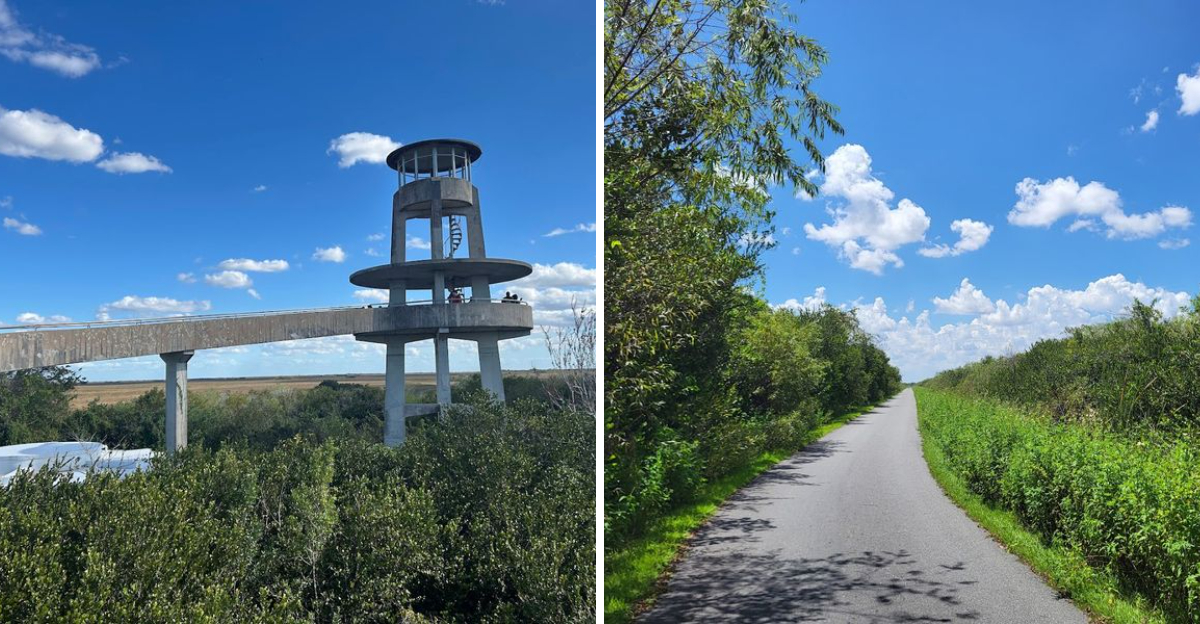
A narrow ribbon of pavement cuts through one of the wildest landscapes in South Florida, and within minutes the world begins to feel very different. Cyclists glide past quiet wetlands where alligators rest beside the path, herons step carefully through the shallows, and miles of sawgrass stretch beneath an enormous open sky.
The route forms a long, scenic loop that pulls visitors deep into one of the most remarkable ecosystems in North America. For travellers who want to experience Florida’s wilderness up close, this ride offers a rare chance to slow down and feel completely immersed in the Everglades.
The Trail Forms A 15-Mile Loop Through The Heart Of The Everglades
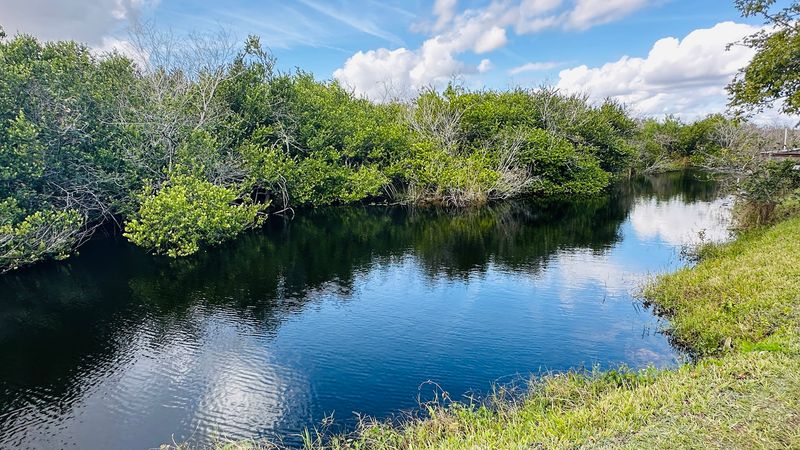
A perfect circle of pavement cutting through one of the most storied wetlands in North America, the Shark Valley loop measures exactly 15 miles and returns you precisely where you began. That tidy geometry is somewhat deceptive, because what happens inside that loop feels anything but ordinary.
The trail runs through the northern edge of Everglades National Park, a UNESCO World Heritage Site covering over 1.5 million acres of subtropical wilderness.
Cyclists typically complete the full loop in two to three hours at a relaxed pace, while walkers should budget considerably more time. The route is entirely paved, which makes it manageable for most fitness levels.
Shade is sparse along large sections of the path, so sunscreen and water are practical necessities rather than optional accessories.
The loop structure means there are no wrong turns, no dead ends, and no backtracking. You simply ride forward and let the Everglades unfold around you at whatever pace feels right.
Cyclists And Walkers Share The Scenic Paved Path
The trail at Shark Valley operates on a respectful understanding between people on bikes and people on foot, and for the most part, that understanding holds up quite well. The paved surface is wide enough to accommodate both without constant friction, though popular weekend mornings can bring enough traffic that awareness becomes part of the experience.
Renting a bike from the facility near the visitor center is the most popular option for those arriving without their own. Bikes are available on a first-come, first-served basis early in the morning, and they do sell out on busy days.
Arriving at or just after the 8:30 AM opening gives you the best chance of securing one.
Walking the full 15 miles is entirely possible but demands preparation. The flat terrain helps, yet the open exposure to Florida sun makes hydration genuinely important.
Comfortable footwear with solid support will serve a walker far better than casual sandals on this route.
Alligators Are Often Seen Resting Beside The Trail
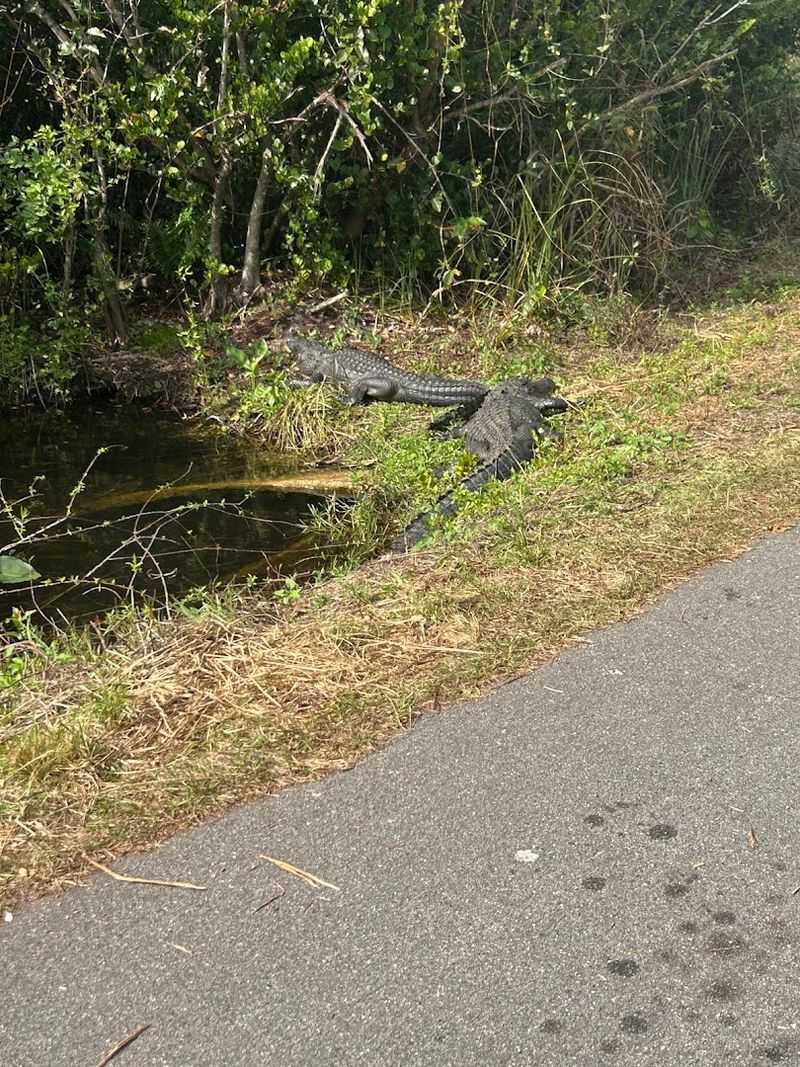
Spotting an alligator from a safe distance is one thing. Watching one rest approximately four feet from a bicycle path while you pedal past is a considerably more memorable experience.
Shark Valley delivers that encounter with remarkable consistency, and visitors frequently count dozens of alligators over the course of a single loop.
American alligators are native to the Everglades and thrive in the shallow, slow-moving water that lines much of the trail. They are most active during warmer months but can be observed year-round basking along the canal edges and open banks.
The western side of the loop tends to produce more sightings, according to those who have completed the route multiple times.
Maintaining a respectful distance is both a safety requirement and a matter of common sense. Rangers and park staff are present and knowledgeable, and the general atmosphere encourages observation without interference.
Watching a gator hold perfectly still while the world moves around it carries a strange, calming quality.
Wading Birds And Wildlife Appear Throughout The Ride
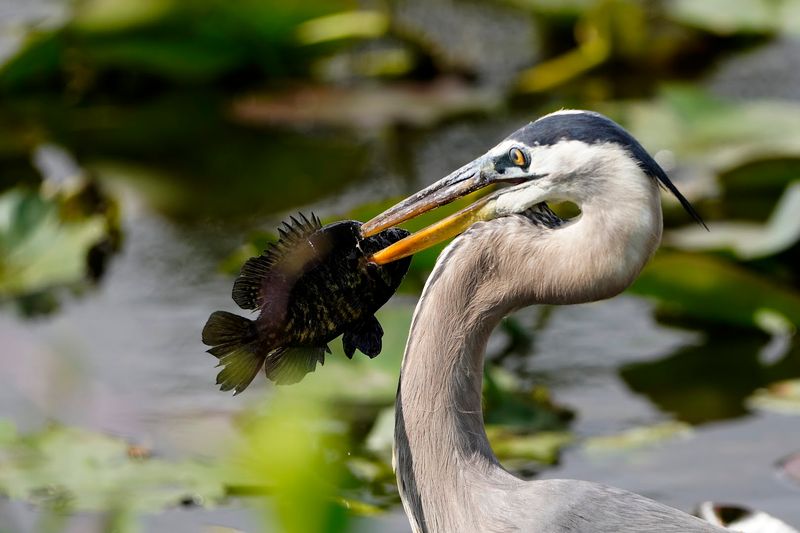
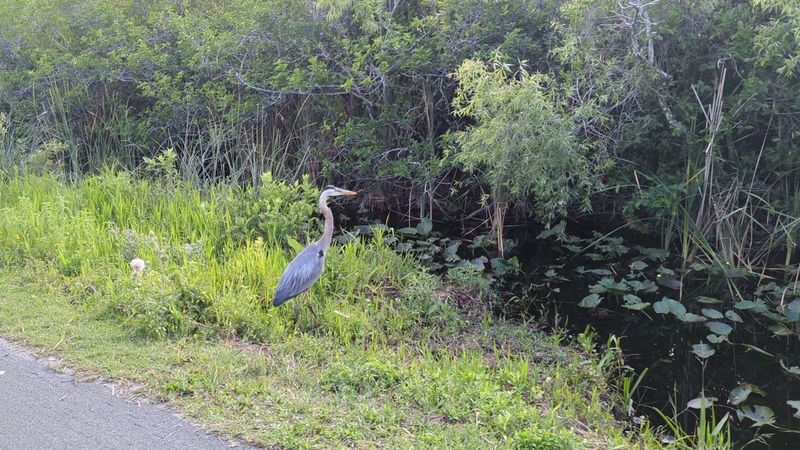
Beyond the alligators, Shark Valley presents a rotating cast of wildlife that keeps the ride perpetually interesting. Great blue herons stand motionless in the shallows with the focused intensity of seasoned anglers.
Anhingas stretch their wings wide to dry in the sun, creating silhouettes that look almost prehistoric against the pale sky.
Turtles, including the Florida softshell, are a common sight along the canal edges. Florida gar glide just below the water surface, and large Lubber grasshoppers make colorful appearances in the vegetation beside the path.
The biodiversity here reflects the Everglades designation as one of the most ecologically significant wetlands in the world.
Bringing a pair of binoculars or a camera with a decent zoom lens will significantly enrich the experience. Animals are close enough to observe clearly, but optical assistance adds detail that makes identification easier and photographs more satisfying.
The trail rewards those who slow down and actually look at what surrounds them.
The Shark Valley Observation Tower Offers Sweeping Everglades Views
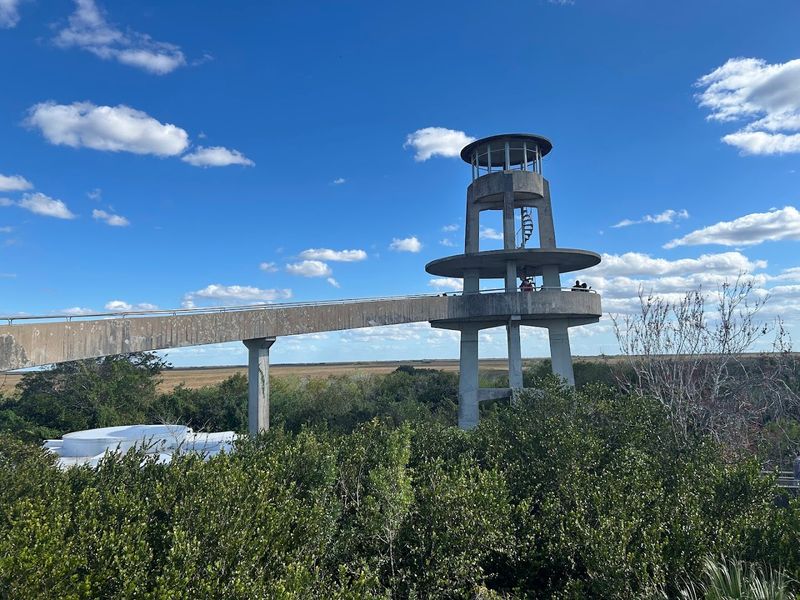
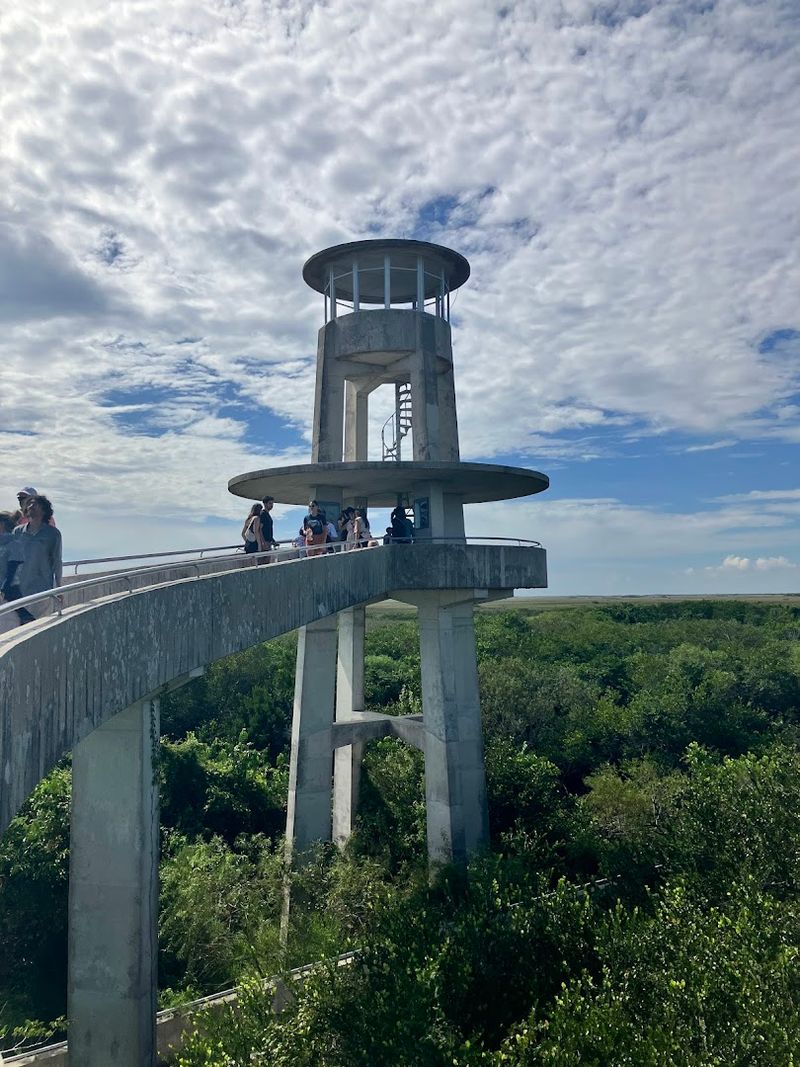
Roughly halfway around the loop stands the Shark Valley Observation Tower, a concrete structure that rises above the flat terrain and delivers one of the most expansive views available anywhere in South Florida. From the top, the sawgrass prairie extends in every direction without interruption, and the scale of the Everglades becomes genuinely comprehensible for the first time.
The tower is accessible via a gently spiraling ramp rather than stairs, which makes the climb manageable for most visitors regardless of age or mobility. On clear days, the view reaches far enough to feel almost surreal given how flat the surrounding landscape is at ground level.
Many cyclists treat the tower as a natural midpoint stop for water, snacks, and a moment of quiet appreciation.
A water bottle refill station is available at the tower, which is the only such facility on the full loop. Planning your water supply around this stop is a practical strategy, especially during warmer months when the sun is relentless and the pavement radiates considerable heat.
A Tram Tour Also Travels The Full Length Of The Trail
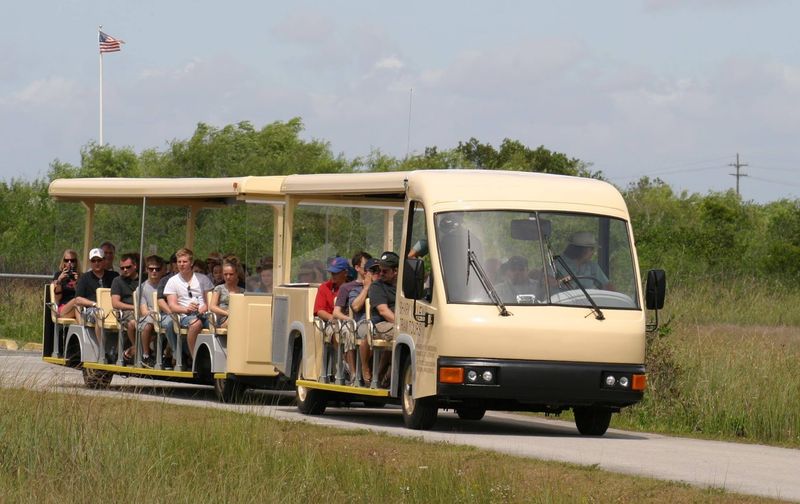
For those who prefer a guided experience or simply want to cover the full 15-mile loop without pedaling, the Shark Valley Tram Tour offers a structured two-hour journey along the complete route. The tram departs from near the visitor center and travels the entire loop with a naturalist guide providing commentary on the wildlife, ecology, and history of the area.
Tram tickets are priced separately from the park entrance fee, with adult fares running around $34, senior fares near $26, and children between three and twelve paying approximately $18. The tram moves slowly near alligator sightings, allowing passengers adequate time for photographs.
It makes a stop at the observation tower, giving everyone a chance to climb up and take in the view.
Booking in advance is advisable during peak season, as tours fill up quickly on weekends and holidays. The tram is a sensible option for families with young children or anyone who wants expert interpretation alongside the wildlife encounters that the trail consistently provides.
The Flat Terrain Makes The Route Accessible For Most Cyclists
Elevation change along the Shark Valley loop is essentially nonexistent, which makes the route one of the more forgiving long-distance paved trails in Florida. The entire 15 miles sits at or near sea level, and there are no hills, bridges, or inclines of any meaningful grade to navigate.
That flatness is both a physical advantage and a reminder of the geology underlying the Everglades.
Beginner cyclists, older riders, and families with children can all complete the loop without requiring advanced fitness or technical skill. The main physical challenge is duration rather than difficulty, combined with the environmental factors of sun and heat that Florida reliably provides.
Wind can become a factor on the return leg of the journey, and a headwind on the back half of the loop is a common experience.
Bike rentals near the visitor center include standard adult bikes and options suitable for younger riders. Arriving early secures both equipment availability and cooler morning temperatures, making the first hour of riding considerably more comfortable than the midday stretch.
The Landscape Changes Subtly Along The Loop
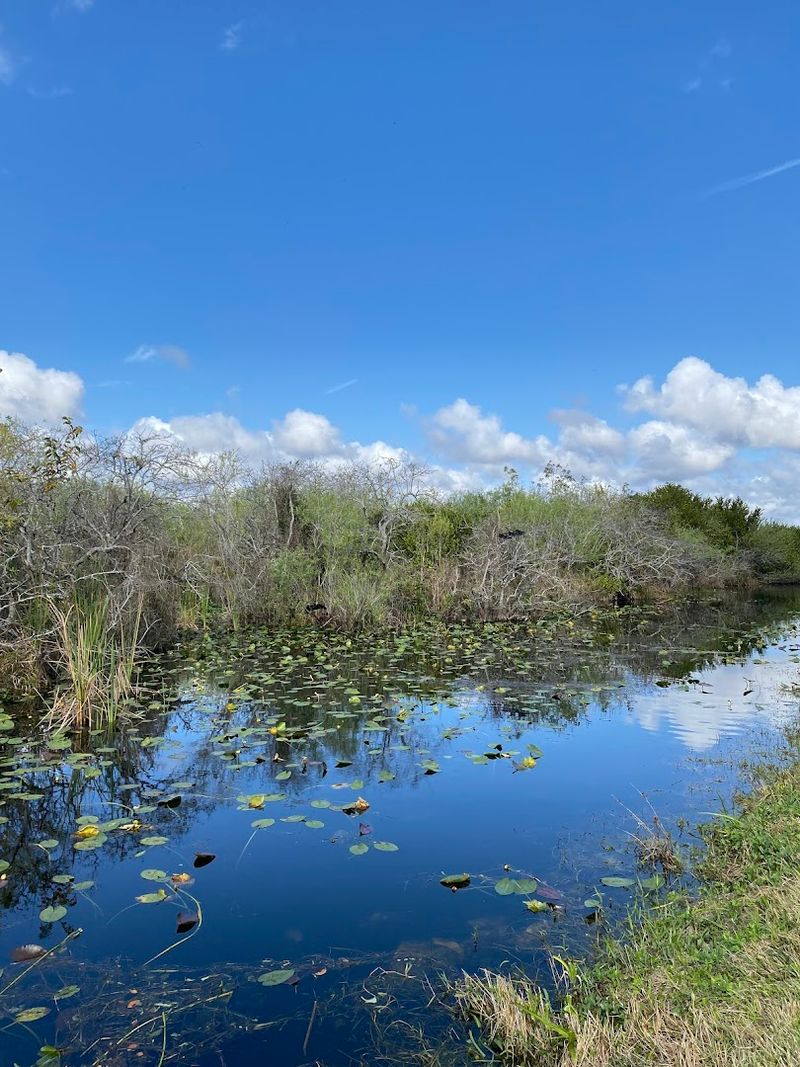
A common assumption about the Shark Valley loop is that the scenery stays uniform from start to finish. The first stretch along the canal does offer a consistent corridor of water and vegetation, but the landscape shifts in character as the trail progresses further into the interior.
Sawgrass prairie opens up in wide, unobstructed expanses that feel almost oceanic in their horizontal reach.
Tree islands, locally called hammocks, appear periodically and break the flatness with clusters of subtropical vegetation. These elevated patches of higher ground support different plant communities than the surrounding wetland, and they attract wildlife that prefers denser cover.
The visual contrast between open prairie and hammock stands gives the ride a rhythm that prevents the scenery from becoming monotonous.
The quality of light also shifts considerably depending on the time of day and season. Morning rides carry a soft, golden tone across the water surfaces, while midday sun flattens everything into sharp contrast.
The landscape at Shark Valley rewards patient observation rather than a hurried pass-through.
Dry Season Months Often Bring The Best Wildlife Viewing
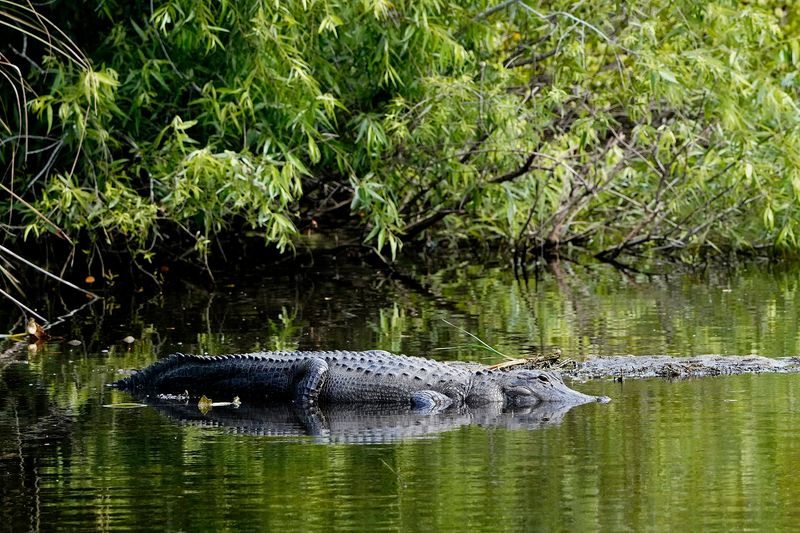
Timing a visit to Shark Valley around the dry season, which generally runs from November through April, pays meaningful dividends in terms of wildlife density and overall comfort. As water levels drop across the Everglades, fish and other aquatic animals concentrate in the remaining pools and canal channels, drawing predators and wading birds into tight, observable clusters.
Alligators become more visible during this period as they move toward water sources, and bird activity along the trail intensifies considerably. Species diversity peaks in winter months when migratory birds supplement the year-round resident population.
The cooler temperatures between December and February also make the physical experience of cycling the full loop considerably more pleasant.
The wet season, from May through October, brings humidity, afternoon thunderstorms, and mosquitoes in numbers that require serious preparation. The wildlife is still present, but the conditions demand more from visitors.
Dry season visits tend to produce the concentrated, front-row wildlife encounters that make Shark Valley genuinely distinctive among Florida destinations.
Early Morning Rides Offer Cooler Temperatures And Quiet Paths
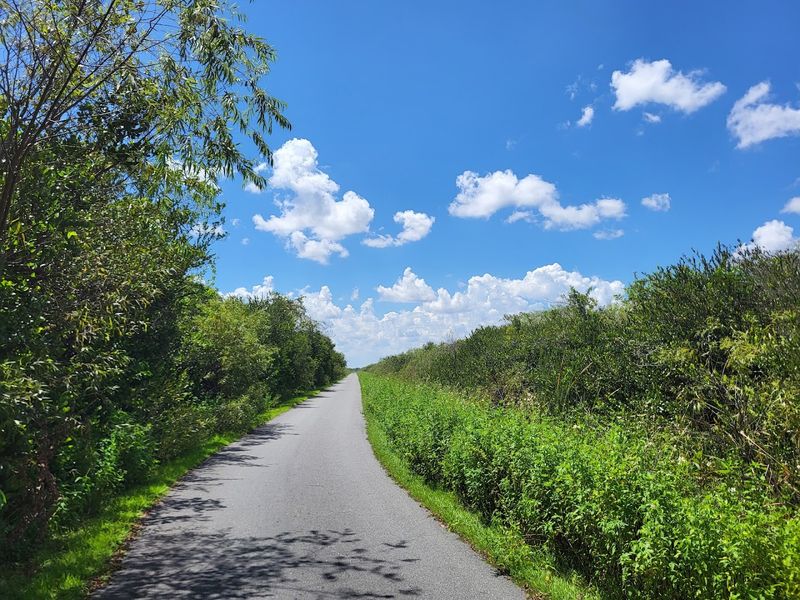
Arriving at Shark Valley when the gates open at 8:30 AM transforms the experience in ways that a midday visit simply cannot replicate. The air carries genuine coolness in the morning hours, the light falls at angles that make the water and vegetation glow, and the path holds a quietness that disappears once the crowds arrive.
That first hour on the trail belongs to early risers and the wildlife that has not yet retreated from the path edges.
Alligators are particularly active in the morning, moving between resting spots and water with unhurried deliberateness. Birds call from the sawgrass, and the absence of tram engine noise makes it easier to hear the ambient sounds of the wetland.
The difference in atmosphere between 8:45 AM and 11:00 AM is substantial enough to justify setting an early alarm.
Bike rentals and tram tickets also go faster than most visitors anticipate. An early arrival secures equipment, avoids the entrance line congestion, and gives you the quieter, cooler version of the trail that many consider the definitive Shark Valley experience.
The Trail Provides A Rare Close-Up Look At Everglades Ecosystems
Most encounters with large wilderness areas happen at a remove, viewed through a windshield or from a designated overlook at a comfortable distance. Shark Valley operates on a different principle entirely.
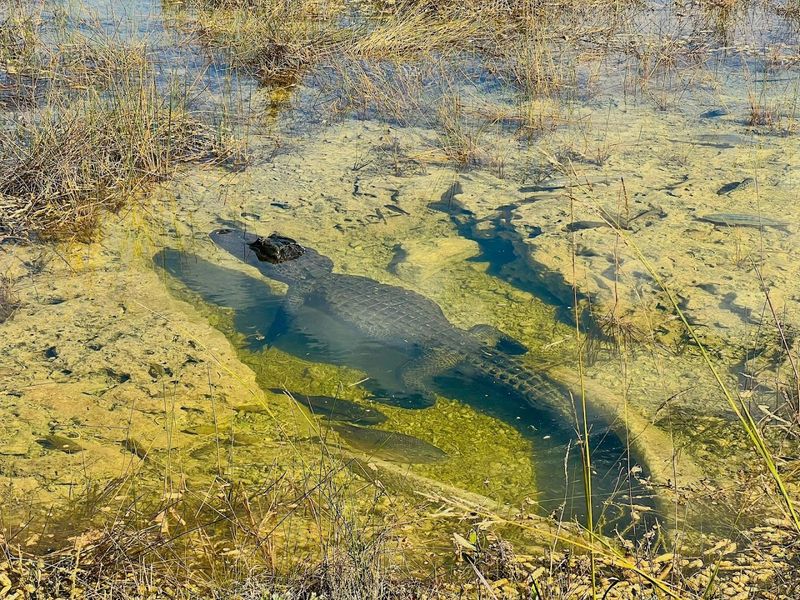
The trail runs directly through the ecosystem rather than around it, placing visitors in immediate proximity to the biological processes that define the Everglades as a functioning, living system.
The shallow water alongside the canal is clear enough in many sections to observe fish, turtles, and aquatic vegetation without any special equipment. The sawgrass prairie that dominates the interior of the loop represents one of the most distinctive plant communities in North America, shaped by the slow sheet flow of water that once moved freely across the entire southern tip of Florida.
Interpretive signage along the trail provides ecological context for what you are seeing, and the park staff are genuinely informative for those who ask questions. Shark Valley functions as both a recreational trail and an accessible field classroom for anyone curious about how one of the continent’s most complex wetlands actually works.