
This Stunning Florida Pond Is Home To The Largest Lily Pads In The World
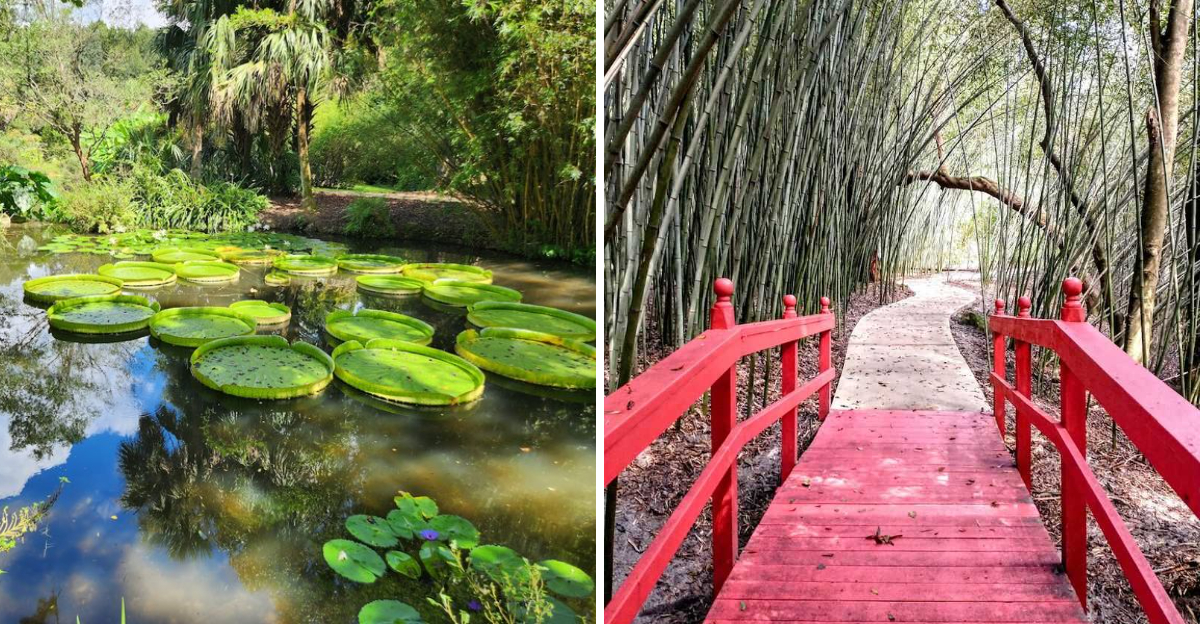
Florida is full of natural surprises, yet a quiet garden in north-central Florida often leaves visitors momentarily speechless. Spread across dozens of lush acres, this peaceful destination features a pond where enormous lily pads rest on the surface like floating green platforms.
These remarkable Victoria water lilies grow so large that they seem almost unreal at first glance, looking more like something imagined in a storybook than part of an ordinary afternoon. For anyone who enjoys slow walks, tropical scenery, and plants that truly stand out, this garden offers a striking glimpse of nature’s quieter wonders.
A Botanical Garden Known For Its Extraordinary Water Garden
Kanapaha Botanical Gardens carries a quiet authority that most public gardens spend decades trying to earn. Located at 4700 SW 58th Dr, Gainesville, FL 32608, the garden spans 68 acres and organizes its landscape into 24 themed areas, each with its own personality and pace.
The water garden stands apart from everything else on the property, commanding attention the moment you approach it.
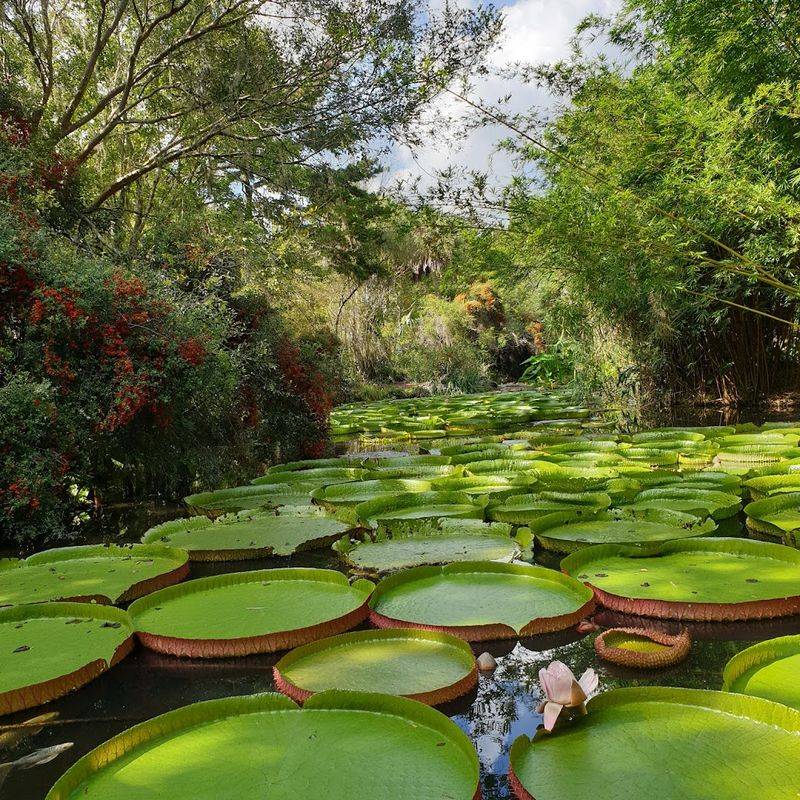
Victoria water lilies dominate the central pond with a presence that feels almost architectural. Their enormous circular pads rest on the surface like platforms, rimmed with upturned edges that give them a sculptural quality no photograph fully captures.
The surrounding plantings frame the scene with layers of tropical foliage, keeping the atmosphere lush and shaded.
Admission is $12 for adults and $7 for children, making this one of the more accessible botanical experiences in North Florida. The garden opens at 9 AM most days of the week, giving morning visitors the best light for exploring.
The Giant Lily Pads That Can Grow Several Feet Across
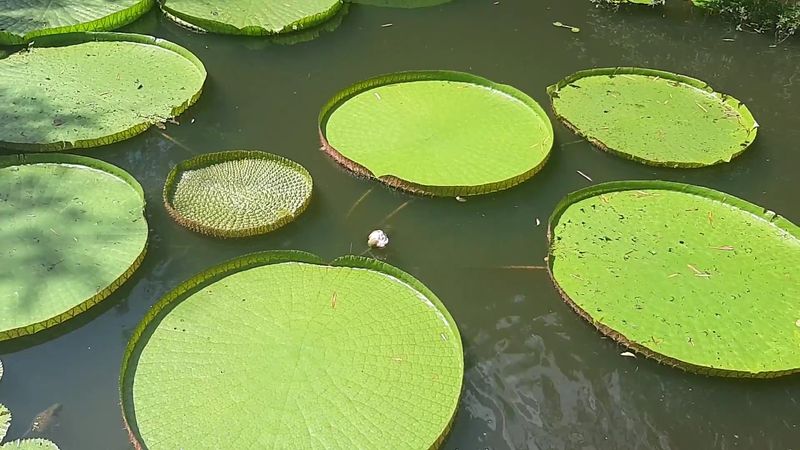
Victoria water lilies are not simply large. They are genuinely, almost implausibly large, and seeing one in person recalibrates your sense of what a plant is capable of.
The pads of the Victoria amazonica species can reach up to eight feet in diameter under favorable conditions, making them the largest floating leaves of any plant on earth.
At Kanapaha, the warm Florida climate provides exactly the kind of humid, sun-soaked environment these lilies prefer. The pond water stays warm through the growing season, and the lilies respond by sending out pads that expand steadily through summer.
Each pad is supported from below by a network of rigid veins that radiate outward like the spokes of a wheel.
The upturned rim around each pad adds to the visual drama, giving every leaf the look of a shallow green bowl. Standing at the water’s edge and staring down at these pads is one of those experiences that quietly rearranges your expectations of the natural world.
A Pond Where The Famous Victoria Water Lilies Take Centre Stage
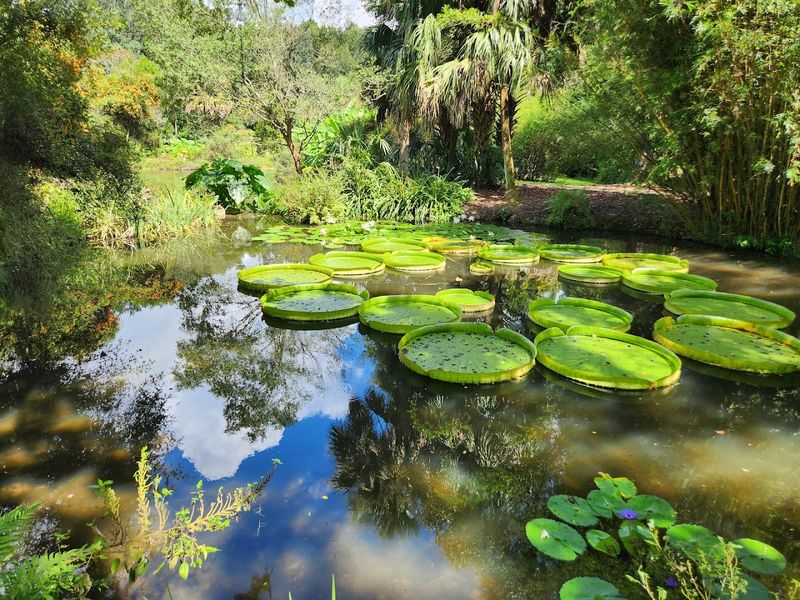
The pond at Kanapaha is not large by lake standards, but it holds its ground as one of the most visually striking water features in any public garden in the American South. The Victoria water lilies claim the surface with an easy dominance, their pads overlapping at the edges during peak season and their flowers opening at dusk in shades of white that gradually deepen to pink over two nights.
This color shift is one of the more fascinating botanical details associated with the Victoria genus. The flowers are pollinated by beetles, which are lured in by warmth and fragrance on the first night when the bloom is white, then trapped briefly inside as the flower closes.
By the second night, the flower reopens in pink and releases its visitors, dusted with pollen.
Watching this pond through the seasons reveals a different garden each time. Late summer brings the fullest display, when the pads are at their widest and the blooms appear most frequently in the early evening hours.
The Tropical Water Garden That Draws Photographers And Garden Lovers
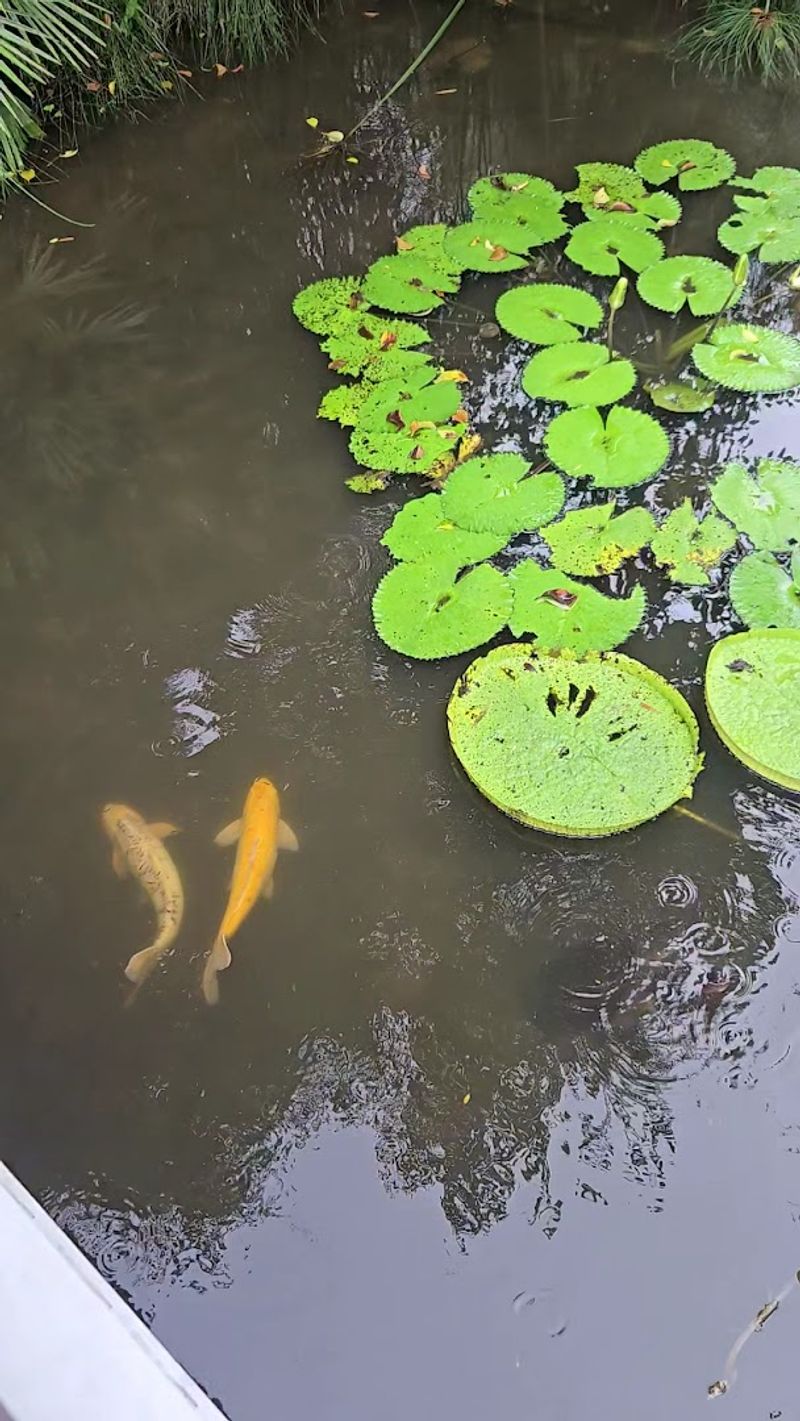
Few subjects in nature photography offer the compositional variety of a well-planted water garden in full bloom. The pond at Kanapaha delivers layers of visual interest, from the geometric patterns of the lily pads to the reflections of surrounding palms and the occasional koi moving through the shaded water beneath the surface.
Garden photographers who visit during the summer months often return multiple times in a single season, chasing the right combination of light and bloom. Morning visits offer soft diffused light that suits the greens and whites of the lily garden, while late afternoon brings a warmer tone that flatters the pink second-night blooms.
The garden’s paths are paved and well maintained, allowing photographers to move around the pond without difficulty.
Beyond photography, the water garden draws visitors who simply want to stand near something genuinely beautiful without needing to explain why. The garden’s phone number is +1 352-372-4981 if you want to confirm seasonal bloom conditions before making the trip.
Why These Massive Lily Pads Feel Almost Unreal Up Close
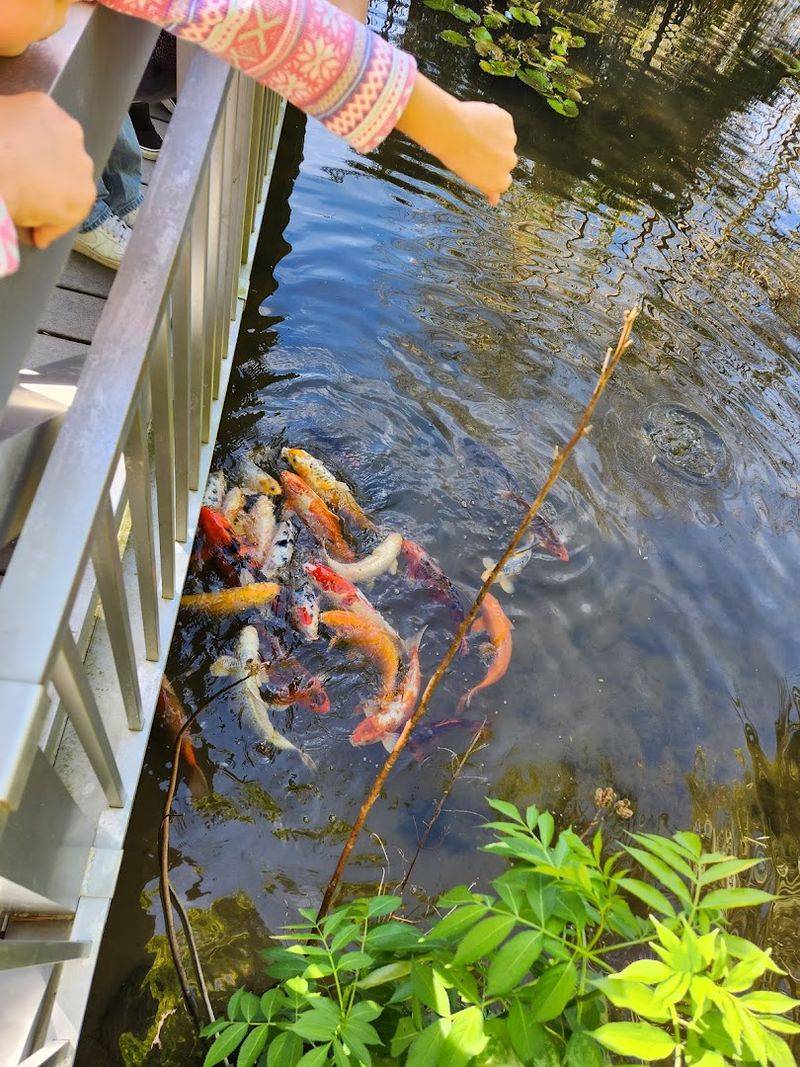
There is a specific moment when you step close to the lily pond at Kanapaha and the scale of the pads finally registers. From a distance, they read as large.
Up close, they read as extraordinary. An adult could theoretically sit on a mature Victoria pad, which is a fact that sounds absurd until you are standing at the water’s edge looking at one.
The structural engineering of these leaves is worth pausing over. The underside of each pad is reinforced with a branching network of veins that distribute weight evenly across the surface, allowing the pad to support significant mass without sinking.
This same structure has reportedly inspired architectural designs, including the framework of Joseph Paxton’s Crystal Palace in London.
That blend of beauty and function is part of what makes the Victoria lily so compelling to botanists and casual visitors alike. At Kanapaha, you do not need any background in plant science to feel the weight of what you are looking at.
The pond does that work for you.
The Seasonal Bloom That Brings The Pond To Life Each Year
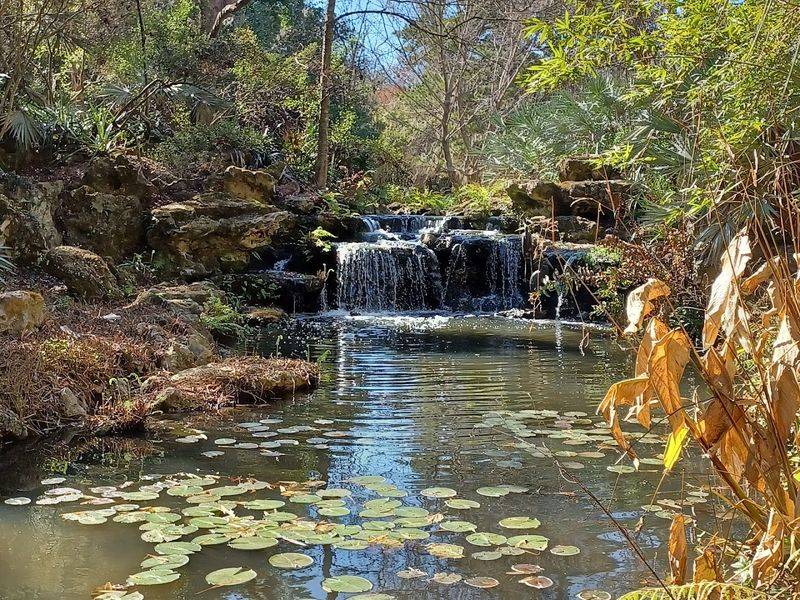
The Victoria water lilies at Kanapaha are seasonal performers, and the garden rewards visitors who time their trips accordingly. The plants begin establishing themselves in late spring as Florida’s temperatures climb, and by midsummer the pond reaches the kind of fullness that makes it genuinely difficult to see the water beneath the pads.
Blooming typically intensifies through July and August, with flowers appearing in the evening and persisting into the following morning. Each individual flower lasts only two nights before closing and sinking below the surface to develop seed.
The brevity of each bloom gives the pond a sense of ongoing change, so no two visits feel entirely the same.
Visitors who arrive outside the growing season will find the pond quieter but still worth a look. The surrounding water garden plantings remain active through much of the year, and the overall character of the space holds even without the full lily display.
Calling ahead to confirm bloom status is always a sensible step before planning a visit specifically for the lilies.
A Garden Setting Filled With Palms, Bamboo, And Lush Greenery
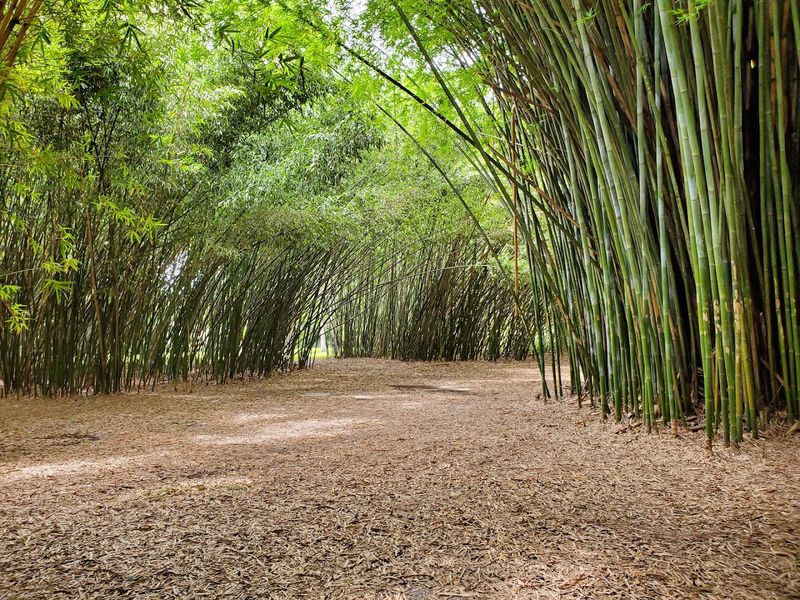
The water garden at Kanapaha does not exist in isolation. It sits within a broader landscape that includes one of the most impressive bamboo collections in the region, a hummingbird garden, a palm hammock, a butterfly garden, and a sprawling herb garden, among many others.
The variety of plant communities across the property gives the garden a richness that builds as you walk further from the entrance.
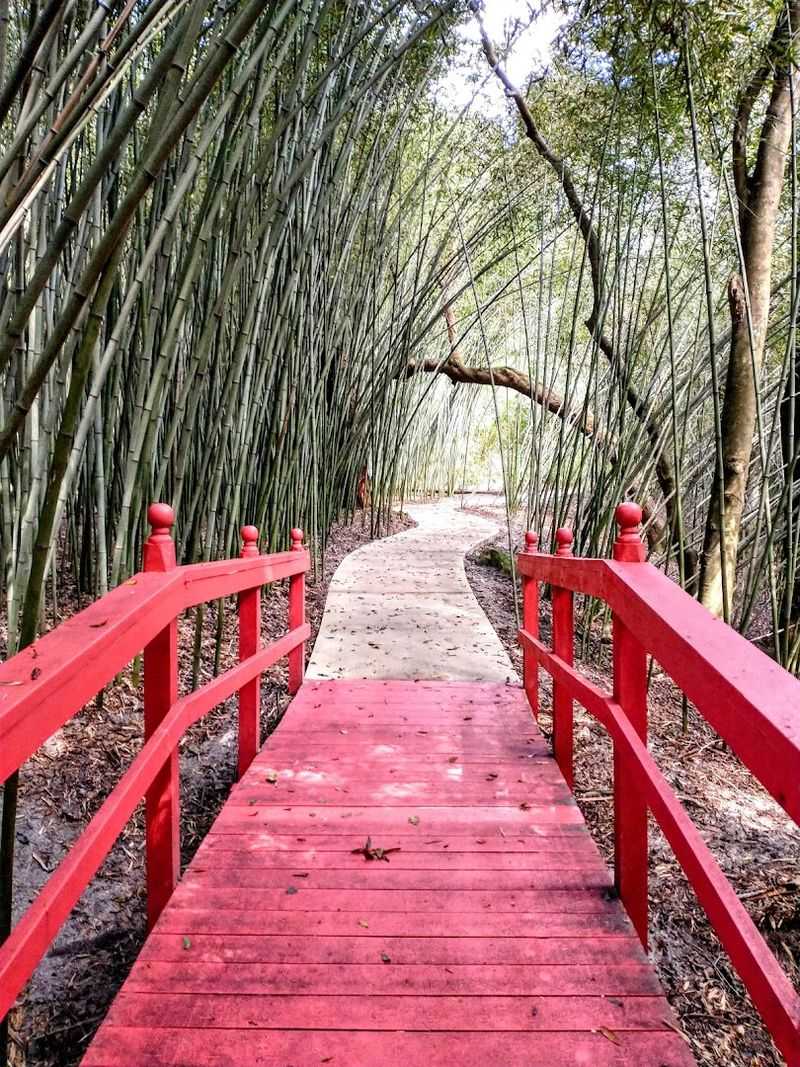
The bamboo grove in particular has earned a devoted following. The culms reach heights that create a genuine sense of enclosure, and the sound of wind moving through the upper canopy is unlike anything else on the property.
Walking through it feels like a brief departure from the rest of the garden, and most visitors slow down instinctively once they step inside.
Palms of multiple species appear throughout the grounds, reinforcing the tropical character of the landscape. The overall effect is of a garden that has been assembled with genuine botanical curiosity rather than decorative impulse, which gives the whole place a credibility that holds up across multiple visits.
A Peaceful Walking Garden Where Visitors Can Slow Down And Explore
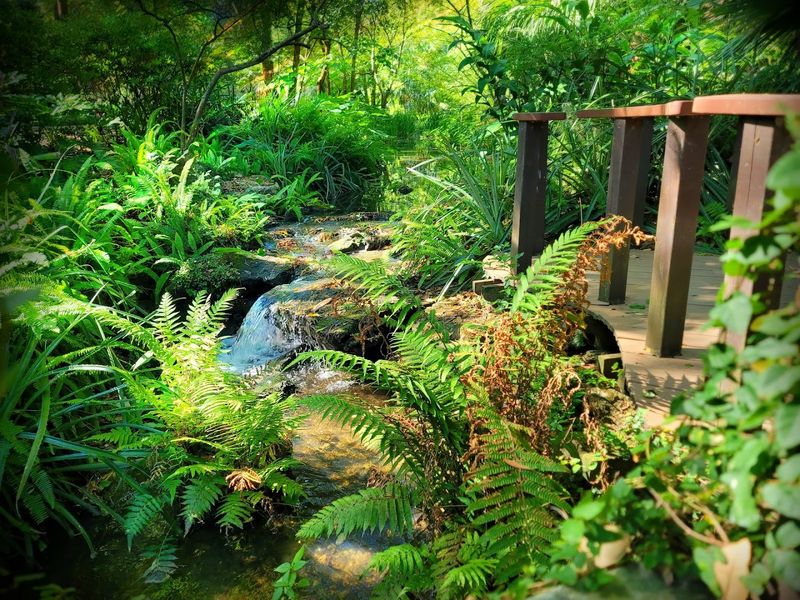
Kanapaha covers 68 acres and roughly two miles of trail, which is enough ground to give a visit genuine substance without demanding athletic effort. The paths are mostly paved or brick-surfaced, keeping the walk accessible for a wide range of visitors, including those with mobility considerations.
Shade is distributed generously across the property, and on a warm Florida morning that matters considerably.
The garden’s layout encourages a kind of unhurried exploration. Themed areas are clearly marked, but the transitions between them feel organic rather than abrupt, so the walk has a natural flow.
Most visitors report spending between one and two hours on the grounds, though the pace is entirely self-directed and some people extend that considerably.
Children are well accommodated, with a playground area that gives younger visitors a physical outlet between garden sections. Dogs are welcome on non-retractable leashes, which adds a relaxed, community-oriented atmosphere to the grounds.
The garden is open Wednesday through Tuesday, closed on Thursdays, from 9 AM to 5 PM.
How The Gardens Showcase Plants From Around The World
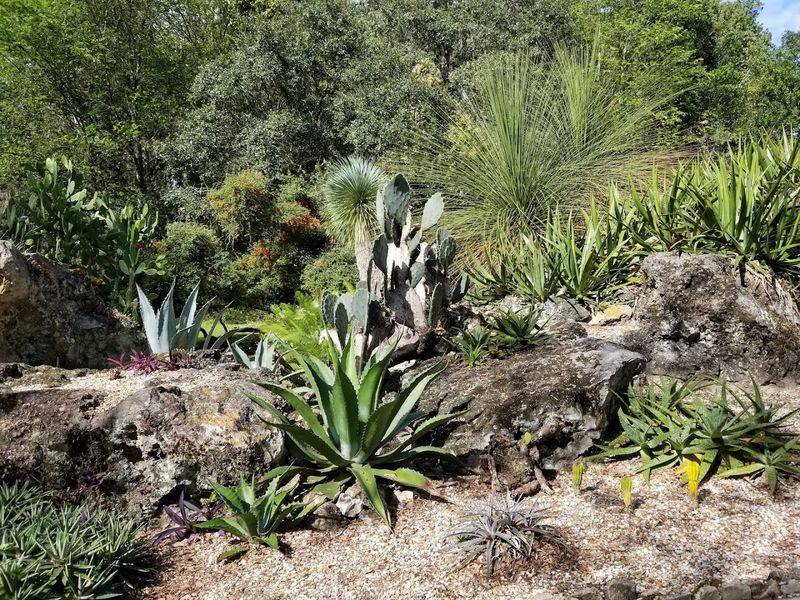
Kanapaha Botanical Gardens operates as a living collection, which means the plants on display are not simply decorative arrangements but curated specimens representing botanical diversity from multiple continents. The 24 themed gardens include areas dedicated to specific plant families, growing conditions, and geographic origins, giving the property an educational depth that rewards attentive visitors.
Citrus trees bearing visible fruit, banana plants at full height, desert succulents arranged in a dedicated xeriscape section, and aquatic species from South America all share the same 68-acre property. The range is wide enough that walking the full circuit feels like moving through several distinct climates in a single afternoon.
Staff members on the grounds are knowledgeable and willing to answer questions, which adds a layer of informal interpretation to the experience.
The garden’s website at kanapaha.org provides additional information about specific collections and seasonal highlights. For a botanical garden of this scope and quality, the $12 adult admission represents genuinely good value by any reasonable measure.
Why Visitors Often Spend Hours Wandering The Garden Paths
A well-designed botanical garden earns extended visits by offering more than its headline attractions. Kanapaha succeeds at this because each themed section has enough individual character to hold attention on its own terms.
The water garden brings people in, but the bamboo grove, the hummingbird garden, and the herb collection are capable of holding visitors for longer than they anticipated spending.
The pacing of the garden also contributes to longer stays. Because the paths wind rather than run in straight lines, and because the transitions between sections are gradual, visitors tend to slow their stride naturally.
There is always something just ahead that warrants a closer look, and the garden is laid out in a way that rewards that impulse.
Returning visitors often note that the garden shows differently across seasons, which creates an incentive to come back. Azaleas and camellias perform in cooler months, while the water lilies and butterfly garden peak in summer.
The garden manages to be worth the trip in nearly every month of the year.