
The Little-Known Aviation Museum In Tennessee You’ve Probably Never Heard Of
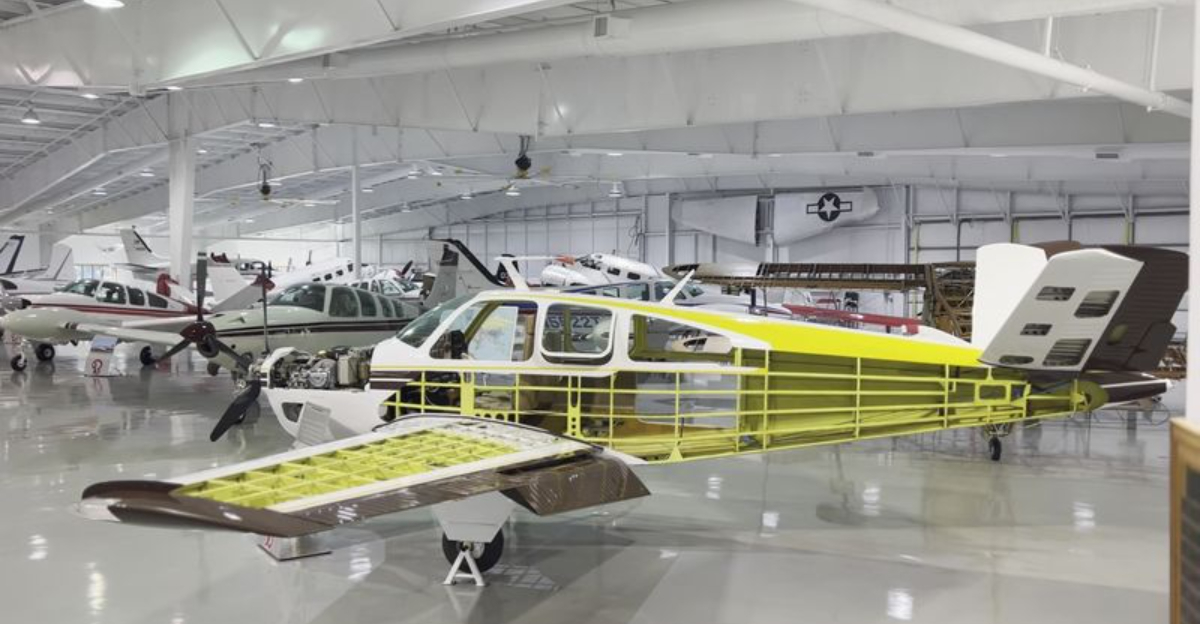
Engines, polished metal, and decades of aviation history waiting quietly in one fascinating spot. Tennessee is home to an aviation museum that surprises almost everyone who walks through the doors.
The collection is impressive. Classic aircraft, rare models, and stories from the golden age of flight fill the hangars, giving visitors a close look at machines that helped shape modern aviation.
Enthusiasts linger beside the planes, studying every detail, while curious newcomers quickly realize they’ve found something special. In a state filled with well-known attractions, this lesser-known Tennessee museum offers a remarkable journey into the world of aviation that many travelers never see coming.
A Museum Built Around One Legendary Aircraft Brand
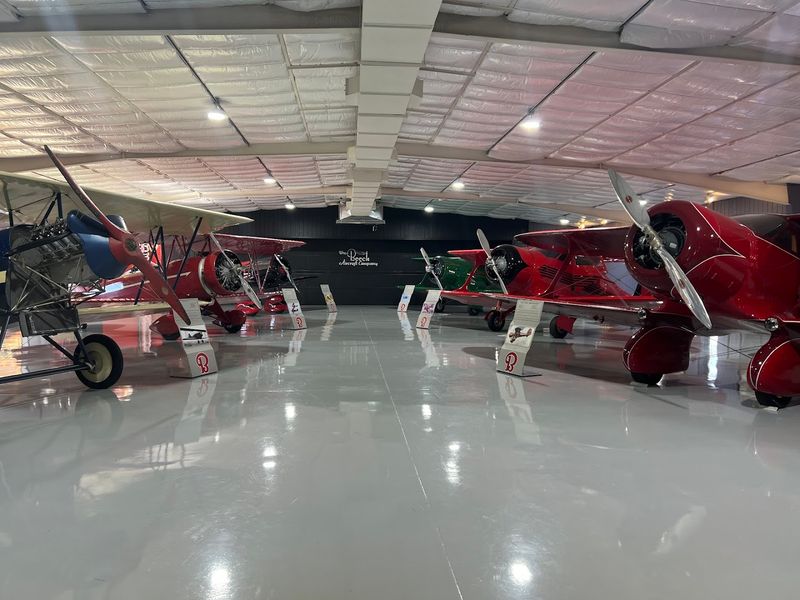
Not every museum earns a 4.9-star rating from hundreds of visitors, but this one has done exactly that. The entire collection is devoted to one aircraft manufacturer, Beechcraft, and that singular focus is precisely what makes it so compelling.
This museum was founded in 1932 by Walter H. Beech and his wife Olive Ann Beech, and the company went on to produce some of the most beloved and technically refined aircraft in American aviation history.
Concentrating a museum around one brand might sound limiting, but the breadth of designs that emerged from Beechcraft over the decades is genuinely staggering.
From early biplanes to sophisticated turboprops, the variety on display covers nearly a century of aviation engineering. Visitors frequently report spending two hours or more moving through the exhibits, which speaks to how much the museum packs into its space.
First-time visitors often arrive with modest expectations and leave thoroughly impressed.
The Staggerwing: A Biplane That Rewrote The Rules
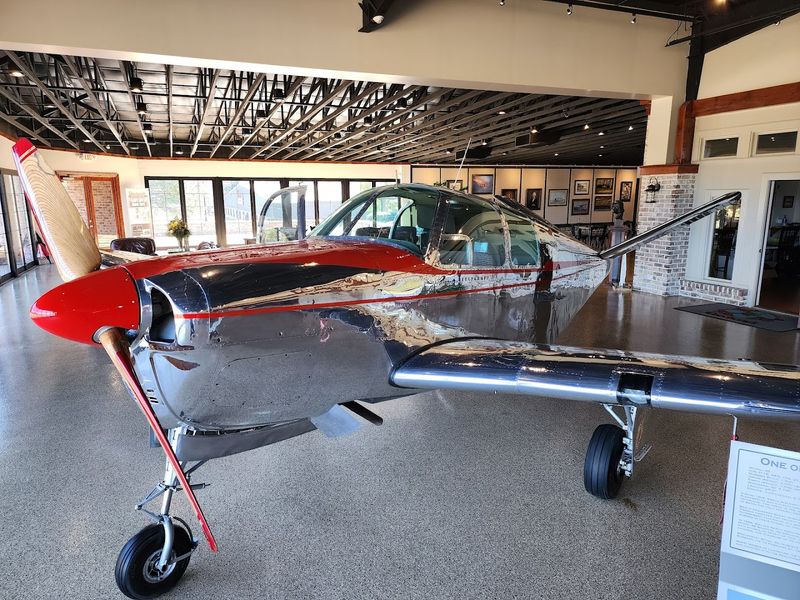
Few aircraft in history generated as much attention upon their debut as the Beechcraft Model 17 Staggerwing, and the museum’s collection of these machines is one of the most compelling reasons to visit. The Staggerwing earned its name from an unconventional design where the lower wing is positioned ahead of the upper wing, which was the opposite of most biplanes of the era.
Introduced in 1932, the Staggerwing was fast, elegant, and expensive. It became a status symbol among wealthy businesspeople and racing pilots, and it set speed records that embarrassed aircraft built specifically for competition.
Seeing one in person changes your understanding of what 1930s engineering was capable of.
The museum houses several Staggerwings in varying states of restoration, and the detail work on the fully restored examples is extraordinary. Visitors are permitted to get very close to the aircraft without barriers blocking their view, which makes the experience feel personal rather than clinical.
The craftsmanship visible in the airframes, fabric surfaces, and engine cowlings gives these machines a presence that photographs simply cannot capture.
The Bonanza And Its Remarkable Six-Decade Production Run
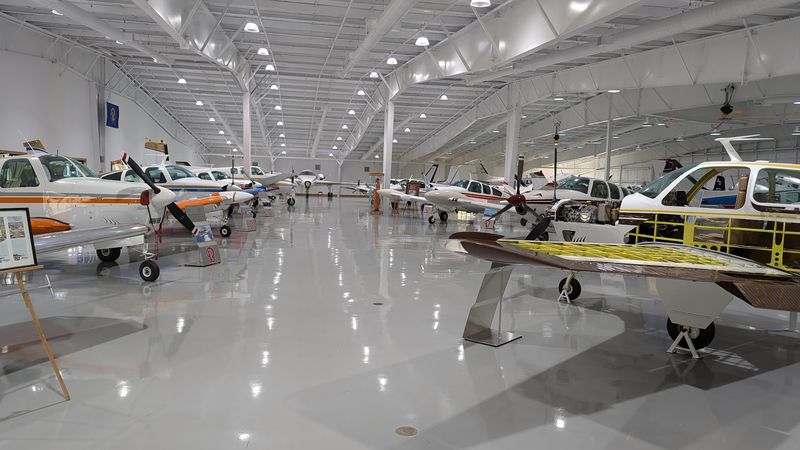
Introduced in 1947, the Beechcraft Bonanza holds a production record that no other aircraft in history has matched. It has been manufactured continuously for over 75 years, making it the longest-running production aircraft ever built.
That is not a minor footnote; it is a testament to how well the original design was conceived.
The most recognizable version features a distinctive V-shaped tail, which gave it an immediately identifiable silhouette and earned it the nickname “the Doctor Killer” among some pilots, a reference to the aircraft’s performance capabilities outpacing the skills of some of its wealthy early buyers. The museum presents the Bonanza’s full evolution across multiple decades with clarity and depth.
Standing beside a Bonanza inside the museum, you notice how clean and purposeful the design looks even by modern standards. The cockpit layouts, when visible, reveal how instrument panels evolved from simple analog gauges to increasingly complex arrangements over the years.
Aviation students and private pilots tend to linger longest around these exhibits, and their enthusiasm is entirely understandable given the Bonanza’s outsized place in general aviation history.
Two Full Hangars Worth Of Aviation History
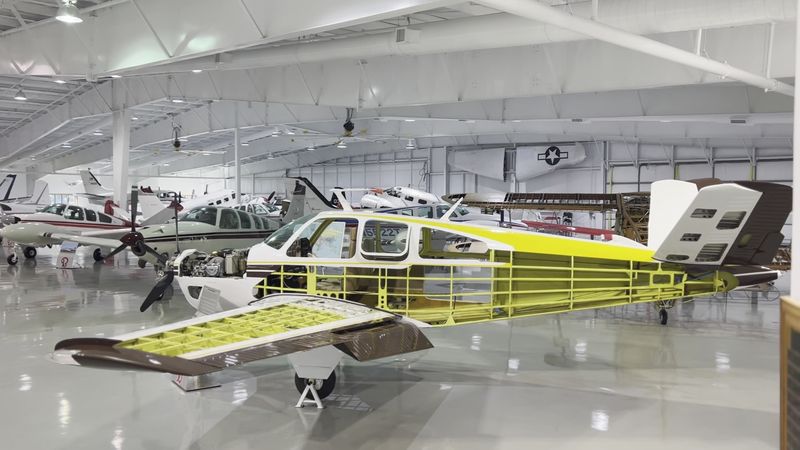
Space matters in an aviation museum, and the Beechcraft Heritage Museum does not feel cramped or crowded. The collection spans two hangars, both of which are climate-controlled, well-lit, and organized in a way that allows visitors to move through the exhibits without feeling rushed or disoriented.
Each aircraft is displayed with enough surrounding space to allow full walkarounds, and the floor surfaces are kept impressively clean throughout. Visitors consistently mention how organized and tidy the facility feels, which reflects the care the staff and volunteers put into maintaining the collection on a daily basis.
The second hangar introduces aircraft types that the first does not cover, so there is a genuine sense of discovery as you move between buildings. Informational placards accompany each exhibit, providing context about the aircraft’s history, technical specifications, and significance within the broader Beechcraft story.
Those who appreciate reading as they walk will find the written content thorough without being overwhelming, striking a balance that keeps the visit educational and enjoyable simultaneously.
A Living Airport Setting That Adds Real Energy
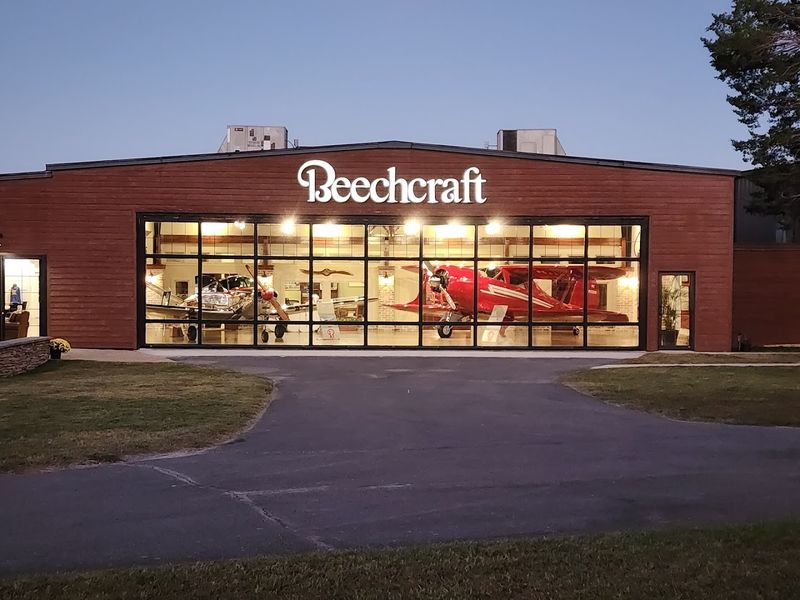
The Beechcraft Heritage Museum sits on the grounds of Tullahoma Regional Airport, and that location adds a dimension that indoor-only museums simply cannot offer. Actual aircraft take off and land throughout the day just outside the museum walls, and the sound of propeller-driven engines overhead provides a living backdrop that reinforces everything you are seeing inside.
Several visitors have noted the pleasure of stepping outside between exhibits to watch small planes touch down on the runway nearby. There is something grounding about standing near a restored 1940s aircraft inside and then watching a modern version of a similar design roll past on the tarmac outside.
The contrast between eras becomes tangible rather than theoretical.
The airport setting also means that during special events, aircraft fly directly in and park near the museum, eliminating the distance between the collection and the active aviation community it represents. For visitors who fly their own aircraft, arriving at Tullahoma Regional Airport and walking directly into the museum is an option that adds a memorable layer to the experience.
The surrounding grounds are well maintained and pleasant to walk through.
The Annual Beech Party: A Fly-In Worth Marking On Your Calendar
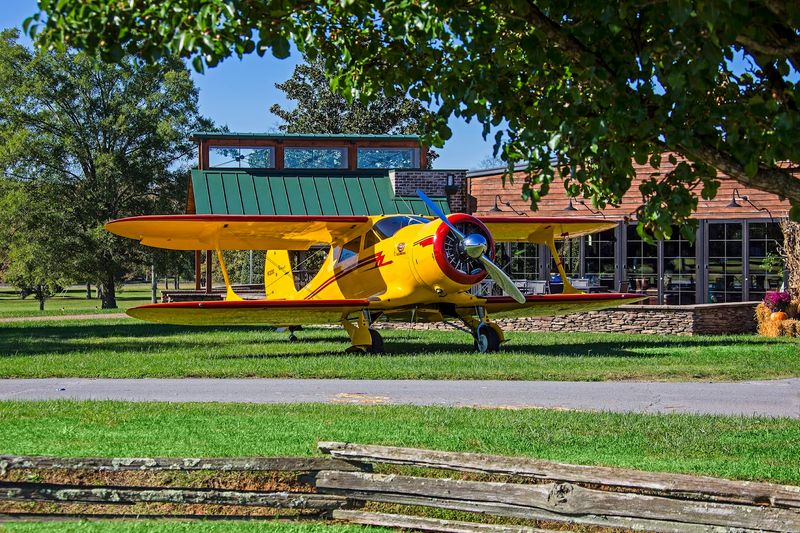
Once a year, typically in October, the Beechcraft Heritage Museum hosts an event called the Beech Party, and the description barely does it justice. Owners of Beechcraft aircraft from across the country fly their planes directly to Tullahoma Regional Airport, park on the grounds, and spend the weekend celebrating the aircraft they love alongside people who share that enthusiasm.
The variety of aircraft that arrives during the Beech Party is remarkable. Staggerwings, Bonanzas, Barons, Twin Beechcrafts, and King Airs all show up in numbers that transform the airport ramp into an outdoor extension of the museum itself.
Visitors who attend during this period get access to aircraft they would never encounter on a standard visit.
Multiple reviewers have described the Beech Party as the single best time to visit the museum, and some have returned year after year specifically for the event. The atmosphere is social and relaxed, with pilots happy to discuss their aircraft and share stories about flights they have taken.
Volunteers and staff are especially present during this period, and the collective knowledge available to curious visitors is exceptional.
Honoring Women In Aviation With Archival Records
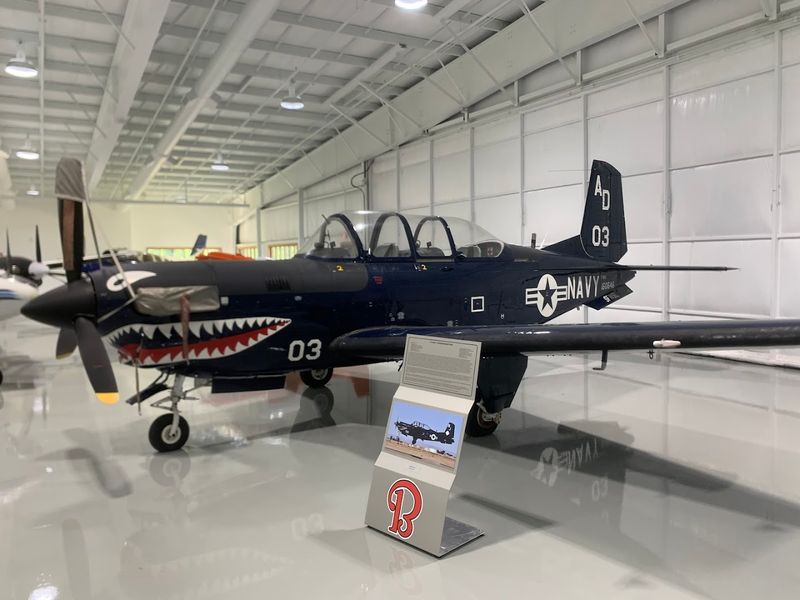
One section of the museum draws particular attention from visitors who may not have expected it: the archival records honoring outstanding women in aviation. The collection documents contributions made by female pilots across different eras of flight, and the depth of the material on display reflects genuine curatorial effort rather than a token acknowledgment.
Women played significant roles in Beechcraft’s history specifically. Olive Ann Beech, co-founder of the company, ran the entire operation after her husband Walter’s death in 1950 and guided it through decades of growth and change.
Her leadership helped Beechcraft become one of the most respected names in general aviation, and the museum gives her story the prominence it deserves.
Beyond the company’s founders, the archival materials document women who flew Beechcraft aircraft in competitions, record attempts, and military service. Seeing photographs and personal documents from pilots who operated in an era when their participation in aviation was considered unusual adds emotional weight to the visit.
Aviation historians and educators have found this section particularly valuable as a resource for understanding the broader social history of flight in America.
Getting Up Close Without Ropes Or Barriers
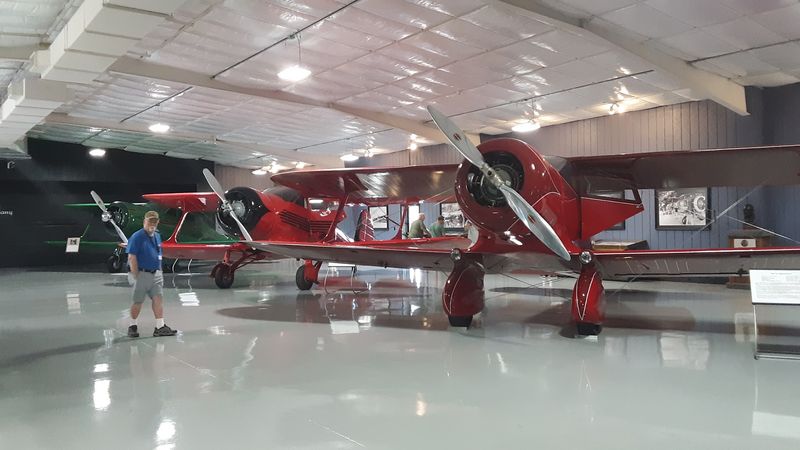
Most aviation museums keep their aircraft behind ropes, stanchions, or glass barriers that maintain a frustrating distance between visitor and machine. The Beechcraft Heritage Museum operates differently.
Visitors can walk directly up to the aircraft, lean in to examine rivets, read instrument panel markings, and study the engineering details that photographs never quite capture.
That proximity changes the experience entirely. Running your eye along the leading edge of a 1930s wing or standing close enough to read the original manufacturer’s plates on an engine cowling creates a connection to the aircraft that no interpretive panel can replicate.
Several reviews specifically mention this openness as one of the highlights of the visit.
The trust placed in visitors reflects the museum’s community-oriented approach. Rather than treating guests as potential hazards to the collection, the staff welcomes genuine curiosity and engagement with the aircraft.
Children benefit particularly from this policy, since being able to actually see the details of a full-scale aircraft rather than viewing it from ten feet away makes the experience tangible and memorable. Adults with a background in aviation tend to spend considerable time studying specific mechanical details up close.
Friendly Staff And Volunteers Who Actually Know Their Planes
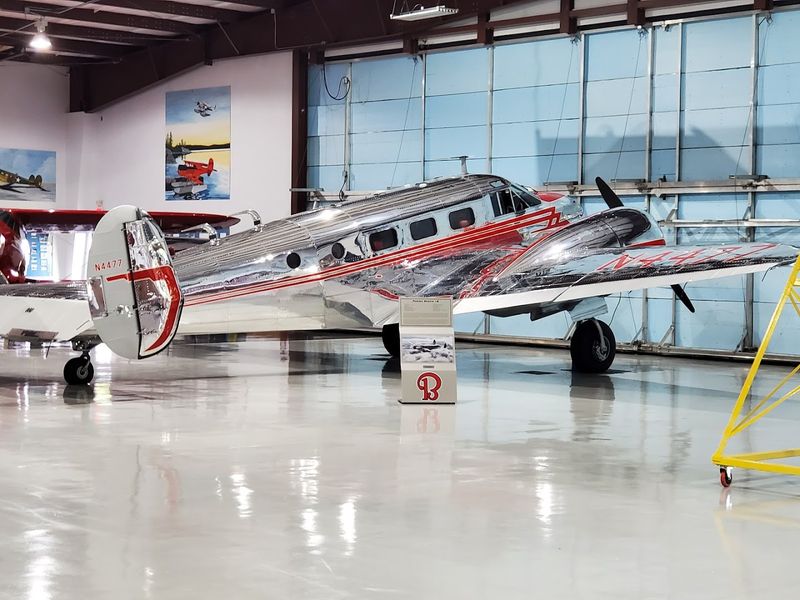
A museum is only as good as the people who bring it to life, and by nearly every visitor account, the staff and volunteers at the Beechcraft Heritage Museum are exceptional. They are described consistently as friendly, knowledgeable, and unhurried, which is a combination that makes a genuine difference in how much a visitor absorbs and enjoys during a visit.
The introductory orientation provided at the start of each visit sets a tone of genuine hospitality. Staff members take time to explain the layout of the museum, highlight exhibits that are particularly significant, and answer questions with the kind of depth that comes from real familiarity with the subject matter.
Visitors who arrive knowing very little about Beechcraft leave with a solid understanding of the brand’s history and significance.
Volunteers who assist during events like the Beech Party bring additional layers of personal experience to the museum environment. Many are pilots themselves or have direct connections to specific aircraft in the collection, and their stories add context that no placard can provide.
Multiple reviewers have singled out individual staff members by description, noting how much a warm welcome shaped their overall impression of the place.
Planning Your Visit To Tullahoma For A Rewarding Day Trip
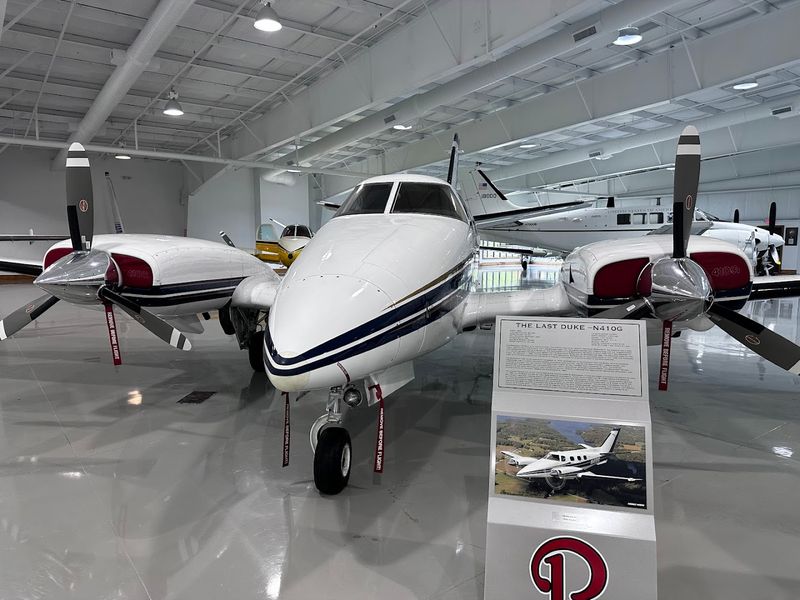
Tullahoma sits in Coffee County in central Tennessee, roughly an hour southeast of Nashville and about 30 minutes from Lynchburg. The city is modest in size but has a character shaped in part by its deep connections to aerospace research and aviation history.
Arnold Engineering Development Complex, one of the most advanced aerospace testing facilities in the world, is located nearby, which gives the region a legitimate claim to significance in American flight history.
The Beechcraft Heritage Museum, located at 570 Old Shelbyville Hwy, Tullahoma, TN 37388, is open Tuesday through Saturday from 9 AM to 4 PM and is closed Sunday and Monday. The phone number for inquiries is +1 931-455-1974, and more information is available at beechcrafthm.org.
Admission pricing is reasonable relative to the quality of the experience.
Visitors planning a full day can pair the museum with a meal in downtown Tullahoma and a walk through the local area. The drive from Nashville along Highway 41A passes through pleasant Tennessee countryside and takes under 90 minutes.
Those coming from Chattanooga will find the trip similarly manageable. The museum is dog-friendly and fully accessible for visitors with mobility considerations.