
10 Breathtaking Oregon Waterfalls That Feel Straight Out Of A Dream
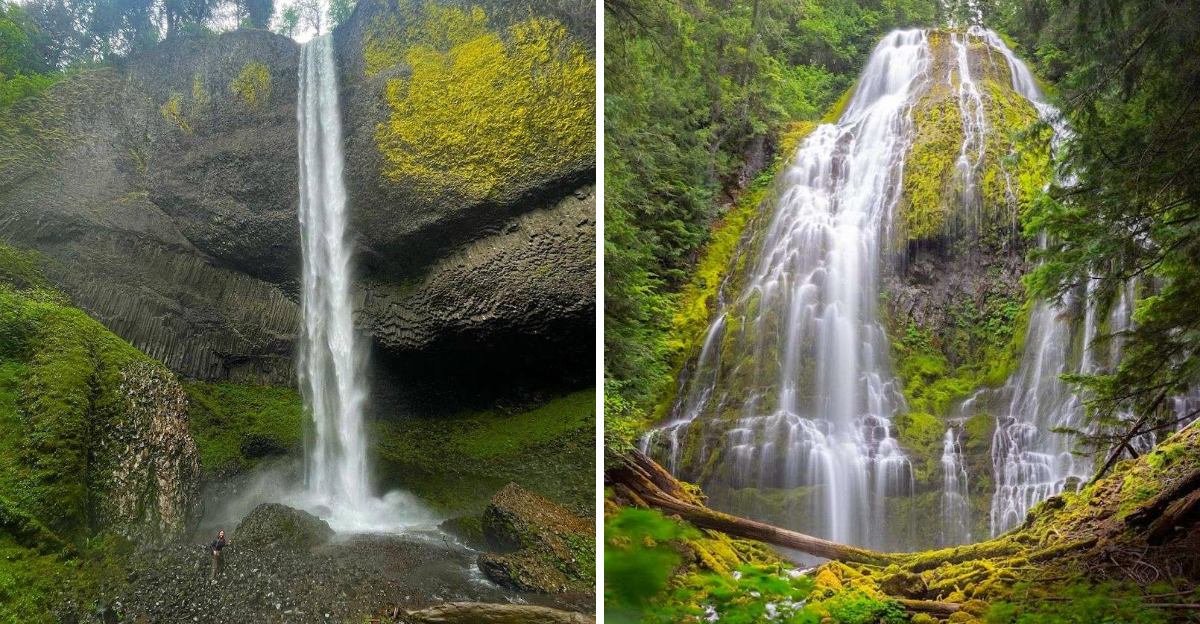
Ever turned a corner on a trail and suddenly heard the roar of a waterfall echoing through the forest? Oregon is full of moments like that.
One minute you’re walking beneath towering evergreens, and the next you’re staring at a curtain of water tumbling down mossy cliffs like something out of a dream. The state is famous for its lush forests and dramatic landscapes, but its waterfalls might be the most unforgettable part of all.
Pack a rain jacket and lace up your hiking boots, because these ten Oregon waterfalls look so breathtaking they almost don’t feel real.
1. Multnomah Falls
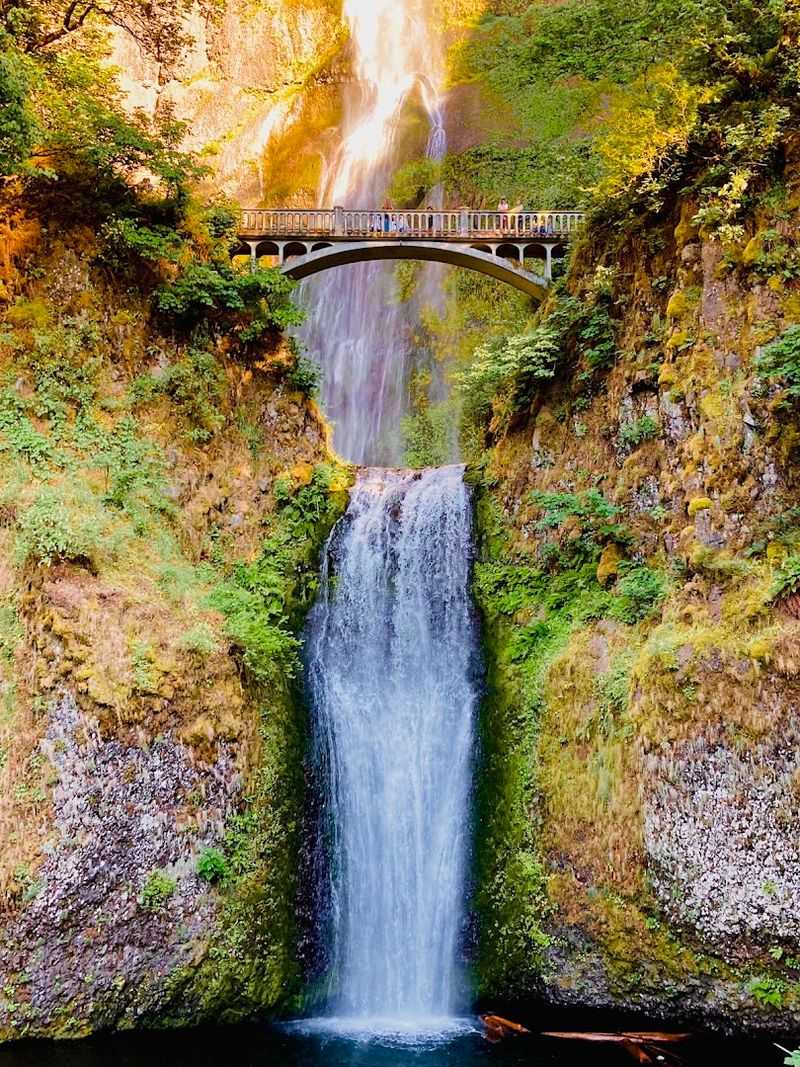
Standing at 620 feet tall, Multnomah Falls is the kind of place that stops you cold the moment it comes into view. It is the tallest waterfall in Oregon and one of the most visited natural landmarks in the entire country.
The sheer power of the water crashing down in two dramatic tiers is something no photograph can fully capture.
A short hike up the paved Gorge Trail brings you to the famous Benson Bridge, which arches right in front of the upper falls. Standing on that bridge with mist hitting your face and the roar of the water surrounding you is genuinely unforgettable.
The bridge was built in 1914 and has become as iconic as the waterfall itself.
Multnomah Falls sits inside the Columbia River Gorge National Scenic Area, about 30 miles east of Portland. Parking fills up fast, so arriving early in the morning is your best strategy.
A historic lodge at the base serves food and houses a visitor center, making this a full experience and not just a quick stop.
2. Latourell Falls
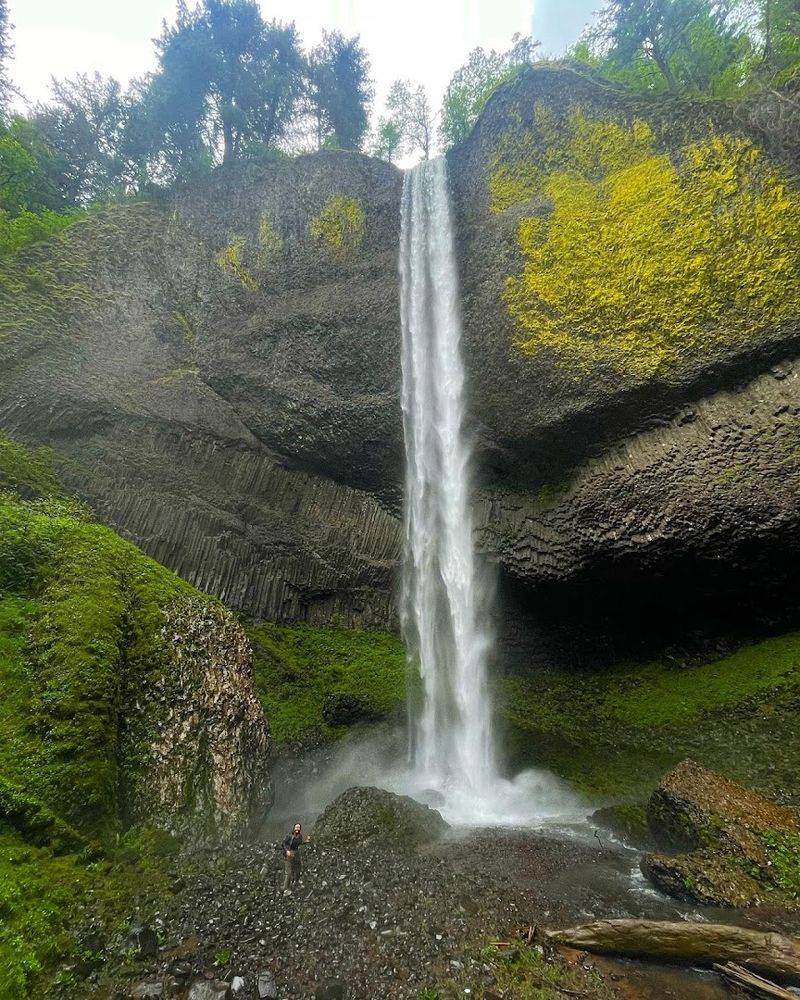
Bright yellow-green lichen splashed across dark basalt columns gives Latourell Falls a look unlike anything else in the Columbia River Gorge. The waterfall drops 249 feet in a single, clean plunge over ancient volcanic rock, and the contrast of colors makes it feel almost like a painting.
First-time visitors often just stand there for a few minutes, mouth open, trying to process how something this vivid actually exists in nature.
The trailhead sits right off Historic Columbia River Highway in Guy W. Talbot State Park, and the walk to the base is barely a quarter mile.
That makes it one of the most accessible big waterfalls in Oregon, perfect for families with young kids or anyone who wants maximum wow factor with minimal effort. A longer loop trail of about 2.4 miles takes you to an upper viewpoint that most visitors skip entirely.
Going in winter or early spring means you will likely have the trail mostly to yourself. The falls run strongest after heavy rain, and the surrounding forest turns a deep, saturated green that makes every photo look professionally edited.
Bring waterproof shoes because the mist near the base keeps the ground permanently damp.
3. South Falls
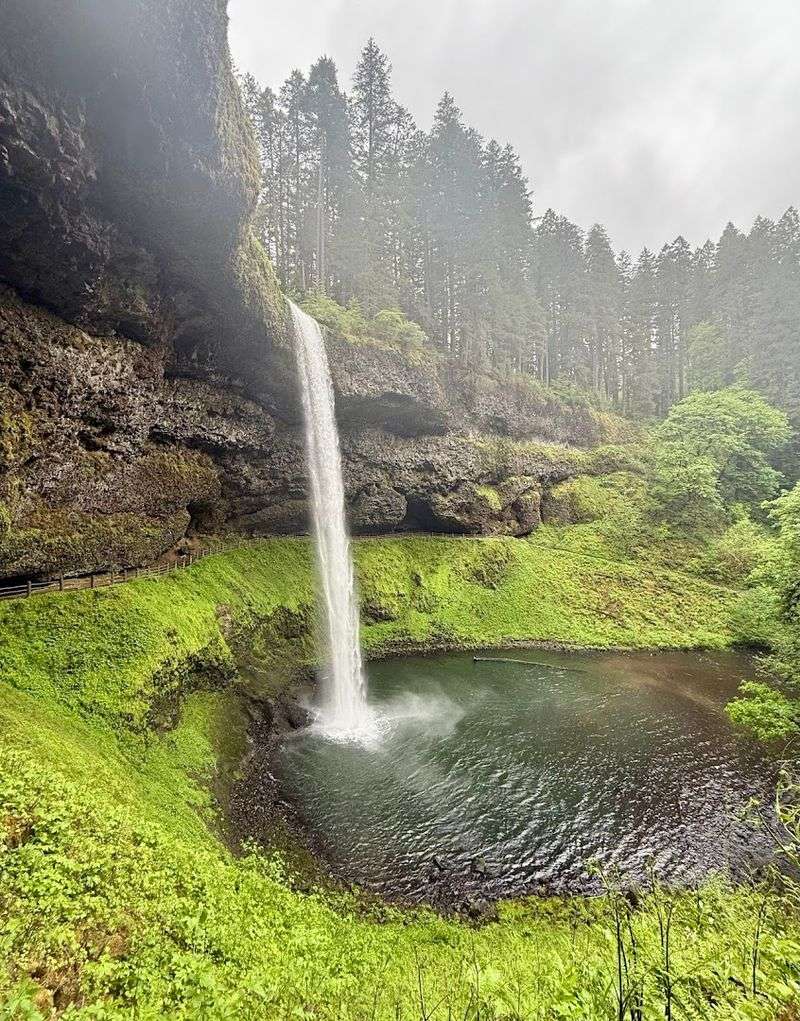
Walking behind a waterfall feels like stepping into a secret the rest of the world does not know about, and South Falls at Silver Falls State Park gives you exactly that experience. At 177 feet tall, it is the crown jewel of Oregon’s largest state park, and the Trail of Ten Falls loop that passes behind it is considered one of the best hikes in the Pacific Northwest.
You literally walk through a cave-like alcove carved by centuries of falling water.
The park sits about an hour south of Portland near Silverton, and the full Trail of Ten Falls covers roughly 7.2 miles with multiple waterfalls along the way. South Falls is the showstopper, but honestly every waterfall on that loop earns its moment.
North Falls, Drake Falls, and Lower South Falls all bring something different to the table.
Autumn is spectacular here because the maple and bigleaf trees turn gold and orange, framing the silver curtain of water in warm color. Camping is available inside the park if you want to catch the falls in early morning light before day-trippers arrive.
Wear layers because the canyon stays noticeably cooler than the surrounding landscape even on warm days.
4. Proxy Falls
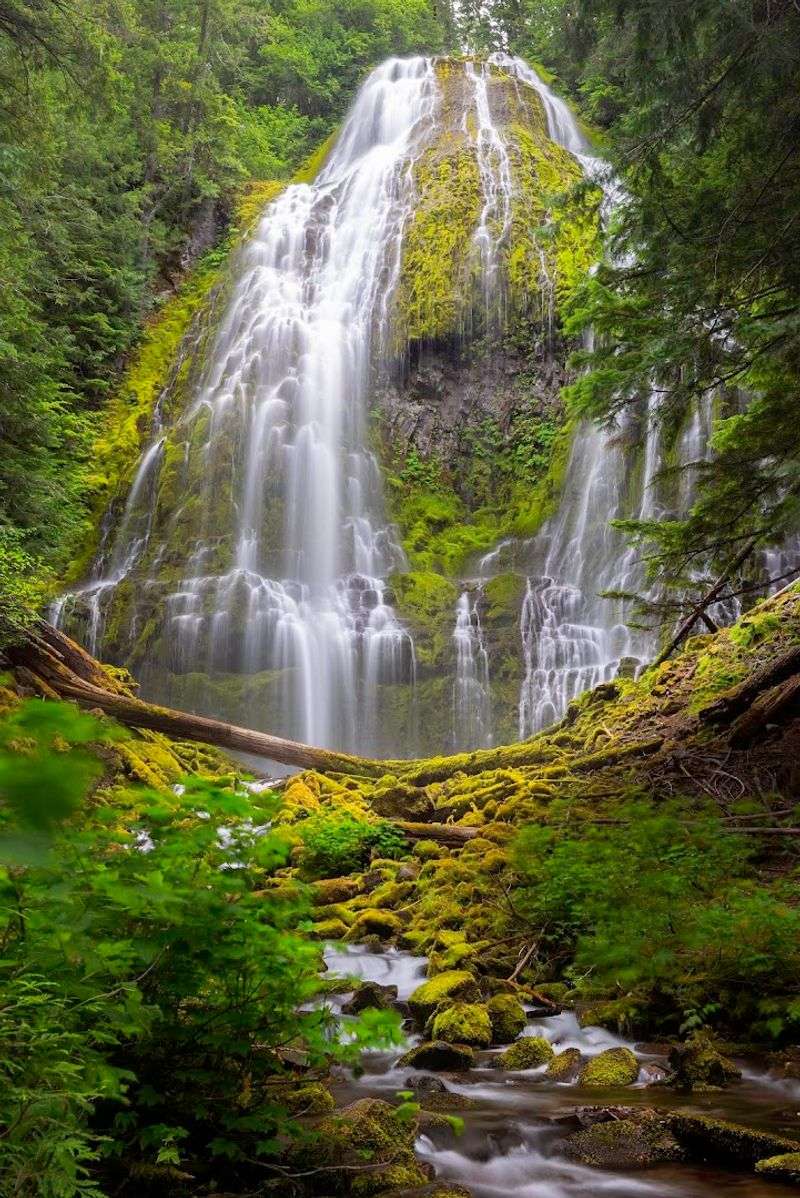
Proxy Falls does not fall in one straight line like most waterfalls. Instead, it fans out across a broad wall of porous lava rock, spreading into dozens of delicate streams that weave through thick moss before disappearing into the ground below.
There is no pool at the base because the porous volcanic rock absorbs all the water. That detail alone makes Proxy Falls one of the most scientifically fascinating waterfalls in Oregon.
The hike to reach it is a 1.6-mile loop through old-growth forest in the Three Sisters Wilderness near McKenzie Pass. Ancient lava fields border the trail, giving the whole area a dramatic, otherworldly atmosphere that feels completely different from the green gorge waterfalls farther north.
Upper Proxy Falls and Lower Proxy Falls are both on the loop, and both are worth your full attention.
Summer is the ideal time to visit because the access road off Highway 242 is closed by snow for much of the year. Arriving on a weekday helps you avoid the crowds that have discovered this gem in recent years.
The combination of volcanic geology, old-growth trees, and a waterfall that literally vanishes into the ground makes Proxy Falls feel genuinely one of a kind.
5. Toketee Falls
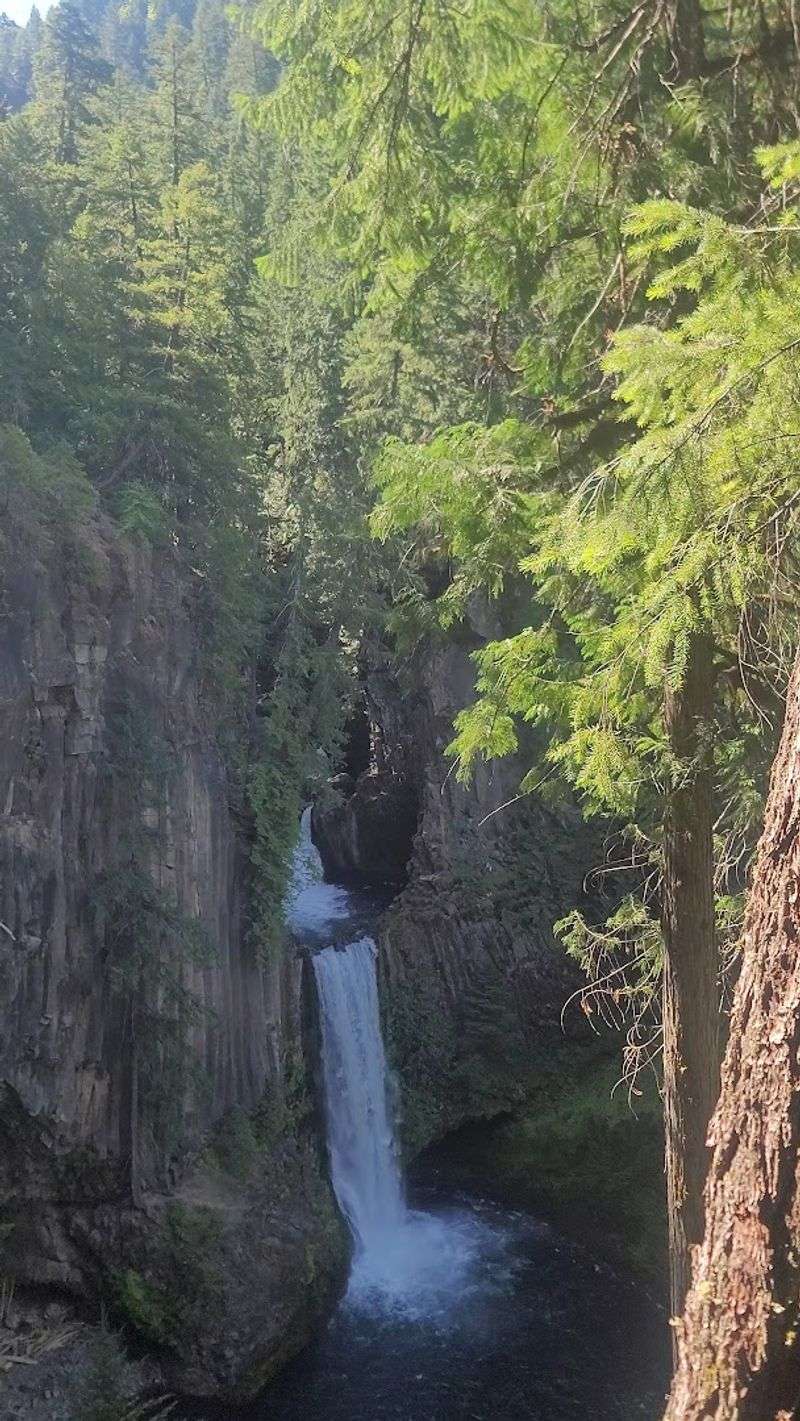
Few waterfalls in Oregon have the kind of dramatic framing that Toketee Falls pulls off naturally. The water shoots out over a ledge and drops 120 feet in two tiers directly into a gorgeous blue-green pool, all framed by perfectly symmetrical columns of basalt that look like they were arranged by an architect.
The name comes from a Chinook word meaning pretty or graceful, and honestly, that is an understatement.
Getting there involves a short but steep 0.8-mile round-trip hike through Douglas fir forest in the Umpqua National Forest. The trail ends at a wooden viewing platform that puts you face-to-face with the full scene.
Swimming is not allowed at the base pool, but the view from the platform is so good that you will not feel like you are missing anything.
Toketee Falls sits along the North Umpqua River corridor, a stretch of highway lined with so many waterfalls that a dedicated road trip through the area makes total sense. Watson Falls is just a few miles away, so combining both in one afternoon is easy and deeply satisfying.
Visit in late spring for peak water flow and the greenest possible forest backdrop surrounding the falls.
6. Sahalie Falls
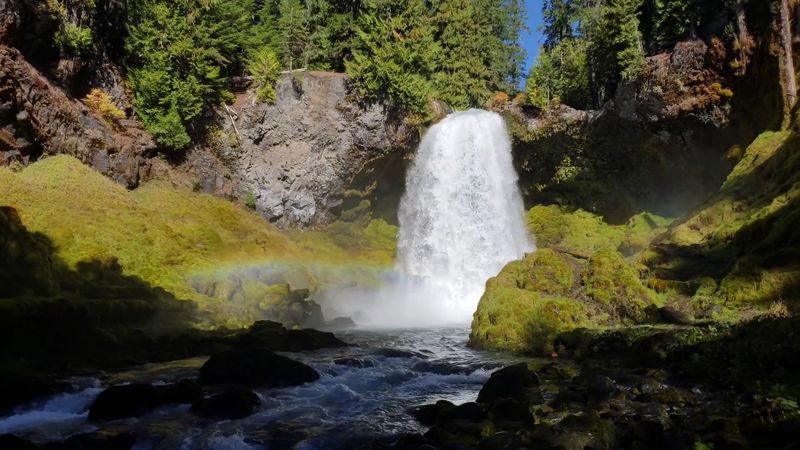
The color of the water at Sahalie Falls is the first thing that grabs you, and it is almost aggressively beautiful. The McKenzie River runs such a vivid turquoise blue-green that it looks artificially colored, and watching it launch over a basalt ledge and crash 100 feet into a boiling emerald pool is genuinely breathtaking.
The name Sahalie comes from the Chinook Jargon word for heaven or high place, and standing at the overlook, that name makes complete sense.
Sahalie Falls sits along the McKenzie River National Recreation Trail near the town of McKenzie Bridge in the Willamette National Forest. A short paved path from the parking area leads directly to the main viewpoint.
From there, a beautiful 2.6-mile loop trail connects Sahalie to nearby Koosah Falls downstream, passing through old-growth forest the entire way.
The falls run at full force year-round because the McKenzie River is fed by underground springs from lava fields above. That means even in late summer when other Oregon waterfalls slow to a trickle, Sahalie stays powerful and loud.
If you have never heard a waterfall that you could feel vibrating in your chest from twenty feet away, Sahalie Falls will give you that experience.
7. Tumalo Falls
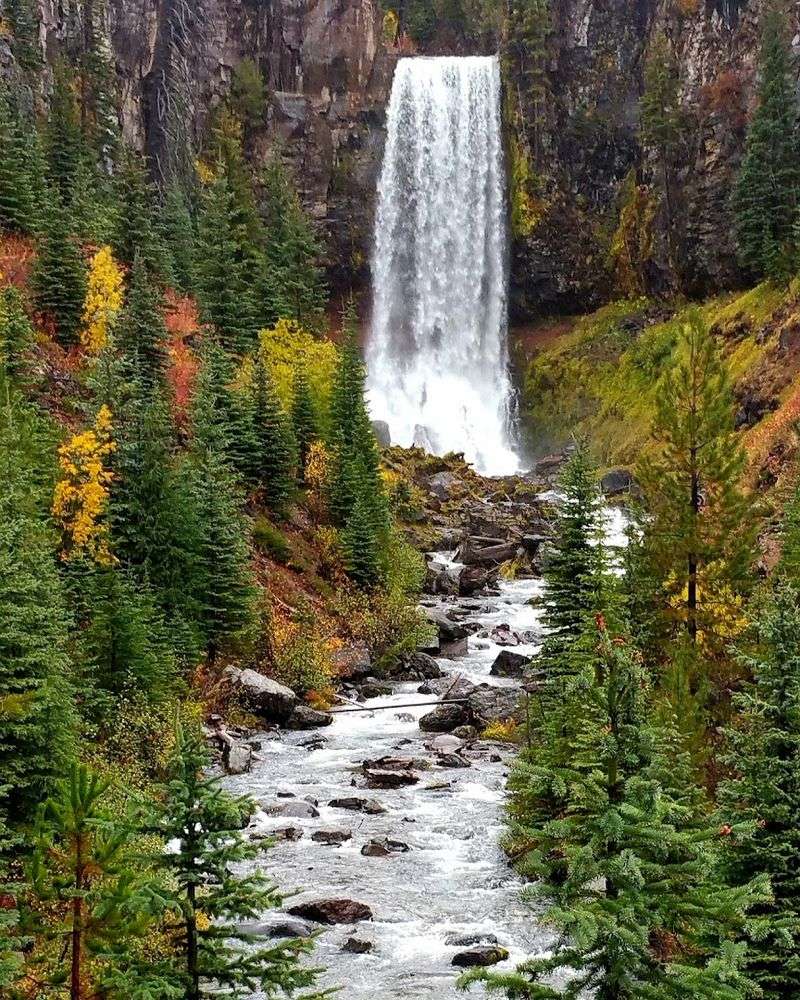
Oregon waterfalls are usually associated with the wet, green west side of the Cascades, which is exactly why Tumalo Falls surprises so many people. Located just west of Bend in the high desert landscape of Central Oregon, this 97-foot waterfall drops through a pine-scented canyon that feels completely different from the mossy gorge waterfalls most people picture.
The contrast between the dry, open terrain nearby and the lush creek corridor surrounding the falls is striking.
The trailhead at Tumalo Falls County Park is about 12 miles from downtown Bend, making it an easy half-day adventure from the city. A moderate 4.4-mile out-and-back trail continues past the main falls to several smaller cascades upstream.
The main falls viewpoint is accessible right from the parking area, so even a short visit delivers a big payoff.
Winter visits here are genuinely magical because snow coats the canyon walls and the surrounding ponderosa pines while the falls continue to flow. Summer brings wildflowers along the trail and the pleasant sound of Tumalo Creek rushing alongside you the whole way up.
Parking is limited and fills quickly on weekends, so a weekday morning visit or arriving before 8 a.m. is the smart move here.
8. Salt Creek Falls
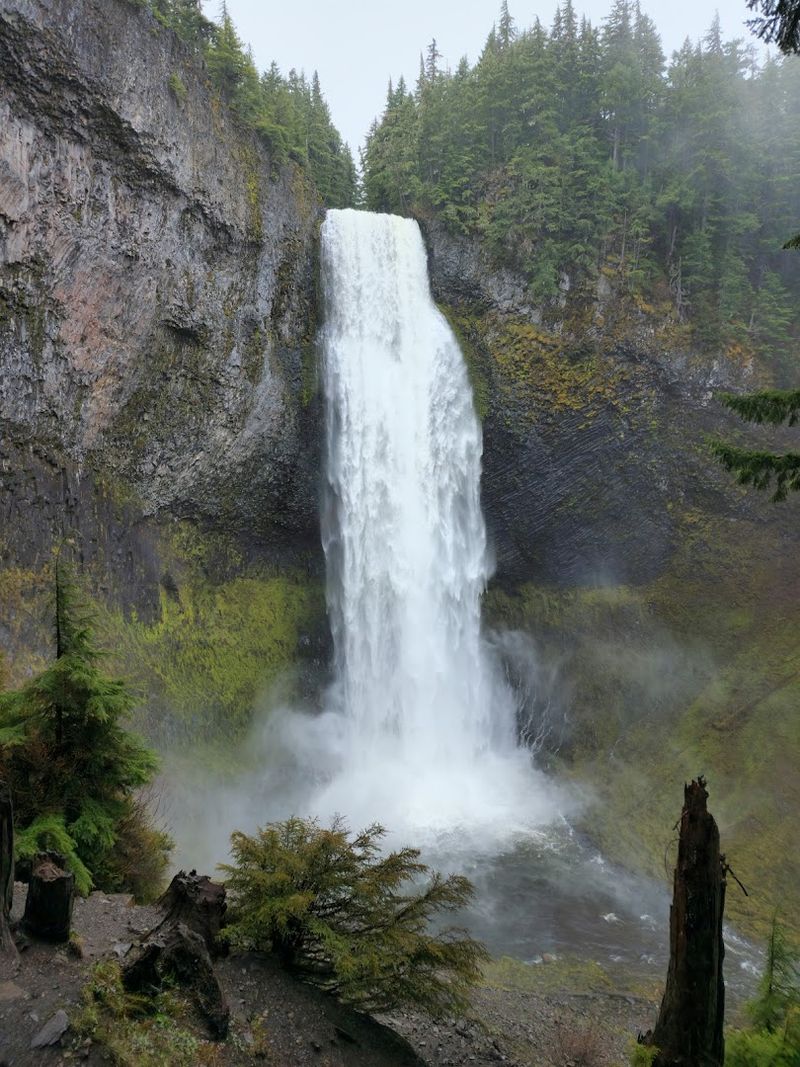
At 286 feet, Salt Creek Falls is the second tallest waterfall in Oregon and one of the most underrated. While Multnomah Falls gets all the Instagram attention, Salt Creek quietly goes about being absolutely massive in the Willamette National Forest near Willamette Pass.
The falls drop in a single unbroken plunge into a deep, forested canyon, and the roar from the overlook is loud enough to make normal conversation difficult.
Getting to the viewpoint requires less than a quarter mile of walking from the parking area off Highway 58, which makes the size of what you see feel almost unfair. A short but steep trail descends to a closer viewpoint near the base where the mist is constant and the scale of the falls becomes even more overwhelming.
Diamond Creek Falls, a smaller but beautiful cascade, is reachable via a 1.7-mile trail from the same parking lot.
Salt Creek Falls runs strongest in spring when snowmelt from the Cascades adds to the flow. The surrounding Willamette National Forest turns brilliant shades of gold in October, making fall visits especially photogenic.
Highway 58 stays open year-round, so there is no seasonal restriction on reaching this giant, which means a winter visit with icy canyon walls is absolutely worth the drive.
9. Watson Falls
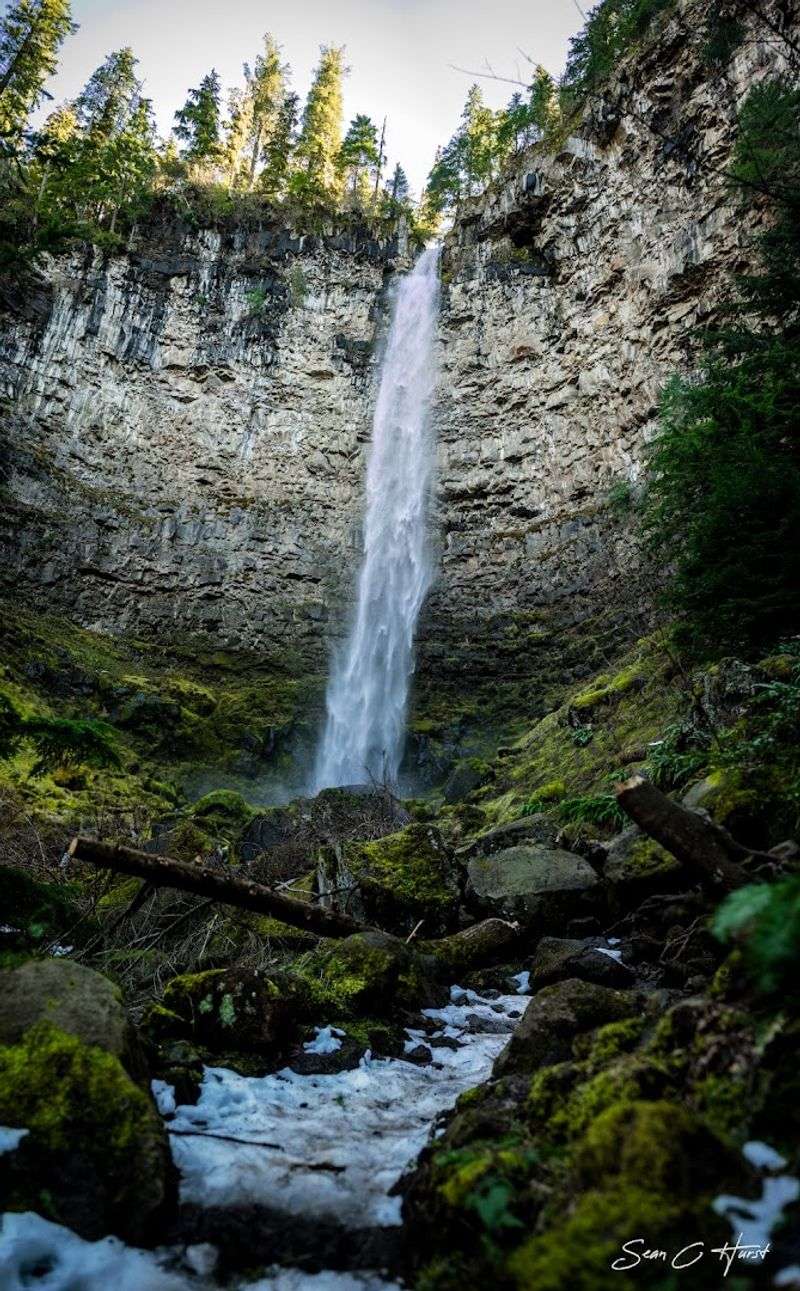
Watson Falls is one of those places that earns a gasp before you even reach the viewpoint. Dropping 272 feet through a narrow, moss-draped canyon in the Umpqua National Forest, it ranks as the third tallest waterfall in Oregon and one of the most atmospheric on this entire list.
The canyon walls are dark and slick with moisture, ferns crowd every available surface, and towering Douglas fir and hemlock trees form a cathedral canopy overhead that blocks out most of the sky.
The hike to the base viewpoint is about 0.8 miles round trip with some elevation gain on the return. A second, closer viewpoint puts you within a short distance of the falls where the mist is heavy and the sound is thunderous.
The trail winds through genuinely ancient forest that makes the approach feel as impressive as the destination itself.
Watson Falls sits just off Highway 138 near the small community of Idleyld Park, and it pairs perfectly with a visit to nearby Toketee Falls a few miles down the road. Together, the two waterfalls make for one of the best afternoon waterfall double features in the state.
Spring and early summer bring peak water volume, but the canyon retains its moody, dramatic character throughout the entire year.
10. White River Falls
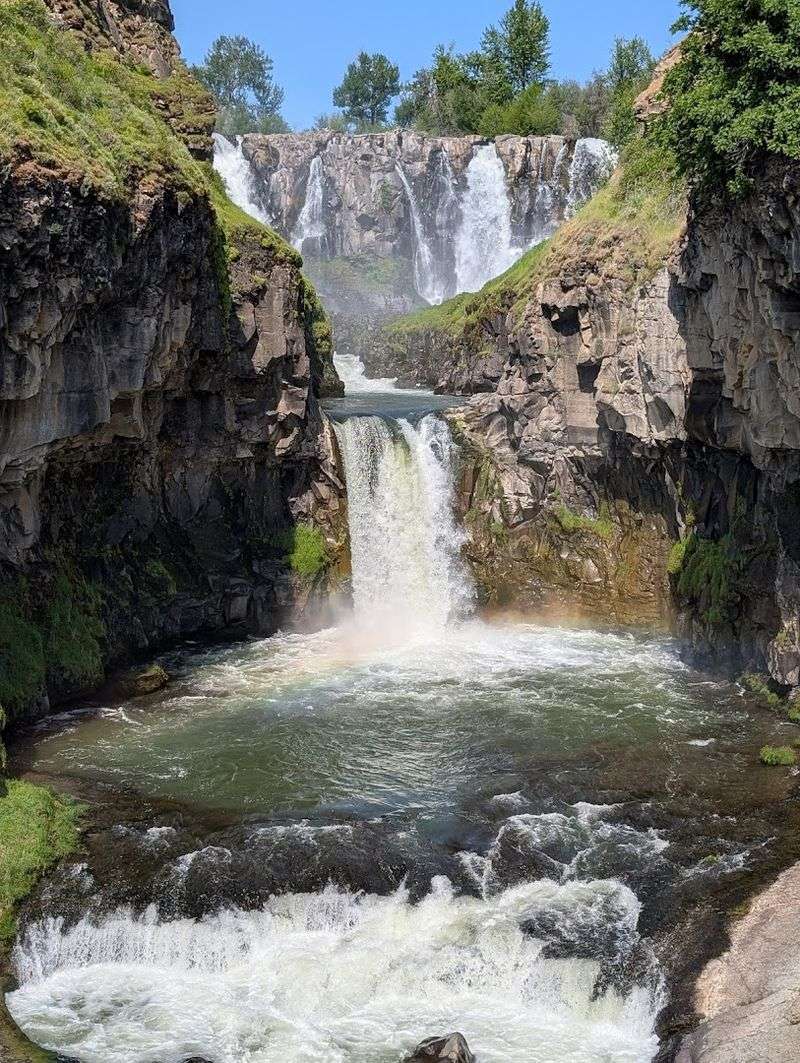
Forget everything you think you know about Oregon waterfalls, because White River Falls is playing a completely different game. Located near the small town of Tygh Valley in the dry, golden landscape of eastern Oregon, this 90-foot waterfall drops over a basalt shelf into a canyon that looks nothing like the rainforest gorges of the west side.
Open sky, sagebrush, golden grass, and the sharp smell of dry summer heat surround you here instead of moss and ferns.
White River Falls State Park is small and free to enter, and the short trail to the main overlook is barely a third of a mile. A second, steeper trail descends into the canyon and leads to the ruins of an old hydroelectric powerhouse built in 1910.
That powerhouse once generated electricity for communities throughout the region, and exploring its crumbling walls adds a fascinating historical layer to the visit.
Spring is peak season here because the White River runs high with snowmelt from Mount Hood, turning the falls into a roaring, wide curtain of white water. By late summer the flow slows considerably, but the canyon scenery remains striking year-round.
This waterfall is a genuine hidden gem that most Oregon visitors completely overlook, which means you often get the whole place to yourself.