
10 Unforgettable Hiking Trails In Tennessee Worth Visiting In 2026
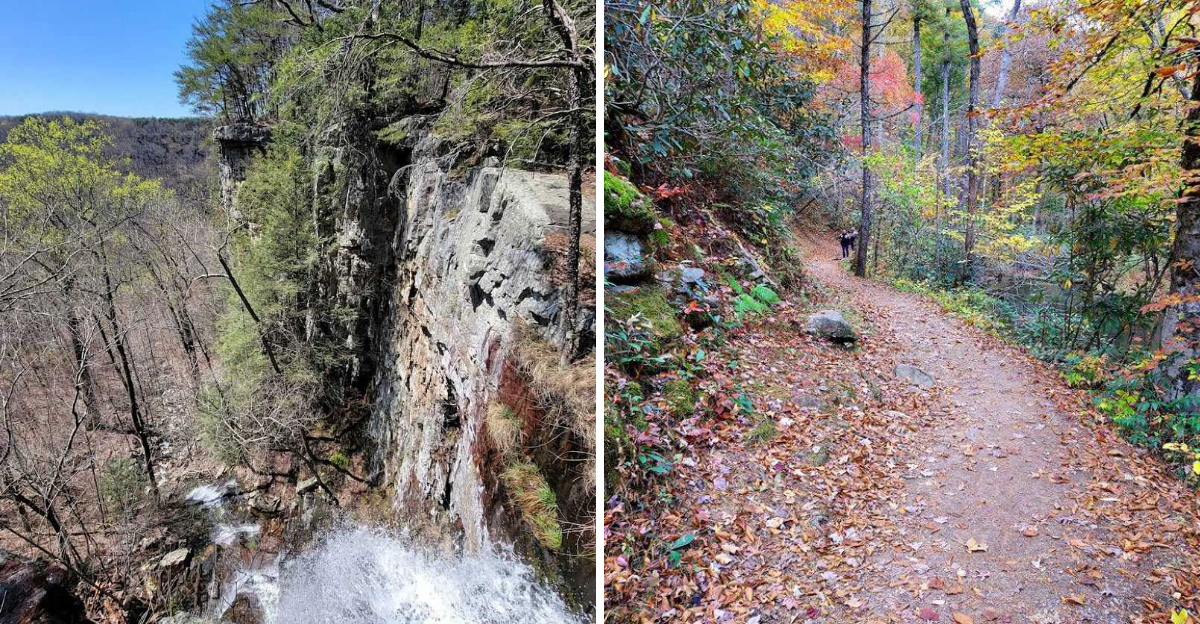
Lace up your boots and take a deep breath, because Tennessee is made for wandering. Forest paths wind through towering trees, rocky ridges open up to sweeping mountain views, and waterfalls appear around bends in the trail when you least expect them.
Some hikes challenge your legs, others invite a slow and peaceful walk, but every one offers something memorable along the way. In 2026, Tennessee remains one of the best places in the South for outdoor adventures that feel both refreshing and rewarding.
These unforgettable hiking trails showcase the landscapes that keep locals exploring and visitors returning again and again.
1. Alum Cave Trail, Great Smoky Mountains National Park
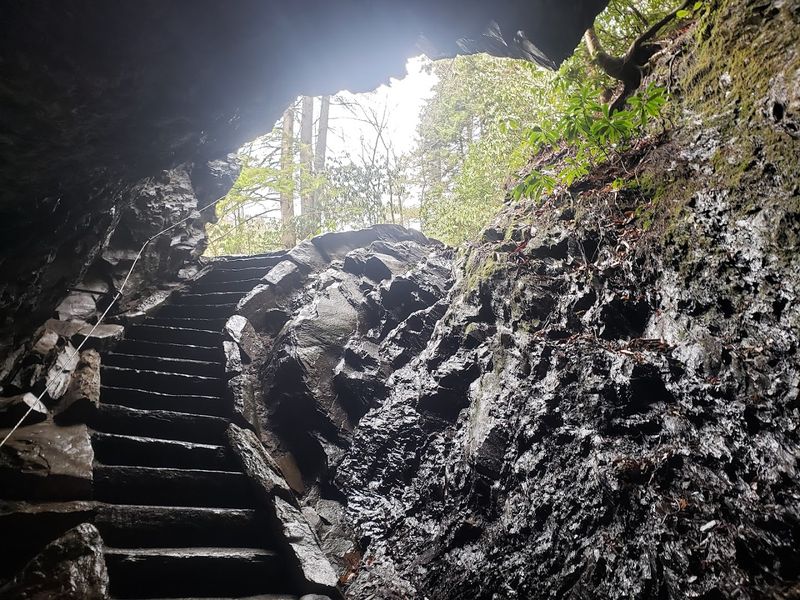
Few trails in the eastern United States pack as much geological drama into a single route as the Alum Cave Trail in Great Smoky Mountains National Park, located off Newfound Gap Road near Gatlinburg.
The hike begins with a pleasant forest walk along Alum Cave Creek before arriving at Arch Rock, a natural tunnel carved through a solid rock face that hikers must pass through on stone steps.
Further along, the trail opens up at Alum Cave Bluff, a massive overhanging escarpment that stretches nearly 100 feet high and shelters hikers from rain like a natural roof.
The bluff gets its name from the alum-rich minerals found in the rock, and on dry days you can see crystalline deposits glittering on the surface.
Beyond the bluff, the trail continues steeply toward the summit of Mount LeConte, one of the highest peaks in the Smokies.
Most day hikers turn around at the bluff, which sits about 2.3 miles from the trailhead, making it a manageable out-and-back adventure with a serious wow factor.
Spring and fall are especially rewarding seasons here, when wildflowers or vibrant foliage line every step of the way.
2. Abrams Falls Trail, Townsend
Located inside the beloved Cades Cove area of Great Smoky Mountains National Park near Townsend, Abrams Falls is a trail that earns every bit of its outstanding reputation.
The waterfall at the end of this roughly 5-mile round-trip hike drops only about 20 feet, but what it lacks in height it more than makes up for in sheer volume and force.
Abrams Creek funnels an enormous amount of water over the falls, creating a thundering cascade that mists the air and fills the gorge with sound.
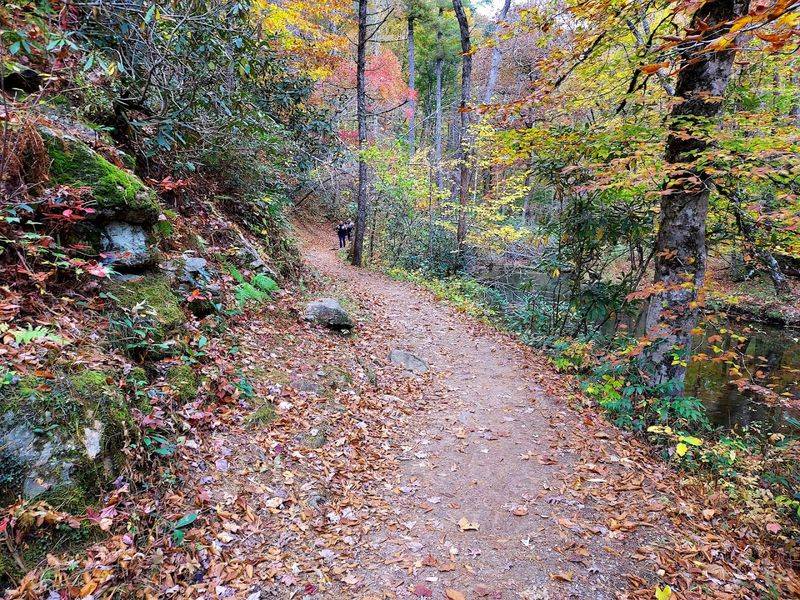
The trail itself winds through hardwood forest, crosses footbridges, and follows the creek closely enough that you can hear the water rushing beside you for much of the journey.
Elevation changes are moderate, with some rocky scrambles near the falls that add a bit of adventure without being overwhelming for most hikers.
Wildlife sightings are common in the Cades Cove area, so keep your eyes open for white-tailed deer, wild turkeys, and the occasional black bear at a respectful distance.
Arriving early in the morning helps you beat the crowds and enjoy the falls in near-perfect quiet, which makes the whole experience feel like a private discovery.
3. Laurel Falls Trail, Near Gatlinburg
At just under 3 miles round trip, the Laurel Falls Trail near Gatlinburg is one of those rare hikes where the payoff is completely disproportionate to the effort required.
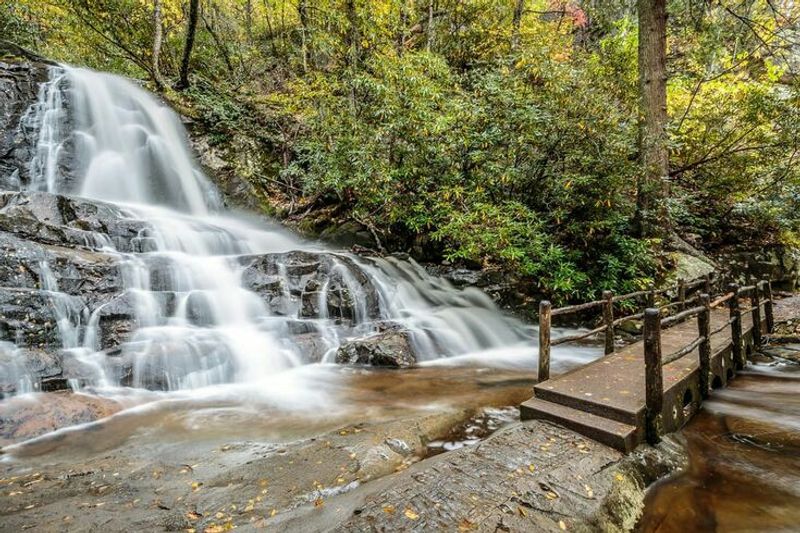
The trail follows a fully paved path through Great Smoky Mountains National Park, making it accessible to a wide range of hikers, including families with young children and those who prefer a more stable surface underfoot.
The destination is Laurel Falls itself, an 80-foot cascade that splits into two tiers around a wide, flat rock shelf where visitors love to stop and take photographs.
Because the trail is so approachable, it consistently ranks among the most visited hikes in the entire national park system, so arriving early is strongly recommended if you want breathing room.
The forest canopy along the route is thick and beautiful, offering shade during summer months and a fiery display of color every autumn.
Mountain laurel blooms line much of the path in late spring, adding soft pink and white flowers that give the trail its name and its charm.
Even on a busy day, standing at the base of those falls with mist on your face makes every step of the journey completely worthwhile.
4. Fiery Gizzard Trail, South Cumberland State Park
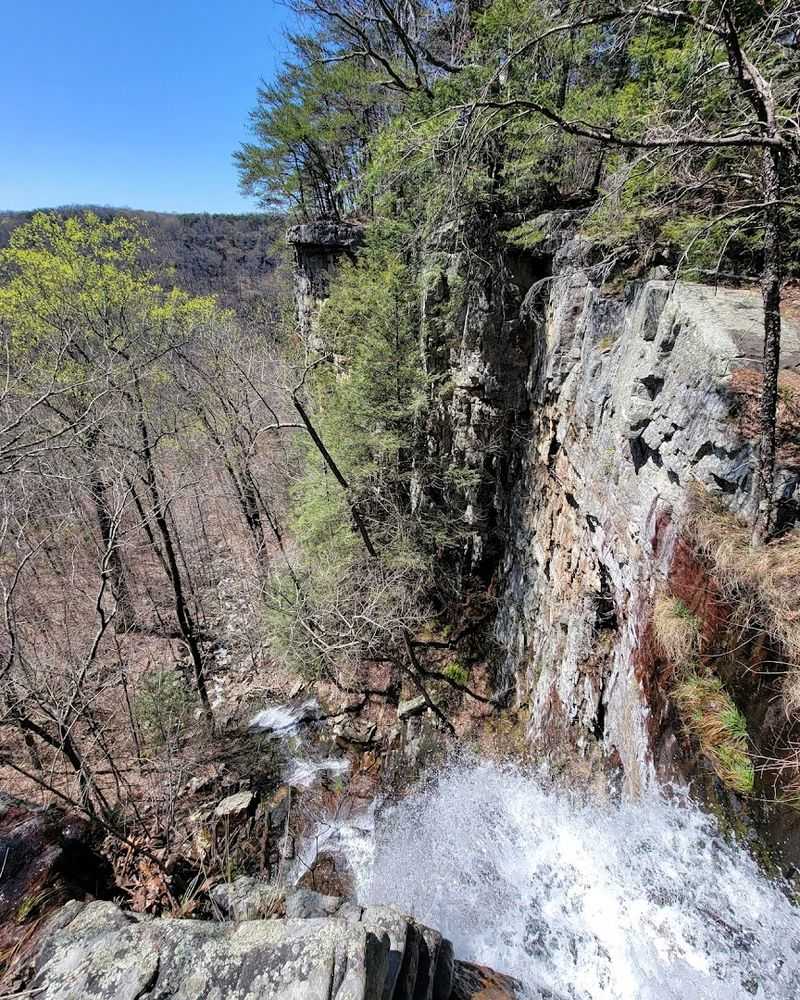
The name alone is enough to make you curious, and the Fiery Gizzard Trail in South Cumberland State Park near Tracy City delivers an experience that lives up to its unforgettable title.
Consistently ranked among the best hiking trails in the entire United States, this route winds through a rugged sandstone gorge filled with waterfalls, dramatic rock formations, and old-growth forest that feels genuinely wild.
The full trail stretches about 12.5 miles one way, but most hikers tackle shorter sections that still provide an extraordinary sample of the terrain.
One of the most popular destinations along the route is Raven Point, a sweeping overlook perched on the canyon rim with views that extend for miles across the forested plateau below.
The trail also passes Blue Hole Falls and Sycamore Falls, two beautiful cascades that invite hikers to stop, cool off, and simply absorb the surroundings.
Rocky footing and elevation changes make this trail best suited for hikers with some experience, and sturdy footwear is a must throughout the year.
Autumn transforms this gorge into something almost unreal, with golden and crimson leaves reflecting off the creek pools in a way that no photograph can fully capture.
5. Stone Door Trail, Savage Gulf State Park Near Beersheba Springs
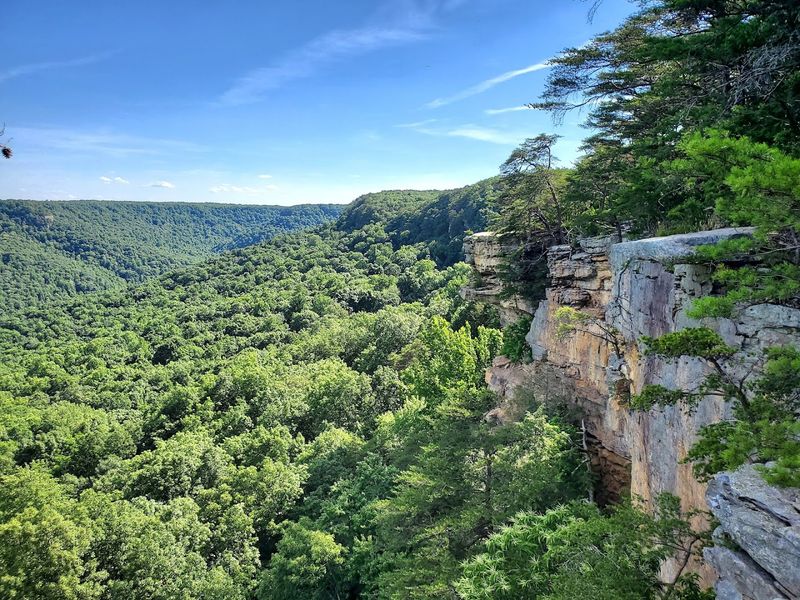
Standing at the edge of the Stone Door overlook in Savage Gulf State Park near Beersheba Springs is one of those moments that genuinely stops you in your tracks.
The hike to reach this dramatic viewpoint is relatively short, covering about 1.5 miles from the trailhead on Stone Door Road, making it an ideal choice for hikers who want big scenery without a full-day commitment.
The trail name refers to a narrow, vertical crack in the sandstone cliff, wide enough for a person to pass through, that served as a natural doorway for Native Americans traveling down into the gorge centuries ago.
Walking through that narrow passage yourself connects you to a long history of human movement through this landscape in a way that feels surprisingly personal.
Below the rim, Savage Gulf stretches out in a dense, green expanse of forested ravines and creek bottoms that look almost untouched by modern life.
The surrounding park contains over 55 miles of backcountry trails for those who want to extend the adventure well beyond the overlook.
Visiting on a clear weekday morning gives you the best chance of having this extraordinary view almost entirely to yourself, which is an opportunity worth setting an early alarm for.
6. Rainbow Falls Trail, Gatlinburg
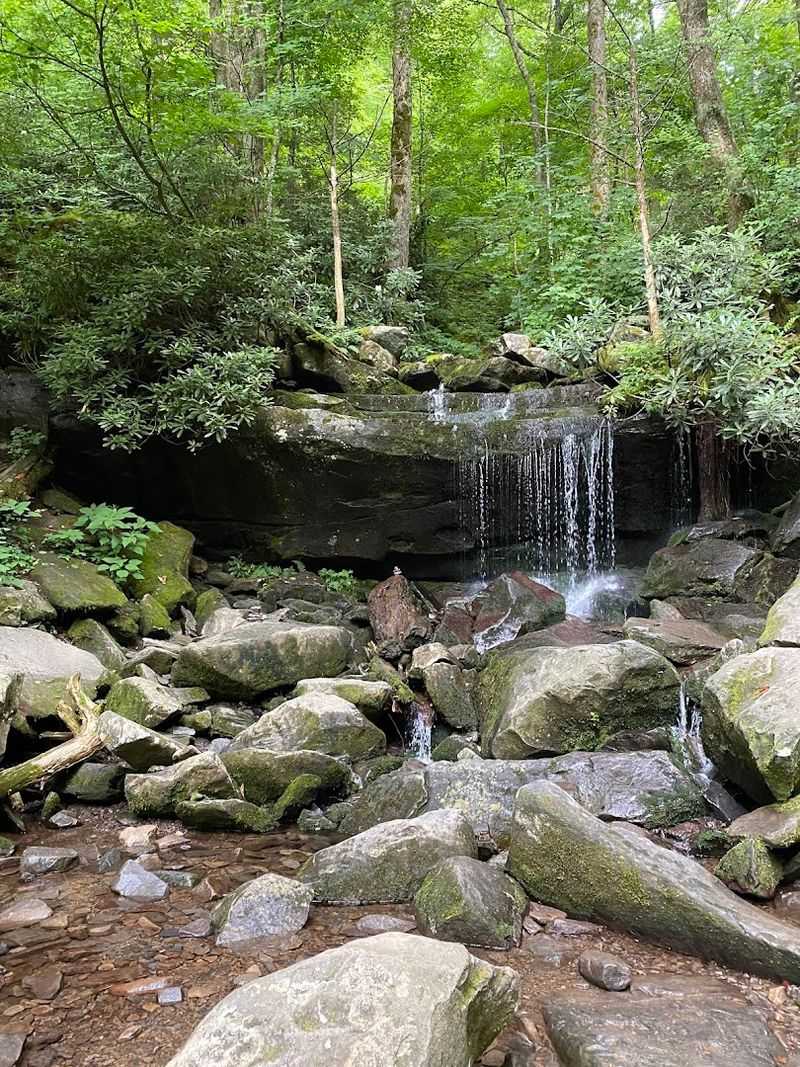
Rainbow Falls earns its poetic name on sunny afternoons when the spray from its 80-foot drop catches the light and scatters color across the rocks below, creating a natural spectacle that hikers remember for years.
The trail begins on Cherokee Orchard Road near Gatlinburg within Great Smoky Mountains National Park, and covers about 5.4 miles round trip with a steady uphill climb throughout.
Unlike some of the park’s more accessible waterfall trails, Rainbow Falls requires real effort, gaining roughly 1,600 feet in elevation before reaching the cascade.
That climb is rewarded not just by the falls themselves but also by the quality of the forest along the way, which includes old-growth hemlocks, mossy boulders, and LeConte Creek rushing alongside the path.
In winter, the falls sometimes freeze partially, creating an ice formation that photographers and adventurous hikers seek out specifically during cold snaps.
The trail continues past the falls toward the summit of Mount LeConte for those looking to turn a waterfall hike into a full mountain adventure.
Trekking poles are a smart addition on this route, especially on the descent when tired legs and wet rocks can make the footing a little unpredictable.
7. Burgess Falls Trail, Burgess Falls State Park
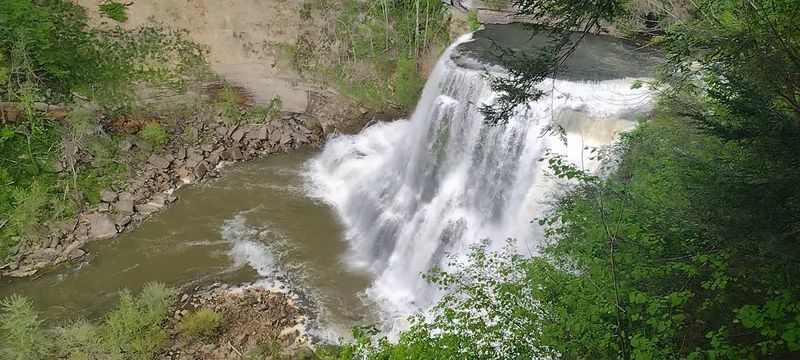
Not every great Tennessee waterfall sits inside a national park, and Burgess Falls State Park near Sparta makes that point with tremendous force, literally.
The Burgess Falls Trail follows the Falling Water River through a series of overlooks, passing three smaller cascades before arriving at the main event: a thundering 130-foot waterfall that plunges into a deep, rocky gorge.
The trail is approximately 2 miles round trip, making it one of the more accessible big-waterfall experiences in the state without requiring serious physical preparation.
Stone steps and well-maintained paths guide hikers through the park, though some sections near the lower falls require careful footing on uneven terrain close to the cliff edges.
The gorge itself is geologically fascinating, with exposed limestone walls and river-carved rock formations that tell the story of millions of years of erosion.
Swimming is not permitted near the main falls due to strong currents, but the visual experience of standing at the overlook with the mist hitting your face is more than enough reward.
Spring visits offer the most dramatic water flow, when snowmelt and seasonal rain push the river to its fullest and the falls roar with an intensity that you can feel in your chest.
8. Fall Creek Falls Base Trail, Fall Creek Falls State Park
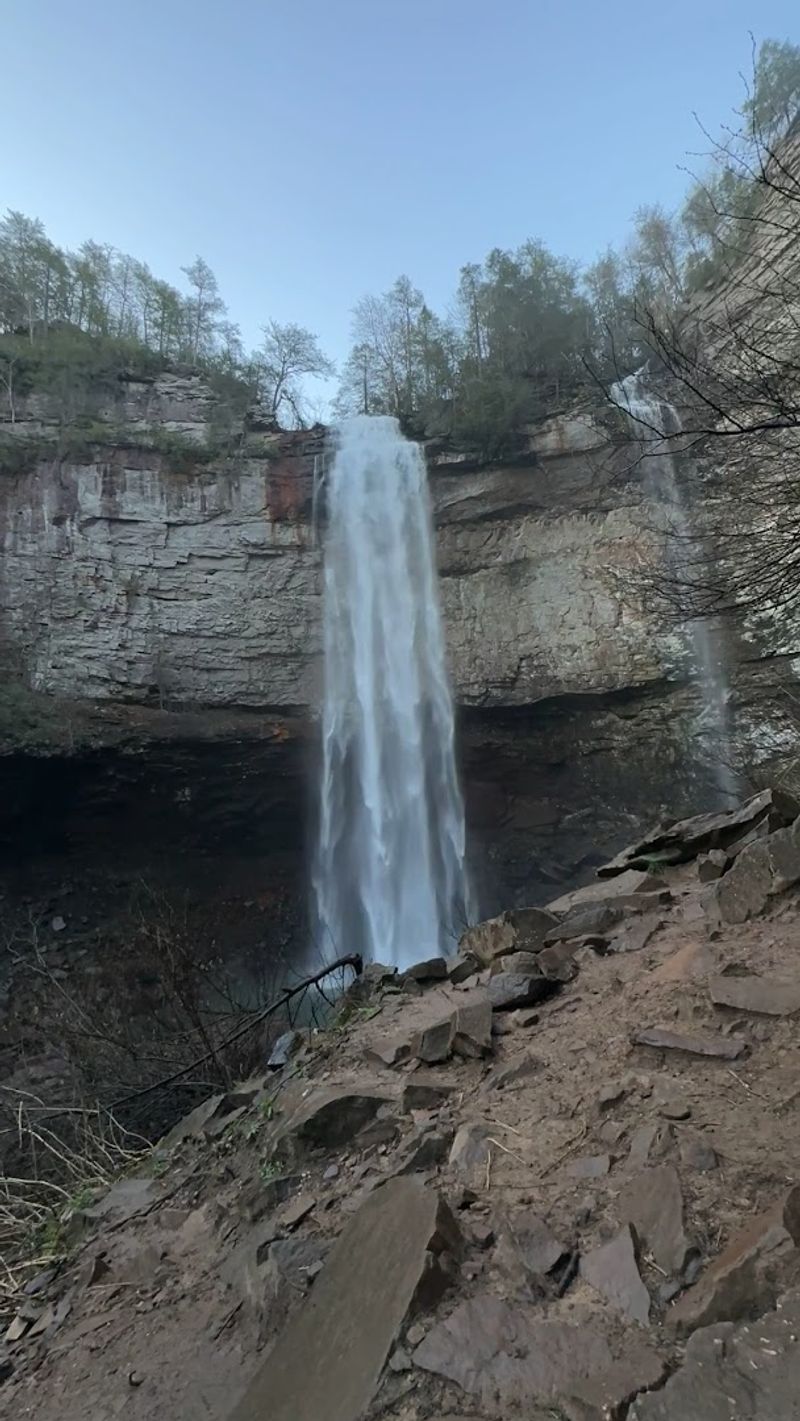
Standing at the base of Fall Creek Falls and looking straight up at 256 feet of free-falling water is one of those experiences that makes you feel genuinely small in the best possible way.
Located in Fall Creek Falls State Park near Spencer, this is one of the tallest waterfalls in the entire eastern United States, and the Base Trail gives hikers direct access to the canyon floor where the full scale of the falls becomes unmistakably clear.
The trail descends steeply into the gorge via a series of switchbacks and cable-assisted sections, covering about 1 mile each way with significant elevation change.
At the bottom, a wide plunge pool spreads out before the falls, and on warm days the mist creates a natural cooling zone that feels like a reward after the descent.
The surrounding canyon walls are draped in ferns and mosses fed by the constant moisture, giving the entire area a lush, almost tropical atmosphere.
Nearby Cane Creek Falls and Piney Creek Falls are also accessible from the park trail network, making this an excellent base for a full day of waterfall exploration.
Pack extra water and snacks because that climb back out of the gorge is noticeably more demanding than the way down.
9. Roan Mountain Appalachian Trail Section, Appalachian National Scenic Trail, Roan Mountain
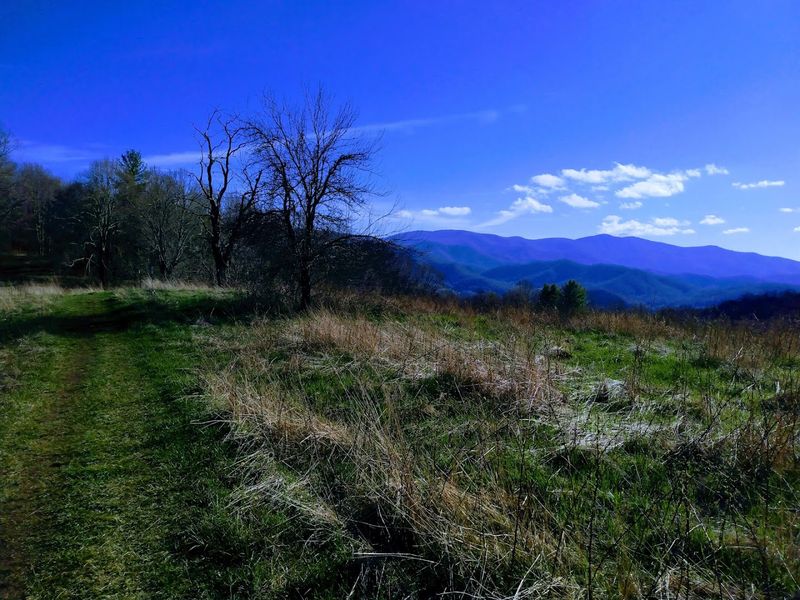
Every June, the high balds of Roan Mountain erupt in one of the most spectacular natural flower shows in the entire Appalachian region, and hiking the Appalachian Trail through this section near Roan Mountain puts you right in the middle of it.
Roan Mountain State Park sits along the Tennessee-North Carolina border at an elevation that keeps temperatures noticeably cooler than the valleys below, making summer hiking here genuinely comfortable.
The Appalachian Trail crosses the Roan Highlands through a series of open grassy balds, including Roan High Knob, which at 6,285 feet is one of the highest points on the entire AT.
These open meadows offer 360-degree views of layered mountain ridges that stretch in every direction, with no trees blocking the horizon and nothing but wind and sky above you.
The rhododendron bloom typically peaks in mid-June, drawing visitors from across the country who come specifically to walk through tunnels of pink and purple blossoms.
Fall hiking here is equally rewarding, with cooler air, fewer crowds, and golden grasses swaying across the balds against a backdrop of changing forest colors below.
The trailhead off TN-143 provides straightforward access, and even a modest 3 to 4-mile out-and-back walk captures the essence of what makes this section genuinely unforgettable.
10. Cummins Falls Trail, Cookeville
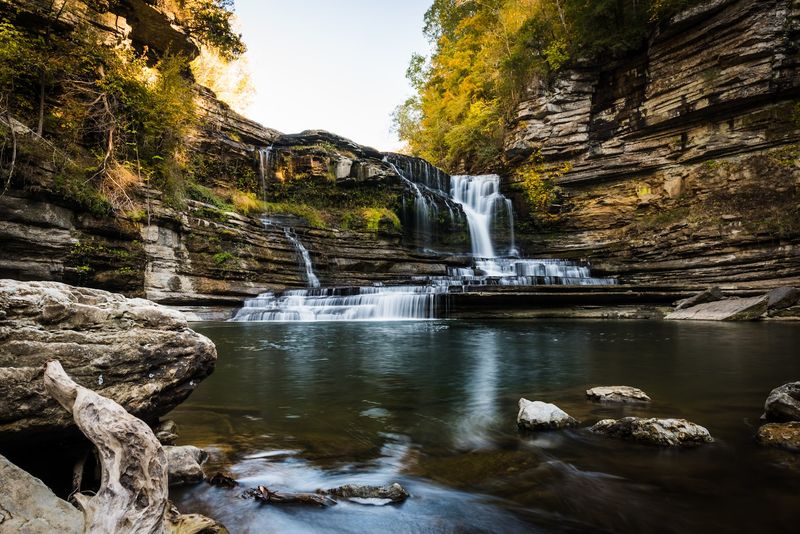
Few Tennessee hiking experiences combine rugged trail adventure with the payoff of a stunning natural swimming hole quite like the Cummins Falls Trail in Cummins Falls State Park near Cookeville.
The falls themselves drop roughly 75 feet over a series of wide rock shelves before pooling in a beautiful basin that draws swimmers and waders from across the region during warmer months.
Getting there requires a 1.5-mile hike along a trail that involves creek crossings, rocky scrambles, and some genuinely uneven terrain that keeps the experience feeling like a real outdoor adventure rather than a leisurely stroll.
Water shoes or sandals with straps are strongly recommended, especially for the creek crossings that can vary in depth depending on recent rainfall.
The gorge surrounding the falls is carved from layered limestone and features dramatic overhanging walls that frame the waterfall in a way that feels almost cinematic.
Access to the swimming area requires a permit, which must be reserved in advance through the Tennessee State Parks website, so planning ahead is essential for summer visits.
Visiting in late spring or early fall offers the best balance of comfortable temperatures, strong water flow, and manageable crowd levels that let you fully appreciate one of Tennessee’s most beloved natural attractions.