
This Breathtaking 3,751-Acre State Park In Missouri Is Drawing Visitors From All Over
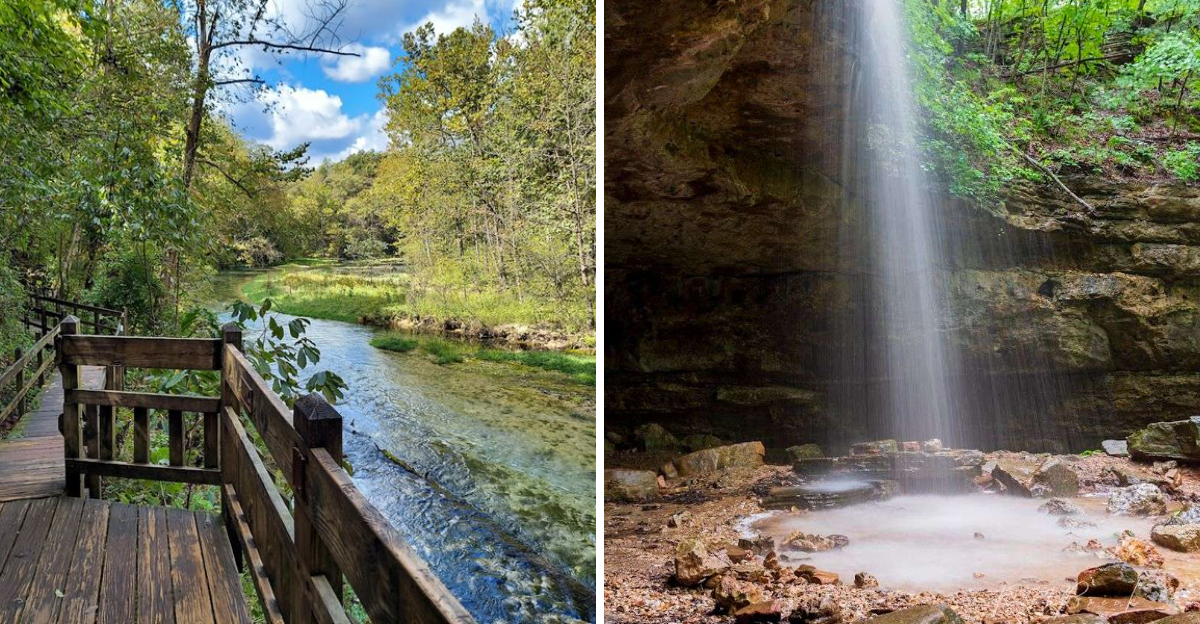
Some places feel almost too beautiful to be real, where rugged cliffs, quiet forests, and sweeping lake views all seem to come together in one remarkable landscape. Spanning 3,751 acres along a peaceful arm of the Lake of the Ozarks, this Missouri park blends striking geology, intriguing history, and miles of scenic trails into a destination that is hard to forget.
Visitors can wander past the ruins of a once-grand stone castle overlooking the water, explore caves carved deep into the earth, and experience a rare karst landscape shaped over thousands of years. With so much to see in one location, it is hardly surprising that more than half a million people visited in 2022 alone.
The Dramatic Ruins Of A Stone Castle Overlooking The Ozarks
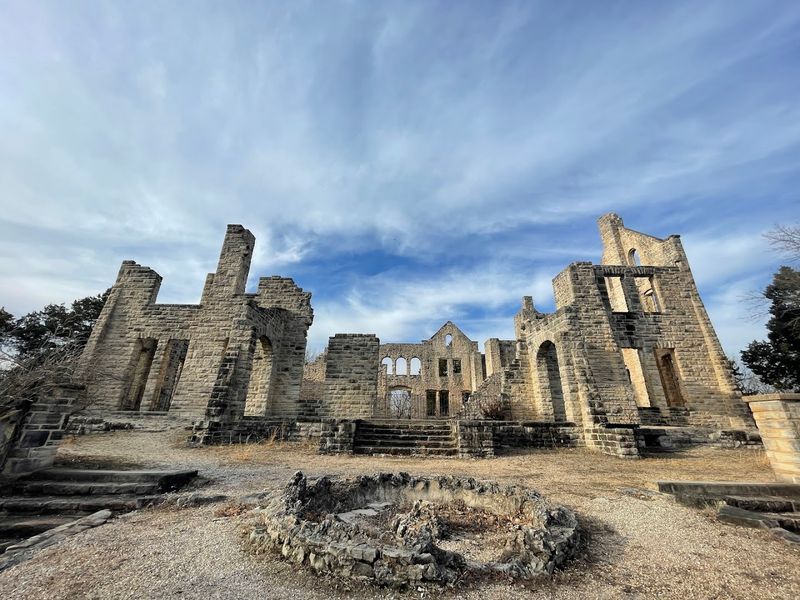
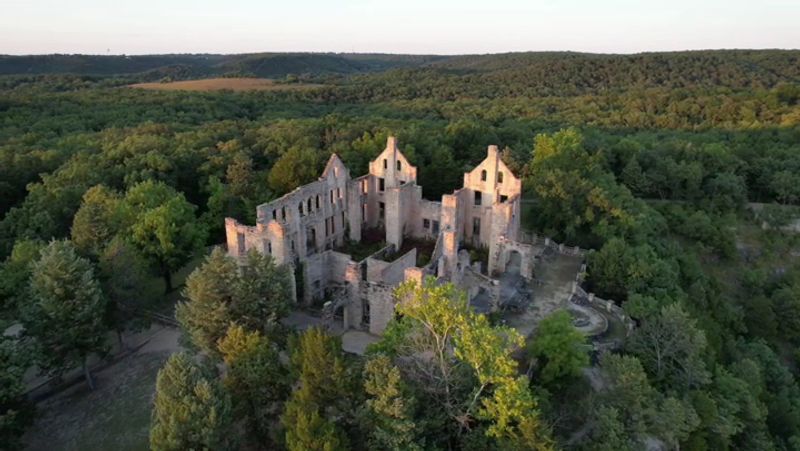
Few things prepare you for the first glimpse of Ha Ha Tonka Castle ruins rising against the Missouri sky. Robert Snyder, a Kansas City businessman, began construction on this grand European-style stone mansion in the early 1900s, drawing inspiration from 16th-century architecture.
Snyder died before the project was completed, and the castle passed through several hands before a devastating fire in 1942 reduced it to the striking skeletal structure visitors see today.
The remaining walls, archways, and the iconic water tower still carry an undeniable presence. A short, paved trail of roughly 500 feet leads from the parking area to the ruins, making it accessible for most visitors.
Standing inside what remains of those stone walls, with the Lake of the Ozarks stretching out below, gives you the kind of quiet awe that photographs rarely manage to fully capture. The castle is located at 1491 Missouri D, Camdenton, MO 65020.
Sweeping Views Over The Lake Of The Ozarks
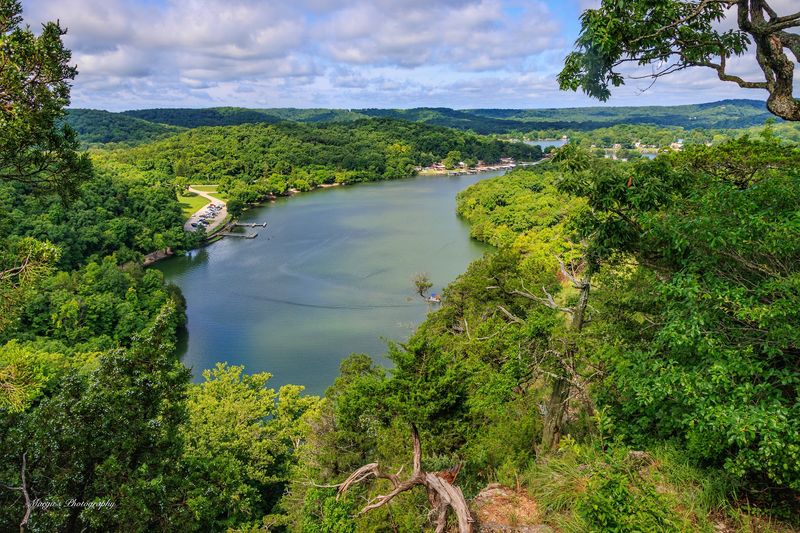
The Lake of the Ozarks stretches out far below the park’s highest bluffs, offering one of the most satisfying panoramas in all of Missouri. From the overlooks near the castle ruins, the water appears almost impossibly blue against the green tree canopy, especially in late spring and early fall when the foliage is at its most dramatic.
The elevation change between the trailhead and the viewpoints is modest enough that the payoff far outweighs the effort.
Several designated overlook points are scattered throughout the park, each offering a slightly different angle on the lake and surrounding terrain. Morning visits reward early risers with soft light and occasional mist hovering over the water.
Afternoon light brings sharper contrasts and longer shadows across the bluffs. Photographers and casual walkers alike find themselves returning to these spots more than once during a single visit, reluctant to move on before soaking in just a little more of the view.
A Natural Bridge Carved From Solid Rock
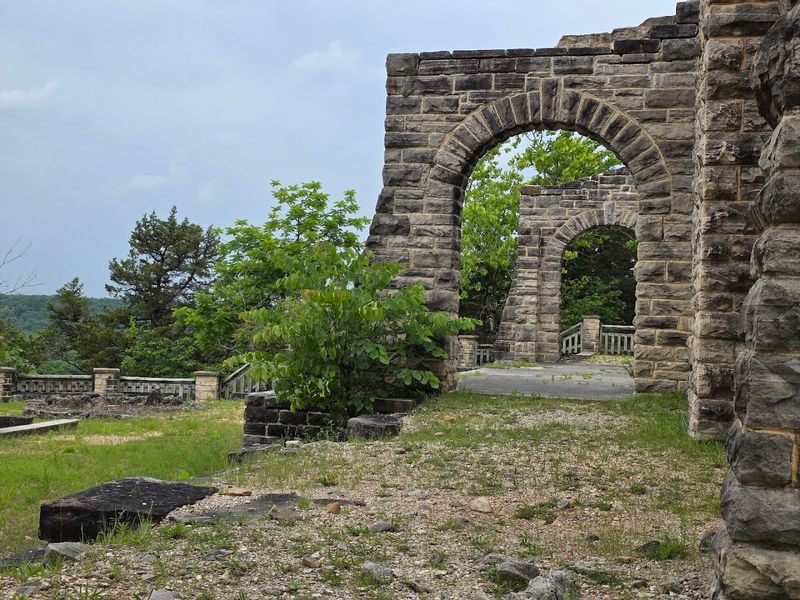
Ha Ha Tonka’s natural bridge is one of those geological features that stops a conversation mid-sentence. Carved over thousands of years by water dissolving the underlying dolomite, the arch spans approximately 60 feet and stands about 70 feet above the ground below.
Geologists point to this formation as a textbook example of karst topography at work, where water and time conspire to reshape solid rock into something that looks almost too deliberate to be natural.
The bridge sits along a trail that winds through the park’s forested interior, so reaching it involves a pleasant walk through shade and birdsong rather than a strenuous climb. Children seem particularly fascinated by the arch, often pausing to look up through the opening at the sky above.
Adults tend to linger a bit longer, reading the interpretive signs that explain the slow geological forces behind its formation. It is a satisfying stop on any trail route through the park.
One Of Missouri’s Largest Springs Flows Here
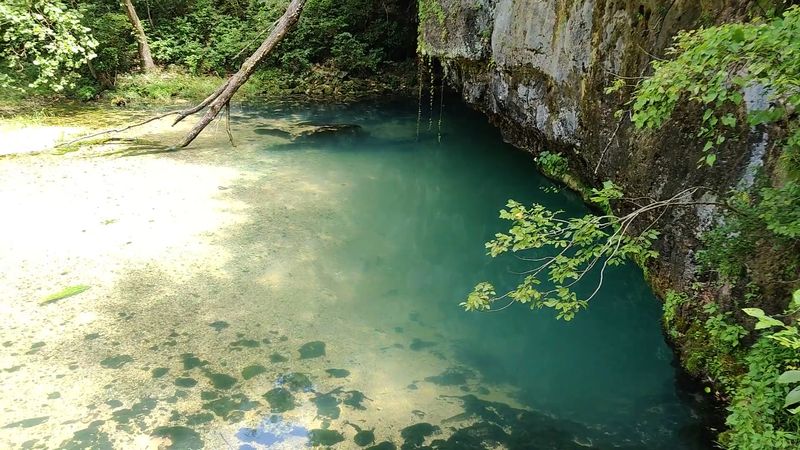
Ha Ha Tonka Spring ranks among the most impressive natural springs in Missouri, discharging millions of gallons of cold, clear water daily from the base of a bluff directly into the Lake of the Ozarks. The spring emerges from the same karst system that shapes much of the park’s underground geology, fed by rainwater that filters slowly through layers of porous dolomite before reappearing at the surface.
Standing near the outflow point, you can feel the temperature difference in the air almost immediately.
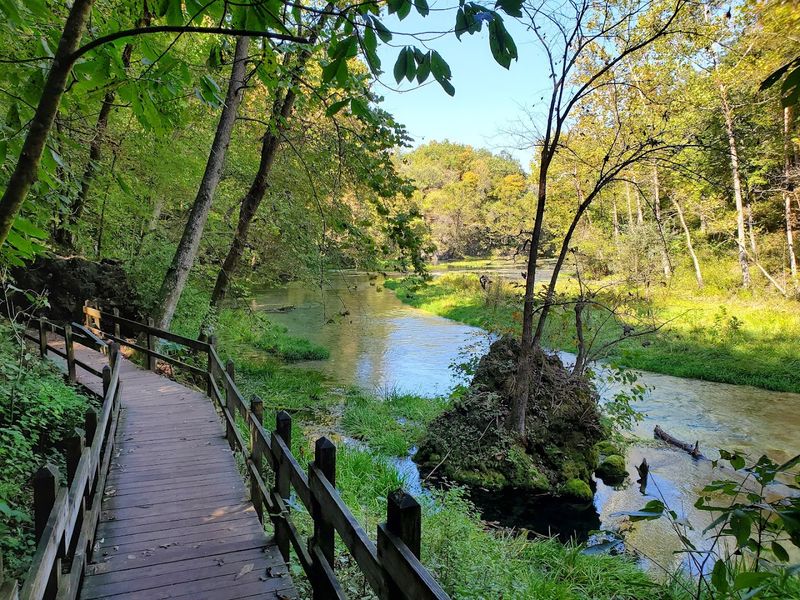
The spring pool itself has a striking blue-green color that shifts subtly depending on the light and time of day. A short trail leads down to the water’s edge, where visitors often pause to watch the steady, almost hypnotic surge of water pushing outward toward the lake.
Fishing is permitted in designated areas around the spring outflow, and the cold, oxygen-rich water supports a healthy population of fish year-round. It is one of the park’s most quietly compelling attractions.
A Boardwalk Trail That Winds Through A Rare Karst Landscape
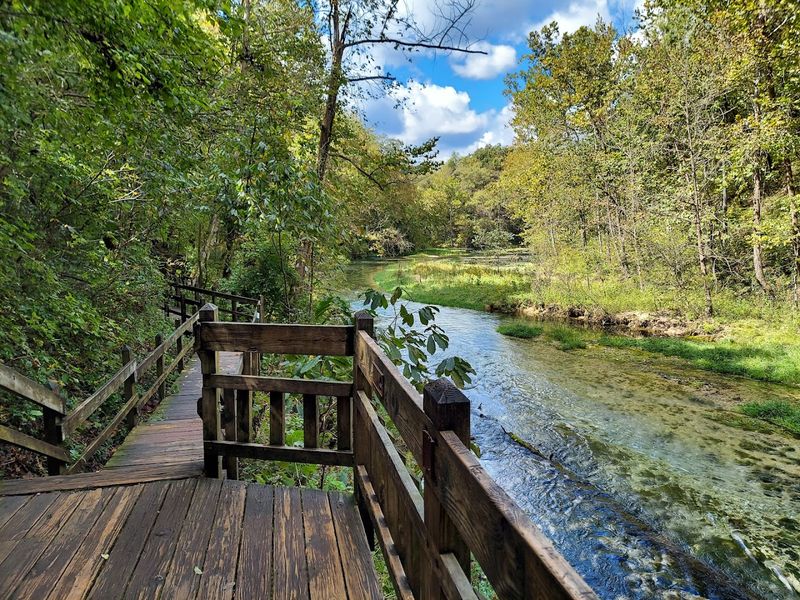
The 70-acre Karst Natural Area at Ha Ha Tonka is one of the most geologically distinctive patches of land in Missouri. A boardwalk trail guides visitors through this terrain, keeping foot traffic from disturbing the fragile surface while still offering a close-up look at sinkholes, collapsed cave ceilings, and exposed dolomite formations.
The Missouri Department of Conservation designated this section specifically to protect its unusual character while making it accessible to curious visitors of all ages.
Karst landscapes form when soluble rock, primarily limestone or dolomite, gradually dissolves and creates irregular, pitted terrain full of depressions and underground drainage. Walking the boardwalk here gives you a real sense of how dynamic and active this geology still is, even if the changes unfold over centuries rather than years.
Interpretive signs along the route explain the science in clear, approachable language. Even visitors with no background in geology tend to leave this section with a noticeably better understanding of what lies beneath their feet.
Miles Of Scenic Hiking Trails Through Forest And Bluffs
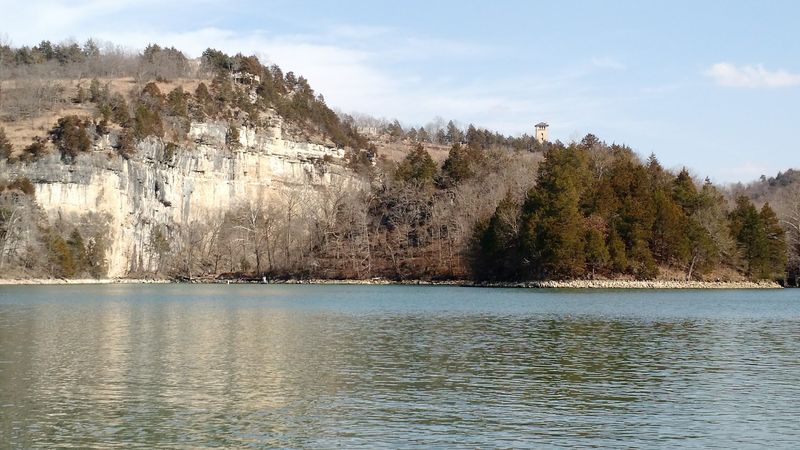
With 15 miles of marked trails crisscrossing the park, Ha Ha Tonka offers a range of hiking experiences that suit beginners and seasoned trail walkers equally well. Some paths are paved and gently graded, ideal for families with young children or visitors who prefer a more relaxed pace.
Others climb through rocky bluffs and dense forest, rewarding the effort with elevated views and a genuine sense of exploration.
Trail difficulty ratings and distance markers are posted clearly at trailheads, so planning a route is straightforward even for first-time visitors. The forest canopy provides welcome shade during summer months, and the trails take on a completely different character in autumn when the hardwoods shift into warm golds and oranges.
Dogs are welcome on the trails when kept on a leash, and the park sees a steady mix of solo hikers, couples, and family groups throughout the year. Each trail segment reveals something worth stopping for.
Towering Cliffs And Dramatic Rock Formations
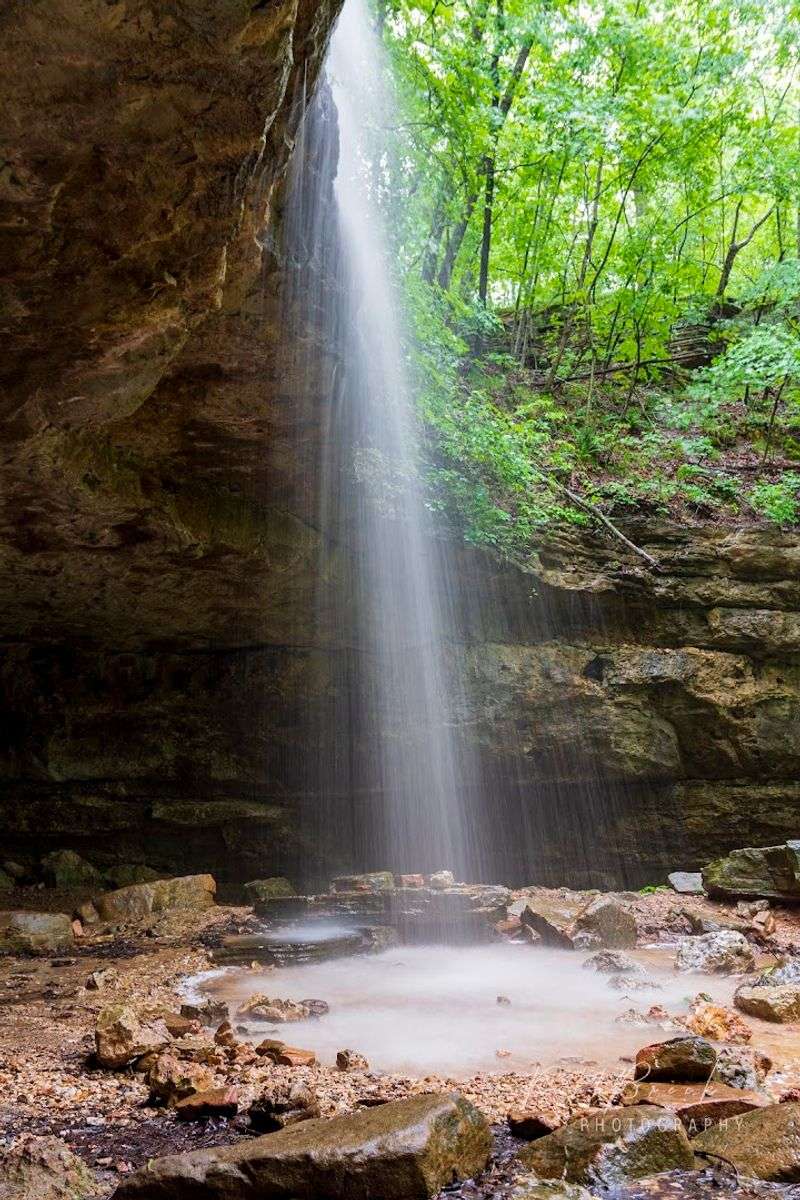
The cliffs at Ha Ha Tonka rise sharply from the forest floor, composed primarily of dolomite laid down hundreds of millions of years ago when a shallow inland sea covered much of the central United States. Erosion and the slow dissolution of rock over millennia have sculpted these bluffs into layered, textured walls that geologists and casual hikers find equally absorbing.
Some sections overhang the trail below, creating natural shelters that were likely used by Indigenous peoples and early Ozark settlers.
The scale of these formations is genuinely difficult to appreciate from photographs alone. Standing at the base of a cliff face and looking upward, you get a palpable sense of geological time that no exhibit or illustration quite replicates.
Certain trail sections run directly alongside the cliff walls, close enough to reach out and trace the rock layers with a hand. The contrast between the cool, shadowed rock face and the bright open sky above it makes for some of the park’s most striking visual moments.
Wildlife Watching Opportunities Across Woodlands And Wetlands
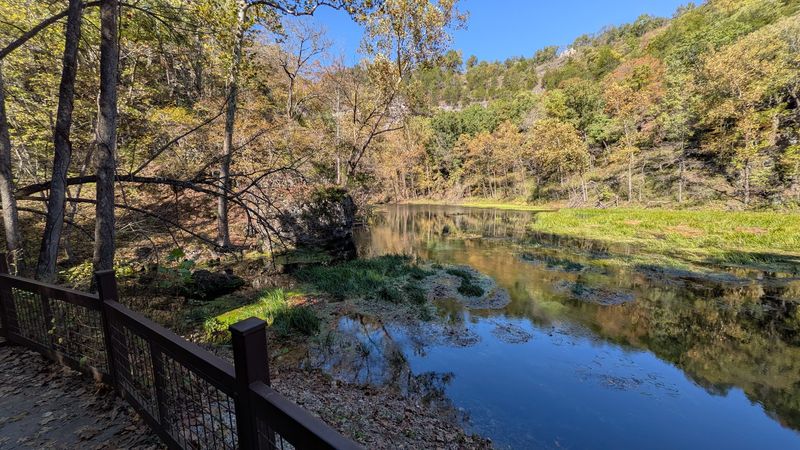
Ha Ha Tonka’s mix of forested uplands, rocky bluffs, open glades, and water-adjacent terrain creates a remarkably varied habitat that supports a wide range of wildlife. White-tailed deer are a common sight along the quieter trail sections, particularly in the early morning and late afternoon hours when they move more freely.
Wild turkey, great blue herons, and a rotating cast of migratory songbirds make the park a productive destination for anyone who enjoys watching animals in their natural environment.
The spring outflow area and the lake shoreline attract wading birds and waterfowl throughout the year, and patient observers sometimes spot river otters along the water’s edge. Reptile enthusiasts tend to find the rocky, sun-warmed sections of trail particularly rewarding, with several native snake and lizard species active during warmer months.
Binoculars are a practical addition to any park visit, and a field guide to Missouri birds or mammals adds real depth to the experience without slowing anyone down.
A Landscape Shaped By Sinkholes, Caves, And Springs
The ground at Ha Ha Tonka is, in a very real sense, full of surprises. Dozens of sinkholes dot the park’s surface, each one a visible reminder of the cave systems and underground drainage channels that run beneath the landscape.
Some sinkholes are shallow depressions barely noticeable unless you are looking for them, while others are deep, dramatic openings that descend well below the surrounding terrain. The park’s cave systems connect many of these features into a single, complex underground network.
Ha Ha Tonka Cave is among the most accessible of the park’s subterranean features, with a trail leading to its entrance and interpretive materials explaining its formation. The cave environment supports specialized organisms adapted to low light and stable temperatures, adding a biological dimension to what is already a compelling geological story.
Above ground, the springs that emerge from this same system bring the underground world back to the surface in a way that feels almost circular, a landscape constantly cycling water through rock and time.
A State Park With A Story Linked To Early Ozark History
Long before Missouri designated Ha Ha Tonka as a state park in 1978, the land carried significant human history. The Osage people inhabited and traveled through the Ozarks region for centuries, and the area around the Niangua arm of the Lake of the Ozarks held both practical and cultural importance for Indigenous communities.
European-American settlers arrived in the 19th century, drawn by the springs, fertile bottomlands, and abundant timber that the Ozarks offered.
Robert Snyder’s early 20th-century ambition to build a grand estate here added another layer to that history, one that ended dramatically with his death in an automobile accident before construction was finished and then again with the 1942 fire that claimed the completed sections of the castle. The water tower and carriage house that survived those events still stand near the castle ruins, offering visitors a tangible connection to that era.
Ha Ha Tonka preserves all of these stories with care and makes them genuinely accessible to anyone willing to walk its trails.