
Glass-Bottom Boat Rides And Wild Monkeys Make This Florida State Park Unforgettable
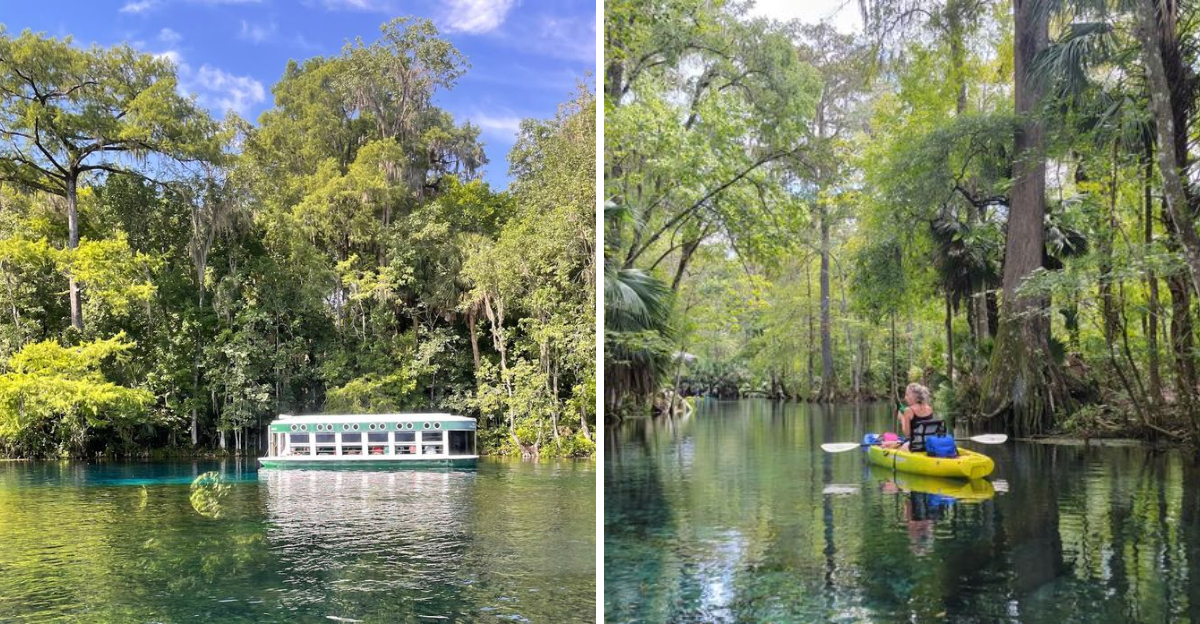
Imagine gliding over water so clear it feels like floating above an aquarium, where fish slip through underwater grasses and ancient springs bubble up through the sandy bottom. Now add a riverbank where unexpected wildlife sometimes appears in the trees and a history that stretches back more than a century.
One Florida park manages to bring all of that together in a single unforgettable setting. Visitors can drift across the springs in glass-bottom boats, watch wildlife along the shoreline, and experience a landscape that feels both peaceful and surprisingly alive.
One visit is all it takes to see why people keep coming back.
Crystal-Clear Springs Reveal An Underwater World
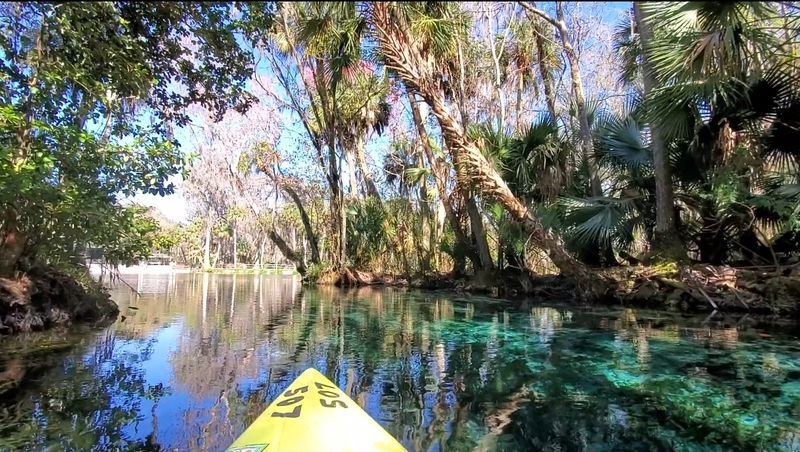
Few natural sights in Florida match the clarity of the springs at Silver Springs State Park. The water here is so transparent that standing at the edge of the headspring feels like looking through a pane of glass into another world entirely.
Submerged cypress roots, schools of fish, and swaying aquatic plants are all visible without any special equipment.
The springs maintain a constant temperature of around 72 degrees Fahrenheit year-round, which keeps the water clean and the visibility exceptional. Located at 5656 E Silver Springs Blvd, Silver Springs, FL 34488, the park opens daily at 8 AM, giving early visitors the best light for observing the underwater landscape.
Sunlight hits the water at certain angles and transforms the spring basin into something almost surreal, with colors shifting between turquoise and deep sapphire. This natural phenomenon draws photographers, nature lovers, and curious travelers who want to witness one of Florida’s most remarkable geological features up close.
The Famous Glass-Bottom Boats Have Been Running For Decades
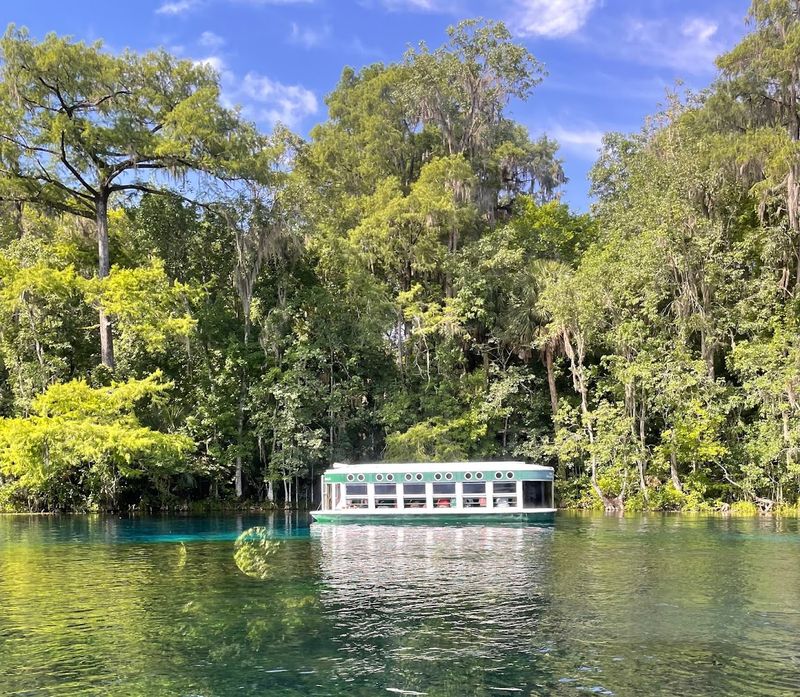
Since the 1870s, glass-bottom boat tours have been the signature experience at Silver Springs, making this one of the longest-running tourist attractions of its kind anywhere in the United States. The boats themselves are a charming piece of living history, with some vessels dating back to the 1960s still in active service on the river today.
A standard 30-minute tour costs around $13 for adults and runs daily, while the extended 90-minute tour, priced at approximately $25, ventures further down the Silver River on weekends. The longer tour is especially popular because it covers more ground, increases your chances of spotting monkeys, and gives the guide time to share the park’s layered history.
Booking in advance is strongly recommended, particularly for the extended tour, as spots fill quickly during peak seasons. The boat captains are knowledgeable and often entertaining, turning what could be a simple sightseeing ride into a genuinely memorable outing on the water.
Wild Rhesus Monkeys Roam The Forest Along The River
Back in the late 1930s, a tour boat operator introduced six rhesus macaque monkeys to a small island in the Silver River, intending them to serve as part of a jungle cruise attraction. What the operator failed to account for was the fact that rhesus macaques are strong swimmers, and the animals promptly escaped to the surrounding forest.
Decades later, their descendants are still here, thriving in the subtropical landscape along the riverbanks. Spotting a troop of monkeys moving through the canopy or making a dramatic river crossing is one of the most talked-about moments a visitor can have at Silver Springs.
The extended glass-bottom boat tour gives you the best opportunity to encounter them in their preferred habitat.
These animals are wild and should never be fed or approached. Watching them from the water at a respectful distance, however, is an experience that feels genuinely extraordinary for a state park in central Florida.
A Natural Spring That Pumps Out Millions Of Gallons Daily
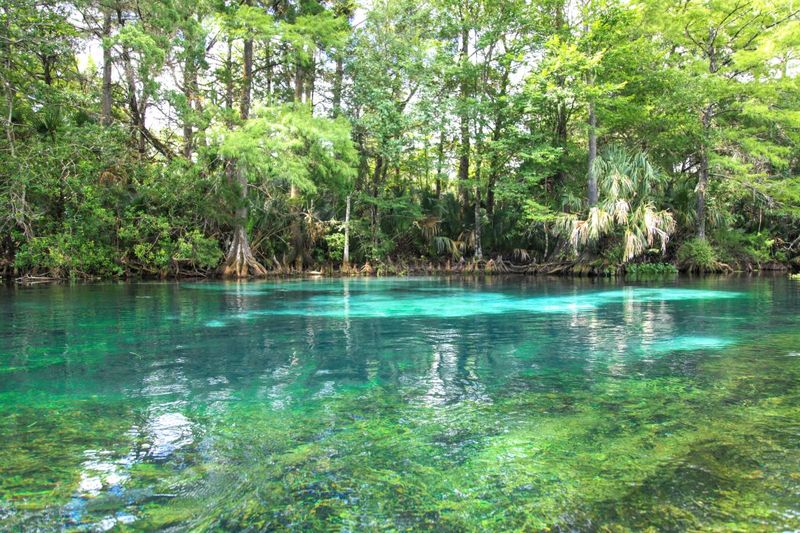
The headspring at Silver Springs is not merely scenic. It is one of the largest artesian spring systems in the world, pumping out hundreds of millions of gallons of water every single day from the Floridan Aquifer deep beneath the surface.
That volume of output is what keeps the Silver River flowing steadily and the water perpetually clear.
Artesian springs like this one form when underground water pressure forces groundwater upward through natural openings in the limestone bedrock. The result is a constant, self-renewing supply of clean, mineral-rich water that has attracted human settlement and wildlife to this site for thousands of years.
Archaeological evidence suggests people have gathered at these springs since prehistoric times.
The spring system supports an entire ecosystem, providing habitat for fish, turtles, manatees, and countless bird species. Visitors who take a moment to consider the sheer geological scale of what they are looking at often come away with a new appreciation for Florida’s extraordinary natural infrastructure.
Kayaking And Paddling Through The Silver River
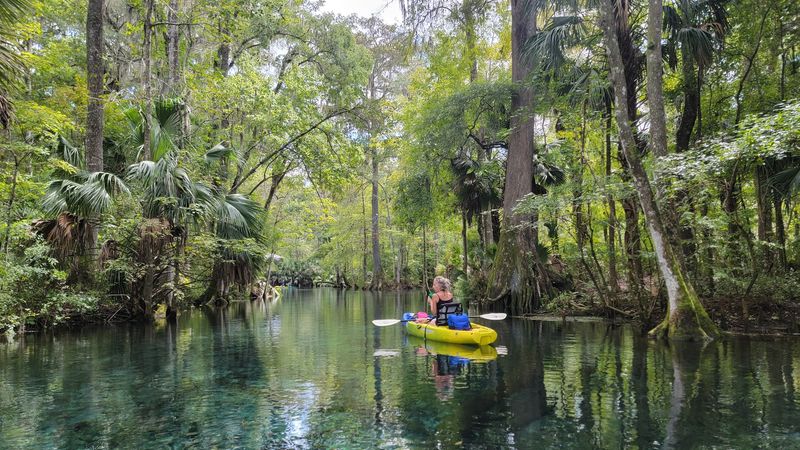
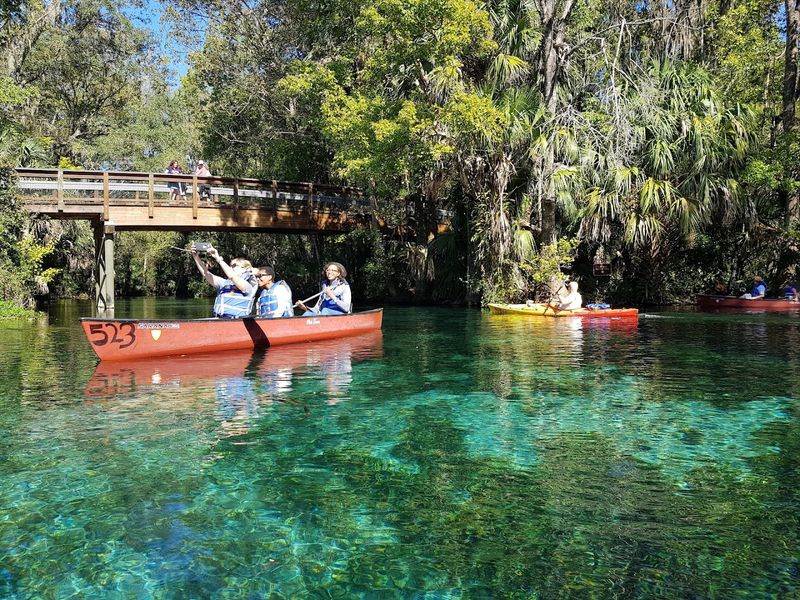
Paddling the Silver River is one of the most immersive ways to experience everything this park has to offer. The river stretches approximately 5.5 miles from the headspring to the Ocklawaha River, and the full route passes through a landscape that feels genuinely remote despite being minutes from Ocala.
Kayak and canoe rentals are available at the park for visitors of all skill levels. A popular two-mile loop trail keeps things manageable for beginners, while more experienced paddlers often opt for the full downstream run, with a shuttle service available to return them to the launch point.
Clear-bottom kayaks are also offered, adding an extra dimension to the experience by allowing paddlers to observe fish and aquatic life directly beneath them.
Manatees, alligators, wading birds, and the occasional monkey sighting are all realistic possibilities on the water. Early mornings tend to offer the calmest conditions and the most active wildlife, making an early start well worth the effort for anyone visiting the park.
Boardwalk Trails Winding Through Lush Florida Forest
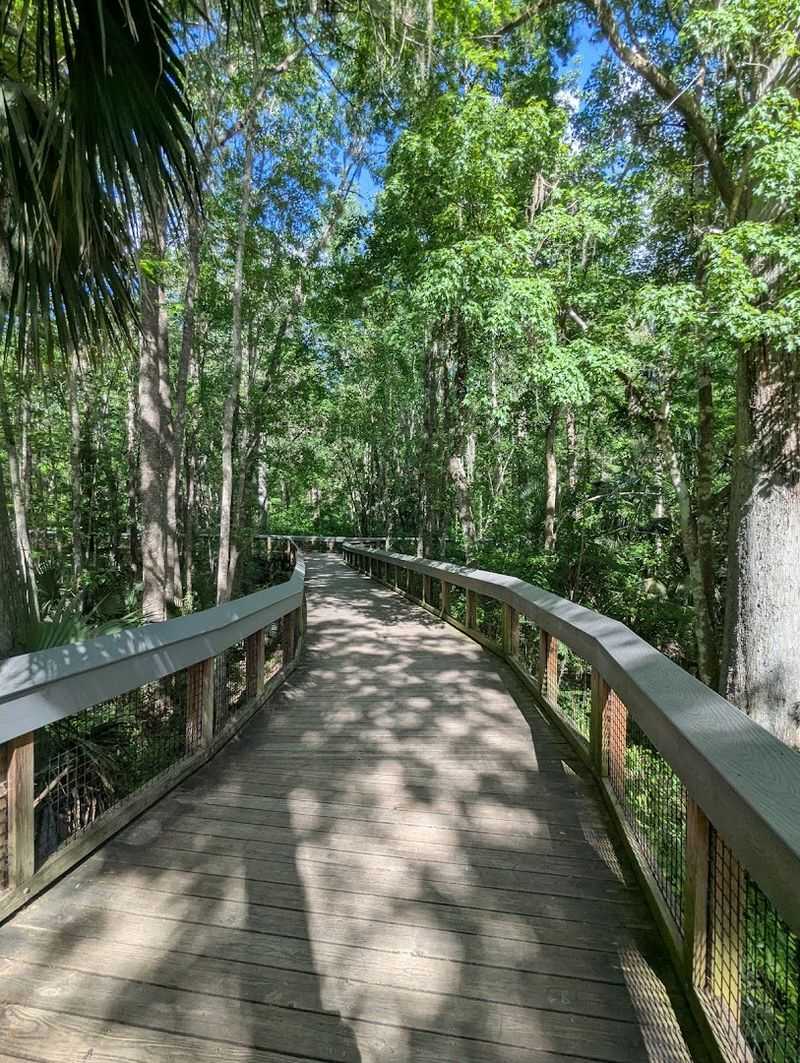
Silver Springs State Park maintains a network of trails that wind through several distinct Florida ecosystems, from open scrub to dense hardwood hammock and floodplain forest. The boardwalk sections are particularly well-suited for visitors who want to observe wildlife without needing to navigate rough terrain.
Shaded rest spots are positioned along the boardwalk, and the elevated walkway provides excellent vantage points for birdwatching. Anhingas, great blue herons, ospreys, and wood storks are regularly spotted from these platforms, particularly during the cooler months when migratory species swell the bird population considerably.
The trail system is accessible to a wide range of visitors, including those with mobility considerations, and the paths are consistently well-maintained. Hikers who look upward into the canopy often spot wildlife that ground-level observers miss entirely.
Bringing binoculars and moving quietly along the boardwalk dramatically increases the chances of meaningful wildlife encounters throughout the park.
Manatees And Turtles Often Appear In The Water
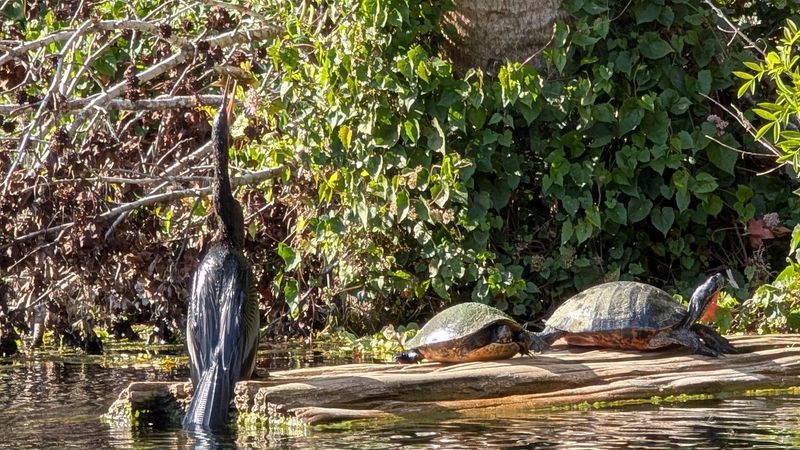
Manatees gather at Silver Springs in notable numbers during the cooler months, drawn by the spring’s constant 72-degree water temperature. Watching one of these enormous, slow-moving animals glide beneath a glass-bottom boat or alongside a kayak is the kind of moment that tends to silence even the most talkative visitors.
Florida softshell turtles and peninsula cooters are also common throughout the park, often seen basking on logs or moving steadily through the shallows. The water clarity makes observing these animals unusually easy, as you can track their movements from above without disturbing them.
This transparency is one of the spring’s most valuable qualities for wildlife observation.
Alligators are present in the river as well, most often spotted resting along the banks in the sun. Park staff and boat captains are experienced at pointing out wildlife in a way that informs without alarming, and the guided tours remain one of the best ways to maximize what you see during a single visit.
One Of Florida’s Oldest Tourist Attractions
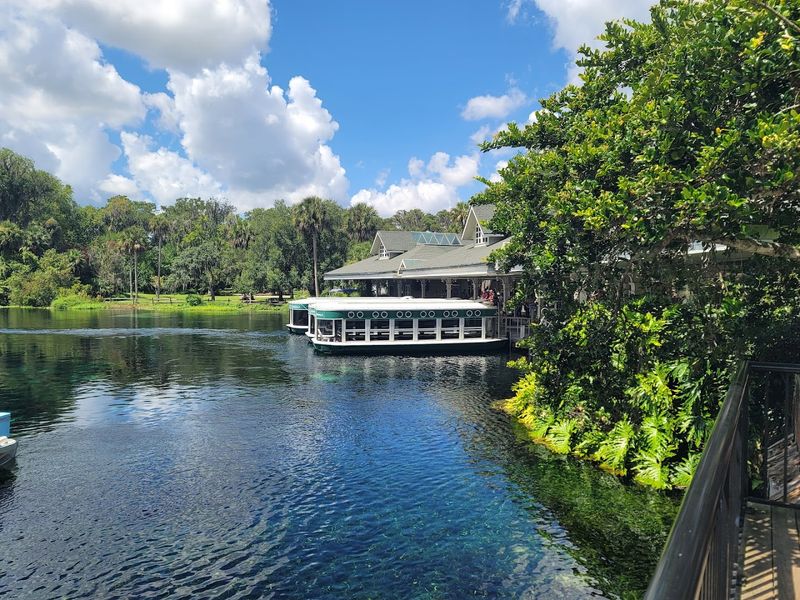
Silver Springs has been drawing visitors since the 1870s, making it one of the oldest continuously operating tourist destinations in the state of Florida. Long before theme parks and resort complexes defined Florida tourism, people traveled from across the country specifically to see these extraordinary springs.
The park’s history includes a succession of private operators, promotional campaigns, and eventually its incorporation into the Florida State Park system in 2013. Throughout those transitions, the core appeal has remained consistent: clear water, remarkable wildlife, and an atmosphere that feels genuinely apart from the commercial world surrounding it.
Visitors who grew up coming here often return decades later and find that the essential character of the place has not fundamentally changed. The boats still glide across the same spring-fed river, the water still carries that distinctive blue clarity, and the forest still holds its quiet, unhurried presence.
That kind of continuity is increasingly rare and worth recognizing.
Movie Crews Once Filmed Classic Adventure Films Here
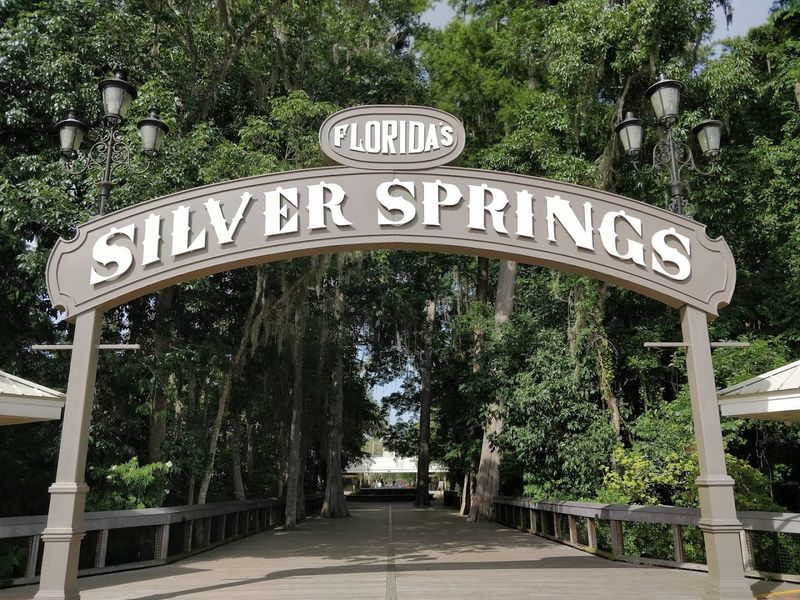
Hollywood discovered Silver Springs decades ago, and the park’s combination of clear water, exotic-looking vegetation, and abundant wildlife made it an ideal stand-in for tropical locations around the world. Several Tarzan films were shot along the Silver River during the mid-20th century, along with episodes of the original Sea Hunt television series starring Lloyd Bridges.
The clarity of the water was particularly valuable for underwater filming, as cameras could capture clean, well-lit footage without the murkiness that plagued other natural locations. The park’s exotic appearance on screen helped cement Florida’s reputation as a filming destination long before Miami or Orlando entered the conversation.
Remnants of that cinematic era are woven into the park’s identity and frequently mentioned on the guided boat tours. For visitors with an interest in film history, there is something quietly satisfying about floating over the same spring-fed water that once served as a backdrop for some of Hollywood’s most beloved adventure productions.
A Wildlife Haven In The Heart Of Ocala
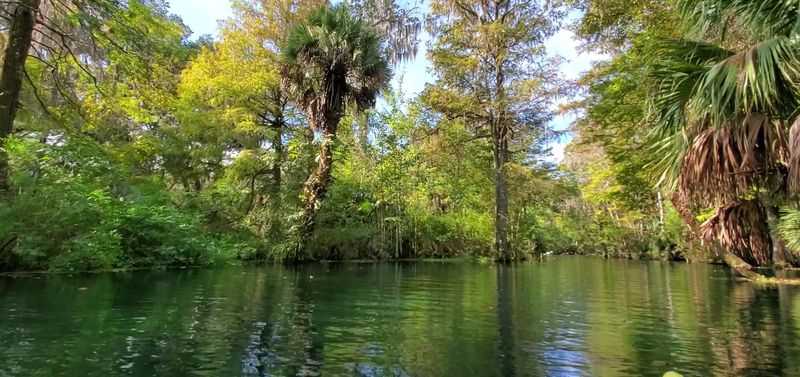
Silver Springs State Park sits within a broader natural corridor that includes the Ocala National Forest, creating a connected landscape of considerable ecological value. The park itself covers over 4,000 acres, supporting a remarkable diversity of species within a relatively compact area of central Florida.
White-tailed deer, river otters, bobcats, and numerous reptile species share the habitat with the more visible residents like manatees and monkeys. Birdlife is particularly rich, with over 100 species recorded within the park boundaries across various seasons.
The combination of river, floodplain forest, and upland scrub creates multiple habitat types that support different communities of wildlife.
For anyone interested in Florida’s natural ecosystems, this park functions as an accessible and well-managed introduction to what the state’s interior landscapes actually look like beyond the beaches and resort corridors. The park’s location at 5656 E Silver Springs Blvd places it conveniently close to Ocala while still feeling genuinely immersed in undisturbed Florida nature.
Sunlight Turns The Spring Water A Brilliant Blue
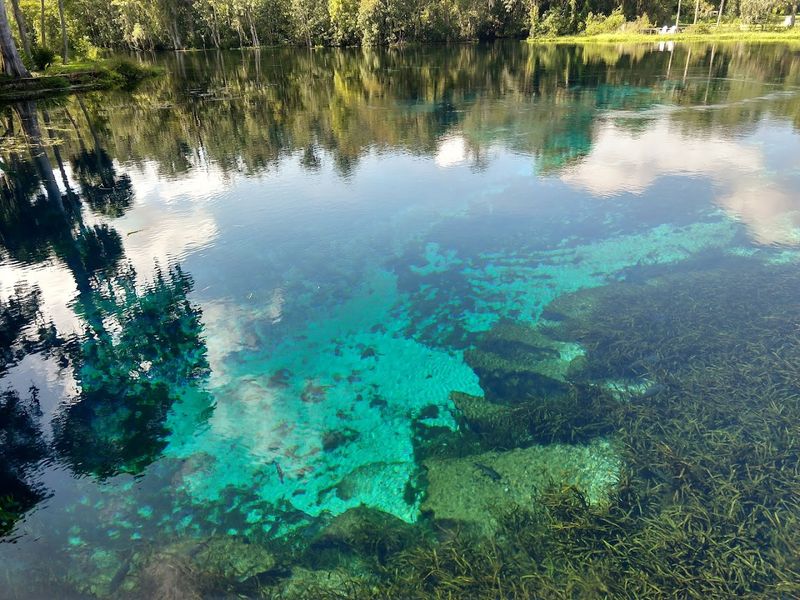
Visitors who arrive at Silver Springs on a clear morning are often stopped in their tracks by the color of the water. Under direct sunlight, the spring basin shifts through shades of turquoise, cobalt, and deep blue in a way that looks almost artificially enhanced but is entirely natural.
The effect comes from the interaction between sunlight, the white sandy bottom, and the exceptional clarity of the water.
Photographers and painters have been attempting to capture this quality of light for well over a century, and the challenge remains real. The color changes throughout the day as the sun moves across the sky, with the most vivid blues typically appearing in the late morning when light strikes the water at the most favorable angle.
Standing at the edge of the headspring and watching that color pulse and shift with the movement of the water is one of those quiet, unhurried experiences that parks like this one do better than anywhere else. No filter required, and no exaggeration needed.