
Explore The Oldest City In New York For A Day Trip Filled With History And Charm This Year
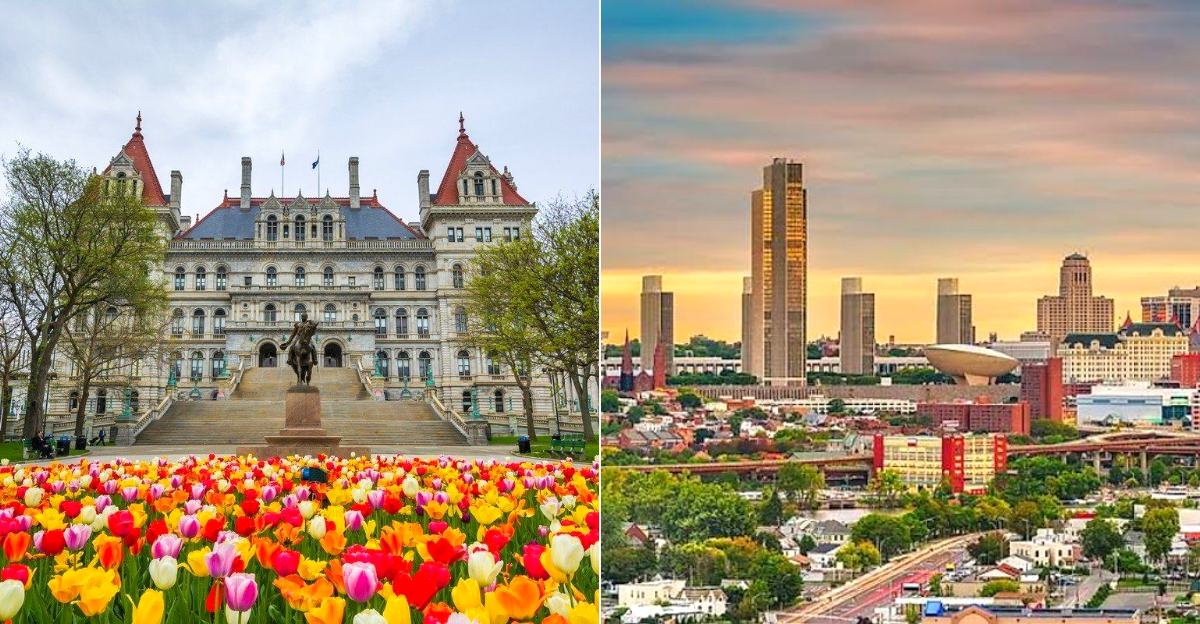
History has a way of shaping a place, and in New York’s oldest city, you can feel it at every turn. Streets lined with preserved buildings, waterfront views, and landmarks that date back centuries create a setting that feels rich with stories.
It is the kind of place where a simple walk quickly turns into a journey through time.
Spend the day exploring and you will find plenty to take in, from historic sites and small museums to cozy cafés and scenic spots perfect for a break. Everything feels close enough to enjoy at a relaxed pace, making it easy to fit a full experience into a single visit.
For anyone looking for a day trip that blends history with charm, this New York destination is well worth adding to your plans this year.
A City That Carries Four Centuries On Its Shoulders
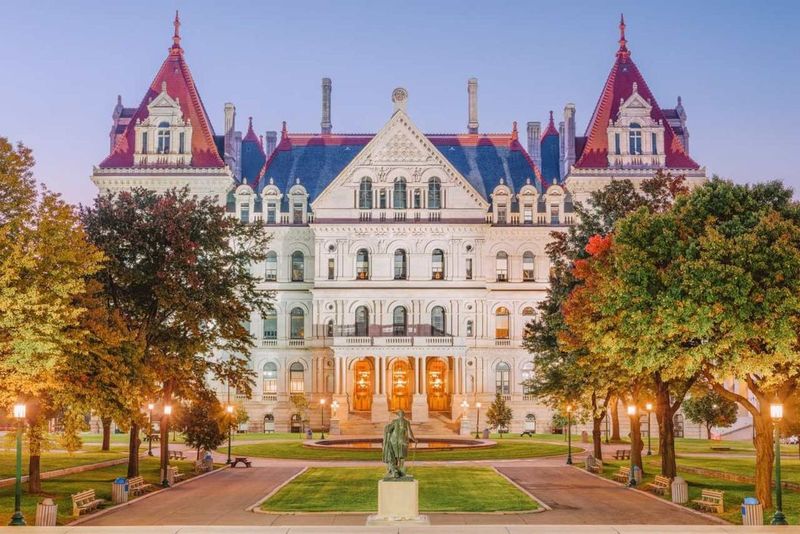
Few American cities wear their age as gracefully as this one does. The streets of Albany are lined with architectural evidence of nearly every era in American history, from Dutch colonial foundations to Federal-style rowhouses to the sweeping Beaux-Arts grandeur that defined the late 19th century.
Walking through the older neighborhoods feels less like sightseeing and more like reading a very long and well-preserved book.
The city was officially chartered in 1686, making it one of the longest continuously governed municipalities in the entire country. That kind of longevity leaves marks everywhere: in the cobblestone patterns still visible beneath certain streets, in the names of parks and plazas, and in the quiet confidence the city seems to carry without needing to announce it.
Albany also serves as the capital of New York State, which means the density of civic architecture here is genuinely remarkable for a city of its size. The combination of political history, cultural depth, and physical beauty makes Albany a day trip that rewards preparation.
Come with comfortable shoes, a loose schedule, and a genuine appetite for discovery.
The New York State Capitol Building That Took 32 Years To Complete
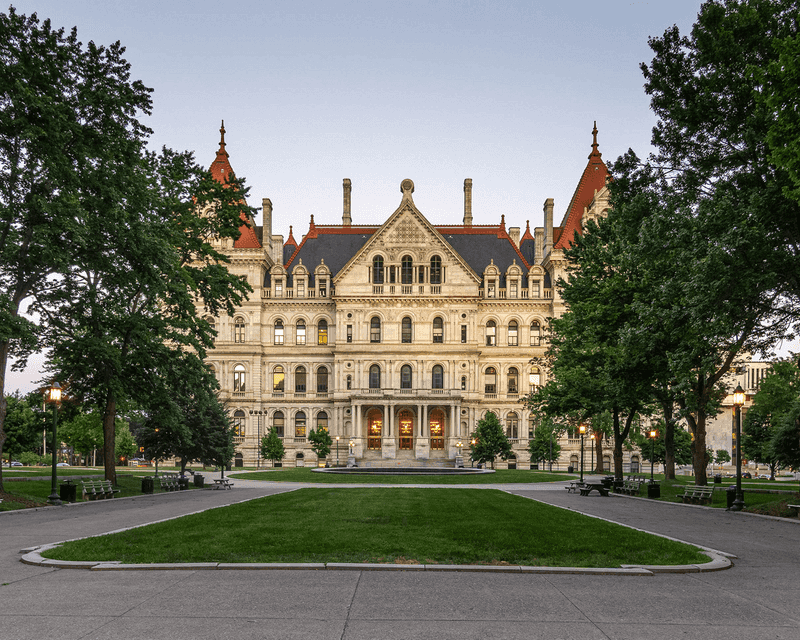
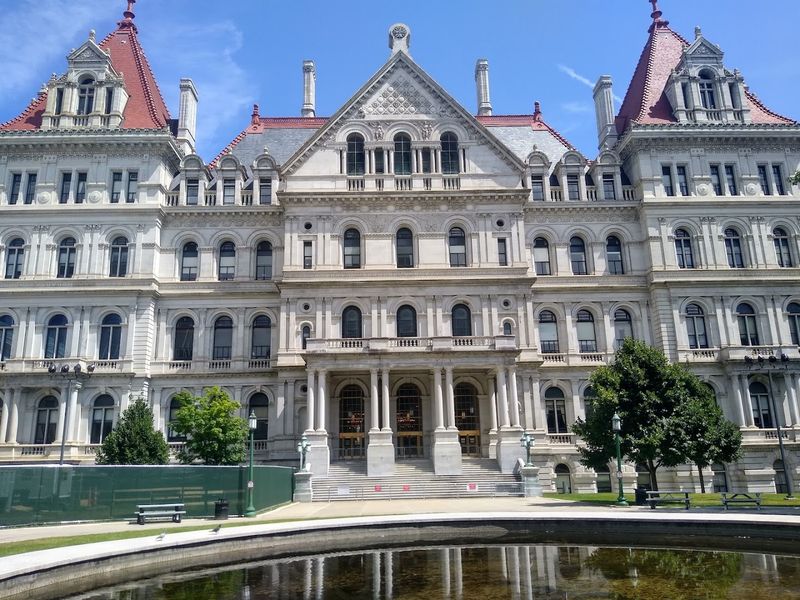
Standing at the northern end of Empire State Plaza, the New York State Capitol is one of the most architecturally ambitious government buildings in the United States. Construction began in 1869 and was not completed until 1899, a timeline that reflects just how seriously its designers took the task.
The building was shaped by multiple architects over its long construction, including H.H. Richardson and Stanford White, whose competing visions produced a structure that blends Romanesque and Renaissance styles in a way that should not work as well as it does.
Free guided tours are available most days and are absolutely worth taking. The interior reveals layers of craftsmanship that photographs simply cannot capture: hand-carved stonework, ornate staircases, and painted ceilings that reward slow, attentive looking.
The famous Million Dollar Staircase alone took 14 years to carve and features nearly 300 faces of historical and personal significance embedded into its stone columns.
The building is located at Washington Avenue, Albany, NY 12224. Arriving early in the morning means fewer crowds and more time to absorb the details at your own pace.
It is the kind of place that genuinely improves with a second visit.
New York State Museum And The Natural World Beneath Your Feet
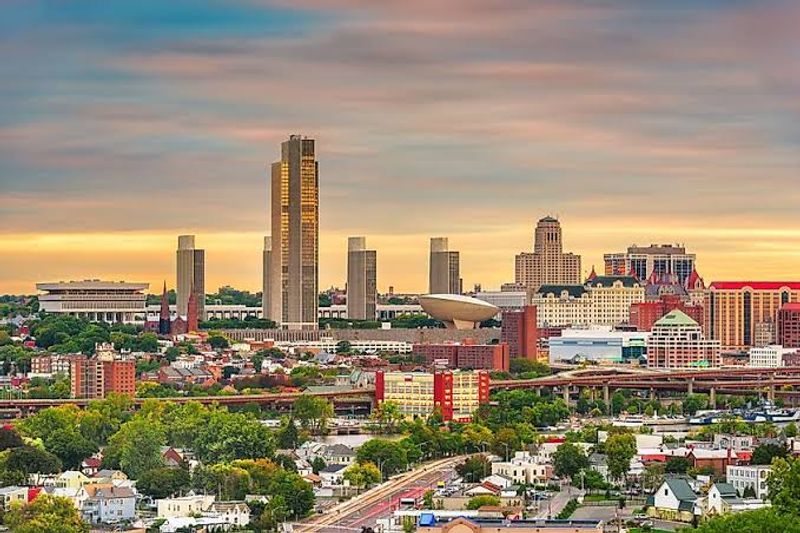
At the southern end of Empire State Plaza, the New York State Museum holds one of the largest and most comprehensive collections of natural and cultural history in the entire country. The museum is free to enter, which makes it one of the better surprises Albany has to offer.
Exhibits cover everything from the geology of the Adirondack Mountains to the cultural life of the Haudenosaunee people, whose presence in this region predates European settlement by centuries.
The natural history floor is particularly engaging, featuring full-scale dioramas, a mastodon skeleton, and geological displays that explain how the Hudson Valley landscape was formed over millions of years. Children tend to be captivated by the scale of the exhibits, but adults will find equal depth in the historical and cultural galleries, which are thoughtfully curated and generously labeled.
A dedicated section covers New York City history, including a striking exhibit related to the September 11 recovery efforts, which carries genuine emotional weight without becoming exploitative. Plan to spend at least two hours here, and resist the temptation to rush through the upper floors.
The museum rewards patience and rewards those who read the small placards that most visitors walk past.
Washington Park Where The City Slows Down And Breathes
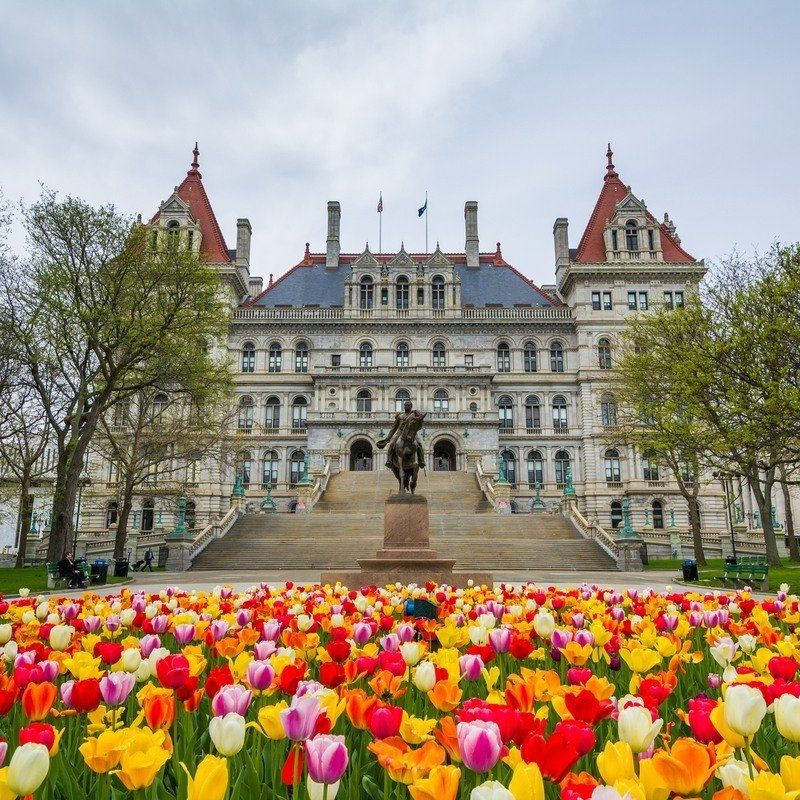
Washington Park is one of those green spaces that earns genuine affection rather than obligatory praise. Designed in the tradition of the great 19th-century urban parks, it covers roughly 81 acres in the heart of Albany and provides a natural counterpoint to the density of civic architecture nearby.
The park is especially well known for its annual Tulip Festival, held each May, when thousands of tulips bloom in organized displays that trace back to the city’s Dutch heritage.
The park contains the Van Ostrande-Radliff House, widely regarded as the oldest standing building in Albany, which adds a quiet historical footnote to what might otherwise feel like a simple afternoon walk.
Paths wind past a small lake, several open lawns, and mature trees that provide generous shade during warmer months.
The atmosphere is unhurried, and the people who gather here tend to treat it with care.
Joggers, families, and people reading on benches all share the space without friction, which says something about the park’s character. A midday visit works particularly well as a transition between the denser historical sites nearby.
Bring a small lunch and find a spot near the lake. Albany at rest is a different and equally rewarding thing to witness.
Albany Institute Of History And Art And The Hudson River School Legacy
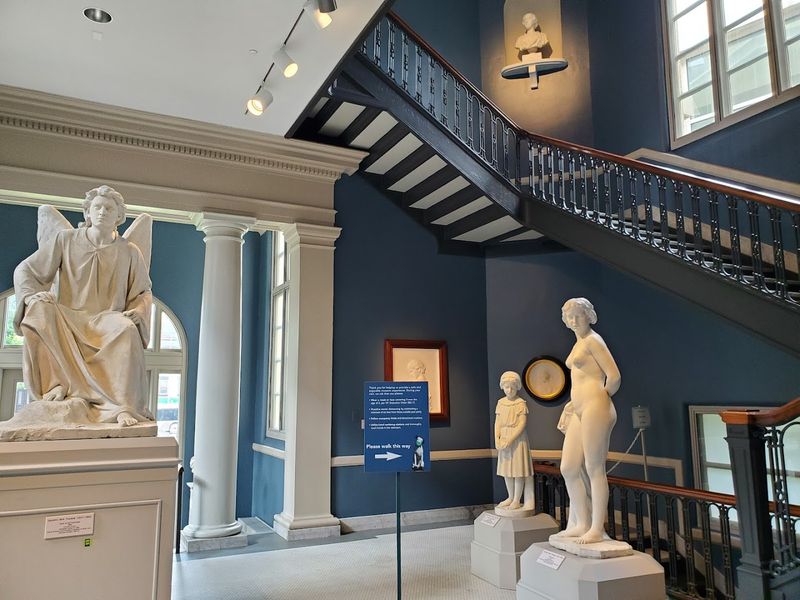
The Albany Institute of History and ArtHudson River School paintings is one of the oldest museums in the United States, founded in 1791, and it holds a collection that feels both personal and profound.
The museum is best known for its exceptional holdings of , a 19th-century American art movement that celebrated the landscape of the Northeast with a reverence that bordered on spiritual.
Seeing these large-format canvases in person, rather than in reproduction, is a genuinely different experience.
Beyond the paintings, the institute maintains deep collections of decorative arts, Egyptian antiquities, and regional historical artifacts that collectively tell the story of the upper Hudson Valley with unusual thoroughness.
The Egyptian collection alone surprises most first-time visitors, who arrive expecting local history and leave having also spent time with ancient mummies and carved stone relics from a civilization half a world away.
The institute is located on Washington Avenue, within easy walking distance of both the Capitol and Washington Park, which makes it a natural addition to any afternoon itinerary.
Admission is reasonably priced and the galleries are never overcrowded, which allows for the kind of unhurried looking that good art actually requires.
It is a museum that earns its reputation quietly and steadily.
Empire State Plaza And The Egg That Refuses To Be Ignored
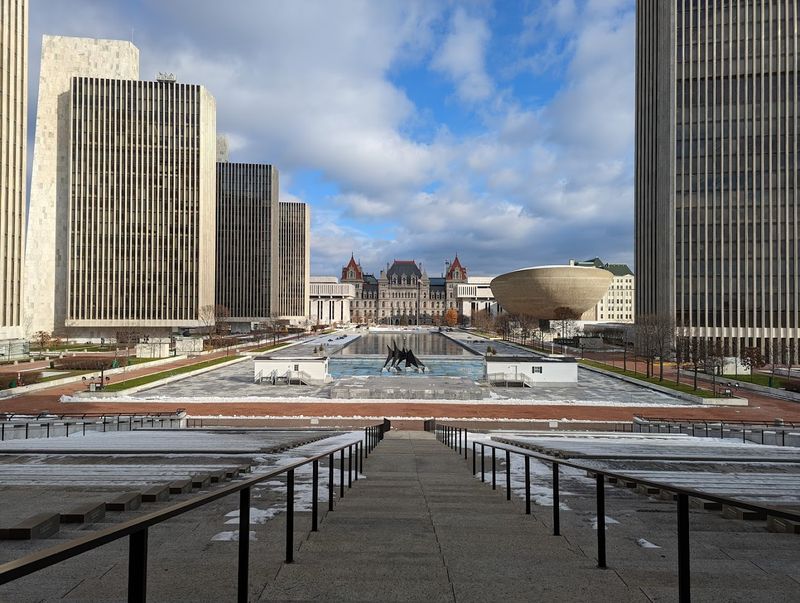
Conceived in the 1960s under Governor Nelson Rockefeller, Empire State Plaza is the kind of civic project that could only have been imagined in an era of absolute governmental confidence.
The complex covers 98 acres in the center of Albany and includes a series of marble-clad towers, reflecting pools, a vast underground concourse, and an art collection of surprising quality.
Love it or find it overwhelming, the plaza is impossible to dismiss.
The undisputed centerpiece of the complex is The Egg, a performing arts venue whose elliptical form rises from the plaza like something deposited there by a civilization with strong opinions about geometry.
Designed by architect Harrison and Abramovitz, it opened in 1978 and continues to host concerts, theater productions, and cultural events throughout the year.
The building’s silhouette has become one of Albany’s most recognized images.
The underground concourse beneath the plaza contains one of the largest publicly owned art collections in New York State, featuring works by prominent 20th-century artists that most people walk past without realizing what they are looking at. Take a slow loop through the concourse and pay attention to the walls.
The plaza also connects directly to the State Museum, making it a natural hub for an entire morning of exploration.
Downtown Albany Where Architecture And Appetite Come Together
Downtown Albany18th and 19th century architecture rewards those who explore it on foot rather than from a car window.
The historic district contains an impressive density of , including Federal-style townhouses, Victorian commercial buildings, and cast-iron facades that survived the urban renewal pressures of the mid-20th century largely intact.
The neighborhood known as Lark Street has long served as a cultural corridor where independent businesses, galleries, and restaurants cluster in close proximity.
The local food scene reflects Albany’s diverse population and its position as a regional hub. Options range from long-standing family-owned establishments to newer kitchens drawing on contemporary American and international influences.
A late-afternoon meal here, after a full day of walking and exploring, has a particular satisfaction to it that a rushed lunch cannot replicate.
The streets around Madison Avenue and Lark Street are especially lively on weekends, when foot traffic increases and the neighborhood shows more of its personality.
Bookstores, specialty food shops, and small galleries fill in the spaces between restaurants, making it easy to extend a simple dinner into a full evening of wandering.
Albany after dark carries a different energy than Albany in daylight, and both are worth experiencing if time and energy permit.