
This Lesser-Known Garden In New York Feels Like A Magical Wonderland Worth Visiting This Year
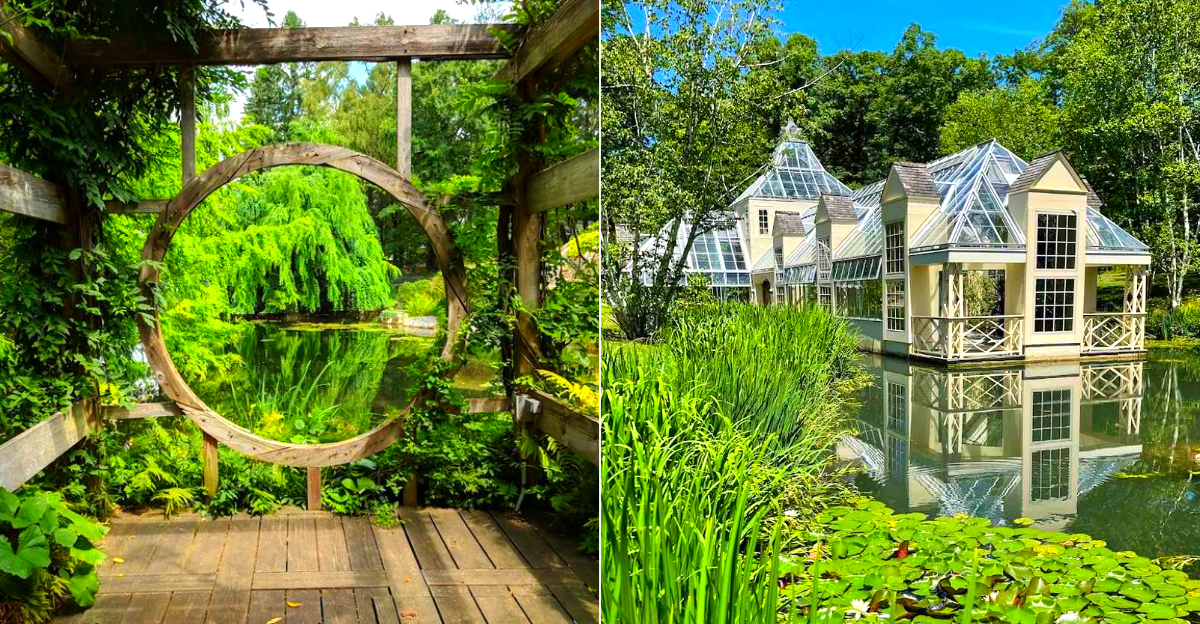
The moment you step inside, everything feels softer, calmer, and a little more enchanting. This lesser-known garden in New York creates an atmosphere that feels almost storybook-like, with winding paths, layered greenery, and bursts of color that change with the seasons.
It is the kind of place that invites you to slow down and take it all in.
Every turn reveals something new, from quiet corners perfect for a pause to carefully designed spaces that feel both natural and thoughtfully arranged. It never feels crowded or rushed, which only adds to the experience.
For anyone looking to escape into something peaceful and a little magical, this New York garden is well worth visiting this year.
The Kind Of Place That Makes You Question Why You Ever Stayed Indoors
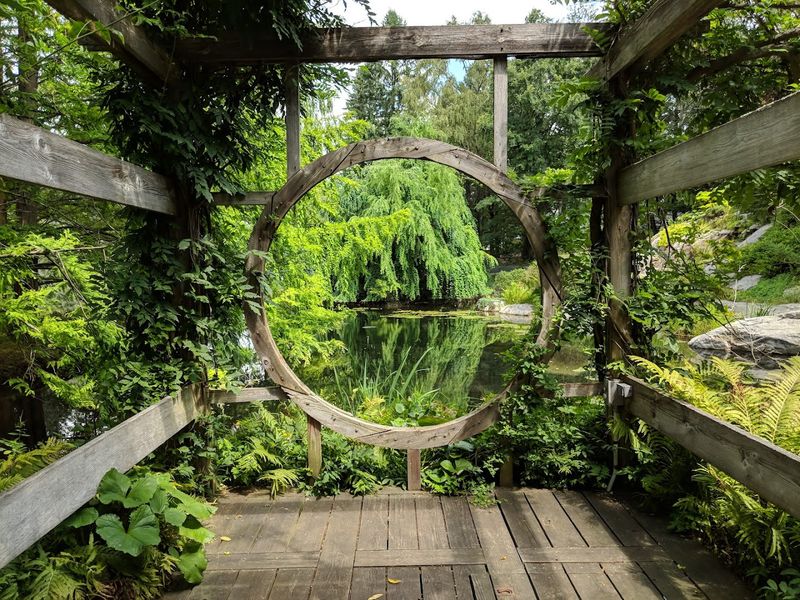
Picture this: your friend texts you on a Saturday morning and says, “I found a secret garden an hour from the city and I think it might be enchanted.” You roll your eyes. Then you go.
Then you never fully recover.
The gardens are organized into distinct areas, each with its own character, mood, and plant palette. You move from one space to the next almost without realizing it, the way chapters in a good book carry you forward before you notice the pages turning.
Visitors consistently describe the experience as peaceful, absorbing, and genuinely surprising. The staff are knowledgeable, the signage is helpful, and the Google Lens app pairs remarkably well with the plant tags throughout the property.
Admission is affordable, with entry priced at ten dollars for adults and five for seniors, making the entire afternoon feel like an exceptional bargain for what you receive in return.
Situated in Cold Spring, New York, Stonecrop Gardens sits on 12 acres of land that manages to feel both curated and completely wild at the same time.
Stonecrop Gardens And The Story Behind Its Remarkable Character
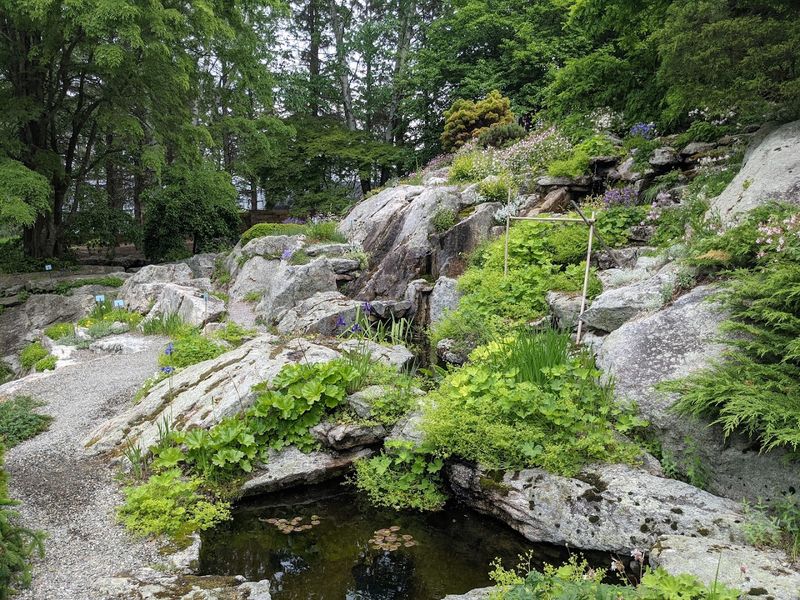
Stonecrop Gardens began as a private estate and has since opened its grounds to the public, carrying the spirit of that personal dedication into every planted bed and stone-edged path.
The name itself comes from the rocky outcroppings that define the property, and those same stone formations anchor the garden’s most celebrated feature: a rock garden with flowing water and natural pools that visitors regularly describe as the most impressive section on the property.
The address is Stonecrop Gardens, Cold Spring, NY 10516, and the drive up from the city takes roughly 80 minutes depending on traffic. Once you arrive, the parking is ample and the welcome is warm.
A clear, well-drawn map is handed to every visitor at the entrance, making self-guided exploration both easy and enjoyable.
Caroline Burgess serves as the head gardener, and her influence is visible throughout the property. Under her guidance, the gardens have grown to include an intern program, educational workshops, and a place on the Open Days gardening calendar.
The space feels like it is tended by people who genuinely love what they do, and that care communicates itself through every detail, from the placement of a bench to the selection of a climbing vine.
Rock Gardens And Water Features That Earn Every Superlative Thrown At Them
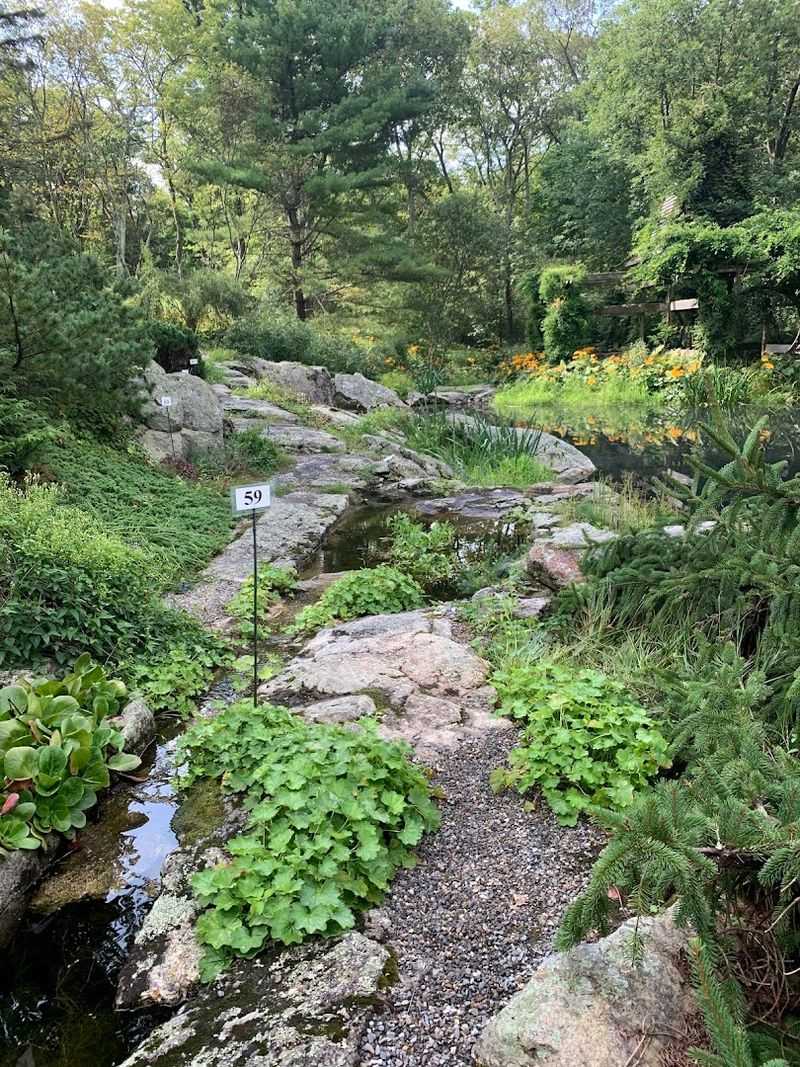
There is a moment, somewhere along the rocky path near the stone outcroppings, when the sound of flowing water reaches you before the view does.
Then the pool comes into sight, framed by moss-covered rocks and low-growing alpine plants, and the whole scene lands with a quiet kind of force that photographs struggle to fully capture.
The rock garden at Stonecrop is widely considered the crown jewel of the property. Built into the natural geology of the land, it features cascading water, still pools, and a remarkable collection of plants that thrive in rocky, well-drained conditions.
The textures are extraordinary: rough stone against soft cushion plants, still water reflecting cloud and canopy, all of it arranged with a precision that never feels forced.
Visitors are encouraged to look for bullfrogs along the water’s edge and keep an eye out for dragonflies hovering near the surface. The Wisteria Pavilion nearby adds another layer of atmosphere, especially during late spring when the blooms are at their fullest.
Walking this section slowly and without agenda is the only correct approach, and the garden seems to quietly insist on that pace the moment you step onto its paths.
The Conservatory And Greenhouse Collection Worth The Trip Alone
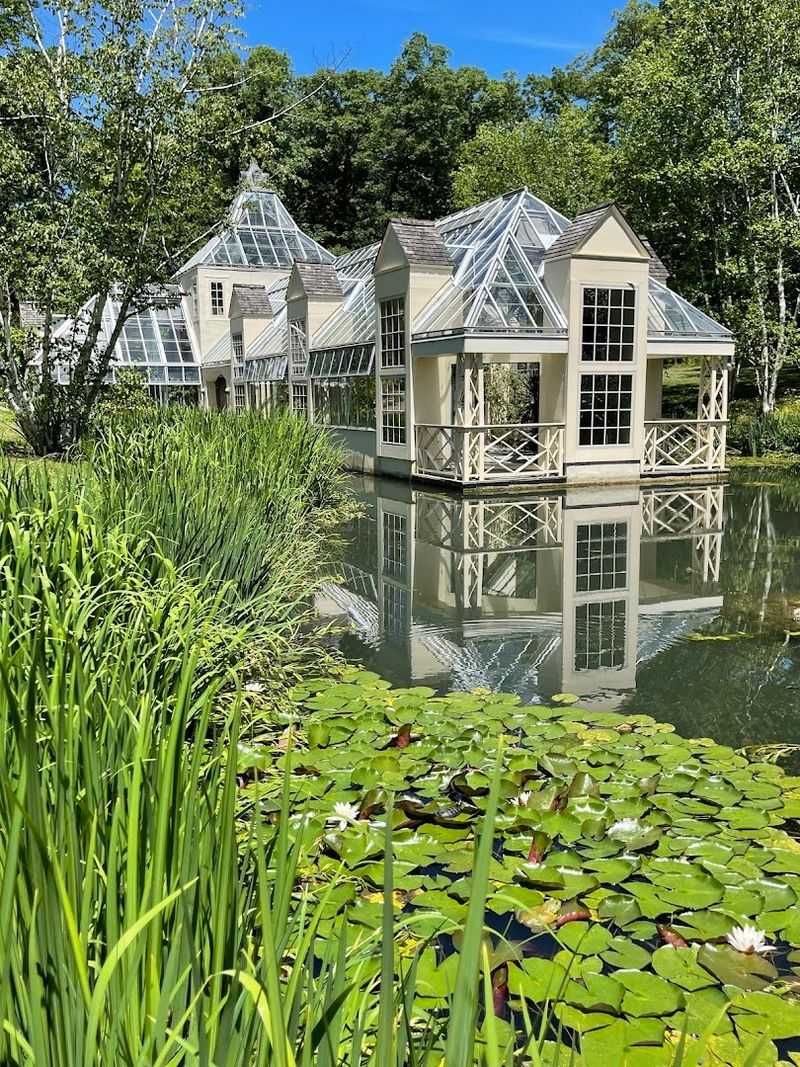
Not every garden visit ends with a greenhouse that makes you want to rethink your entire apartment decor, but Stonecrop’s conservatory has a way of doing exactly that.
The glass structure houses an impressive collection of succulents, cacti, and tropical specimens that create a striking contrast with the temperate landscapes outside.
Stepping inside feels like crossing a small but significant climate boundary.
Visitors described the succulent greenhouse as the highlight of an already exceptional visit, noting that the care and intentionality behind each display was obvious.
The conservatory also functions as a covered space, making it particularly useful during unpredictable weather, and it has served as a backdrop for events ranging from engagement sessions to member garden parties.
Beyond the conservatory, the property includes a sales area where plants are available for purchase, giving visitors a tangible way to bring a piece of Stonecrop home. The selection leans toward unusual and hard-to-find varieties, which makes browsing feel more like a discovery than a transaction.
For anyone who has ever wandered a garden wishing they could take the whole thing with them, the plant sales area offers at least a reasonable compromise.
Perennial Beds And Color Arrangements That Inspire Real Garden Ambition
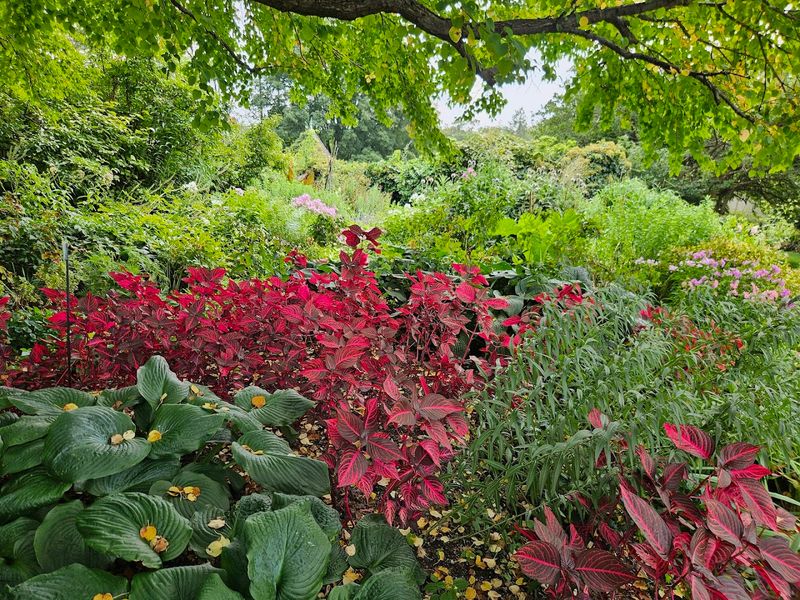
Color theory is one thing in a classroom and something else entirely when you are standing in front of a raised bed of sunflowers, coleus, and castor beans arranged in a way that should not work but absolutely does.
The perennial garden at Stonecrop is enclosed by a tall wooden fence that extends the growing season, and inside it, plants are organized by color in large raised plots that produce some of the most vivid combinations you are likely to encounter in a public garden.
The red and yellow plots are particularly striking, drawing visitors in with their intensity before releasing them into softer palettes of lavender, cream, and deep burgundy.
Improbable plant pairings appear throughout, and rather than feeling random, they read as deliberate experiments conducted by someone with a very good eye and a willingness to take risks.
A straw figure of Gertrude Jekyll, the celebrated 19th-century garden designer, often stands as the centerpiece of the garden, offering both a nod to horticultural history and a slightly surreal landmark for navigation.
The vegetable garden nearby adds a productive, grounded contrast to the more ornamental displays, with seasonal harvests of basil, lettuce, pole beans, and onions filling out the beds with practical beauty.
Wildlife Encounters And The Quiet Surprises Hidden Along Every Path
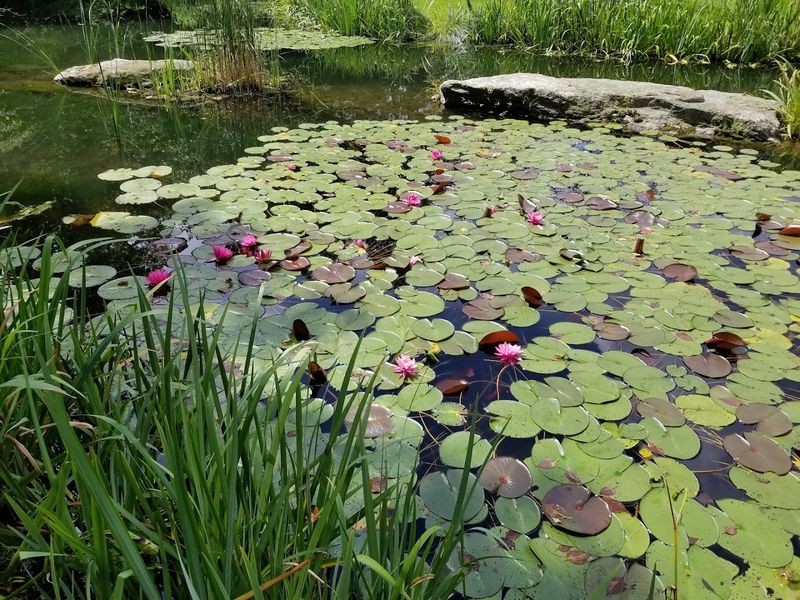
Most gardens offer plants. Stonecrop offers plants plus the occasional frog staring at you from a lily pad with the calm confidence of someone who has been there much longer than you have.
The grounds support a healthy population of bullfrogs, turtles, and the kind of birdsong that makes city residents stop walking and stand very still for longer than they expected.
Horses can be spotted on the property, and cats have been known to wander the paths with the proprietary ease of animals who consider the garden their personal domain.
For families with children, these encounters transform the visit into something more interactive and memorable than a standard stroll through manicured beds.
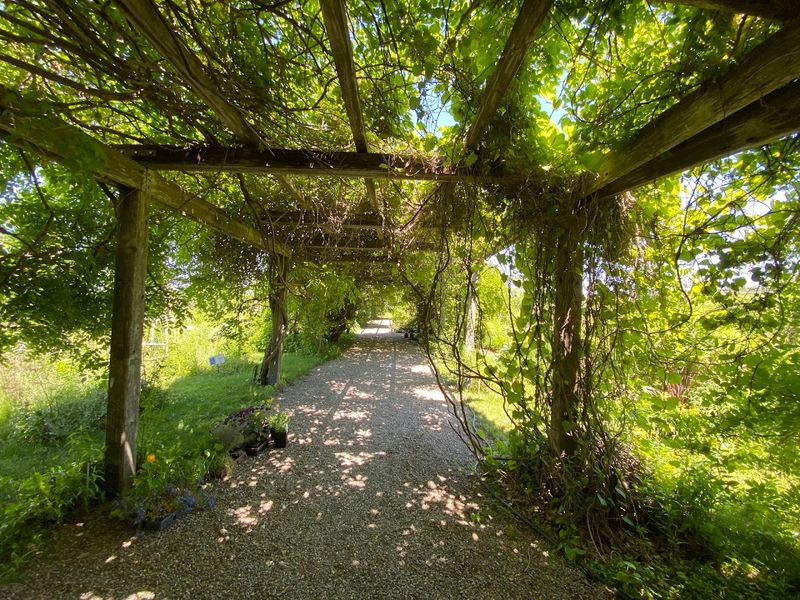
The paths toward the back of the garden, particularly the vine-covered trellis near the systematic order beds, carry a sense of discovery that feels genuinely earned.
Overgrowth in certain areas is not neglect but character, contributing to the lush, layered atmosphere that makes Stonecrop feel less like a museum and more like a living, breathing ecosystem that happens to welcome human visitors on select days.
Planning Your Visit And Making The Most Of Every Hour At Stonecrop
Advance registration is required to visit Stonecrop Gardens, which is not a bureaucratic inconvenience but a genuine act of preservation. Limiting visitor numbers keeps the grounds from becoming overcrowded and protects the environment that makes the place worth visiting in the first place.
Booking ahead is simple through the garden’s website at stonecrop.org, and the ten-dollar admission fee is among the most reasonable you will encounter for a property of this quality.
Visitors are advised to bring their own food and water, as nothing is sold on the premises. A hat and comfortable walking shoes are practical additions, and a camera is essentially mandatory.
The garden looks exceptional after rainfall, when water droplets cling to petals and the whole property takes on a heightened, almost theatrical quality that rewards anyone willing to visit in less-than-perfect weather.
Stonecrop pairs naturally with a trip to Cold Spring village, where a late lunch and some leisurely antiquing can extend the day into a genuinely satisfying weekend outing. The garden is open seasonally and hosts workshops, member events, and occasional poetry installations throughout the grounds.
Visiting in different seasons reveals entirely different gardens, from the snowdrops and crocuses of early spring to the turning leaves of October, each visit offering its own distinct and unhurried reward.