
This Postcard-Worthy State Park In Tennessee Is A Dream For Nature Lovers
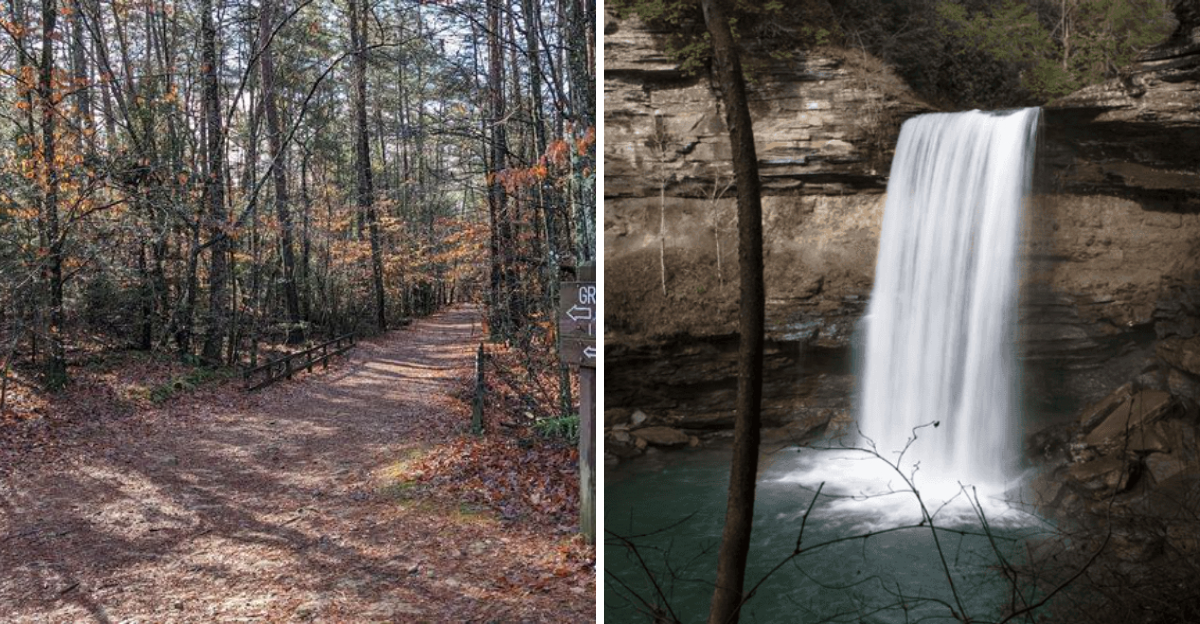
Fresh air hits differently out here, carrying the scent of pine and earth as the landscape stretches in every direction. Tennessee reveals a wilder, more rugged side through deep gorges, towering cliffs, and quiet forest paths that feel far removed from everyday life.
Some trails lead to sweeping overlooks that seem almost unreal, while others follow the sound of rushing water hidden below. It’s peaceful, dramatic, and endlessly scenic all at once.
Long hikes, slow moments, and unforgettable views come together in a place that invites you to stay a little longer than planned.
The Stone Door: A Natural Entrance Unlike Any Other
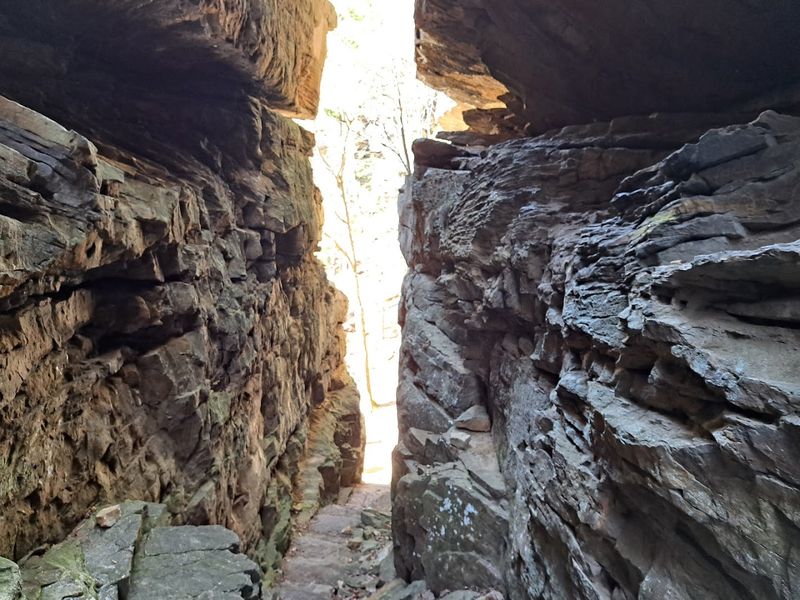
Some natural features earn their name honestly, and the Stone Door is exactly that. A massive sandstone boulder, cracked cleanly through the middle, forms a narrow passage that hikers descend to enter the gulf below.
The opening is tight, the stairs are steep, and the experience of stepping through it feels genuinely earned.
Located along the North Entrance trail system at this park, this landmark gives the park its most recognizable address. First-time visitors often pause at the top of the stairs, taking in the scale of the rock before committing to the descent.
The approach trail is paved and accessible for most of the distance, making the early portion of the hike welcoming to a wide range of visitors. Once you pass through the Stone Door itself, the terrain shifts entirely.
The landscape becomes rawer and more demanding, rewarding those who continue with sweeping overlooks and a sense of genuine wilderness.
Hikers with children should keep a watchful eye near the overlooks, as there are no railings in certain areas. Sturdy footwear with solid grip is strongly recommended for this section of the trail.
Greeter Falls: The Waterfall That Earns Every Step
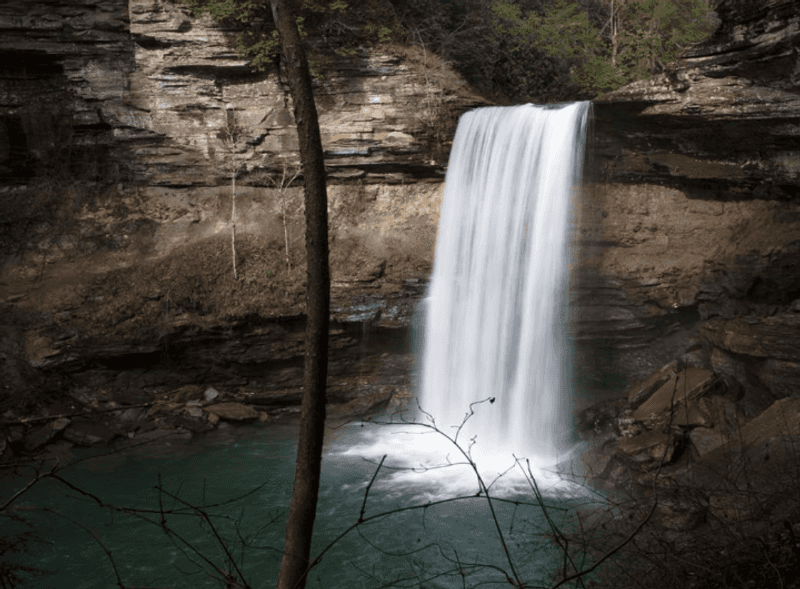
Greeter Falls has a reputation among Tennessee hikers that travels well beyond the Cumberland Plateau. The waterfall drops in two distinct tiers, and the trail down to the lower falls includes a metal spiral staircase that adds a surprisingly dramatic touch to the experience.
Visitors who have made the trip consistently describe the approach as one of the most memorable parts of the hike. Wooden steps near the base can become slick from the clay soil and the constant mist rising off the falls, so traction matters here more than almost anywhere else in the park.
A connector trail near the campground links Greeter Falls to the broader trail network, which means backpackers can include it as part of a longer multi-day route. Day hikers, however, will find that a focused visit to both the upper and lower falls gives plenty of material to talk about afterward.
The swimming hole at the base of Greeter Falls is a legitimate draw during warmer months. Cool, clear water collects in the natural pool, and on a warm afternoon in late spring or early summer, it becomes one of the most refreshing stops in the entire park.
Laurel Gulf Overlook: Where The Plateau Reveals Itself
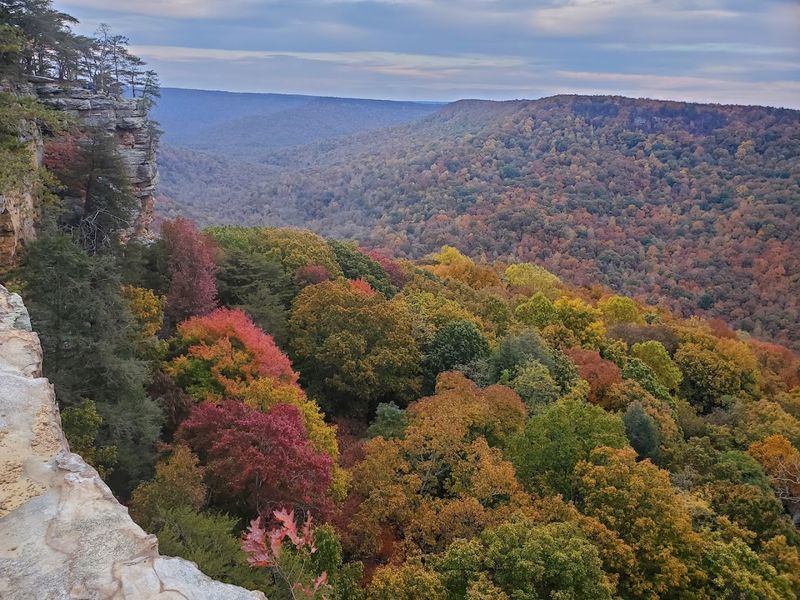
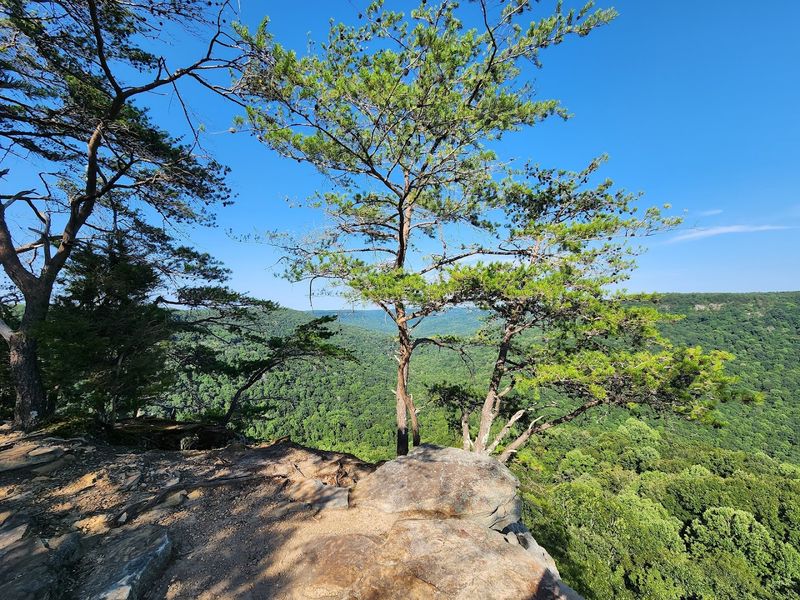
Standing at Laurel Gulf Overlook for the first time, most people go quiet. The gorge drops away beneath you in a long sweep of forest and stone, and the silence of the plateau fills in around the edges.
It is the kind of view that makes you understand why people return to this park year after year.
The hike to this overlook follows a paved accessible trail for a good stretch before transitioning to sandy, loamy soil through a pine-scented corridor. The elevation change is gradual enough that the overlook arrives almost as a surprise, which adds to the impact considerably.
Multiple overlook points along the Big Creek Rim Trail extend the experience beyond a single viewpoint. Each one offers a slightly different angle on the gulf below, and the soft soil underfoot makes the walking comfortable even on longer outings.
Spring and fall are the most visually rewarding seasons here. Mountain laurel blooms in May create a corridor of pink and white flowers along the rim, while autumn foliage transforms the gorge into something that photographers travel significant distances to capture.
Early mornings offer the clearest air and the best light.
Camping At Savage Gulf: Sleeping Under Real Darkness
Camping at Savage Gulf is a different proposition than pulling into a polished campground with electrical hookups and a camp store nearby. The park offers both developed sites and primitive backcountry camping, and the remote options deliver genuine solitude for those willing to carry their gear a few miles in.
The Alum Gap campsite, mentioned frequently by experienced backpackers, sits deep enough in the trail system that the ambient noise of the outside world disappears entirely. Reviewers consistently describe the sites as clean and well-maintained, which reflects positively on the park staff who manage a large and rugged area.
Backcountry campers should plan water carefully. Sources in the park can be limited, particularly during dry summer months, so carrying adequate supply from the trailhead is essential rather than optional.
A water filter is a sensible addition to any overnight pack.
Dogs are welcome on a leash, which makes the park accessible to hikers who prefer four-legged company on their trips. Cell service is unreliable throughout much of the park, so downloading offline maps before arrival is a practical habit.
The darkness at night, far from any town lights, is genuinely extraordinary for stargazing.
The Trail Network: Miles Of Marked And Varied Routes
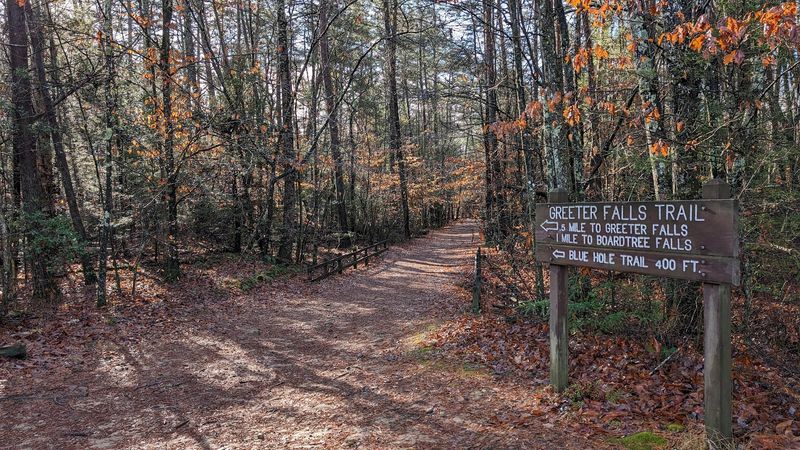
Few state parks in Tennessee offer the sheer variety of terrain that Savage Gulf presents across its trail system. The park covers 15,590 acres and contains trails ranging from paved accessible paths near the visitor center to demanding backcountry routes that drop into the gulf and climb back out along the rim.
Trail signage throughout the park earns consistent praise from visitors. Junction signs include mileage, color codes, and directional information that makes navigation straightforward even on longer loops.
The visitor center staff are notably helpful in matching trail recommendations to individual fitness levels and time constraints.
One of the most celebrated routes is the Stone Door and Big Creek Gulf Rim loop, a challenging eight-plus mile circuit that combines overlook views with deep gorge hiking. Experienced hikers describe it as one of the most satisfying full-day routes on the entire Cumberland Plateau.
Collins Rim Trail offers a different character, running along the gorge edge through loose rocks and seasonal wildflowers. Spring brings particularly vivid blooms to this section.
Regardless of which trail you choose, carrying a laminated paper map from the visitor center is sound advice, since phone signal drops to nearly nothing once you descend into the gulf.
Sandstone Cliffs And Geology: The Park Reads Like A Textbook
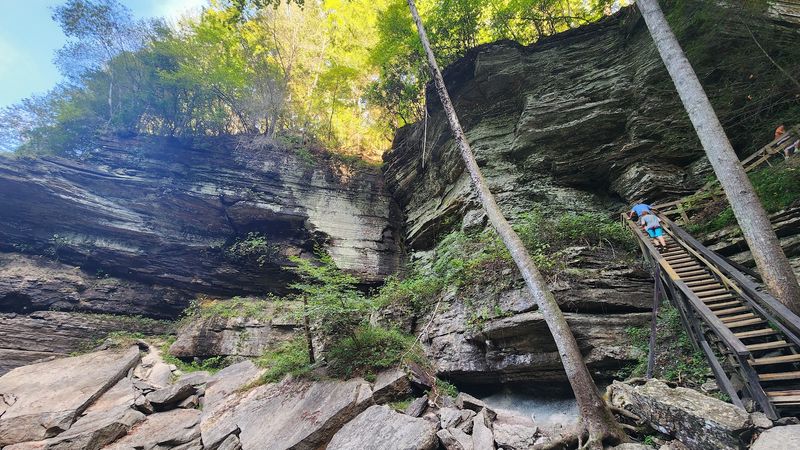
The geology of Savage Gulf State Park at 1183 Stone Door Rd in Beersheba Springs tells a story that stretches back hundreds of millions of years. The sandstone cliffs that frame the gorges were formed from ancient sedimentary deposits, and the erosion patterns visible today represent an ongoing process that has been reshaping the plateau for an enormous span of time.
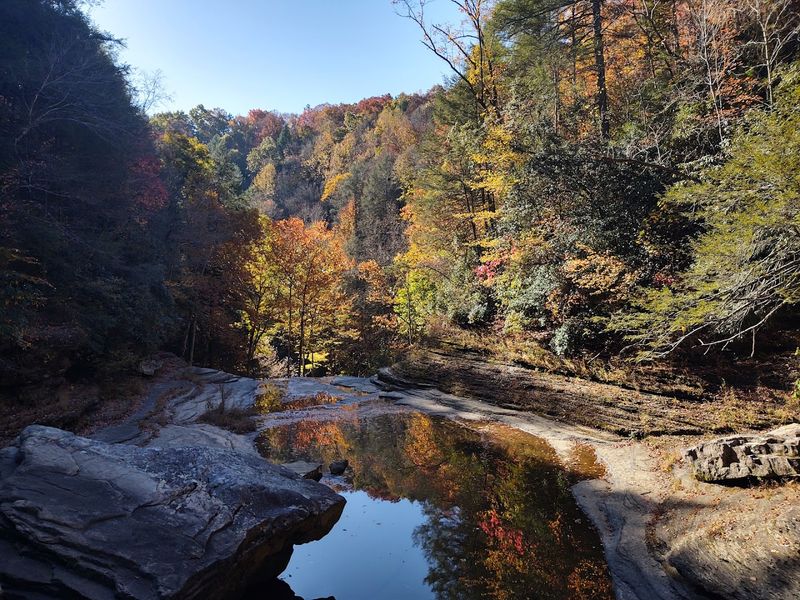
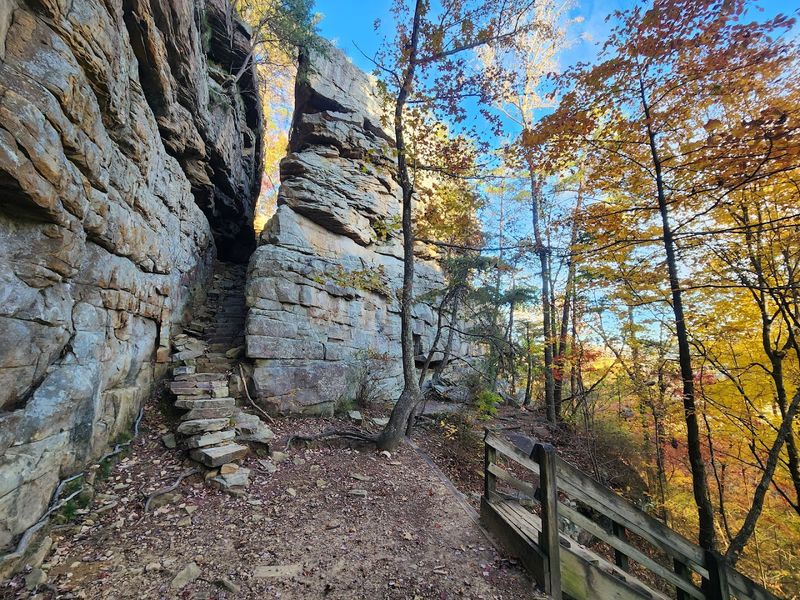
What makes these formations visually striking is the contrast between the pale buff-colored stone and the dense green canopy below. In autumn, when the foliage shifts to amber and red, the cliffs stand out even more sharply against the color below them.
Photographers who visit in October frequently describe the combination as among the best natural compositions in the eastern United States.
The cliff edges in certain sections of the park are unguarded, which requires attentive hiking rather than casual strolling. This is not a park designed to manage risk on your behalf, which is part of what gives it a quality of authentic wilderness that more developed parks cannot replicate.
Fallen trees are left where they land unless they block a trail, a management philosophy that reflects the park’s designation as a natural area. This approach keeps the forest floor in a state that feels genuinely undisturbed, adding to the overall sense of a landscape that operates on its own terms.
Wildlife And Wildflowers: The Park Changes With Every Season
Spring at Savage Gulf arrives with a particular enthusiasm. The forest floor fills with wildflowers before the canopy closes overhead, and species like pink lady slipper orchids appear along certain trails in numbers that genuinely surprise first-time spring visitors.
The Collins Rim Trail is especially productive for wildflower observation in April and May.
Mountain laurel follows in late spring, lining the rim trails with dense clusters of pale pink blooms that transform the hiking experience into something closer to a walk through an informal garden. Visitors who plan trips around the laurel bloom often return annually to catch the peak.
Wildlife is present throughout the park in forms that reward patience. White-tailed deer move through the forest at dawn and dusk, and wild turkeys are frequently spotted near the trailheads.
Snakes are part of the ecosystem as well, and hikers are advised to give them space rather than approach or disturb them.
The park also offered a color-blind viewfinder at the visitor center, a thoughtful accommodation that one reviewer specifically praised during a family visit. Small details like that reflect an attentiveness to visitor experience that goes beyond basic trail maintenance.
The park genuinely looks after its guests in quiet and practical ways.
The Visitor Center: Start Here Before You Hit The Trail
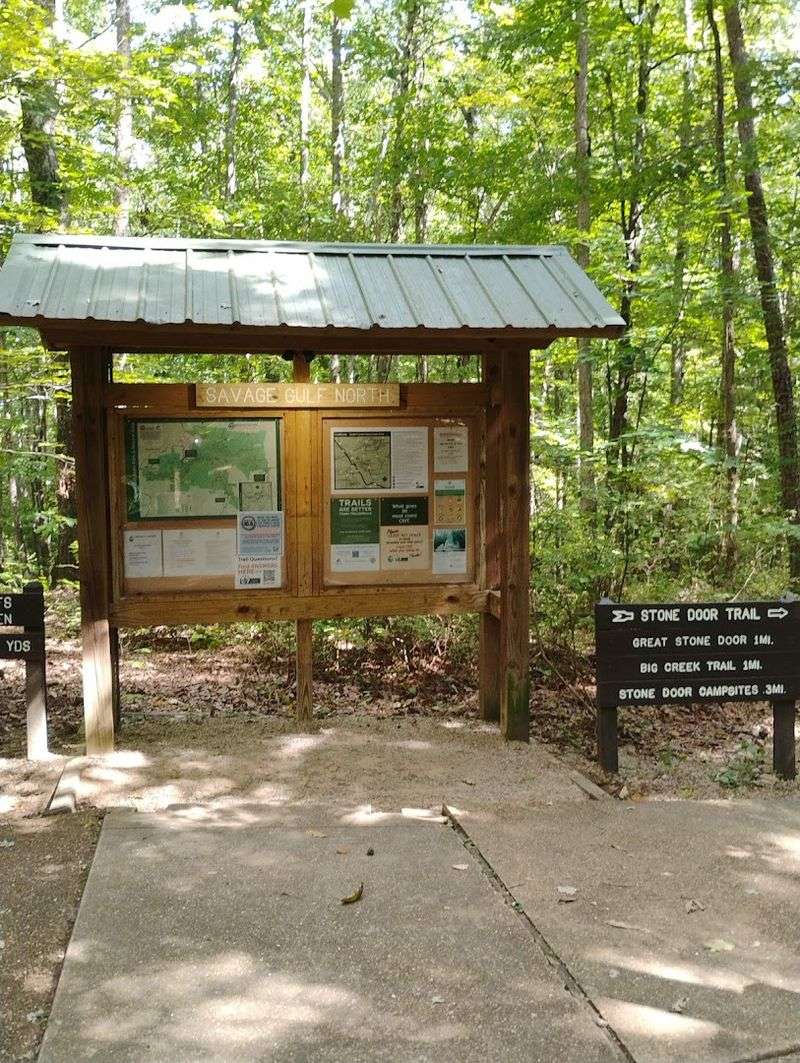
Every experienced hiker will tell you the same thing about Savage Gulf: stop at the visitor center before you do anything else. The staff there have detailed knowledge of current trail conditions, water availability, and which routes are appropriate for your fitness level and the time you have available.
The center provides free detailed maps that are clear, accurate, and considerably more reliable than phone navigation in a park where cell service disappears quickly once you move away from the trailhead. Picking up a laminated copy is one of the most practical decisions you can make before heading out.
A small gift shop operates at the ranger station, and the park participates in the Tennessee State Parks passport program. Visitors can collect a stamp for Savage Gulf in their passport book, a small ritual that connects this park to the broader network of state parks across Tennessee.
Public restrooms and picnic tables are available near the visitor center, making it a sensible base for families who want to organize gear and eat before setting off. The staff consistently receive high marks in visitor reviews for being friendly, approachable, and genuinely invested in making each visit a good one.
Their enthusiasm for the park is apparent without being performative.
Safety And Preparation: What Smart Hikers Know Before They Go
Savage Gulf is not a park that tolerates casual preparation. The terrain is beautiful, but it is also demanding, and a handful of conditions require attention before you step onto any trail.
Good footwear is the first consideration, as many surfaces become slick when wet, particularly near waterfalls and on clay-heavy sections of trail.
Cell service is unreliable throughout most of the park and drops to nothing once you descend into the gulf. Relying solely on a smartphone for navigation is a documented way to end up far off course.
A printed or laminated map from the visitor center, combined with a basic understanding of the trail color system, is the reliable alternative.
Basic emergency supplies deserve space in every pack, regardless of how short the planned hike seems. A first-aid kit, extra water, a snack, and a light layer for unexpected weather changes cover most contingencies.
Arriving early is also consistently recommended by experienced visitors, both to secure parking and to complete longer trails before afternoon heat or storms develop.
Poison oak grows along the edges of several trails, so staying on the marked path is practical rather than just a park rule. The park rewards visitors who take it seriously, and the preparation required is genuinely modest compared to the experience it unlocks.
Getting There And Planning Your Visit To Beersheba Springs
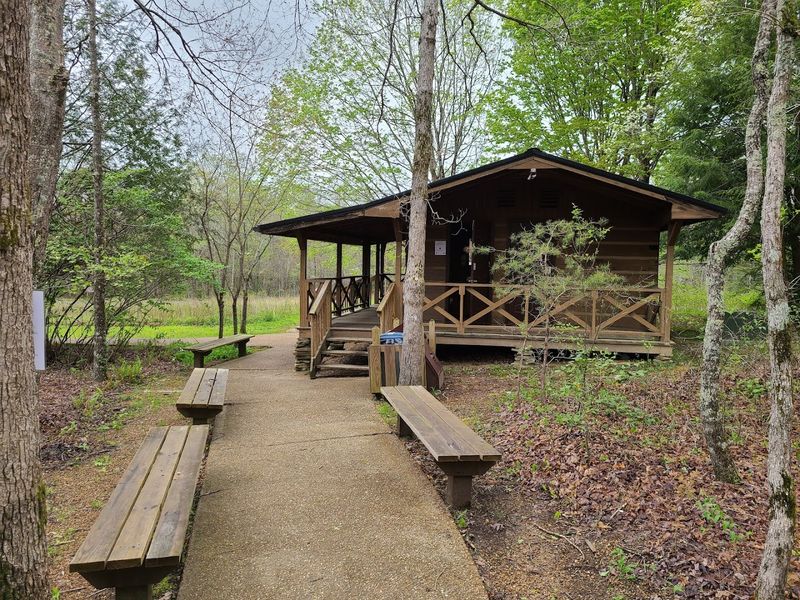
Savage Gulf State Park sits on the Cumberland Plateau at 1183 Stone Door Rd, Beersheba Springs, TN 37305, roughly equidistant between Nashville and Chattanooga. Both cities are within approximately 90 minutes of the park, which makes it accessible as a day trip while also rewarding those who plan an overnight stay.
The towns of Altamont and Beersheba Springs are small and offer limited dining and shopping options, so arriving with supplies already packed is the practical approach. Tracy City and Monteagle are both within about 30 minutes of the park and provide more substantial options for food and fuel before or after your visit.
The park has four entrance points, each offering access to different sections of the trail system. The North Entrance near Stone Door Road is the most visited and provides access to the Stone Door, Laurel Gulf Overlook, and Big Creek Rim Trail.
Each entrance has its own character, and returning visitors often make a point of exploring all four over multiple trips.
The park is open year-round, and each season offers something distinct. Winter strips the canopy back and opens long views that summer obscures.
Spring delivers wildflowers and waterfalls running full. Fall brings color.
Summer means swimming holes. There is no genuinely wrong time to visit.