
This Gorgeous New York State Park Has So Much To Do That One Visit Is Never Enough
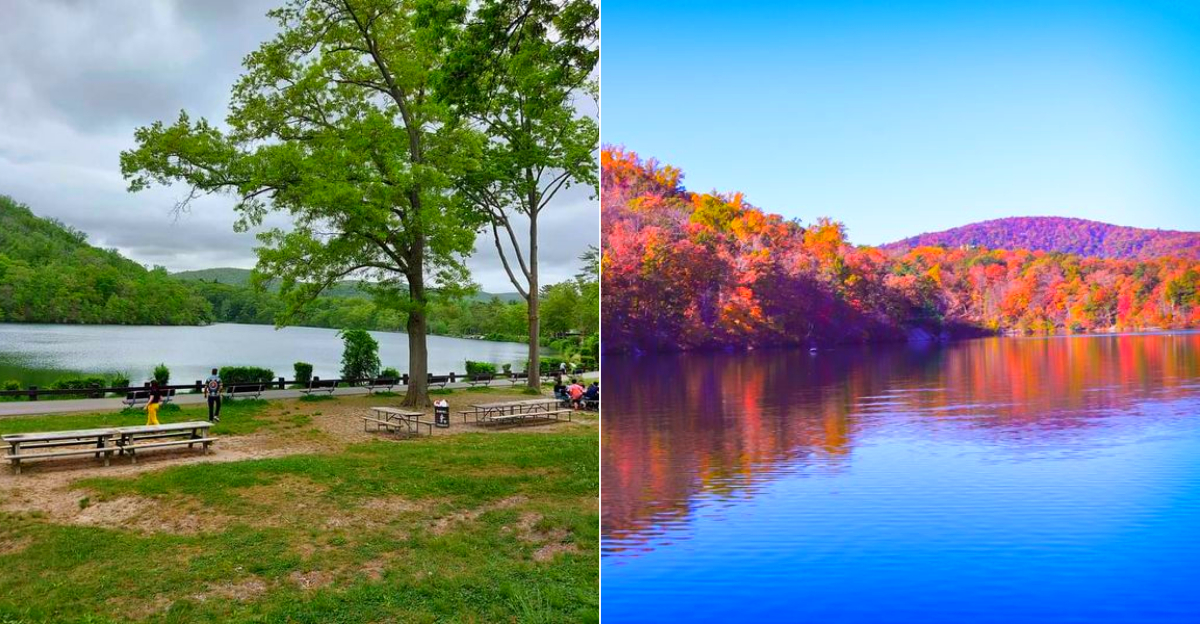
One visit barely scratches the surface at this gorgeous New York state park! The landscape stretches out with forests, open views, and winding trails that invite you to keep exploring just a little farther.
Every turn seems to reveal something different, which is exactly what makes the place so hard to experience in a single day.
Visitors come for many reasons. Hiking paths lead to scenic overlooks, quiet spots near the water offer a chance to relax, and wide natural spaces make it easy to slow down and enjoy the surroundings.
Throughout the year, the park feels slightly different each time you return. That sense of variety is what keeps people planning another trip before they have even finished the first one.
A Summit That Earns Every Step
Few things sharpen the appetite for a hike quite like knowing the reward at the top involves four states at once. From the summit of Bear Mountain, on a clear day, you can pick out New York, New Jersey, Connecticut, and Pennsylvania spread across the horizon like a living map.
The Hudson River threads through the landscape below, and on the sharpest days, the faint silhouette of the Manhattan skyline flickers at the southern edge of sight.
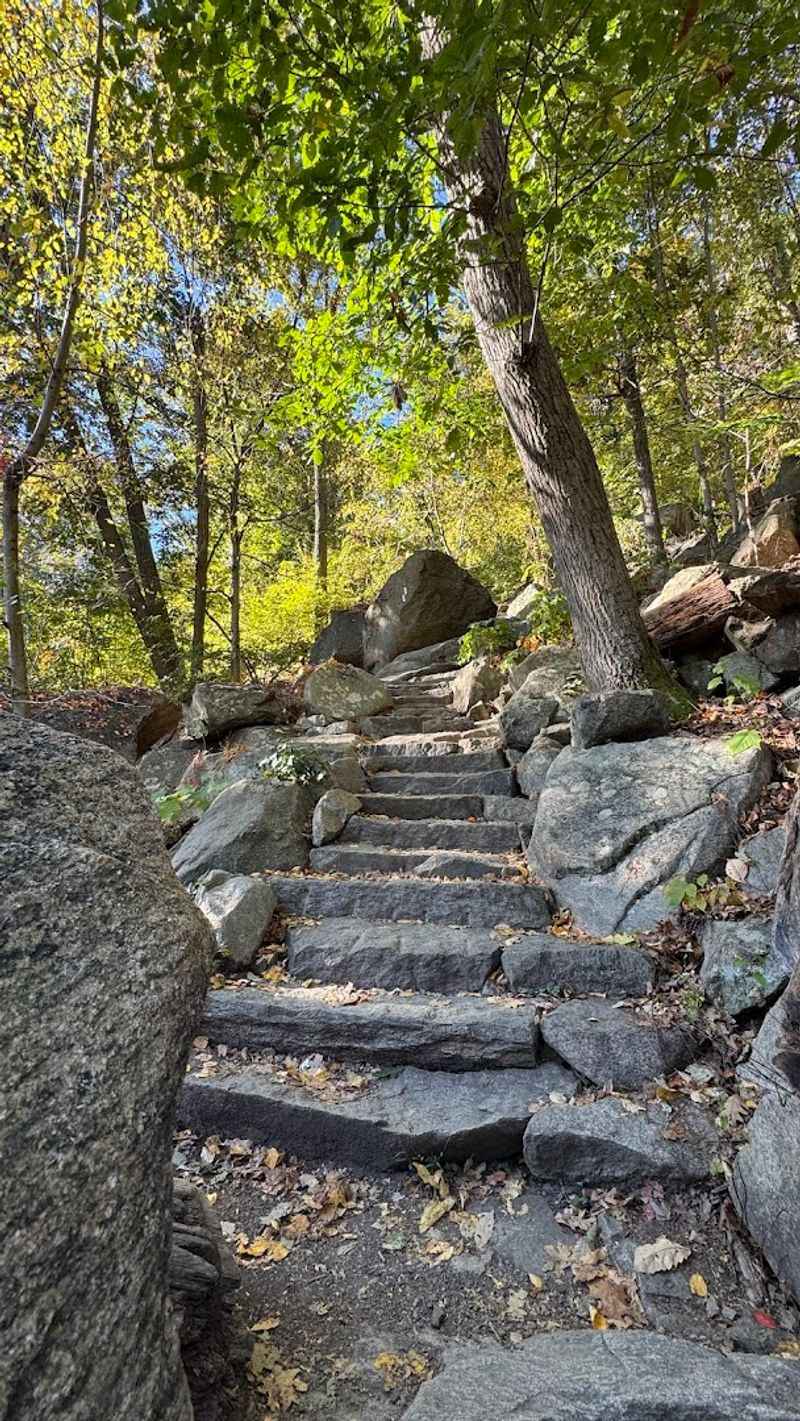
The most popular route follows the Appalachian Trail upward, where roughly 1,300 granite stairs have been cut directly into the mountain. Those stairs are a small engineering feat in their own right, keeping the ascent manageable without making it feel artificial.
The round trip runs about four miles, with the steepest sections front-loaded so the descent feels like a reward rather than a punishment.
Starting early in the morning is genuinely good advice here. Trails grow busy by midday, especially on weekends, and the quieter morning hours let you move at your own pace.
Vending machines and restrooms at the summit mean you are not entirely on your own once you reach the top, which is a thoughtful touch for families and casual hikers alike.
Perkins Memorial Tower And Its Storied Past
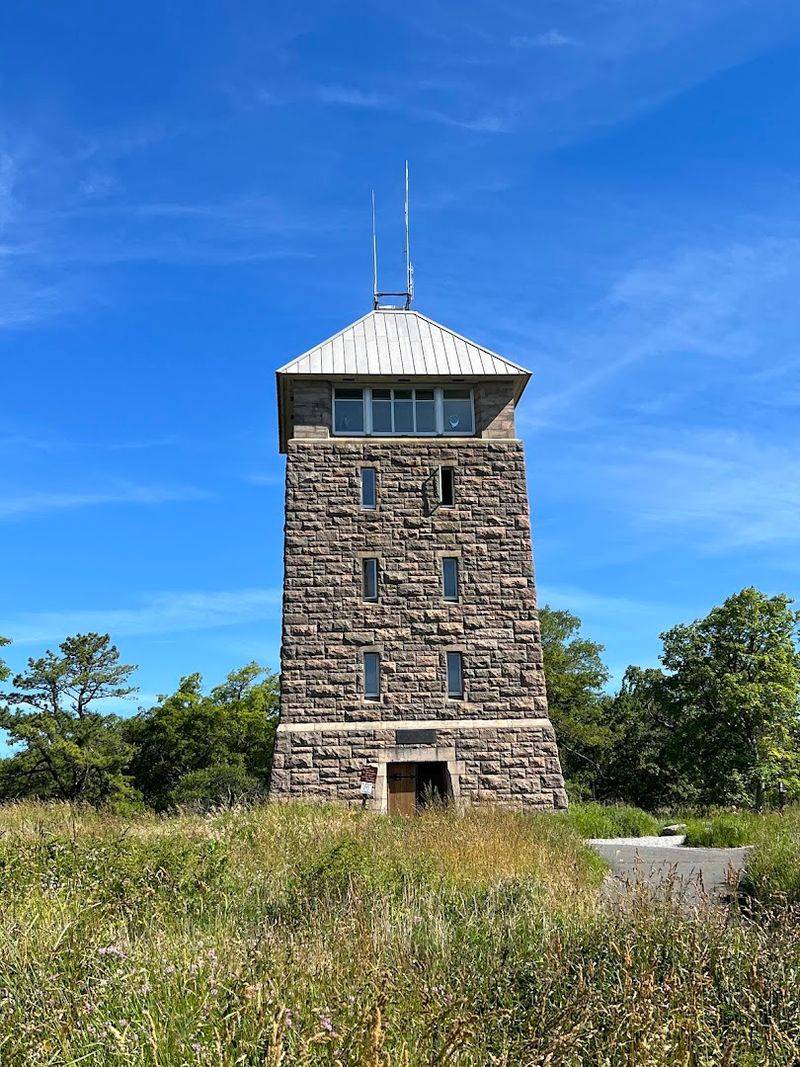
Standing at the very crown of Bear Mountain, Perkins Memorial Tower has been orienting visitors since 1934. Built from local stone and named after George W.
Perkins, the businessman and conservationist who fought to protect this land from industrial development in the early twentieth century, the tower carries genuine historical weight alongside its practical function as an observation deck.
Climbing the tower adds an extra layer of elevation to an already impressive summit. The structure itself is compact and solid, built in the rustic style common to Depression-era public works projects, with thick walls and small windows that frame the surrounding ridgelines rather than simply showing them.
Once at the top of the tower, the full sweep of the Hudson Highlands opens up in every direction without obstruction.
Benches scattered around the tower base make it easy to sit, rest tired legs, and take in the scenery without rushing. The history embedded in the place gives the stop a texture that purely scenic overlooks sometimes lack.
Knowing that Perkins essentially saved this mountain from becoming a quarry site adds a quiet layer of gratitude to every visit, making the view feel a little more earned and a great deal more meaningful.
Hiking Trails For Every Comfort Level
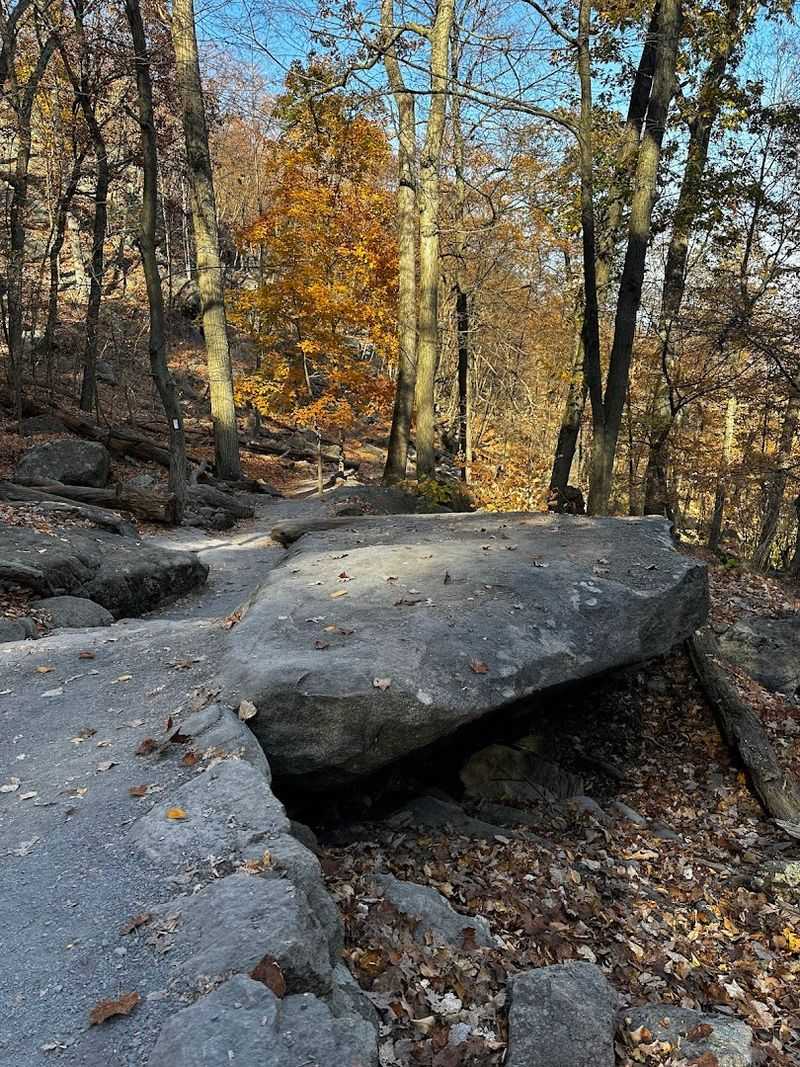
Bear Mountain does not ask you to be an expert before it lets you enjoy itself. The trail network here covers a wide range of difficulty levels, from gentle lakeside walks that suit families with young children to scrambling routes that will test experienced hikers who prefer their terrain unpredictable and steep.
That breadth of options is one of the park’s most underappreciated qualities.
The Appalachian Trail passes directly through the park, which means Bear Mountain carries the distinction of being one of the few places in the eastern United States where a national scenic trail intersects so seamlessly with a state park’s amenities.
Hikers can access the AT here and follow it in either direction for extended stretches if a single summit is not enough to satisfy the urge to keep moving.
Trail markers use a color-coded system that makes navigation straightforward even for first-timers. Wearing proper footwear matters more here than on many other trails because the granite surfaces can become slick when wet, and several descents involve uneven footing where ankle support earns its keep.
Bringing more water than you think you need is always the right call, especially during warmer months when the exposed granite sections of the trail radiate heat long after the sun shifts.
Hessian Lake And The Calm It Carries
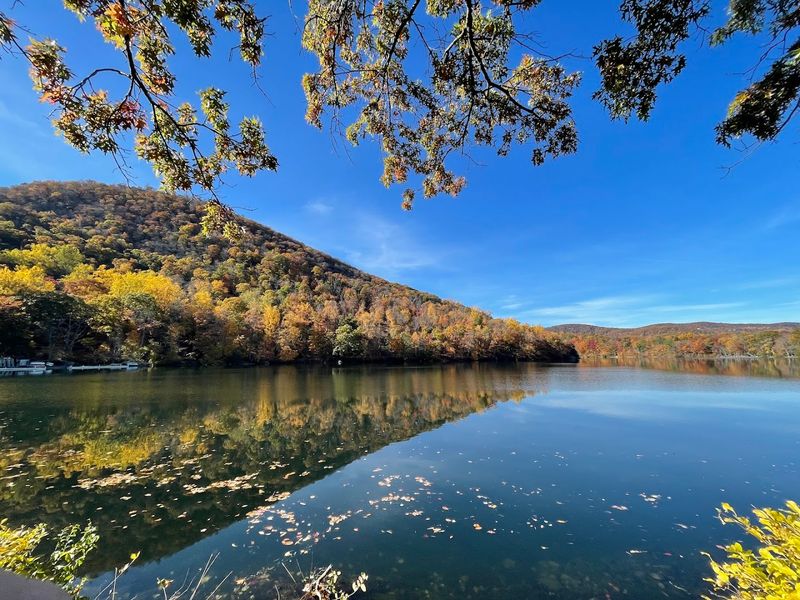
At the base of the mountain sits Hessian Lake, a body of water so still on calm mornings that it mirrors the surrounding hills with almost unsettling precision.
The lake has been a centerpiece of the park’s lower area for well over a century, offering a natural gathering point for visitors who want scenery without the elevation gain.
Its name traces back to Hessian soldiers from the Revolutionary War era, lending the water a historical depth that goes well beyond its placid surface.
Walking the perimeter of the lake is a pleasant and low-effort way to experience the park’s lower landscape. The path winds past mature trees, open grassy areas, and views back toward the mountain that give a satisfying sense of the terrain you either just hiked or are about to attempt.
Families often settle along the lake’s edges for picnics, and the general atmosphere is relaxed in the way that only well-loved outdoor spaces manage to achieve.
On clear autumn days, the foliage reflected in the lake produces the kind of color display that makes people stop mid-sentence to look. The water itself stays clean and visually striking across all seasons, though the fall months tend to draw the largest crowds specifically because the combination of mountain backdrop and changing leaves is genuinely hard to top.
Paddling And Boating On Open Water
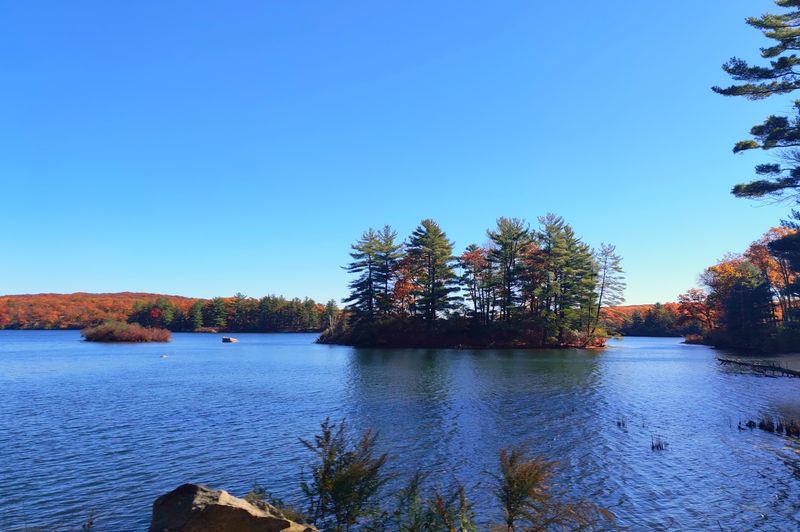
Getting out onto the water at Bear Mountain adds a completely different dimension to the park visit. Boat rentals are available at Hessian Lake during the warmer months, offering rowboats and pedal boats that let visitors explore the lake at their own pace from the water’s surface.
The perspective from a boat looking back toward the mountain is one of those views that photographs well but lands even harder in person.
Paddling here does not require any prior experience or special equipment beyond what the rental facility provides. The lake is calm and relatively compact, making it a comfortable outing for families with children who want to try something beyond walking.
The rental process tends to be straightforward, and the boats are well-maintained enough that you can focus on the scenery rather than the mechanics of staying afloat.
Arriving on weekday mornings tends to mean shorter waits and more open water to yourself, which makes the experience feel less like a managed attraction and more like genuine exploration.
The combination of the mountain rising directly above the lake and the open sky overhead gives the paddling experience a sense of scale that smaller, more enclosed waterways simply cannot replicate.
It is one of those park activities that looks simple on paper and delivers more than expected in practice.
The Trailside Museums And Wildlife Center
Most people come to Bear Mountain for the hike and leave having also spent an unplanned hour watching a porcupine investigate its enclosure with great seriousness of purpose.
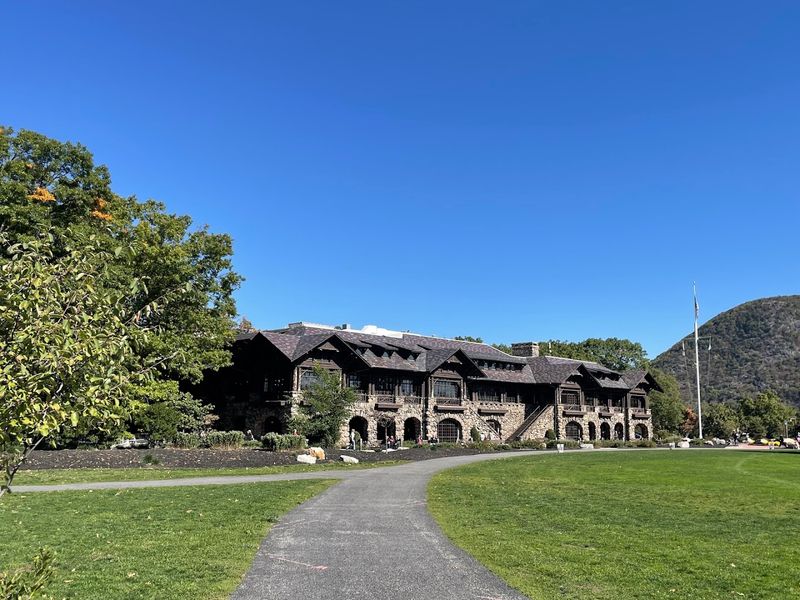
The Trailside Museums and Wildlife Center operates along the base of the mountain, weaving a series of small natural history exhibits and native animal displays into the landscape in a way that feels integrated rather than tacked on.
The animals here are all non-releasable wildlife that cannot survive independently in the wild.
Resident animals include owls, hawks, beavers, and porcupines, among others, each housed in naturalistic settings that reflect their actual habitats rather than sterile display cages.
The educational signage throughout the center explains not just what each animal is but why it ended up here and what role it plays in the broader Hudson Valley ecosystem.
Children tend to slow down noticeably at each enclosure, which is a reliable indicator that the exhibits are doing their job well.
The museums component of the center covers geology, ecology, and regional history through small but well-curated displays spread across several buildings along the trail route.
The whole experience can be completed in under two hours at a relaxed pace, making it an excellent complement to a morning hike rather than a competing attraction.
Entry is included with general park admission, which makes it an easy addition to any visit itinerary.
Bear Mountain Bridge And The Hudson River Crossing
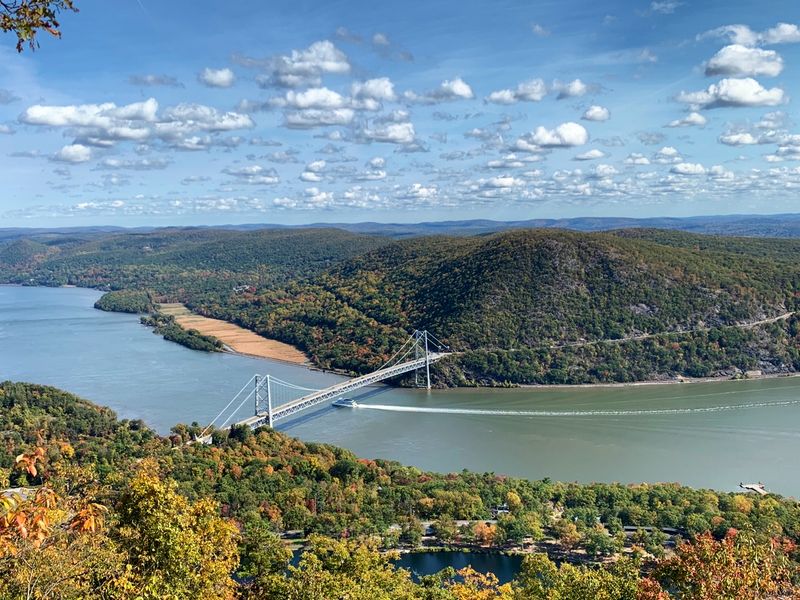
Completed in 1924, the Bear Mountain Bridge was the first suspension bridge to cross the Hudson River and held the record as the longest suspension bridge in the world for a brief period. That backstory alone makes a stop at the bridge worth factoring into any visit to the area.
The structure still carries traffic today, and its presence in the landscape adds an architectural counterpoint to all the natural scenery surrounding it.
From various points along the hiking trails and the lake shoreline, the bridge appears in the middle distance as a graceful arc connecting the two banks of the Hudson. Many hikers spot it during the ascent and use it as an informal landmark to gauge their position on the mountain.
On clear days it appears with sharp definition against the river and the hills beyond, making it a reliable focal point for photographs taken from the upper trail sections.
Driving across the bridge offers its own brief but memorable experience, with the river visible in both directions and the mountain rising to the west. The toll plaza on the western side marks the entry point for visitors arriving from New Jersey or points south via Route 9W.
The bridge is one of those infrastructure achievements that has aged into something approaching elegance, which is not a common outcome for engineering projects nearly a century old.
Fall Foliage That Commands Attention
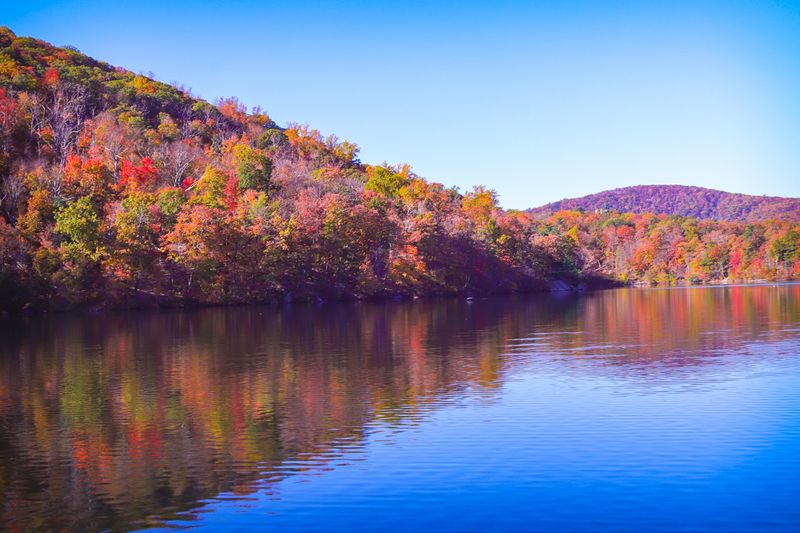
Autumn at Bear Mountain operates on a different register than the rest of the year.
The Hudson Highlands have long been recognized as one of the finer places in the northeastern United States to witness the annual change in leaf color, and the combination of elevation, varied tree species, and open viewpoints makes Bear Mountain a particularly strong location within that already competitive field.
Peak foliage typically arrives in mid to late October, though the timing shifts slightly from year to year depending on temperature patterns.
From the summit, the fall color display spreads across the surrounding ridgelines in every direction, with the Hudson River providing a silver thread through the center of the composition.
The contrast between the water and the hillsides covered in orange, red, and gold is the kind of scene that makes people understand why landscape painters spent so much time working in this exact region during the nineteenth century.
The Hudson River School of painting was not invented here by accident.
Parking fills quickly on peak fall weekends, so arriving before 8 a.m. is a practical necessity rather than an optional suggestion during October. Weekday visits during the foliage season offer a noticeably calmer experience with the same visual payoff.
The colors tend to linger for about two to three weeks at their most vivid before the trees begin shedding in earnest, so timing a visit to that window rewards the effort considerably.
Swimming And Summer Recreation At The Park Pool
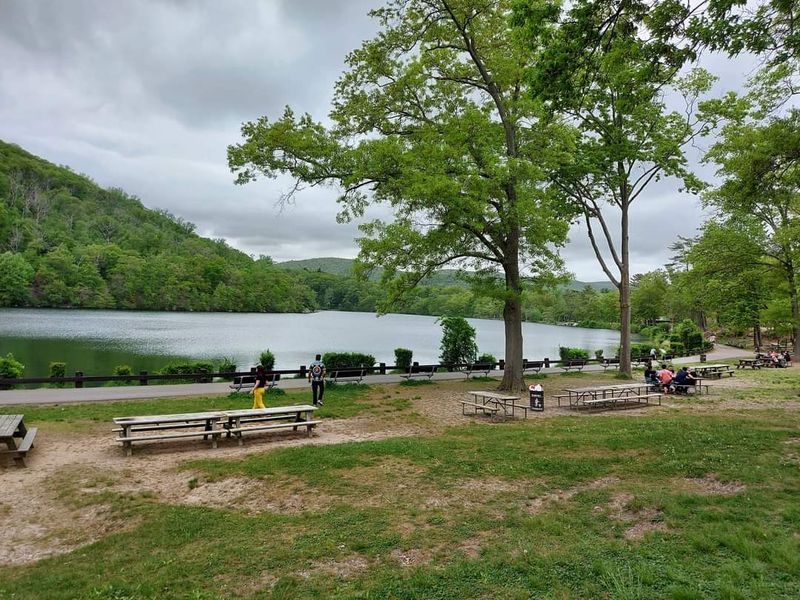
Bear Mountain State Park operates one of the largest outdoor swimming pools in New York State, a facility that has been cooling off summer visitors for decades. The pool sits near the base of the mountain, making it a natural endpoint for families who want to follow up a morning hike with an afternoon spent in the water.
The scale of the facility means it rarely feels overcrowded even on busy summer weekends, which is a meaningful advantage over smaller municipal pools in the region.
Lifeguards are on duty during operating hours, and the facility includes changing rooms, restrooms, and nearby food concessions that make it self-sufficient enough for a full day’s visit without needing to leave the park for supplies.
Families with younger children who find the hiking trails a bit ambitious tend to gravitate toward the pool area, which offers its own version of the park experience without requiring anyone to climb a mountain.
The pool season generally runs from late June through Labor Day, with hours posted on the park’s official website ahead of each season. Admission fees are separate from general park entry but remain reasonable by regional standards.
On genuinely hot summer days, the combination of cool water and mountain air circulating through the valley creates a comfort level that air-conditioned indoor spaces struggle to match in any meaningful way.