
16 Stunning Places You Wouldn’t Expect To Find In New York
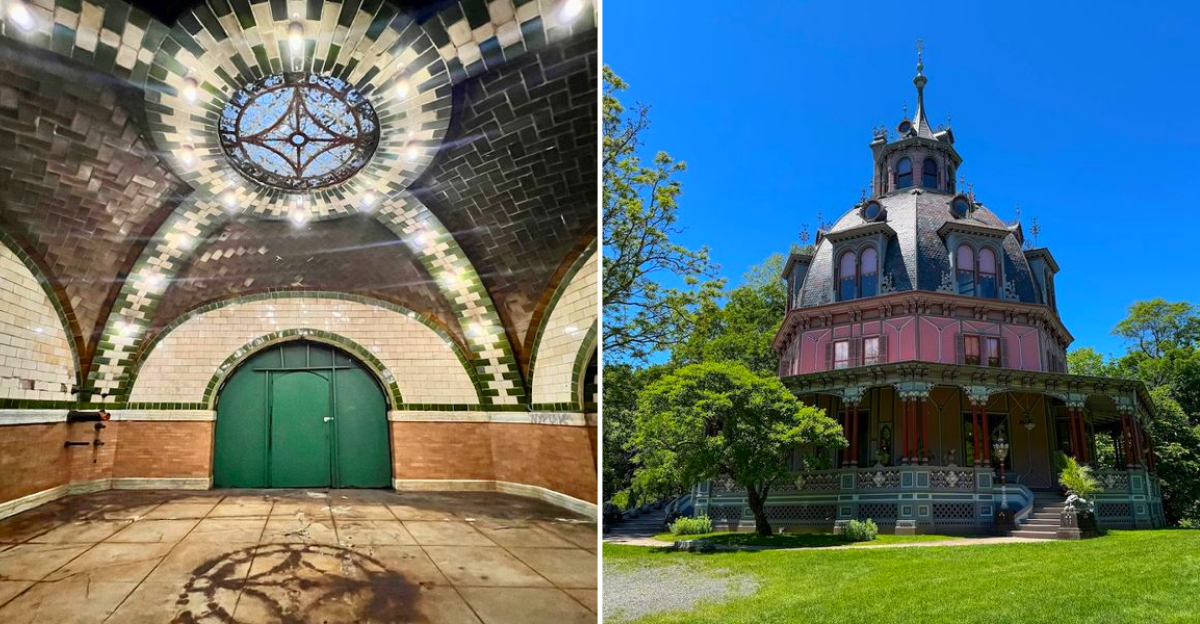
New York is full of famous landmarks and well-known destinations, but some of its most breathtaking places are the ones people rarely expect to find there. Beyond the busy streets and familiar sights, the state hides landscapes and attractions that can feel surprisingly dramatic, peaceful, or even a little surreal.
Waterfalls tucked deep in the forest, quiet lakes with crystal-clear water, unusual museums, and charming towns all appear in places many travelers never think to explore. Each one offers a reminder that New York’s beauty extends far beyond the spots most people already know.
For anyone willing to look a little closer, these unexpected places reveal a side of the state that feels full of discovery.
1. Natural Stone Bridge And Caves — Pottersville
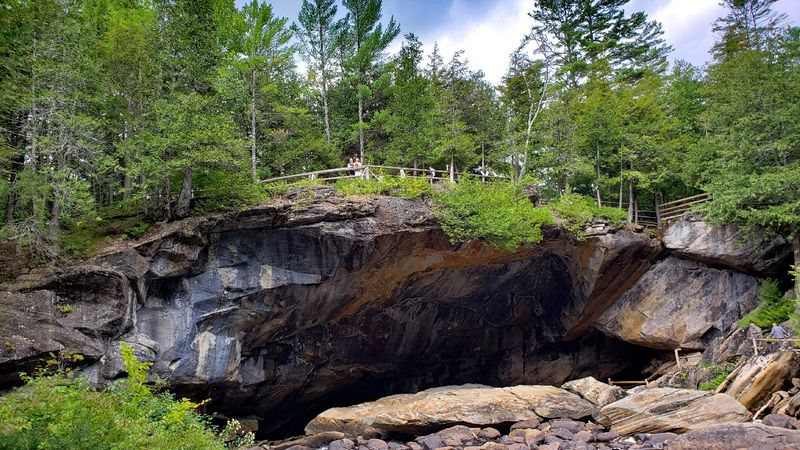
Mother Nature went absolutely wild in the Adirondacks, and the proof is at Natural Stone Bridge and Caves in Pottersville. The whole place looks like something out of a fantasy novel, but it is completely real and open to the public.
Marble caves, roaring waterfalls, and ancient rock formations carved by the last Ice Age greet you at every turn.
The trails here wind through dramatic gorges and past formations that took thousands of years to shape. You can find the property at 535 Stone Bridge Road, Pottersville, NY 12860, and it is well worth the drive upstate.
There are guided cave tours available, plus a gem mining sluice if you want to bring the kids along for extra fun.
The sound of rushing water follows you the whole time, and the cave ceilings feel impossibly high. Geologists say the marble here is over 500 million years old, which puts your Monday morning problems in serious perspective.
Pack sturdy shoes and bring a light jacket because the caves stay cool even in summer. Honestly, this place makes Central Park look like a parking lot.
2. Secret Caverns — Cobleskill
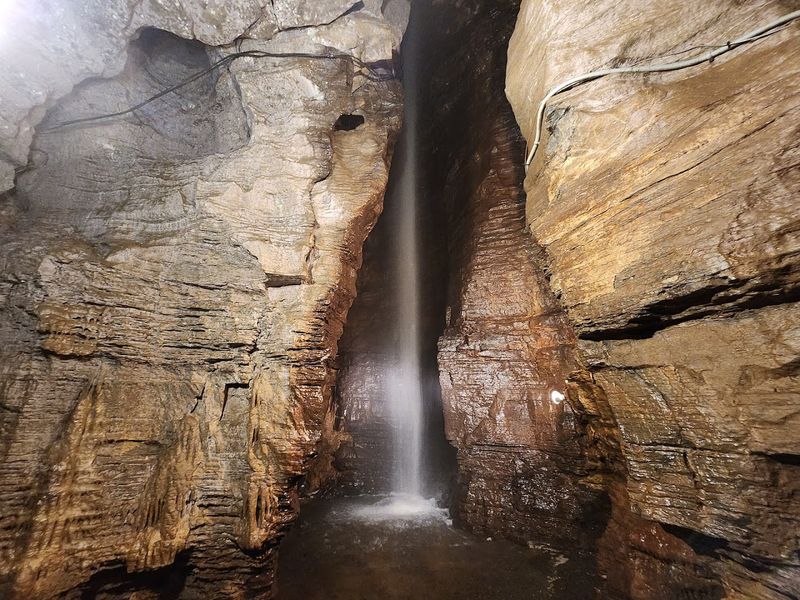
Not every cave comes with personality, but Secret Caverns in Cobleskill has buckets of it. The hand-painted folk art signs along the path are equal parts hilarious and charming, giving this underground adventure a roadside-attraction energy that feels refreshingly old-school.
Nobody does quirky like upstate New York.
The main event is a 100-foot underground waterfall that drops straight down into darkness, and yes, it is every bit as dramatic as it sounds. You can reach the caverns at 671 Caverns Road, Howes Cave, NY 12092, just a short drive from the better-known Howe Caverns nearby.
The two caves make a great double feature if you are already making the trip.
Tours run regularly throughout the day and last about 45 minutes. The cave temperature sits at a steady 50 degrees Fahrenheit year-round, so bring a layer even if it is blazing hot outside.
Secret Caverns has been operating since 1928, which means this hidden gem has been doing its thing longer than most New York landmarks most tourists actually know about. Straight up, this place slaps harder than you would ever expect.
3. Eternal Flame Falls — Chestnut Ridge Park
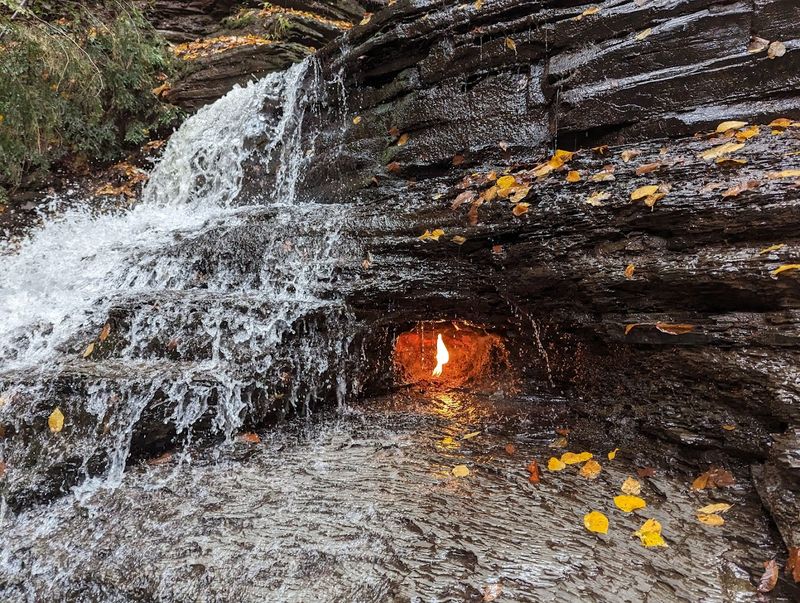
Fire and water are not supposed to coexist, but Eternal Flame Falls did not get that memo. Found behind a modest waterfall in Chestnut Ridge Park near Orchard Park, a small but persistent flame burns thanks to natural methane gas escaping through cracks in the shale below.
It has been burning for centuries.
The hike to reach it is about 1.5 miles round trip through a beautiful gorge, and the payoff is genuinely one of the most surreal sights in the entire state. Chestnut Ridge Park sits at 6121 Chestnut Ridge Road, Orchard Park, NY 14127, and admission to the park is free for Erie County residents.
The trail can get slippery, so waterproof boots are a smart call.
Scientists have studied the flame and found that the natural gas here seeps from Devonian-age shale, a rare geological quirk. The flame occasionally goes out during heavy rain, but visitors can relight it with a simple match or lighter, which makes the whole experience feel oddly interactive.
Honestly, standing in front of a waterfall with a flame burning behind it feels like a scene from a movie, except the ticket is free.
4. The Armour-Stiner Octagon House — Irvington
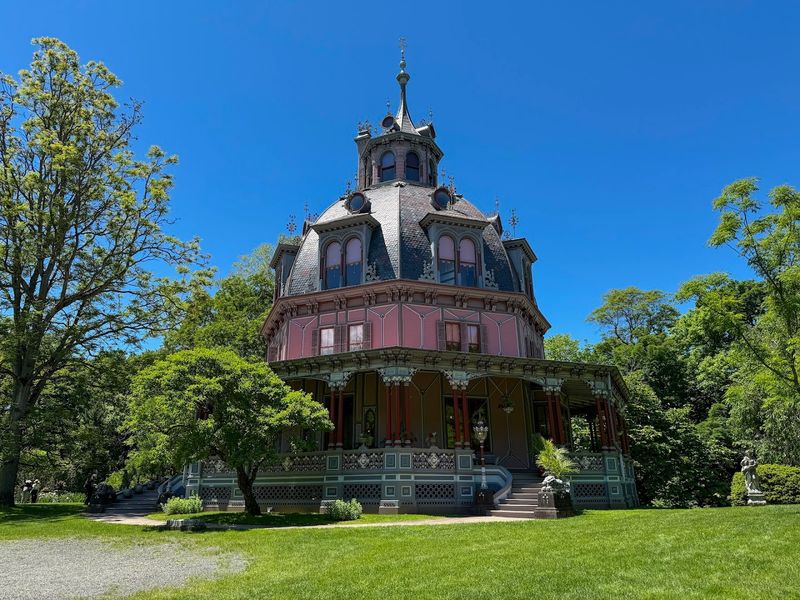
Eight sides, one dome, and zero competition. The Armour-Stiner Octagon House in Irvington is one of the most architecturally rare buildings in the entire world, and it is just sitting quietly along the Hudson River like it is not a big deal.
Built in 1860, this Victorian beauty has a full domed roof and interiors that match the drama of the exterior completely.
The house is located at 45 West Clinton Avenue, Irvington, NY 10533, and guided tours are available by appointment through the World Monuments Fund, which helped restore the property.
The octagon design was championed in the mid-1800s by an American writer named Orson Squire Fowler, who believed the shape promoted health and efficiency.
New York really attracts the visionaries.
Inside, the rooms radiate outward from a central spiral staircase, and the original period furnishings have been carefully preserved. The dome floods the upper floor with natural light in a way that feels almost theatrical.
There are fewer than a dozen fully intact octagon houses left in the United States, which makes this one a true architectural unicorn. Catching a tour here is like stepping into a 19th-century dream that somehow never ended.
5. Sylvan Terrace — Washington Heights
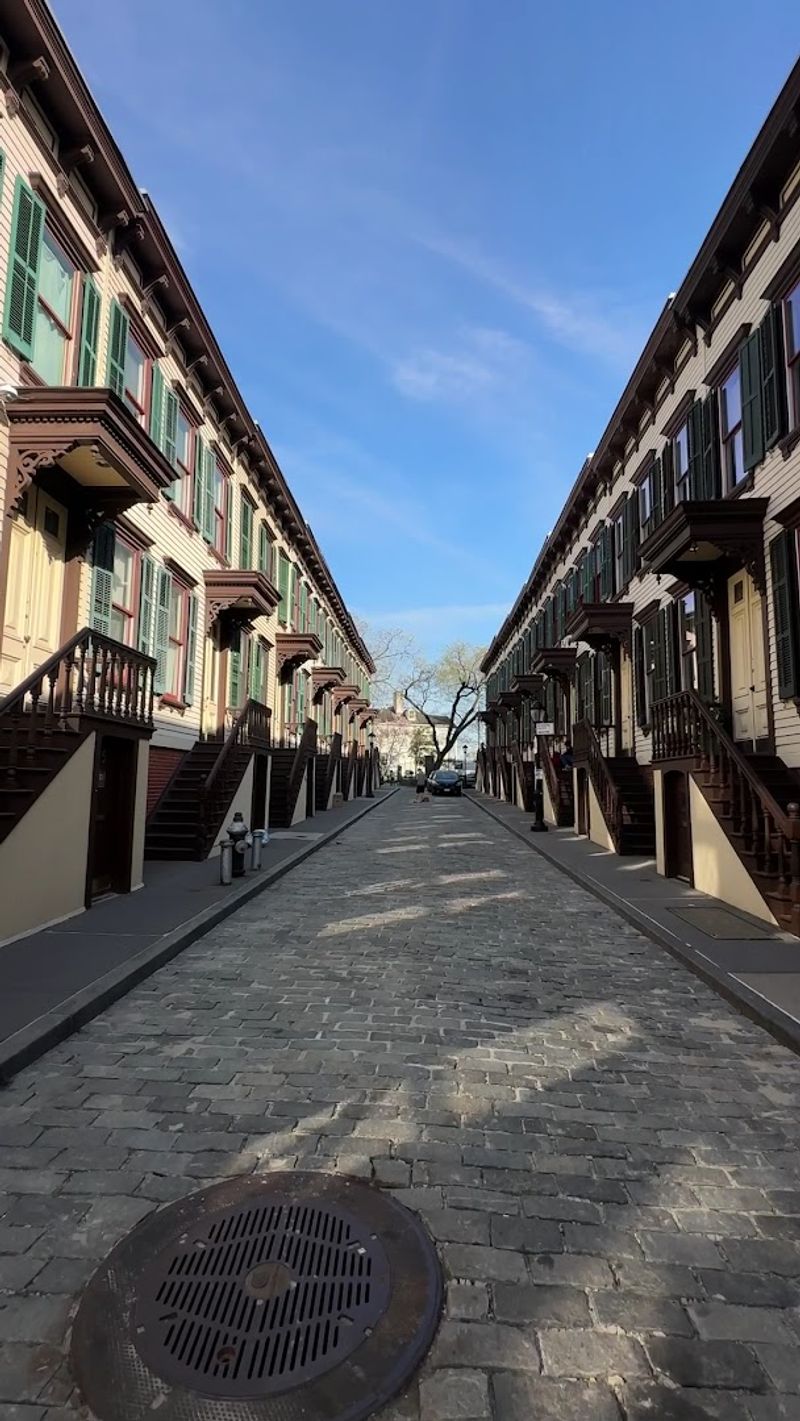
Right in the middle of Washington Heights, there is a block that time completely forgot. Sylvan Terrace is a short cobblestone street lined with two rows of wooden row houses built in 1882, and they look so pristine that first-time visitors often assume they are standing on a movie set.
The whole street has been landmarked and lovingly maintained.
The terrace runs between Jumel Terrace and St. Nicholas Avenue, adjacent to the Morris-Jumel Mansion at 65 Jumel Terrace, New York, NY 10032, which is the oldest surviving house in Manhattan.
The wooden homes along Sylvan Terrace were originally built as worker housing, and they have been repainted in cheerful colors that make the block pop against the surrounding urban landscape.
George Washington reportedly used the mansion nearby as a military headquarters during the Revolutionary War.
Walking Sylvan Terrace on a quiet afternoon is one of those rare New York experiences that feels genuinely calm. The contrast between this sleepy wooden lane and the busy avenues just half a block away is almost absurd.
It is one of the most photographed streets that most tourists have never heard of. Do yourself a favor and add this one to the list before the whole internet discovers it.
6. The New York Earth Room — Manhattan
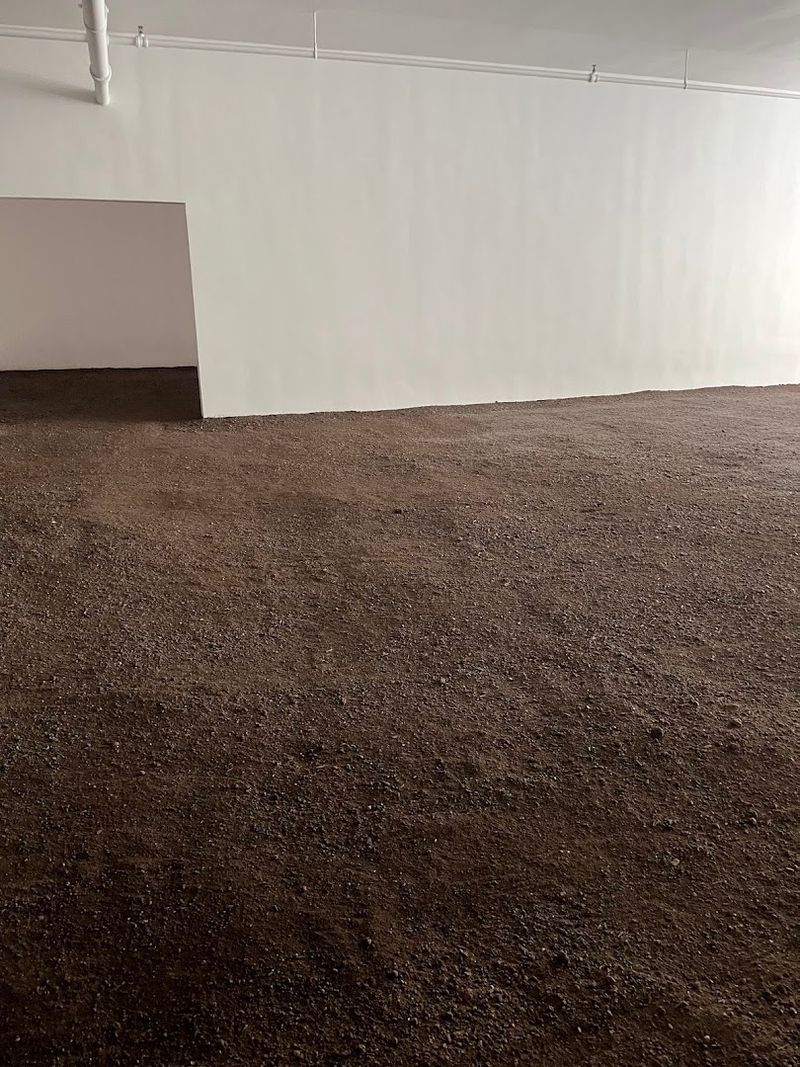
280,000 pounds of dirt sitting in a SoHo apartment. That sentence is real, and so is the artwork.
The New York Earth Room is a permanent installation by artist Walter De Maria, and it has been maintained by the Dia Art Foundation since 1977. The room is filled with 22 inches of rich, dark soil covering the entire floor of the loft space.
You can visit it for free at 141 Wooster Street, New York, NY 10012, and it is open to the public several days a week. The smell when you walk in is extraordinary, a deep earthy scent that instantly transports you somewhere far from the city.
Visitors are not allowed to touch or walk on the soil, which only adds to the strange reverence the space demands.
De Maria created three Earth Rooms in total, but the one in SoHo is the only surviving version. The installation has been refilled and maintained continuously, which means someone literally tends to this apartment full of dirt as a full-time responsibility.
That fact alone is worth sitting with for a moment. For a city that prides itself on maximizing every square foot, dedicating an entire loft to soil is the most New York power move imaginable.
7. The Evolution Store — Manhattan
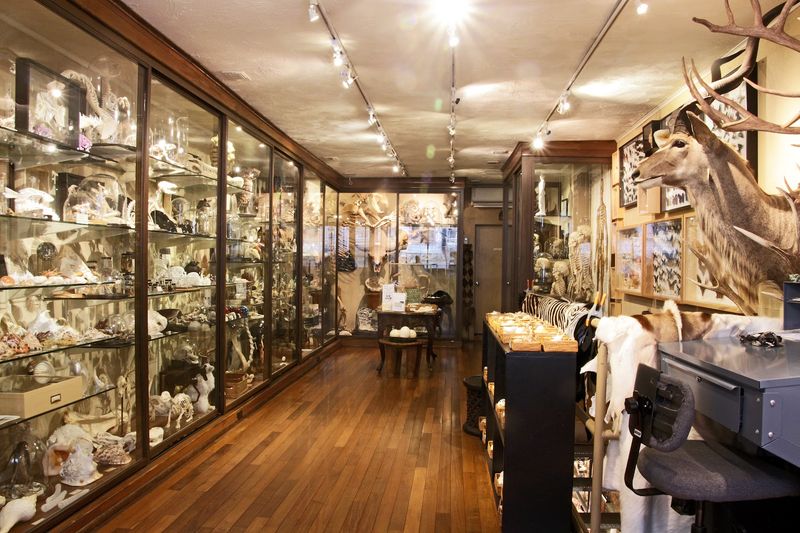
Some stores sell clothes. The Evolution Store sells dinosaur teeth, framed beetles, and real human skulls.
Located in SoHo, this natural history shop is one of the most genuinely fascinating retail spaces in all of New York City, and that is saying something in a city where the competition is fierce. Every shelf is packed with something that makes your brain do a double take.
You can find it at 120 Spring Street, New York, NY 10012, and walking through the door feels like stepping into the back room of a natural history museum where all the really good stuff lives.
Fossilized shark teeth, mounted butterfly collections, taxidermy pieces, meteorite fragments, and anatomical models are all part of the regular inventory.
The prices range from a few dollars to several thousand, depending on how serious your collection is.
The store has been a SoHo staple since 1993, and it attracts everyone from curious tourists to serious collectors and scientists. Gift shopping here is an absolute adventure because nothing is predictable.
Buying a fossilized ammonite for your friend’s birthday is a power move that a flower arrangement simply cannot compete with. The Evolution Store is proof that retail can still be genuinely thrilling.
8. City Hall Subway Station (Abandoned) — Manhattan
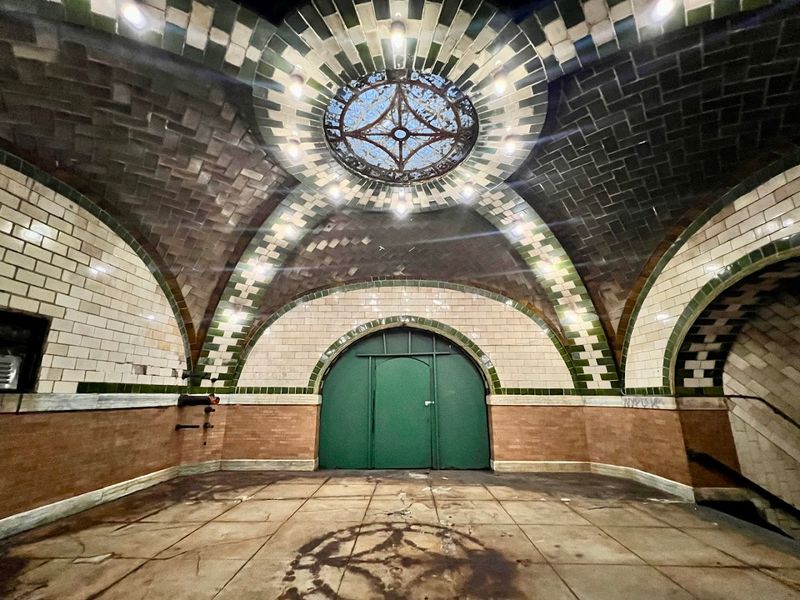
New York City has a subway station so beautiful that it was sealed off from the public rather than modernized.
The original City Hall station opened in 1904 as the crown jewel of the IRT line, designed with Guastavino tile vaulting, graceful arched skylights, and brass chandeliers that would not look out of place in a European cathedral.
Then the city just closed it in 1945.
The station sits beneath City Hall Park in lower Manhattan, and while you cannot simply walk in, members of the New York Transit Museum can book special tours to access it. The Transit Museum itself is located at Boerum Place and Schermerhorn Street, Brooklyn, NY 11201, and membership is genuinely worth it for access to experiences like this one.
The architecture inside has been described as one of the finest examples of early transit design in the world.
Riders on the 6 train can actually catch a brief glimpse of the station if they stay on past the last stop at Brooklyn Bridge and watch through the windows as the train loops around. It is a fleeting but genuinely magical moment.
The fact that this level of beauty has been sitting underground untouched for decades is both heartbreaking and completely fascinating.
9. Opus 40 — Saugerties
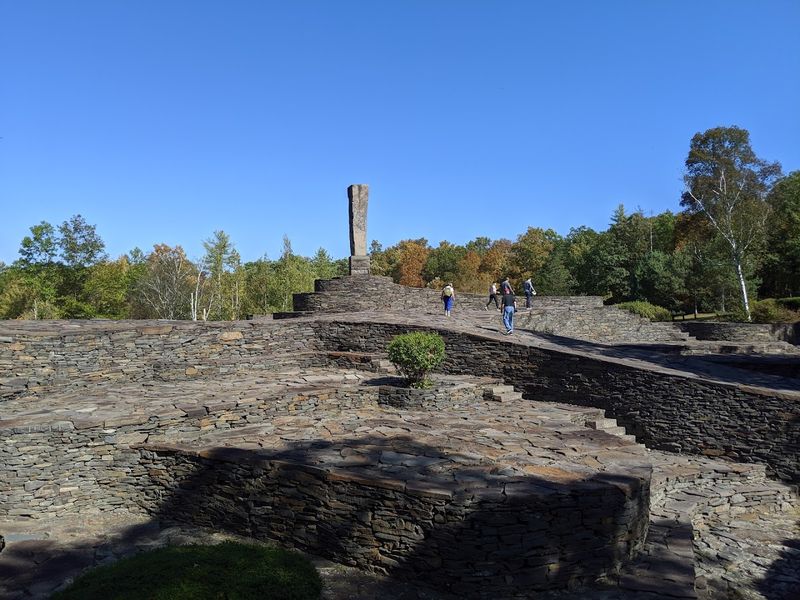
One man spent 37 years building a six-acre sculpture by hand in the Hudson Valley, and the result is one of the most breathtaking outdoor artworks in the country.
Harvey Fite created Opus 40 from bluestone quarried directly on the property, constructing an elaborate system of terraces, ramps, pools, and a towering central monolith without any formal architectural training.
The sheer ambition of it is almost incomprehensible.
Located at 50 Fite Road, Saugerties, NY 12477, the site is open to visitors seasonally and also hosts concerts and special events throughout the year. Fite originally intended the project to take 40 years, which is where the name comes from, but he died in an accident on the property in 1976 before reaching that milestone.
His work was left exactly as it stood.
Walking through Opus 40 feels like exploring an ancient ceremonial site that somehow appeared in the Catskills. The bluestone surfaces are worn smooth in places, and the views from the upper terraces stretch out across the surrounding landscape beautifully.
It is the kind of place that makes you want to sit down and just exist for a while. Opus 40 is proof that one determined person with a vision can genuinely reshape the world.
10. Widow Jane Mine — Rosendale
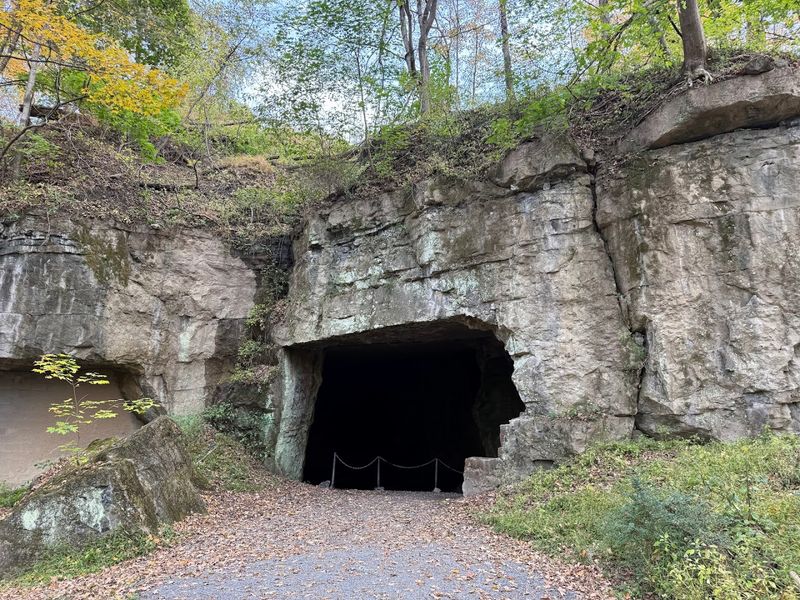
Most mines get abandoned and forgotten. Widow Jane Mine got turned into a concert venue, and somehow that is the most Upstate New York thing ever.
Located in Rosendale, this former cement mine features a cavern so massive and acoustically stunning that it now hosts live music, art installations, and cultural events throughout the year. The reverb inside is reportedly extraordinary.
The mine is part of the Century House Historical Society at 668 Route 213, Rosendale, NY 12472.
Rosendale cement was once famous across the country and was used in the construction of the Statue of Liberty and the Brooklyn Bridge, so the mine has some serious historical credibility to back up its artistic ambitions.
The cavern ceiling soars to remarkable heights, and the stone walls carry the kind of weight that only centuries can provide.
Tours of the mine run during warm months, and the annual Rosendale International Pickle Festival nearby makes for a fun double-feature day trip if you appreciate both history and absurdity in equal measure. The combination of industrial history and contemporary art programming makes Widow Jane Mine feel genuinely alive.
Standing inside and hearing your own voice echo off those ancient walls is an experience that stays with you long after you have driven back home.
11. The Old Stone Fort — Schoharie
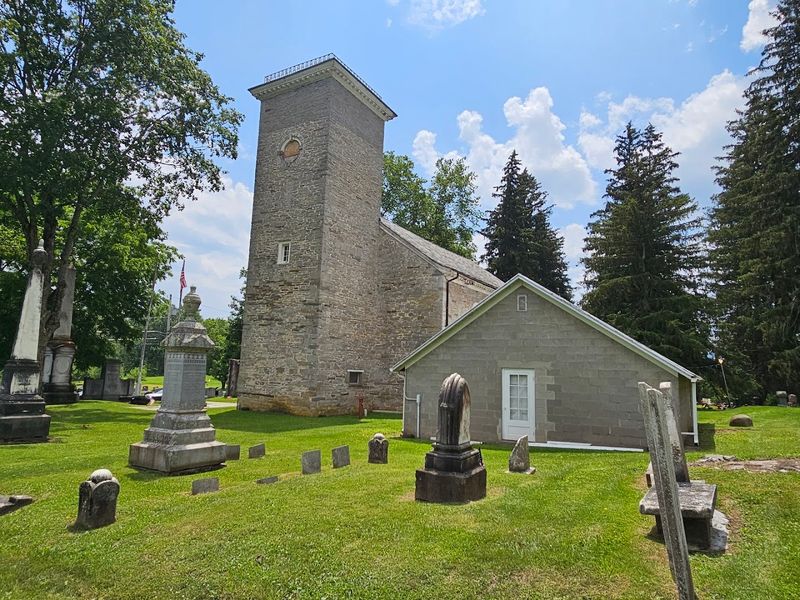
Churches have served many purposes throughout history, but not many of them can say they doubled as a Revolutionary War fortress.
The Old Stone Fort in Schoharie was originally built as a Dutch Reformed Church in 1772, and when the Revolutionary War arrived, the community fortified it and used it as a refuge during British and Loyalist raids.
The walls of this building have genuinely seen things.
Today the fort operates as a museum at 145 Fort Road, Schoharie, NY 12157, and it houses an impressive collection of Revolutionary War artifacts, Native American objects, and early American historical items.
The 1780 raid on Schoharie by British forces led by Sir John Johnson is one of the most dramatic events in upstate New York’s colonial history, and the fort was right at the center of it.
Cannonball damage is still visible on the exterior walls.
The surrounding cemetery contains graves dating back to the 1700s, adding another layer of historical depth to the visit. The museum staff are knowledgeable and enthusiastic, which makes the whole experience feel personal rather than textbook.
For anyone who thought history class was boring, the Old Stone Fort is the kind of place that changes minds entirely. Real history hits different when the walls are still standing.
12. The Kazoo Museum — Eden
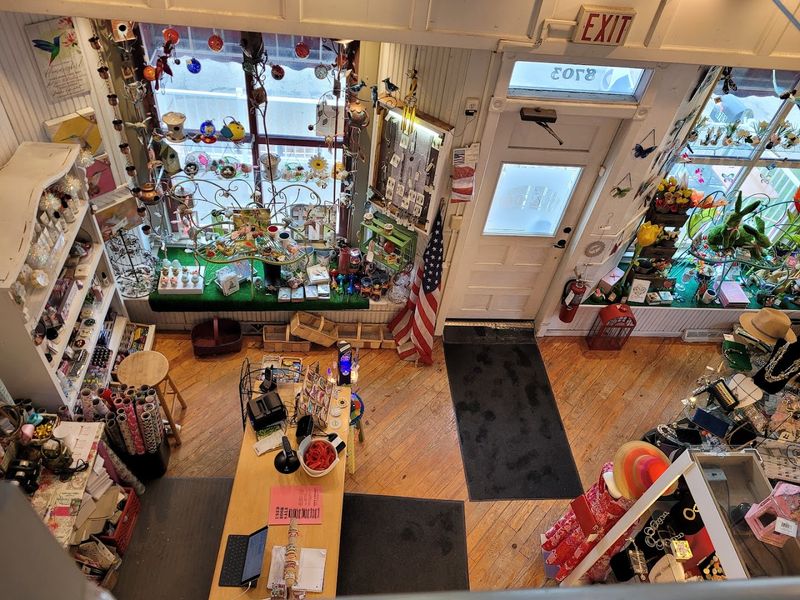
There is a museum in New York State dedicated entirely to the kazoo, and it is housed inside the only metal kazoo factory still operating in the United States.
The Kazoo Museum in Eden, New York, is one of those places that sounds like a joke until you are actually standing inside it, surrounded by the entire history of the world’s most democratically accessible instrument.
Yes, a kazoo museum. Yes, it is fantastic.
Located at 8703 South Main Street, Eden, NY 14057, the museum is part of the Original American Kazoo Company, which has been manufacturing kazoos on this site since 1916.
Visitors can watch kazoos being made by hand on vintage equipment, browse through a collection of rare and novelty kazoos from around the world, and even make their own kazoo to take home.
The gift shop is predictably delightful.
The kazoo was invented in the United States in the 1840s, and this museum traces the full arc of its cultural history with genuine enthusiasm and care. Admission is affordable, and the whole visit takes about an hour, making it a perfect stop during a road trip through Western New York.
Bringing a kazoo home as a souvenir is arguably more New York than a snow globe of the Brooklyn Bridge.
13. Bannerman Castle Ruins — Hudson River
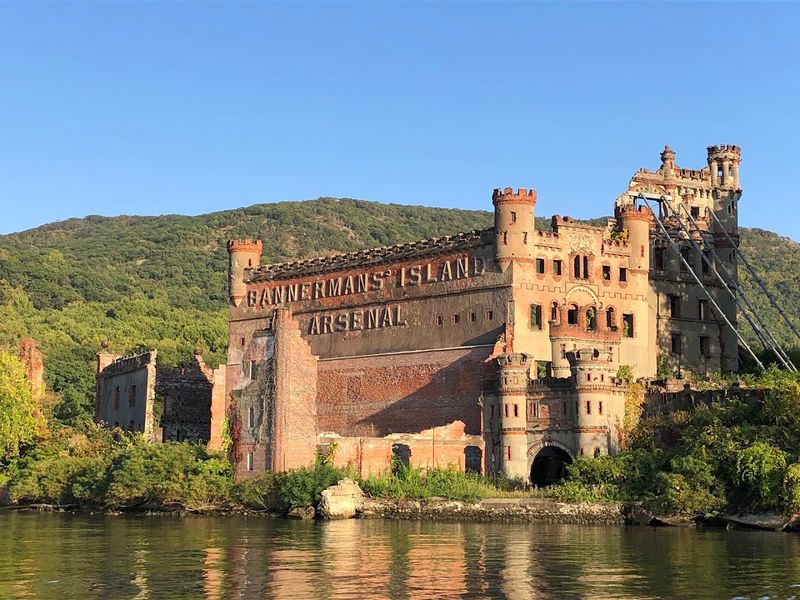
A crumbling castle rising from a small island in the middle of the Hudson River is not something most people expect to find on their commute, but here we are. Bannerman Castle on Pollepel Island was built by Francis Bannerman VI starting in 1901 as a storage facility for his military surplus business, and he modeled it on a Scottish castle because why not.
The man had range.
The island is located near Beacon, New York, and tour boats depart from the Beacon waterfront at 1 East Main Street, Beacon, NY 12508, offering kayak tours and guided walking tours of the ruins during warmer months. Bannerman purchased the island after running out of storage space in Brooklyn for the enormous quantities of surplus military equipment he acquired after the Spanish-American War.
The castle eventually held artillery, cannons, and thousands of rounds of ammunition.
An explosion in 1920 damaged a large section of the structure, and a fire in 1969 finished off most of what remained. The ruins today are dramatic and photogenic, rising from the river like a fever dream of Scottish architecture transplanted to the Hudson Valley.
The Bannerman Castle Trust works to stabilize and preserve what is left, and visiting by boat gives you one of the best views on the entire river.
14. The Stone Chambers Of Putnam County
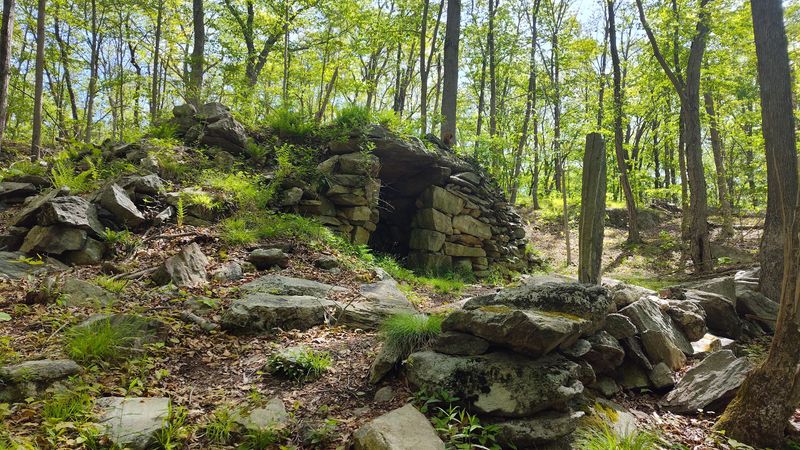
Scattered through the forests of Putnam County are dozens of mysterious stone structures that have puzzled historians, archaeologists, and casual hikers for generations.
These dry-laid stone chambers resemble ancient European megalithic huts, and nobody has reached a definitive agreement about who built them or exactly why.
That ambiguity is a large part of what makes them so compelling.
Some researchers believe they are colonial-era root cellars built by early European settlers in the 17th and 18th centuries. Others argue their astronomical alignments suggest a much older or more intentional origin.
Putnam County sits roughly between Carmel and Cold Spring in the Hudson Valley, and many of the chambers are accessible via public hiking trails through Fahnestock State Park at 1498 Route 301, Carmel, NY 10512. No single chamber is officially promoted as a tourist attraction, which adds to the adventure of finding them.
The structures are built with large flat stones stacked without mortar, and many feature low doorways oriented toward the rising sun at specific times of year. Walking up to one of these chambers alone in a quiet forest is a legitimately eerie experience.
Whatever their origin, the stone chambers of Putnam County are a reminder that New York State holds far more mystery than most people ever take the time to explore.
15. The Elevated Acre — Manhattan
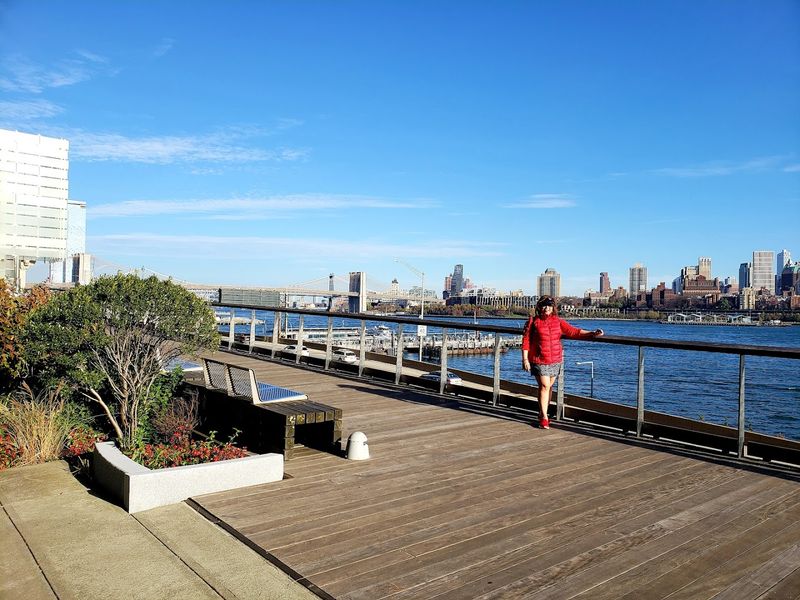
Most people rushing through the Financial District have absolutely no idea there is a peaceful rooftop park sitting above their heads.
The Elevated Acre at 55 Water Street is a publicly accessible open space perched above the street level of the Financial District, and it offers sweeping views of the East River, the Brooklyn Bridge, and the downtown skyline from an angle most New Yorkers have never experienced.
Getting there feels like finding a cheat code.
The entrance is located at 55 Water Street, New York, NY 10041, and you access the park via escalators inside the building lobby. The space features a manicured lawn, an outdoor amphitheater, and clean seating areas that fill up with office workers during lunch hours on nice days.
After 5pm on weekdays and on weekends, the place gets significantly quieter and the views become even more rewarding.
The park was created as part of a public plaza agreement when the building was developed in the 1970s, which means the city essentially traded square footage for sky. That deal aged extremely well.
Watching boats move along the East River while standing on a grass lawn in the middle of lower Manhattan is the kind of experience that reminds you New York City still has the ability to genuinely surprise you, even after years of living here.
16. The City Reliquary — Brooklyn
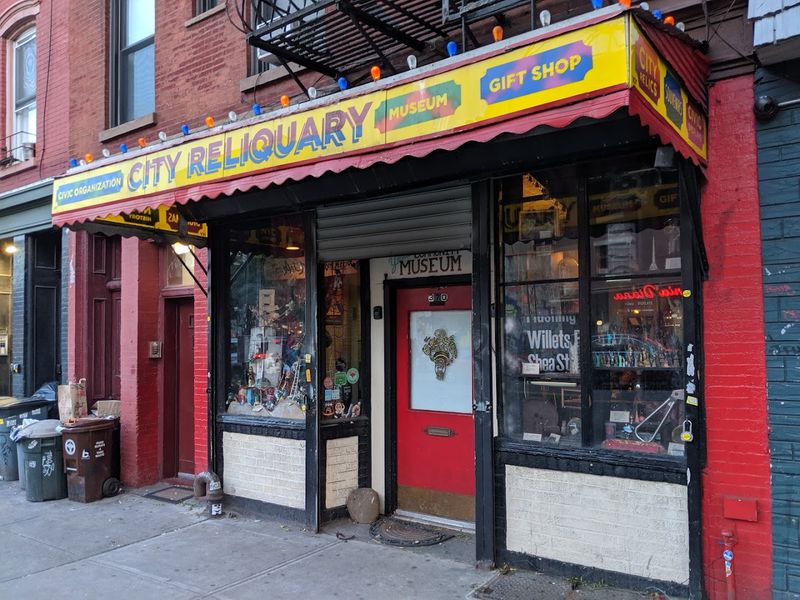
Brooklyn has always had a soft spot for the strange and sentimental, and the City Reliquary is the purest expression of that spirit. Packed into a small storefront in Williamsburg, this community museum is dedicated to preserving the weird, wonderful, and deeply personal artifacts of New York City life.
Subway tokens, fragments of demolished buildings, vintage postcards, and items donated by ordinary New Yorkers fill every inch of the space.
Located at 370 Metropolitan Avenue, Brooklyn, NY 11211, the museum charges a modest admission fee and operates as a nonprofit committed to keeping New York’s grassroots history alive. Rotating exhibitions have covered topics ranging from the history of the Brooklyn Bridge to the culture of New York City street vendors.
The permanent collection is a love letter to the city written in objects rather than words.
Founded in 2002, the City Reliquary started as a window display in a private apartment before growing into a full museum with a committed community following. It is the kind of place that makes you feel deeply attached to a city you thought you already knew everything about.
Every object here has a story, and the cumulative effect of all those stories together is genuinely moving. The City Reliquary is New York City distilled into a single room, and that room is magic.