
This Storybook Bridge In Tennessee Looks Too Pretty To Be Real
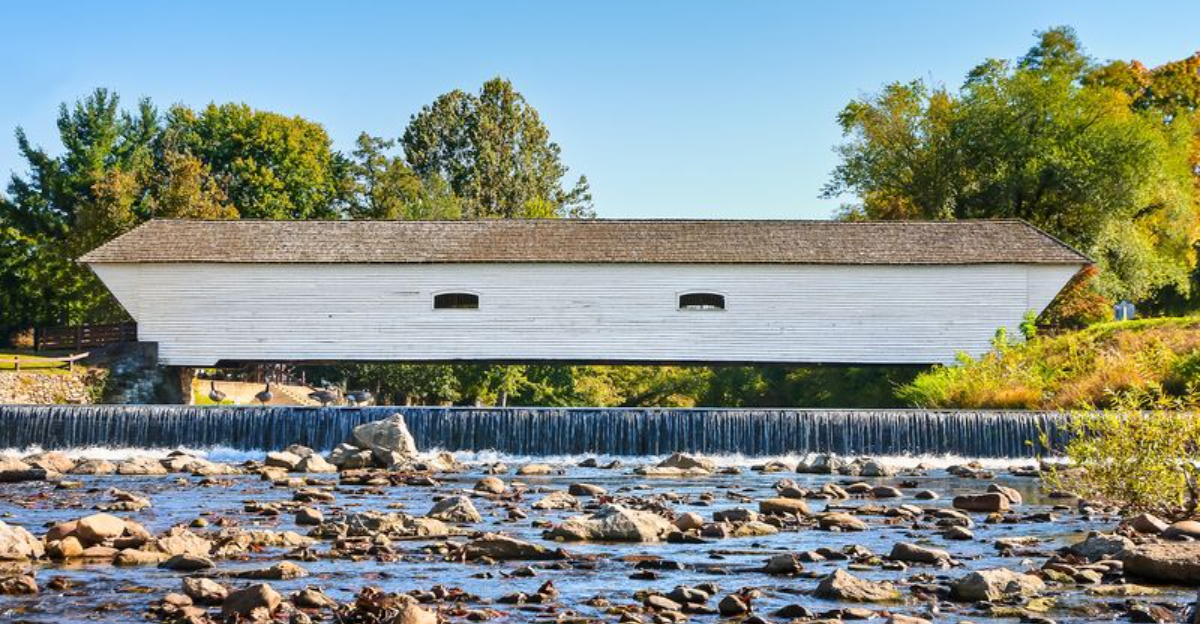
At first glance, it almost feels like a scene pulled straight out of an old storybook. A wooden bridge stretching across a gentle river, its weathered timbers and peaked roof creating the kind of view that makes people slow down and take a second look.
Tennessee has many scenic places, but few feel quite as charming as this historic crossing. Walk across the creaking planks and you’ll notice the river flowing quietly below while the surrounding town carries on around it.
Cameras come out quickly here. This beloved bridge proves that sometimes the simplest landmarks end up feeling the most magical.
The Howe Truss Design That Has Stood For Over 140 Years
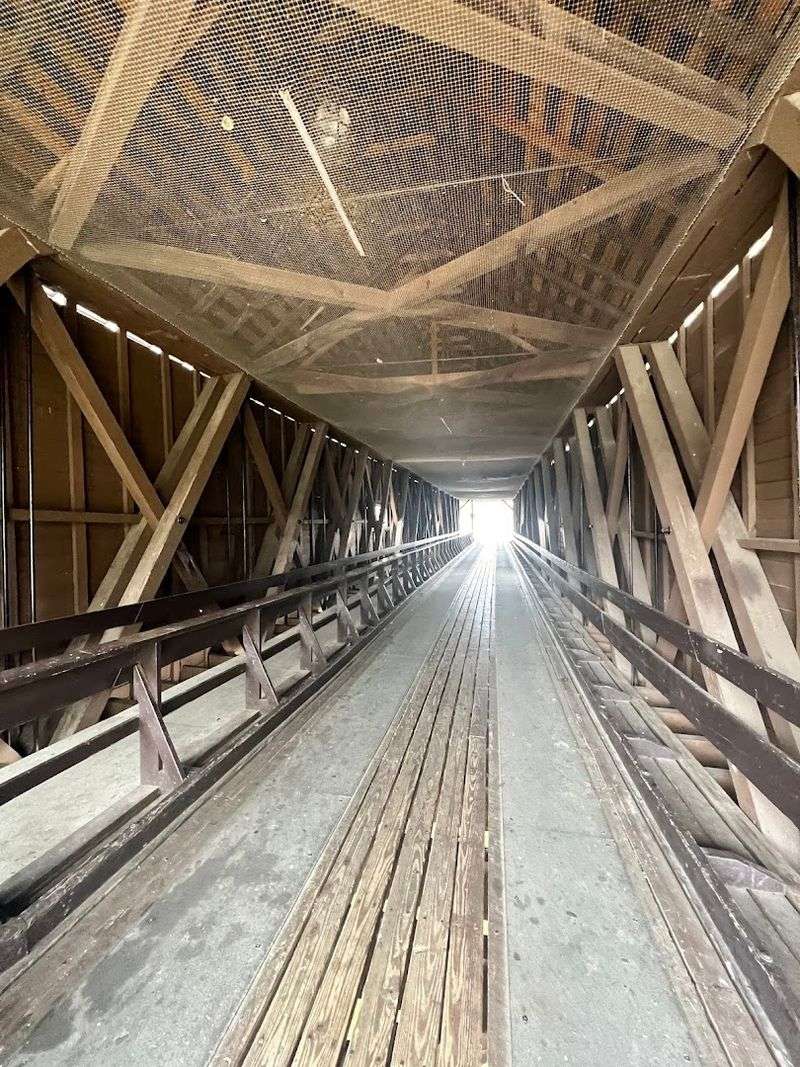
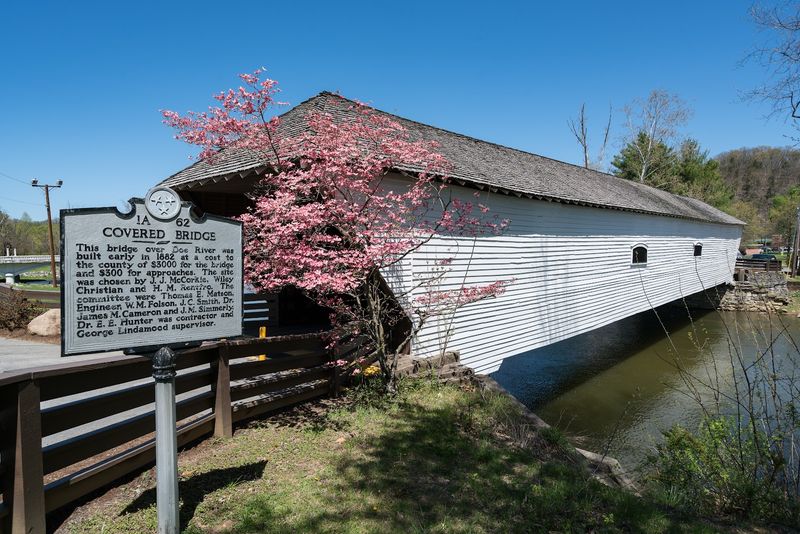
Back in 1882, a group of builders in Carter County, Tennessee, constructed a bridge using the Howe truss method, a structural system that had become widely trusted across America during the 19th century. The design relies on a careful arrangement of diagonal wooden beams and vertical iron rods that distribute weight with remarkable efficiency.
It was engineering logic at its finest, long before computers ever entered the picture.
The Howe truss gave the bridge its lasting strength. That same framework, now well over 140 years old, continues to hold firm above the Doe River.
Engineers and historians who have studied the structure consistently praise its integrity and craftsmanship.
Visitors walking through the bridge can look upward and see the original timber arrangement still intact. The wood carries the patina of time, darkened and textured by decades of seasons.
For anyone with even a passing interest in architectural history, this interior view alone is worth the trip.
A Gleaming White Exterior That Stops Visitors In Their Tracks
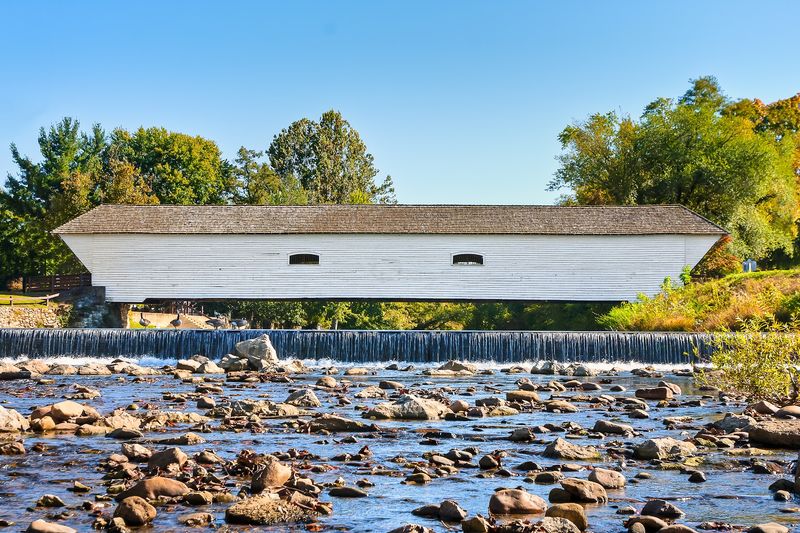
There is something almost theatrical about the way the Elizabethton Covered Bridge appears against the surrounding landscape. Its white-painted wooden siding catches the light in a way that makes it look freshly constructed, even though it has been standing since the late 19th century.
First-time visitors often stop mid-step, reaching for their cameras before they have even processed what they are looking at.
The consistent upkeep of the exterior paint is a direct reflection of how seriously the local community values this landmark. The town of Elizabethton has maintained the bridge with care, ensuring that its visual appeal remains as strong today as it was generations ago.
That level of dedication to preservation is genuinely uncommon.
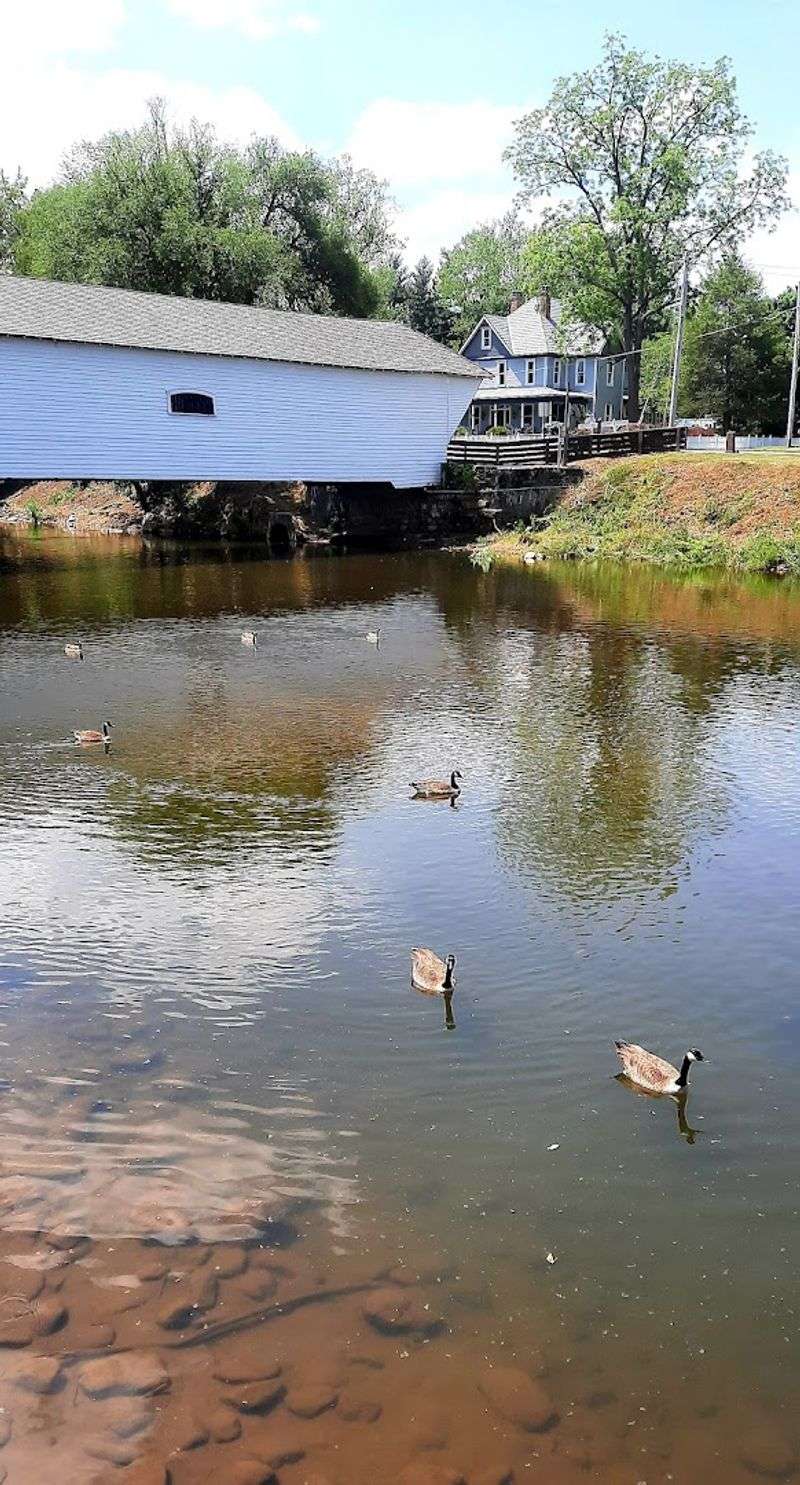
On a clear afternoon, with the Doe River reflecting light below and the trees framing the structure on both sides, the bridge looks almost too composed to be real. Photographers frequently set up along the riverbank to capture the full picture.
The combination of white wood, flowing water, and natural greenery creates a scene that requires very little editing to look extraordinary.
The Doe River Setting That Makes Every Photo Worth Keeping
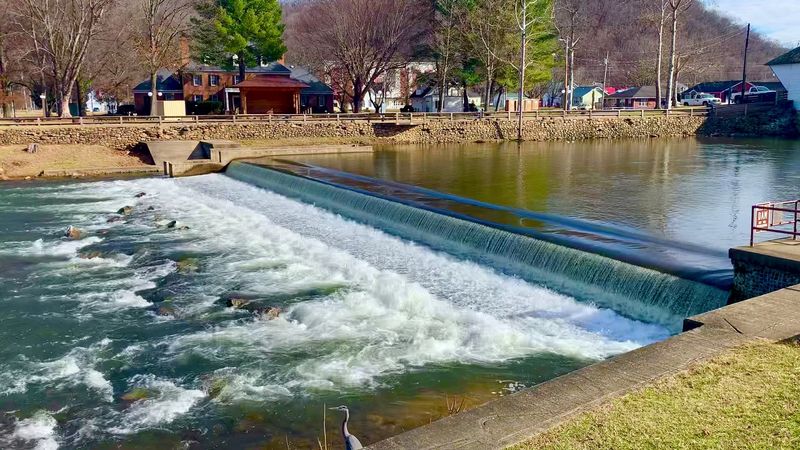
The Doe River moves with quiet authority beneath the Elizabethton Covered Bridge, and the relationship between the two feels almost intentional. A small dam runs across the full width of the river just downstream from the bridge, creating a gentle cascade of water that adds both sound and visual motion to the scene.
Standing on the riverbank, you hear the water before you see the full picture.
Wildlife congregates here regularly. Ducks and geese rest along the banks, largely unbothered by visitors who approach slowly.
Wild birds have been spotted in the trees and along the water’s edge, making this a genuinely pleasant spot for anyone who enjoys observing nature without traveling far from town.
Sunset visits carry a particular reward. The warm light settles over the white bridge and the moving water simultaneously, producing a color combination that feels almost staged.
Multiple visitors have described walking along the river at dusk as one of the more memorable experiences they had during their time in Elizabethton. The river setting elevates the bridge from a historical structure to a full sensory destination.
Covered Bridge Days Festival And The Community Spirit Behind It
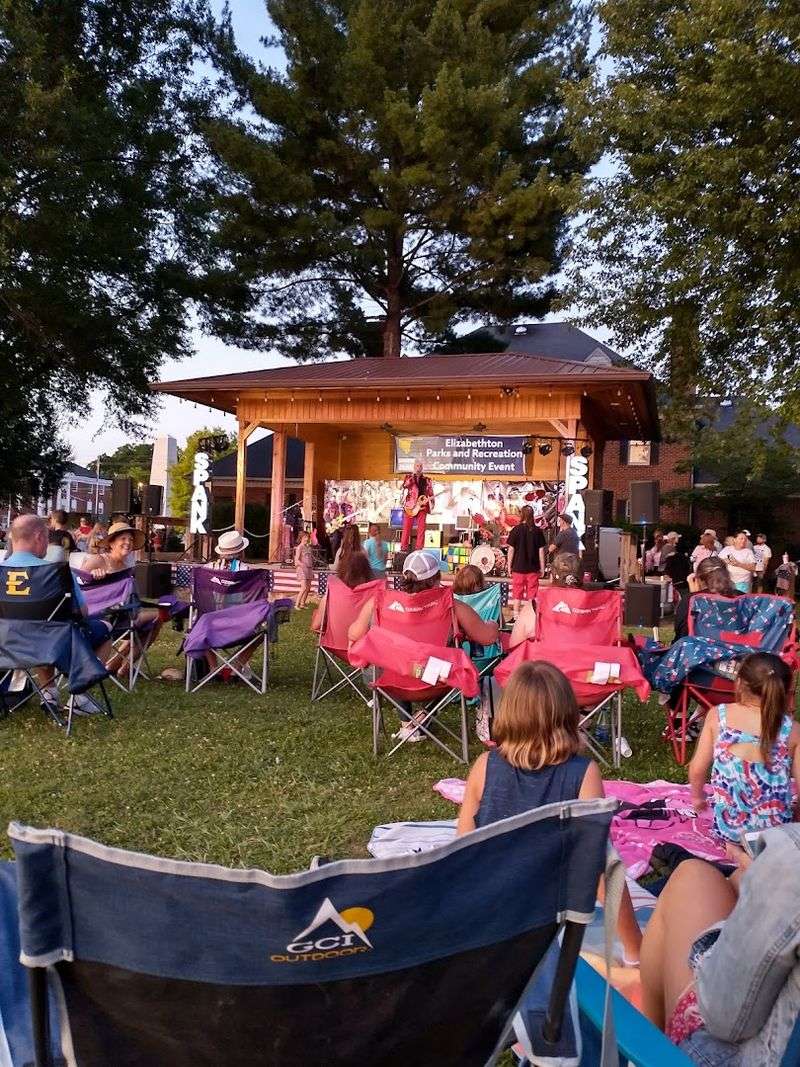
Once a year, the area surrounding the Elizabethton Covered Bridge at 717 E Elk Ave in Elizabethton transforms into a full community celebration. The Covered Bridge Days festival draws families from across the region, filling the park with food vendors, live music on a dedicated outdoor stage, and activities designed for visitors of every age.
It is the kind of event that turns a historical site into a living, breathing gathering place.
Children gravitate toward the foam parties, inflatable attractions, and novelty competitions that organizers bring in each year. One past event featured a life-sized hamster wheel race that drew enthusiastic participants and plenty of laughter from the crowd watching nearby.
These details speak to the creativity and energy that local organizers invest in making each festival memorable.
The festival also highlights how deeply the bridge is woven into the identity of Elizabethton. For many residents, attending Covered Bridge Days is an annual tradition passed down through families, with grandparents bringing grandchildren the same way their own parents once brought them.
That generational continuity gives the event a warmth that no amount of marketing could manufacture. It is simply a town celebrating something it genuinely loves.
Picnic Areas And Parkland That Invite You To Stay Longer
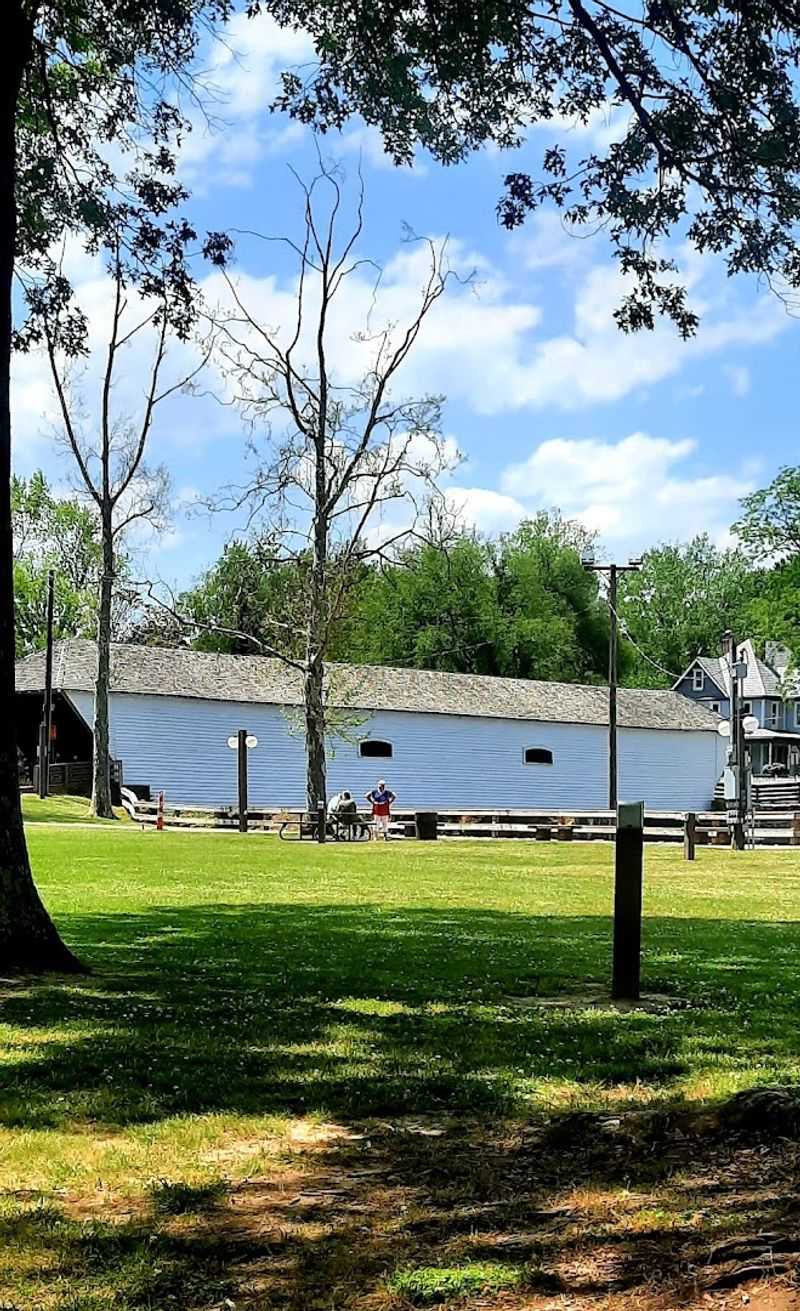
The land surrounding the Elizabethton Covered Bridge has been thoughtfully developed into a small park that encourages visitors to slow down. Picnic tables are placed near the river, offering shaded spots where families can spread out a meal while listening to the water move below.
The park has a relaxed, unhurried quality that feels increasingly rare in popular tourist destinations.
Feeding the ducks along the riverbank is a simple pleasure that visitors of all ages seem to enjoy equally. The birds have grown comfortable around people, making close observation easy without any effort.
Fishing is also a common activity in the area, with the river providing a calm and accessible stretch of water for those who bring gear.
The linear trail running alongside the river extends the experience beyond the bridge itself. Walkers and cyclists use the path regularly, and the surrounding scenery keeps the route engaging throughout.
For families planning a full afternoon outing, the combination of the bridge, the picnic areas, the river trail, and the wildlife creates a complete and satisfying visit without requiring any admission fee or advance reservation.
Proximity To Sycamore Shoals And Tennessee Frontier History
Elizabethton sits in a part of Tennessee where American frontier history is not a distant abstraction but a physical presence. Sycamore Shoals State Historic Park lies close to the covered bridge, and together they form a natural pairing for visitors interested in understanding the region’s past.
The park preserves the site of the Watauga Settlement, one of the earliest areas of permanent English-speaking settlement west of the Appalachian Mountains.
The reconstructed Fort Watauga gives visitors a tangible sense of what frontier life looked like in the 18th century. The Carter Mansion, also located in the area, represents some of the oldest surviving domestic architecture in Tennessee and adds further depth to the historical picture.
Spending a morning at the covered bridge and an afternoon at these sites creates a layered experience of the region.
For travelers who prefer their sightseeing to carry some educational weight, this corner of northeast Tennessee delivers consistently. The combination of natural beauty and documented history makes Elizabethton a destination that rewards curiosity.
A single visit rarely feels sufficient for those who arrive with genuine interest in what the area has preserved.
Walking Across The Bridge And What You Actually Experience
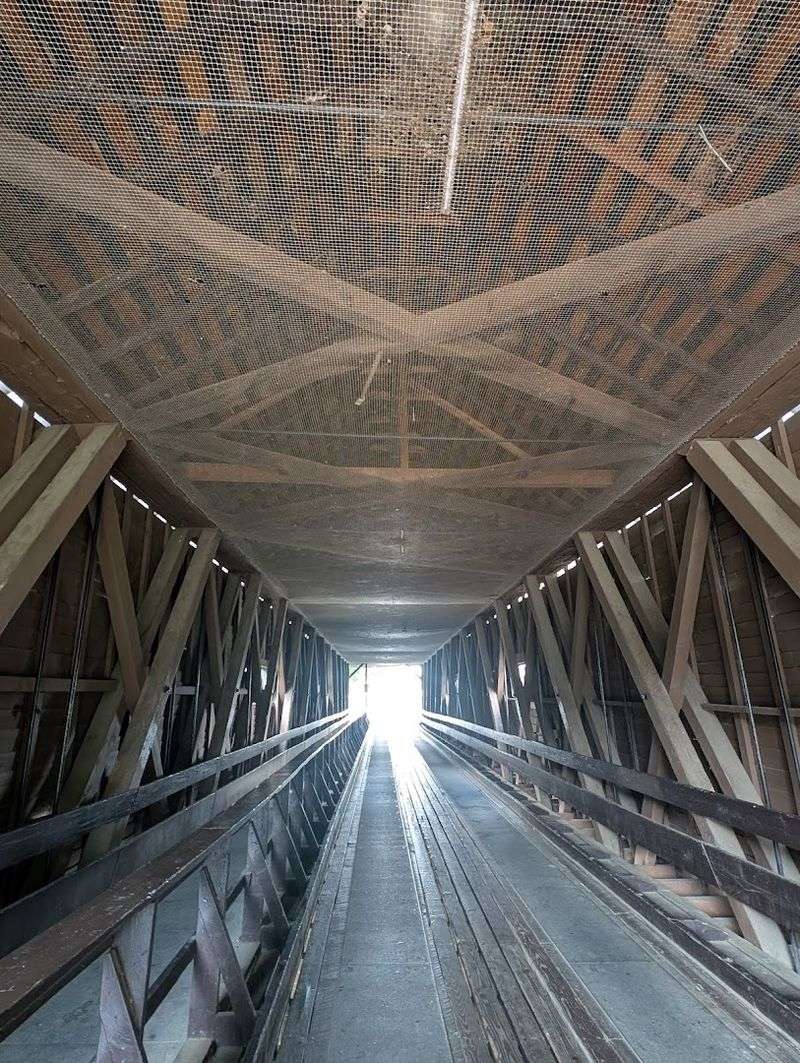
Crossing the Elizabethton Covered Bridge on foot is a different experience from simply viewing it from the outside. Once inside the 134-foot span, the ambient light shifts and the sounds of the surrounding area become muffled.
Your footsteps on the wooden planks echo slightly, and the smell of aged timber fills the enclosed space with something that feels genuinely old and specific to this place.
The side openings along the bridge frame the river below in a series of rectangular views, each one a slightly different composition depending on where you stand. Some visitors pause mid-crossing to look down at the water through the gaps in the planking.
The experience has a meditative quality that is hard to anticipate before you actually step inside.
The bridge has a slight lean to it, as one visitor noted, which adds a subtle physical reminder that you are standing on a structure built by hand in the 19th century. Far from being concerning, that characteristic lean gives the crossing a bit of personality.
It is a bridge that has earned its quirks through decades of honest use, and walking across it feels like a small act of connection with the past.
Parking, Access, And Planning A Visit Without Stress
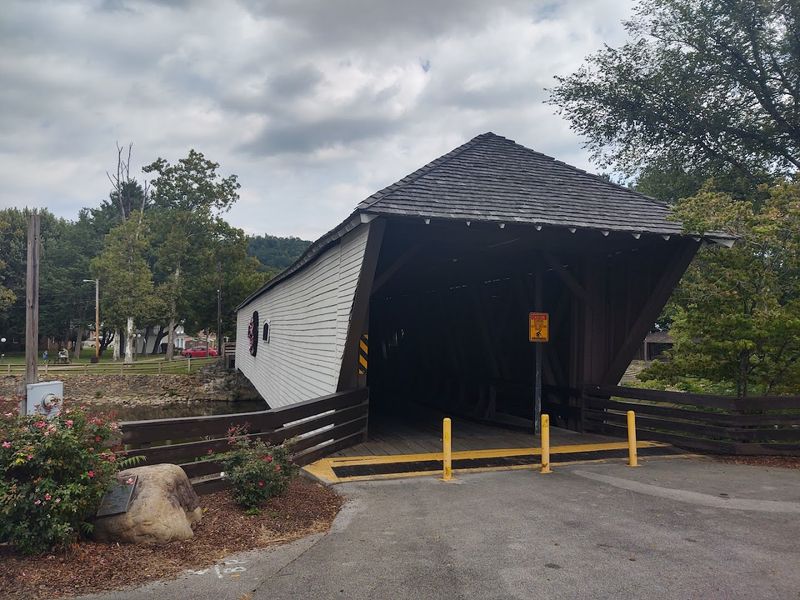
Practical details matter when planning a visit, and the Elizabethton Covered Bridge is straightforward to access for most travelers. The bridge is located at 717 E Elk Ave and parking is available directly adjacent to the structure off Third Street.
The lot is small, with only a handful of spaces, but visitors who arrive during quieter periods rarely have trouble finding a spot.
For those who find the dedicated lot full, the downtown area of Elizabethton offers multiple public parking areas within easy walking distance. The town is compact and pedestrian-friendly, making the short walk back to the bridge a pleasant addition to the visit rather than an inconvenience.
Several reviewers have noted that the surrounding streets are easy to navigate.
Admission is free, which removes one of the most common barriers to spontaneous travel decisions. The bridge is accessible during daylight hours and requires no advance booking or guided tour to enjoy independently.
That said, organized history tours of Elizabethton do include the covered bridge as a stop, and participants consistently recommend taking the full tour to understand the broader context of what they are seeing. The phone number for local information is +1 615-741-2848.
Why This Bridge Has Earned A 4.8-Star Rating From Hundreds Of Visitors
A 4.8-star rating across 284 reviews is not something a place accumulates by accident. The Elizabethton Covered Bridge has earned that figure through a combination of genuine historical significance, consistent maintenance, natural beauty, and the kind of welcoming atmosphere that makes visitors feel their time was well spent.
The reviews read less like formal assessments and more like personal recommendations shared between friends.
People describe it as a beautiful, peaceful place in the heart of a charming town. They mention the friendly locals, the interesting art installations in downtown Elizabethton, the quality of the river walk, and the ease of combining a bridge visit with a broader exploration of the area.
The bridge functions as an anchor point for a larger experience rather than a single isolated attraction.
First-time visitors frequently express surprise at how much the site offers without charging a single dollar. The accessibility, the scenery, the history, and the surrounding park create a value proposition that is difficult to argue with.
For anyone driving through northeast Tennessee, or planning a dedicated trip to the region, the covered bridge represents exactly the kind of destination that makes travel feel worthwhile and genuinely memorable.