
This Mysterious Road In New York Is One Of The Most Beautifully Bizarre Places In The Northeast
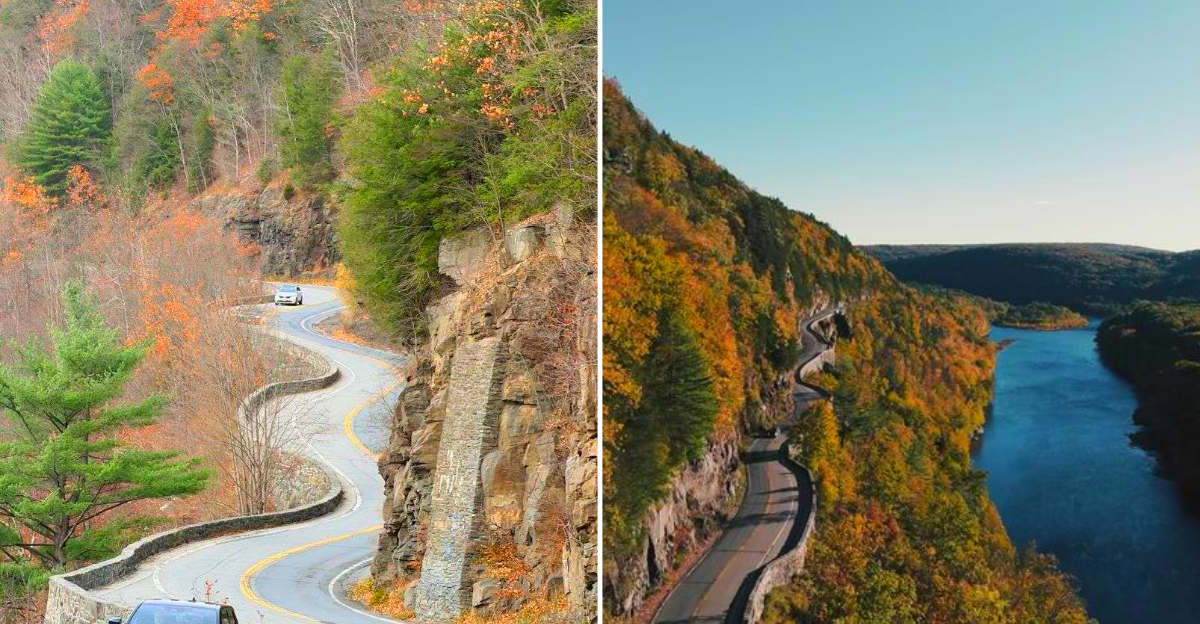
New York hides some landscapes that feel almost impossible to believe until you see them with your own eyes. High above the Delaware River, one stretch of road clings tightly to a rugged cliff, bending through dramatic curves while sweeping views open across the valley below.
Bald eagles often circle overhead, rafters drift quietly along the river far below, and the surrounding hills stretch into Pennsylvania in a landscape that feels more like the American West than the Northeast.
With its dramatic cliffs, bald eagles, tight curves, and lookout points perched high above the water, the road has become one of the most unusual and unforgettable places to visit in New York.
The setting is so striking that many first-time visitors simply stand in silence for a moment, taking in a view that completely reshapes their expectations of the state’s natural beauty.
A Road That Feels Like It Belongs Somewhere Else Entirely
Some roads are purely functional. Others carry a sense of character so strong that the act of driving them feels more like an encounter than a commute.
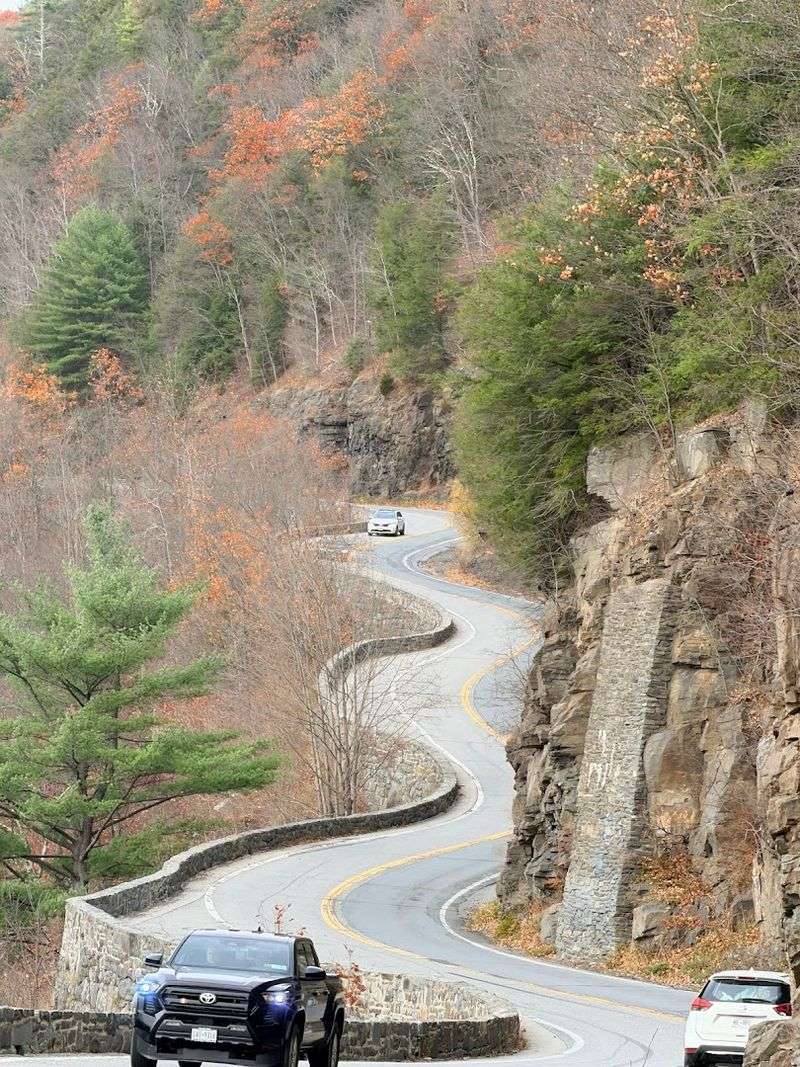
Hawk’s Nest Road along Route 97 in Sparrow Bush, New York, belongs firmly in the second category, and it announces itself with little ceremony.
The road clings to the face of a rocky cliff above the Delaware River, curving through terrain that most travelers would expect to find somewhere in the American West rather than about 70 miles northwest of New York City. The landscape here has a rugged, unhurried quality that catches first-time visitors completely off guard.
Bald eagles circle overhead during certain seasons, river rafts drift lazily far below, and the tree line stretches across the Pennsylvania hills on the opposite bank. There is nothing manufactured about any of it.
The whole scene feels assembled by geography rather than design, which is precisely what makes it so disorienting and so memorable at the same time. Arriving here for the first time genuinely changes your expectations of what New York has to offer beyond its famous urban sprawl.
Route 97 And The Hawk’s Nest Lookout Explained
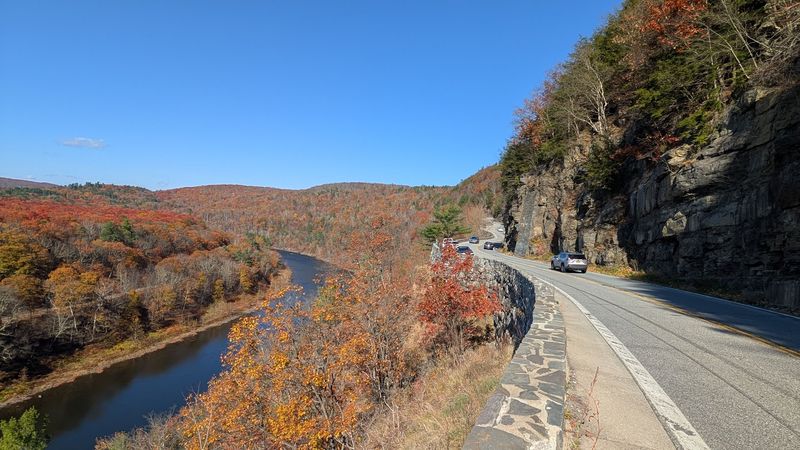
Route 97 is a New York State highway that runs along the western edge of the state, tracing the Delaware River for much of its length. The most celebrated section of the route is the Hawk’s Nest segment near Sparrow Bush, where the road rises sharply and hugs the cliffside in a series of tight, deliberate curves.
The Hawks Nest Lookout, located at 546 NY-97, Sparrow Bush, NY 12780, is open 24 hours a day every day of the week, making it accessible regardless of when you happen to be passing through.
There are four distinct observation pull-offs along the southbound side of the road, each offering a slightly different angle on the river valley below.
The pull-offs closest to the beginning and end of the stretch tend to offer the most parking space, which is useful to know during peak weekend traffic.
Planning a visit on a weekday or at sunrise gives you the best chance of enjoying the views without the distraction of heavy foot traffic nearby.
The Four Lookout Points And What Each One Reveals
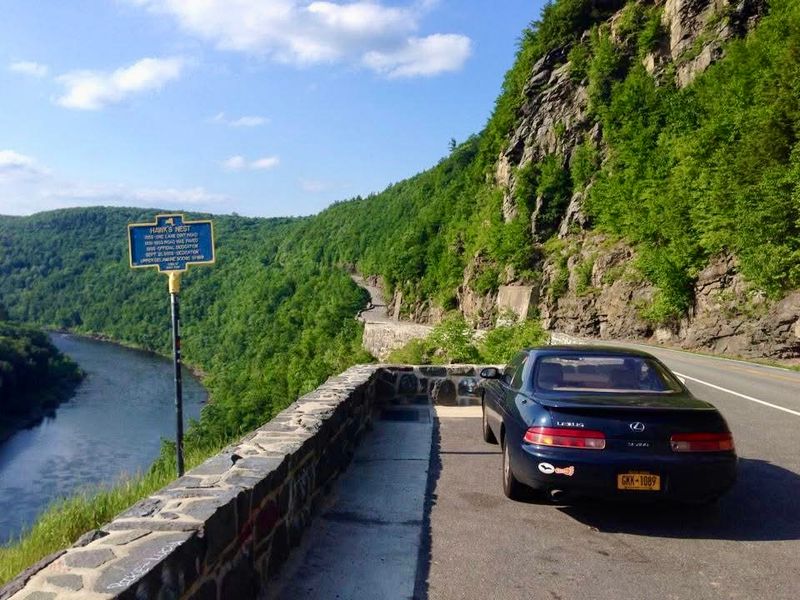
Not all viewpoints along Hawk’s Nest are created equal, and part of the fun is discovering which one speaks to you. Each of the four pull-off areas along Route 97 frames the surrounding landscape from a subtly different elevation and angle, making it worth stopping at more than one if traffic allows.
The pull-off furthest from the main curve of the road tends to deliver the broadest, most complete view of the river and the forested valley spreading out toward Pennsylvania. From there, you can see the road itself snaking below, which gives the whole experience a pleasantly cinematic quality.
Photographers tend to favor this vantage point for capturing the full drama of the scene.
Closer pull-offs put you more directly above the river, with a steeper, more vertigo-inducing drop just beyond the stone wall. Standing at the barrier and looking straight down at the Delaware gives a genuine sense of the cliff’s height.
Each stop rewards patience and a willingness to linger rather than simply snap a photo and leave. The road genuinely earns its reputation as one of the most visually layered drives in the entire Northeast region.
The Seasons Transform This Stretch Of Road Completely
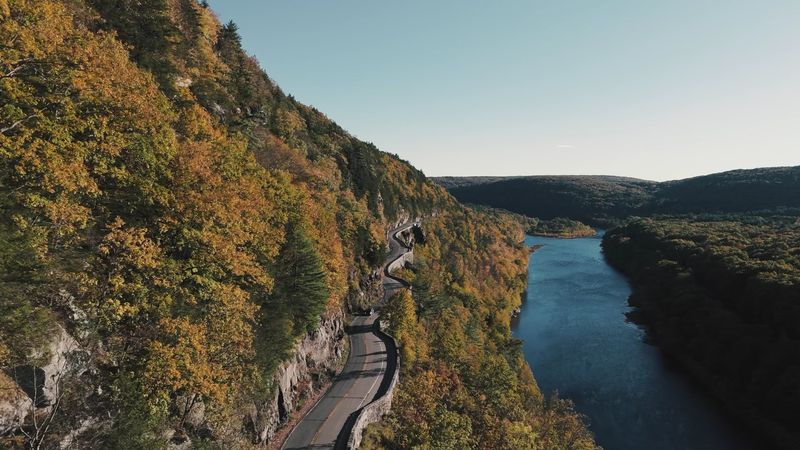
Hawk’s Nest Road earns admiration in every season, but autumn is where it truly distinguishes itself from nearly every other scenic drive in the Northeast.
When the foliage peaks across the Delaware River valley, the hillsides transform into broad sweeps of amber, crimson, and gold that reflect off the water below in ways that are genuinely difficult to describe with precision.
Summer brings a lush, dense canopy of green that softens the edges of the cliffs and makes the river look impossibly blue on clear days. River rafters appear far below during warmer months, their bright equipment adding unexpected color to the scene.
Bald eagles are more commonly spotted during this period as well, riding thermals above the ridge with an effortless authority that commands attention.
Foggy mornings in spring give the road an almost otherworldly quality, with mist filling the valley and the river disappearing beneath a soft gray blanket. Winter visits, while requiring more caution on the curves, strip the trees bare and reveal the full geological drama of the cliffs.
Each season essentially presents a different road altogether, which explains why so many visitors return year after year without any sense of repetition.
Motorcycles, Marvel Films, And A Famous Piece Of American Asphalt
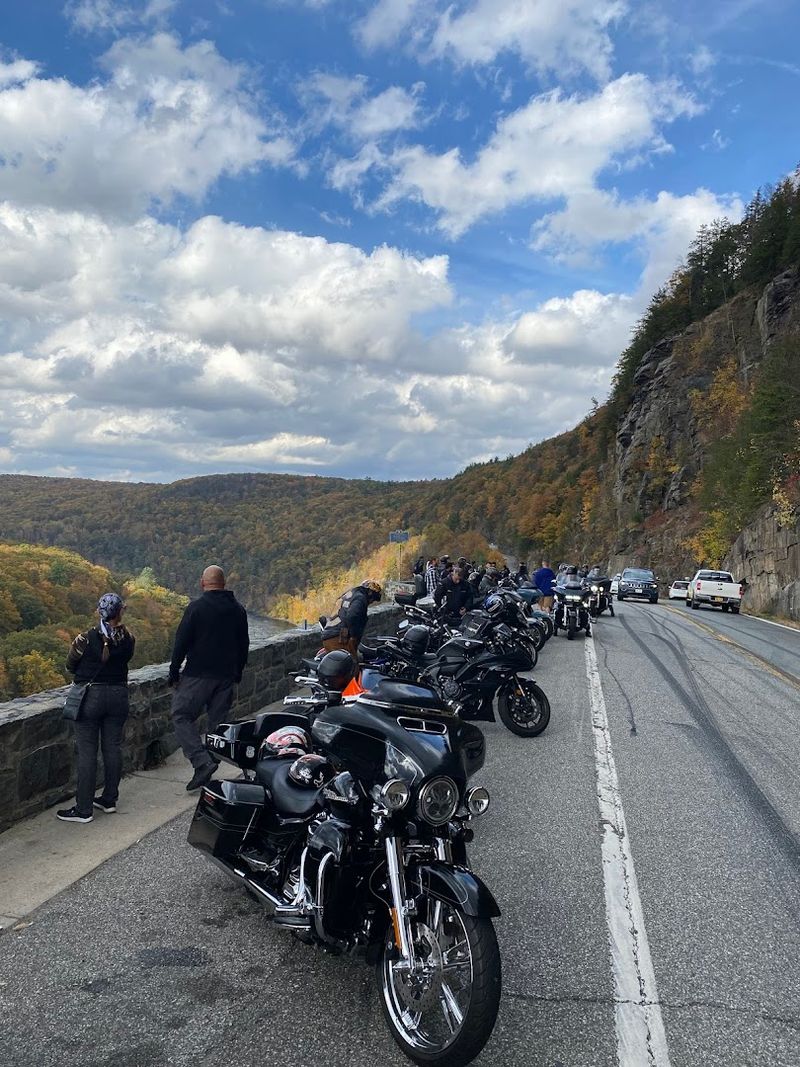
Hawk’s Nest Road has accumulated a quietly impressive list of cultural credentials over the years. The road has been featured in television commercials and holds a recognized place on lists of America’s top scenic routes, a distinction it earned through geography rather than marketing.
Marvel fans may recognize the curves of Route 97 from the 2016 film Doctor Strange, in which the road’s dramatic bends served as the setting for a pivotal early scene.
Knowing that detail adds a layer of surreal recognition when you drive through it yourself, particularly if you have seen the film and suddenly realize the landscape looks familiar.
The motorcycle community has long claimed Hawk’s Nest as one of its preferred destinations in the region. The curves are tight and deliberate without being punishing, making the road satisfying to navigate on two wheels without demanding expert-level skill.
Performance car enthusiasts feel the same pull, and on weekends the pull-offs occasionally resemble informal gatherings of automotive appreciation.
The road manages to attract an unusually eclectic mix of visitors, from birdwatchers and photographers to film enthusiasts and driving hobbyists, all drawn by the same fundamental quality of the terrain.
The Roebling Aqueduct Bridge And The Wider Route 97 Experience
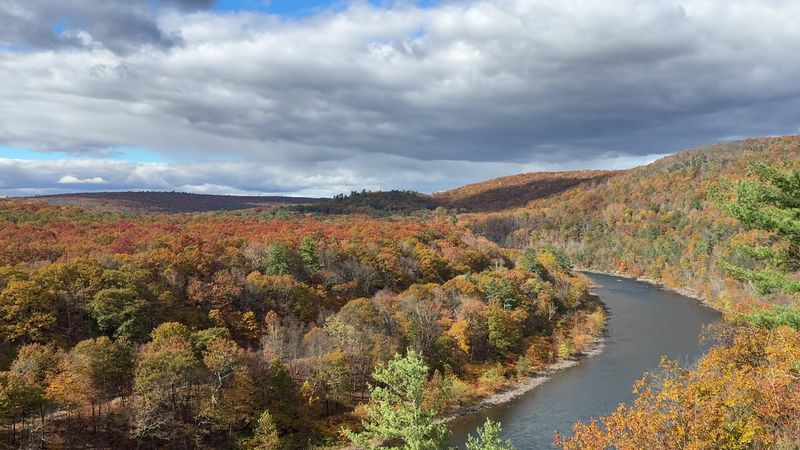
Hawk’s Nest is the most celebrated section of Route 97, but the road offers considerably more to those willing to continue north along its length.
The upper Delaware River corridor is a federally protected scenic and recreational area, and Route 97 serves as the primary road running alongside it for much of the journey.
A short distance north of Hawk’s Nest sits the Roebling Suspension Aqueduct Bridge, an engineering landmark that deserves far more attention than it typically receives. Built in the mid-nineteenth century by John A.
Roebling, the same engineer who later designed the Brooklyn Bridge, the aqueduct originally carried canal boats across the Delaware River.
Today it stands as the oldest surviving wire suspension bridge in the United States, and walking across it offers a tactile connection to American industrial history that few landmarks in the region can match.
The stretch of river accessible from Route 97 is also popular for fishing, kayaking, and shoreline picnicking during warmer months. Pulling off at any number of access points along the road and simply sitting by the water for a while is one of those uncomplicated pleasures that the area makes remarkably easy to pursue.
The road rewards curiosity at every mile.
Practical Tips For Getting The Most Out Of Your Visit
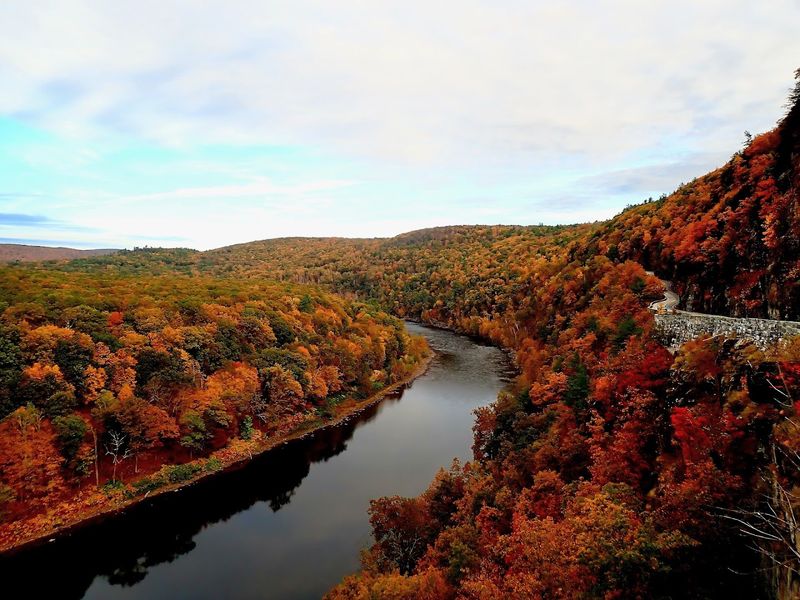
A visit to Hawk’s Nest rewards a little advance planning, particularly during the busiest times of year. Weekend afternoons in autumn draw the largest crowds, and parking at the pull-offs can become genuinely competitive.
Arriving on a weekday, or timing your drive for early morning or evening, shifts the experience considerably in your favor.
Sunset lighting at the lookout points is widely regarded as the most photogenic time of day, casting warm tones across the river and the Pennsylvania hills beyond. Sunrise visits offer softer light and near-certain solitude, which appeals to photographers and anyone who simply wants to stand at the wall and think without interruption.
Both are worth experiencing at least once.
The road itself demands respect behind the wheel. The curves are narrow and active, meaning other vehicles are always a consideration, and stepping out near the stone barriers requires awareness of passing traffic.
Speed limits are enforced along the route, and police presence is not uncommon. Wearing comfortable shoes is advisable if you plan to walk between pull-offs rather than drive between each one.
Bringing a pair of binoculars adds genuine value, especially for spotting eagles and river traffic far below. The visit costs nothing and delivers considerably more than most paid attractions in the region.