
This Pleasant 1.6-Mile Hike In Massachusetts Is So Beautiful, You’ll Be Dreaming About It For Days

Salt air, crashing waves, and a trail that feels like it belongs in a postcard. In Massachusetts, one short coastal hike delivers views that stay in your mind long after the walk ends.
The path winds past rugged granite, wildflowers, and open ocean stretching toward the horizon. Some moments feel quiet and reflective.
Others stop you in your tracks with sweeping Atlantic scenery. It’s only about 1.6 miles, yet every step brings another reason to pause and take it all in.
Anyone exploring Massachusetts will quickly understand why this scenic trail keeps hikers, photographers, and nature lovers talking about it for days.
The Coastal Trail Loop That Covers 1.6 Miles Of Pure Scenery

Few trails in New England pack this much variety into such a short distance. The main loop here measures 1.6 miles and winds through open meadows, past a historic water-filled quarry, and out to a dramatic rocky shoreline where the Atlantic stretches endlessly toward the horizon.
The trail is well-blazed and clearly signed throughout, so first-time visitors rarely feel lost or uncertain about which direction to head.
The surface underfoot shifts pleasantly as you walk. Wide gravel paths give way to narrower dirt trails lined with coastal shrubs and low-growing wildflowers.
Near the shoreline, the path opens onto broad granite ledges where you can stand and watch waves roll in from the open sea.
The park earns its 4.8-star rating from more than 2,000 visitors for good reason. The trail is mostly flat, making it accessible for families with young children, older adults, and even leashed dogs.
Plan to spend about an hour completing the full loop, though most people linger far longer than that once they reach the water.
Babson Farm Quarry: A Historic Water-Filled Wonder Mid-Trail
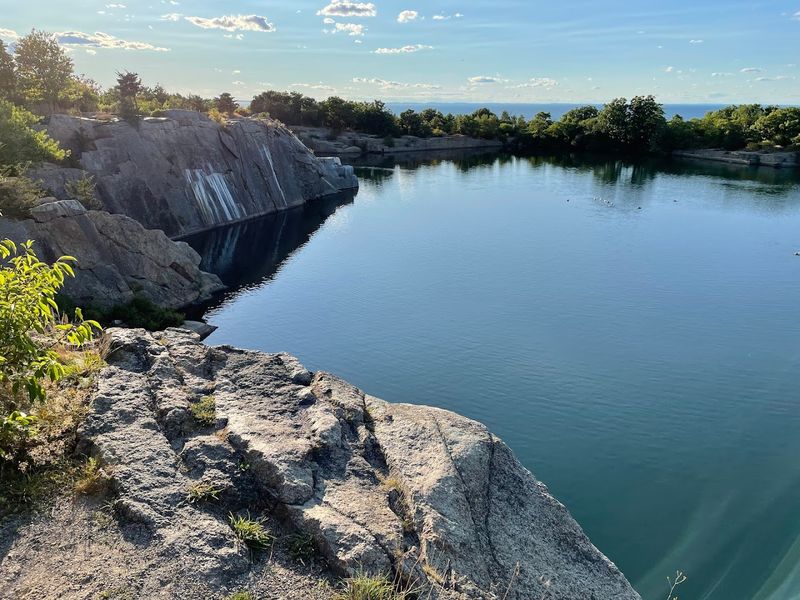
Right at the heart of the trail sits one of the most unexpected sights you will find on any Massachusetts hike. The Babson Farm Quarry operated as an active granite-cutting site until 1929, and after it was abandoned, rainwater gradually filled the pit to a depth of roughly 18 meters.
Today it holds perfectly still, dark water that reflects the sky above and the surrounding granite walls in a way that feels almost surreal.
Viewing platforms and natural ledges around the quarry edge allow you to look down into the water from multiple angles. The interpretive trail around the quarry provides historical context about the granite industry that once defined this entire region.
Rockport granite was shipped to cities across the Eastern Seaboard and used in construction projects that still stand today.
One important note for anyone visiting with children: there are no guardrails along portions of the quarry edge, so close supervision is essential. Swimming is strictly prohibited.
The quarry is best photographed earlier in the day when sunlight hits the water at an angle that brings out the subtle blue hues. Morning light transforms the surface into something you will want to photograph from every possible position.
Ocean Views That Stretch All The Way To New Hampshire And Maine
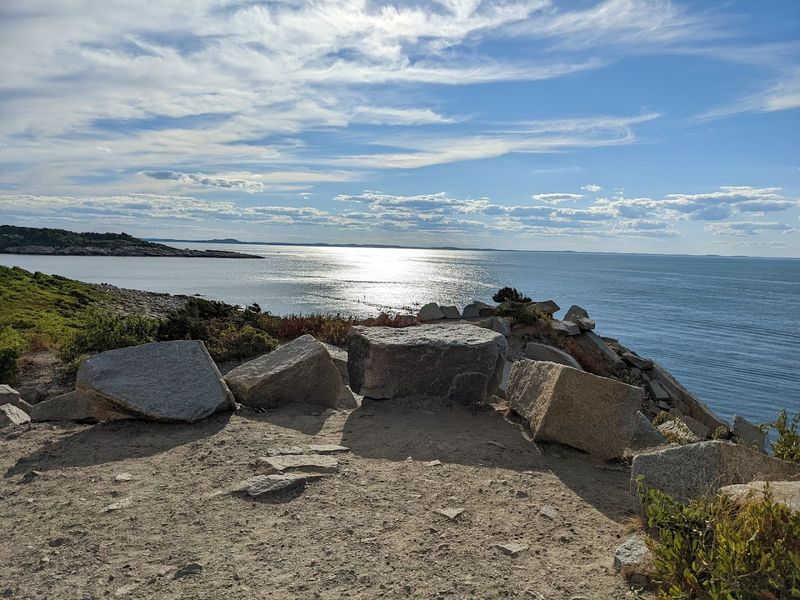
Standing on the granite ledges at the far end of the trail, the horizon opens up in a way that genuinely stops you mid-step. On clear days, the view extends north to the coastline of New Hampshire and even to the southern edge of Maine.
This is one of the few spots in Massachusetts where three states become visible from a single vantage point, and that alone makes the short walk entirely worth it.
The rocky shore here is composed of 440-million-year-old granite, one of the oldest exposed rock formations accessible to the public anywhere in the state. Waves break against those ancient ledges with a deep, rhythmic sound that carries inland and adds an almost meditative quality to the entire experience.
Sitting quietly on the rocks and simply watching the water is something visitors consistently mention in their reviews.
Bring a pair of binoculars if you have them. Seabirds are common along this stretch of coastline, and on calm days you might spot harbor seals resting on offshore rocks.
Sunrise visits are particularly rewarding here, and the open exposure means you get color in the sky long before the sun clears the treeline.
Wildflowers And Coastal Vegetation That Change With Every Season
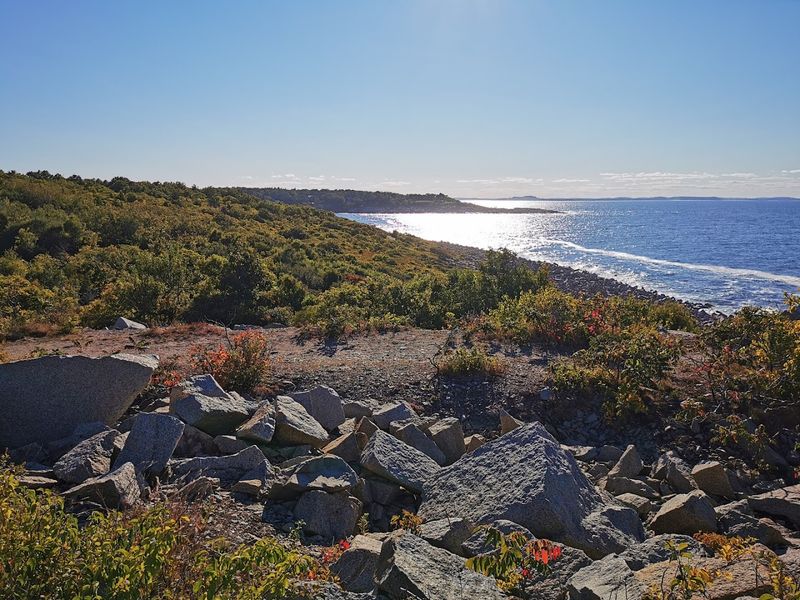
Spring and summer bring an unexpected softness to what might otherwise read as a purely rugged landscape. The open meadow sections of the trail fill with native wildflowers including goldenrod, Queen Anne’s lace, and seaside goldenaster.
These plants attract butterflies and bees in noticeable numbers, and the meadow sections hum with insect activity during warmer months in a way that feels genuinely alive.
The coastal vegetation here has adapted to salt spray, wind, and thin rocky soil over centuries, which gives the plant life a low, dense, almost sculptural quality. Bayberry, beach rose, and wild blueberry grow in thick clusters along the trail edges, and in late summer the blueberries are sometimes ripe enough to sample as you walk.
The park also maintains a small interpretive garden near the visitor center where native plants are labeled for identification.
Fall transforms the meadows into warm amber and rust tones that contrast beautifully against the grey granite and the deep blue of the October ocean. Winter strips the vegetation back entirely, revealing the raw structure of the landscape and making the geology far more visible.
Each season offers a genuinely different reason to return to this same 1.6-mile loop.
The Visitor Center Built In The Shape Of A Lighthouse
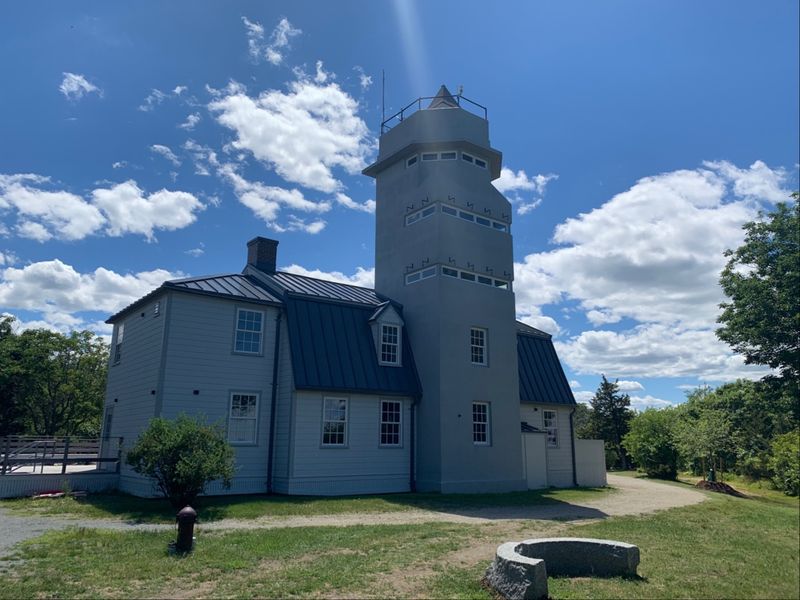
Before you even reach the trail, the visitor center at Halibut Point at Gott Ave in Rockport gives the park a sense of character that larger, more commercial parks often lack. The building is designed in the shape of a lighthouse, which feels appropriate given the coastal setting and the maritime history of Cape Ann.
Inside you will find restrooms, informational displays about the park’s geology and granite industry, and staff who can answer questions about trail conditions and wildlife.
Picnic tables arranged outside the visitor center make it a comfortable place to eat lunch before or after your hike. The area around the center is shaded and well-maintained, and it serves as a natural gathering point where visitors tend to linger and share trail recommendations with each other.
It has the relaxed social energy of a place people genuinely enjoy being in.
The visitor center is not always open, particularly during off-season months or late afternoon hours, so checking ahead is worthwhile if you are planning specifically around using the indoor facilities. Portable restrooms are available in the parking lot year-round as a backup.
The parking area itself is located across the road from the park entrance, and you walk a short flat road into the park from there.
Parking, Fees, And Everything You Need Before You Arrive

Getting to Halibut Point is straightforward, and the logistics are simple enough that you can plan this trip in about ten minutes. The park entrance is on Gott Ave in Rockport, MA 01966, and the parking lot sits directly across the road from the main trail entrance.
During summer months, parking costs five dollars for Massachusetts residents and twenty dollars for out-of-state vehicles. In winter and early spring, parking is often free, which makes off-season visits an especially attractive option.
The lot has a good number of spaces including designated handicap spots, and visitors report that even during peak summer weekends the lot rarely feels overwhelmed. Arriving before 10 AM is the safest strategy if you want easy parking and a quieter experience on the trail itself.
The park is open year-round, though operating hours for the visitor center vary by season.
You cannot drive into the park itself. All vehicles stay in the lot and visitors walk a short flat dirt road to reach the trail entrance.
This setup keeps the interior of the park peaceful and free of vehicle noise. Dogs are welcome on leash throughout the park, and the rule is enforced consistently given the adjacent wildlife reserve.
Call ahead at (978) 546-2997 for current hours and conditions.
Rocky Shoreline Tidal Pools That Reward Curious Visitors
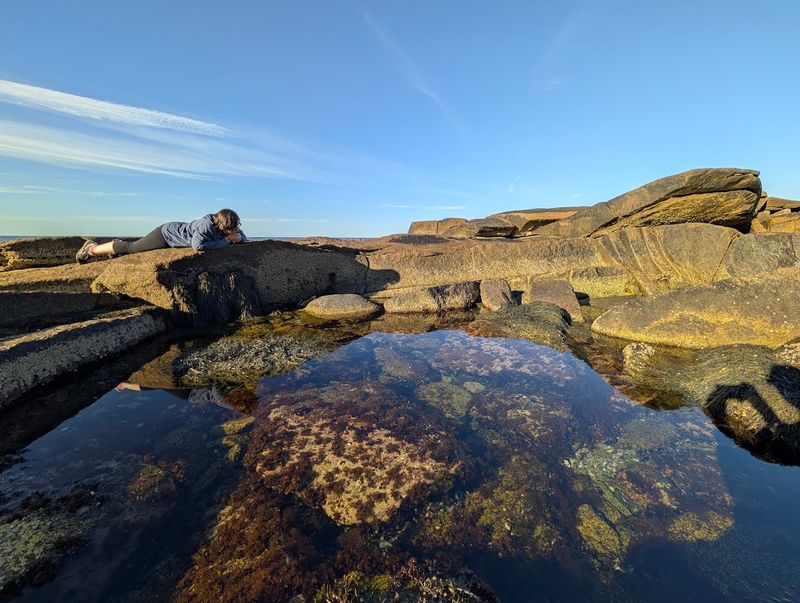
Low tide at Halibut Point reveals a version of the shoreline that most visitors never anticipate. When the water pulls back from the granite ledges, shallow tidal pools form in the natural depressions of the rock.
These pools hold small crabs, periwinkles, sea anemones, and other marine life that can be observed up close without any special equipment. Families with young children consistently describe this as one of the most memorable parts of the visit.
The rocks themselves are enormous, some the size of cars and trucks, and they have been shaped by centuries of wave action into forms that are genuinely interesting to explore. Walking among them requires reasonable balance and attention, particularly when the surfaces are wet.
The park does not restrict access to the shoreline rocks, but visitors with mobility concerns should be aware that this section is the most physically demanding part of the entire trail.
One practical tip worth passing along: check the tide schedule before your visit and aim to arrive around low tide for the best tidal pool experience. Mussels grow under seaweed along certain sections of the rocks, and their shells are sharp, so wearing sturdy shoes with good grip makes a real difference.
The tidal zone here is a working ecosystem, so observe without disturbing what you find.
Sunset And Sunrise Visits That Turn The Trail Into Something Unforgettable

The trail at Halibut Point faces east and northeast, which makes it one of the better sunrise destinations on the Massachusetts coast. The open granite ledges at the water’s edge provide an unobstructed view of the horizon, and on clear mornings the light arrives in warm bands of orange and pink before it fully clears the water.
Arriving thirty minutes before official sunrise gives you enough time to walk from the parking lot to the shoreline and settle in before the show begins.
Sunset is equally worth experiencing, particularly in late summer and autumn when the light lingers longer and the sky produces richer color. The meadow sections of the trail catch the late afternoon light beautifully, and the quarry takes on a golden quality in the hour before dark that photographers return for repeatedly.
Several reviewers specifically recommend the park for evening visits and describe the experience as genuinely calming.
Keep in mind that the park closes at sunset, so plan accordingly and give yourself enough time to walk back to the parking lot comfortably before the light fades completely. The trail is not lit after dark.
Arriving an hour before sunset allows you to experience the full transition from afternoon to evening without feeling rushed or cutting the visit short.
Wildlife Sightings From Deer To Seabirds Along The Trail
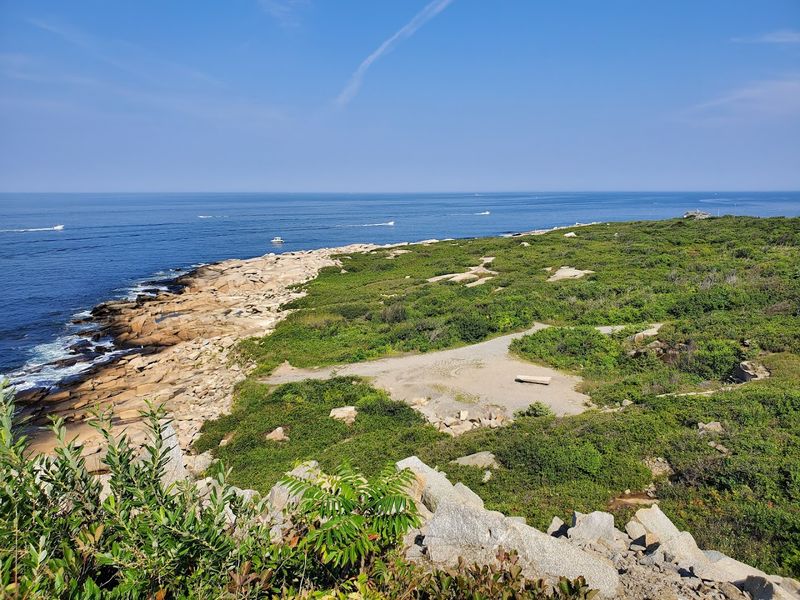
The park sits adjacent to a wildlife reserve, and that proximity means the trail offers more animal sightings than you might expect from a 1.6-mile coastal walk. White-tailed deer have been spotted multiple times by visitors exploring the meadow and wooded sections of the trail, typically in the early morning or just before dusk when animal activity is highest.
Seeing a deer emerge from the coastal shrubs with the ocean as a backdrop is the kind of moment that elevates a pleasant walk into a genuinely memorable outing.
Seabirds are a constant presence along the rocky shoreline. Common eider ducks, herring gulls, and double-crested cormorants are all regular visitors to the rocks and nearby water.
During migration seasons in spring and fall, the variety of bird species increases considerably, and birdwatchers with binoculars can spend a productive hour scanning the offshore rocks and open water without covering much ground at all.
Harbor seals occasionally haul out on rocks visible from the trail during winter months, which adds a surprising element to cold-weather visits. The wildlife reserve boundary keeps a significant buffer of undisturbed habitat adjacent to the park, which supports a broader range of species than the park acreage alone would suggest.
Quiet, attentive walkers consistently report more sightings than those moving quickly through the trail.
Why Rockport Makes The Perfect Base For This Coastal Hike
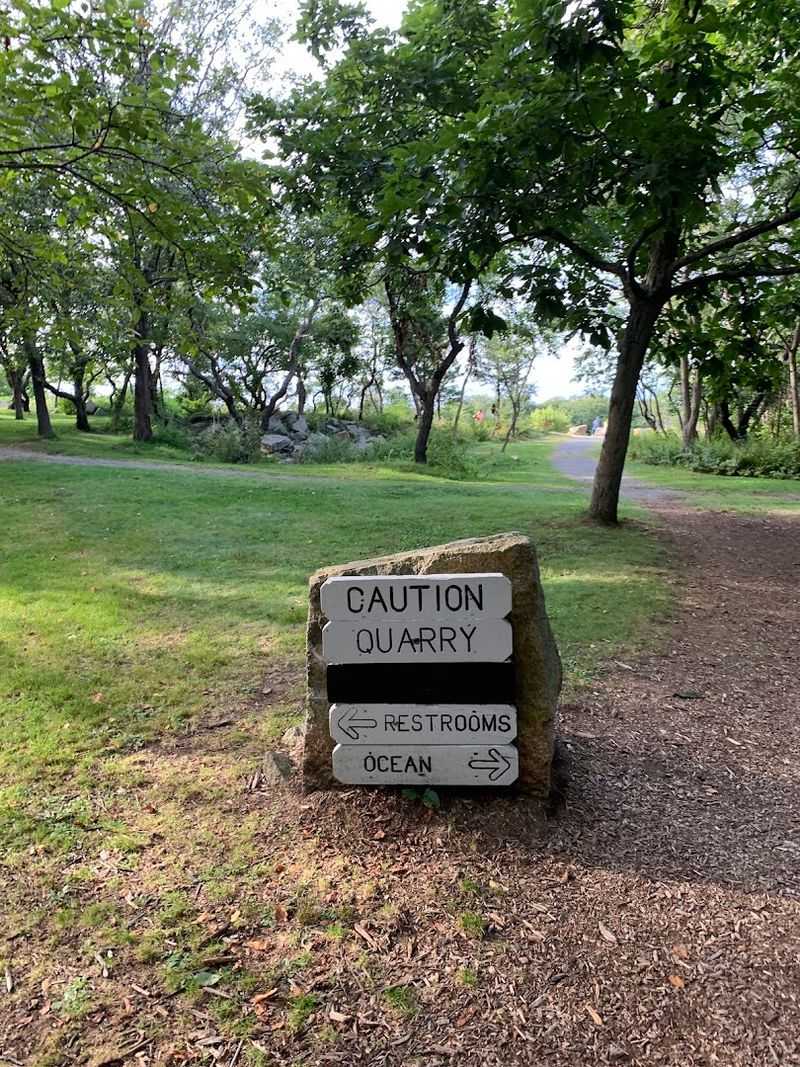
Halibut Point sits about ten minutes by car from downtown Rockport, which means you can combine the hike with a full day of exploration along one of the most character-rich stretches of the Massachusetts coast. Rockport’s compact downtown area clusters around a working harbor and offers independent restaurants, galleries, and shops that feel genuinely local rather than manufactured for tourism.
Having the trail as your morning activity and the town as your afternoon destination makes for a satisfying and well-balanced day trip.
The drive to the park from Rockport center is scenic in its own right, passing through quiet residential streets lined with old New England architecture before opening up to the coastal landscape near Gott Ave. Several visitors mention that the drive itself sets a relaxing tone that carries through the entire visit. Parking in town can be competitive during summer weekends, so using the state park lot and walking or driving into town afterward works well logistically.
Rockport is roughly an hour north of Boston by commuter rail, which makes Halibut Point accessible for day-trippers who prefer not to drive. The Rockport MBTA station is a short cab or rideshare ride from the park entrance.
Combining the train, the trail, and a meal in town creates a complete and unhurried day out that requires almost no advance planning.