
This Hidden Park With A 25-Foot Waterfall In The Middle Of Midtown Manhattan Reopens This Spring
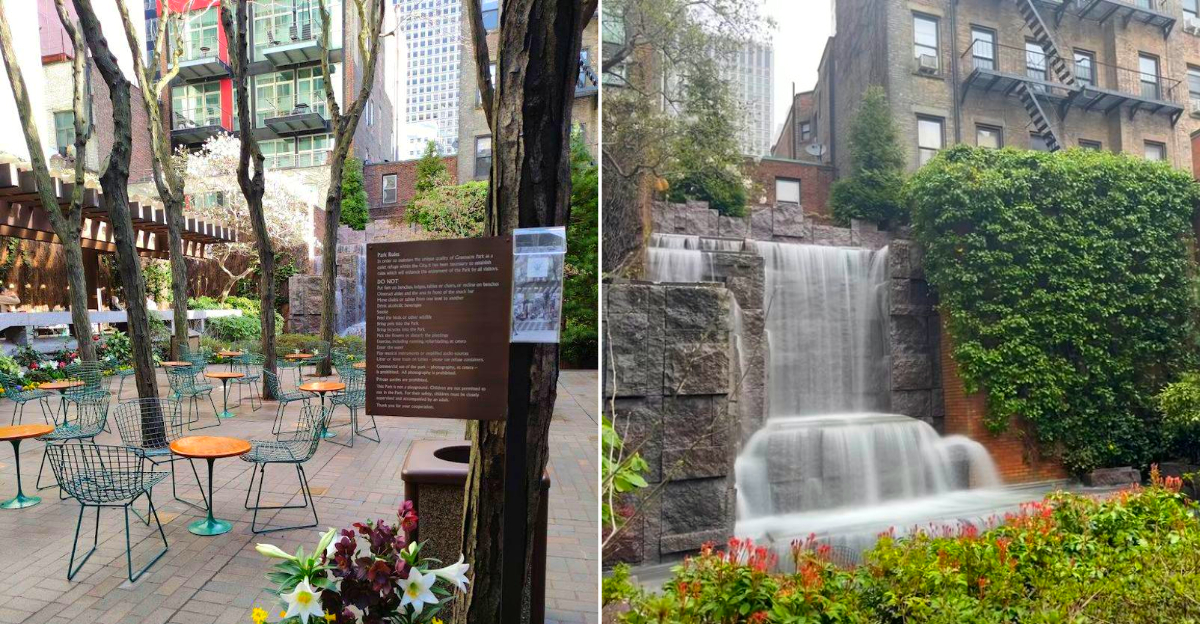
The middle of Manhattan is not where most people expect to find a waterfall. Among the glass towers and busy sidewalks sits a surprising green space where rushing water and leafy paths create a moment of calm right in the heart of New York City.
When this park is open, the sound of traffic fades behind the steady cascade of a 25-foot waterfall that feels worlds away from Midtown’s constant energy.
Visitors come here to sit by the water, enjoy lunch outdoors, or simply pause during a hectic day. After being closed for renovations, the park is reopening this spring, giving New Yorkers and visitors another chance to enjoy one of the most unexpected little escapes in Manhattan.
It is proof that even in the busiest part of New York, nature can still find a way to surprise you.
A Waterfall In The City That Actually Stops You In Your Tracks
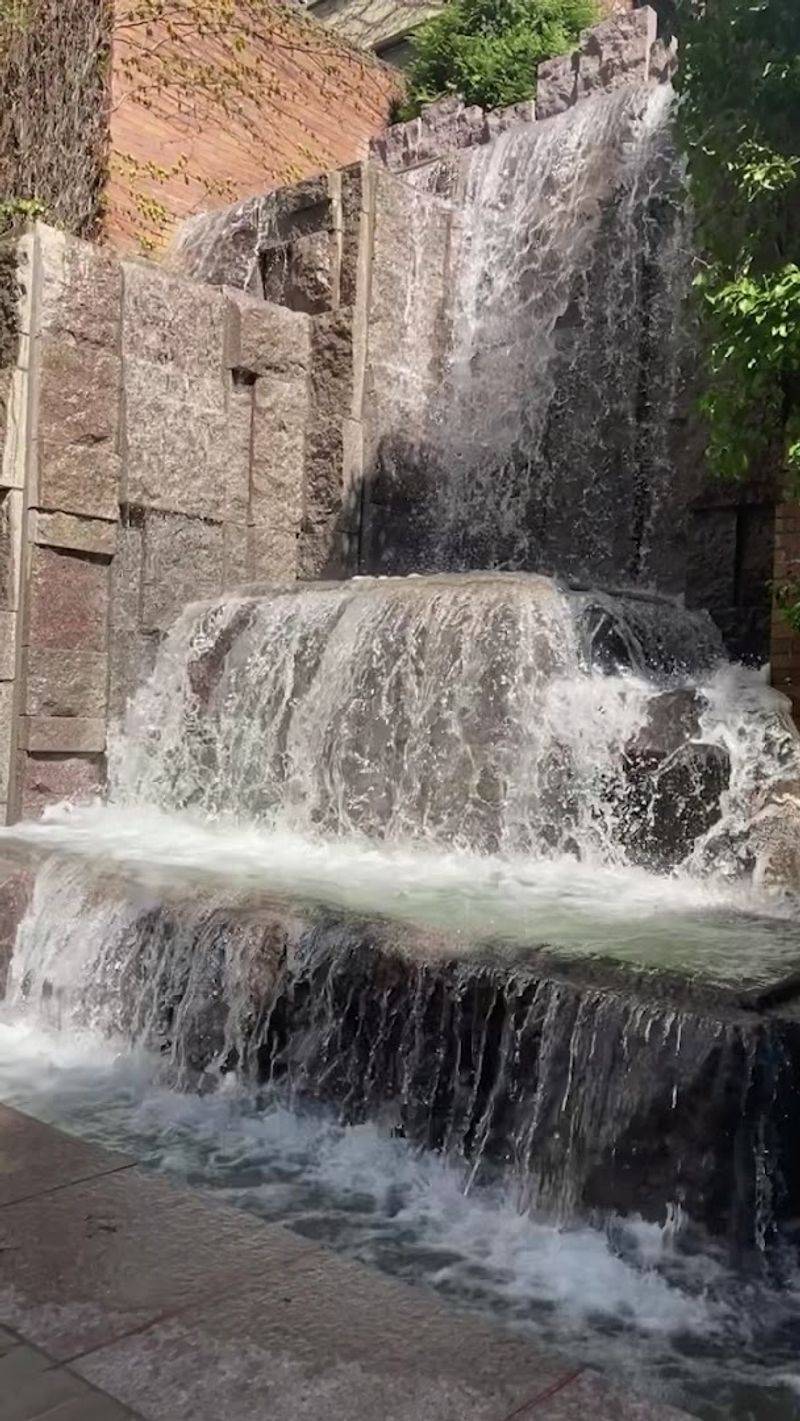
Most people walking along East 51st Street have no idea what is waiting for them just a few steps off the main path. The sound reaches you before the sight does, a deep, steady rush of water that cuts right through the ambient noise of the city.
It is disorienting in the best possible way, because nothing about Midtown prepares you for a 25-foot waterfall.
Greenacre Park’s centerpiece waterfall is not decorative in the way that hotel fountains tend to be. The water moves with real force, dropping from a structured stone wall and creating a fine mist that cools the air around the lower seating level on warm days.
The acoustic effect is genuinely impressive, as the sound of cascading water effectively masks the traffic, sirens, and general roar of the surrounding streets.
Sitting near the base of the waterfall feels like pressing a mute button on Manhattan. The park holds a 4.8-star rating, and the waterfall is consistently the feature people mention first.
For anyone who has never experienced it, the surprise of finding something so powerful and natural in the heart of one of the world’s busiest neighborhoods is a moment that tends to stay with you.
Greenacre Park And The Story Behind Its Generous Origins
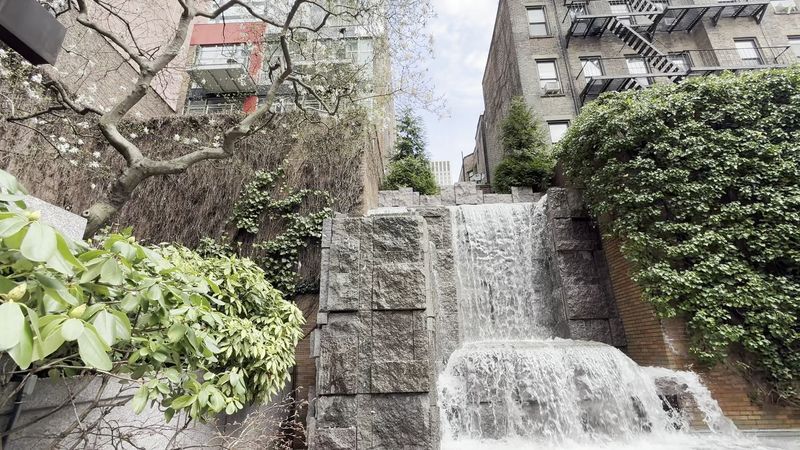
Not every park has a backstory worth telling, but Greenacre Park earns its history. Philanthropist Abby Rockefeller Mauzé gifted this space to the public in 1971, commissioning landscape architect Hideo Sasaki to design something that would give city residents a genuine retreat without leaving the neighborhood.
The result was a park that has outlasted trends, renovations, and decades of changing Manhattan.
The term used for spaces like this is “vest pocket park,” which refers to a small, publicly accessible green space carved out of dense urban surroundings. Greenacre fits that description perfectly, occupying a narrow lot between buildings that could just as easily have become another office tower or retail development.
The fact that it exists at all is a reflection of deliberate generosity.
In 2018, Greenacre Park was added to the National Register of Historic Places, a recognition that formalized what regular visitors already understood about its cultural value. The designation acknowledged the park not just as a pleasant amenity, but as a meaningful contribution to the quality of urban life.
Sasaki’s design has aged gracefully, and the original vision of providing genuine calm within a dense city remains as relevant today as it was more than fifty years ago.
What Three Levels Of Design Do For The Experience
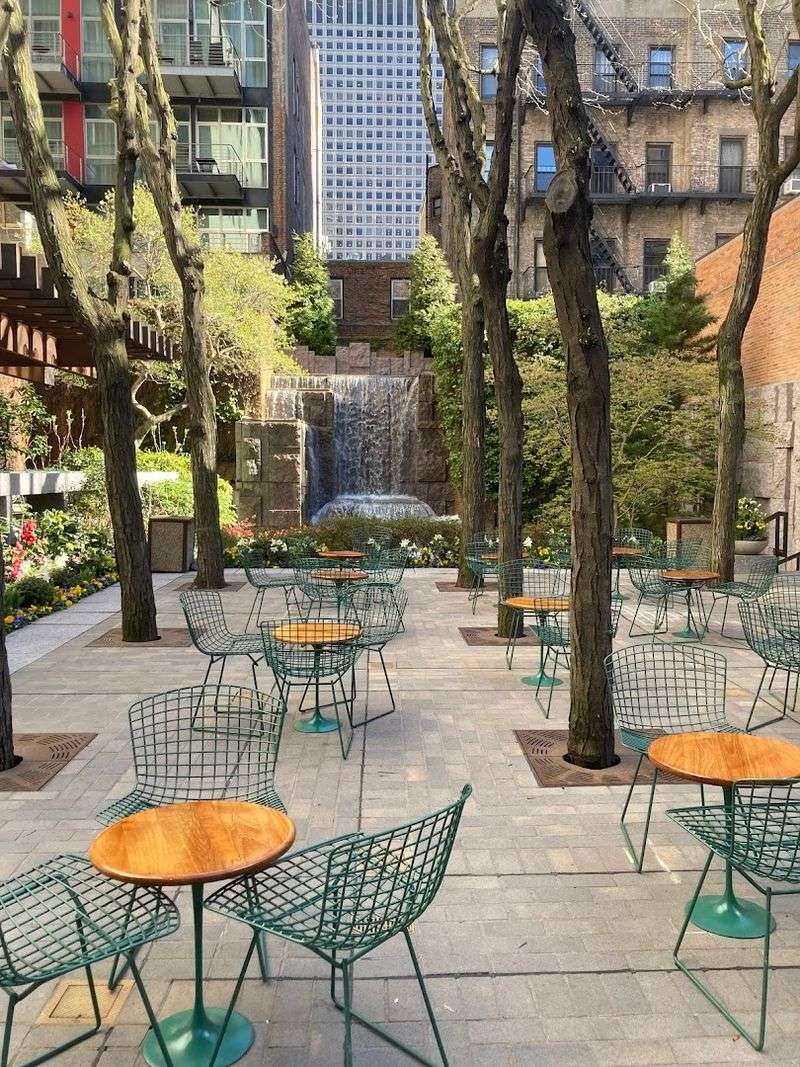
Hideo Sasaki did not simply plant some trees and call the project finished. The park is organized across three distinct levels, each offering a slightly different relationship with the space and the waterfall.
The lowest level places visitors closest to the water and carries the strongest acoustic immersion, while the upper levels provide a broader view across the park and a somewhat quieter atmosphere for conversation or focused work.
Moveable tables and chairs are distributed throughout all three levels, which is a detail worth appreciating. Fixed seating in urban parks tends to feel institutional, but the flexibility at Greenacre allows visitors to arrange themselves according to mood, company, or the angle of the afternoon sun.
A trellis structure spans part of the space and is equipped with heat lamps, extending the park’s usability into cooler autumn days.
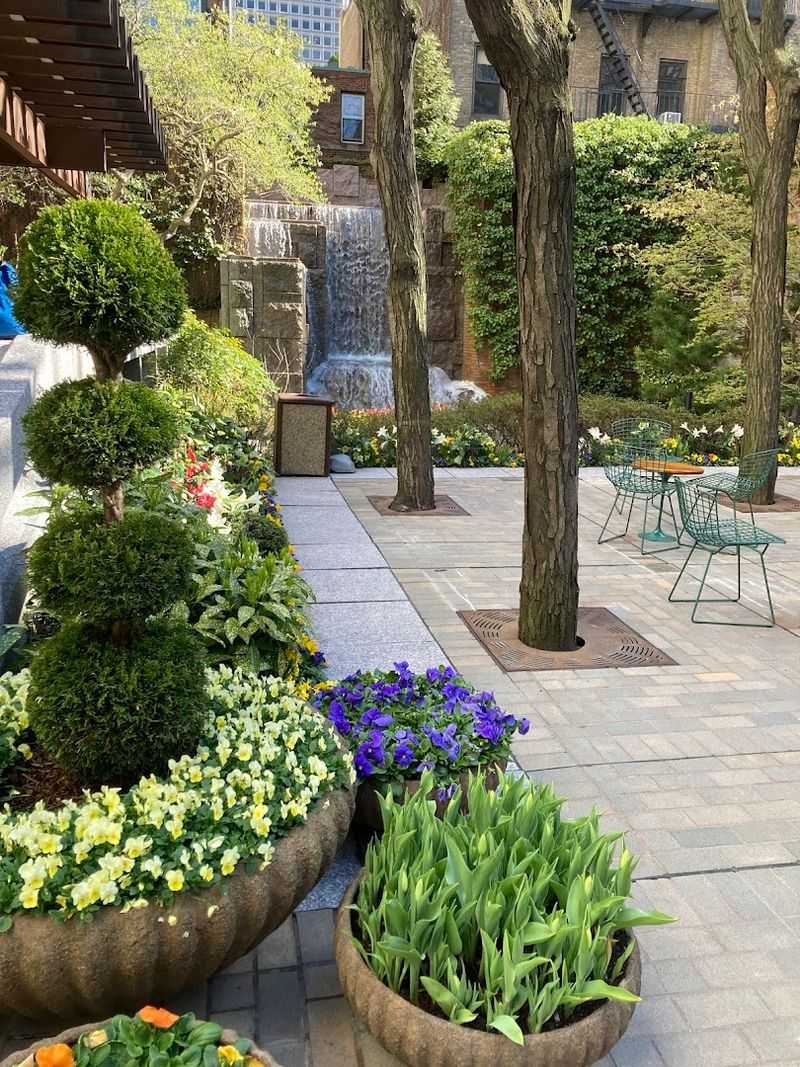
The plantings are rotated seasonally, so the park looks noticeably different depending on when you visit. Honey locust trees provide a dappled canopy overhead, while azaleas, hydrangeas, and pansies fill the lower beds with color throughout the warmer months.
The stone wall tiles that line the park’s interior add a textural warmth that keeps the space from feeling stark. Every design choice here feels considered rather than coincidental, which is part of what makes the park feel so complete despite its compact footprint.
Carol’s Cafe And The Simple Pleasure Of Eating Near A Waterfall
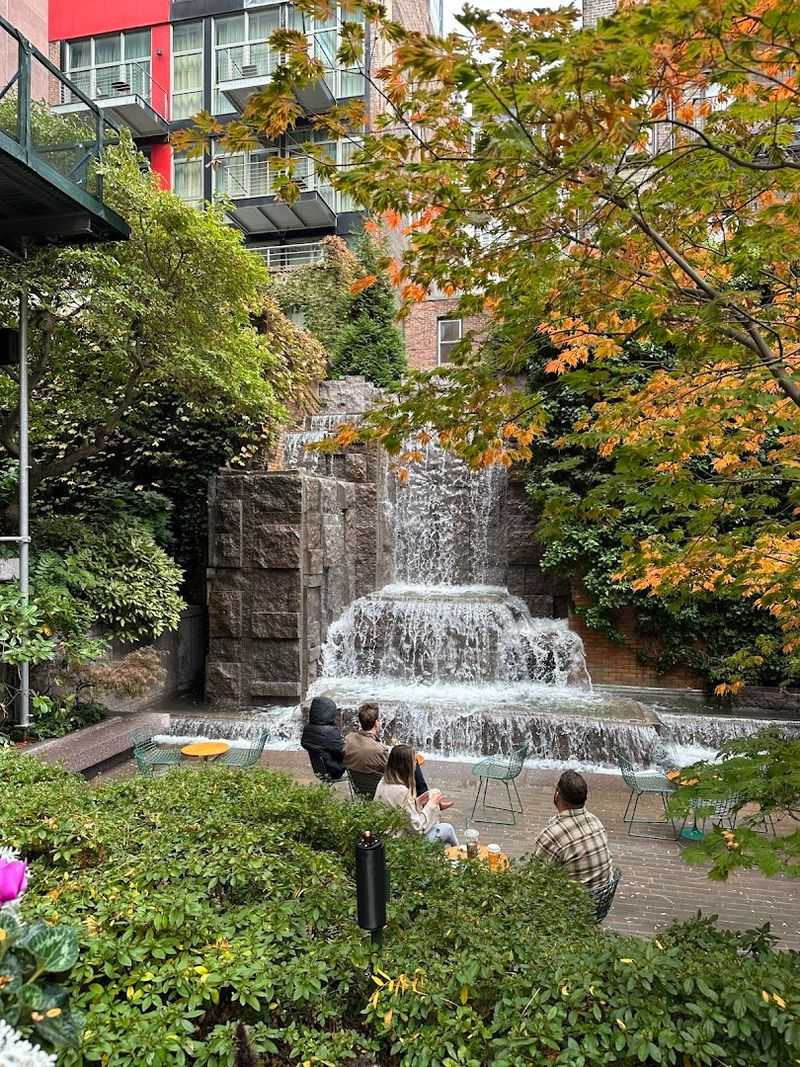
There is something quietly satisfying about eating lunch next to a waterfall in the middle of one of the most relentlessly busy cities on earth. Carol’s Cafe, the small food and beverage stall situated near the park’s entrance, makes that experience easily accessible without requiring much planning or expense.
The menu is straightforward, offering coffee, snacks, and light refreshments that suit the pace of the park itself.
Visitors who arrive early in the morning can pick up a coffee before the surrounding neighborhood fully wakes up, which is one of the more underrated ways to experience Greenacre.
The seating fills up quickly on pleasant days, so arriving with a little extra time is a practical strategy if you want a spot near the waterfall.
Regulars tend to know this already and plan accordingly.
The option to bring your own food is equally welcome. The park does not restrict outside meals, and plenty of visitors arrive with lunch from nearby delis or cafes, settle into a chair, and spend the better part of an hour simply eating and listening to the water.
It is a low-effort, high-reward kind of afternoon that Manhattan does not always make easy to find. Carol’s Cafe adds a layer of convenience that rounds out the experience without overcomplicating it.
When To Visit And How To Get There Without Any Confusion
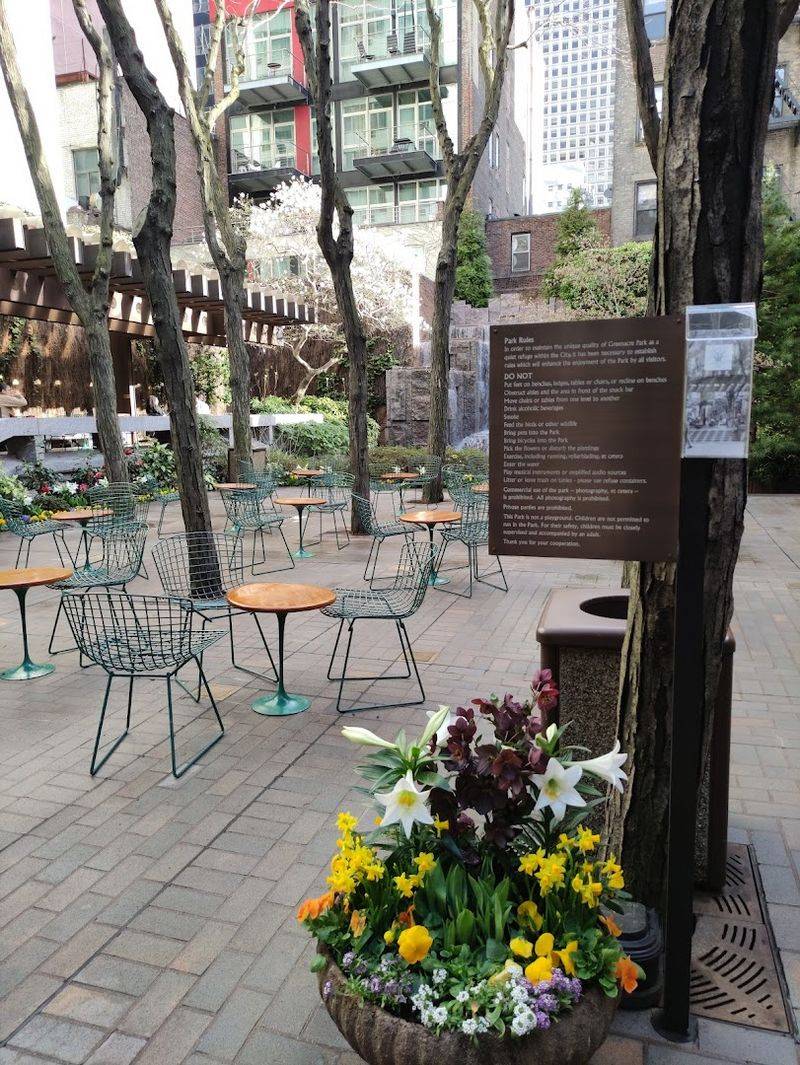
Greenacre Park operates seasonally, opening each year on April 1st and remaining accessible through December. Daily hours run from 8 AM to 6 PM throughout the week, giving morning commuters, midday lunch crowds, and late afternoon wanderers all a reasonable window to visit.
The park closes during winter months, which makes the spring reopening a genuinely anticipated event for the people who visit regularly.
Getting there by subway is straightforward. The E and M lines stop at Lexington Avenue and 53rd Street, and the 6 train stops at 51st Street, both within a short walk of the park’s address at 217 East 51st Street between Second and Third Avenues.
The entrance can feel slightly tucked away from the sidewalk, so first-time visitors should look carefully between the buildings rather than expecting a wide, obvious gateway.
Weekday mornings tend to offer the most peaceful experience, as the lunch rush between noon and 2 PM brings the largest crowds. Weekend afternoons are busy but rarely feel overwhelming given the park’s thoughtful layout.
Seating is genuinely in demand on warm days, so arriving a little before peak hours pays off. The park’s website at greenacrepark.org carries updated seasonal information for anyone planning a visit around specific dates or events.
The Kind Of Calm That A Small Park Delivers Better Than A Large One
Large parks offer acreage and variety, but they rarely deliver the particular kind of calm that comes from enclosure. Greenacre Park works partly because its boundaries are clear and close.
The surrounding walls, the overhead trellis, the layered plantings and the constant sound of the waterfall create an environment that feels genuinely separated from the street, even though the street is only a few yards away.
The acoustic design is a significant part of this. At 6,360 square feet, the park is small enough that the waterfall’s sound fills the entire space without any dead zones.
Visitors seated at the upper level still hear the water clearly, and that continuous auditory presence is what makes the park feel so removed from its surroundings. The city does not disappear visually, but it recedes in a way that feels meaningful rather than cosmetic.
People use the space in genuinely varied ways. Some come to read, others to work on a laptop using a personal hotspot, and many simply sit with no particular agenda beyond staying for a while.
The park staff maintain the grounds with notable care, with daily cleaning routines that keep the space consistently tidy. That level of maintenance is not accidental, and it contributes directly to the atmosphere that makes Greenacre worth returning to across an entire season.
Why This Park Earned A Place On The National Register Of Historic Places
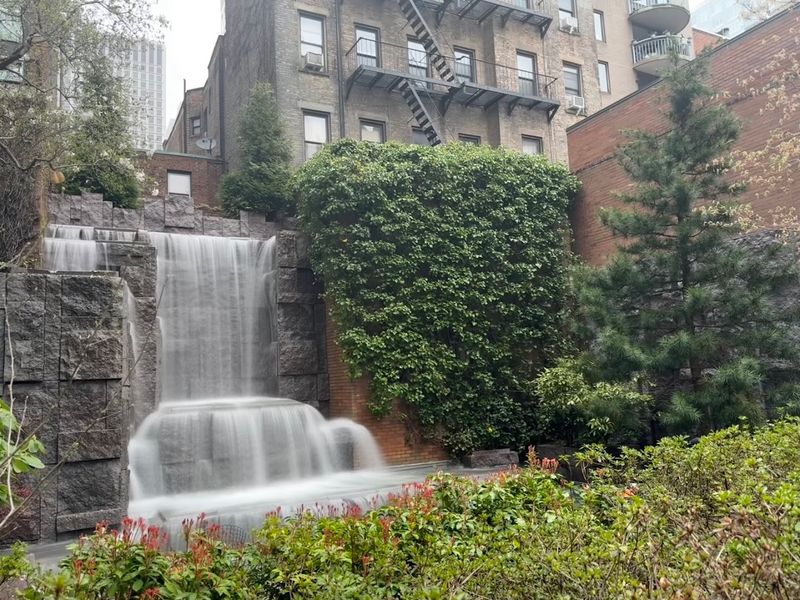
Being listed on the National Register of Historic Places in 2018 placed Greenacre Park in distinguished company, and the recognition was earned through more than just longevity. The designation reflects the park’s role as a model for thoughtful urban design at a scale that most cities rarely attempt seriously.
Sasaki’s original layout demonstrated that a small footprint could deliver an outsized civic benefit, and that argument has only grown stronger over the decades since the park opened.
The seasonal planting program is one of the more tangible expressions of that ongoing commitment. The park’s horticultural team rotates the flower and plant selections throughout the year, so returning visitors in October find a space that looks and feels distinctly different from the same space in May.
Stone tiles line the interior walls with a warmth that ages well, and the overall material palette has resisted the kind of dated quality that often affects designed spaces from the early 1970s.
For a park that occupies less space than many Manhattan apartments, Greenacre carries an impressive amount of cultural weight.
The historic designation gave formal recognition to something that regular visitors had understood informally for years: this small park genuinely improves the quality of daily life for the people who live and work nearby, and that is not a small achievement in a city as demanding as New York.