
A Spring Trip To This Tennessee Overlook Will Leave You Amazed
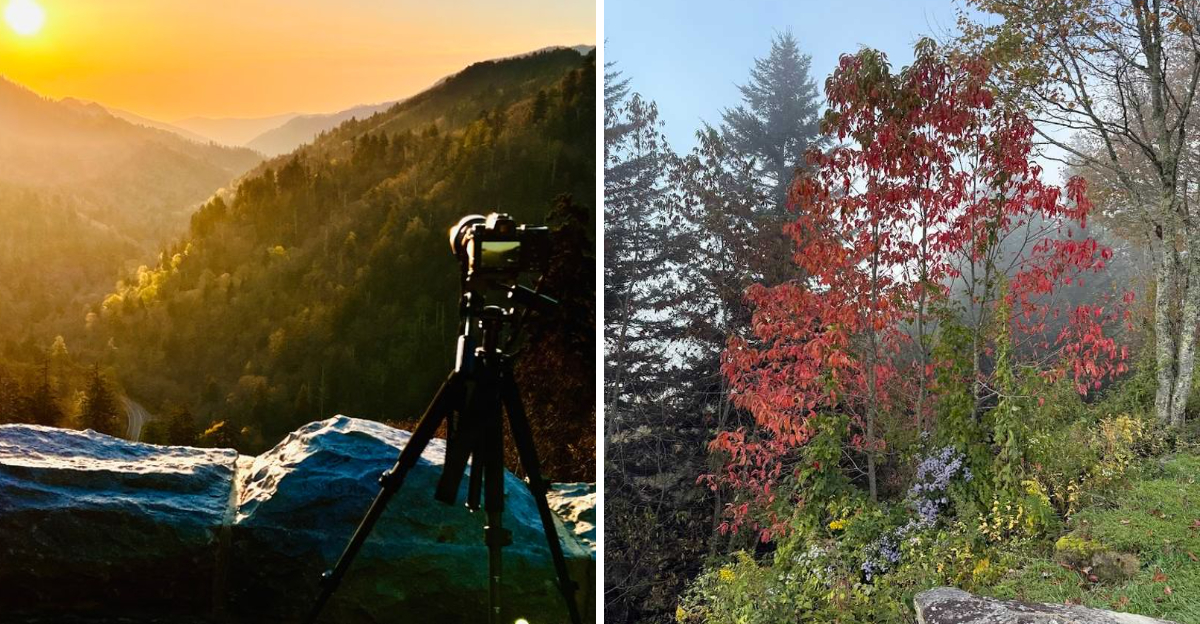
Spring arrives in Tennessee with a quiet kind of magic. Hills turn bright green, wildflowers begin to appear, and the mountains stretch toward the horizon in every direction.
Then you reach a place where the view suddenly opens up and the landscape seems to go on forever. It’s the kind of spot where people pause, pull out their cameras, and simply take a moment to look around.
Fresh mountain air, rolling ridgelines, and sweeping scenery make this overlook especially memorable in spring. One visit here makes it easy to understand why so many travelers consider it one of the most unforgettable viewpoints in Tennessee.
The First Look
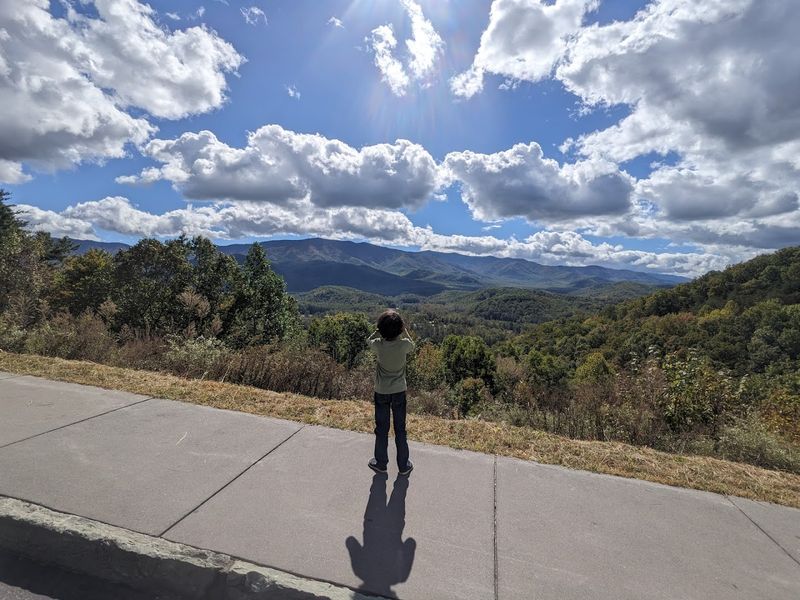
Standing at the edge of this overlook for the first time, most visitors go quiet. The view does not reveal itself gradually.
It arrives all at once, a broad sweep of layered mountain ridges rolling south toward the Tennessee-North Carolina border, softened in spring by every shade of green imaginable.
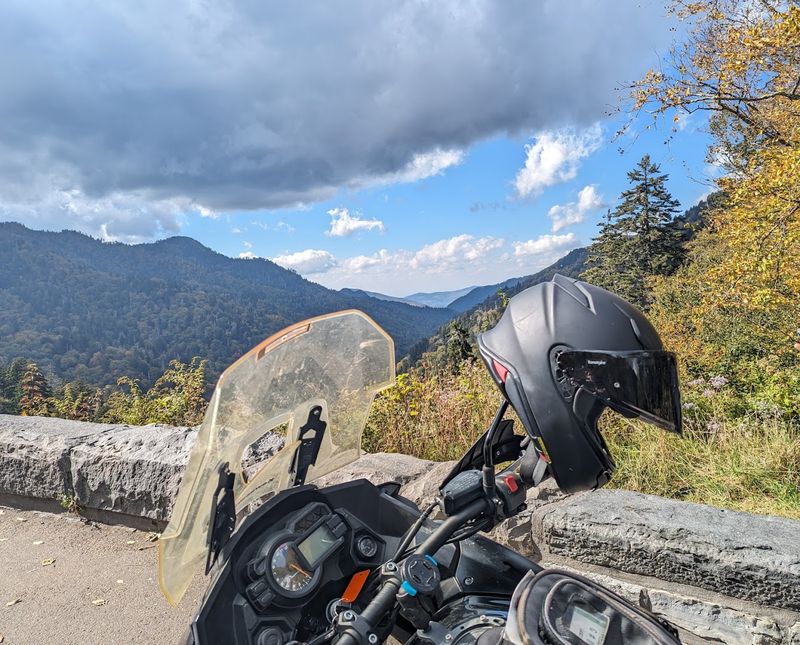
This roadside vista point sits within Great Smoky Mountains National Park. The overlook is positioned at an elevation that places you above the tree canopy in certain directions, offering unobstructed sightlines that feel almost cinematic.
Spring adds a particular richness to the scene, with fresh foliage covering the slopes and occasional morning fog drifting through the valleys below.
What separates this overlook from others along the same road is the combination of scale and accessibility. You do not need to hike for miles to earn this view.
A short stop from your car places you face to face with one of the most rewarding mountain panoramas in the entire park. Visitors consistently describe it as the kind of view that makes the drive worthwhile all on its own.
Spring Colors Along Newfound Gap Road Leading To The Overlook
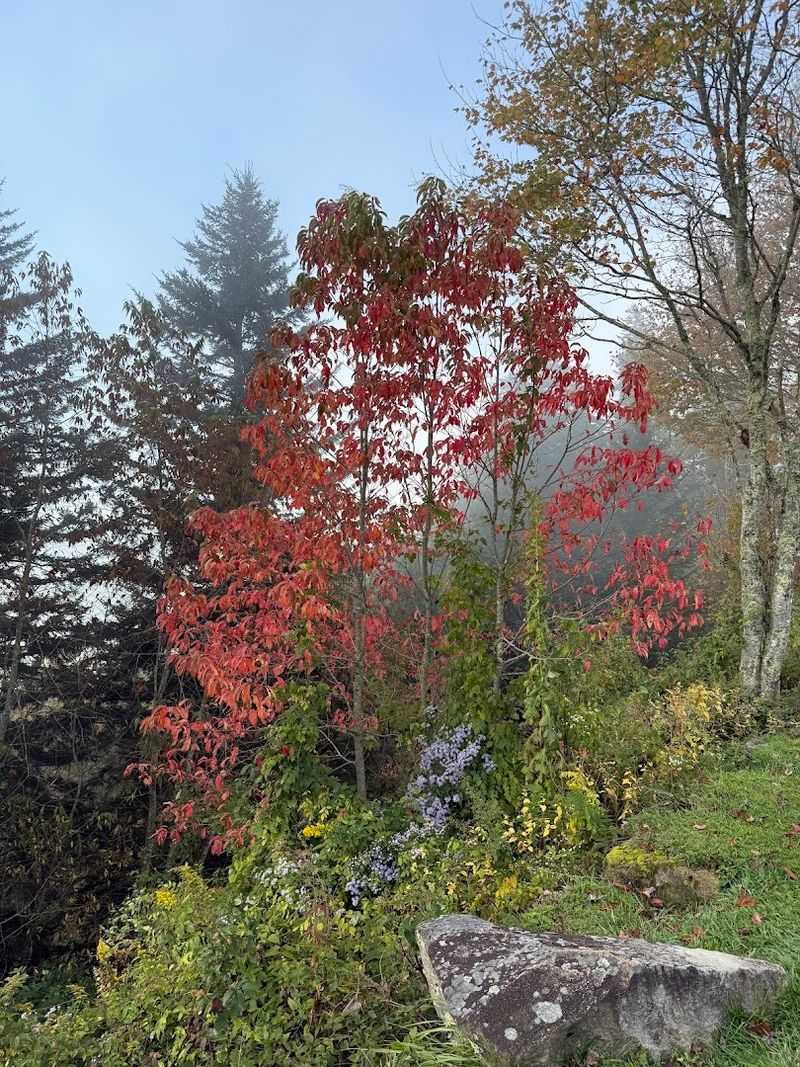
The drive to Ben Morton Overlook is its own reward. Newfound Gap Road winds through the heart of Great Smoky Mountains National Park, and in spring, the roadside transforms into a moving gallery of color.
Redbud trees bloom in soft purple, dogwoods open their white petals, and wildflowers appear along the shoulders of the road in cheerful clusters.
Spring arrives gradually at different elevations here. At lower elevations near Gatlinburg, the blooms begin as early as late March.
By the time you climb higher toward the overlook, the foliage is still fresh and luminous, that particular shade of green that only lasts a few weeks before deepening into summer. The contrast between the pale new leaves and the dark ridgelines in the distance creates a layered visual effect that photographers chase every year.
Visitors who time their arrival for mid-morning report the best combination of light and cleared fog. The early hours often bring mist rising from the valleys, which is beautiful in its own right.
By late morning, the mountains emerge fully, and the spring colors along the road leading to the overlook glow with a clarity that feels almost deliberate. It is a drive worth slowing down for.
Sunrise And Sunset Views That Draw Visitors Back Again And Again
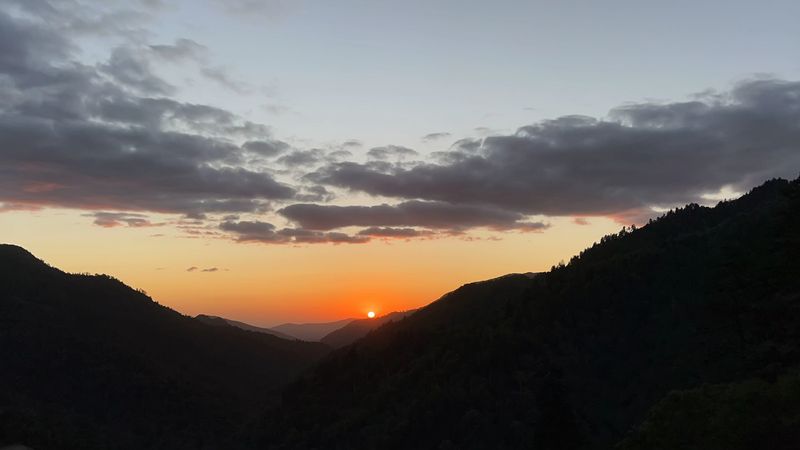
Ask any regular visitor to Ben Morton Overlook what time of day they prefer, and most will pause before answering. Sunset tends to win the debate.
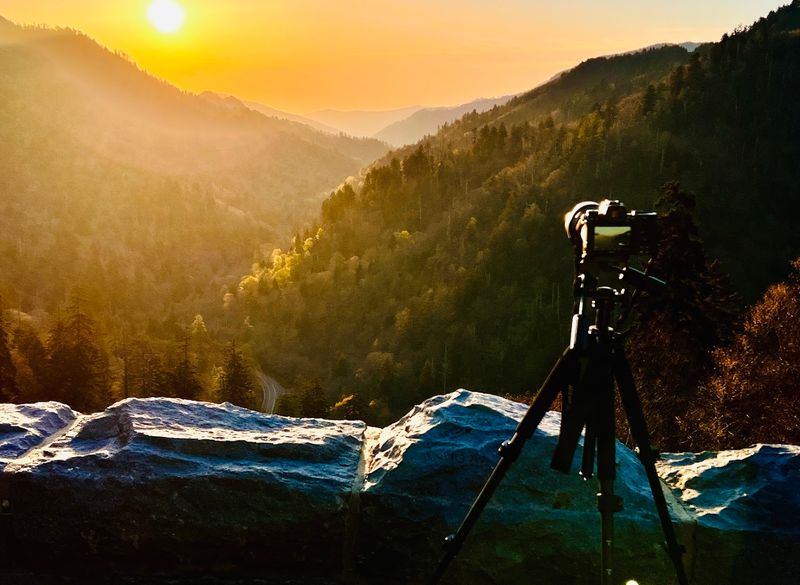
The overlook faces west-southwest, which positions it perfectly for catching the last light as it drops behind the ridgelines, painting the sky in combinations of amber, coral, and deep violet.
One review from a social media traveler described the sunset colors as absolutely breathtaking, noting that the overlook ranks among their favorites along the entire length of Newfound Gap Road. Another visitor planned their stop strategically, arriving at 3 p.m. to scout parking and returning at 6 p.m. for a sunset that reportedly began around 8:30 p.m.
That kind of planning speaks to how seriously people take the experience here.
Sunrise visits have their own appeal. The morning light comes from behind the overlook, illuminating the mountains ahead with a soft, directional glow that brings out the texture of the ridges.
Spring mornings often carry lingering fog in the valleys, and watching that fog burn off as the sun rises is an experience that rewards early risers considerably. The overlook is open 24 hours, making both sunrise and sunset entirely accessible without any special permits or fees.
Parking Realities And The Best Strategy For A Smooth Visit
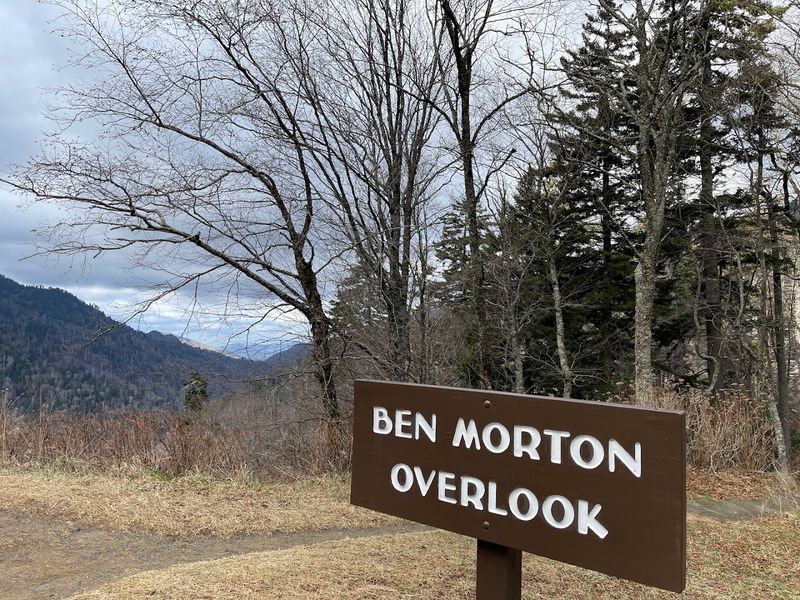
Honesty about parking at Ben Morton Overlook saves a great deal of frustration. The lot is small, accommodating roughly seven to twelve cars depending on how visitors arrange themselves.
During peak spring weekends, it fills quickly, particularly in the late afternoon when sunset seekers begin arriving hours early to secure a spot.
The most practical approach, confirmed by multiple visitors, is to drive past first and assess availability. If the lot is full, the turnover is generally fast.
Most people stop, take their photos, absorb the view for ten to twenty minutes, and move on. Patience here is usually rewarded within a short wait.
Arriving on a weekday morning significantly improves your odds of finding immediate space.
The entrance and exit points connect directly to US-441, so caution when pulling in and out is important. Traffic along Newfound Gap Road moves at a reasonable pace, but the transitions require attention.
A small stone wall lines the overlook area, offering a natural boundary between the parking surface and the mountainside drop. Visitors who plan to stay for sunset are advised to arrive no later than two hours before the expected time.
That buffer makes the difference between a relaxed experience and a hurried scramble for position.
Interpretive Signs That Tell The Story Of The Smokies
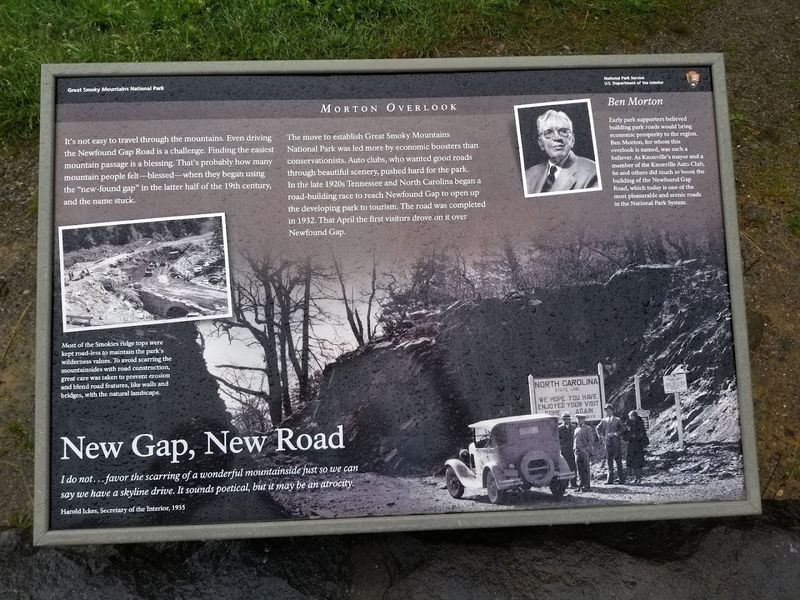
Not every overlook takes the time to educate its visitors. Ben Morton Overlook does.
Several interpretive signs are posted throughout the stop, covering the history of Great Smoky Mountains National Park, the remarkable biodiversity found within its boundaries, and the natural processes that shaped the landscape visible from the overlook itself.
The park is recognized as one of the most biodiverse temperate regions on the planet, home to over 19,000 documented species of plants, animals, and fungi. The signs at this overlook give visitors a way to connect what they are seeing with the science and history behind it.
For families traveling with children, these panels offer an engaging way to make the visit educational without feeling like a classroom exercise.
Reading through the signage before or after taking in the view adds a layer of appreciation that purely visual experiences sometimes lack. Knowing that the forest stretching across those ridges contains salamander species found nowhere else on earth, or that the park was established in 1934 after years of conservation effort, changes how you look at the landscape.
The overlook becomes not just a place to photograph, but a place to understand. That combination of beauty and context is part of what makes this stop genuinely memorable.
Weather And Fog Conditions That Shape Every Visit Differently
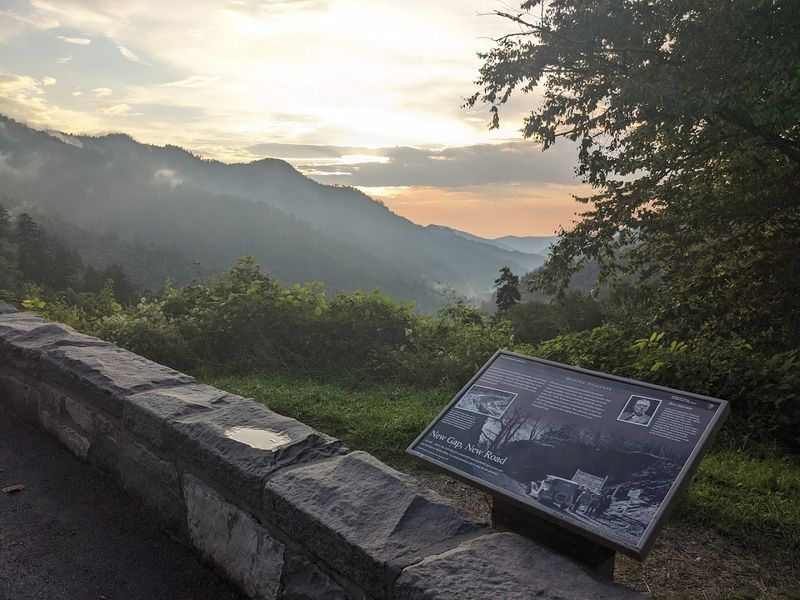
The Great Smoky Mountains earned their name from the atmospheric haze that rises from the dense vegetation covering their slopes. At Ben Morton Overlook, that haze is a constant companion, and learning to appreciate it rather than resist it changes the entire experience.
Fog is not a disappointment here. It is a feature.
One visitor arrived early on a morning following two days of rain and found the overlook covered in a layer of snow and ice, creating a scene they described as unexpectedly beautiful. Another arrived at 8 a.m. to find heavy fog that slowly cleared over the course of an hour, revealing the full panorama in stages.
That gradual reveal has its own dramatic quality that a perfectly clear day cannot replicate.
Spring weather in the Smokies is genuinely unpredictable. Temperatures can shift by twenty degrees between morning and afternoon, and afternoon thunderstorms are common from April onward.
Checking the forecast before visiting is sensible, but arriving with flexible expectations is equally important. Some of the most photographed moments at this overlook have come on days that looked unpromising on paper.
The mountains have a habit of surprising visitors who show up anyway, and that quality keeps people returning across every season.
Photography Opportunities And Tips For Capturing The Best Shots
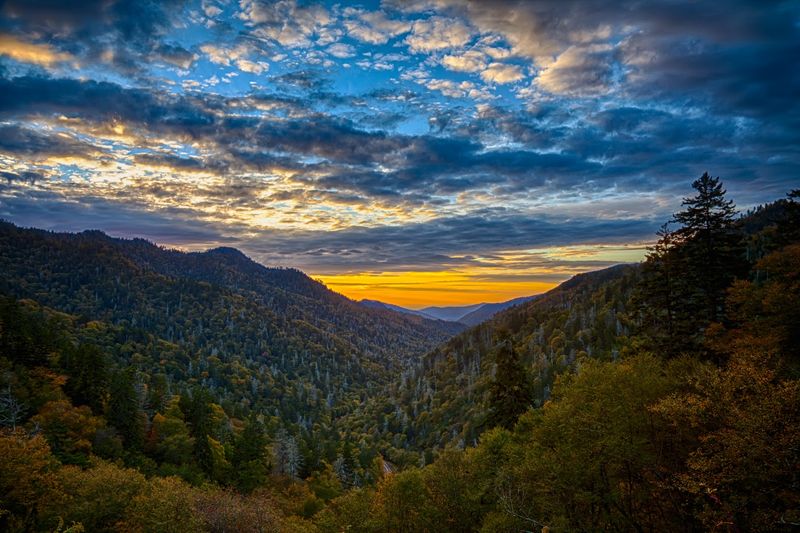
Ben Morton Overlook has developed a genuine reputation among landscape photographers, and the reasons are straightforward. The view is wide, the foreground is clean, and the light at both ends of the day behaves exceptionally well.
The stone wall that lines the overlook provides a natural compositional element, useful for leading lines and for framing portraits with the mountains behind.
Spring offers photographers a specific advantage. The fresh foliage creates a range of tonal values across the mountain slopes, from pale yellow-green in the newly opened canopy to deeper tones on the older growth.
When morning fog fills the valleys, the ridgelines appear to float above the mist, producing the layered effect that has become something of a signature look for Smoky Mountains photography.
For those using smartphones, mid-morning light after the fog clears produces the most consistent results. Arriving at golden hour, roughly forty-five minutes before sunset, gives more dramatic color but requires faster decision-making as the light changes quickly.
The small stone wall serves as a natural seat for steadying shots or posing for portraits. Visitors heading south on US-441 have noted a paved walkway with stone walls on both sides that offers additional angles and a slightly different perspective on the same mountain range.
Facilities On Site And What To Bring For A Comfortable Stop
For a roadside overlook, Ben Morton Overlook is notably well-equipped. Clean restrooms are available on site, a detail that visitors consistently mention with visible appreciation, particularly those traveling with children or spending extended time waiting for sunset.
Hand sanitizer stations are provided in place of traditional sinks, which keeps the facilities simple but functional.
Beyond the restrooms, the overlook offers a stone wall barrier that doubles as seating, a small paved area for standing and viewing, and the interpretive signage already mentioned. There are no food vendors or picnic tables, so bringing your own snacks and water is the practical approach.
Spring temperatures at this elevation can feel cooler than expected, particularly in the morning and evening, so a light jacket is worth packing even on days that start warm in Gatlinburg below.
The overlook is open around the clock, every day of the week, with no admission fee beyond the standard Great Smoky Mountains National Park entrance, which itself requires no fee. That combination of accessibility and amenity makes it an easy inclusion on any itinerary.
For visitors planning to stay through sunset, bringing a blanket or camp chair significantly improves the waiting experience. The phone number for the park is +1 865-436-1200 for any questions before your visit.
How Ben Morton Overlook Compares To Other Stops Along US-441
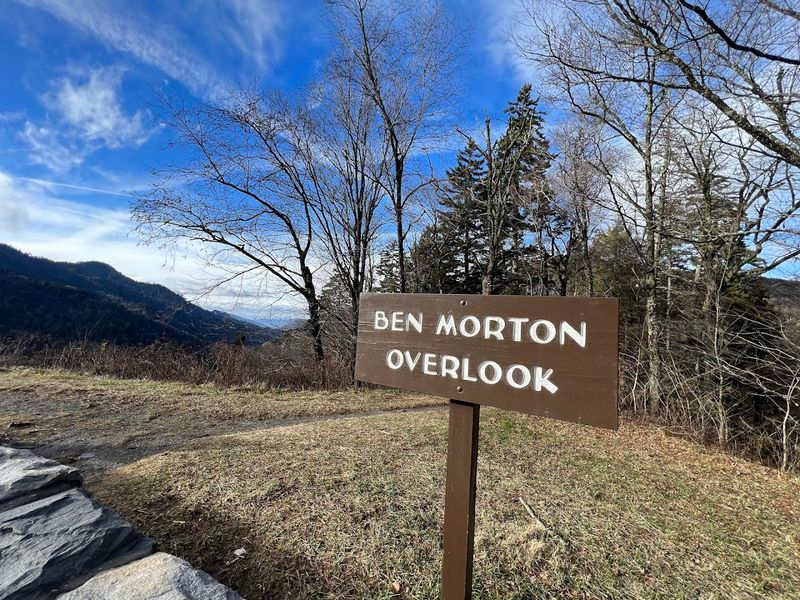
Newfound Gap Road is generously supplied with overlooks, pullouts, and scenic stops. Driving the full length of US-441 through the park introduces you to a rotating series of mountain views, each shaped by its elevation, orientation, and the particular curve of the ridge it faces.
Ben Morton Overlook earns its distinction among these options through a combination of factors that other stops do not always share.
The view here is notably unobstructed. Several reviewers have pointed out that the trees do not crowd the sightline the way they do at some lower-elevation stops, allowing multiple mountain ranges to appear simultaneously.
The gorge visible from this overlook adds vertical drama that flat ridge views cannot match. One long-time visitor described it as standing out even among many beautiful spots along the entire route, recommending it as the priority stop for anyone with limited time.
That said, the overlook works best as part of a longer drive rather than an isolated destination. The road itself is worth experiencing at a slow pace, with windows down and no particular schedule.
Ben Morton Overlook functions as the natural climax of that drive, the moment where the accumulated beauty of the journey concentrates into a single, open view. Arriving with that context makes the stop feel earned rather than simply convenient.
Planning Your Spring Visit: Timing, Access, And Practical Advice
Spring at Ben Morton Overlook runs roughly from late March through May, with each month offering a distinct version of the experience. Late March brings the earliest wildflowers and the first flush of green on the lower slopes.
April intensifies the color, adding blooming trees and warmer afternoon temperatures. May delivers the fullest foliage and the longest daylight hours, making it the most popular month for visiting.
The overlook sits on US-441 within Great Smoky Mountains National Park, accessible from the Gatlinburg entrance on the Tennessee side. From downtown Gatlinburg, the drive takes approximately twenty to thirty minutes depending on traffic, which can be considerable on spring weekends.
Starting early or arriving after 4 p.m. helps avoid the midday congestion that builds along Newfound Gap Road during peak season.
Visitors driving from the Cherokee, North Carolina side will find the overlook accessible from that direction as well, making it a natural midpoint stop on a cross-park drive. Cell service along portions of the road is limited, so downloading offline maps before departure is a sensible precaution.
The park entrance is free, the overlook is free, and the views are, by overwhelming consensus, worth every mile of the journey to reach them.