
The Most Beautiful Drive In Colorado That Looks Like Art
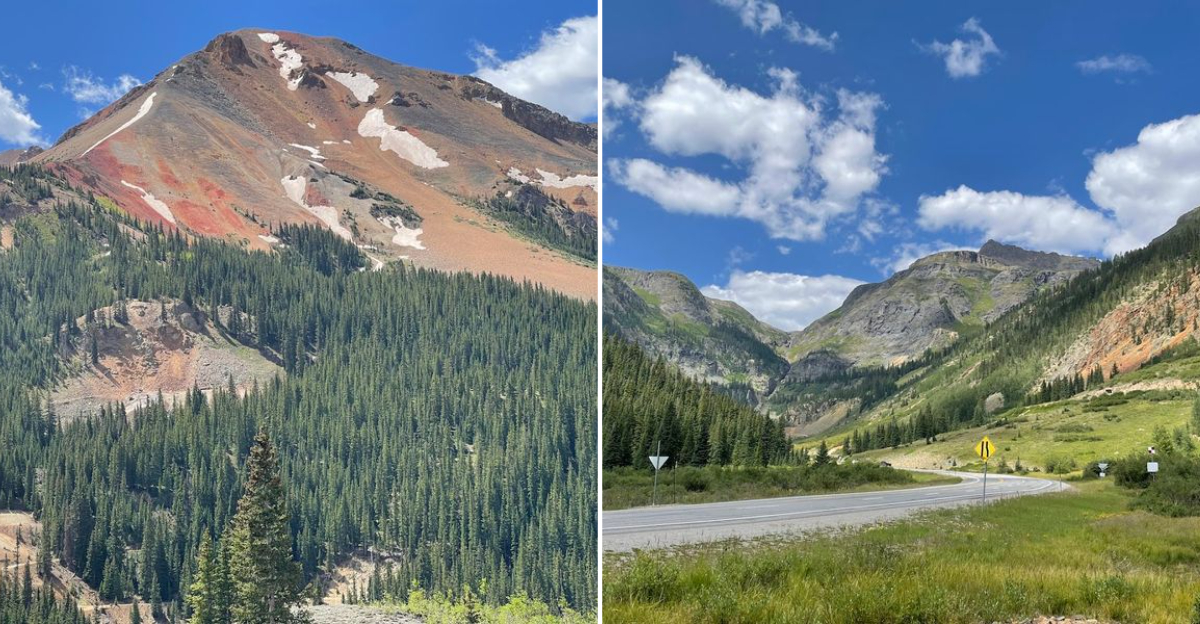
If you have ever wondered whether some of the views you see while driving down a highway are only something out of a movie, the answer is no, they are real. And this highway in Colorado is living proof of that.
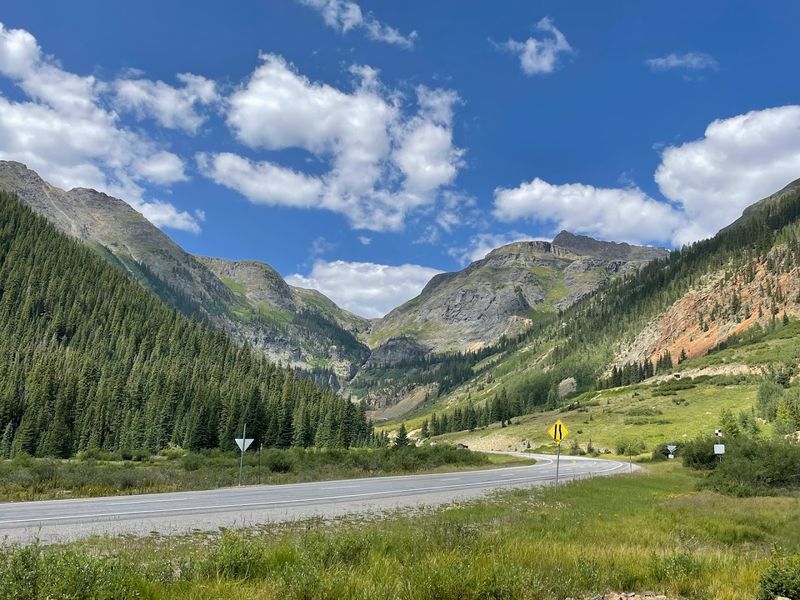
As you leave the noise of everyday life behind, the road begins to unfold like a moving postcard. Mountain peaks rise in the distance, and light cuts through vast open skies.
Every turn feels like it was designed to make you slow down, even if just for a moment, to take it all in. There is a strange kind of silence here, not empty but full, as if the landscape itself is speaking.
In places like this, driving stops being just a way to get somewhere and becomes the reason you travel at all.
Mountain Landscapes That Inspire Awe
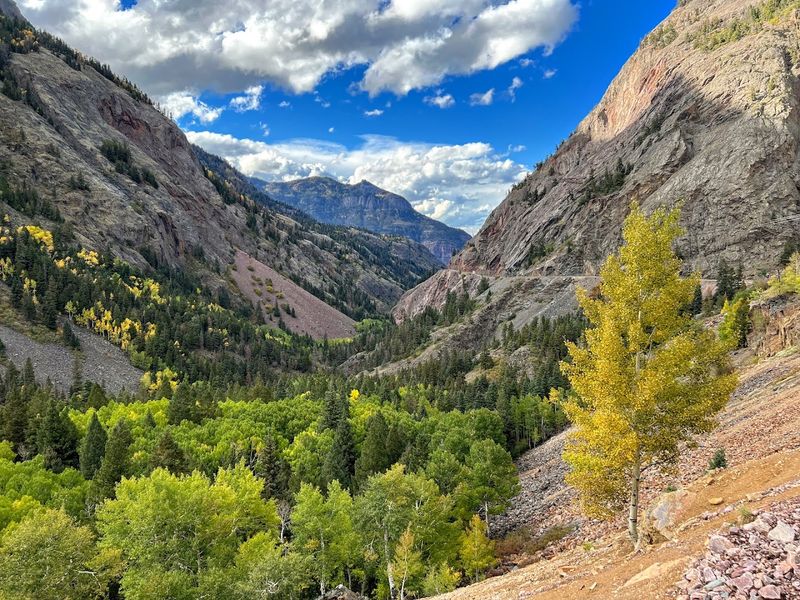
This Highway earns its legendary status the moment you see your first real mountain wall looming overhead. The road runs between Ouray and Silverton, cutting through the San Juan Mountains with zero apology for how intense it gets.
These are not gentle rolling hills. These are massive, jagged peaks that shoot straight up like nature was showing off.
The elevation swings are real. You go from the charming Victorian town of Ouray at around 7,800 feet up to Red Mountain Pass at over 11,000 feet.
That climb is packed with hairpin turns, sheer drop-offs, and views that will make your passengers grab the door handle involuntarily.
No guardrails exist on many sections of this Million Dollar Highway. That sounds terrifying, and honestly, it kind of is.
But it also means nothing blocks your view of those jaw-dropping canyon walls and peaks stretching into the sky. The landscape here does not look like something you drive through.
It looks like something you hang on a wall. You can find this unforgettable stretch along US-550 in Colorado.
Wildlife Encounters Along The Way
Pull over slowly, because wildlife on Million Dollar Highway does not care about your schedule. Bighorn sheep are the celebrities of this road.
They hang out on impossibly steep rock faces like gravity is just a suggestion for other animals. Spotting a group of them casually grazing near the road edge is one of those moments that feels completely surreal.
Mule deer are common sightings, too, especially in the early morning and evening hours. Black bears occasionally wander through the lower elevations near Ouray, so keep your eyes open and your snacks sealed.
Mountain goats sometimes appear higher up near the passes, blending into the pale rock with impressive camouflage skills.
Marmots are the funny little guys you will see sunning themselves on boulders near the higher elevations. They whistle loudly when startled, which is both adorable and slightly alarming if you are not expecting it.
Birds like Clark’s nutcracker and golden eagles patrol the skies above the peaks. Wildlife here is not something you have to search hard for.
It finds you, usually when you least expect it, which makes every mile feel like a nature documentary you accidentally starred in.
Seasonal Changes That Transform The Scenery
Every season on Million Dollar Highway delivers a completely different show. Summer brings lush green slopes, cascading waterfalls fed by snowmelt, and wildflowers popping up in meadows along the roadside.
The air smells clean and sharp, and the peaks are fully visible without the haze that lower elevations sometimes get.
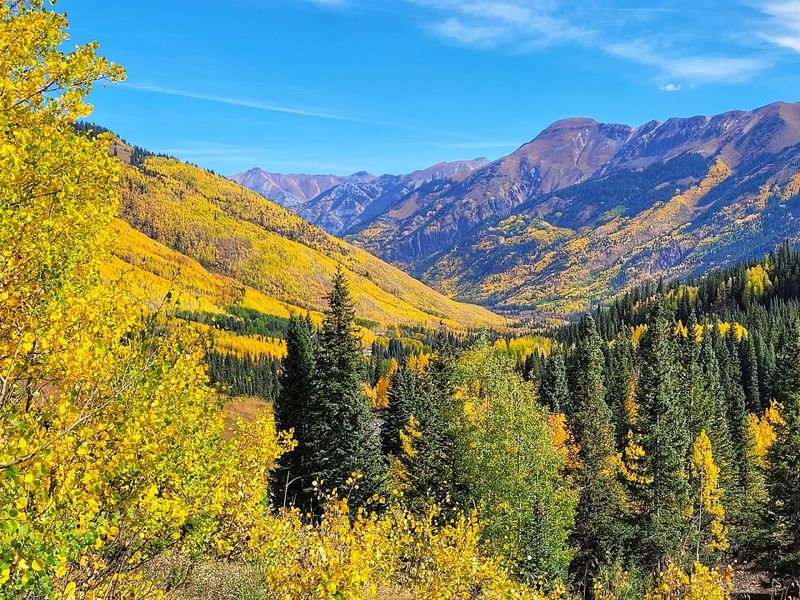
Fall is when this drive becomes almost irrationally beautiful. The aspen trees turn gold and orange around late September and early October.
Those colors set against the dark red rock of Red Mountain create a contrast that photographers lose their minds over. It is the scenery that makes people cry a little, and nobody judges them for it.
Winter closes much of the road due to avalanche danger and snow accumulation, which makes the open seasons feel even more precious.
Spring brings dramatic snowmelt, rushing streams, and patches of snow still clinging to the upper peaks while flowers bloom below. Each visit at a different time of year feels like a brand new road entirely.
If you can only do one season, aim for fall. But honestly, showing up in any season here beats staying home every single time.
Historical Significance Of The Route
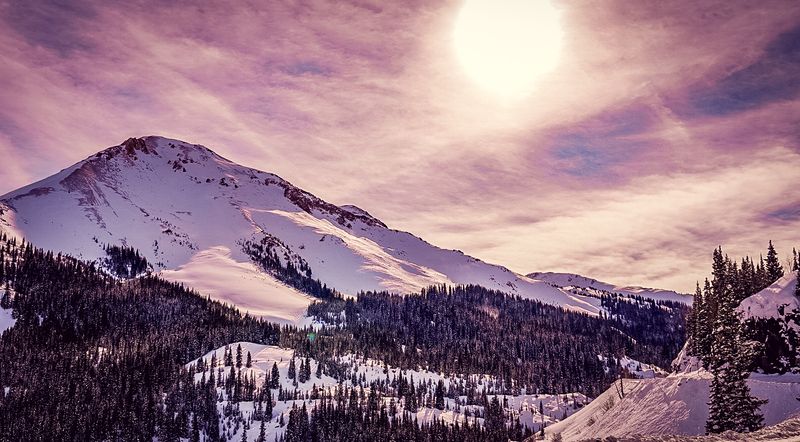
Million Dollar Highway has a past as dramatic as its scenery. The road was originally built in the 1880s to support the booming silver and gold mining operations in the San Juan Mountains.
Silverton, one of the towns it connects, was a full-on mining boomtown. At its peak, the area pulled millions of dollars worth of ore out of those mountains every year.
The name itself has a few competing origin stories. Some say it costs a million dollars per mile to build, which, given the terrain, is extremely believable.
Others claim the roadbed contains gold ore worth a million dollars. A third story says an early traveler declared she would not drive it again for a million dollars, and honestly, that one feels the most historically accurate given the road’s reputation.
The route passes through towns that survived long after the mines closed, preserving their Victorian-era architecture and gritty character. Ouray is sometimes called the Switzerland of America.
Silverton still looks like a Western movie set. These towns are not manufactured tourist traps.
They are real places with real history that happened to survive long enough for the rest of us to appreciate them properly.
Unique Geological Formations Visible From The Road
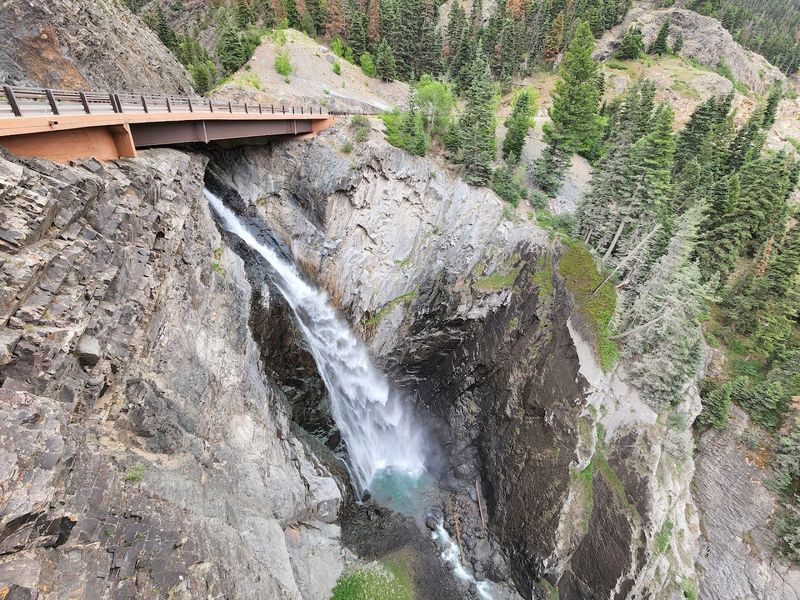
Red Mountain Pass is the geological showstopper of the entire drive. The mountains here are stained deep red and orange from iron oxide deposits left behind by ancient volcanic and hydrothermal activity.
It looks like someone painted the peaks with rust and fire, and it is completely natural. No filter needed, no enhancement required.
The San Juan Mountains themselves are volcanic in origin, which explains the wild variety of rock colors and textures you see throughout the drive.
Layers of different minerals create stripes and patches of green, yellow, purple, and brown across the cliff faces. Geologists genuinely get emotional driving through here, and you will start to understand why even without a geology degree.
Box Canyon near Ouray offers a close-up look at how water carved through solid rock over thousands of years. The canyon walls rise hundreds of feet on both sides of a narrow slot, and a waterfall thunders through the middle.
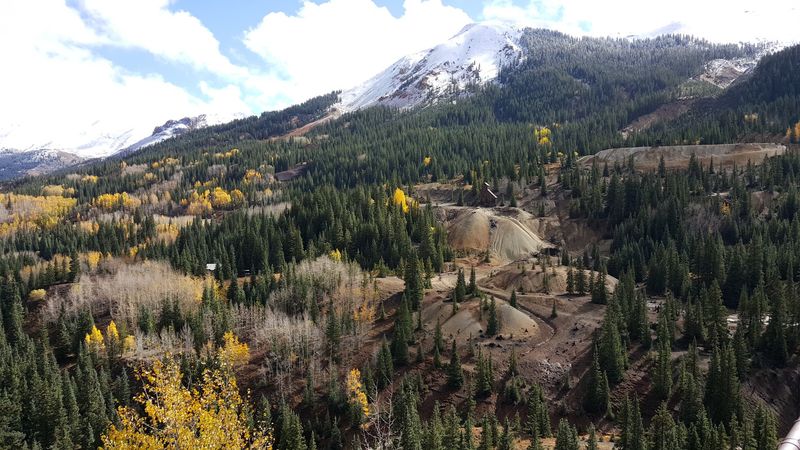
Talus slopes, old mine tailings, and exposed rock faces line the road throughout the route. Every mile reveals another chapter of the earth’s history written in stone, and the story it tells is wildly more interesting than any textbook version.
Recreational Opportunities Available Nearby
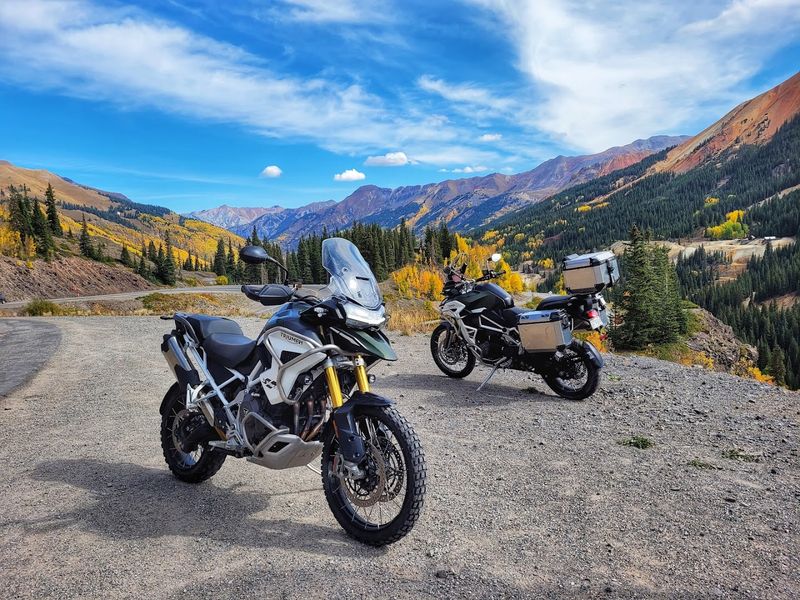
Million Dollar Highway is not just something you drive through and check off a list. The towns and wilderness areas surrounding it are packed with things to do once you park the car.
Ouray is famous for its natural hot springs, which feel perfect after a long drive through high mountain passes. Soaking in warm mineral water while staring at jagged peaks is a very specific kind of happiness.
Ouray is also called the Ice Climbing Capital of the United States. The Ouray Ice Park draws climbers from all over the world every winter.
In summer, the same canyon fills with hikers and waterfall chasers instead. The trail system around Ouray alone could keep you busy for days without repeating a single path.
Silverton sits right on the Colorado Trail and offers access to some of the most remote backcountry in the state. Mountain biking, off-roading, and ATV trails branch out in every direction from town.
The Durango and Silverton Narrow Gauge Railroad runs between the two towns along a route that follows the Animas River through canyon scenery that rivals the highway itself. There is genuinely no shortage of ways to fill your time once you arrive here.
Photography Tips To Capture The Natural Beauty
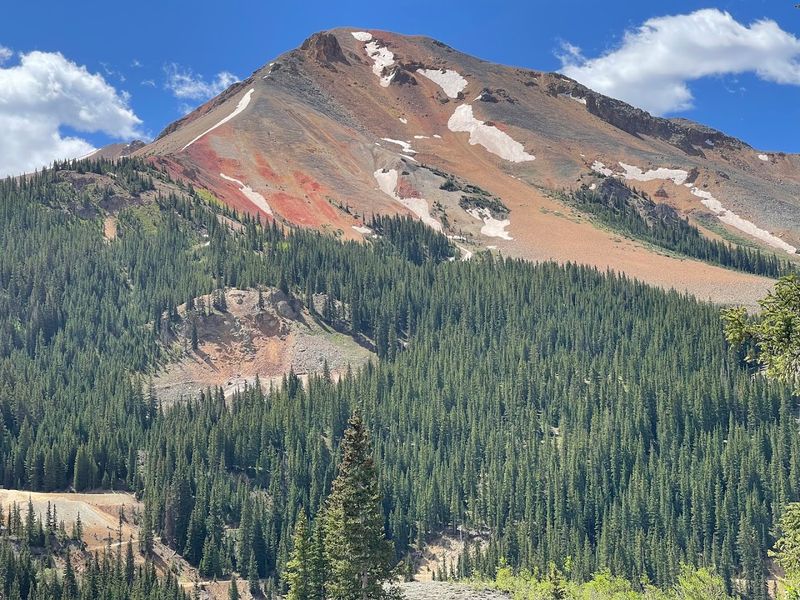
Golden hour on Million Dollar Highway is not a suggestion. It is a requirement.
The warm morning and evening light hits those red and orange mountain faces in a way that makes every shot look professionally edited, even when it is not. Set your alarm early.
Seriously, just do it. You will not regret losing the sleep.
Use pullouts whenever you want to stop for a shot. The road has several designated scenic overlooks, and they exist for a reason.
Do not stop in the middle of the lane to photograph something, even if the view is incredible. Other drivers are also trying to survive those curves, and they will not appreciate the interruption.
A wide-angle lens captures the full scale of the canyon walls and sky together. A telephoto lens lets you pull in distant peaks and wildlife without disturbing them.
Shoot in RAW format if your camera allows it, because the dynamic range between bright sky and shadowed canyon can be extreme. Polarizing filters help cut glare off the rocks and deepen the blue of the sky.
Pack extra memory cards. You will use them all, and you will still wish you had brought more.
Local Flora That Enhances The Drive Experience
Colorado’s state flower, the Rocky Mountain columbine, grows wild along the lower sections of Million Dollar Highway, and it is genuinely stunning. The blue and white blooms show up in meadows and along stream banks, usually peaking in July.
Spotting them for the first time feels like finding a hidden detail in a painting you thought you already understood.
Indian paintbrush adds brilliant splashes of red and orange to the roadsides, often growing right up against the guardrails or rocky slopes.
These plants are semi-parasitic, pulling nutrients from neighboring roots, which is a slightly dramatic life strategy that somehow fits the landscape perfectly. Engelmann spruce and subalpine fir dominate the forested sections at higher elevations.
They give the road a dark, dramatic canopy feel.
Aspen groves are the seasonal headliners. In summer, they provide cool, flickering shade and a soft rustling sound that feels almost musical.
In the fall, they go full gold and make the entire mountainside look like it is on fire in the best way. Wildflower meadows near Molas Pass are worth a short walk off the road.
The variety and density of blooms there in mid-summer is the kind of thing you describe to people for months afterward.