
Most People Don’t Know About This Hidden Waterfall Just Outside Nashville, Tennessee And It’s So Worth The Drive
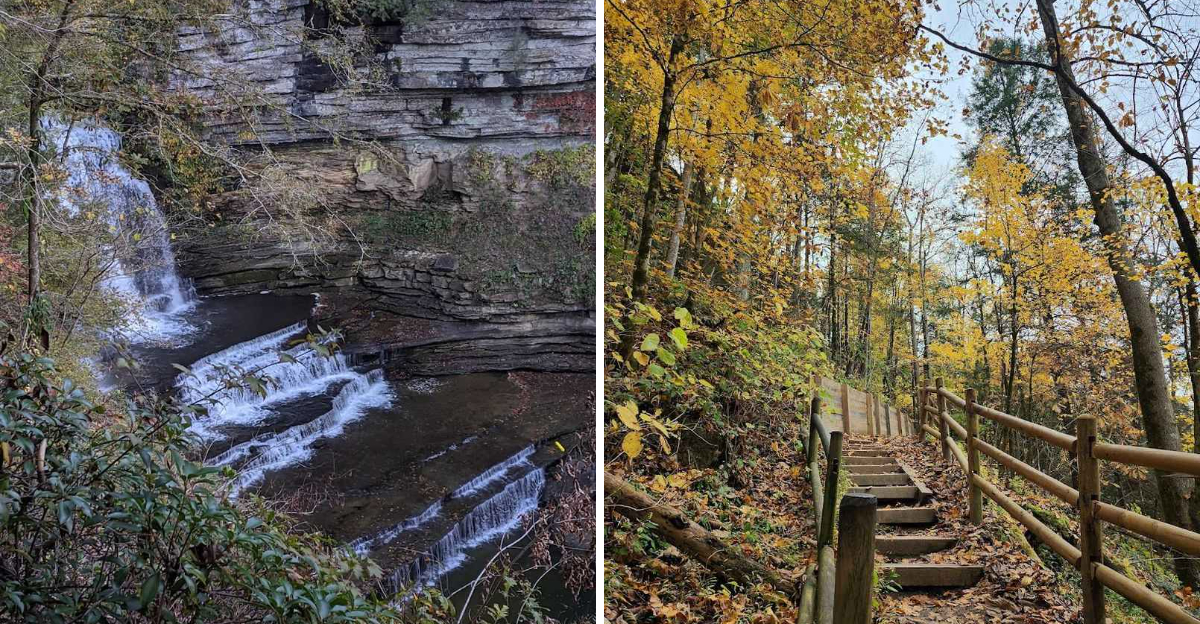
Tennessee offers more than city views, and this waterfall proves it the moment you leave Nashville behind. The scenery changes quickly, giving way to quiet trails and the steady sound of rushing water.
The walk in feels purposeful, each step bringing you closer to something worth seeing. Then it comes into view, wide, powerful, and hard to ignore.
It invites you to pause, take it in, and stay a little longer than planned. Bring sturdy shoes, go at your own pace, and enjoy a spot that makes the effort feel completely worthwhile.
The Waterfall That Actually Earns The Hype
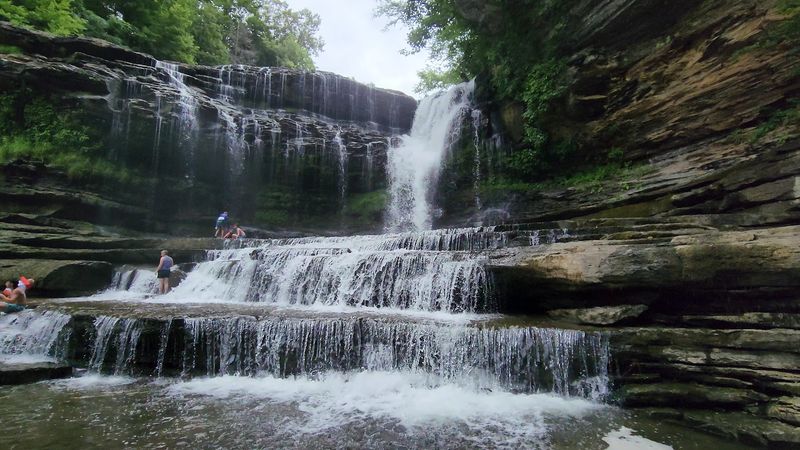
Standing at the base of the falls for the first time, most people go quiet. Not because there is nothing to say, but because the sheer scale of it makes words feel a little inadequate.
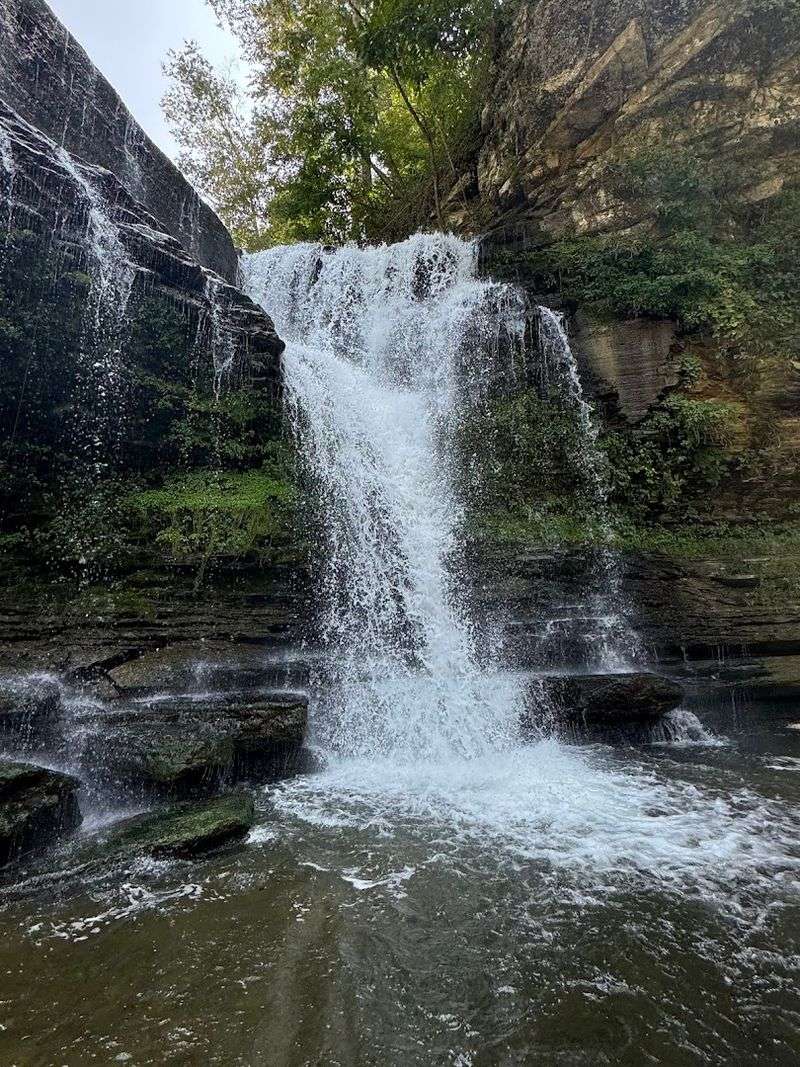
The falls drop roughly 75 feet into a wide, clear pool that sits at the floor of a rugged limestone gorge, and the whole scene has a raw, unpolished quality that no manicured resort can replicate.
This state park protects one of the largest waterfalls in Tennessee by volume of water. That distinction alone makes the drive from Nashville well worth the fuel.
On a warm afternoon, the pool at the base fills with swimmers of all ages, and the sound of falling water drowns out every distraction you brought from the city.
The falls look different depending on the season. Spring runoff turns the cascade into a roaring curtain of white water, while late summer reveals more of the surrounding rock face.
Both versions are worth seeing, and many visitors return specifically to compare the two experiences across different times of year.
Two Trails, Two Very Different Experiences
Cummins Falls State Park offers two distinct ways to experience the waterfall, and choosing between them depends entirely on how much adventure you are willing to commit to on a given day. The Falls Overlook Trail is roughly half a mile round-trip, paved for much of its length, and delivers a solid aerial view of the falls from a concrete observation platform.
It is the kind of trail you can complete in sneakers with a coffee cup still in hand.
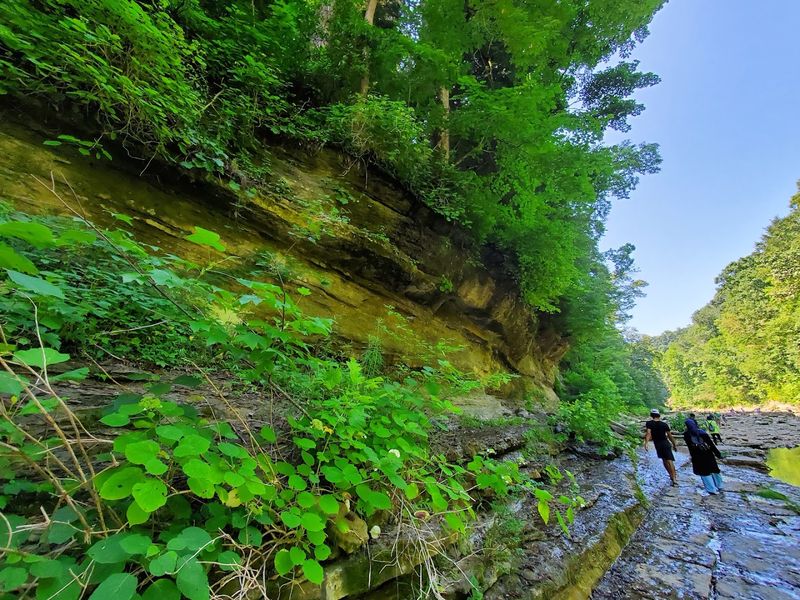
The Gorge Trail is a completely different story. This route takes hikers down to the creek bed and requires wading through water, hopping across slick rocks, and navigating terrain that will test your balance more than once.
It is moderately strenuous, and the park requires visitors to purchase a permit before heading down. Rangers are stationed throughout the gorge, and their presence adds a genuine layer of safety to the experience.
First-time visitors who arrive without much time often stick to the overlook, then return later to tackle the gorge. That strategy is surprisingly common among regulars.
The overlook gives you enough of a preview to make the gorge feel like a worthy next chapter rather than an unknown gamble.
The Permit System And Why It Actually Works
A lot of outdoor enthusiasts bristle at the idea of paying for a permit just to hike a trail, but the system at Cummins Falls at 390 Cummins Falls Ln in Cookeville makes a convincing case for itself. The gorge permit costs around eight dollars per person, and that fee funds trail maintenance, ranger staffing, and the life jackets available for use near the swimming hole.
When you see how clean and well-managed the gorge is compared to unregulated natural areas, the value becomes obvious.
Permits are available at the park office near the trailhead, and rangers there are genuinely helpful. They will give you a realistic briefing on current trail and water conditions, recommend appropriate footwear, and flag any areas that require extra caution.
That kind of honest preparation is not something you get from a trail app.
The permit system also controls crowd volume in the gorge, which keeps the experience from feeling overwhelming even on busy summer weekends. You are unlikely to find yourself stuck in a slow-moving line of hikers along the creek.
The result is a visit that feels deliberate and personal, not like a theme park queue dressed in hiking boots. That alone justifies the small cost of entry.
Footwear Is Not Optional Down Here
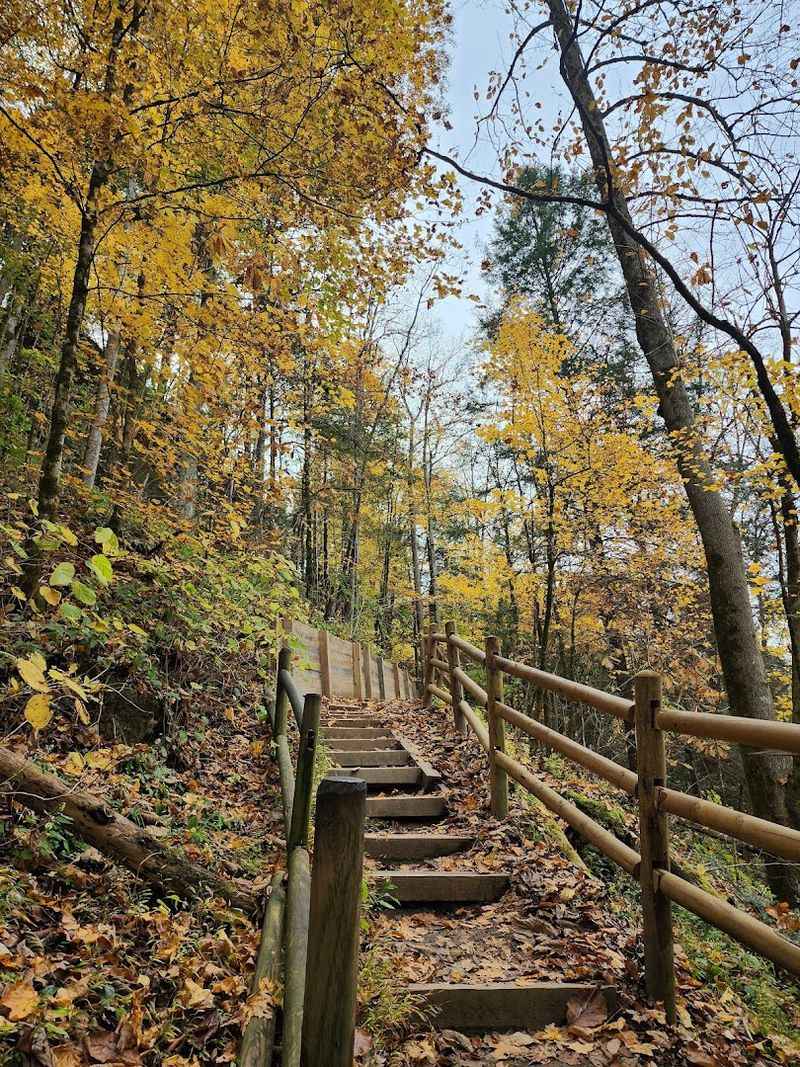
Few pieces of advice about Cummins Falls are repeated more consistently than this one: wear the right shoes. The gorge floor is covered in submerged limestone rocks coated with algae, and ordinary sneakers or sandals without traction will have you sliding before you reach the first bend in the creek.
Multiple visitor reviews mention slipping, and the rangers echo the same warning during every permit briefing.
Water shoes with non-slip soles are the standard recommendation, and they genuinely transform the experience. With solid traction underfoot, you can focus on the scenery rather than calculating your next step.
Closed-toe water shoes also protect against the sharper edges of the creek bed, which becomes relevant after a few hundred yards of wading.
If you only own regular hiking boots, bring them anyway and accept that they will get wet. A soaked boot with real tread is still safer than a dry sandal with a smooth sole.
Some visitors wear neoprene water socks inside older trail shoes to add grip and cushion simultaneously. Whatever combination you choose, test the grip on a wet surface before committing to the gorge.
The falls reward preparation, and the creek has a reliable way of exposing overconfidence within the first ten minutes.
Swimming Inside A Gorge Feels Like A Different Planet
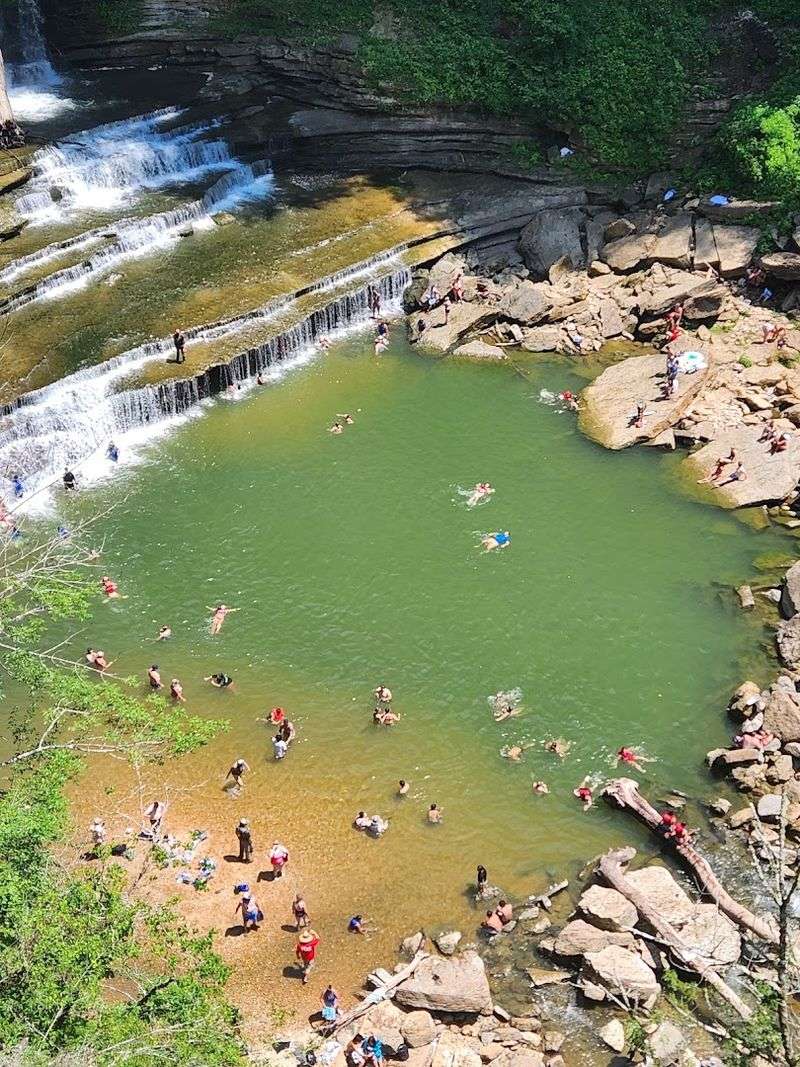
There is something genuinely unusual about swimming at the base of Cummins Falls. The gorge walls rise steeply on both sides, the water is cold even in August, and the roar of the falls creates a kind of natural white noise that makes the outside world feel very far away.
People who visit for the first time often describe the experience with the same word: surreal.
The swimming hole is large enough to accommodate a crowd without feeling cramped, and the park provides life jackets in several sizes near the water. Families with young children tend to stay closer to the shallower edges, while stronger swimmers venture toward the base of the falls where the current is more pronounced.
Rangers monitor the area and keep things orderly without being intrusive.
Water clarity varies by season and recent rainfall. After a dry stretch in late summer, the pool can be remarkably transparent, with fish visible darting through the deeper sections.
Visitors have reported spotting several different species swimming alongside them, which adds an unexpected wildlife dimension to what is already a visually striking location. Bring a waterproof phone case if you want to document the experience from below the surface.
Golden Hour At The Overlook Is Worth Staying Late For
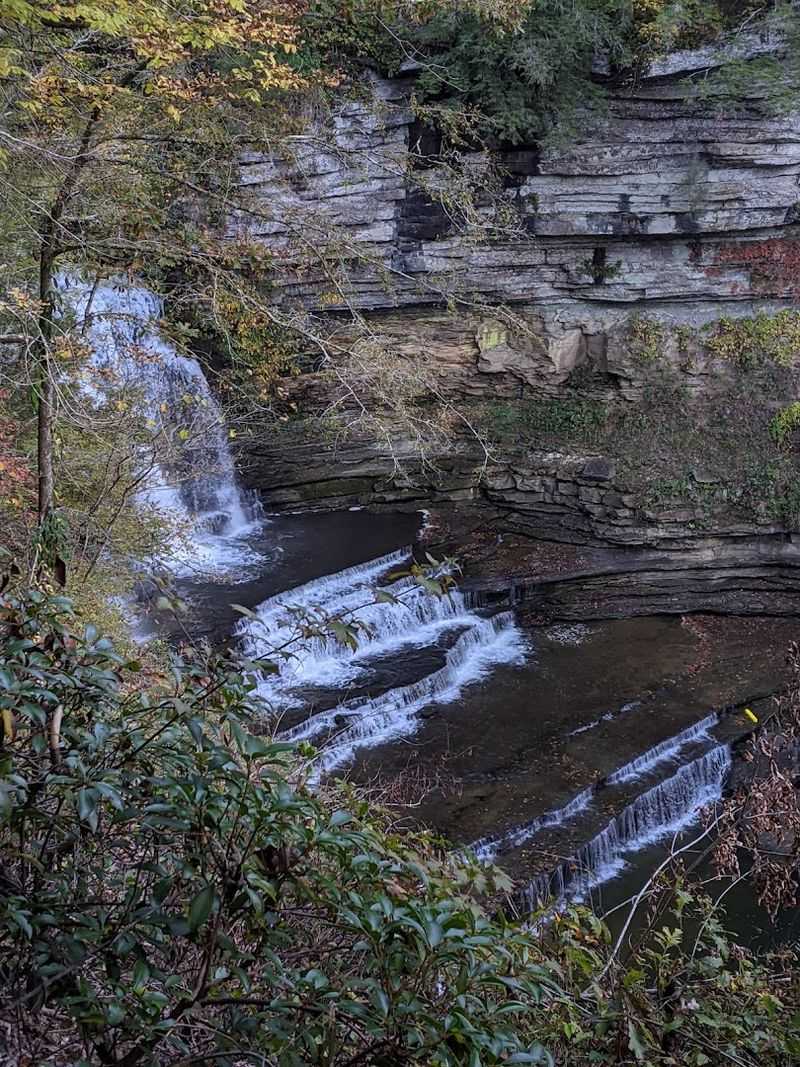
Most visitors arrive mid-morning, hike the gorge, swim, and leave before the afternoon light shifts. Those who stay a little longer discover that the overlook platform at Cummins Falls has a completely different personality once the sun starts dropping toward the tree line.
The warm light catches the mist from the falls and turns the whole gorge into something that looks more like a painting than a public park.
The overlook itself is a short, easy walk from the parking area, making it accessible even for visitors who did not come prepared for a serious hike. Benches and picnic tables near the platform make it a comfortable place to sit and watch the light change without rushing.
Several visitors have mentioned witnessing marriage proposals at this spot, which says something about the atmosphere the place creates at the right time of day.
The park closes at 6 PM daily, so golden hour visits require some timing awareness. Arriving around 4:30 PM in spring or early summer gives you enough daylight to reach the overlook comfortably and linger without feeling rushed toward the exit.
The falls look completely different in that light than they do at noon, and the contrast alone is reason enough to time a second visit around the evening hours.
A Park That Actually Welcomes Dogs
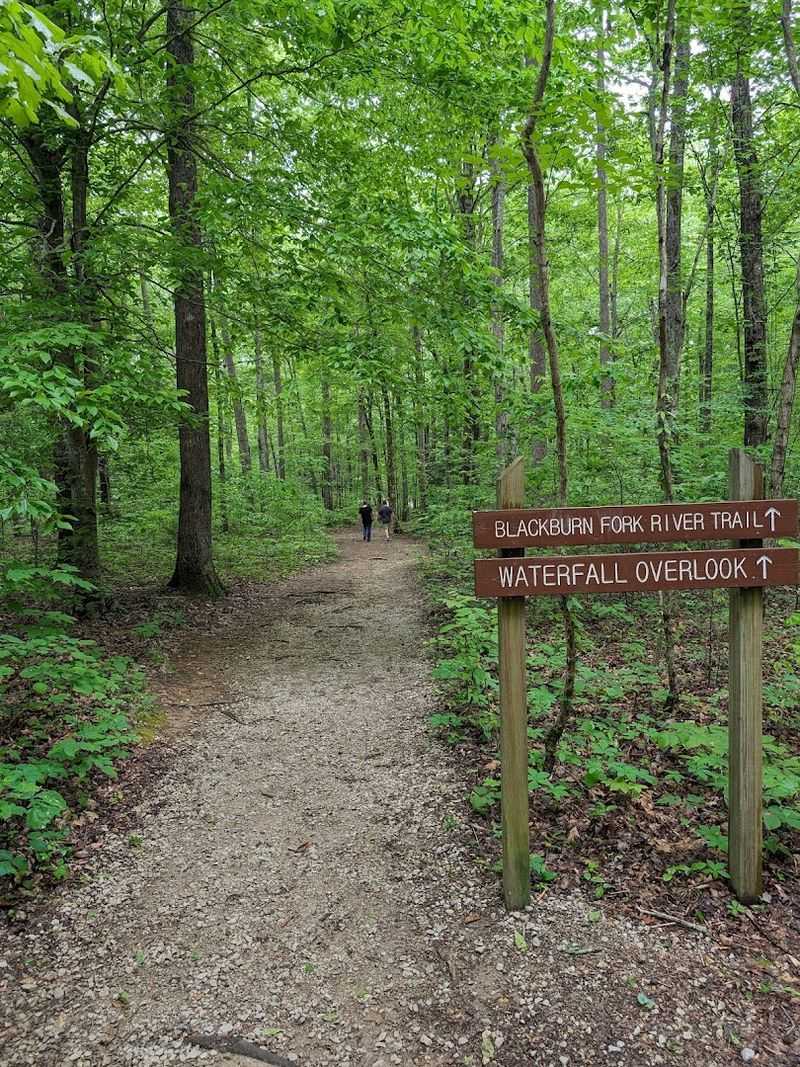
Finding a genuinely dog-friendly state park can be harder than it sounds. Many parks technically allow dogs but restrict them from the most interesting areas, leaving owners navigating a confusing patchwork of rules.
Cummins Falls takes a more straightforward approach, and visitors with dogs consistently mention the experience as a highlight rather than a logistical headache.
Dogs are welcome on the trails with a standard leash requirement, and the park sees enough four-legged visitors that the presence of dogs feels completely normal rather than tolerated. The overlook trail in particular works well for dogs of most fitness levels, offering shade, interesting smells, and enough variety to keep an energetic animal engaged for the duration of the walk.
One honest caveat worth knowing: the gorge trail draws a high volume of dog visitors on weekends, so dogs with strong social anxiety may find the density of other animals a bit much. One recent visitor specifically noted that the crowd of dogs was significant enough to warrant a heads-up.
For well-socialized dogs, this is a non-issue and might even be part of the fun. For more reserved animals, a weekday visit keeps the trail quieter and the interactions more manageable without sacrificing any of the scenery.
The History Behind The Falls Adds Real Depth
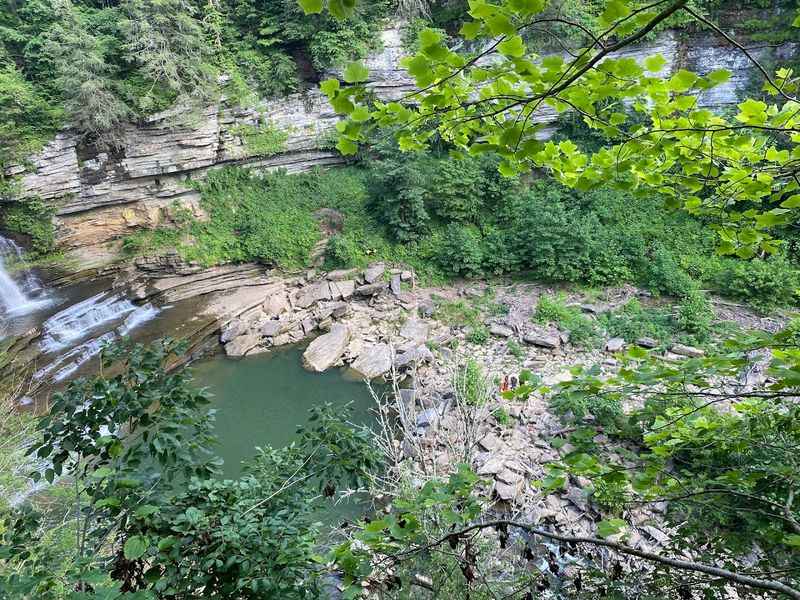
Before Cummins Falls became a state park, this stretch of Blackburn Fork Creek was a working landscape. The site served as the location of two separate grist mills over the course of its history, and the waterfall that draws thousands of visitors today once provided the mechanical power to grind grain for surrounding communities.
That industrial past gives the place a layered character that goes beyond simple natural beauty.
The transition from working mill site to protected parkland reflects a broader story about how Tennessee has approached conservation over the past several decades. The state officially designated the area as a state park in 2012, making it one of the newer additions to the Tennessee State Parks system.
Despite its relative youth as a park, it has accumulated a visitor base and a reputation that rival destinations with far longer histories.
Interpretive materials at the park office touch on the mill history, and the physical landscape still holds traces of that earlier use if you know where to look. Rock formations and creek-side features that might seem purely geological sometimes reflect deliberate shaping from the mill era.
That kind of layered reading of a landscape rewards curious visitors who take a few extra minutes to look beyond the obvious spectacle of the falls themselves.
Planning Your Visit Around The Right Season
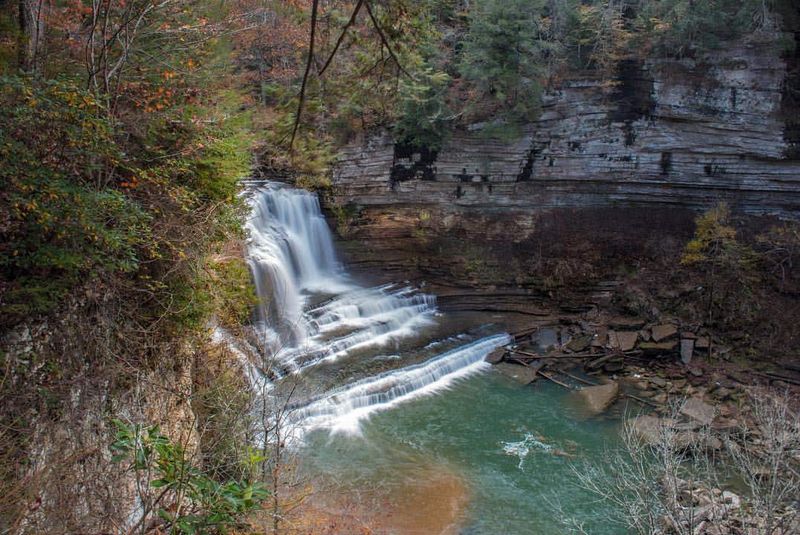
Spring is the most dramatic season to visit Cummins Falls. Seasonal rainfall and snowmelt from higher elevations push the volume of water over the falls to its annual peak, and the result is a significantly more powerful cascade than what you will find in late summer.
The gorge also feels more alive in spring, with vegetation fully leafed out and the creek running with enough energy to make the wading sections genuinely engaging.
Summer brings the swimming crowd, and for good reason. The combination of warm air temperatures and cold gorge water makes the swimming hole particularly appealing from late June through August.
Weekends in this period can be busy, and arriving early, ideally before 9 AM, gives you a more relaxed experience with better parking options and fewer people on the trail ahead of you.
Fall offers its own rewards. The hardwood canopy surrounding the gorge turns through a full range of amber, orange, and rust tones that frame the waterfall in a completely different palette than summer green.
Water levels are typically lower in autumn, which makes the rock-hopping sections of the gorge trail easier to navigate. Winter visits are quieter still, and while swimming is off the table, the bare trees open up views of the gorge walls that the summer canopy conceals entirely.
Practical Details That Make The Trip Go Smoothly
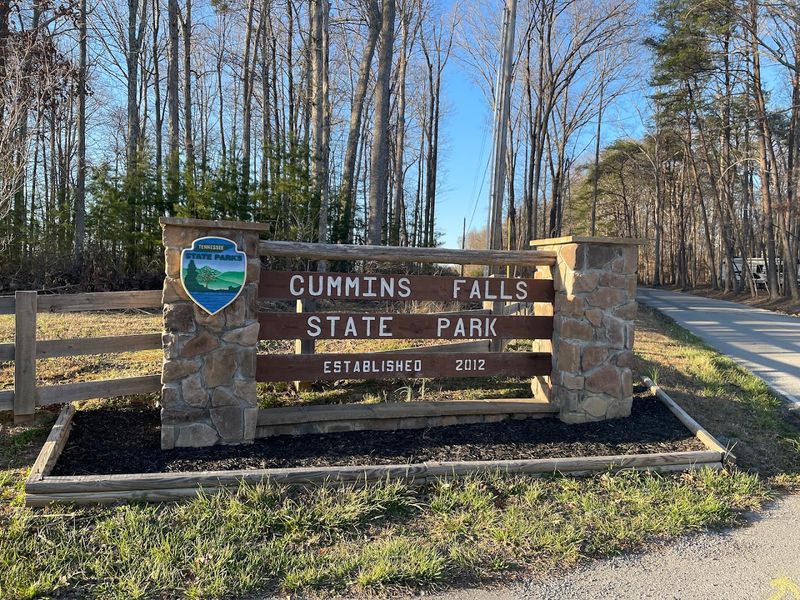
Cummins Falls State Park sits at 390 Cummins Falls Ln, Cookeville, TN 38501, and the drive from Nashville runs approximately 90 minutes depending on traffic and your starting point within the city. The route along Interstate 40 East is straightforward, and the park entrance is well-marked once you reach the Cookeville area.
Parking is free and the lot is large enough to handle busy weekend volumes without significant overflow.
Park hours run from 8 AM to 6 PM daily, and those closing times are enforced. Arriving with at least three hours before closing gives you enough time to hike the overlook trail, secure a gorge permit, and spend meaningful time at the falls without feeling rushed on the way back.
The park office opens with the park and stays staffed throughout operating hours, so permit purchases are straightforward upon arrival.
The park can be reached by phone at 888-867-2757, and the official website at tnstateparks.com/parks/cummins-falls posts current conditions, permit availability, and any seasonal advisories. Checking the site before a long drive is a reasonable habit, particularly after heavy rainfall, which can temporarily close gorge access when water levels become unsafe.
A quick check takes two minutes and can save an otherwise wasted trip.