
12 Historic Spots In New York Where You’ll Learn More Than Most Textbooks Could Teach You
There are some places don’t just show you history, they make you feel it. A worn doorway, a preserved room, a quiet stretch of ground where something important once unfolded.
New York has no shortage of well-known landmarks, but these spots go further, offering details and stories that don’t always make it onto the page.
Spend a little time at each one and the past starts to feel closer. You notice the small things, the way spaces were used, the traces left behind, and how much more there is beyond a headline or a paragraph.
It’s not about memorizing dates. It’s about seeing history in motion, piece by piece, until it starts to stick in a way a textbook rarely can.
1. Tenement Museum
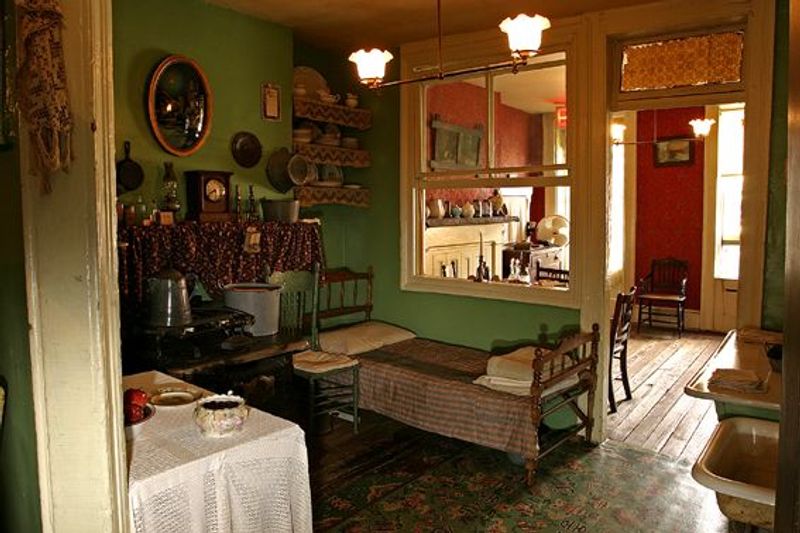
Walking into the Tenement Museum at 103 Orchard Street feels less like a museum visit and more like stepping into someone else’s life. The building itself is from 1863, and the apartments inside have been carefully restored to show exactly how immigrant families lived during the late 1800s and early 1900s.
No fancy displays. Just real rooms, real objects, and real stories.
Each tour focuses on a specific family that actually lived there. You learn their names, their struggles, and what they were chasing when they arrived in New York.
That personal detail is what makes this place unforgettable. A history book gives you dates.
This museum gives you feelings.
Over the years, nearly 7,000 immigrants from more than 20 countries called this building home. That number alone is staggering.
The Lower East Side neighborhood surrounding the museum still carries echoes of that era. If you want to understand what American immigration actually looked like up close, this is where you start.
2. Seneca Falls
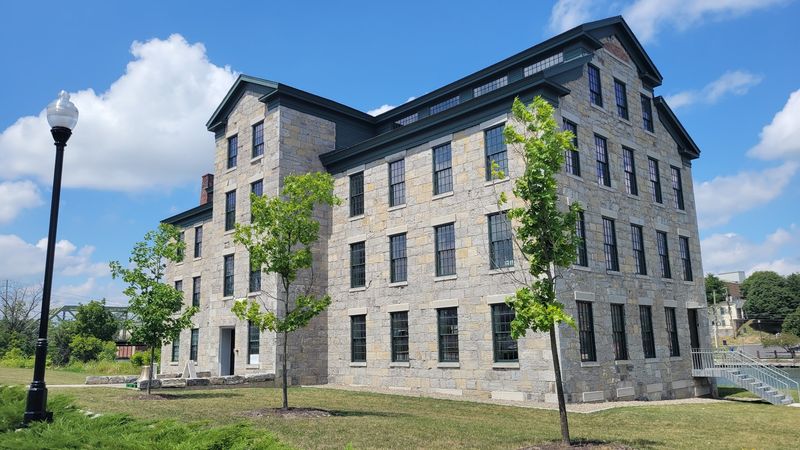
Back in 1848, a small town in upstate New York changed the course of American history forever. Seneca Falls hosted the very first Women’s Rights Convention, and the Declaration of Sentiments signed there became one of the most important documents in the fight for equality.
Not bad for a town most people have never heard of.
The Women’s Rights National Historical Park at 136 Fall Street preserves the original Wesleyan Chapel where that convention took place. Standing inside the space where Elizabeth Cady Stanton and Frederick Douglass once spoke is genuinely moving.
The park does an excellent job of connecting the events of 1848 to the broader arc of civil rights in America.
Beyond the park, the town itself is worth exploring. The National Women’s Hall of Fame nearby honors hundreds of trailblazing women across every field you can think of.
Seneca Falls is quiet and unhurried, which actually makes it easier to absorb everything you are learning. History does not always happen in loud, crowded places.
Sometimes it happens in a small chapel by a waterfall.
3. Hyde Park Roosevelt Estates
Most people know Franklin D. Roosevelt as the president who guided America through the Great Depression and World War II.
Fewer people know what his daily life actually looked like. At Hyde Park in Dutchess County, you get to see both sides of the man, and the combination is genuinely surprising.
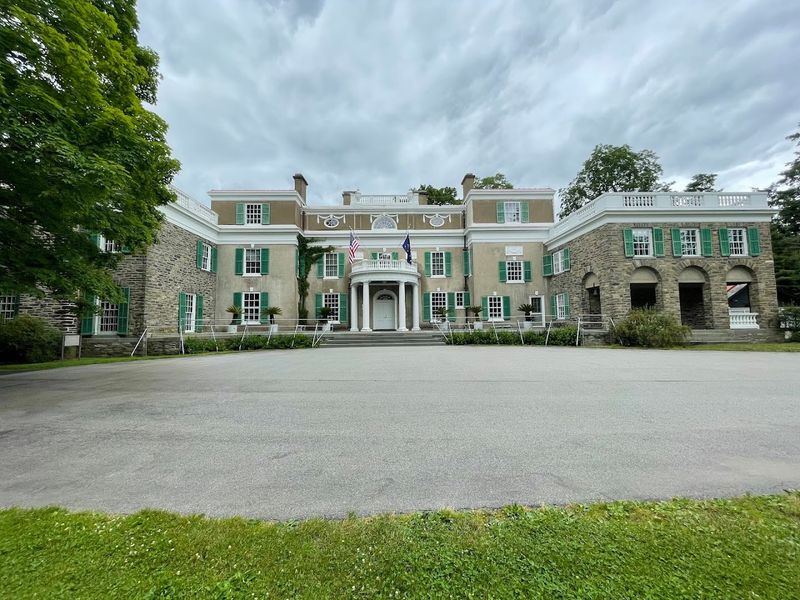
Springwood, the Roosevelt family home at 4097 Albany Post Road, is where FDR was born, raised, and eventually buried. Touring the house reveals a surprisingly personal portrait of a president.
His wheelchair ramps, his books, his mother’s dominant presence in the household. All of it adds texture to a figure who can feel distant in history class.
The FDR Presidential Library and Museum is also on the grounds, making this a full-day destination without question. Eleanor Roosevelt’s Val-Kill cottage is just two miles away and tells its own compelling story about independence and purpose.
Hyde Park rewards curious visitors who want more than just a surface-level history lesson. It is the kind of place where you leave knowing someone, not just knowing about them.
4. Olana State Historic Site
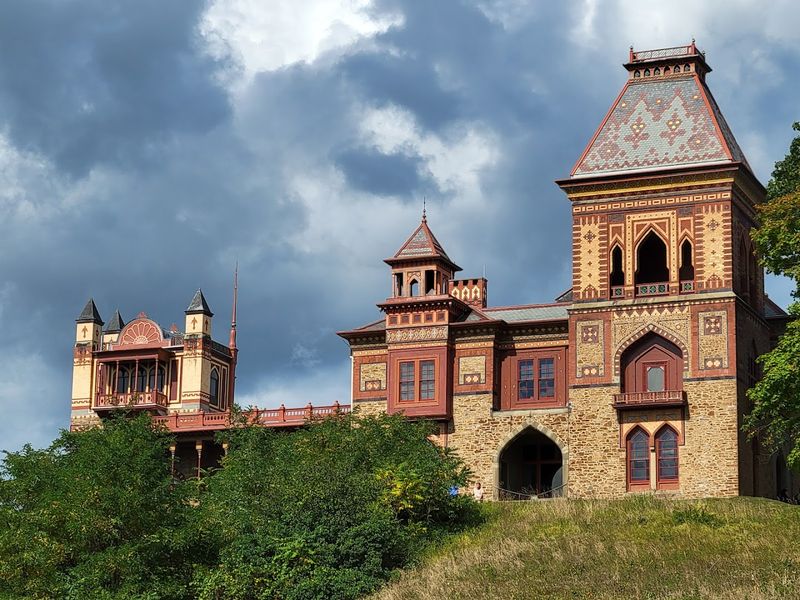
Frederic Edwin Church was one of the most celebrated painters in 19th-century America, and his home on a Hudson Valley hilltop is every bit as dramatic as his canvases. Olana, located at 5720 State Route 9G in Hudson, New York, is part house, part landscape, part artwork.
Church designed it all himself, down to the winding roads and the placement of every tree.
The architecture pulls from Persian, Moorish, and Victorian influences in a way that feels bold even by today’s standards. Church traveled extensively through the Middle East and South America, and those journeys clearly shaped everything about this property.
The views of the Hudson River from the hilltop are genuinely breathtaking in any season.
Inside the house, his original furnishings, paintings, and personal collections remain largely intact. Visiting Olana is a lesson in how art, travel, and identity intersect in one remarkable life.
The site also offers a strong sense of how 19th-century artists thought about landscape and environment as subjects worth serious attention. If you appreciate creativity in any form, Olana will leave a lasting mark on you.
5. Storm King Art Center
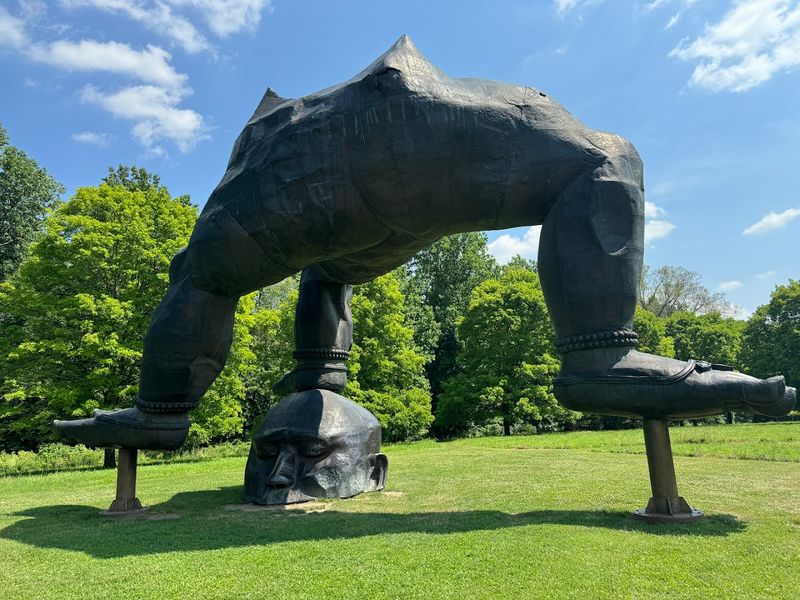
Art does not always belong on a wall. Storm King Art Center makes that argument with 500 acres of rolling Hudson Valley landscape and over 100 large-scale sculptures placed throughout the grounds.
Located at 1 Museum Road in New Windsor, New York, it is the kind of place that resets your entire understanding of what art can be.
Founded in 1960, Storm King has grown into one of the most respected outdoor sculpture parks in the world. Artists like Mark di Suvero, Alexander Calder, and Maya Lin have work here, and seeing those pieces in open air rather than inside a gallery changes how you experience them entirely.
Scale, shadow, and season all become part of the artwork.
The park reflects decades of shifting ideas in modern art, from minimalism to land art to large-scale abstraction. Kids and adults both tend to respond to it with genuine curiosity, which is not always easy to pull off.
Comfortable shoes are strongly recommended because there is a lot of ground to cover. Storm King is not a place you rush through.
You wander, you pause, and somewhere along the way, something clicks.
6. Sleepy Hollow Cemetery
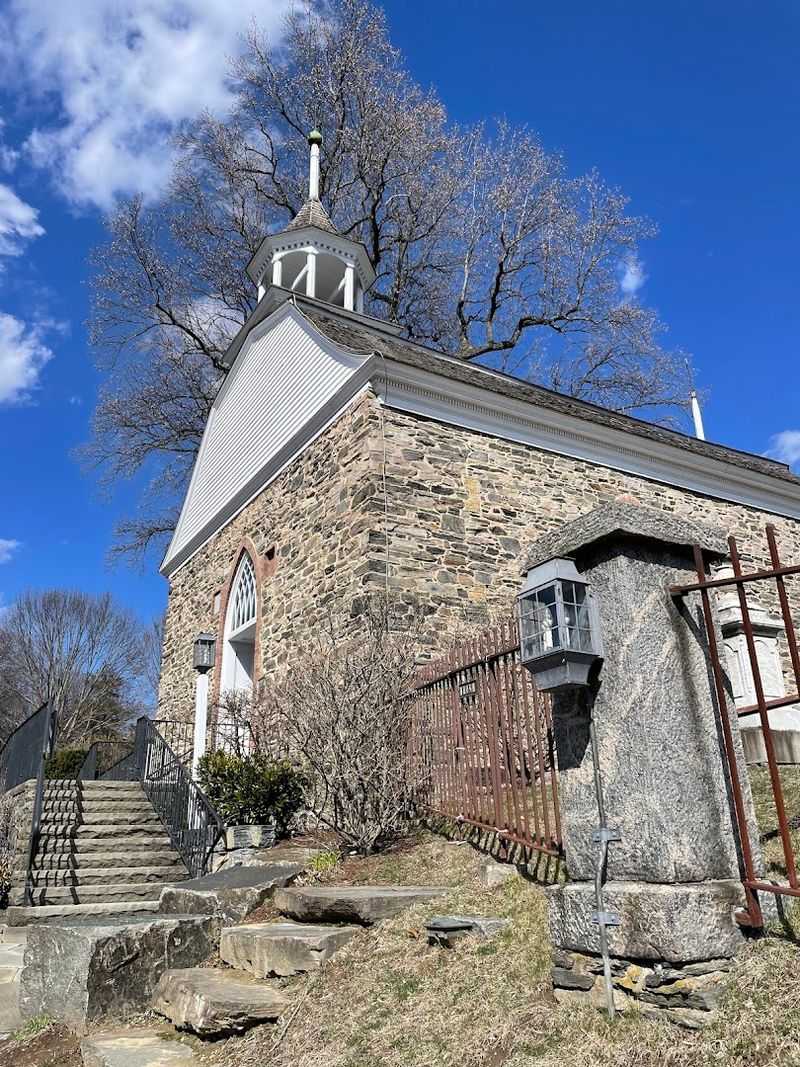
Few cemeteries in America carry as much literary and cultural weight as Sleepy Hollow Cemetery in Westchester County. Washington Irving, the author who gave us the Headless Horseman, is buried here.
So are steel magnate Andrew Carnegie and Standard Oil founder William Rockefeller. The place is essentially an open-air history lesson with excellent atmosphere.
Located at 540 North Broadway in Sleepy Hollow, New York, the cemetery sits alongside the Old Dutch Church of Sleepy Hollow, which dates back to 1685. The combination of the two sites tells a layered story about Dutch colonial history, American literature, and the Gilded Age all in one visit.
That is a lot of ground to cover, and yet it never feels overwhelming.
Irving’s grave is marked simply, which feels fitting for a man who preferred stories over spectacle. The surrounding landscape is peaceful and genuinely beautiful, especially in the fall when the colors are at their peak.
Visiting here connects the fictional world of Ichabod Crane to actual places and actual people in a way that makes the legend feel even more alive. Spooky?
A little. Worth it?
Absolutely.
7. The Cloisters
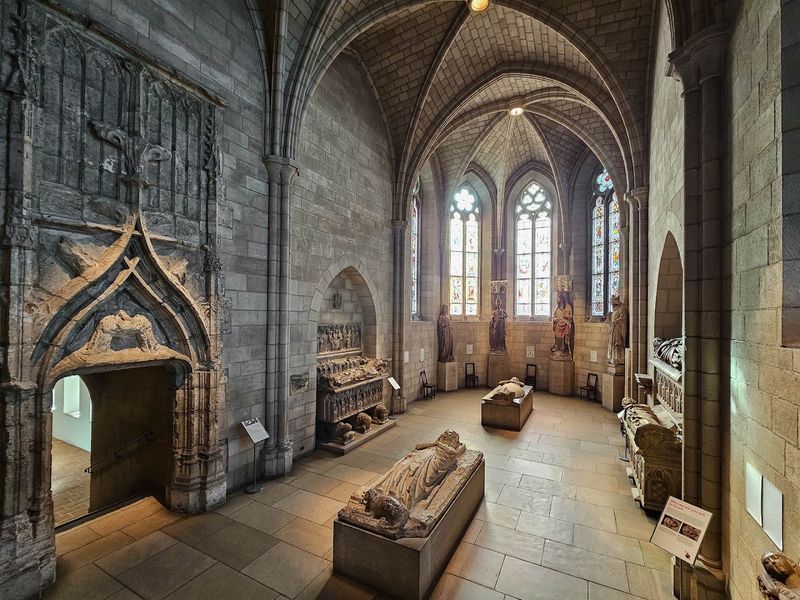
At the northern tip of Manhattan, perched above the Hudson River in Fort Tryon Park, The Cloisters is one of the most unexpected places in all of New York City. Built using actual architectural elements from five medieval French monasteries, the building itself is the exhibit.
You are not just looking at medieval art. You are standing inside a structure that is medieval.
The museum, located at 99 Margaret Corbin Drive, is a branch of the Metropolitan Museum of Art and houses one of the finest collections of medieval European art in the Western Hemisphere. The famous Unicorn Tapestries alone are worth the trip.
Woven in the late 1400s, they are remarkably well-preserved and strikingly beautiful up close.
John D. Rockefeller Jr. donated the land and funded much of the construction, which opened in 1938.
He also purchased a large stretch of land across the river in New Jersey specifically to preserve the view from the museum. That kind of thoughtful preservation is rare, and it shows.
The Cloisters offers a genuinely transporting experience that feels completely removed from the city buzzing just a few miles south.
8. Philipsburg Manor
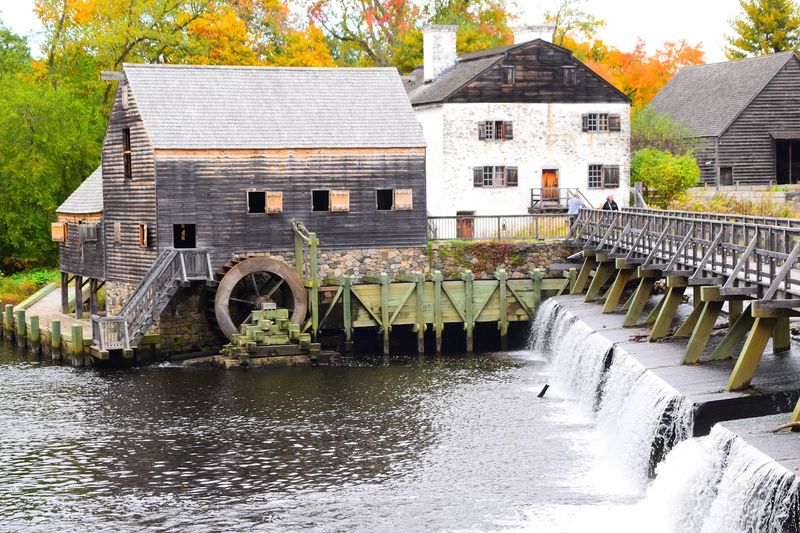
History has a habit of only telling part of the story, and Philipsburg Manor in Sleepy Hollow, New York, is one of the places working hardest to change that. The site focuses not just on the wealthy Philipse family who owned the estate, but on the enslaved Africans who actually built it, operated it, and kept it running.
That honest approach makes a real difference.
Located at 381 North Broadway, the property includes a restored 17th-century stone manor house, a working grist mill, and a wooden bridge over the millpond. Costumed interpreters bring daily colonial life to life in a way that feels immediate rather than theatrical.
The mill still grinds grain, which is a satisfying and surprisingly educational detail.
Historic Hudson Valley, the organization that manages the site, has done extensive research to document the lives of the enslaved people who lived and worked here. Their names, origins, and roles have been recovered and are now central to every tour.
Visiting Philipsburg Manor challenges comfortable assumptions about colonial history and replaces them with something far more complete and far more honest. That kind of reckoning is exactly what good history education looks like.
9. Mount Gulian Historic Site
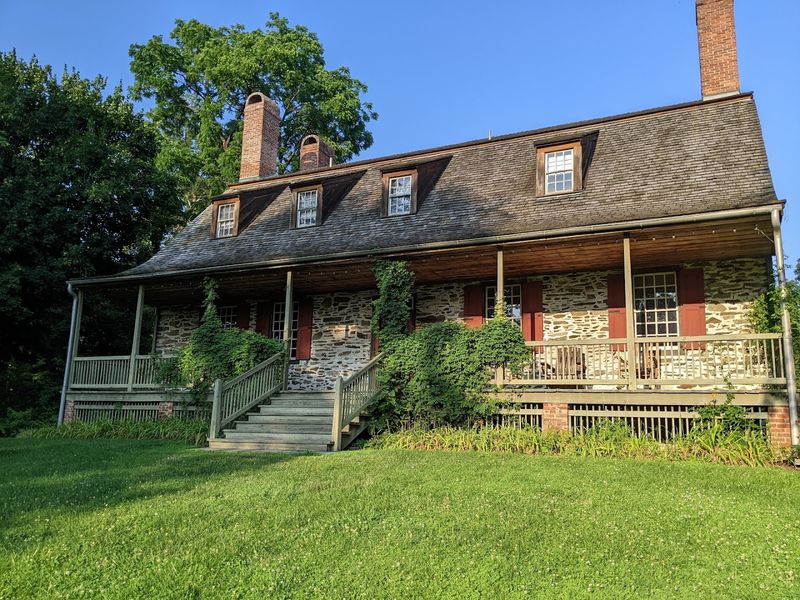
Not every important historic site comes with a massive crowd or a famous name attached to it, and Mount Gulian proves that quiet places can carry enormous historical weight. Located at 145 Sterling Street in Fishkill, New York, this restored Dutch colonial farmhouse sits on land that has been continuously inhabited since the 1600s.
That alone deserves a moment of appreciation.
During the Revolutionary War, the property served as headquarters for General Friedrich von Steuben, the Prussian military officer who trained the Continental Army at Valley Forge.
It was also the birthplace of the Society of the Cincinnati, the oldest patriotic organization in the United States, founded here in 1783.
Not bad for a spot most tour buses skip entirely.
The grounds include a restored barn, formal gardens, and a riverside landscape that still feels remarkably undisturbed. The interpreters here are knowledgeable and clearly passionate about the site’s layered history, which includes Dutch, British, and African American narratives.
Mount Gulian rewards visitors who prefer depth over spectacle. It is the kind of place that makes you feel like you found something most people missed, because honestly, you did.
10. Lyndhurst Mansion
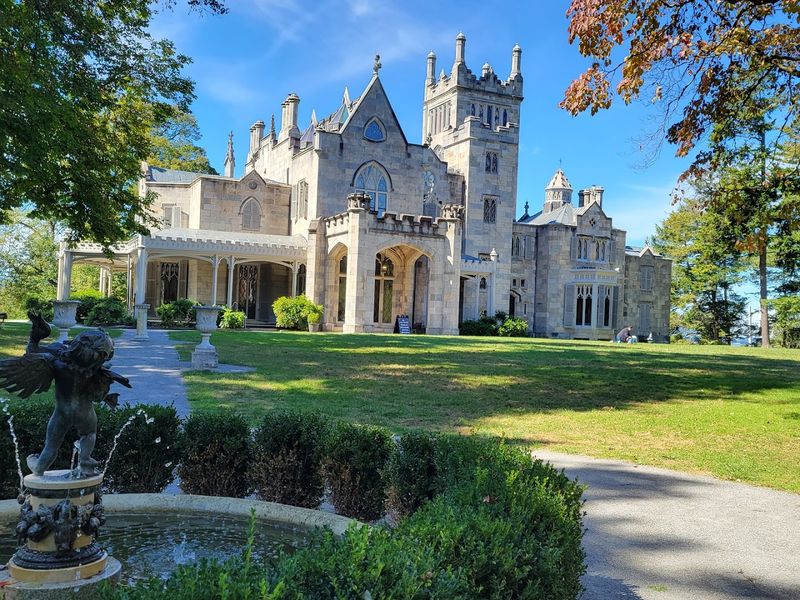
Gothic Revival architecture does not get much more dramatic than Lyndhurst Mansion in Tarrytown, New York. With its turrets, pointed arches, and castle-like silhouette set against the Hudson River, this place looks like it belongs in a novel.
And given its location just down the road from Sleepy Hollow, maybe that is entirely appropriate.
Built in 1838 and later expanded, the mansion at 635 South Broadway has been home to a New York City mayor, a Civil War general, and railroad tycoon Jay Gould. Each owner left their mark on the interiors, which means walking through the rooms is like flipping through chapters of American wealth and ambition.
The original furnishings and art collections are largely intact, which is increasingly rare.
The National Trust for Historic Preservation now manages the property, and they have done a careful job of maintaining both the house and the sweeping 67-acre landscape. The greenhouse on the grounds is particularly striking, even in its current weathered state.
Lyndhurst is the kind of place that makes you think hard about how architecture, money, and taste intersect across generations. Plus, the views of the Hudson from the lawn are genuinely hard to top.
11. Eldridge Street Synagogue
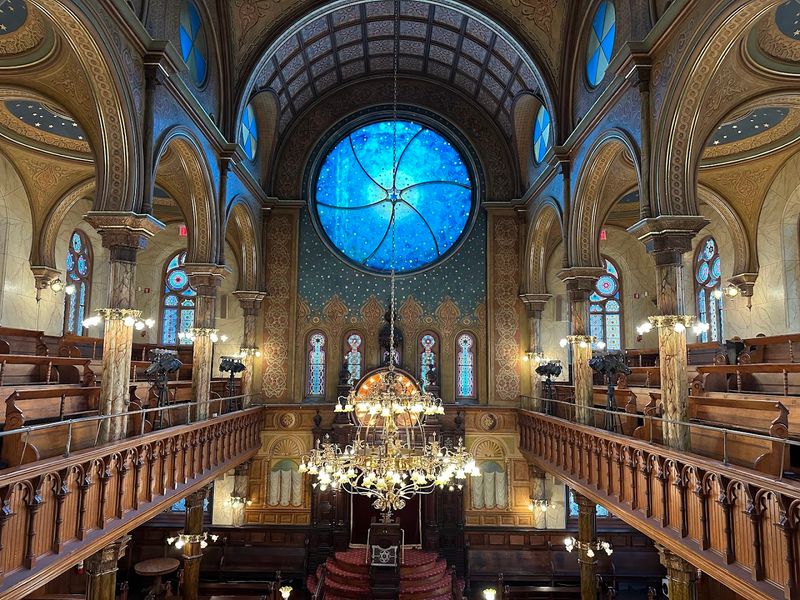
When Eastern European Jewish immigrants arrived on the Lower East Side in the late 1800s, they built something extraordinary at 12 Eldridge Street. The Eldridge Street Synagogue, completed in 1887, was the first great synagogue constructed by that immigrant community in the United States.
The building is a bold statement about identity, faith, and belonging in a new country.
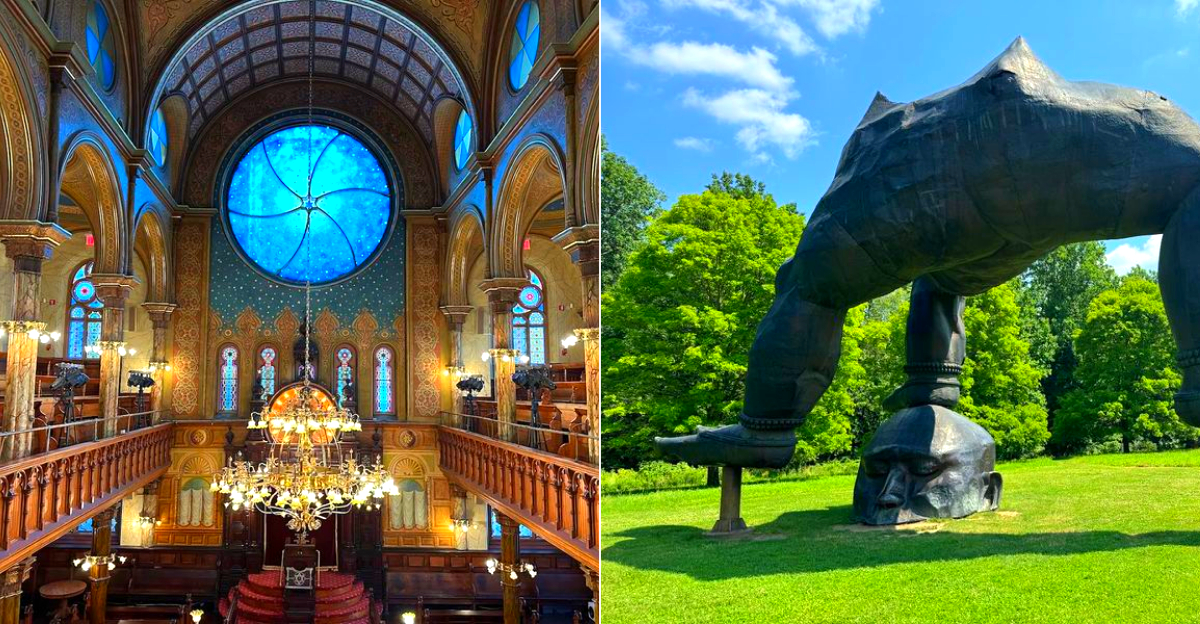
The architecture blends Moorish, Gothic, and Romanesque influences in a way that feels genuinely ambitious for a congregation that had just arrived with very little.
The interior is breathtaking, with soaring ceilings, intricate woodwork, and a stunning new stained-glass window designed by artist Kiki Smith and architect Deborah Gans installed in 2010.
The contrast between old and new works beautifully.
Now operating as the Museum at Eldridge Street, the site offers tours that cover both the building’s restoration and the broader story of Jewish immigrant life in New York. By the mid-20th century the synagogue had fallen into serious disrepair.
A decades-long restoration effort brought it back, and the results are remarkable. Visiting here connects art, architecture, religion, and immigration in a single hour.
That is a lot of history to carry in one building, and it carries it well.
12. Shaker Heritage Society
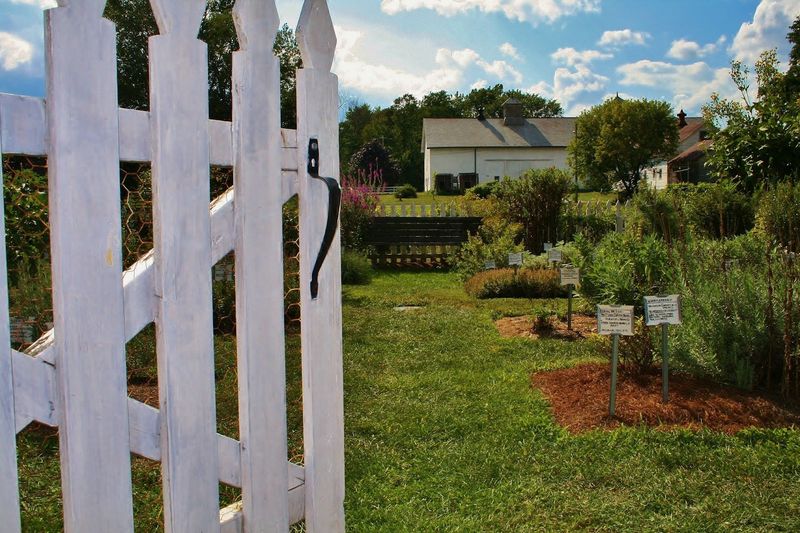
The Shakers were a religious community who believed that simplicity, hard work, and good design were forms of worship. At the Shaker Heritage Society in Albany, New York, you can see exactly what that philosophy looked like in practice, and it is far more fascinating than it sounds.
These people were genuinely ahead of their time in ways that keep surprising you.
Located at 25 Meeting House Road on the grounds of the Ann Lee Pond Nature and Historic Preserve, the site preserves original Shaker buildings dating back to 1848. The meetinghouse, farm structures, and surrounding landscape reflect the Shaker commitment to clean lines and functional beauty.
The furniture and objects they produced are still considered design masterpieces today.
The Watervliet Shaker community established here in 1776 was actually the first Shaker settlement in America, founded by Mother Ann Lee herself after she arrived from England. That founding story is told clearly and compellingly through the site’s exhibits and guided tours.
The Shakers eventually dwindled in numbers, but their influence on American craft, design, and even modern minimalism is undeniable. Visiting the Heritage Society makes that influence feel concrete, tangible, and genuinely worth your time.