
This Curiously Odd Cat Museum In Massachusetts Is Too Weird For Words
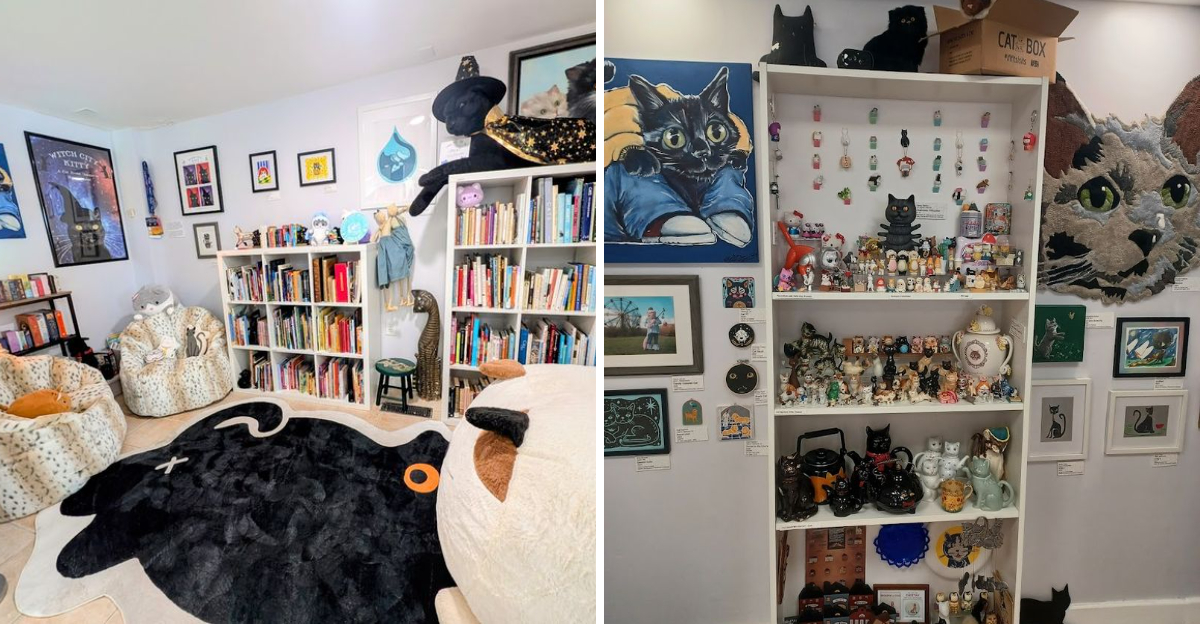
You walk in expecting a few cat-themed displays, then realize this place has other plans. Shelves fill up fast.
Eyes follow you around the room. Every corner adds something stranger than the last.
Somewhere in Massachusetts, this collection turns curiosity into full attention within minutes. Figurines, artwork, and odd little pieces stack together in a way that feels both chaotic and fascinating.
You slow down without meaning to, just to take it all in. Some parts make you laugh, others make you pause.
It’s unusual, memorable, and far more entertaining than you’d expect at first glance.
The Story Behind Salem’s Most Unexpected Museum
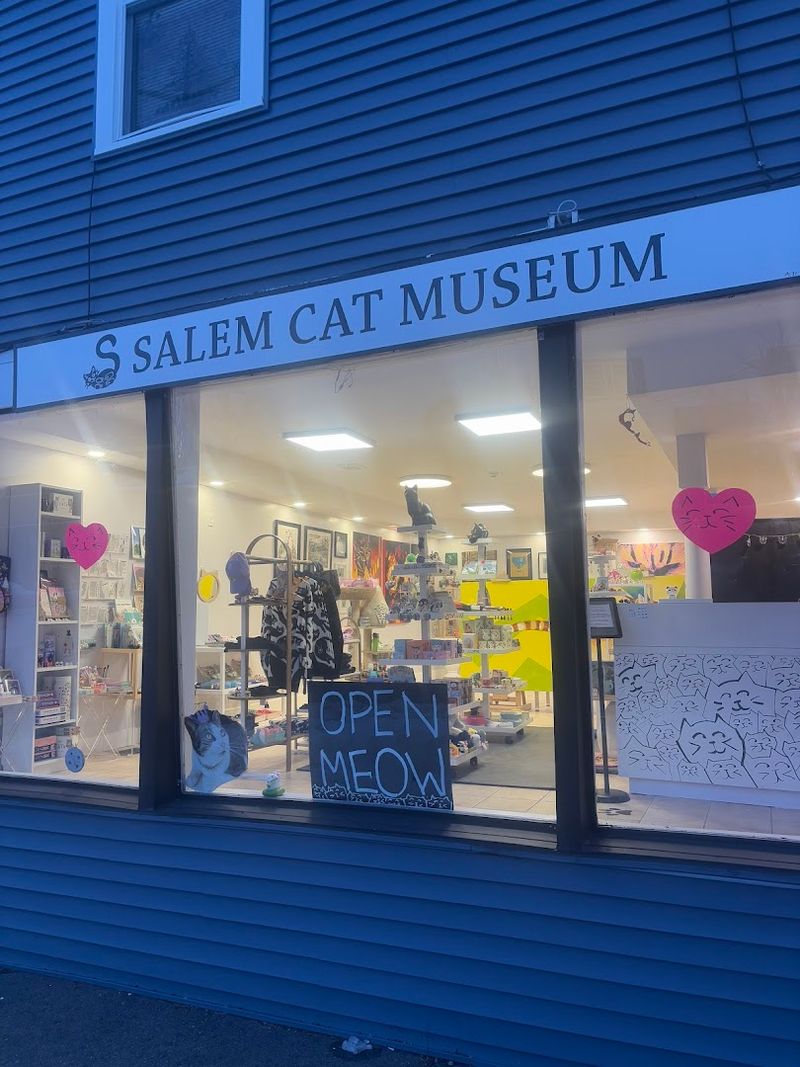
Not every museum begins with a grand plan. This one grew from a genuine love of felines and a desire to give that affection a permanent home in one of New England’s most storied cities.
Owner-curator Wendy Casazza brought this vision to life and the result is something that defies easy categorization.
Established approximately 18 months ago, the museum has already built a loyal following among locals and curious travelers passing through.
Its rise from a storefront concept to a realized cultural space happened with surprising speed, largely because the idea resonated with so many people who share a deep connection with cats.
The museum currently holds a near-perfect 4.9-star rating from visitors who consistently praise its warmth, creativity, and heart.
What started as a personal passion project has become a genuine community institution, one that keeps growing with each new exhibit and donated book.
Salem has seen many unusual attractions over the centuries, but this one carries a spirit that feels genuinely fresh and full of life.
Forty Artifacts That Tell Salem’s Feline History
Cats and Salem have a relationship that stretches back centuries, and the museum’s flagship exhibit brings that long history into sharp focus.
The Salem Cats exhibit features over 40 artifacts collected from different eras, each one offering a small window into the way felines have been perceived, celebrated, and cherished.
You will find objects here that range from the playfully decorative to the genuinely historical, arranged in a way that invites close looking rather than a quick glance.
The curation reflects real thought about how cats have moved through Salem’s cultural identity – not just as pets, but as symbols, companions, and subjects of both fear and reverence.
Visitors who take their time with this exhibit often come away with a different understanding of Salem beyond its witch trial legacy. The city has always had a complicated and fascinating relationship with animals, and cats occupy a particularly layered place in that story.
For anyone who assumed this museum would be purely whimsical, this exhibit is the gentle correction that makes the whole experience feel grounded and worth a second look. It rewards patience and genuine curiosity in equal measure.
Two Hundred Works Of Art And Every One Features A Cat
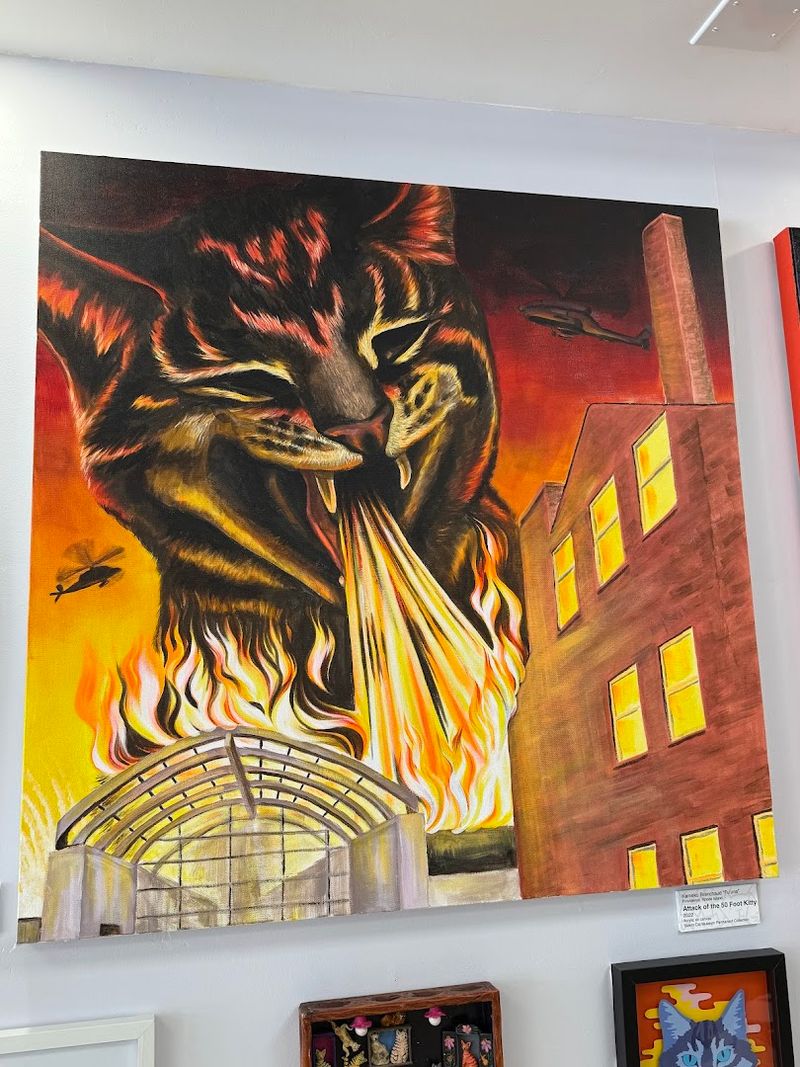
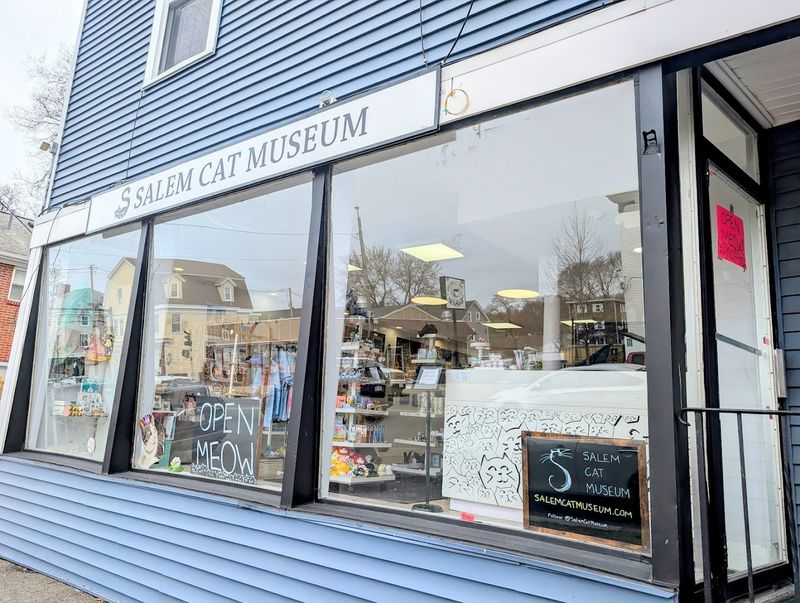
The permanent art collection at the Salem Cat Museum at at 107 Boston St in Salem is where the space truly earns its museum title.
With more than 200 works spanning drawings, paintings, photographs, and sculptures, the gallery represents a remarkable range of artistic voices unified by a single subject.
Both local Salem artists and internationally recognized creators have contributed to this collection, giving it a depth that surprises many first-time visitors.
One reviewer described standing in the gallery as an experience of genuine wonder, noting that the quality of the pieces far exceeded their expectations for a small storefront space. That reaction is common.
The art does not feel like decoration – it feels curated with real intention, as though each piece was chosen because it adds something distinct to the conversation.
Mediums vary widely, from delicate pencil sketches to bold oil paintings to photographic portraits that capture feline personality with striking precision. Sculptures sit on pedestals and shelves, some abstract and some achingly lifelike.
For anyone who appreciates contemporary art, this collection alone justifies the trip to Boston Street. The gallery atmosphere is bright, unhurried, and quietly joyful in a way that makes lingering feel completely natural.
Mid-Century Cat Decor That Somehow Never Gets Old
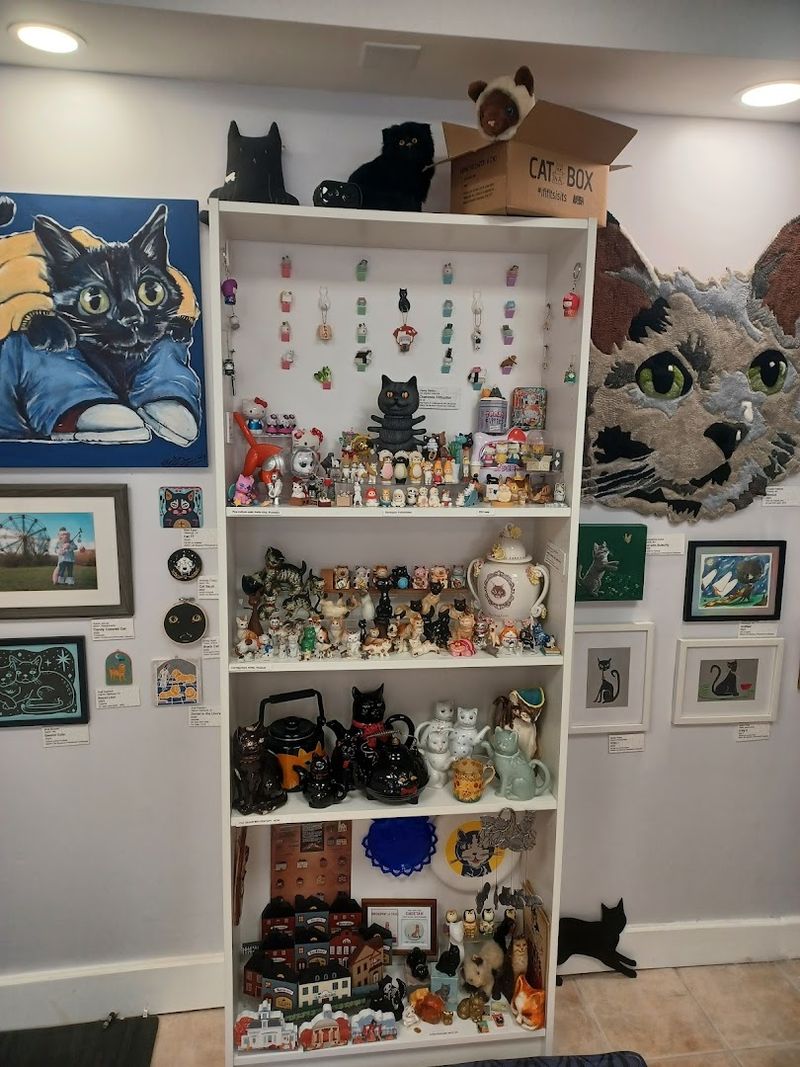
There is something undeniably magnetic about the aesthetic of mid-century cat decor, and the Salem Cat Museum has assembled more than 100 pieces that span from the 1940s.
This exhibit covers the full arc of how cat imagery became a fixture in domestic design, advertising, and popular culture throughout the latter half of the twentieth century.
The collection includes a wide variety of object types – ceramic figurines, printed textiles, novelty items, and decorative pieces that reflect the design sensibilities of each decade they came from.
Seeing them grouped together creates a kind of visual timeline that is both educational and genuinely entertaining.
You start to notice patterns in how each era interpreted the cat as a decorative motif.
The differences between a 1950s porcelain tabby and a 1980s cartoon cat are more revealing than you might expect.
One visitor particularly noted the vintage postcards in this section as a highlight, praising the way they captured both the art styles and the cultural attitudes of their time.
For collectors, design enthusiasts, or anyone who grew up surrounded by cat-themed household objects, this exhibit has a strong pull of recognition and nostalgia.
It manages to be both educational and deeply charming without ever feeling like a cluttered antique shop.
A Library Filled With Nothing But Cat Books
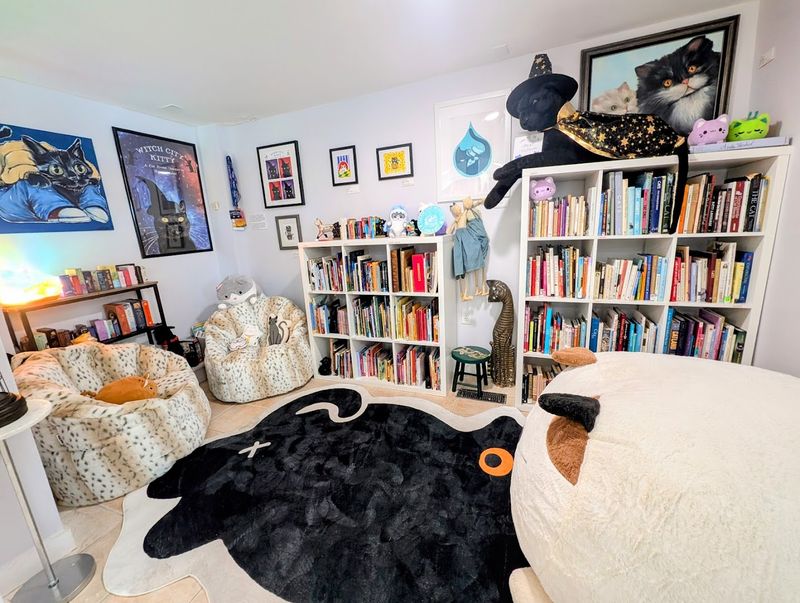
Somewhere between the art gallery and the craft room, you will find one of the museum’s most quietly compelling features: the Cat Library.
Shelves lined with hundreds of cat-related books published from the early twentieth century to the present create a reading nook that feels genuinely cozy rather than staged.
Comfortable chairs invite visitors to sit, browse, and stay a while longer than they originally planned.
The library is an actively growing collection.
One recent visitor noted with evident satisfaction that they were able to donate a book not yet represented on the shelves, contributing something small but meaningful.
That kind of participatory spirit is woven into the museum’s identity – it is a place that welcomes contributions and sees its visitors as collaborators rather than passive observers.
The range of titles reflects the breadth of human fascination with cats: natural history, fiction, illustrated children’s books, academic studies of feline behavior, and everything in between.
Whether you spend five minutes flipping through a vintage picture book or half an hour absorbed in a more serious text, the library offers a kind of quiet that is rare in most tourist attractions.
It functions as both an exhibit and a genuine place of rest, which is a combination very few museums manage to achieve.
The Kung Fu Kitty Mural That Stops Everyone Cold
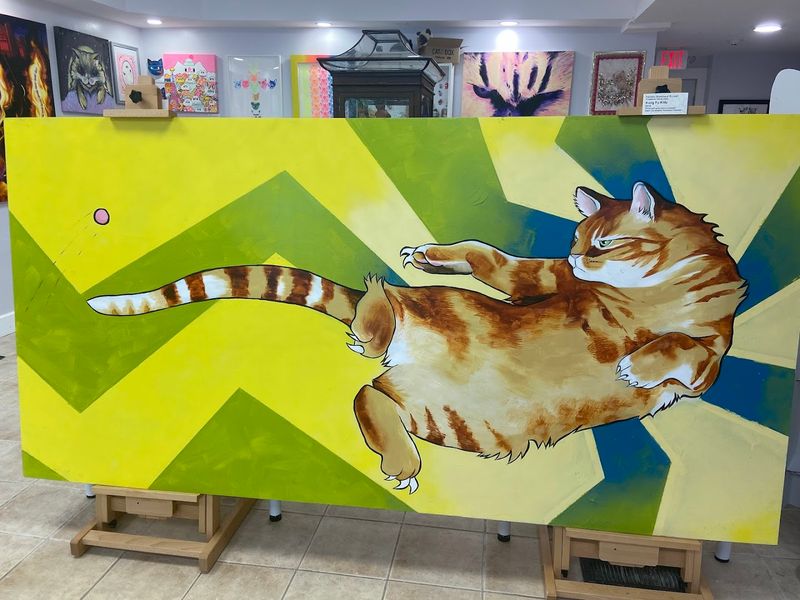
Walk far enough into the museum and you will encounter a wall that commands your full attention.
The eight-foot-long Kung Fu Kitty mural, commissioned from Salem artist Kameko Branchaud, is one of those pieces of public art that earns its reputation entirely on its own terms.
Bold, detailed, and full of personality, it transforms an interior wall into something closer to a landmark.
Branchaud’s work carries a kinetic energy that photographs struggle to capture.
The mural depicts a cat in mid-motion with the kind of confident line work and vivid color palette that makes you want to stand in front of it for longer than you expect.
It was clearly designed to be more than background decoration – it is a centerpiece, and the museum treats it as such by giving it space to breathe.
For many visitors, this mural becomes the image they associate most strongly with the Salem Cat Museum long after their visit ends. It has a way of lodging itself in memory, partly because of its scale and partly because of the sheer commitment of its execution.
Art at this level of ambition, created specifically for a small independent museum, says something meaningful about the community that supports this space.
Crafting Corners And Activities That Welcome Everyone
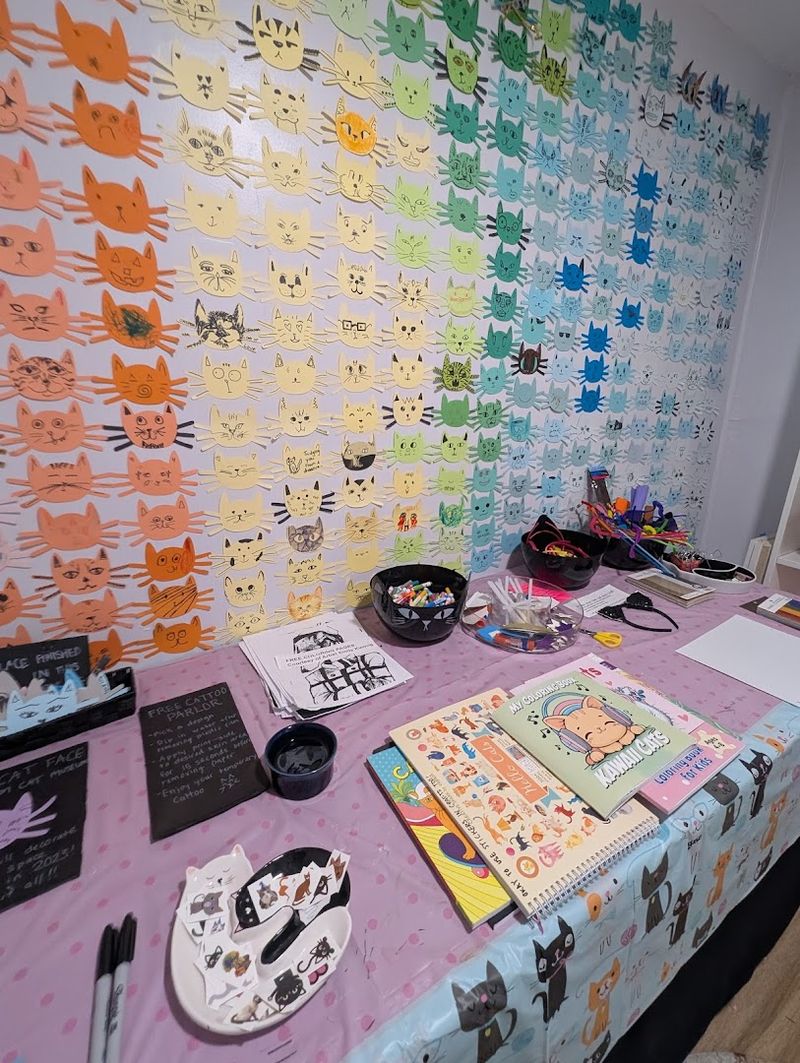
Museums that offer hands-on creative spaces tend to attract a broader range of visitors, and the Salem Cat Museum understood this from the beginning.
The craft room is a small but well-used corner of the space where visitors can make cat-themed decorations, color pages, explore sticker books, and engage with art.
Families with young children consistently highlight this area as a major draw.
One parent noted that the activities kept their little ones engaged while the adults took their time with the gallery.
The craft materials are accessible, the projects are achievable, and the atmosphere encourages experimentation without pressure.
Seasonal programming adds another layer of appeal.
Past activities have included making cat Christmas decorations, and the museum regularly hosts guest pop-ups that bring additional creative energy to the space.
On one memorable Saturday, visitors found Salem Cat Aid on-site with a cat and her kitten available to meet, alongside art created by kittens available for purchase.
That kind of spontaneous, community-connected programming is difficult to manufacture and speaks to the genuine relationships the museum has built in its short time on Boston Street.
A Gift Shop Worth Every Minute Of Browsing
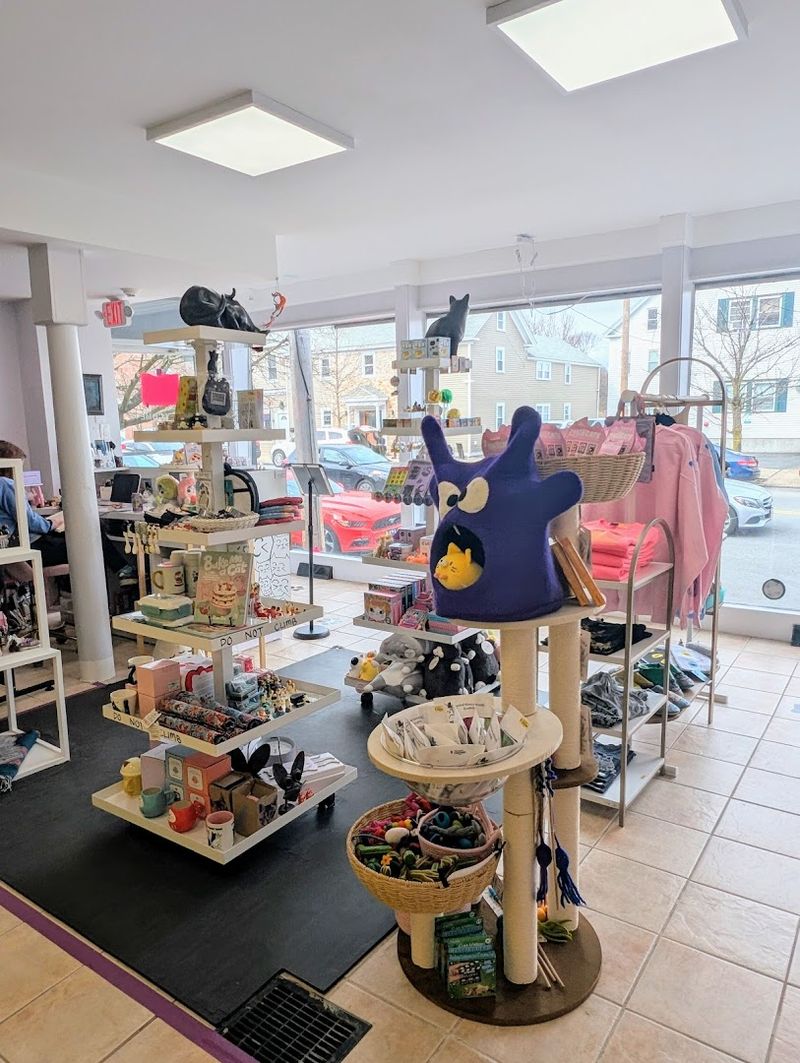
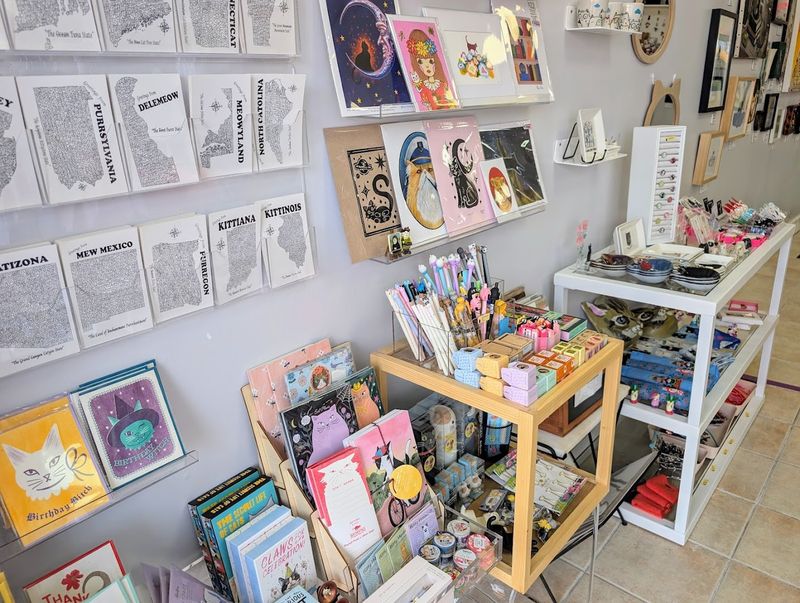
The front of the Salem Cat Museum functions as a gift shop, and it is the kind of retail space that rewards careful browsing rather than a quick scan. Items range from cat toys and small accessories to high-quality art prints created by the artists whose work appears in the gallery.
The selection feels curated rather than mass-produced, which makes the experience of shopping here feel meaningfully different from a typical souvenir stop.
Pricing is another point of consistent praise from visitors.
Multiple reviewers have noted that the gift shop offers good value without compromising on quality, and that the items available feel genuinely special rather than generic.
For cat lovers looking for something to bring home that reflects real artistic effort, the print selection alone is worth the trip.
The shop also carries items that support local artists directly, which aligns with the museum’s broader mission of building a creative community around its subject matter.
Purchasing something here is not just a transaction.
It is a small act of support for an independent cultural space that operates largely on goodwill, community contributions, and a donation-based admission model.
A few visitors have mentioned leaving with more than they intended to buy, which is perhaps the clearest possible endorsement a gift shop can receive from someone who came in just to look.
Admission By Donation And What That Really Means
Pay-what-you-want admission is a concept that sounds simple but carries real implications for who feels comfortable walking through a museum’s door.
At the Salem Cat Museum, the donation-based entry model has become one of its most talked-about features, and for good reason.
It removes the financial barrier that keeps many people from exploring cultural spaces, and it signals something genuine about the museum’s priorities.
Visitors respond to this model with noticeable generosity.
Rather than encouraging people to contribute as little as possible, the donation system seems to inspire visitors to give what they can because they feel the museum deserves support.
Several reviewers mentioned contributing specifically because the experience exceeded their expectations and they wanted to give something back in proportion to what they received.
The model also reinforces the community-centered character of the space.
When admission is voluntary, the relationship between visitor and institution shifts slightly – you are not a paying customer but a guest who has chosen to invest in something you value.
That distinction changes the atmosphere in a way that is difficult to quantify but easy to feel once you are inside. For a museum that has been open less than two years, building that kind of trust with its audience is an achievement worth noting.
It is open on Saturdays and Sundays from 11 AM to 6 PM.
Why Salem Is The Perfect City For A Cat Museum
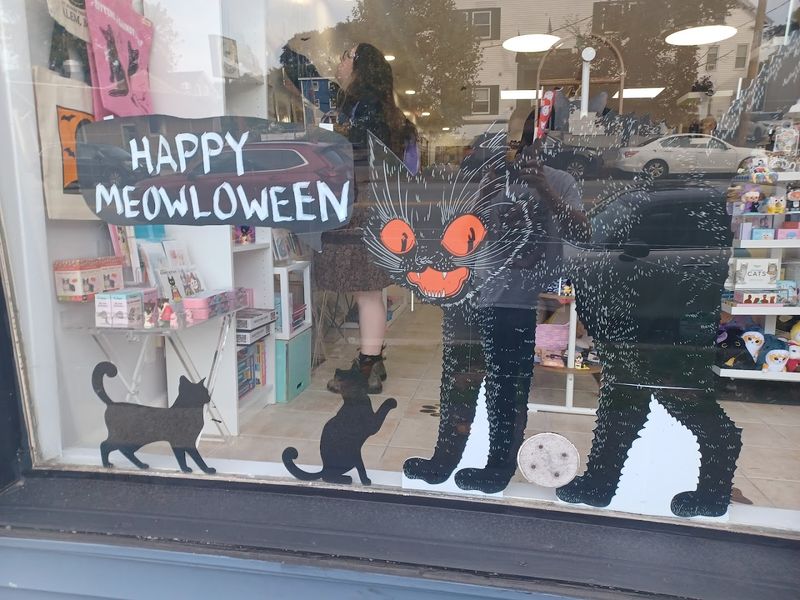
Salem carries a mythology that extends far beyond its seventeenth-century witch trials, and cats have always occupied an interesting place within that mythology.
The association between cats and the supernatural, between felines and the kind of independent, energy that Salem radiates, makes this city an almost logical home for a museum of this particular character.
The fit feels less like a marketing decision and more like an inevitability.
The museum’s location at 107 Boston St places it slightly outside the dense tourist corridor of downtown Salem, which gives it a neighborhood quality.
There is street parking available on Boston Street and the surrounding side streets, making it accessible by car without the stress of the downtown parking situation.
The walk from the city center is manageable, though driving is the more comfortable option for most visitors.
Salem has a long tradition of embracing the eccentric, the artistic, and the culturally specific in ways that other cities might resist.
The Salem Cat Museum fits naturally into that tradition, adding a new chapter to a city that has always understood the value of taking an unusual idea seriously.
This museum offers something that the famous attractions cannot – a sense of discovering something real, growing, and genuinely loved by the people who made it.