
Why This Small Nevada Town Might Be The State’s Hidden Treasure
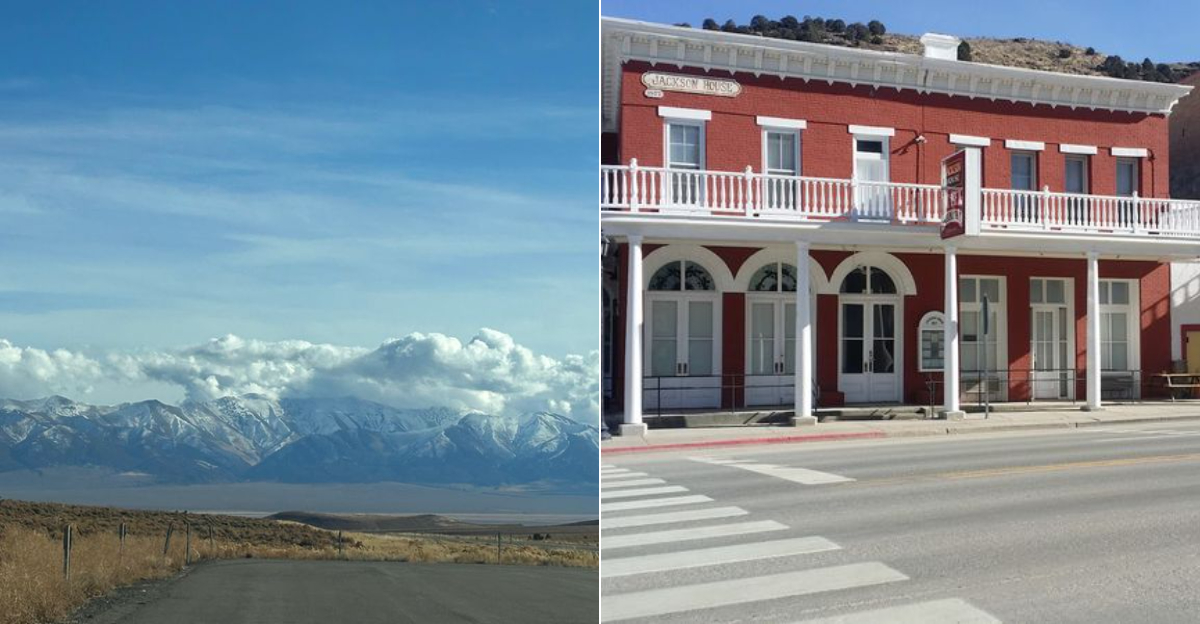
Some towns do not need neon, noise, or a big dramatic entrance to get your attention. They just sit there, calm and confident, waiting for curious travelers to slow down long enough to notice.
That is the funny thing about a place like this. You think you are only passing through, maybe stretching your legs or chasing a better view, and then suddenly the whole stop starts working on you.
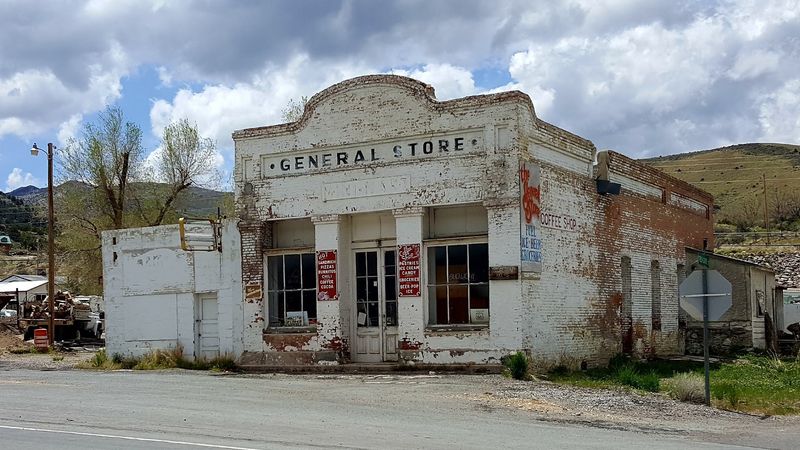
A weathered building here. A strange little story there. A main street with more personality than places ten times its size. In Nevada, that kind of surprise feels even better because the road makes you work for it.
The quieter the highway gets, the sharper the details become. Before long, what looked like a quick detour turns into the kind of stop you keep bringing up later, usually with a grin and the words, “You would not believe this place.”
The Loneliest Road That Leads Somewhere Worth Going
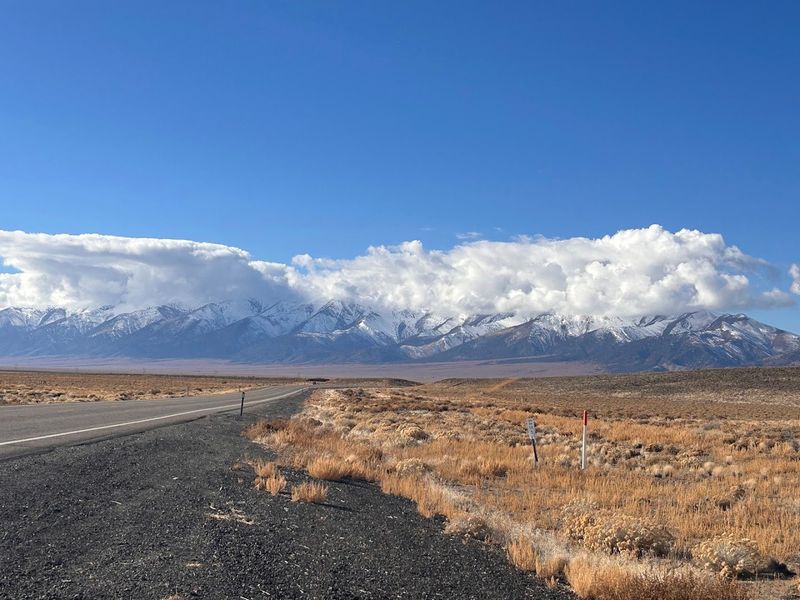
Highway 50 has a reputation. It was once called the loneliest road in America, and that title was not meant as a compliment. But anyone who has actually driven it knows that lonely and boring are two very different things.
Pulling into Eureka along this route feels like the road finally rewarding your patience. The town rests at an elevation of about 6,000 feet in central Nevada, surrounded by mountains and wide-open basin terrain. The air is crisp and the sky feels enormous.
What makes this stretch special is the sense of arriving somewhere real. There are no resort signs or chain hotels announcing the next exit.
Just a genuine town that has been standing since the 1860s, quietly doing its thing while the rest of the world rushes by.
The drive itself is part of the experience. Rolling hills, dramatic valley views, and the occasional pronghorn antelope sighting make the miles feel worthwhile. You are not just passing through Nevada. You are actually seeing it.
Eureka is located at the midpoint of Highway 50 between Ely and Austin, making it a natural stopping point. But most people who stop end up staying longer than planned.
That says everything you need to know about this small but surprisingly memorable place.
A Opera House That Has No Business Being This Beautiful
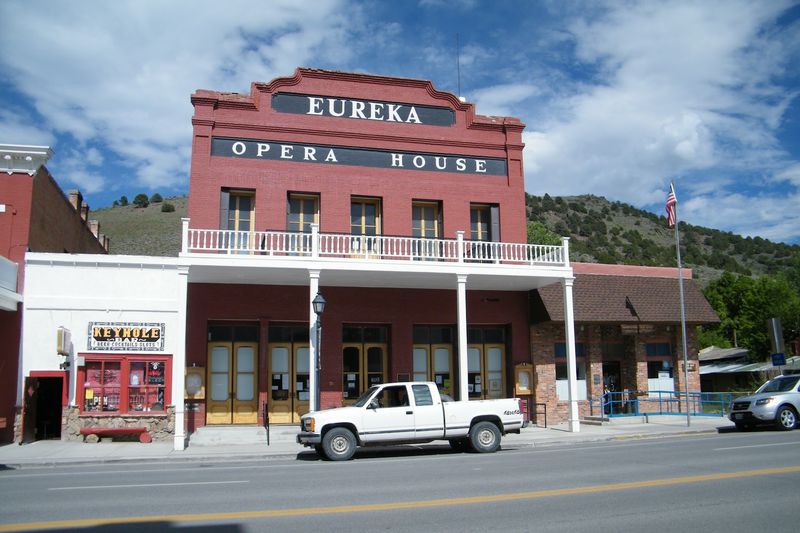
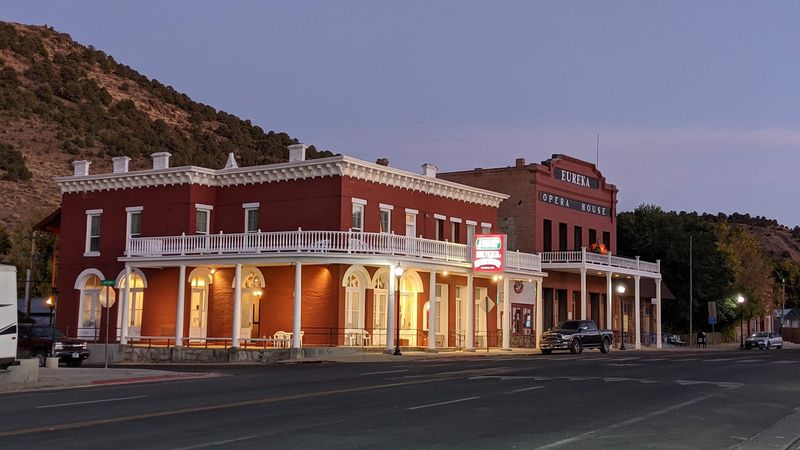
Nobody expects to find a fully restored Victorian opera house in a town of 414 people. And yet, there it is, sitting on Main Street like it owns the place. Because honestly, it kind of does.
The Eureka Opera House was built in 1880 during the town’s silver and lead mining boom. It hosted traveling theater companies, political speeches, and community events that brought culture to one of the most remote corners of the American West.
The building fell into disrepair over the decades but was eventually restored to its original grandeur.
Walking inside feels like stepping into a photograph. The restored interior has period details, a proper stage, balcony seating, and touches that show how seriously the community valued the arts.
Today the opera house still hosts concerts, performances, and public events. The Eureka County seat uses it as a community gathering space, which means it is alive in a way that many preserved historic buildings are not.
Located at 31 S. Main Street in Eureka, NV 89316, the building is open for tours and events.
If you happen to visit during a performance, do not pass it up. Sitting in those seats and watching something unfold on that old stage is the kind of experience that sticks with you long after you leave.
Mining History That Actually Tells A Good Story
Eureka’s past is not the kind of sanitized history you find on a laminated brochure. It is gritty, fascinating, and surprisingly layered for a town this size.
The silver and lead ore discoveries in the 1860s turned Eureka into one of the most productive mining districts in the entire American West. At its peak in the 1870s and early 1880s, the town had a population of around 10,000 people.
Smelters ran day and night, and the town supported newspapers, hotels, and a full commercial district.
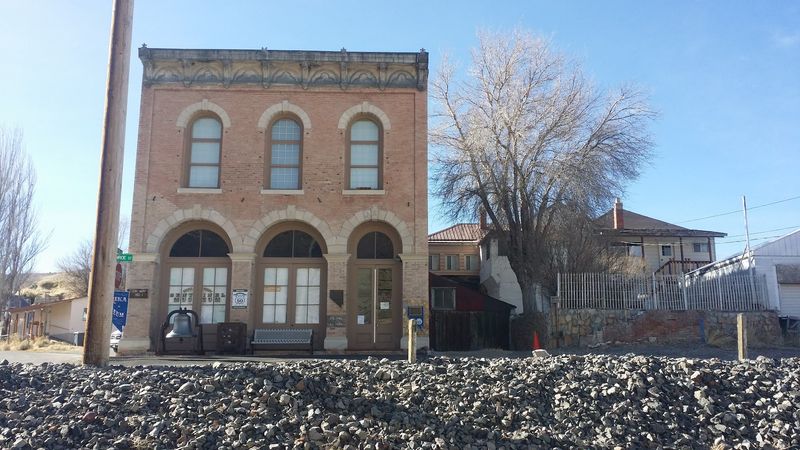
The Eureka Sentinel Museum, housed in the original 1879 newspaper building, tells this story with care and detail. Vintage printing equipment, mining artifacts, and historical photographs fill the space in a way that feels personal rather than clinical.
What makes this history stick is how honest it is about the boom-and-bust cycle that defined so many Nevada towns. Eureka did not survive by pretending the bust never happened. It survived by adapting, shrinking, and holding onto what mattered.
The museum is free to visit and staffed by locals who genuinely enjoy talking about the town’s past. That combination of authentic artifacts and real human enthusiasm makes the history feel immediate.
You leave knowing something real, not just something you read off a placard.
Courthouse Architecture That Stops You Mid-Stride
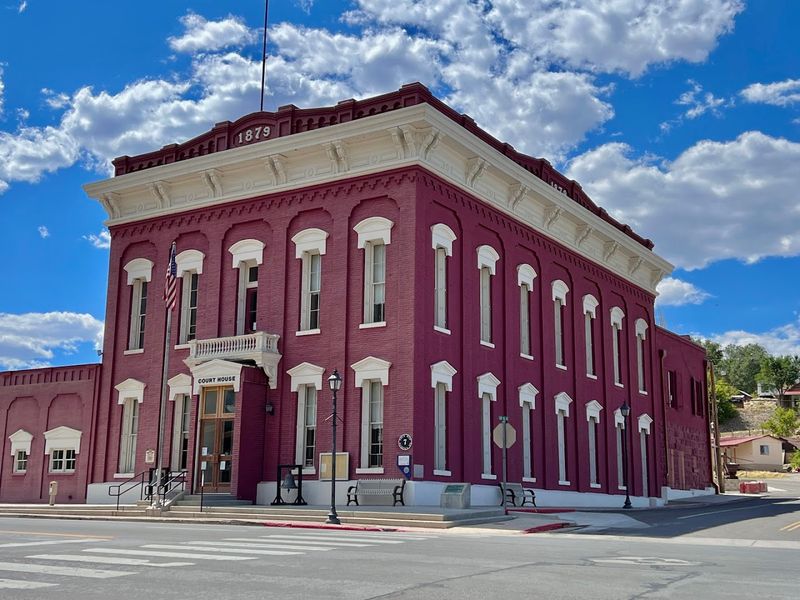
Some buildings make you slow down without asking. The Eureka County Courthouse is exactly that kind of building. It commands attention in the best possible way.
Built in 1879, this red brick courthouse is one of the finest examples of Victorian civic architecture still standing in Nevada. The building has served as a courthouse for over a century, outlasting many Western structures that were demolished or abandoned.
The exterior details are worth stopping to study. Arched windows, decorative brickwork, and a symmetrical facade give the building a dignity that feels earned rather than imposed.
Inside, the courtroom keeps much of its original character, with period woodwork and proportions that still feel serious and meaningful.
What strikes me most about this building is its quiet confidence. It does not need a sign telling you it is important. The craftsmanship speaks clearly on its own.
Eureka County is one of America’s least populated counties, yet this architectural landmark remains its working seat of government. That fact alone says something interesting about community pride and the value placed on preserving what came before.
Take a few minutes to walk around it. Every angle rewards the attention.
The Night Sky Above Central Nevada Is Not A Joke
Light pollution is one of those things you do not fully appreciate until it disappears. Standing outside in Eureka after dark is a genuinely disorienting experience if you are used to city skies.
Central Nevada sits far from any major metropolitan area, and Eureka’s small population means there is almost no artificial light competing with the stars. On a clear night, the Milky Way stretches across the sky in a way that looks almost theatrical.
It takes a moment to convince yourself it is real. Stargazing here requires no equipment, no guided tour, and no reservation. You step outside, let your eyes adjust for about twenty minutes, and then the sky does the rest.
The elevation at around 6,000 feet also helps by reducing atmospheric haze.
If you plan to maximize the experience, check the lunar calendar before your visit. A new moon phase combined with Eureka’s naturally dark skies produces conditions that amateur astronomers travel hundreds of miles to find.
The fact that you can access it simply by showing up and looking up makes it one of the most underappreciated things about this town.
Small Town Festivals With Surprisingly Big Energy
You might assume a town with 414 residents would struggle to throw a good party. You would be wrong. Eureka knows how to celebrate, and the community puts genuine effort into its annual events.
The Eureka County Fair and Rodeo is the signature event, drawing visitors from across central Nevada and beyond. It is a small-town rodeo with real competition, an enthusiastic crowd, and a throwback atmosphere in the best way.
Beyond the rodeo, the town hosts seasonal events that reflect local culture and history. These gatherings give visitors a chance to interact with actual residents rather than just browsing storefronts alone.
That human element changes the entire experience of visiting a place.
What I noticed at a community event I attended was how relaxed everyone seemed. There was no performance of fun happening. People were just genuinely enjoying themselves in their own town, doing things they actually looked forward to all year.
If your travel dates happen to align with one of these events, adjust your schedule to make it work. Experiencing Eureka during a community celebration gives you access to a side of the town that no museum or historic building can fully replicate.
The energy is contagious and the welcome is completely authentic. Check local event listings before you go.
Geology And Landscape That Belong On A Postcard
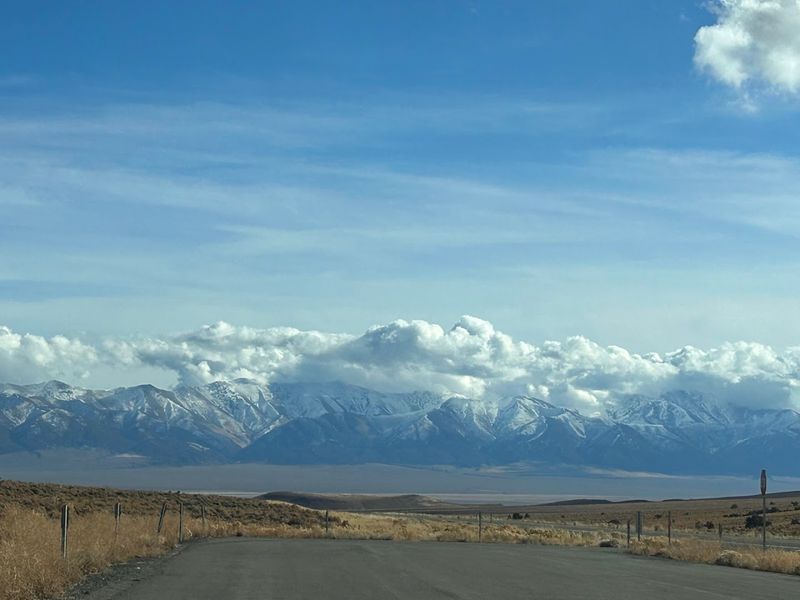
The land around Eureka does not ease you in gently. It presents itself all at once, massive and unfiltered, and you either love it immediately or take a few minutes to catch up.
Central Nevada lies in the Basin and Range Province, where mountain ranges and flat valleys stretch across the landscape in parallel lines. From any high point near Eureka, you can see multiple mountain ranges stacked against the horizon like a geography lesson come to life.
The Diamond Mountains and the Diamond Valley nearby offer accessible hiking and exploration for those willing to get off the pavement. The terrain is varied enough to stay interesting without requiring serious technical skill to navigate.
Rock formations in the area also reflect the region’s volcanic and mining history. The exposed geology tells a story of immense pressure and time that makes you feel appropriately small in the best way possible.
Spring and fall are the most rewarding seasons to explore the landscape. Summer heat can be intense at elevation, and winter brings genuine snow to the surrounding mountains.
The shoulder seasons offer comfortable temperatures and dramatic light that photographers and casual hikers both appreciate equally.
The scenery here is not trying to impress you. It simply exists on a scale that is hard to process until you are standing right in the middle of it, looking around with no particular place to be.
Why Eureka Rewards The Curious Traveler More Than Most
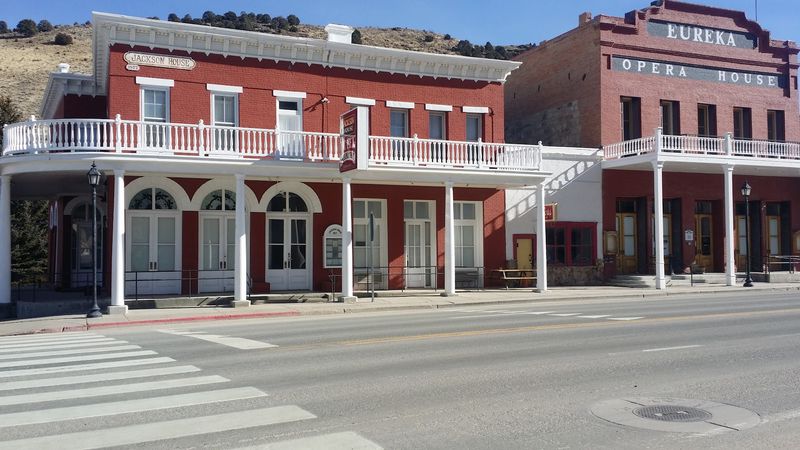
Most people drive through Eureka without stopping. That is their loss, and honestly, it keeps the town exactly as good as it is.
What makes Eureka work as a destination is the combination of things it offers without overselling any of them. History, landscape, architecture, dark skies, and genuine community character all exist here in a compact and accessible package.
Nothing feels manufactured for tourist consumption. The town is located at the intersection of Highway 50 and Diamond Valley Road in Eureka County, Nevada 89316, roughly 70 miles east of Austin and 78 miles west of Ely.
That central position makes it an ideal base for exploring a large swath of central Nevada that most travelers never see.
Accommodation options are limited but functional. Small motels and a handful of local dining spots serve visitors without the noise and crowds of a larger tourist destination. That simplicity is part of the appeal rather than a limitation.
The travelers who get the most out of Eureka are the ones who slow down, ask questions, and let the town reveal itself at its own pace. It rewards curiosity over efficiency. Show up without a rigid agenda and you will almost certainly leave with more than you expected.
Eureka is not competing with anyone. It has been here since 1864 and will likely outlast most trends in travel. That kind of quiet confidence is, in itself, worth the detour.