
This Secret New York Hiking Spot Feels Like A Peaceful Escape Deep In The Woods
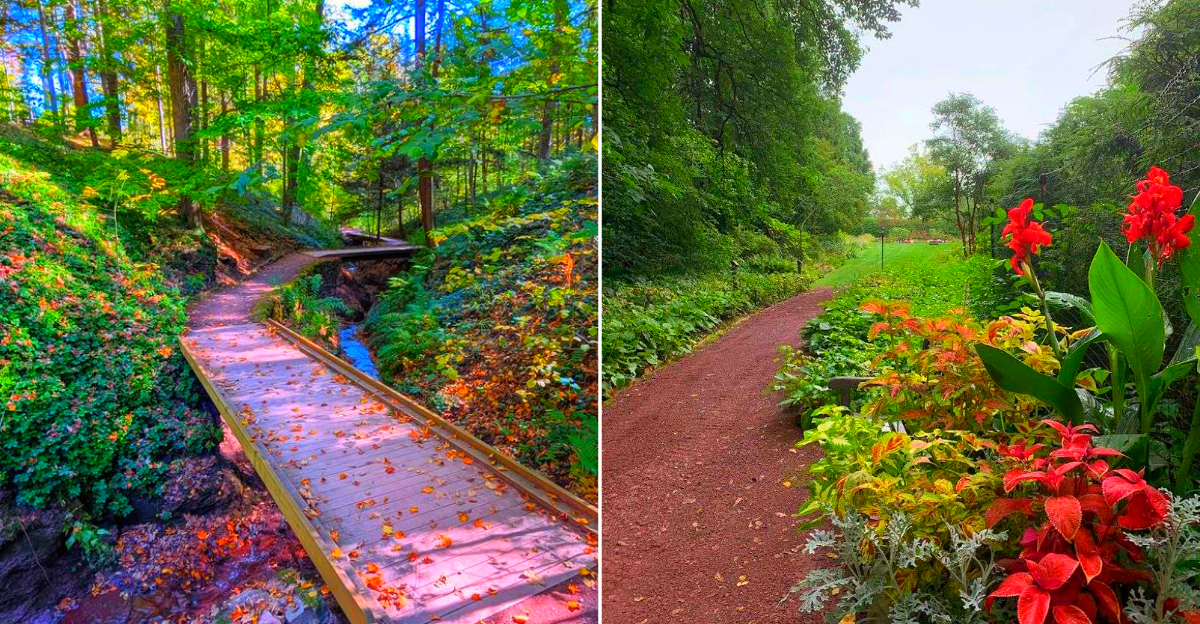
The entrance doesn’t give much away. A narrow path, a quiet start, and no sign of what’s ahead.
This New York hiking spot feels like a reset button you weren’t supposed to find, and once you’re on it, the noise fades faster than you expect.
A few minutes in, the woods take over. Light filters through the trees, the trail softens underfoot, and the pace settles without effort.
Turns come and go without warning, opening up just enough to keep you curious. It stays calm the whole way through.
No crowds, no rush, just a steady stretch of forest that makes it easy to keep going longer than planned.
A Place That Feels Like It Was Kept Secret On Purpose
Few natural spaces carry the quiet confidence of a place that has never needed to advertise itself. Root Glen sits on the Hamilton College campus in Clinton, New York, and yet many people who live within an hour of it have never heard its name.
That kind of obscurity, in a world where every trail seems to have its own social media following, is genuinely refreshing.
The glen covers 7.5 acres of carefully tended botanical landscape, developed over generations by a single family beginning in 1850. Three generations of the Root family shaped this land before transferring it to Hamilton College in 1971.
What they left behind is not a manicured showpiece but a living, breathing environment that feels like it grew entirely on its own terms.
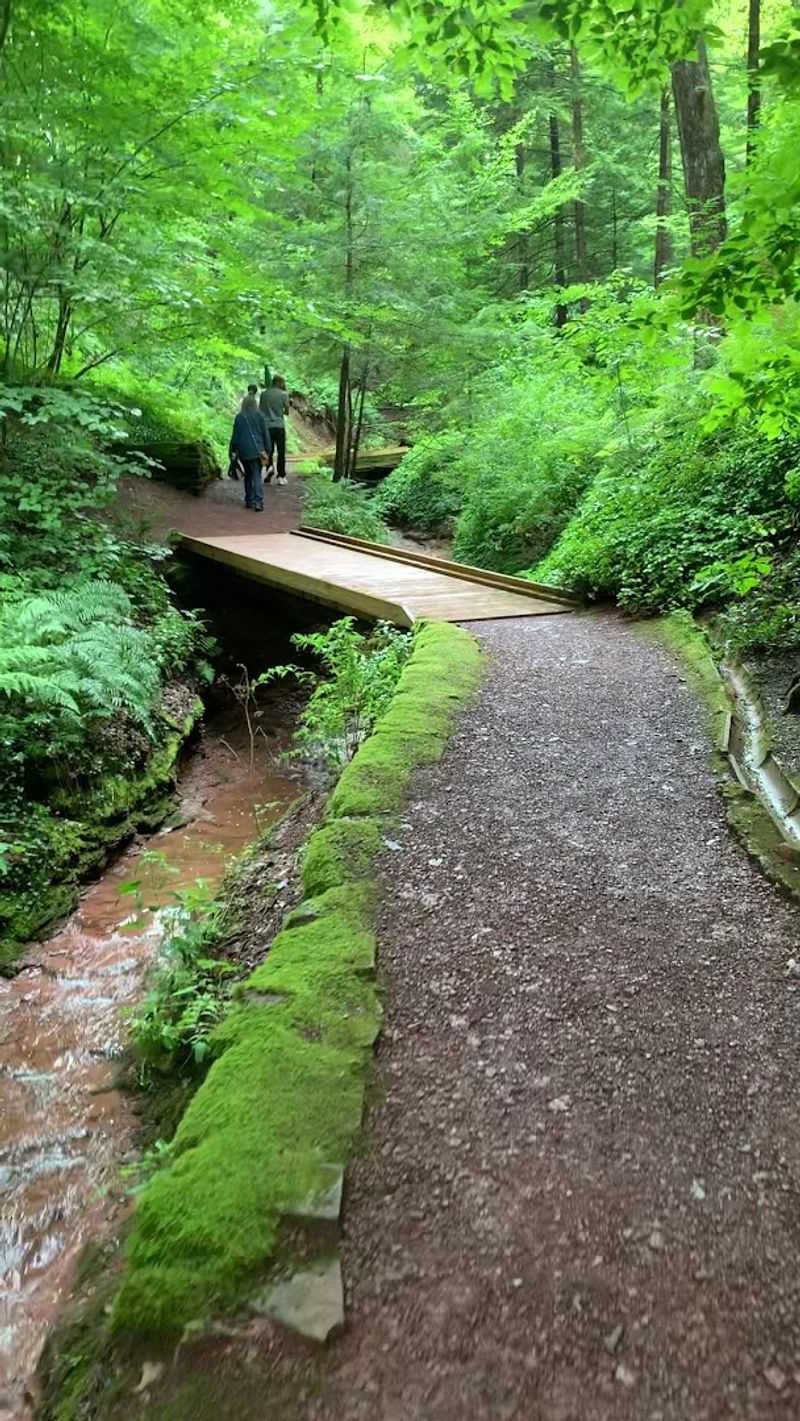
Streams wind through the property, wooden bridges cross the water at seven different points, and benches appear at just the right moments along the trail. Visitors often arrive expecting a brief stroll and end up staying far longer than planned.
The atmosphere has a way of slowing things down without asking permission, which is perhaps the most honest description of what makes this place worth finding.
Root Glen And The History Behind Its Quiet Existence
Root Glen carries more than a century and a half of history within its 7.5 acres, and that weight is felt rather than announced. The glen was first developed in 1850 by the Root family, whose members shaped and tended the land across three generations with evident care and intention.
Located at 153 College Hill Rd, Clinton, NY 13323, on the Hamilton College campus, the property was transferred to the college in 1971 and has been maintained as a public arboretum ever since.
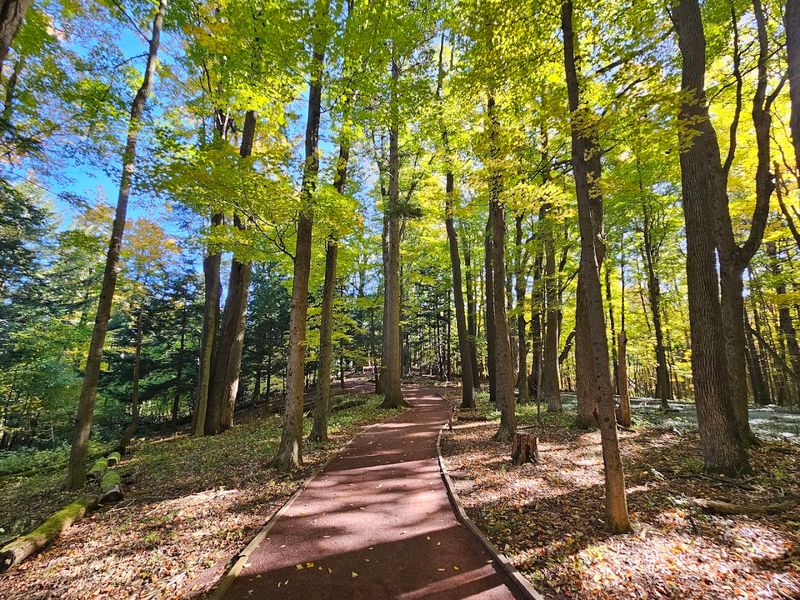
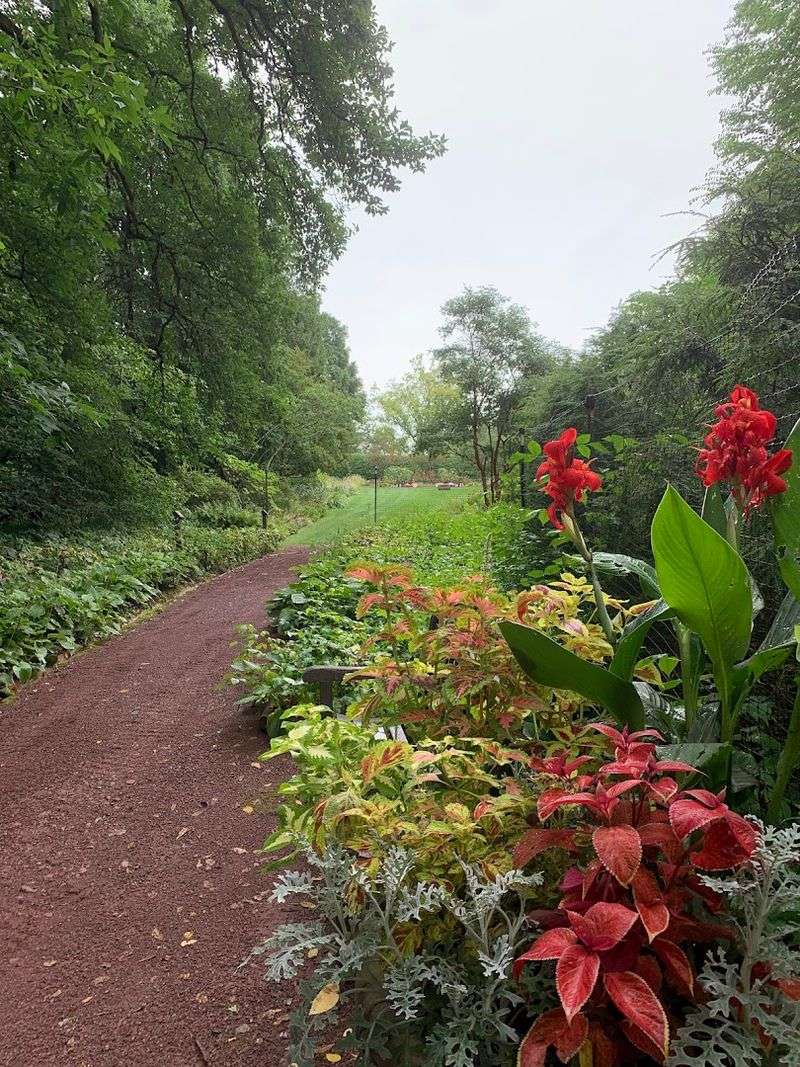
The walking paths are made of red shale, a detail that sounds minor until you actually walk them and realize how well they complement the surrounding greenery. The shale gives the trails a warm, earthy color that feels deliberate rather than accidental.
Signs along the route identify tree species by name, turning an ordinary walk into something closer to a quiet education.
Hamilton College itself adds another layer of appeal to the visit. The historic campus buildings and towering old trees create a setting that feels like a different era entirely.
Exploring the glen and then wandering through the college grounds offers a genuinely complete afternoon that requires no entrance fee and no advance planning.
Seven Bridges And A Stream That Ties Everything Together
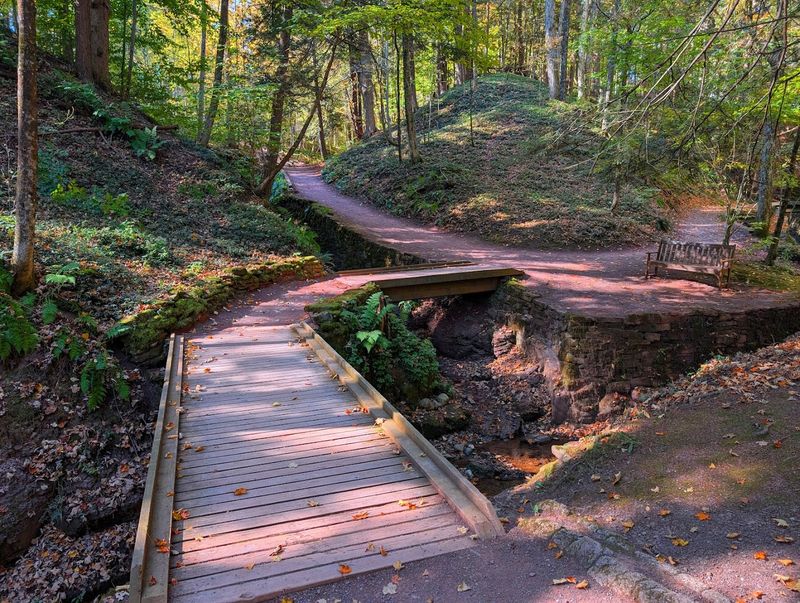
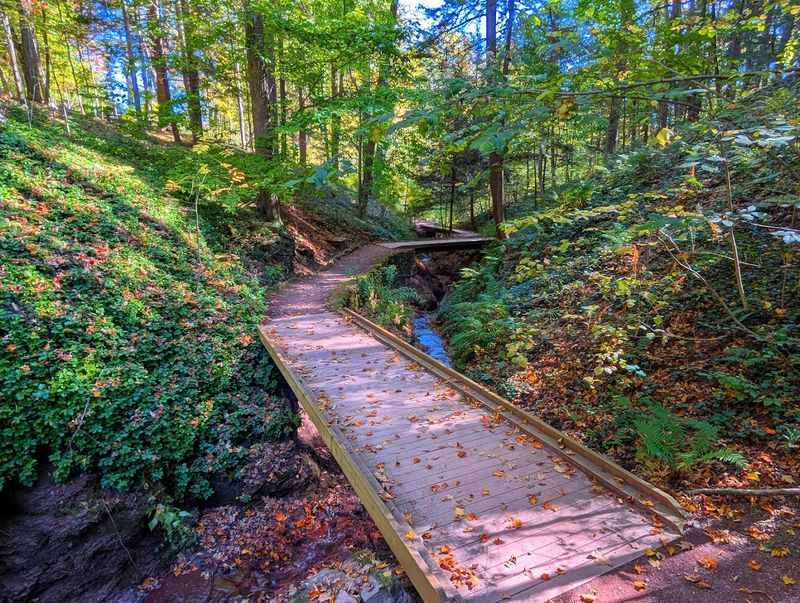
Seven wooden bridges cross the stream that runs through Root Glen, and each one offers its own particular view of the water below. The stream itself is not dramatic or forceful but rather the kind that moves at a pace inviting you to stop and listen.
The sound of moving water threads through the entire experience, present no matter where you are on the trail.
The bridges are historic structures that add visual character to the landscape without feeling out of place. Standing on one of them and looking downstream through a corridor of overhanging branches gives the impression of being somewhere far more remote than a college campus in central New York.
That contrast between the familiar setting and the feeling of genuine seclusion is one of Root Glen’s most appealing qualities.
Water has a way of organizing a landscape, and here it does exactly that. The stream creates a natural axis around which the trails, the plantings, and the bridges are arranged.
Visitors who pay attention to the water as they walk will notice how it changes character slightly from one bridge to the next, shifting from a wider, calmer stretch to narrower passages where it moves with a bit more energy. It rewards a slow pace.
Botanical Diversity That Genuinely Earns Its Reputation
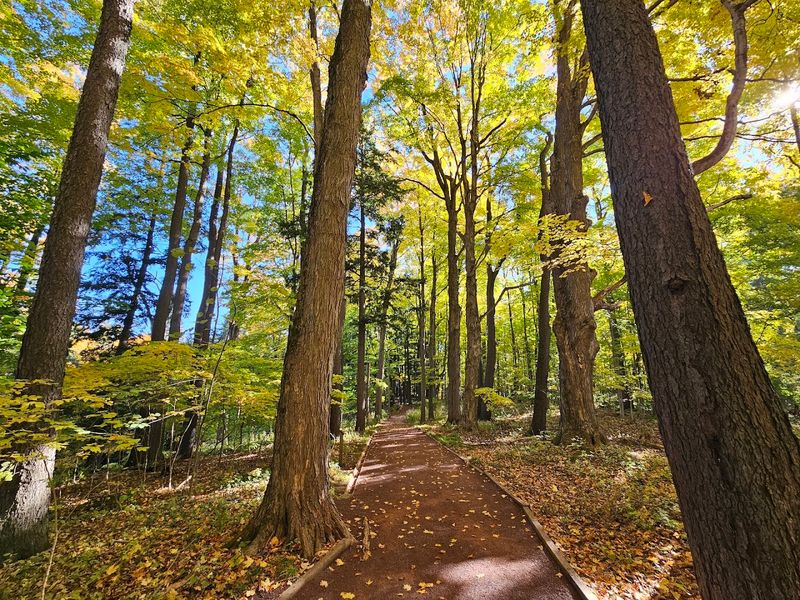
Approximately 65 species of trees grow within Root Glen, and that number alone sets it apart from a typical woodland trail. Dozens of shrubs and scores of flower varieties fill the spaces between the trees, creating a layered environment that changes character depending on where you stand and what time of year you visit.
The botanical range here is genuinely impressive for a 7.5-acre property.
The Hemlock Enclosure is one of the glen’s most distinctive areas, featuring hybridized peonies, iris, azaleas, lilies, and astilbes planted with evident knowledge of how they interact with each other and with the light filtering through the canopy above.
The Primrose Basin is another standout section, known particularly for its Candelabra primroses, which bloom in tiered clusters that seem almost architectural in their arrangement.
Late May or early June is widely considered the best time to visit if seeing the peonies at peak bloom is a priority. The flowers during that window are genuinely worth planning around.
Beyond the bloom season, the glen maintains its appeal through summer and into fall, when the tree canopy shifts through a full range of color. Each visit to this place tends to feel distinct from the last, which is a quality worth appreciating.
The Trails Are Easy Enough To Enjoy And Interesting Enough To Remember
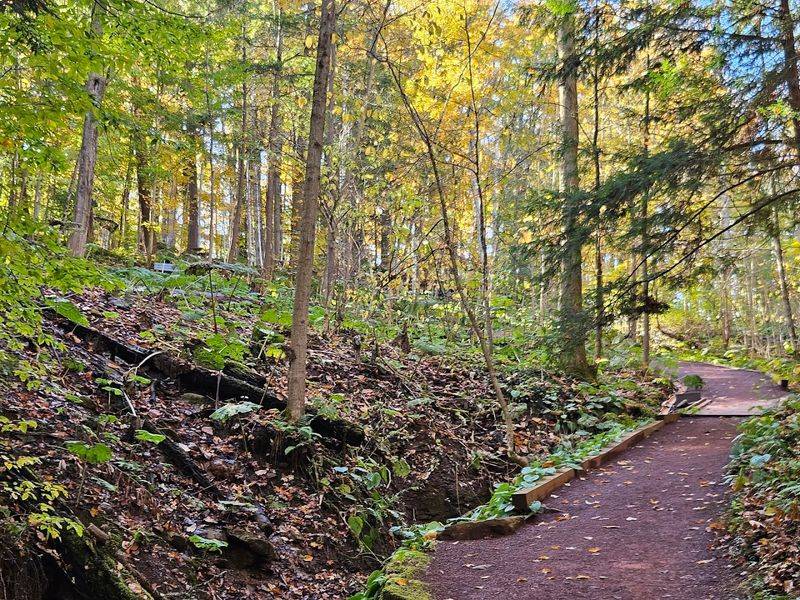
Root Glen’s trails are laid out in a generally circular pattern, with all paths connecting to each other in a way that makes getting genuinely lost almost impossible despite the occasional absence of trail markers.
The total loop runs somewhere between half a mile and a mile, making it an accessible option for a wide range of visitors including families with children and those who prefer a relaxed pace over a strenuous workout.
The red shale surface underfoot is one of those details that elevates the overall experience in a subtle but consistent way. It provides good footing while adding a visual warmth to the trail that plain dirt or gravel simply would not.
Some sections of the path do include steeper inclines, so wearing appropriate footwear makes a meaningful difference in comfort.
Dogs are welcome on the trails, which adds a certain casual energy to the experience and makes the glen a practical destination for pet owners looking for a genuinely pleasant outing. The trail system also connects to additional wooded paths beyond the glen itself, offering more distance for those who want it.
Bringing water is a reasonable idea, particularly during warmer months when the canopy provides shade but the air can still carry heat.
Free To Visit And Worth Far More Than The Price Of Admission
Root Glen charges no entrance fee and offers free parking nearby, making it one of the more genuinely accessible natural destinations in Upstate New York.
In an era when many parks and gardens have moved toward timed entry passes and reservation systems, the straightforward openness of Root Glen feels almost countercultural.
Showing up unannounced on a Tuesday afternoon is entirely acceptable and, based on the reported crowd levels, likely to result in having the trails largely to yourself.
Parking is located near the Hamilton College Admissions Office, a detail worth knowing before arrival since the map marker for the glen itself has been noted to point to an incorrect location.
A short walk from the parking area brings you to the glen entrance, and from there the trails are easy to follow in a general sense even without a formal map in hand.
The combination of no cost, easy access, and genuinely high-quality botanical and natural content makes Root Glen the kind of destination that is easy to recommend without qualification. There is no fine print, no seasonal surcharge, and no crowded gift shop at the exit.
What the glen offers is direct and uncomplicated, which in itself has become something of a rarity among well-regarded outdoor destinations.
What The Trees Can Teach You If You Slow Down Long Enough
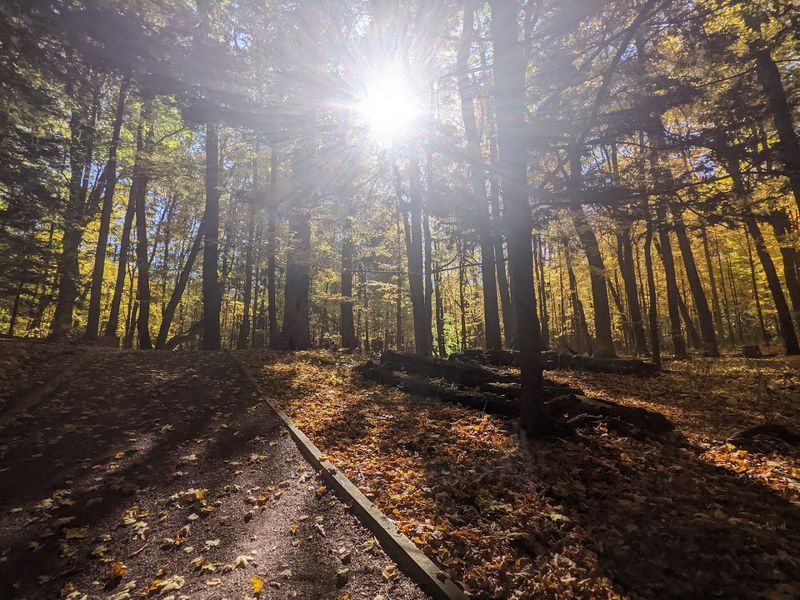
One of Root Glen’s most engaging features is the system of informational signs placed near the trees throughout the property. Each sign identifies the species, turning what might otherwise be a pleasant but unremarkable walk into something with genuine educational value.
The range of trees contributes directly to the atmosphere of the glen. Hemlock canopies create cooler, more filtered light in certain sections, while deciduous trees open the sky above other stretches of trail.
The interplay between these different tree types shapes the texture and temperature of the walk in ways that feel varied and interesting rather than monotonous.
For visitors with children, the labeled trees offer a natural hook for conversation and curiosity. Pointing out a species, reading the sign together, and then looking up at the actual tree creates a simple but effective learning moment that requires no preparation.
Adults who consider themselves reasonably knowledgeable about trees frequently discover several species at Root Glen that are new to them, which is a satisfying outcome from a walk that costs nothing and takes under an hour.
Why Root Glen Deserves A Spot On Your Upstate New York List
Root Glen is not a place that announces itself loudly or competes for attention with flashier destinations.
Its appeal is quieter and more durable than that, built on the combination of botanical richness, historical character, accessible trails, and an atmosphere that feels genuinely restorative rather than performatively scenic.
Spending time here tends to recalibrate the pace of the day in a way that lingers well after you have left the property.
The glen pairs naturally with a walk through the Hamilton College campus, which offers its own rewards in the form of historic architecture and impressively old trees.
Together, the two areas make for an afternoon that covers natural history, botanical education, and architectural interest without requiring a single admission ticket or a lengthy drive between locations.
Planning a visit for late May or early June maximizes the botanical spectacle, particularly for the peonies and primroses that define the glen’s most celebrated season.
Outside of that window, the trails remain worthwhile through summer and fall, and the tree identification signs provide consistent engagement regardless of the bloom cycle.
Root Glen earns its reputation not through dramatic scenery or extreme terrain but through a sustained, unhurried quality of experience that is genuinely difficult to replicate elsewhere in the region.