
Exploring A Forgotten Village Of Vermont Covered By Decay
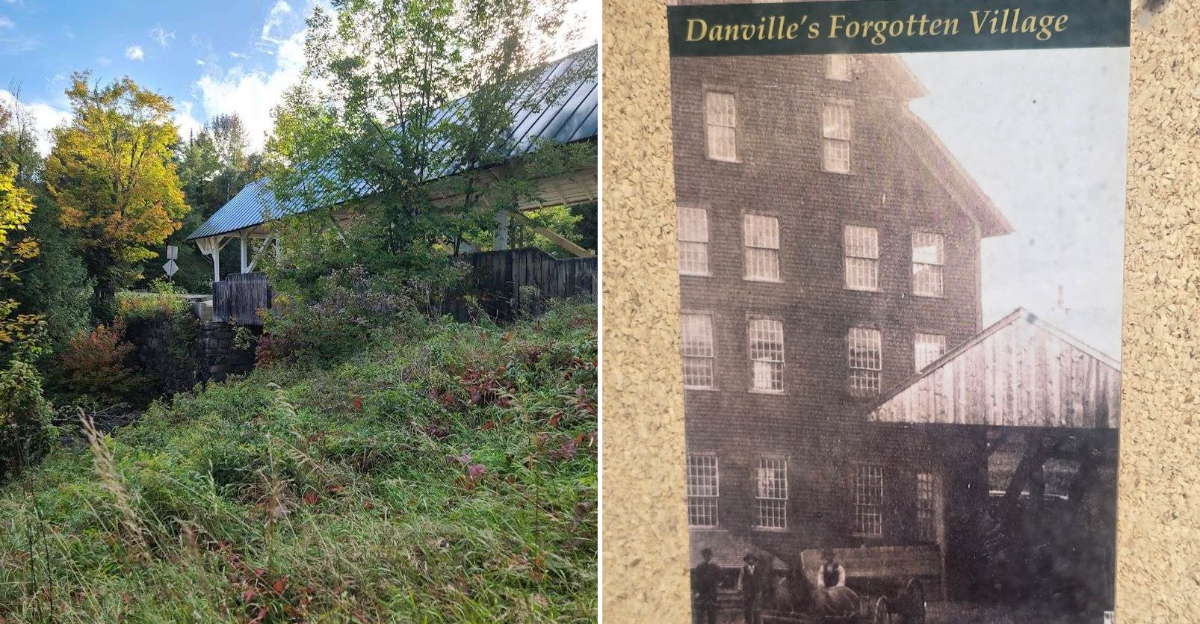
Some places once buzzed with life. You could hear children laughing, wagon wheels rolling across dirt roads, the steady rhythm of a community finding its feet.
Vermont has places like this, scattered across its hills like forgotten footnotes in history. This small village was never cursed.
No dark legend hung over it. But a single spark, the kind that takes only a second to escape a careless hand, was enough to swallow everything whole.
Now there is nothing left standing. No walls, no rooftops, no trace of the hands that built it all from bare ground.
Only the land remains, quiet and patient. It holds the memory of a village that was slowly shaped, stone by stone, season by season, by people who believed they were building something that would last forever.
Historical Background Of Rural Villages
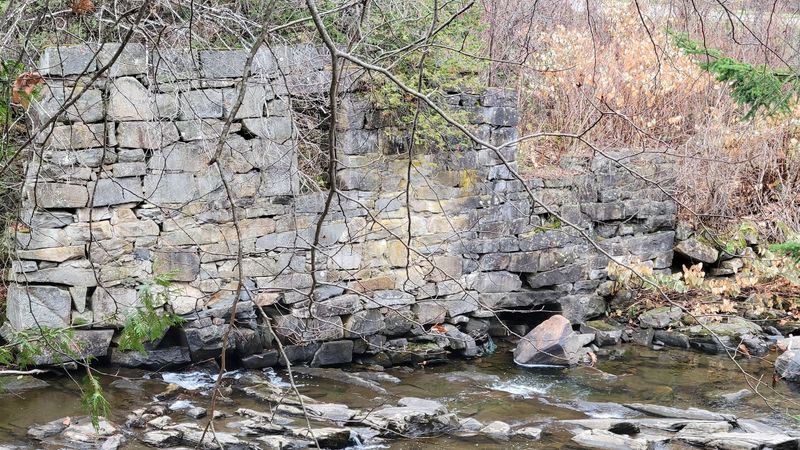
This spot didn’t start as a ghost village. It started as a working mill village with real ambition, real people, and a whole lot of wool.
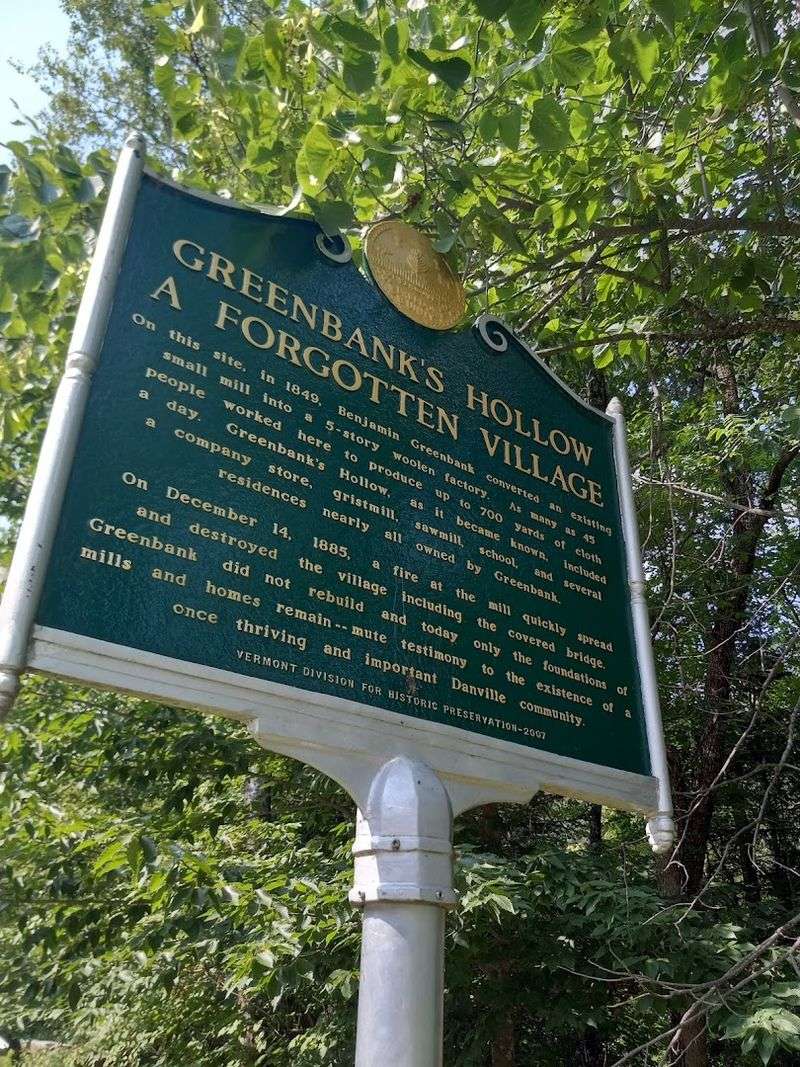
The area along Greenbanks Hollow Road in Danville, VT 05828 went through several name changes before settling on the one we know today. It was called Whitcher Mills, then Davis Mills, then Bolton Mills, before Benjamin Greenbank gave it his name.
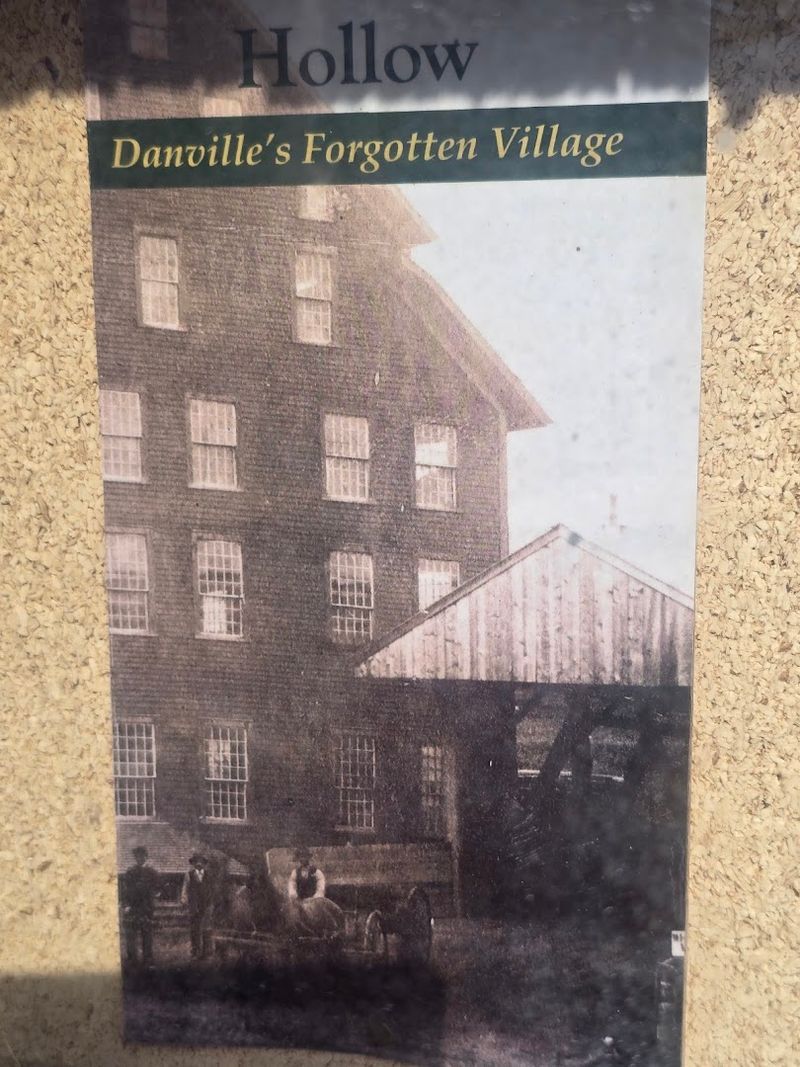
By the 1870s, the woolen mill powered by Joe’s Brook had grown into one of the most significant textile operations in Northeast Vermont. The mill employed a substantial workforce and produced a considerable volume of cloth every day.
The village grew up around that production with a gristmill, sawmill, post office, school, and a store.
Benjamin Greenbank owned or rented most of the buildings, making it a true company village. Then, on December 14, 1885, fire tore through the heart of the place.
The woolen mill, the covered bridge, the store, and Greenbank’s own home were all destroyed. He chose not to rebuild there.
The school closed in 1912. The Danville Historical Society now preserves what remains as a historic park.
Architectural Styles Found In Abandoned Settlements
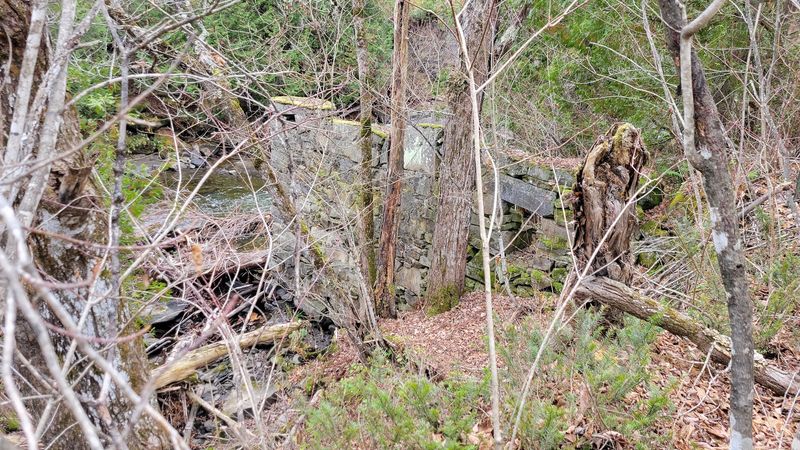
Enter Greenbank’s Hollow, and you start reading the land like a book. The granite foundations left behind tell you exactly how the village was laid out.
These weren’t flimsy structures. They were built to last, which is exactly why the bones are still visible more than a century later.
Vermont mill villages of the 1800s followed a practical architectural logic. The largest building sat closest to the water source.
Smaller outbuildings and worker homes fanned out from there. At Greenbank’s Hollow, the five-story woolen mill was the centerpiece, positioned to harness the power of Joe’s Brook directly.
Cellar holes mark where homes once stood. The original covered bridge footprint is still readable in the landscape.
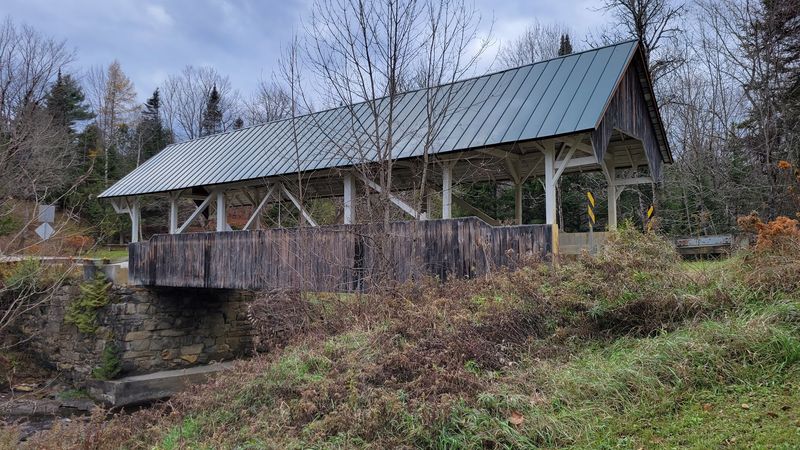
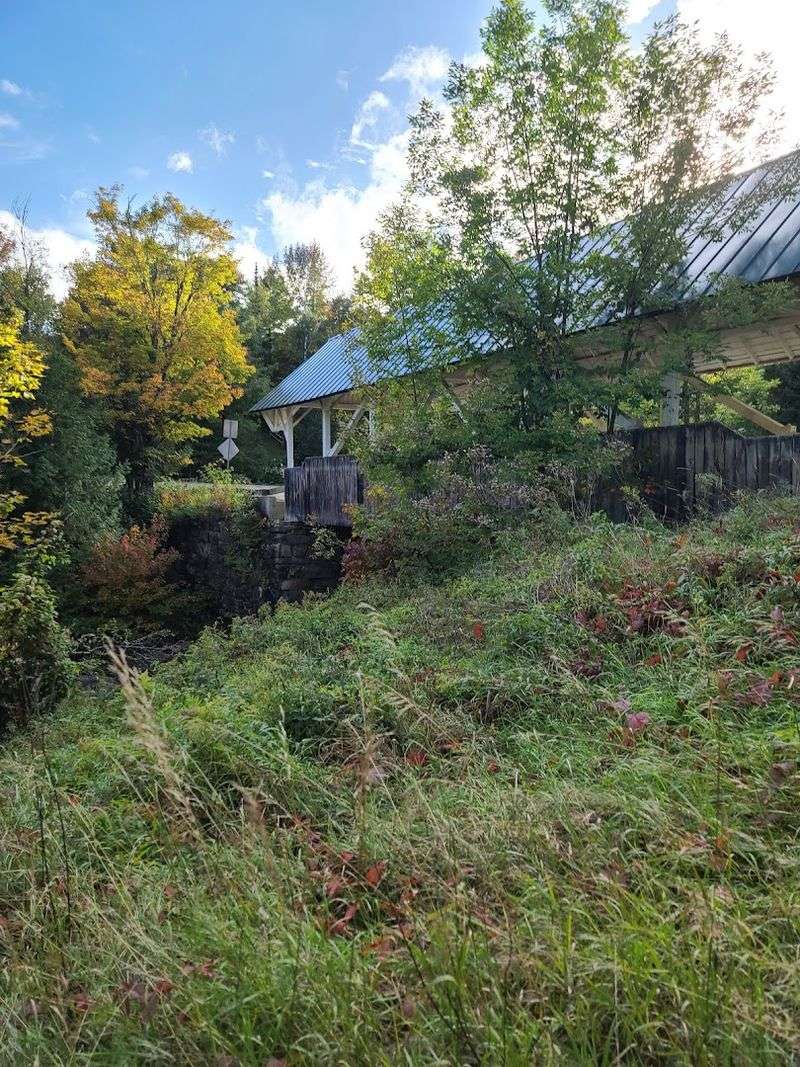
The rebuilt 1886 covered bridge gives you a clear picture of what the crossing looked like before the fire wiped out the original. Interpretive signs placed around the site connect each stone remnant to its former purpose.
You’re not just looking at rubble. You’re looking at a floor plan of a community that once hummed with daily life, commerce, and routine.
The architecture didn’t vanish. It just went underground and grew moss.
Environmental Impact Of Neglected Communities
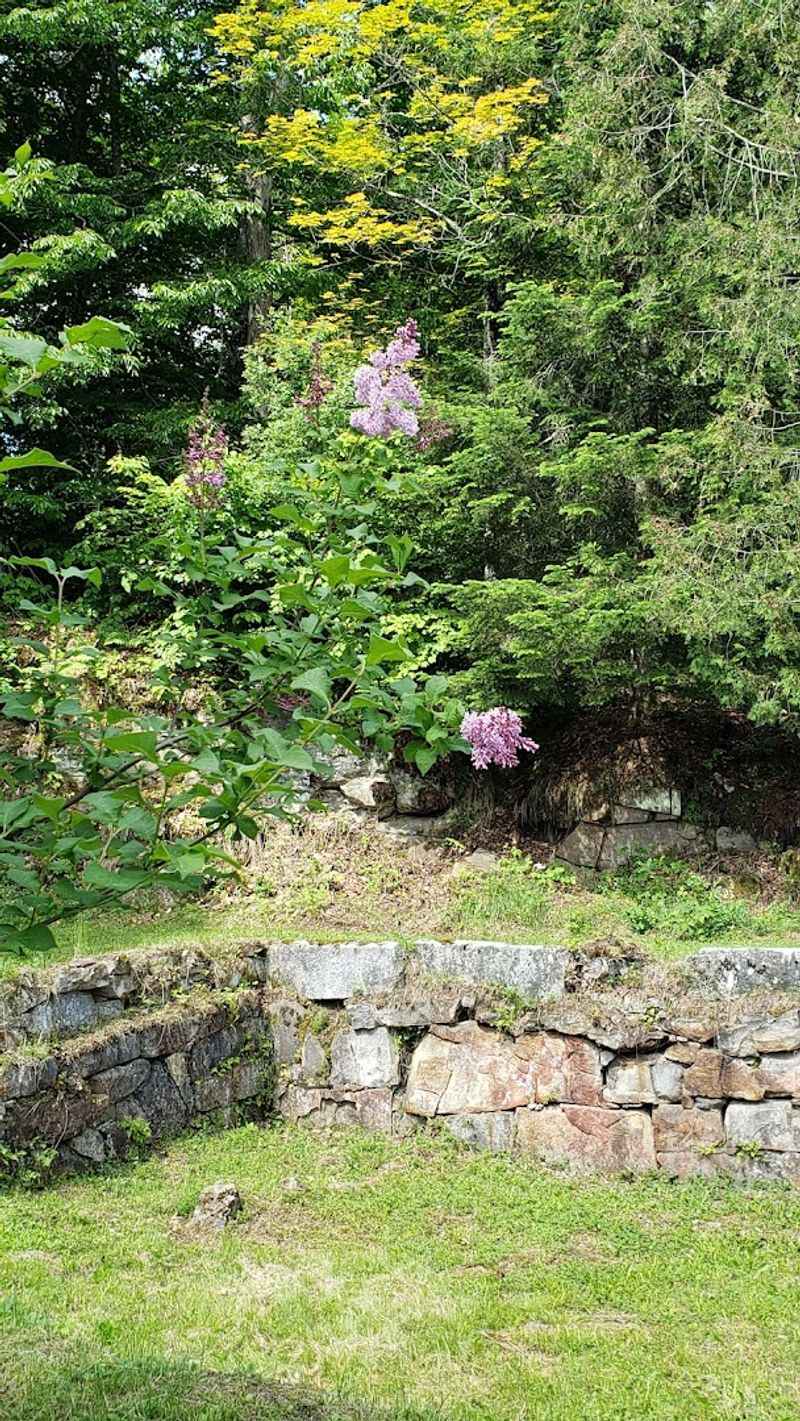
When a village shuts down, nature doesn’t wait around for an invitation to move back in. At Greenbank’s Hollow, the process has been going on since the late 1880s.
Joe’s Brook kept flowing. The trees kept growing.
And gradually, the forest began filling in every gap the fire and abandonment had left behind.
Neglected settlements create a specific kind of environmental shift. Without human maintenance, soil compaction from foot traffic reverses.
Native plants reclaim ground that was once cleared for buildings, gardens, and roads. Water tables stabilize when mill operations stop redirecting flow.
The brook at Greenbank’s Hollow now runs through a landscape that looks almost entirely wild.
That wildness comes with real ecological value. Abandoned industrial sites often become unexpected biodiversity hotspots.
The mix of open cellar holes, old stone walls, water access, and mature forest canopy creates a layered habitat. Insects, birds, small mammals, and amphibians all benefit from that variety.
The environmental story here isn’t just about decay. It’s about recovery.
A community collapsed, and in the silence that followed, a different kind of community grew up to fill the space. Nature is not sentimental, but it is thorough.
Cultural Narratives Surrounding Deserted Hamlets
Ghost villages carry stories that regular villages don’t. There’s something about a place that stops mid-sentence that makes people lean in and listen harder.
Greenbank’s Hollow is full of those half-finished sentences. The fire of 1885 didn’t just destroy buildings.
It ended a chapter so abruptly that people are still reading it today.
Local history around company villages like this one tends to carry complicated feelings. Workers who rented homes from the same man who owned their workplace had very little control over their futures.
When Benjamin Greenbank decided to move his operations to Enfield, New Hampshire, entire families had no choice but to scatter. The village didn’t fade slowly.
It emptied out fast.
The Danville Historical Society has worked to keep that narrative alive through interpretive signs placed throughout the site. Visitors can read the story directly at the spots where it happened.
There’s even a visitor log at the site where people leave their own notes, adding new layers to an ongoing conversation with the past. That log is one of the most quietly moving things about the place.
Strangers writing to strangers about a village none of them ever lived in, but all felt connected to.
Challenges Of Preserving Sites
Preserving a ghost village is harder than preserving a building. With a building, you have walls to stabilize and a roof to patch.
With a ghost village, you’re trying to protect an entire landscape, including things you can barely see. Cellar holes collapse.
Stone walls shift. Interpretive signs weather and fade.
The forest keeps pushing.
The Danville Historical Society manages Greenbank’s Hollow on a volunteer and community-supported basis. That means resources are limited and deci,sions about what to restore versus what to let decay naturally are constant.
The covered bridge was rebuilt in 1886, just a year after the fire, and it still stands today. Keeping it standing requires ongoing attention and funding.
One of the trickiest parts of historic preservation is deciding how much intervention is too much. Over-restoring a site can actually erase the authentic feeling that makes it worth visiting.
Under-maintaining it risks losing physical evidence before it can be properly documented. Greenbank’s Hollow sits in that tension honestly.
The granite foundations are real. The cellar holes are real.
The signs are careful and informative without turning the place into a theme park. That balance is harder to achieve than it looks, and easier to ruin than most people realize.
Economic Factors Leading To Decline
The December 1885 fire at Greenbank’s Hollow wasn’t just a disaster. It was a decision point.
Benjamin Greenbank looked at the wreckage and made a business calculation. Rebuilding in a remote Vermont hollow made less sense than relocating to Enfield, New Hampshire, where infrastructure and opportunity were better positioned.
He left. And the village was left with him.
This pattern repeated itself across rural New England throughout the late 1800s and early 1900s. Mill technology was changing.
Larger operations in bigger villages were outcompeting small village mills. The railroad shifted economic power to communities with better access.
Remote hollows powered by small brooks couldn’t keep up with steam-powered factories in connected cities.
Greenbank’s Hollow was already economically vulnerable before the fire. A single employer owning most of the housing and commerce in a village creates fragility.
When that employer walks away, there’s no economic cushion left. Workers don’t own their homes.
The store closes. The post office loses its reason to exist.
The school population drops until it can’t justify staying open, which happened in 1912. Economic collapse in rural communities rarely happens all at once.
It happens in a sequence of doors closing, one after another, until the last light goes out.
Flora And Fauna Reclaiming Old Settlements
Joe’s Brook is still the loudest thing at Greenbank’s Hollow. It runs through the site like it always did, completely unbothered by the fact that the mill it once powered no longer exists.
Around that brook, the plant life has gone absolutely wild in the best possible way. Ferns cover the cellar holes.
Birch trees grow through foundation gaps. Moss coats every granite surface it can reach.
The combination of disturbed soil, old stone, water access, and forest canopy creates habitat variety that wildlife finds very appealing. Warblers move through the tree canopy during migration.
Woodpeckers work the older dead wood. Salamanders and frogs use the damp cellar holes as shelter.
White-tailed deer paths cut through the underbrush in multiple directions.
Old mill sites like this one often support unusual plant communities. The soil disturbance from past construction allows both native and non-native species to establish side by side.
You can spot plants that don’t typically grow together in undisturbed forest. That botanical mix is actually useful to ecologists studying how landscapes recover after industrial use.
At Greenbank’s Hollow, every plant pushing through a crack in an old foundation is both a sign of decay and a sign of life insisting on continuing anyway.
Photographic Techniques For Capturing Decay
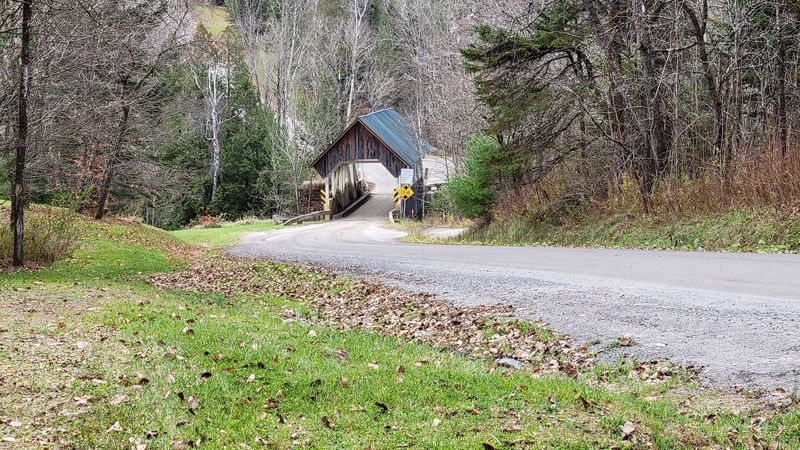
Greenbank’s Hollow is a photographer’s specific kind of dream. The light through the tree canopy hits the granite foundations at angles that make everything look like it belongs in a history book.
The covered bridge frames perfectly against the brook. The cellar holes create natural leading lines into the forest.
You don’t need filters here. The place does most of the work.
For decay photography, late afternoon light works best. It rakes across stone surfaces and pulls out texture that flat midday light completely flattens out.
Overcast days are also excellent because cloud cover eliminates harsh shadows and lets detail in mossy surfaces and weathered wood come through evenly. Early morning fog along Joe’s Brook adds atmosphere without any editing required.
Get low. Seriously, get on your knees if you have to.
Shooting decay from ground level makes granite foundations look monumental and gives moss-covered rocks a presence they lose from standing height.
Use a wide aperture to blur background forest and isolate specific details like lichen patterns or rusted metal remnants. Bring a polarizing filter to manage reflections off the brook.
And slow down. The best shots at a site like this come from spending time in one spot rather than rushing through to photograph everything at once.