
This Remote North Carolina Trail Winds Through A Forest Full Of Local Legends
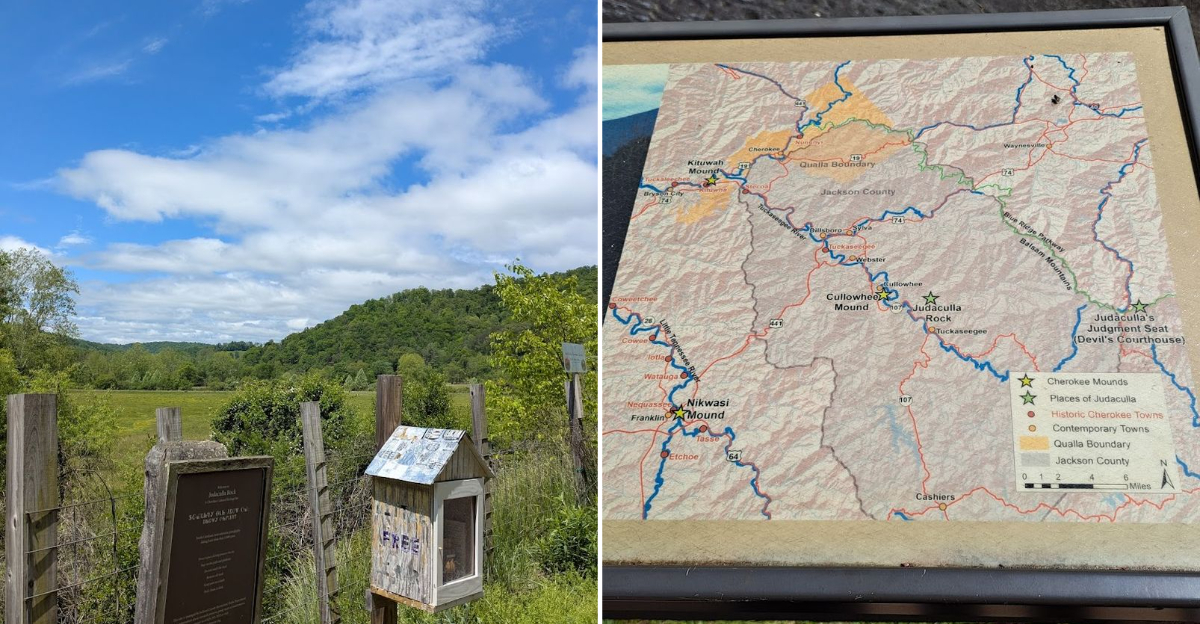
Nobody put it there. At least, nobody alive today can say who did.
In North Carolina, deep where the old land holds its secrets close, locals have passed down the same story for generations. Not because they understand it.
Because they cannot forget it. The tribes that once roamed these lands may have left it behind as a signal.
A marker meant for eyes that had not yet opened. A conversation started centuries ago that nobody has ever been able to finish.
Science offers its guesses. History shrugs its shoulders.
And the rock simply sits there, indifferent to all of it. There is something unsettling about an object that outlives every explanation thrown at it.
Something that makes you feel small. Not in a crushing way.
In the way that reminds you the world was ancient long before any of us arrived to name it.
Legendary Figures Inspiring Trail Folklore
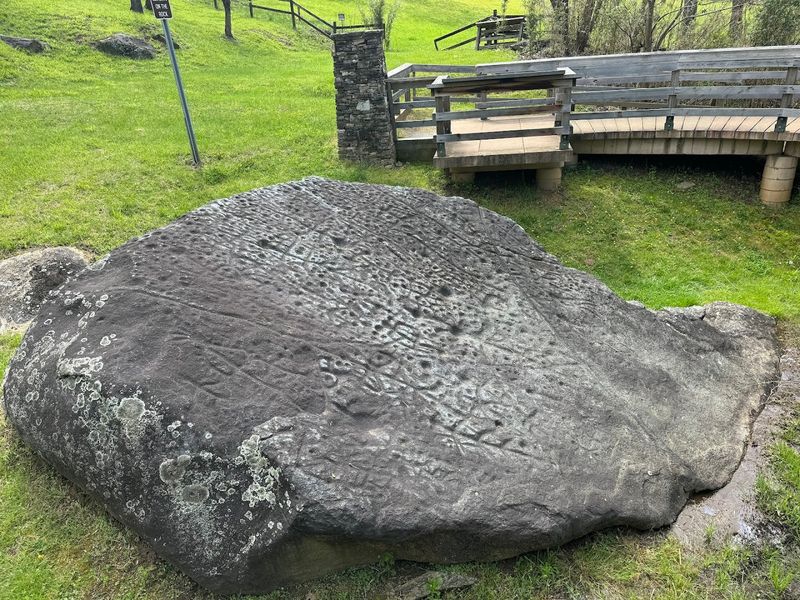
This place gets its name from a giant. In Cherokee legend, Judaculla was a slant-eyed supernatural being who ruled over the mountains and hunting grounds of western North Carolina.
He was enormous, powerful, and apparently not shy about leaving his mark on the landscape.
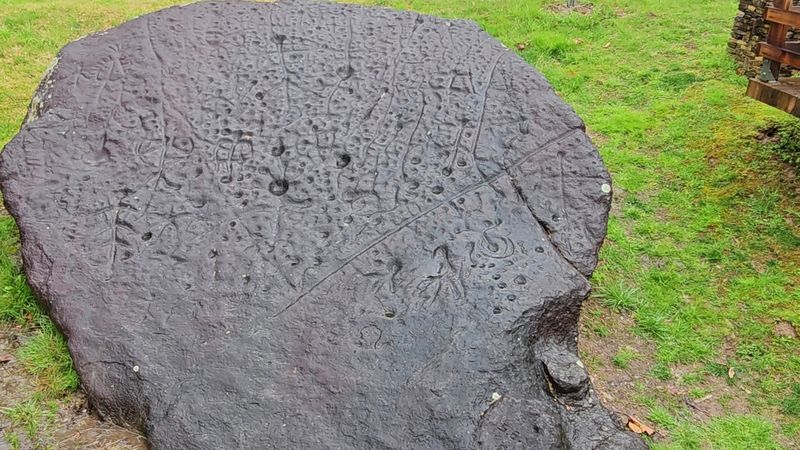
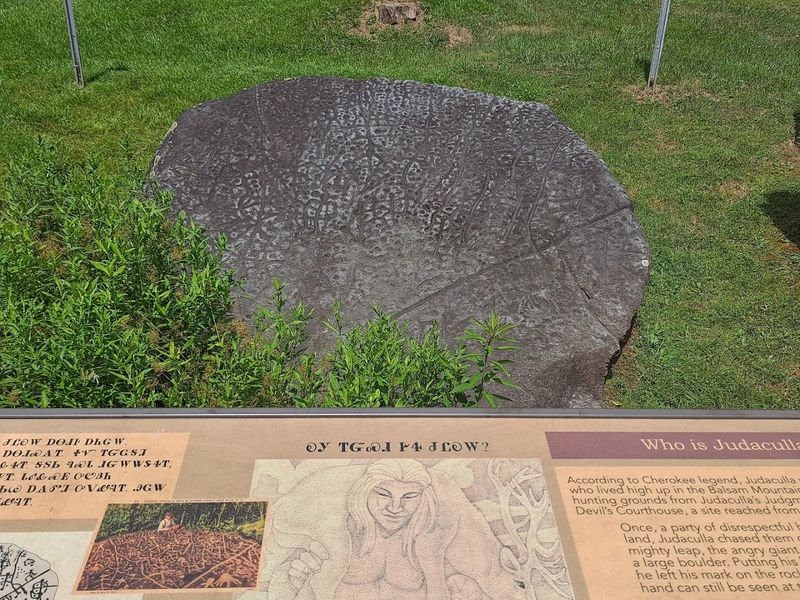
The massive soapstone boulder sitting in a quiet valley near Cullowhee is said to be where Judaculla leaped from his home in the mountains and left his claw marks behind.
Those marks are the petroglyphs carved into the rock, and locals have been telling that story for generations. You can visit the site at 552 Judaculla Rock Rd, Cullowhee, NC 28723.
The legend is not just a fun story for tourists. It reflects deep Cherokee spiritual beliefs about the land, hunting rights, and the relationship between humans and powerful unseen forces.
Standing in front of that boulder, knowing the legend behind it, completely changes how you look at every single carved line. It is one of those rare places where mythology and physical history meet in a way that feels genuinely electric.
Historical Significance Of Ancient Carvings
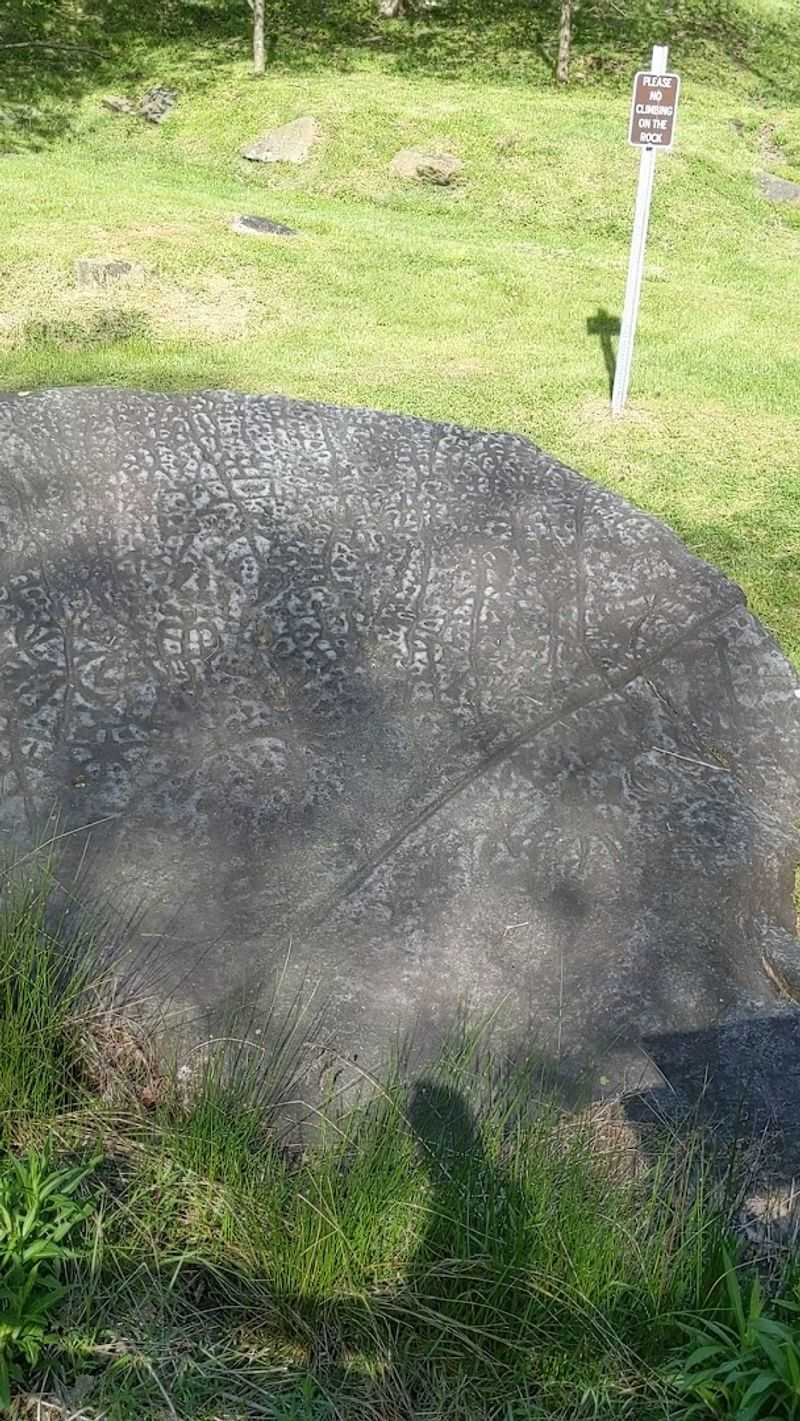
The carvings on Judaculla Rock are estimated to be over 3,000 years old! That number alone is worth sitting with for a moment.
These petroglyphs were made by Indigenous people long before European contact, and they represent one of the largest collections of rock carvings in the entire eastern United States.
Nobody knows for certain what every symbol means. Some researchers believe the markings could represent maps, ceremonial records, or territorial boundaries.
The Cherokee people have their own interpretations rooted in oral tradition. The honest answer is that the full meaning remains a mystery, and that mystery is a big part of why people keep coming back.
The rock itself is a flat, sprawling piece of soapstone that sits low to the ground in a peaceful valley. An accessible boardwalk surrounds it so visitors can get a close look without causing further erosion.
Informational signs are posted throughout the area explaining what researchers currently understand.
The site is free to visit and generally accessible during daylight hours, though it is worth confirming current hours and any seasonal changes directly before making the trip.
Regional Biodiversity

The land surrounding Judaculla Rock sits inside a valley cradled by the Blue Ridge Mountains. The ecosystem here is rich, layered, and genuinely worth paying attention to as you walk the trail.
You are in Appalachian mixed hardwood territory, which means towering oaks, tulip poplars, and hickory trees form a dense canopy overhead.
Wildflowers push up through the forest floor depending on the season. Spring brings trillium and wild ginger.
Summer fills the trail edges with Joe Pye weed and goldenrod.
The creek that runs nearby supports a healthy community of salamanders.
These amphibians are actually a big deal in Appalachia, since the Southern Appalachians are considered the salamander capital of the world.
White-tailed deer move through the valley regularly, especially at dawn and dusk. Red-tailed hawks circle above the open meadow near the rock.
Box turtles sometimes make slow, determined appearances on the trail. The entire area has been protected through a land trust by the local landowners, which means this natural environment is preserved for the long haul.
Walking through it feels like visiting a place that has been genuinely cared for, not just managed.
Trail Routes That Showcase Natural Beauty
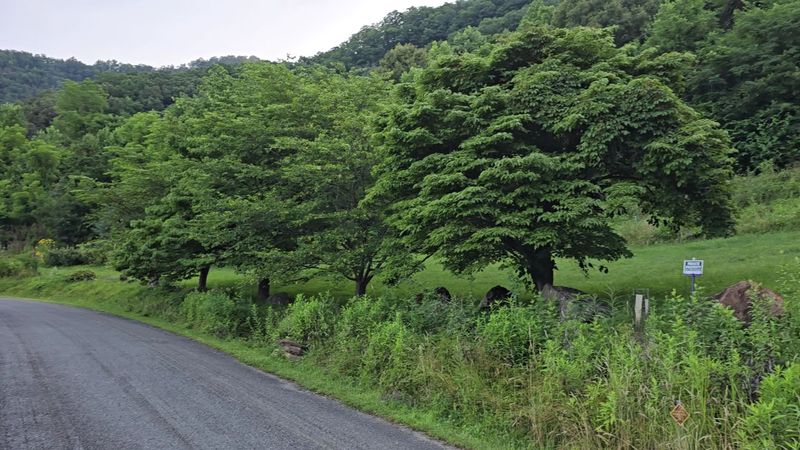
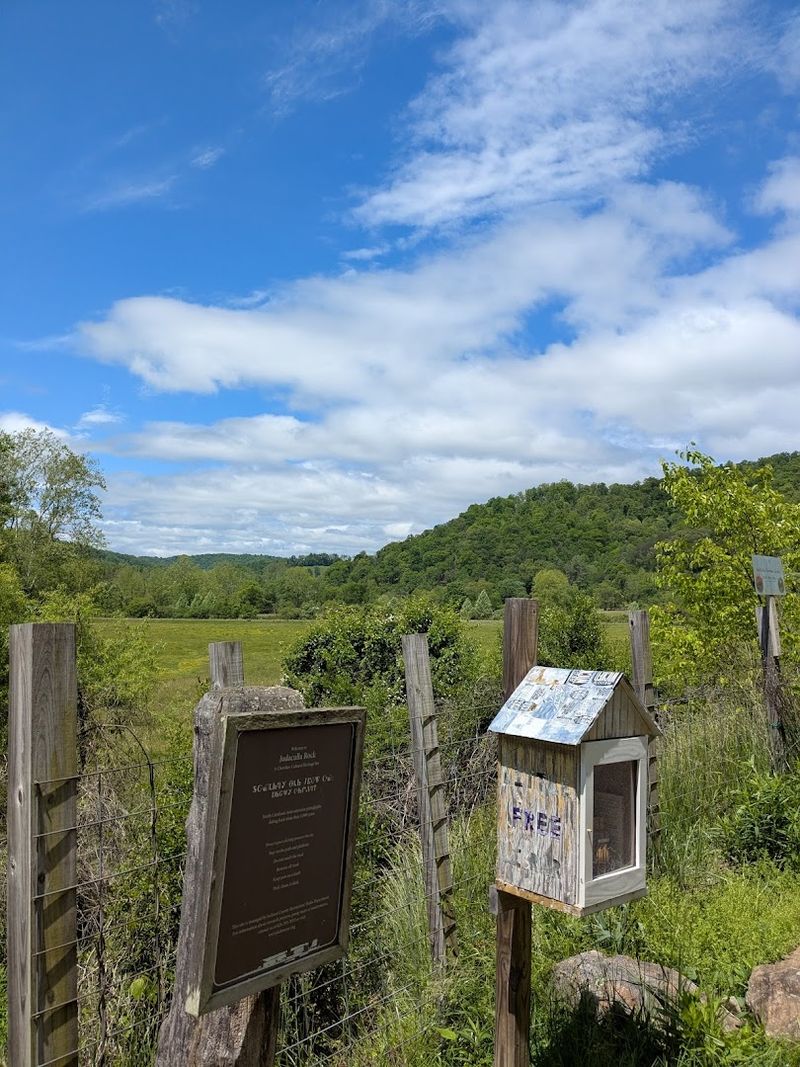
Getting to Judaculla Rock is part of the experience. The drive along Judaculla Rock Road winds through a gorgeous rural valley with open pastures on one side and forested ridgelines on the other.
Mountains frame the view in every direction, and the road itself is peaceful in a way that feels a world apart from the highway you just left behind.
Once you park, a short boardwalk path leads directly to the rock. It is accessible and easy to walk, which means almost anyone can make this trip without difficulty.
The boardwalk keeps visitors off the rock itself, protecting the carvings from foot traffic while still putting you close enough to see every carved line clearly.
There is also a small muddy trail that extends further into the woods beyond the main site. It is not heavily developed, but curious hikers have explored it.
Waterproof shoes are a good call if you plan to go off the main path. The whole visit from the parking lot to the rock and back takes about 15 minutes at a casual pace.
That said, the scenery and the history have a way of making you linger much longer than you originally planned.
Cultural Traditions Connected To The Landscape
The Cherokee Nation has deep roots in this corner of North Carolina. The Eastern Band of Cherokee Indians still calls this region home, and the landscape around Judaculla Rock is woven into their cultural identity in ways that go far beyond tourism.
The rock is not just a curiosity. It is a living piece of Cherokee heritage.
For generations, Cherokee oral traditions have carried stories about Judaculla and the meaning behind the markings on the boulder. These stories were passed from elders to children as lessons about respecting the land, understanding spiritual forces, and maintaining a connection to ancestral places.
The fact that those stories are still being told today is remarkable.
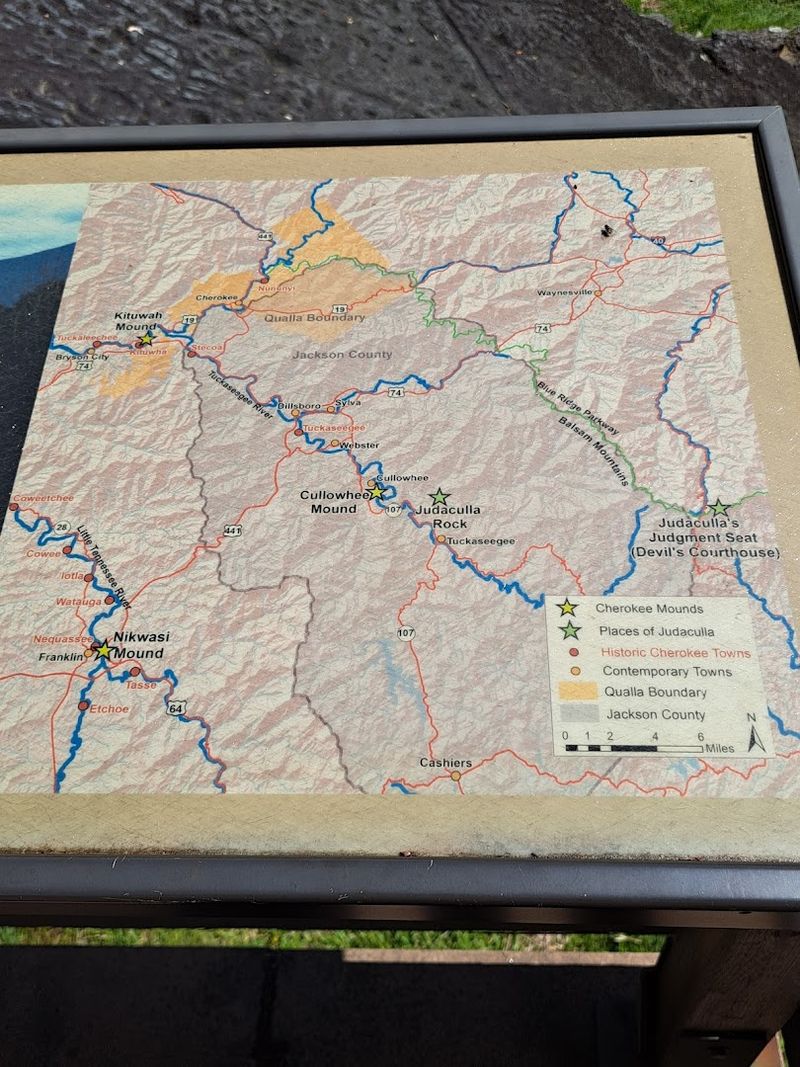
The broader Jackson County area sits right next to the Qualla Boundary, the land held in trust for the Eastern Band of Cherokee Indians.
Cultural events, traditional crafts, and living history programs in the region all connect back to the same Indigenous roots that made Judaculla Rock significant in the first place.
Visiting the rock becomes a richer experience when you take time to understand the living culture still thriving in the surrounding mountains, not just the ancient history carved into stone.
Wildlife Encounters Along The Path
Wildlife watching at Judaculla Rock is low-key but genuinely rewarding. The valley setting and surrounding forest create ideal habitat for a wide variety of animals.
You do not need to hike deep into the backcountry to see something interesting here. Just slow down and pay attention.
Wild turkeys strut through the meadow near the parking area with complete confidence, as if they own the place. Which, honestly, they kind of do.
Great blue herons sometimes appear along the creek, standing impossibly still while scanning for fish. If you arrive early in the morning, you have a solid chance of spotting deer grazing in the open pasture before they retreat into the tree line.
Black bears do live in this part of North Carolina, though sightings at the main site are uncommon. Still, it is smart to stay aware of your surroundings, especially if you wander beyond the boardwalk.
Songbirds are constant companions throughout the visit. Wood thrushes, Carolina wrens, and indigo buntings add a soundtrack to the whole experience that makes the already peaceful atmosphere feel even more alive.
Bring binoculars if you have them. You will use them.
Ancient Storytelling Methods Passed Down Generations
Long before written language arrived in the mountains of western North Carolina, Indigenous communities preserved their history through storytelling. Oral tradition was not just entertainment.
It was the primary way that knowledge, values, and cultural memory moved from one generation to the next. Every story carried weight.
The legends surrounding Judaculla Rock are a perfect example of how storytelling functioned as a historical record. Details about the giant Judaculla, the meaning of the carvings, and the spiritual importance of the land were kept alive through repeated telling across hundreds of years.
Each retelling reinforced community identity and kept ancestral knowledge from disappearing.
Petroglyphs themselves can also be understood as a form of visual storytelling. The symbols carved into the rock may have communicated information across time and space in ways that spoken language could not always guarantee.
Researchers still debate the full meaning of the markings, but the intention behind them, to communicate something lasting, is clear.
Visiting Judaculla Rock is a chance to think about how humans have always found creative ways to say, we were here, and this mattered. That impulse has not changed at all, even thousands of years later.
Tips For Safely Exploring Remote Woodlands
Exploring around Judaculla Rock is pretty accessible, but a few smart habits go a long way toward making the visit smooth. First, GPS signals can get spotty on the winding rural roads leading to the site.
Download an offline map before you leave, or write down the directions the old-fashioned way. The address is easy to find online, but cell service in the valley is not guaranteed.
Wear shoes you do not mind getting dirty. The main boardwalk stays dry, but if you want to explore the side trail into the woods, muddy conditions are common.
Bug spray is a smart addition to your bag, especially in warmer months when mosquitoes and ticks are active throughout the Appalachian region.
The site is open 24 hours, but visiting during daylight makes the carvings much easier to see. Lighting conditions directly affect how visible the petroglyphs are on the surface of the rock.
Bring water, especially if you plan to explore beyond the main site. Tell someone where you are going if you head into the surrounding woods alone.
The area is peaceful and well-maintained, and a little preparation means you spend your whole visit enjoying the history instead of dealing with avoidable problems.