
This New York Waterfall Flows Right Behind A Historic Home And It’s Too Beautiful Not To Visit This Year
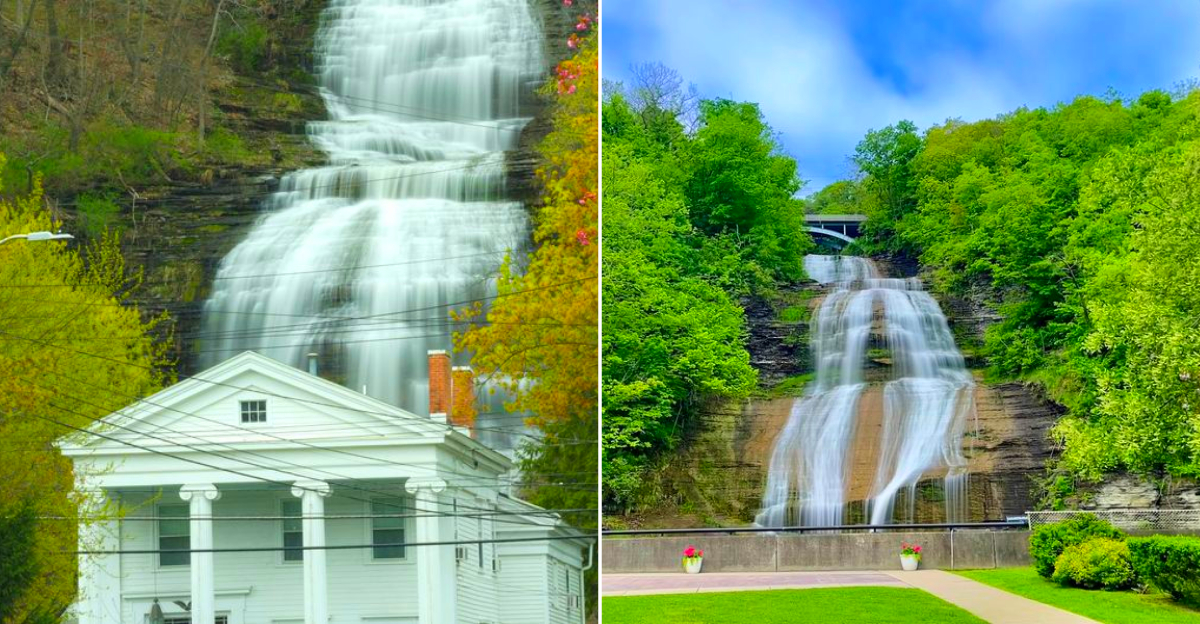
You don’t expect to see it from that angle. A house in view, then the sound builds, and suddenly the waterfall is right there behind it, close enough to feel part of the same scene.
This New York spot looks almost unreal at first glance, a waterfall flowing just beyond a historic home like it was designed that way.
Take a moment and it settles in. Water moves steadily, the setting stays calm, and the contrast between structure and nature does all the work.
It’s not hidden, but it still catches people off guard. You stop, look a little longer, and realize it’s one of those places that feels hard to believe until you’re standing right in front of it.
A Waterfall That Belongs To No Wilderness Yet Feels Completely Wild
Most waterfalls demand something from you before they reveal themselves. A long trail, a steep climb, a muddy detour through dense forest.
This waterfall asks for almost nothing in return for one of the most striking natural sights in the entire Finger Lakes region.
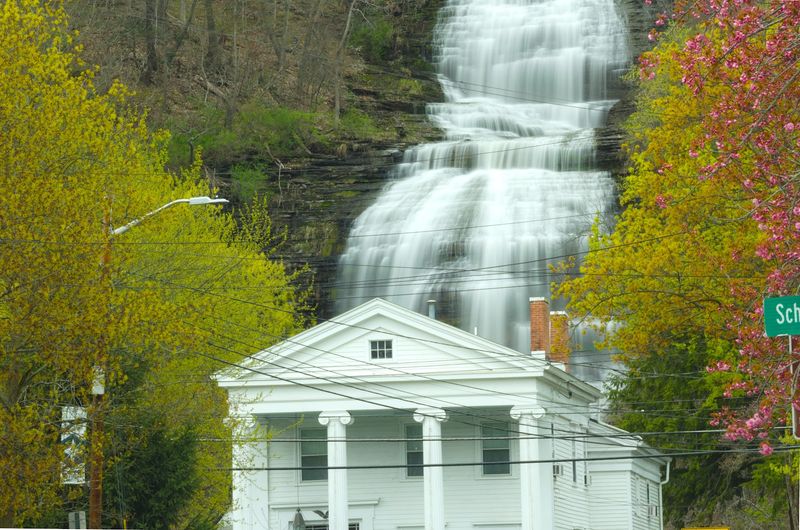
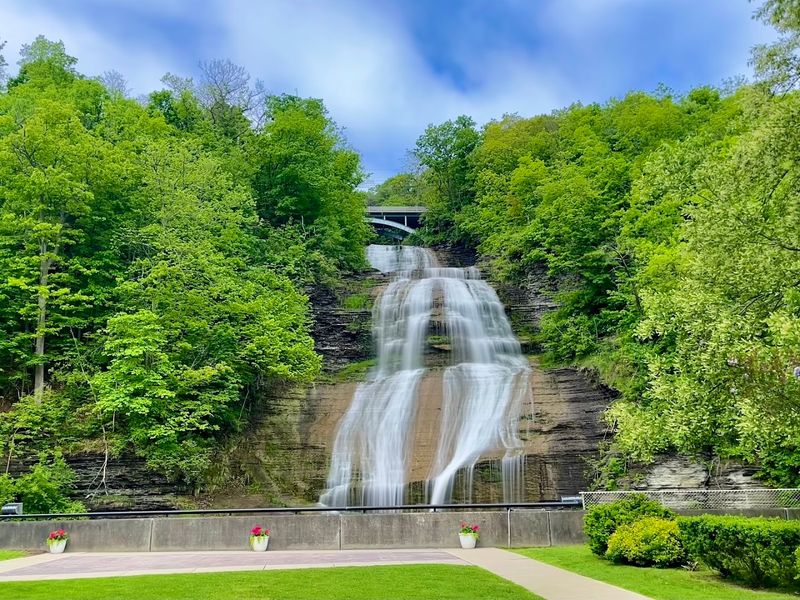
The falls drop approximately 156 to 165 feet in a combination of vertical plunges and steep cascades, spreading across a crest roughly 36 feet wide. That combination gives the waterfall a layered, almost architectural quality that holds your attention far longer than a single-drop fall typically would.
Shequaga Falls Park provides a short 0.1-mile loop trail leading visitors directly to a viewing area at the base. The path is paved and well-maintained, making the experience accessible to nearly everyone regardless of physical ability.
Standing at the base, the sound builds steadily as you approach, shifting from a distant murmur into a full, resonant roar that seems to fill the surrounding air. After a good rain, the volume of water rushing down those cliffs is genuinely humbling.
Even during drier stretches, the falls retain a quiet dignity that keeps the setting entirely worth visiting.
Shequaga Falls And The Historic Homes That Share Its Backyard
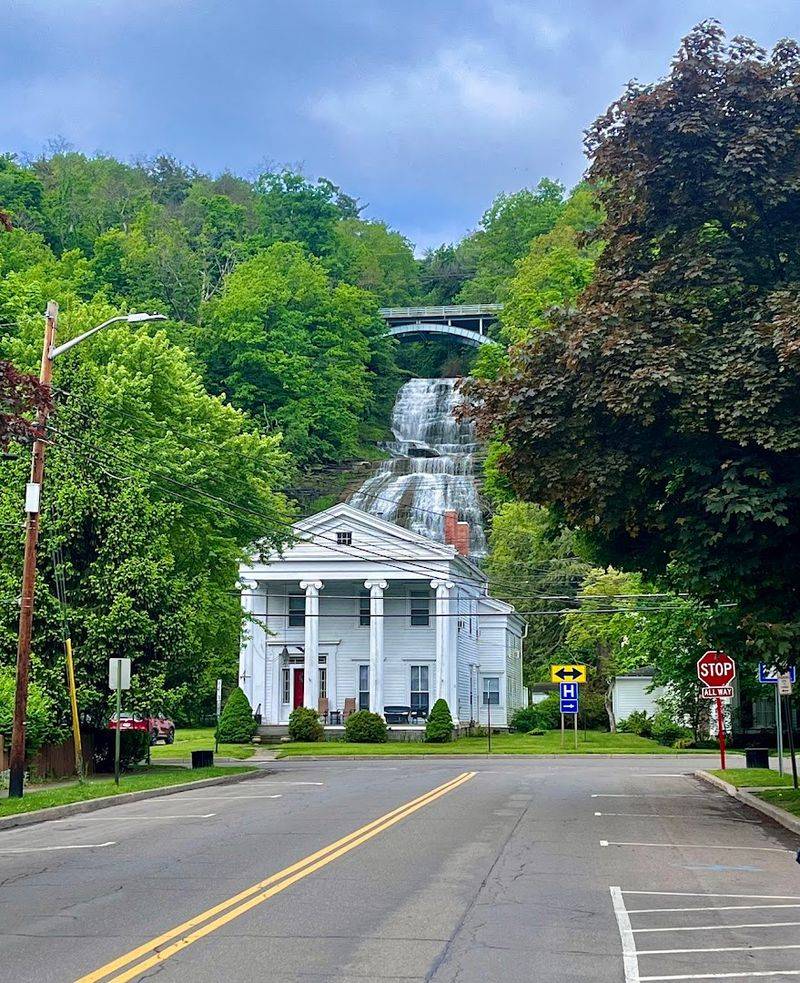
Few natural landmarks in New York share such close quarters with human history as Shequaga Falls does. The Cook Mansion, a nationally recognized 5,800-square-foot home built in 1873, sits directly adjacent to the falls.
Residents of that house can look out from inside and see the cascading water as a living piece of their daily backdrop.
A second Victorian home dating to the 1860s stands within the Glorious T Historic District, just steps from the waterfall’s edge. The juxtaposition of ornate 19th-century architecture and raw geological force creates a visual conversation between two very different kinds of permanence.
A third property, commonly called the Waterfall House and also built in the 1800s, gives visitors the strong impression that the falls flow directly behind it. The effect is so convincing that photographs taken from certain angles look more like painted scenery than real life.
Together, these homes frame the falls in a way that no park design could ever replicate intentionally. The result is a neighborhood where nature and history exist not as separate categories but as genuine neighbors, each one making the other considerably more interesting to observe.
The Native American Name That Carries Centuries Of Meaning
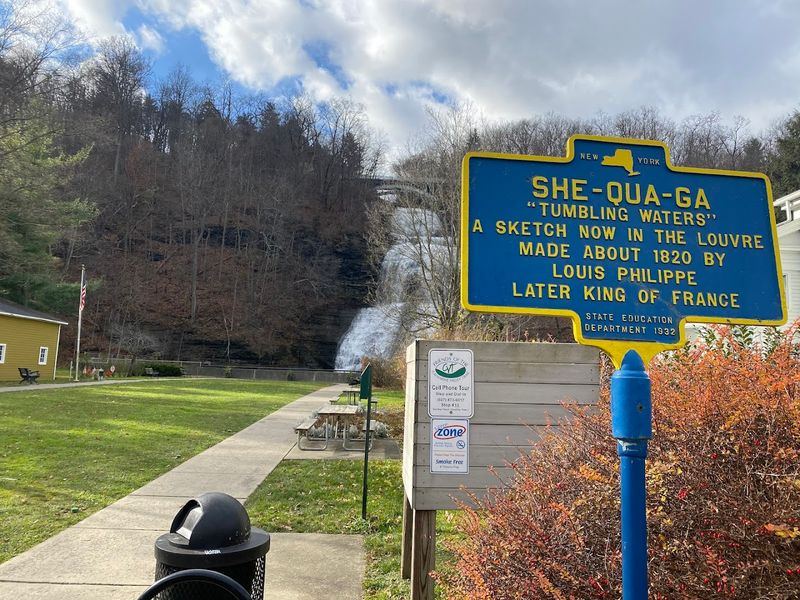
The word Shequaga carries a quiet authority that the English language would struggle to match with a single term. Believed to derive from a Native American expression meaning tumbling waters, the name captures not just what the falls do but the particular quality of motion that defines them.
Seneca Indian Chief Red Jacket is said to have practiced his speeches at the falls, drawn perhaps by the consistent, uninterrupted sound that a waterfall provides. There is something fitting about using the voice of moving water as a backdrop for the craft of persuasion.
Informational signs placed throughout the small park at the base of the falls provide visitors with historical context about the name, the Indigenous connections to the land, and the broader cultural significance of the site.
Taking a few minutes to read them adds real dimension to what might otherwise feel like a simple sightseeing stop.
The Finger Lakes region holds deep roots in Haudenosaunee history, and Shequaga Falls stands as one of the more tangible reminders of that presence. A name given centuries ago still lives on a map, a park sign, and the lips of every visitor who asks how to pronounce it correctly.
When A Future King Of France Stopped To Sketch A New York Waterfall
Not every waterfall in upstate New York can claim a connection to European royalty, but Shequaga Falls carries that distinction with admirable understatement.
Around 1820, Louis-Philippe, who would later reign as King of France from 1830 to 1848, reportedly visited the falls while living in exile in America.
He was reportedly moved enough by the sight to produce a sketch of the waterfall during his time there. That drawing is said to now reside in the collection of the Louvre Museum in Paris, which is a remarkable destination for a piece of art inspired by a small village in Schuyler County, New York.
The story adds an unexpected layer of international prestige to a place that already earns admiration on its own terms. Knowing that a future monarch once stood where you are standing, pencil in hand and genuinely impressed, gives the site a certain quiet gravitas.
History has a way of collecting itself around places of natural beauty, and Shequaga Falls has accumulated more than its share. From Indigenous traditions to exiled royalty to industrial waterpower, the falls have witnessed a broader range of human experience than their modest size might initially suggest.
Getting There And Making The Most Of Your Visit
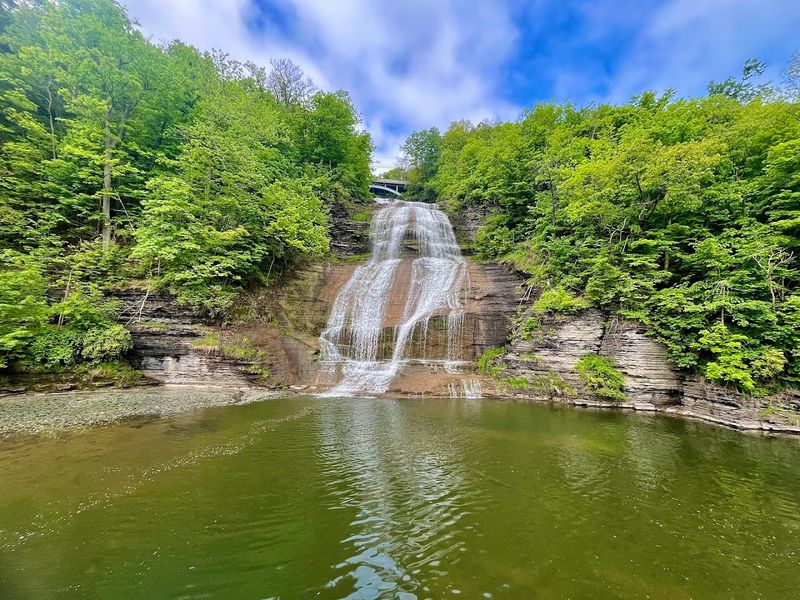
Shequaga Falls sits at the end of Main Street in Montour Falls, Schuyler County, New York, which makes it one of the easiest natural attractions to locate in the entire region. There is no trailhead registration, no entrance fee, and no gear requirement beyond a comfortable pair of shoes.
Parking near the falls is limited, so arriving earlier in the day tends to improve your chances of finding a convenient spot.
A short walk from street parking delivers you to the falls without any real effort, and the paved path makes the journey smooth for strollers, wheelchairs, and anyone who prefers flat ground.
The park includes a small manicured lawn with picnic tables where visitors can settle in and spend time rather than simply passing through. Bringing a packed lunch and staying long enough to watch the light shift across the rock face is a genuinely rewarding way to spend an afternoon.
At night, the falls are illuminated by spotlights, which transforms the entire scene into something altogether different from the daytime experience. The lit water against the dark stone creates a striking visual that photographs well and lingers in memory even longer than the daytime visit tends to.
Seasons, Water Flow, And The Best Time To Visit
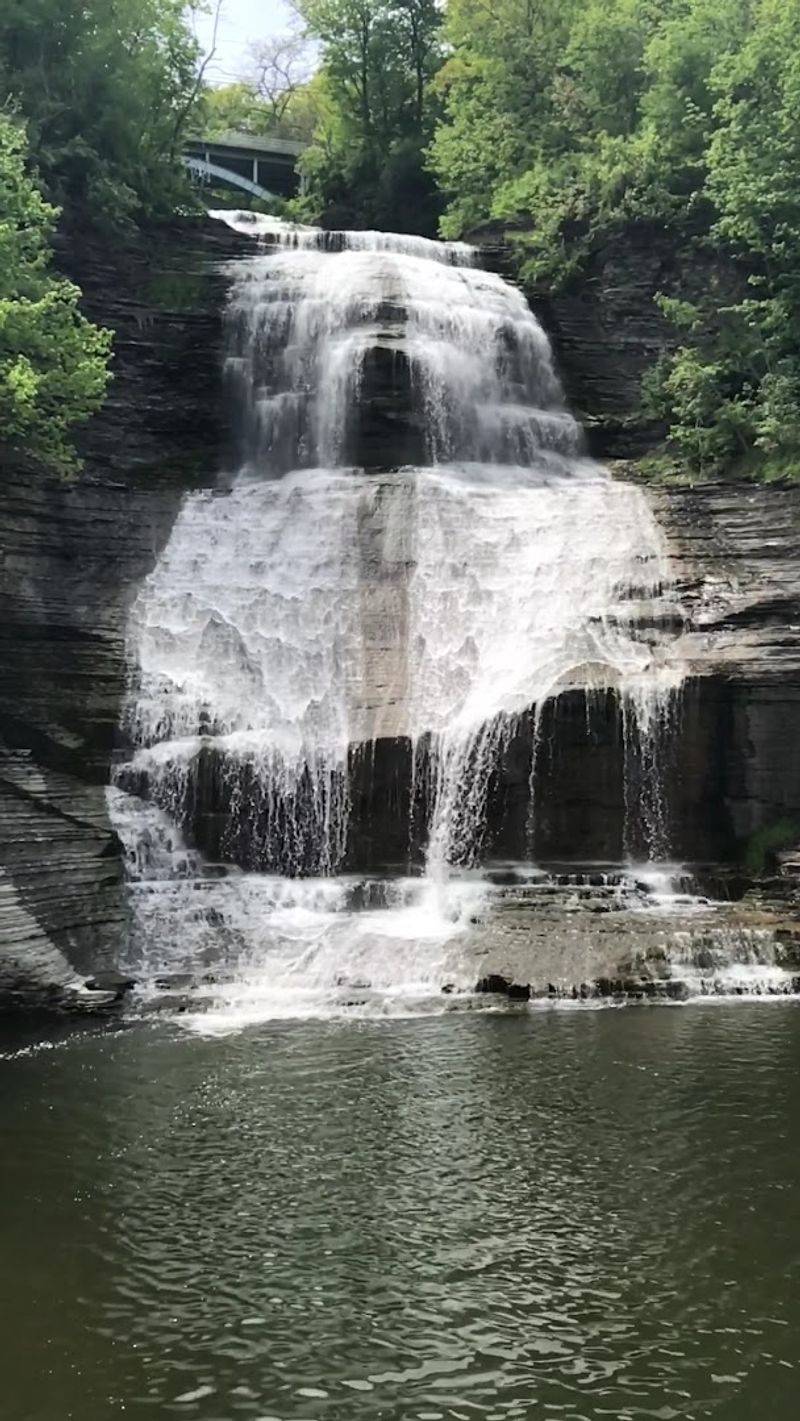
Shequaga Falls behaves differently depending on when you arrive, and that variability is part of what makes repeat visits feel worthwhile rather than redundant.
Spring and early summer tend to bring the strongest flow, when snowmelt and seasonal rain combine to push the maximum volume of water over the crest.
Autumn frames the falls with foliage that turns the surrounding landscape into a layered composition of amber, rust, and deep green. The contrast between the white rushing water and the warm-toned trees in late October is one of the more photogenic combinations the Finger Lakes region has to offer.
Late summer and early fall can see the flow reduce significantly during dry spells, revealing more of the rock face beneath the water. Even at lower volumes, the falls hold their structural character, and the exposed stone carries its own rough beauty that high water tends to conceal.
Winter visits are less common but offer a completely transformed atmosphere. Ice formations build along the edges of the falls during cold stretches, and the surrounding quiet of a small town in January gives the whole scene a stillness that feels far removed from peak tourist season.
Every season presents a genuinely different version of the same place.
Montour Falls As A Destination Beyond The Waterfall Itself
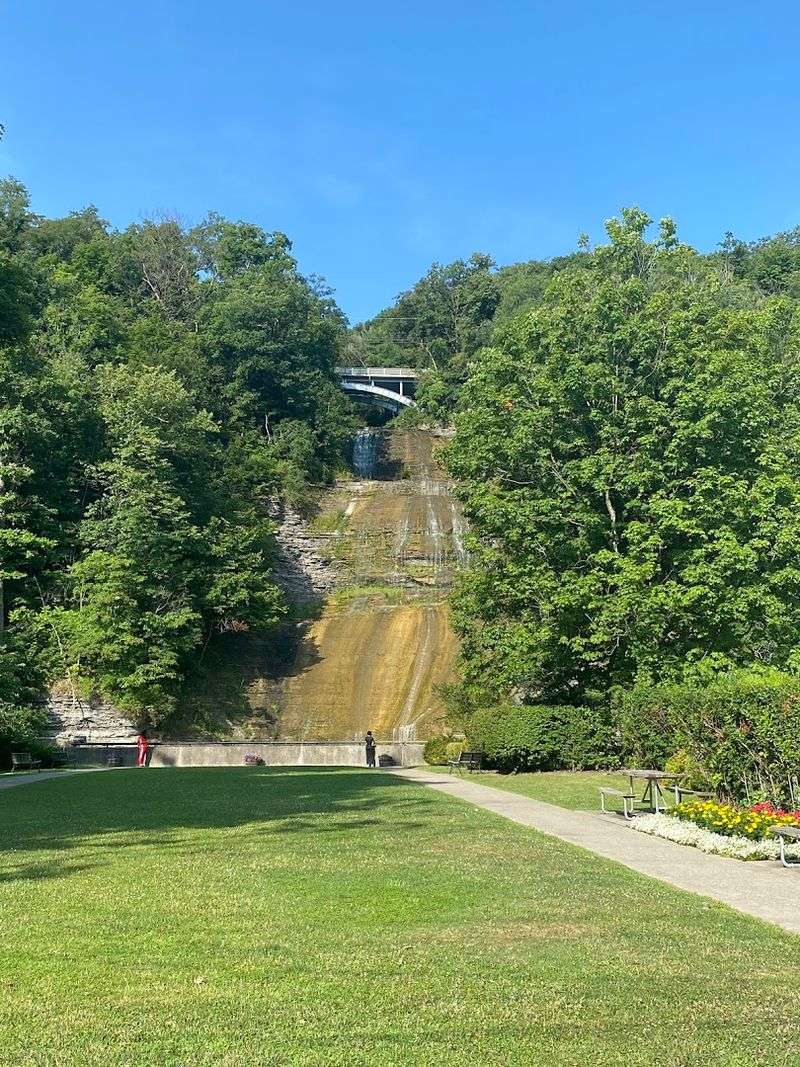
Shequaga Falls may be the centerpiece, but the village of Montour Falls holds its own appeal for anyone willing to spend more than thirty minutes in the area.
The surrounding Glorious T Historic District contains architecture that reflects the ambitions and aesthetics of 19th-century upstate New York with genuine integrity.
The falls sit within easy driving distance of Watkins Glen, one of the most celebrated natural attractions in the Finger Lakes, making Montour Falls a natural starting or ending point for a broader regional itinerary.
Pairing both destinations in a single day is entirely manageable and considerably more satisfying than treating either one as a standalone stop.
The village itself maintains the kind of unhurried pace that encourages exploration rather than efficient tourism. Small parks, historic homes, and the presence of the waterfall at the end of the main road give the town a coherent identity that feels earned rather than manufactured for visitors.
For anyone building a Finger Lakes road trip, Montour Falls deserves more than a footnote on the itinerary. The combination of accessible natural beauty, documented history, and a genuinely walkable village center makes it the kind of place that rewards curiosity and repays the short detour with real satisfaction.