
This Magical Botanical Garden In New York Is A Dreamy Day Trip Worth Coming Back For
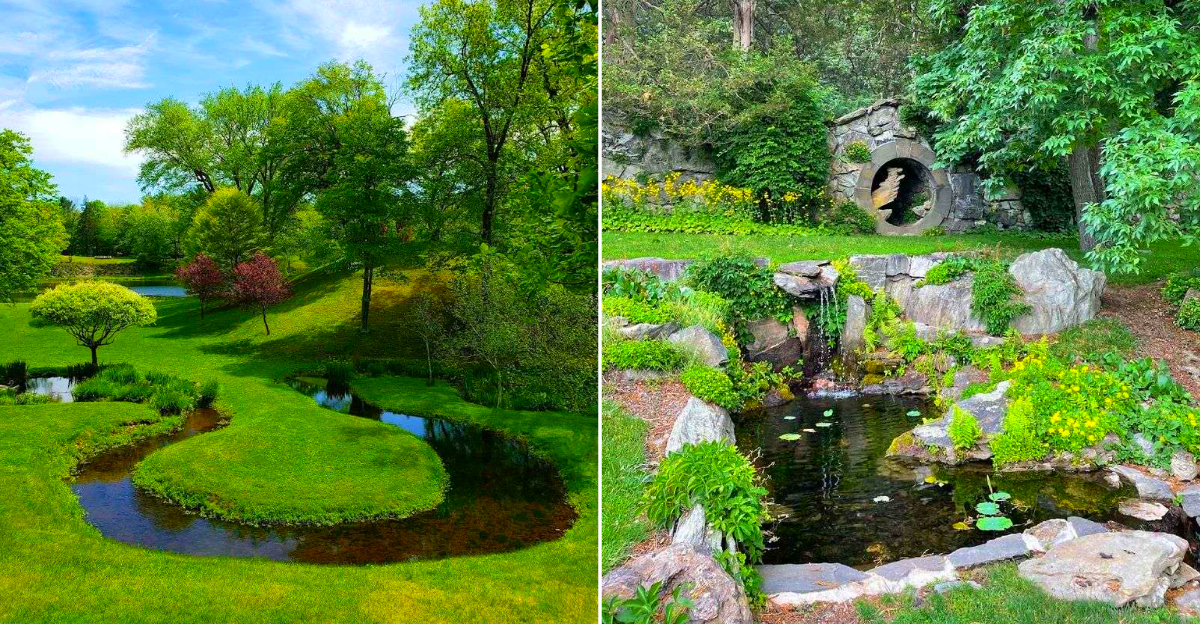
The entrance sets the tone right away. Paths open up, colors shift with the light, and the space feels bigger than expected.
This New York botanical garden turns a simple visit into something you’ll want to repeat, and once you’re in, it’s easy to see why.
Walk a little further and the details start to pull you in. Different sections flow into each other, each one offering a new look without breaking the pace.
You don’t rush it. You slow down, take it in, and let the surroundings do the work.
It’s calm, well laid out, and just engaging enough to keep you there longer than planned.
A Garden That Feels Like It Belongs In Another World
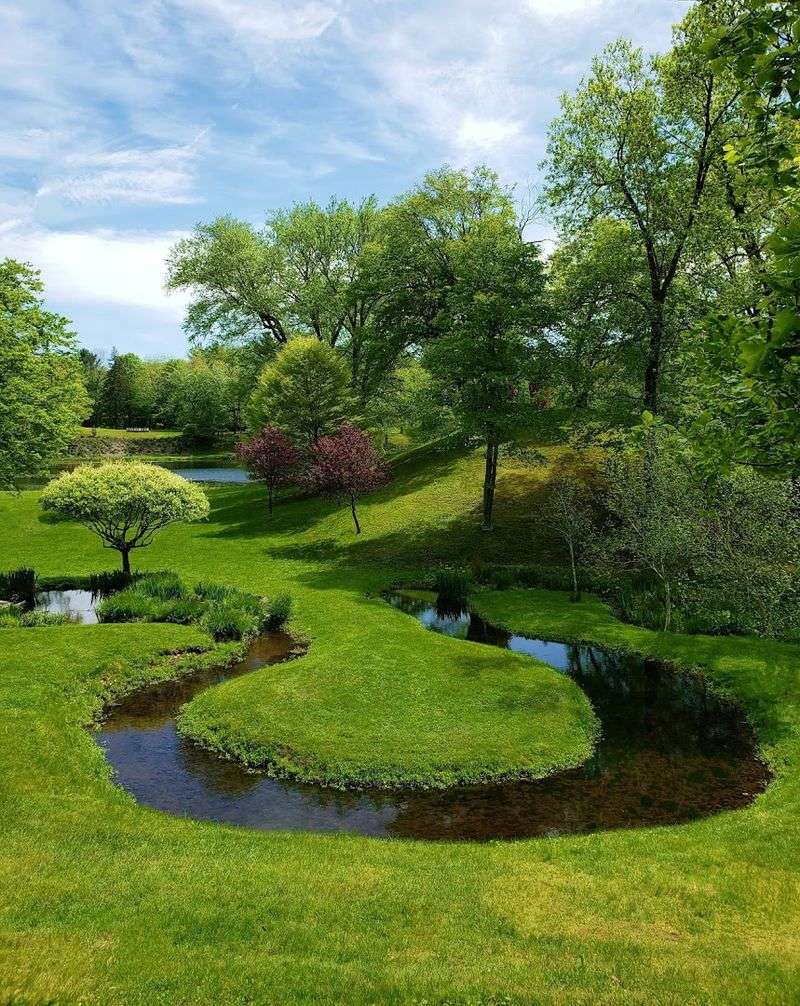
There are places that stop you mid-step and make you reconsider everything you thought a garden could be. This Garden in Millbrook, New York is that kind of place.
Rather than rows of manicured flowers or sculpted hedgerows, visitors find a sprawling, breathing landscape that moves between meadow, forest, and lakeside with quiet confidence.
The garden covers roughly 185 acres and centers on Tyrrel Lake, a 40-acre glacial lake that gives the entire property a sense of depth and stillness.
Every path curves with intention, leading you past stone terraces, small waterfalls, and clusters of native plants arranged in what the designers called cup gardens, or self-contained scenic vignettes that feel complete on their own.
What makes the experience so unusual is how unhurried everything feels. Chairs are placed throughout the grounds at carefully chosen viewpoints, inviting visitors to simply sit and absorb the scenery.
The garden earns its reputation not through spectacle but through an accumulating sense of calm that sneaks up on you before you realize it has arrived.
Innisfree Garden And The Story Behind Its Creation
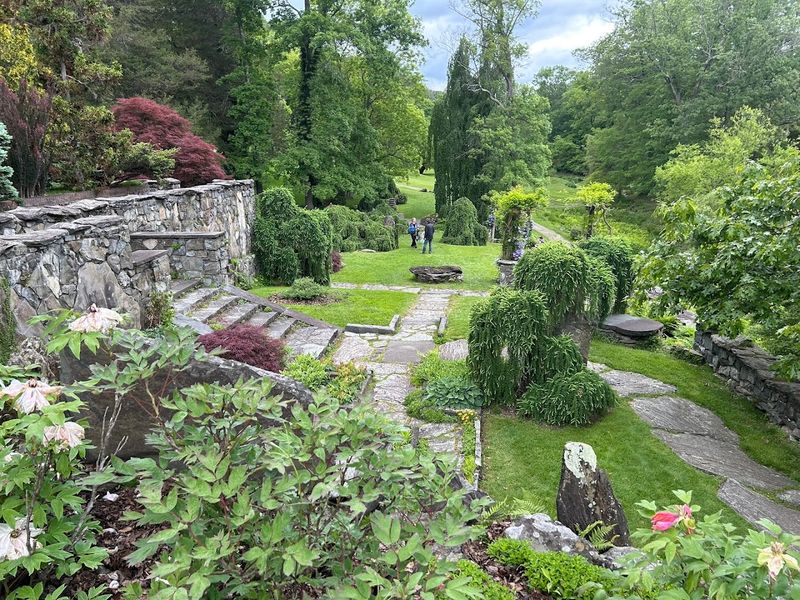
Innisfree Garden began as the private estate of Walter and Marion Beck in the early 1930s on Tyrrel Road in Millbrook, NY 12545.
The Becks were deeply influenced by the scroll paintings of Wang Wei, an 8th-century Chinese poet and painter whose work depicted natural landscapes arranged with a meditative sensibility.
That influence became the philosophical backbone of the entire garden.
In 1938, landscape architect Lester Collins joined the project and worked alongside the Becks to translate those East Asian design ideas into a living American landscape.
Collins continued refining and developing the garden until his death in 1993, and his contributions are now considered foundational to 20th-century American landscape architecture.
The garden officially opened to the public in 1960, though it remained relatively unknown for decades.
In 2019, Innisfree was listed on the National Register of Historic Places for its exceptional significance in landscape architecture, a recognition that finally gave the garden the formal acknowledgment it had long deserved.
The story of its creation reads like a collaboration across centuries, cultures, and continents, all rooted in one quiet corner of Dutchess County.
Cup Gardens And The Art Of Designing With Nature
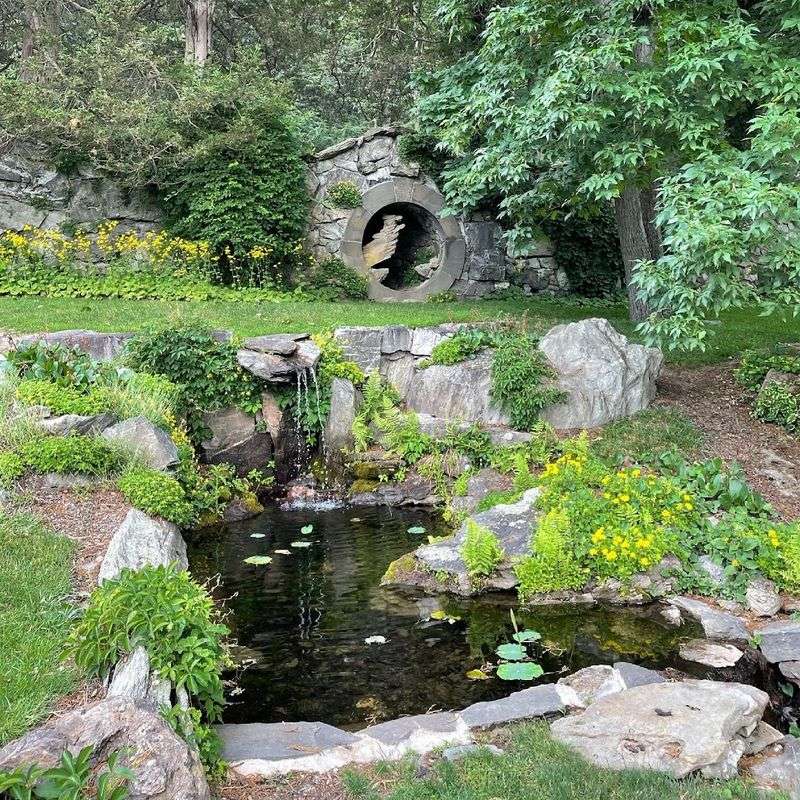
The concept of cup gardens is one of the most fascinating design ideas at Innisfree, and it is also one of the least discussed. Each cup garden functions as a self-contained scene, a small world framed by landforms, rocks, and plants arranged so deliberately that they seem entirely natural.
Visitors often walk past several without realizing they have moved through distinct compositions.
Lester Collins borrowed the concept from Chinese landscape painting, where scenes within a larger scroll each carry their own mood and meaning. At Innisfree, rocks and boulders serve as sculptural anchors rather than decorative afterthoughts.
Their placement is precise, drawing the eye toward water, sky, or a particular grouping of plants with a subtlety that rewards attention.
Native plants dominate throughout the property, which means the garden changes personality with every season.
Spring brings soft greens and early bloomers, summer fills the pond edges with lotus and lily pads, autumn turns the hillsides warm and golden, and even the bare winter structure carries a certain spare elegance.
The design never fights nature but works alongside it, which is exactly what makes the cup garden concept so enduringly effective.
Tyrrel Lake And The Heart Of The Property
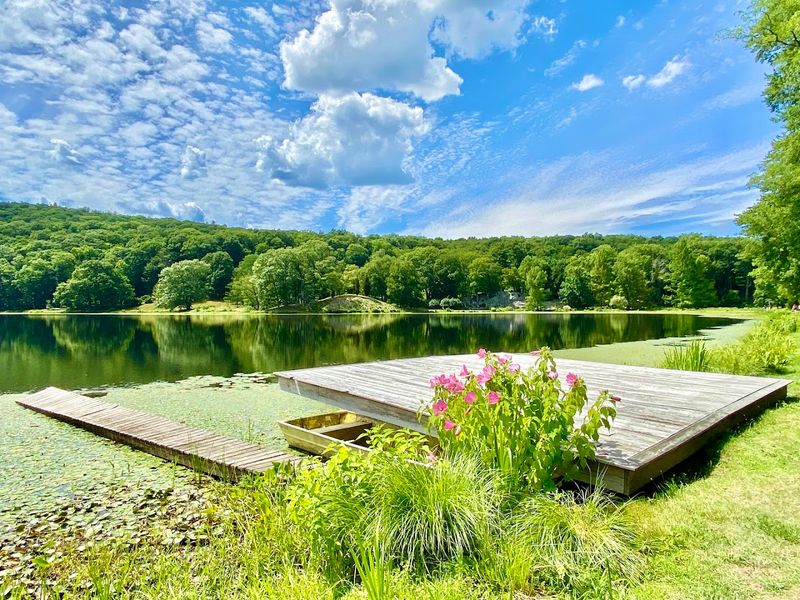
Tyrrel Lake sits at the center of Innisfree Garden both physically and emotionally. The 40-acre glacial lake gives the entire property its defining character, reflecting the sky and surrounding hills with a mirror-like calm that changes throughout the day depending on light and season.
Circling the lake on foot takes roughly an hour at a relaxed pace, though most visitors find themselves stopping far more often than planned.
The natural bowl of land surrounding the lake creates an almost amphitheater-like sense of enclosure, which is part of why the garden feels so private despite being open to the public. Sound softens here.
The outside world genuinely recedes. Bird life around the lake is remarkably active, with herons, ducks, and songbirds visible throughout the warmer months, making binoculars a genuinely useful addition to any visit.
Lotus flowers and water lilies spread across sections of the lake surface during summer, creating dense floating gardens that attract both wildlife and photographers. Picnic tables are positioned on a low hill near the water, offering views that would be hard to find at any restaurant within a hundred miles.
The lake does not demand anything from its visitors except their full attention.
What To Expect When You Visit For The First Time
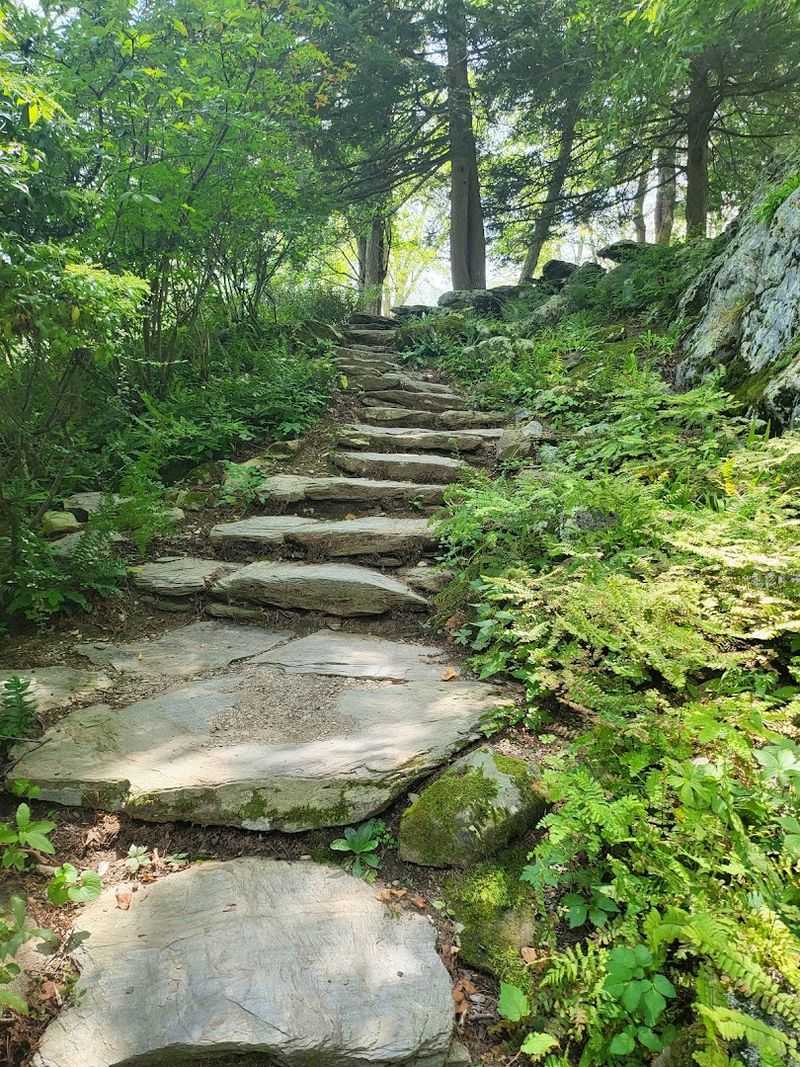
First-time visitors to Innisfree Garden often arrive slightly unsure of what they are walking into, and that uncertainty dissolves almost immediately upon stepping past the welcome booth.
Staff at the entrance are known for being genuinely helpful, offering a large printed map that includes the garden’s history on the reverse side and pointing out which paths suit different energy levels or interests.
The entrance fee is ten dollars per person, which covers full access to all trails and viewpoints across the property. The garden is open seasonally from May through October, with weekend hours running from 10 AM to 5 PM.
Advance reservations are recommended, particularly during peak summer weekends, as the garden intentionally limits visitor numbers to preserve the atmosphere of quiet that defines the experience.
Parking is available on site, though the driveway leading in is long and unpaved, which adds a small sense of adventure before the garden even begins. Portable restrooms are located near the parking area.
Visitors are encouraged to bring their own food and water, and picnicking is welcome in designated areas. Cell service is limited throughout the property, which turns out to be far more of a benefit than an inconvenience.
Recognition That Matches The Reality On The Ground
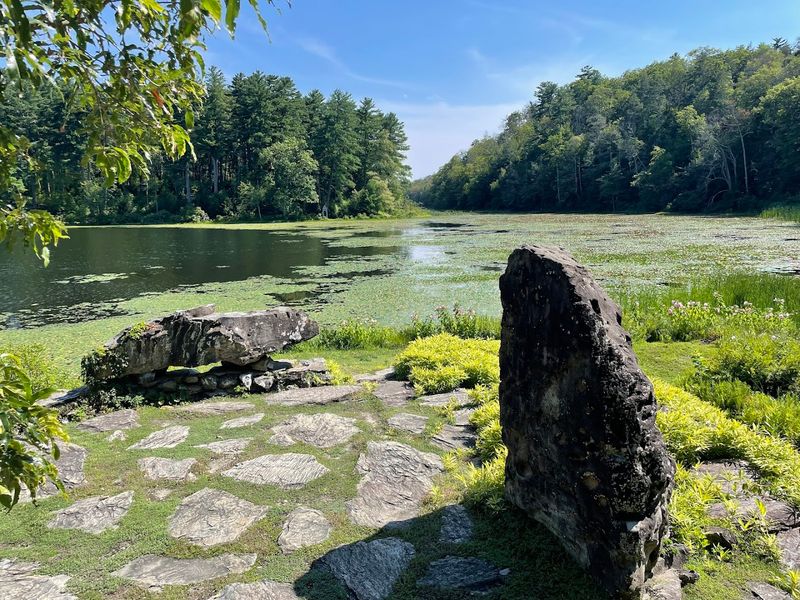
Travel Channel host Samantha Brown once called Innisfree Garden one of the most beautiful gardens in the world, and that kind of endorsement tends to raise eyebrows until you actually visit and find yourself nodding in quiet agreement.
The garden has also appeared on lists citing it among the ten best gardens globally, a claim that feels less like marketing once you have walked its paths and sat beside its lake.
In 2019, the National Register of Historic Places added Innisfree to its records, specifically citing the garden’s exceptional significance in landscape architecture.
That recognition placed it alongside historic sites of genuine cultural weight, not as a footnote but as a landmark worth preserving and understanding.
A 2024 Preserve New York Grant further supported documentation of its unique architectural character.
Closer to home, Innisfree won the Collaboration Award of Distinction in the 2023 Dutchess Tourism Awards and appears on the Dutchess Tourism Zen Finder Outdoor Experience Trail as a featured hidden gem destination.
Despite all of this, the garden remains genuinely uncrowded on most visits, which is either a wonderful mystery or simply proof that great things do not always announce themselves loudly.
Either way, the result benefits every visitor who shows up.
Why This Garden Deserves A Spot On Every New York Itinerary
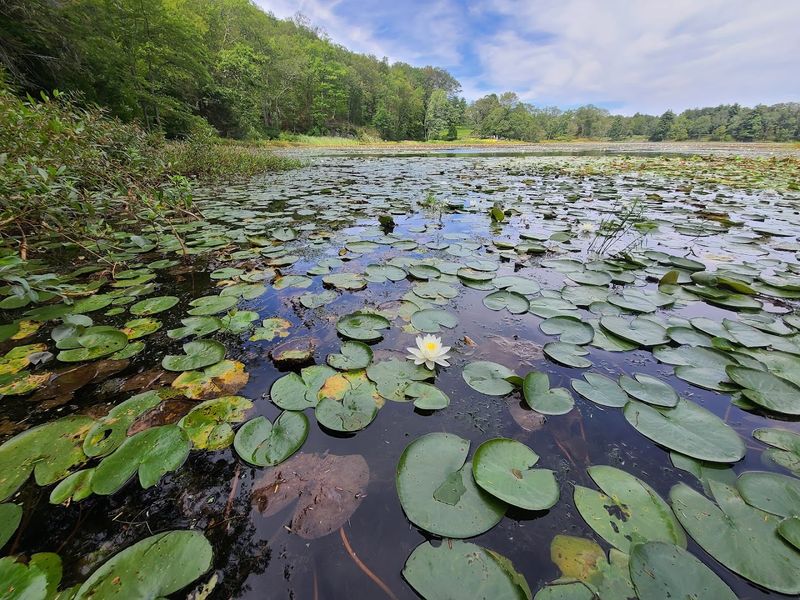
A garden that combines Chinese and Japanese design philosophy with American ecological sensibility, sits on 185 acres of Hudson Valley landscape, and charges ten dollars at the door is not just a good deal. It is the kind of place that recalibrates your sense of what a public green space can accomplish.
Innisfree manages to feel both carefully designed and completely natural at the same time, which is an achievement that most landscape architects spend entire careers attempting.
The garden suits an impressive range of visitors. Photographers find compositions around every bend.
Birdwatchers can spend hours tracking species around the lake and meadow edges. Families with children enjoy the relatively flat main loop, and anyone who simply wants to sit quietly in a beautiful place will find no shortage of chairs positioned at exactly the right spots throughout the grounds.
Getting there requires a drive into the Millbrook countryside, which itself is worth the trip for anyone unfamiliar with the Hudson Valley’s quieter stretches.
The address at 362 Tyrrel Road is easy enough to reach from major highways, and the drive along the final stretch of dirt road builds anticipation in a way that feels entirely appropriate.
Innisfree earns its reputation with every step of the visit.