
This Gentle 2-Mile Hike In New York Leads You To A Secret Waterfall That’s Worth Coming Back For
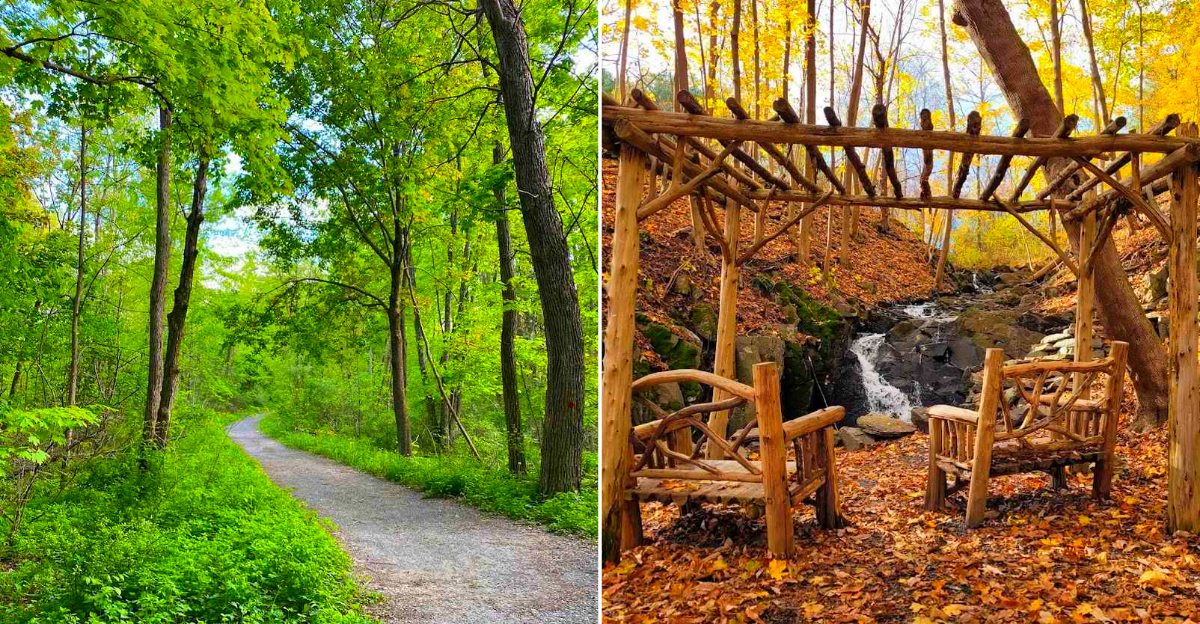
New York has been sitting on a waterfall so quietly beautiful it feels almost unreasonable that more people have not found it yet.
Two miles in, completely manageable, and the payoff waiting at the end is the kind that makes you stand there longer than you planned and take about forty more photos than you intended.
This is the hike that restores your faith in day trips.The trail itself earns its place in the experience. Easy enough to feel like a walk, scenic enough to feel like an event, and just removed enough from everything that by the time the waterfall comes into view you genuinely feel like you discovered something.
People who do this hike once have a habit of coming back, bringing someone new each time like they are personally responsible for spreading the news. The secret is out.
The waterfall is worth it.
A Place That Earns Its Name Before You Even Reach The Water
Not every nature preserve delivers on the promise tucked inside its name, but Falling Waters Preserve makes good on its title within the first few minutes of any visit.
The trailhead greets visitors with a well-maintained informational kiosk stocked with trail maps, and the air carries that particular stillness that only dense woodland can produce.
Spanning between 149 and 168 acres in Ulster County, the preserve sits at Dominican Lane near Saugerties, offering a genuinely accessible outdoor escape that costs nothing to enter.
Open from dawn to dusk every day of the week, the preserve draws a steady but manageable crowd of hikers, dog walkers, and families looking for a relaxed afternoon outdoors. The small parking area holds roughly ten vehicles, which naturally keeps the experience from feeling overcrowded.
Trail markers are clear and color-coded, so even first-time visitors rarely feel lost. The combination of meadows, river-facing bluffs, and shaded forest paths gives the preserve a layered quality that keeps attention engaged from start to finish.
Arriving early on weekends is a smart move if you prefer a quieter experience along the trails.
The Trail System That Fits Almost Every Pace And Preference
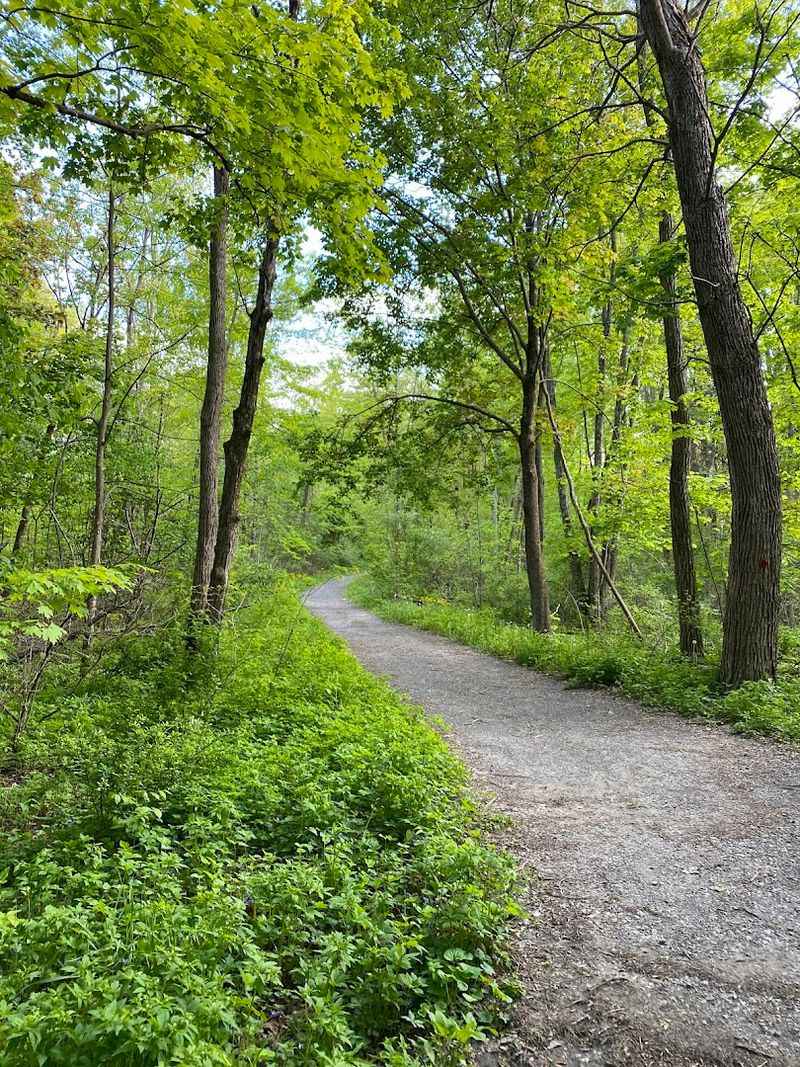
Three color-coded trails wind through the preserve, each offering a slightly different perspective on the landscape. The Red Trail forms the backbone of most visits, running through upland forest with a gentle grade and frequent benches positioned at intervals where the views open up.
The White Trail hugs the riverbank more closely, narrowing in places and moving over tree roots and loose stone, which gives it a mildly adventurous character compared to its companions.
The Blue Trail ventures toward the river in a smaller, self-contained loop that works particularly well for younger children or anyone looking for a shorter outing. Together, the trails create a network covering more than two miles, with loop combinations typically ranging from 1.5 to 2.7 miles depending on the route chosen.
Total elevation gain across the entire system stays well under 200 feet, earning the preserve an easy difficulty rating of about three out of ten. That number should not be mistaken for boring, because the terrain shifts enough to hold interest throughout.
Hikers are encouraged to wear proper footwear since tree roots and occasional rocky sections can catch an unprepared ankle off guard.
The First Waterfall That Appears Almost Without Warning
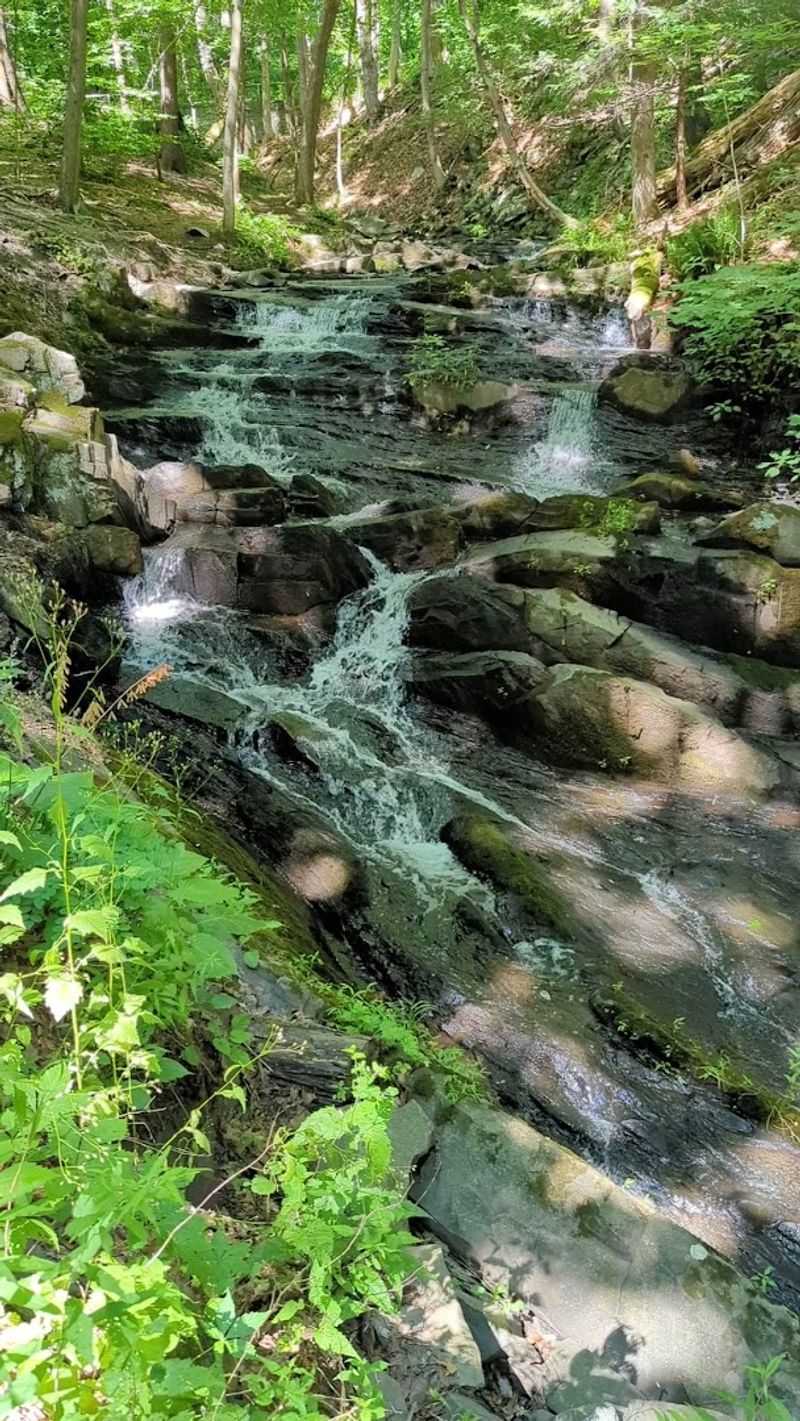
A short walk from the parking area along the Blue Trail leads to the first of the preserve’s two waterfalls, and its arrival feels pleasantly abrupt.
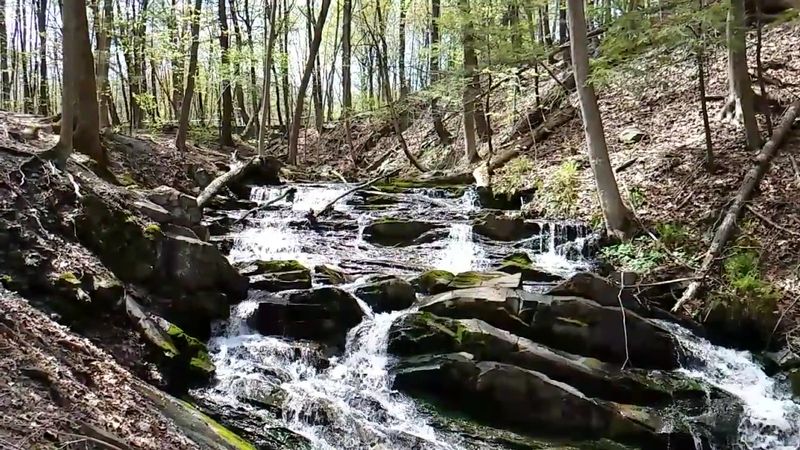
The stream tumbles over layered rocks in a modest but photogenic cascade, framed by the kind of dense green undergrowth that makes waterfalls look twice their actual size in photographs.
It is not a dramatic plunge by any measure, but the sound alone justifies the walk, filling the surrounding woodland with a steady, unhurried rhythm.
Benches placed nearby allow visitors to sit and absorb the scene without feeling rushed, and the spot has a calming quality that makes it easy to linger longer than planned.
The waterfall is small enough that children find it approachable and exciting without any sense of danger, and the surrounding trail remains flat enough that the walk back to the parking area requires minimal effort.
Early morning visits reveal the waterfall at its most atmospheric, when mist hangs low and the light filters through the canopy at an angle that turns the whole scene golden.
Carrying a camera with a slightly slower shutter speed captures the silky water effect beautifully on clear days.
The Second Waterfall That Rewards A Little Extra Effort
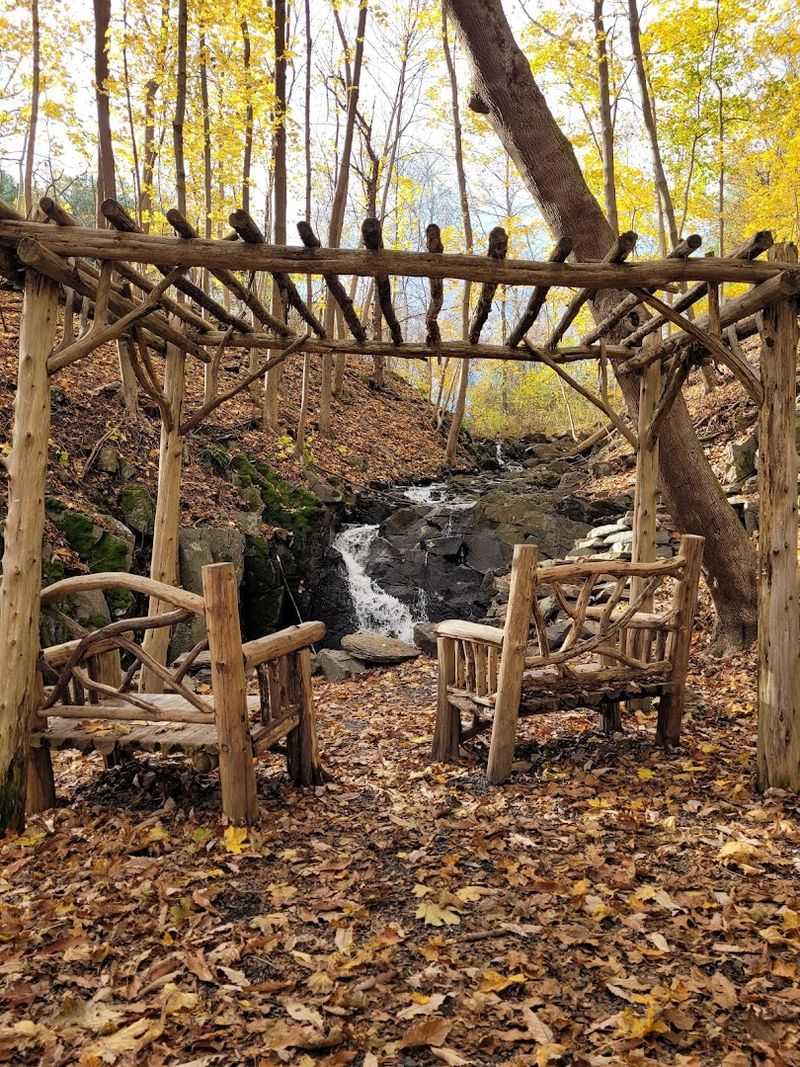
Further along the Upland Red Trail, a second waterfall waits for hikers willing to extend their walk by less than a mile from a key junction on the path.
This one carries a bit more presence than the first, with water moving over a broader rock face and a rustic wooden gazebo positioned nearby for comfortable viewing.
The gazebo itself is a thoughtful addition, giving visitors a sheltered spot to pause without standing directly on the wet rocks beside the falls.
The surrounding forest feels slightly more enclosed at this point on the trail, which amplifies the sound of the falling water and creates a sense of genuine discovery. Visiting after a period of rain noticeably increases the volume of flow, making the falls more impressive and the sound considerably more dramatic.
The trail leading to this point is still well within the easy category, though the path does involve a modest rolling climb that gets the heart moving at a comfortable pace.
Families with older children tend to find this section of the hike the most memorable, and it is the spot most often cited as a favorite resting point before turning back toward the trailhead.
The Historic Icehouse Ruins That Add An Unexpected Layer Of Story
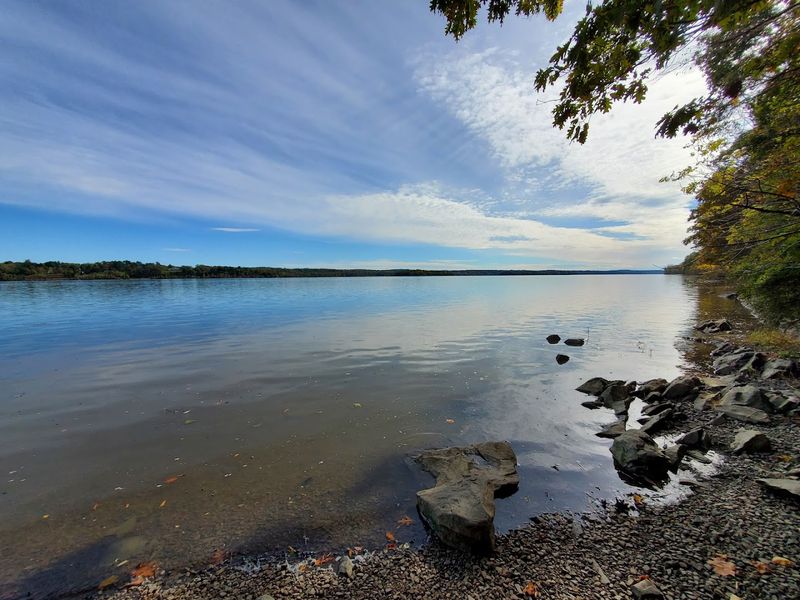
Most people arrive at Falling Waters Preserve expecting waterfalls and river views, so stumbling upon the ruins of the Mulford icehouse comes as a genuinely pleasant surprise.
The remains of this nineteenth century structure stand along the Blue Trail, their weathered stone walls telling a story about an era when harvesting ice from the Hudson River was a legitimate and profitable industry in the region.
Workers would cut large blocks from the frozen river during winter months and store them in insulated buildings like this one for distribution throughout the warmer seasons.
The icehouse ruins add a layer of historical texture to what might otherwise be a purely natural experience, and they reward curious visitors who take time to look closely at the construction details still visible in the remaining walls.
The site is not marked with elaborate signage, which keeps it feeling like a discovery rather than a museum exhibit.
Children tend to find the ruins fascinating, especially when you explain that this crumbling structure once kept food cold long before refrigerators existed.
The Blue Trail loop that passes the ruins also connects to the first waterfall, making it a natural double attraction for visitors willing to spend a bit of extra time exploring this section of the preserve.
Why Dogs And Their Owners Both Leave Completely Satisfied
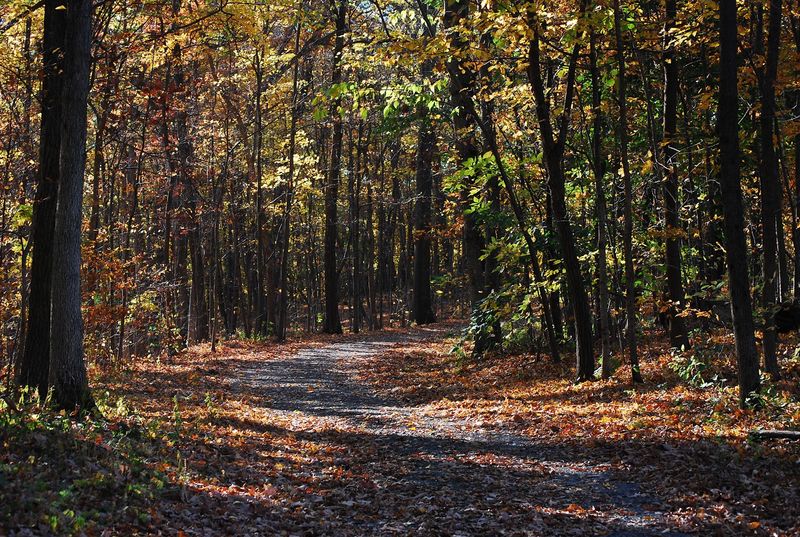
The preserve has quietly earned a reputation as one of the more dog-friendly hiking destinations in the Hudson Valley, and the evidence is visible on almost any given morning.
Leashed dogs are welcome on all trails, and the combination of varied terrain, interesting smells, and occasional stream access makes the experience genuinely stimulating for four-legged visitors.
The trail surfaces shift between packed earth, leaf cover, and rocky sections, giving dogs a sensory experience that a flat suburban walk simply cannot match.
Owners appreciate that the trails are well-defined and easy to navigate, which means attention can stay on the dog rather than on figuring out where to turn next.
The small parking area means the preserve never becomes so crowded that dog encounters feel stressful or difficult to manage.
Stream crossings and the areas near the waterfalls give dogs a chance to cool off during warmer months, which any dog owner knows is the fastest way to earn lasting loyalty on a hiking trip.
A simple leash and a collapsible water bowl are the only extra equipment needed to make the outing comfortable for both parties.
The trails are carry-in and carry-out, so packing waste bags is considered basic trail etiquette here.
Seasonal Visits And What Each One Brings To The Experience
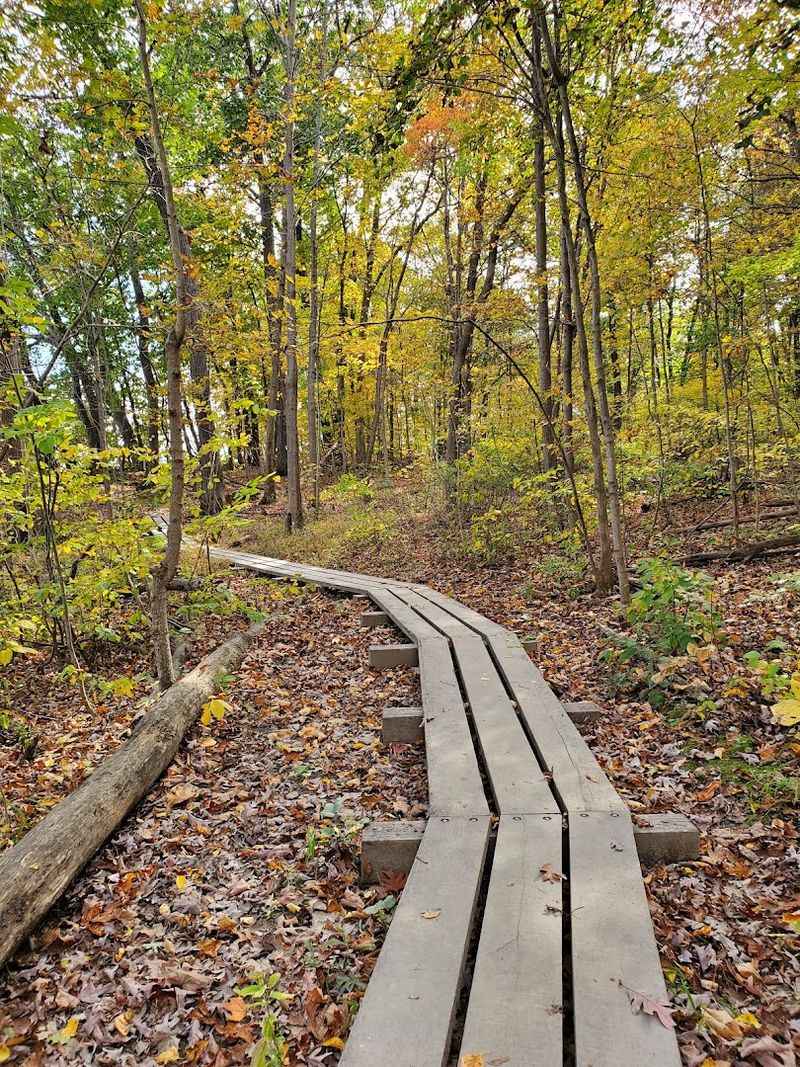
Falling Waters Preserve holds its own across all four seasons, though each visit carries a distinctly different character depending on when you arrive.
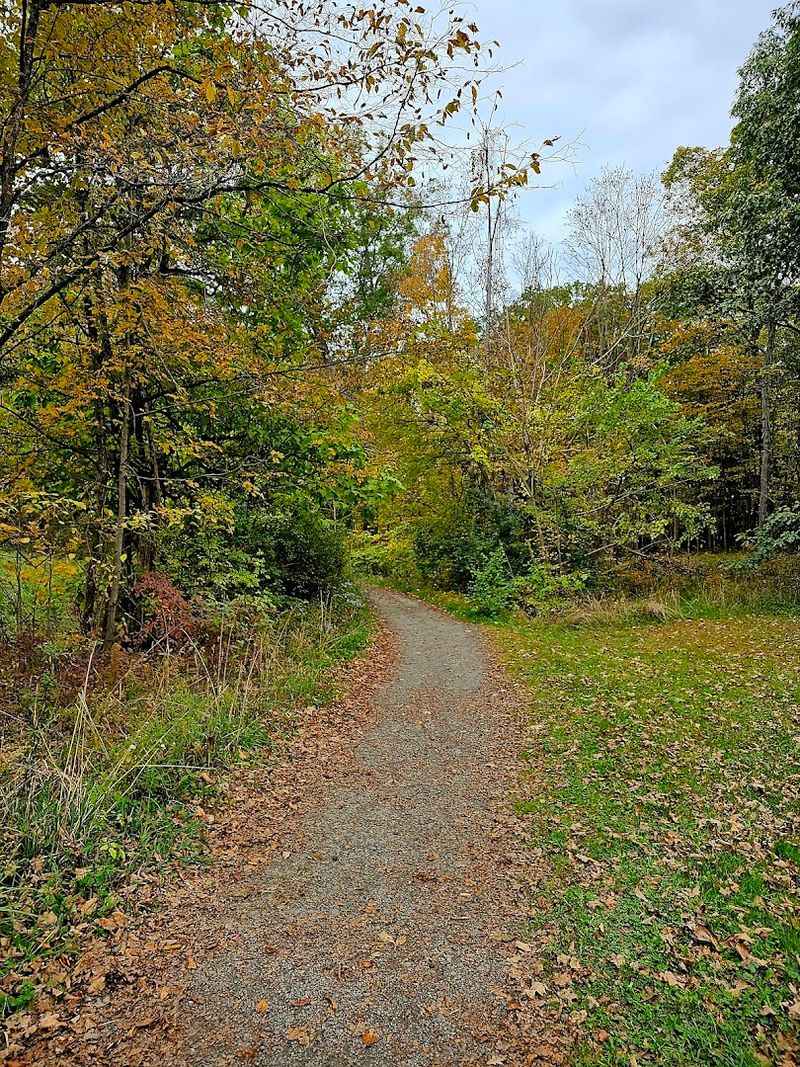
Autumn transforms the forested sections into a corridor of amber and red that makes even a familiar trail feel entirely new, and the waterfall streams run with increased energy after the first autumn rains.
Winter visits are possible but require microspikes or traction devices on footwear, as the trail surface can become a sheet of packed ice that renders the path genuinely difficult to navigate safely.
Spring is arguably the most rewarding season for waterfall enthusiasts, as snowmelt and April rain push both streams to their fullest and most photogenic flow.
The forest floor comes alive during this period with early wildflowers and the kind of rich, damp earth smell that signals genuine renewal rather than a seasonal marketing campaign.
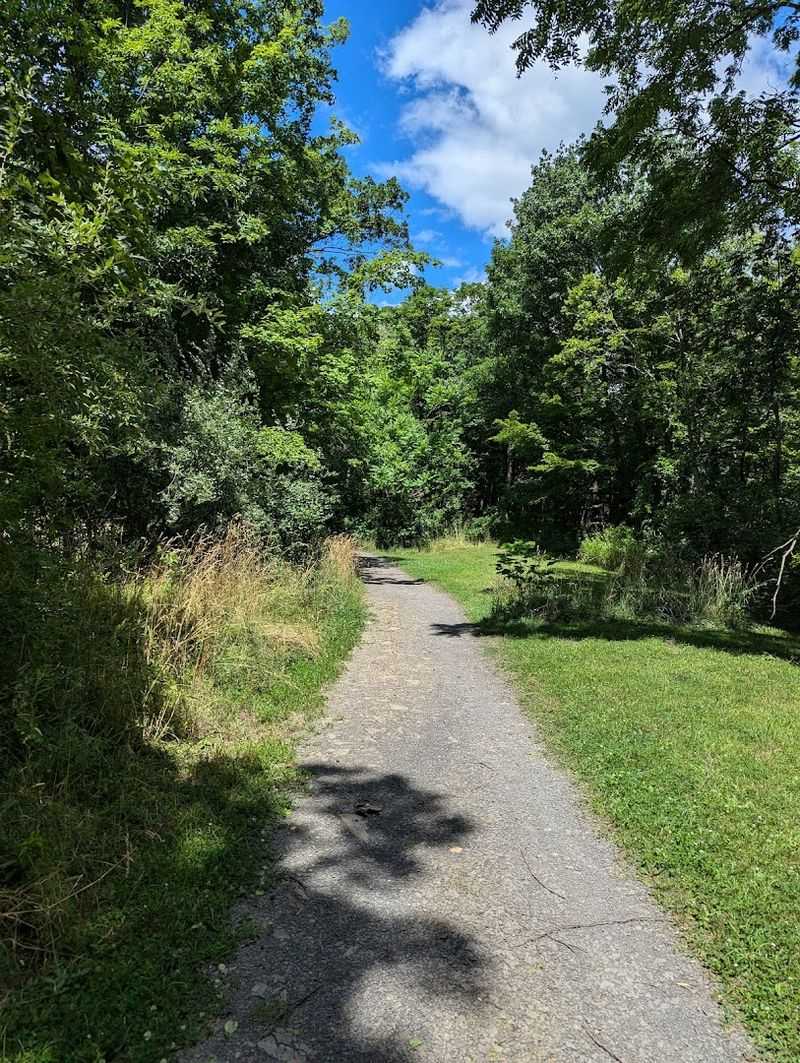
Summer brings dense canopy cover that keeps the trails comfortably shaded even during warmer afternoons, and the river views take on a hazy, luminous quality in the afternoon light.
The preserve is open every day from 7 AM to 7 PM, giving visitors a reliable window across every season to plan their walk around good light and comfortable temperatures.
What To Bring And How To Prepare For The Walk
Preparation for a visit to Falling Waters Preserve does not require an elaborate gear list, but a few basics make a meaningful difference in comfort.
Sturdy hiking shoes with ankle support are strongly recommended, not because the trail is dangerous, but because tree roots and occasional rocky patches can catch flat-soled footwear off guard at inconvenient moments.
A small day pack with water, a light snack, and a fully charged phone covers the essentials for a walk that typically takes between 45 minutes and two hours depending on pace and how long you linger at the waterfalls.
The preserve operates on a carry-in and carry-out basis, so a small bag for any trash keeps the trails clean for the next visitors. Trail maps are generally available at the informational kiosk near the parking area, though downloading a digital version before arriving is a sensible backup plan.
Trekking poles are unnecessary for most of the trail system but provide extra confidence on the steeper sections of the White Trail near the riverbank. Visiting during weekday mornings tends to offer the quietest experience, with the parking area rarely full and the trails largely to yourself.
The preserve can be reached by calling ahead at 845-473-4440 or checking trail conditions at scenichudson.org.
Making The Most Of Your Visit Before Heading Back To The Car
The end of a walk at Falling Waters Preserve tends to arrive before most visitors feel ready for it, which is generally a reliable sign that a trail has done its job well.
Completing the full two-mile loop with time spent at both waterfalls and a stop at the river viewpoint takes roughly 90 minutes at a relaxed pace, leaving enough energy for a drive into Saugerties for a meal or a browse through the village afterward.
The preserve pairs naturally with other Hudson Valley destinations, making it an ideal anchor for a day that combines outdoor activity with local exploration.
Before leaving, a second pass through the kiosk area is worth the two minutes it takes, as seasonal information and updated trail notices are sometimes posted there.
Checking the condition of footwear after the walk is a practical habit, particularly in wet seasons when mud accumulates on the lower trail sections near the river.
The preserve genuinely earns its 4.7-star rating through consistency rather than spectacle, offering a reliable, free, and well-maintained outdoor experience that suits a wide range of visitors.
First-time visitors almost always leave with plans to return, which may be the most straightforward endorsement any hiking destination can receive.