
You Can Explore New York’s Only Abandoned Scottish Castle On A Secret Island That’s Surprisingly Easy To Reach From NYC
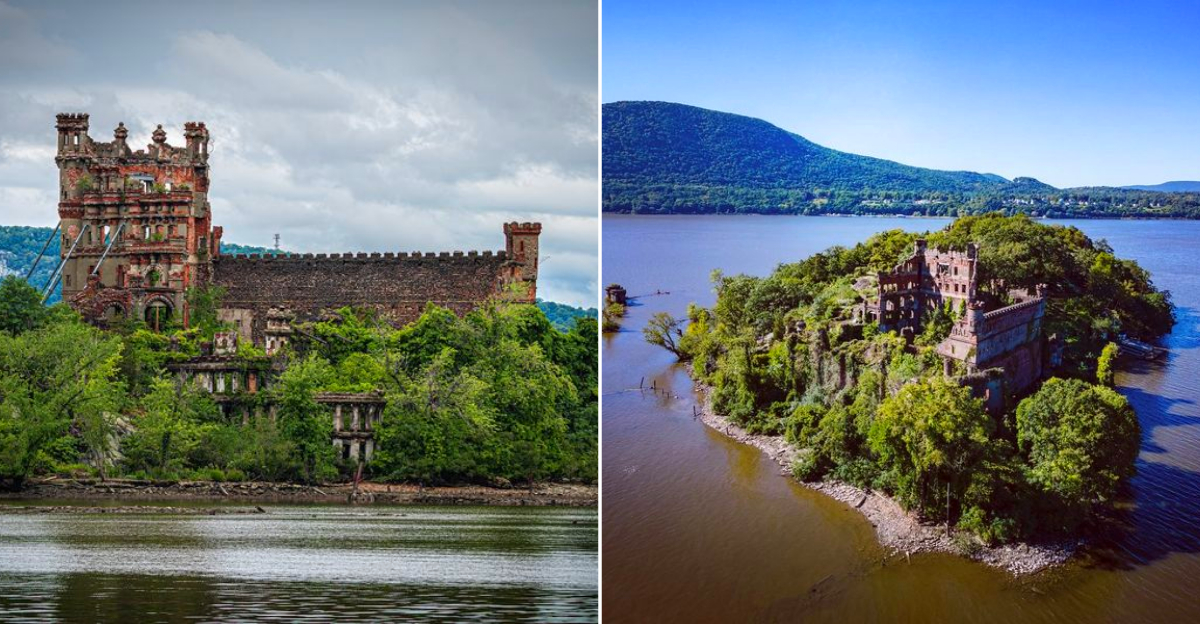
An abandoned Scottish castle on a secret island sounds like the kind of thing New York would charge admission for and put on every tourist map in the city. Somehow it has stayed off the radar long enough to still feel like a real discovery, which in 2026 is an achievement worth respecting.
The castle is real, the island is real, and the trip from the city is easier than anyone expects it to be. What hits hardest when you get there is the atmosphere.
Weathered stone slowly being reclaimed by nature, views that make no sense given how close you are to one of the busiest cities on earth, and a quiet that feels genuinely earned after the journey to get there. New York contains entire worlds that most of its own residents have never visited.
This abandoned castle on a secret island might be the most compelling one of all.
A Castle That Looks Like It Belongs In The Scottish Highlands
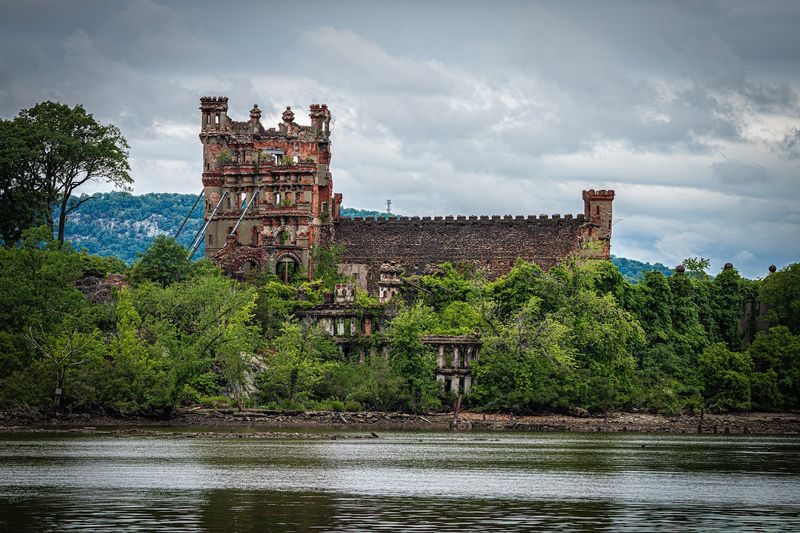
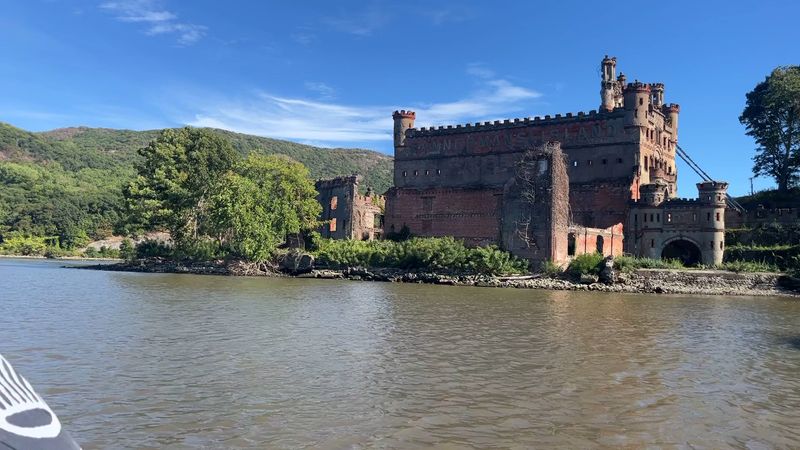
Few sights along the Hudson River stop people mid-sentence the way this castle does. The moment the ferry rounds a bend and the island comes into view, passengers tend to go quiet.
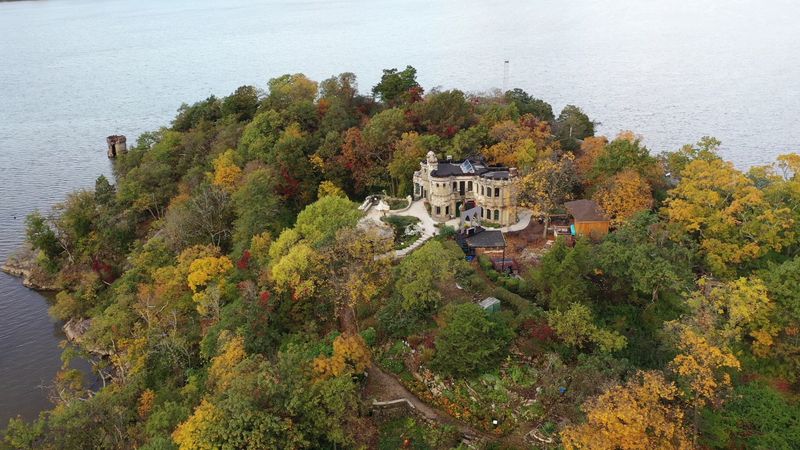
There is something genuinely arresting about seeing a turreted stone structure rising from a small island surrounded by wide, gray river water.
Francis Bannerman VI designed the castle himself, drawing directly from his Scottish heritage and the architectural character of old Highland strongholds. He was not an architect by training, but his ambition more than compensated for that.
The result is a structure that feels both foreign and oddly at home against the backdrop of the Hudson Valley cliffs.
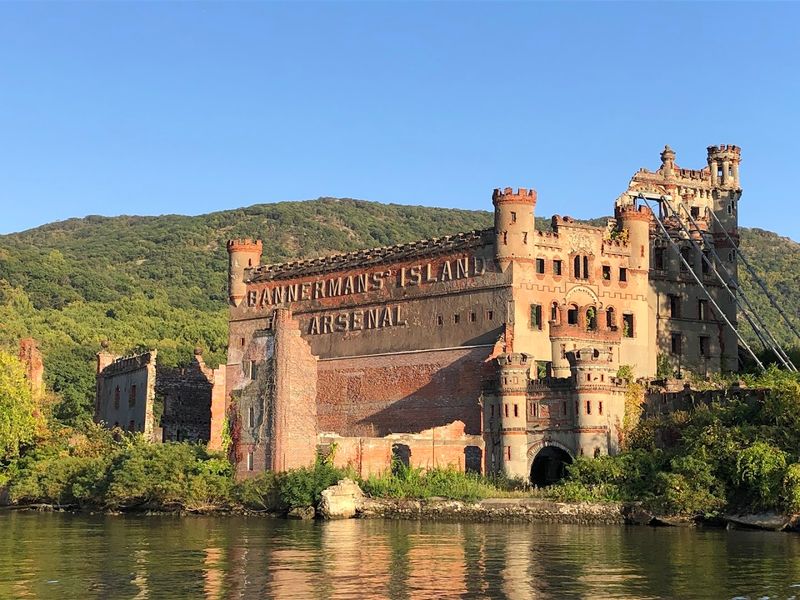
The castle was primarily built to store military surplus goods, including nearly 90 percent of the Spanish military equipment captured after the Spanish-American War. Bannerman also wanted the building to serve as a bold advertisement for his business, and the words “Bannerman’s Island Arsenal” are cast into one of its walls.
The structure accomplished both goals with considerable flair.
Standing at the water’s edge and looking up at those weathered walls, you get the clear sense that this place was built by someone who had a very specific vision and refused to scale it back.
The Story Of Francis Bannerman And His Unusual Island Purchase
Francis Bannerman VI arrived in America as a child and built one of the most unusual businesses in the country. He dealt in military surplus, buying up leftover weapons, ammunition, and equipment from wars and reselling them at his Brooklyn store.
By the end of the Spanish-American War in 1898, his inventory had grown so large that storing it in the city became a genuine problem.
He purchased Pollepel Island in 1900 with a practical solution in mind. The island offered remote storage away from populated areas, which made sense given that he was sitting on thousands of pounds of old munitions.
Construction of the main arsenal building and a smaller residence for himself and his wife began in 1901.
What makes the story fascinating is how Bannerman turned a logistical necessity into something personal and expressive. He did not build a plain warehouse.
He built a castle that reflected his Scottish roots, complete with decorative towers and thick stone walls. Every design choice pointed back to the landscapes of his heritage.
His business sense and his cultural identity became inseparable in the finished structure, and that combination is a large part of what makes Pollepel Island such an interesting place to visit today.
What Happened To The Castle After Bannerman Passed Away
The castle’s decline began not with neglect but with a dramatic explosion. In 1920, a portion of stored munitions detonated in a building adjacent to the main arsenal, causing significant structural damage to the complex.
The blast was powerful enough to scatter debris across the river and rattle windows in nearby towns.
Francis Bannerman had passed away the previous year in 1918, and the family continued to manage the property for some time afterward. New York State eventually acquired the island in 1967, but before any preservation plans could take shape, a major fire swept through the castle in 1969.
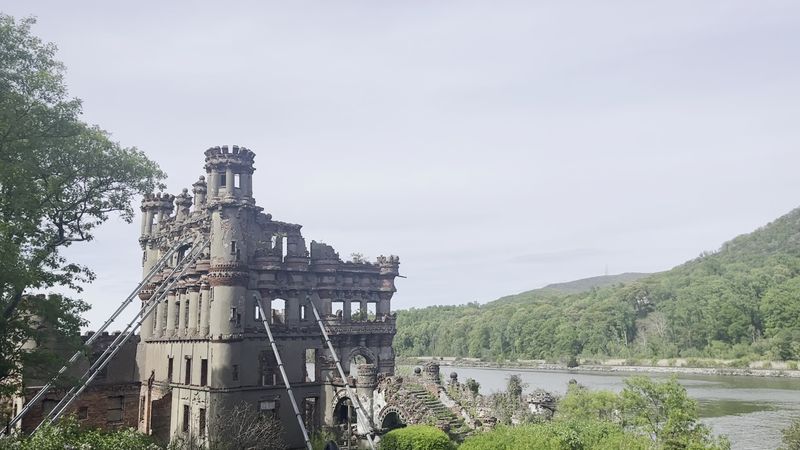
The blaze destroyed most of the roofs and floors, leaving behind the dramatic open shell that visitors see today.
Rather than collapsing entirely into the river, the outer walls held their ground. The Bannerman Castle Trust was later established to preserve and manage what remained, and their work has kept the ruins stable enough to allow guided public access during the warmer months.
The site carries an honest kind of beauty that comes specifically from its history of damage and survival. There is no attempt to make it look pristine, and that restraint is exactly right.
The ruins tell a more truthful story than any restoration could.
Getting To The Island From New York City Is Genuinely Simple
One of the most pleasant surprises about visiting Bannerman Castle is how uncomplicated the journey actually is. From Grand Central Station, the Metro-North Hudson Line runs directly to Beacon, New York, and the trip takes roughly 1.5 hours depending on the service.
The Beacon station sits conveniently close to the ferry dock, making the transfer between train and boat a short and easy walk.
For those who prefer to drive, the trip from Manhattan takes approximately one hour and twelve minutes under normal traffic conditions. Parking near the Beacon ferry dock is available, and on weekends the Metro-North station lot offers free parking, which makes the drive-and-park option genuinely practical.
The address for the departure point is Pollepel Island, Beacon, NY 12508, and the Bannerman Castle Trust can be reached at 845-237-2636 for tour bookings and questions.
The ferry ride itself takes about 30 minutes and passes some of the most scenic stretches of the Hudson Valley. Guides on the boat typically share historical context about the river and the surrounding landscape during the crossing, so the journey functions as the beginning of the experience rather than just transportation.
Arriving by train and stepping onto the ferry within minutes of leaving the platform feels remarkably smooth for a trip that ends at a ruined castle on a river island.
The Gardens And Residence That Most People Never Expect To Find
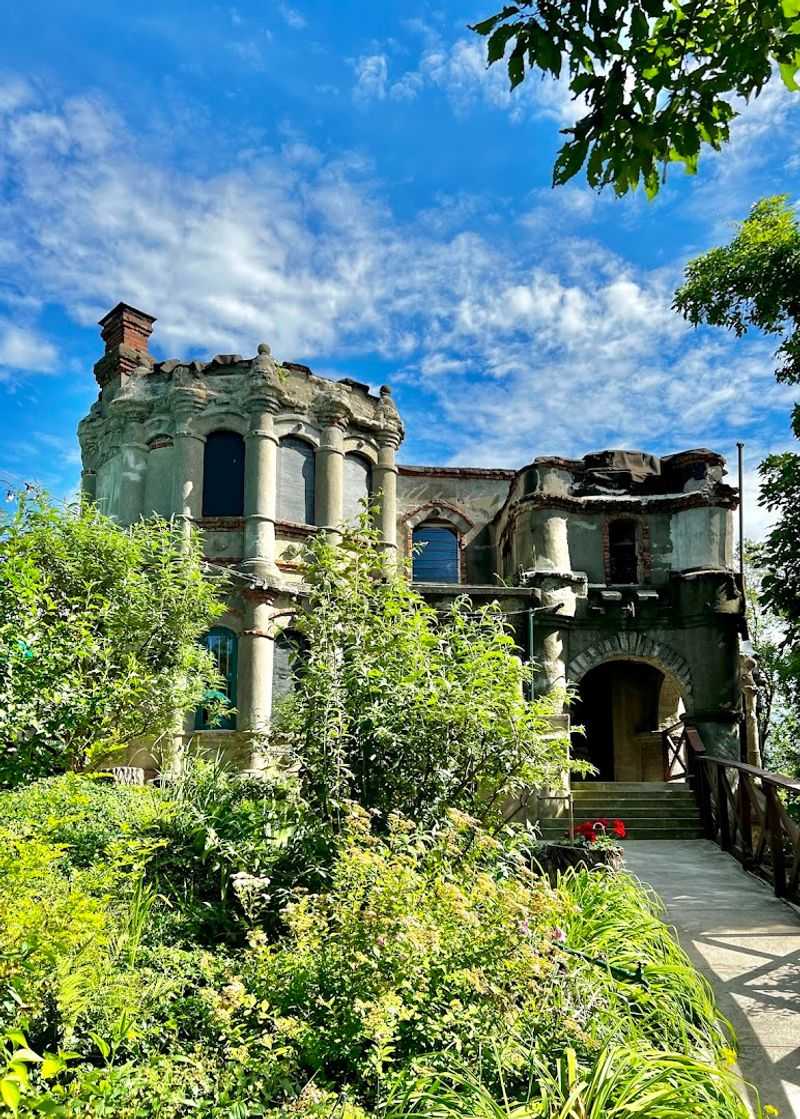
Most people arrive expecting only castle ruins, and the gardens come as a welcome and rather charming surprise.
Tucked along the southern slope of the island below the main residence, the garden area has been carefully maintained by volunteers and Trust staff, and it adds a softness to the landscape that contrasts nicely with the weathered stone of the arsenal walls.
The Bannerman residence itself sits near the island’s high point and offers a glimpse into the domestic side of the family’s time on the island. Unlike the dramatic scale of the arsenal, the house is modest and personal in character.
Exploring it gives a sense of what daily life might have looked like for a family that chose to spend summers on a small river island surrounded by munitions storage.
One of the more curious historical footnotes connected to the island is the presence of a well that was dug but never produced usable water. The explanation turns out to be genuinely interesting: the Hudson River is tidal all the way past Albany and remains brackish and undrinkable as far north as Poughkeepsie, making a freshwater well a practical necessity rather than a convenience.
The garden also serves as a fundraising focus for the Trust, and small donation boxes near the plantings support the ongoing volunteer effort to keep the grounds in good condition.
Kayaking And Alternative Ways To Experience The Island
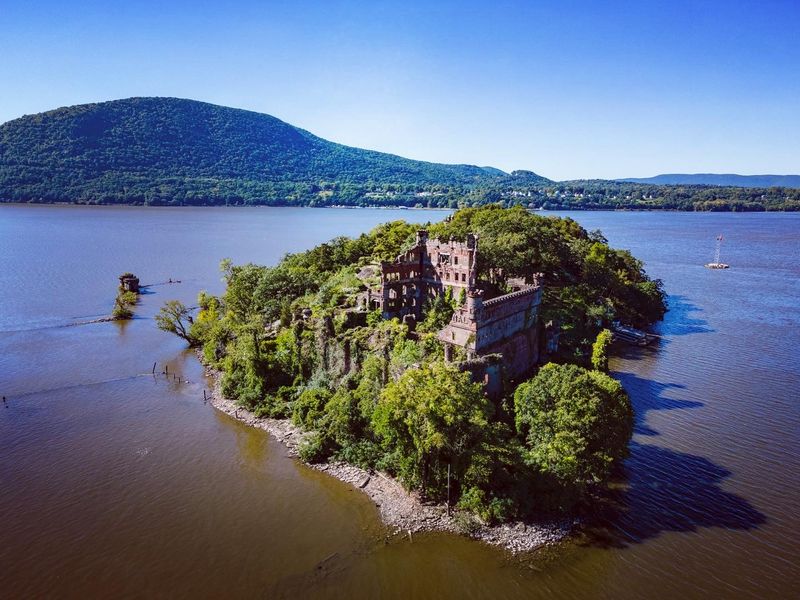
For visitors who prefer a more physical approach to the island, kayaking offers an entirely different perspective on Bannerman Castle. Paddling across the Hudson and approaching the ruins from the water level gives you a sense of scale and atmosphere that no boat tour can quite replicate.
The castle walls loom considerably larger when you are sitting at water level in a kayak than when viewed from the deck of a ferry.
The Bannerman Castle Trust accommodates paddlers with some tour arrangements that include a historian stationed on the island for self-guided visitors who arrive by kayak or canoe. This option suits experienced paddlers who want flexibility and a more independent experience of the site.
Conditions on the Hudson can shift quickly, so checking weather and tidal information before launching is a sensible precaution.
The surrounding river views from the water are exceptional in every direction. The Newburgh Beacon Bridge, the Storm King highlands, and the cliffs of the Hudson Highlands all feature prominently in the scenery, and the island sits at a point where the river narrows in a way that makes the landscape feel particularly concentrated and dramatic.
Whether arriving by ferry or by paddle, the approach to Pollepel Island carries a sense of genuine anticipation that few day trips from the city manage to deliver.
Special Events That Make The Island Worth Visiting More Than Once
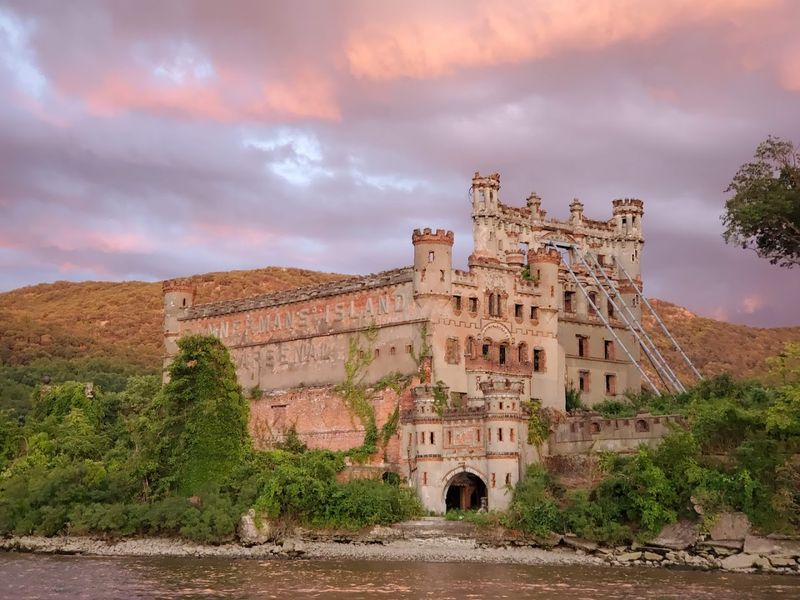
Beyond the standard guided tours, the Bannerman Castle Trust hosts a rotating calendar of events on the island that transform Pollepel into a genuine cultural destination.
Movie nights, live musical performances, and farm-to-table dinners have all taken place against the backdrop of the castle ruins, and the setting adds a quality to each event that no conventional venue can match.
Theatrical productions have become particularly popular among those who know about them. A production of Dracula has been staged on the island and reportedly sells out well in advance, sometimes years in a row for the same audience members who make it an annual tradition.
The combination of Gothic subject matter and a genuinely atmospheric ruined castle makes for an evening that is hard to forget.
The island has also been used for intimate wedding ceremonies, which speaks to the range of experiences the Trust has made possible on a site that could easily have remained purely a historical curiosity.
Couples who have held ceremonies there often describe the setting as unlike anything they considered elsewhere.
Checking the events calendar on the official website well ahead of a planned visit is genuinely worthwhile, because the special programming fills up quickly and adds a dimension to the experience that a standard tour afternoon cannot provide.
Why Beacon NY Deserves Time Before Or After Your Island Visit
Beacon is not simply a transit point on the way to the island. The city has developed into one of the more interesting small cultural destinations in the Hudson Valley, with a Main Street lined with independent shops, galleries, and restaurants that reward a relaxed afternoon of walking.
Arriving early before a tour departure gives you time to settle into the town’s pace before heading to the ferry dock.
The Dia:Beacon museum, which houses a significant collection of large-scale contemporary art in a converted factory building, is one of the most visited cultural institutions in the region. A full visit there pairs naturally with a Bannerman Castle tour into a genuinely satisfying full-day itinerary.
Both sites sit within easy walking or short driving distance of the train station.
Food options in Beacon range from casual lunch spots to more considered restaurants, and several reviewers of the island tour have specifically mentioned a Thai restaurant in town as worth seeking out after returning from the island. The waterfront area near the ferry dock also has its own character and views of the river that are worth taking in before boarding.
Planning the Bannerman Castle visit as the centerpiece of a broader Beacon day rather than a standalone trip tends to produce a much more satisfying overall experience, and the town holds up its end of the bargain comfortably.