
This Bizarre New York Landmark Is Hiding One Of The Strangest Natural Secrets In The State
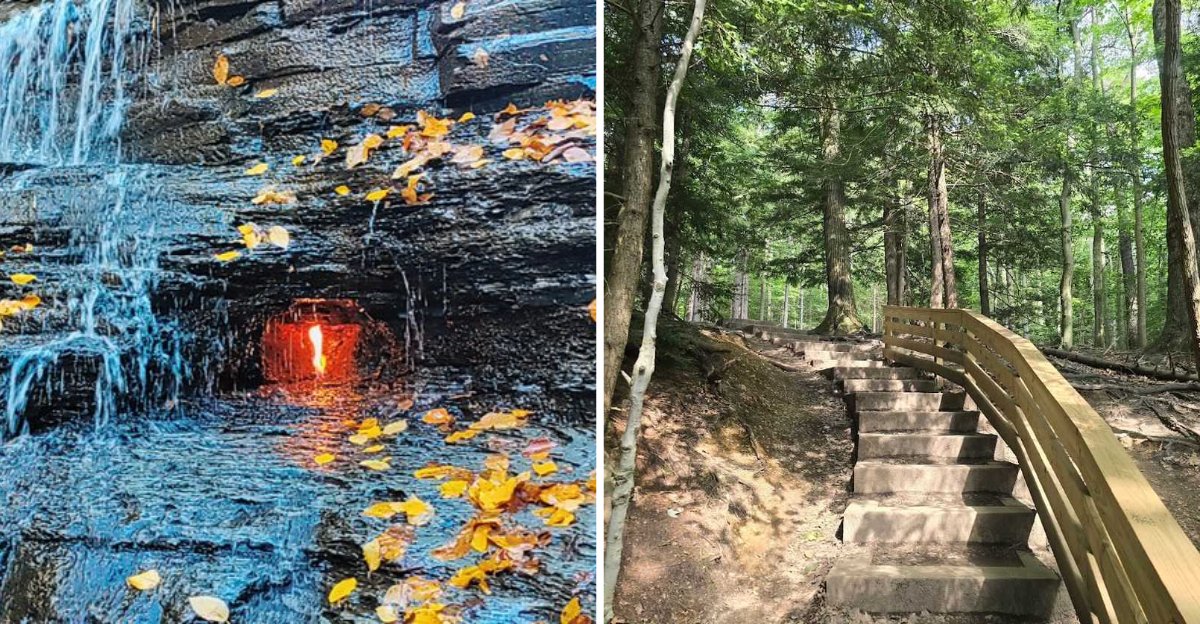
Somewhere in New York a landmark exists that does not behave the way landmarks are supposed to, and the natural secret it has been concealing for years is strange enough to make even the most well traveled people do a double take. This is not the kind of weird that gets manufactured for visitors.
It is the kind that formed over centuries without asking anyone’s permission and has been quietly waiting to be noticed ever since. The strangeness here is specific, real, and completely fascinating once you understand what you are actually looking at.
New York has a habit of hiding its most interesting details in plain sight and this landmark is one of the better examples of exactly that. People who stumble onto this place leave with the slightly dazed energy of someone who just found out a secret they cannot stop thinking about.
That feeling is entirely warranted.
A Flame That Should Not Exist By Any Ordinary Logic
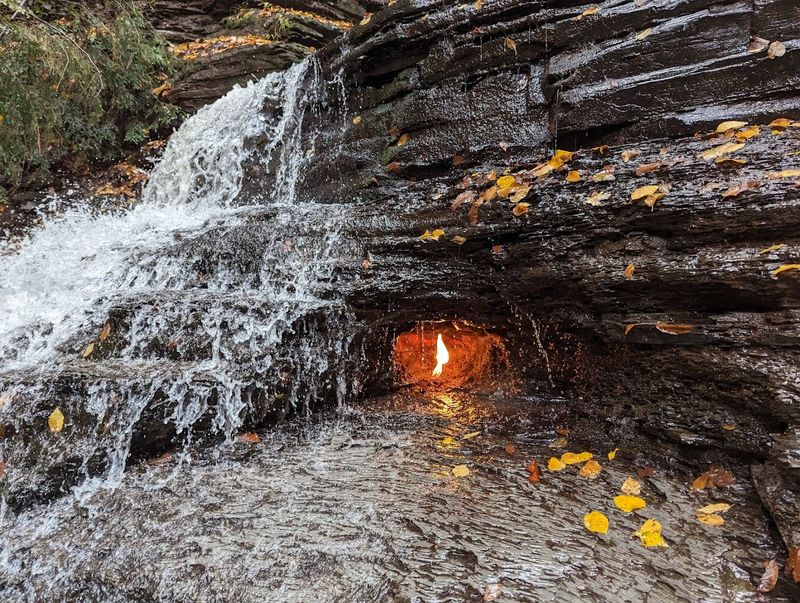
There is a moment on the trail when the smell reaches you before the sight does. A faint sulfurous note drifts through the trees, and then you round a bend and find it: a small, steady flame burning inside a grotto carved into shale, with water pouring just inches away from it.
The flame itself stands between three and nine inches tall, flickering with the kind of calm persistence that feels almost deliberate.
What makes this so unusual is not the flame alone but the geology behind it.
Studies conducted in 2013 by researchers from Indiana University Bloomington and Italy’s National Institute of Geophysics and Volcanology confirmed that the shale producing the gas is far too cool, too shallow, and too young to generate natural gas under normal geological rules.
The gas rises from the Rhinestreet Shale, roughly 400 meters below the surface, through faults created by tectonic activity.
The gas seep contains a notably high concentration of ethane and propane, around 35 percent, which is far above what most natural seeps produce. That unusual composition is likely why the flame persists so reliably.
The main seep releases approximately one kilogram of methane per day, making it one of the more active and studied seeps of its kind in the world.
What The Hike Actually Looks Like From Start To Finish
The round trip to Eternal Flame Falls covers roughly 1.5 miles, and most visitors complete it in about 30 to 60 minutes depending on pace and how long they linger at the falls.
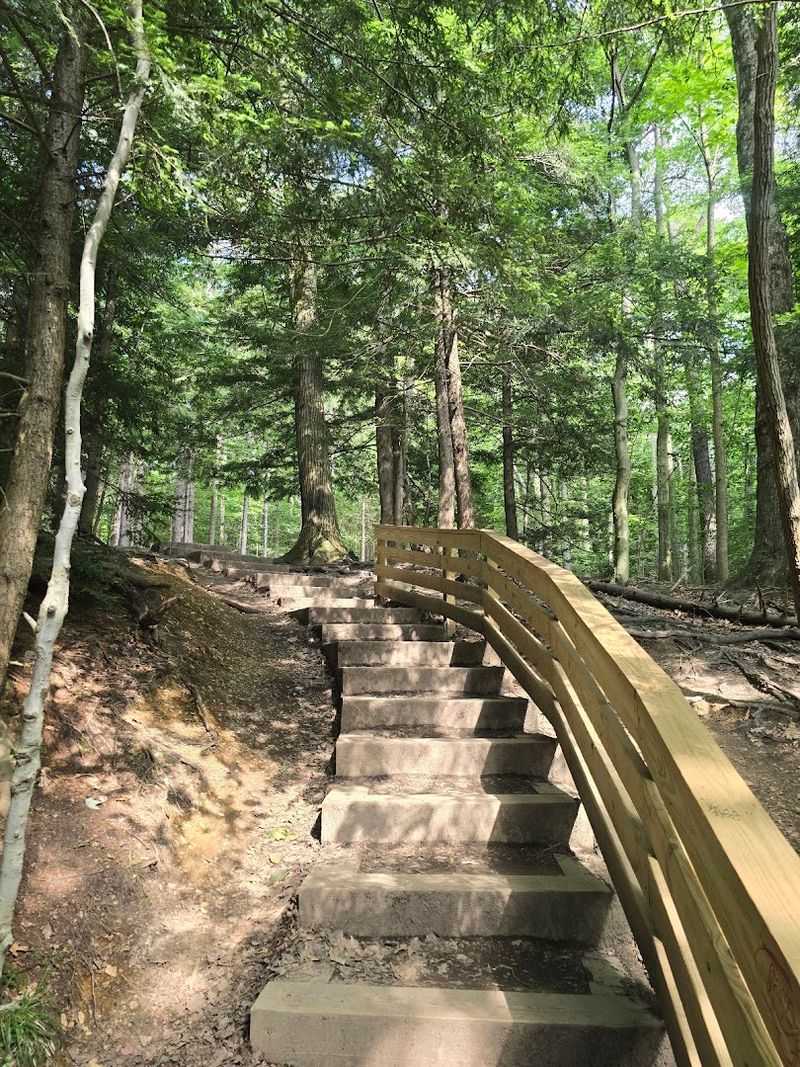
The trail is rated easy to moderate, and the majority of the descent follows a clearly marked path through the woods before reaching the creek bed below.
In August 2023, 139 box steps with railings were added to the steeper section of the trail, which has made the descent considerably more manageable in wet conditions.
Once the steps end, the trail transitions into a creek walk. Visitors should expect to step across water and navigate slippery rocks, so footwear that can handle moisture is genuinely important here.
Waterproof hiking boots or shoes with firm grip are the practical choice, and walking sticks can add useful stability on the return climb.
The trail is well marked throughout, and families with children regularly complete it without difficulty. Dogs are welcome on leash.
The hike is not wheelchair accessible due to the uneven terrain and creek crossings. Spring offers the most dramatic waterfall flow, while winter visits create a striking visual contrast between the cold surroundings and the warm, persistent flame glowing inside the grotto.
Chestnut Ridge Park And The Shale Creek Preserve Setting
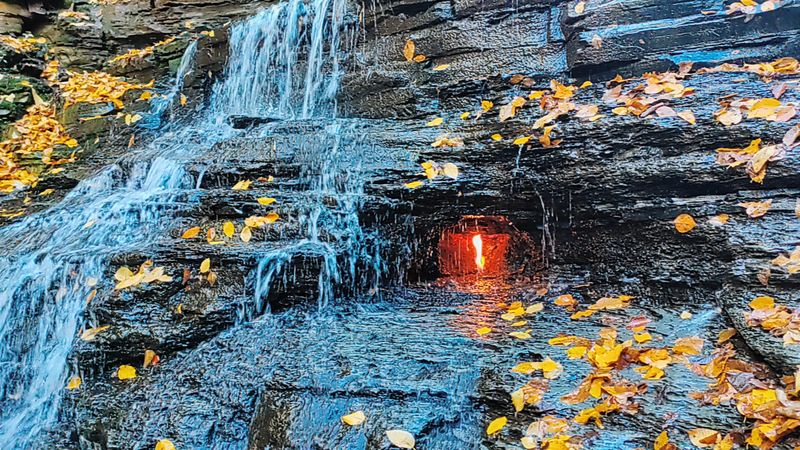
Eternal Flame Falls sits within the Shale Creek Preserve, which is part of Chestnut Ridge Park in Orchard Park, Western New York. The park itself is a well-maintained Erie County property that draws families, hikers, and curious travelers from across the region.
Finding the trailhead is straightforward, and a large free parking lot with restroom facilities makes the logistics of the visit easy to manage.
The landscape around the trail feels genuinely unhurried. A forested ravine guides visitors downward through old-growth trees, past mossy rock walls, and alongside a creek that winds through the valley floor.
The atmosphere is calm and almost hushed in the way that older forests tend to be, with the creek providing a steady backdrop of sound throughout the walk.
Wildlife sightings are common along the path, and deer in particular have been spotted within the first few minutes of the hike. The park is open daily from 7 AM to 9 PM, and the address for navigation purposes is Eternal Flame Hiking Trail, Orchard Park, NY 14127.
For questions or additional information, the park can be reached at 716-858-8355. The setting alone justifies the trip, even before the flame comes into view.
The Waterfall Itself And What To Expect When You Arrive
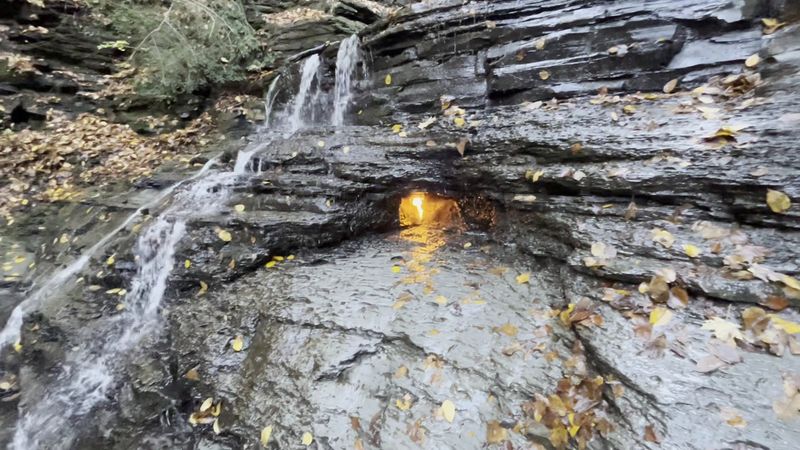
The waterfall at Eternal Flame Falls stands approximately 30 to 35 feet tall, and it drops over layered shale in a tiered formation that creates a natural bowl at the base. The grotto sits directly behind the falling water, which means the flame and the waterfall occupy the same intimate space.
Standing at the base and looking up at both elements together is the kind of sight that takes a moment to fully register.
Water flow varies significantly by season. Spring typically delivers the strongest flow, and the visual effect of water and fire sharing the same rocky alcove is at its most dramatic during that period.
Summer and dry stretches can reduce the falls to a trickle or even leave them dry entirely, but the flame remains visible regardless. The grotto does not disappear just because the water recedes.
A faint sulfurous odor, produced by hydrogen sulfide and other gases escaping from the shale, is noticeable near the base of the falls. It is not overwhelming but it is distinct, and it serves as an interesting sensory reminder that the geology beneath your feet is actively doing something unusual.
The whole scene carries a quiet, almost prehistoric quality that is hard to describe until you are standing inside it.
The Eternal Flame Is Not Always Lit And That Is Part Of The Story
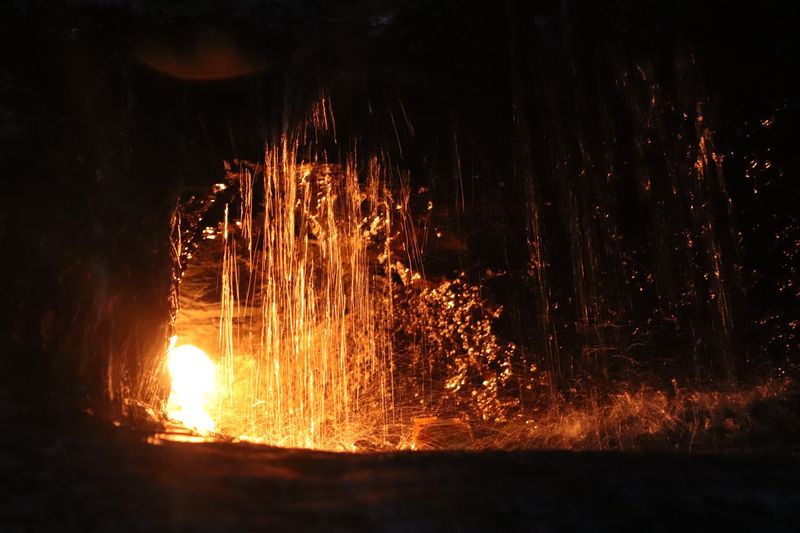
Despite its name, the flame at Eternal Flame Falls does go out on occasion. Strong winds, heavy water flow, or a combination of both can extinguish it, and when that happens, visitors are welcome to relight it themselves.
Bringing a lighter or a long fireplace match is a piece of advice that appears consistently among those who have made the trip, and it adds a small but memorable dimension to the visit.
The act of relighting the flame is oddly satisfying. Holding a flame to the gas seep and watching it catch and hold is a direct, tactile connection to something geological and ancient.
The gas seeps continuously whether the flame is burning or not, and the ignition point is easy to locate inside the grotto. Children in particular tend to find this moment genuinely exciting.
The flame’s persistence over thousands of years is attributed in part to the unusually high concentrations of propane and ethane in the gas, which burn more readily than pure methane. Researchers believe the flame has likely been burning in some form for millennia, though the exact history is impossible to verify.
That long, unconfirmed timeline gives the place a depth that no visitor center exhibit could replicate.
Visiting In Different Seasons And How Each One Changes The Experience
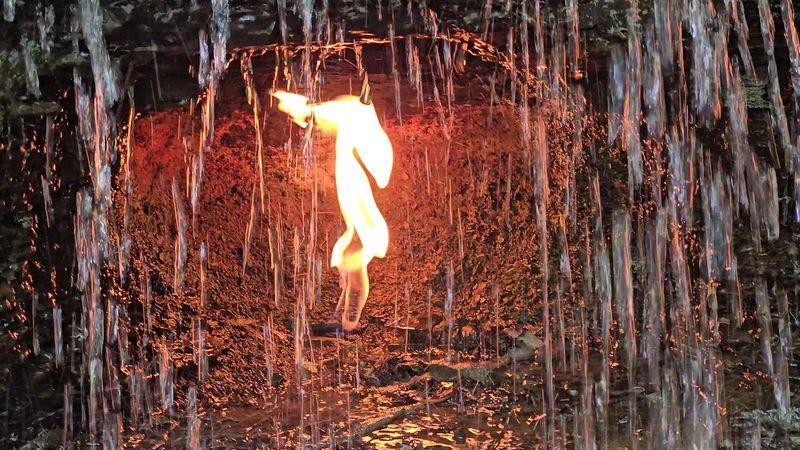
Each season delivers a genuinely different version of the same trail, and the variation is significant enough that returning visitors often choose a specific time of year with a clear purpose in mind. Spring brings the heaviest water flow and the most vivid contrast between the rushing falls and the steady flame.
The surrounding forest is green and lush, and the creek runs with enough energy to make the rock crossings feel like a proper adventure.
Summer tends to reduce the water flow, and by late August the falls can be nearly dry. That reduction actually makes the grotto more accessible and the flame easier to observe up close.
The forest canopy provides good shade along the trail, and the overall hike feels lighter and more relaxed during the warmer months.
Winter visits are the most visually dramatic of all. Ice formations build up around the falls and along the creek banks, and the flame burns inside a shell of frost and frozen spray that looks genuinely surreal.
The trail becomes significantly more demanding in icy conditions, and appropriate footwear becomes critical rather than optional. Autumn sits comfortably between these extremes, offering colorful foliage overhead and moderate water levels that make for a well-rounded and photogenic hike.
Why This Place Belongs On Any Serious New York Bucket List
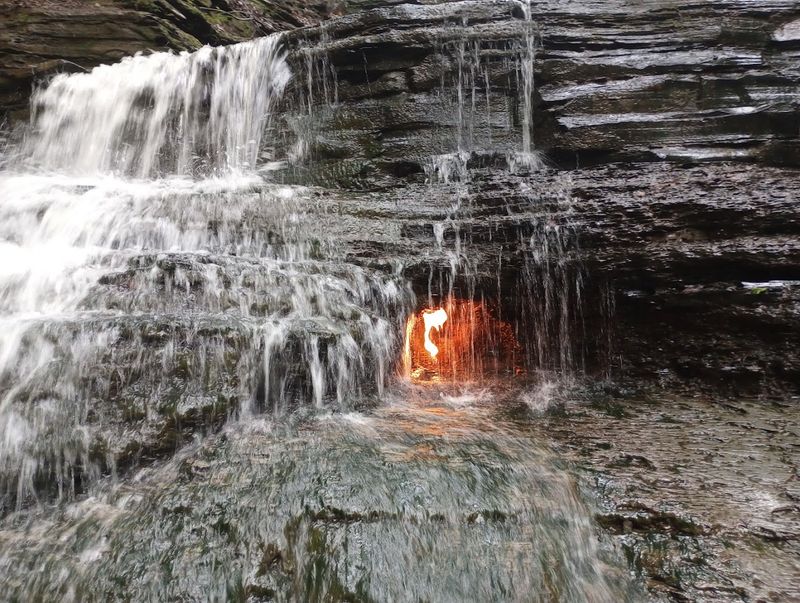
Out of the nine known eternal flames in the world, Eternal Flame Falls in Orchard Park holds a distinction that none of the others can claim: it is the only one situated inside a grotto directly behind an active waterfall. That single detail elevates it from geological curiosity to something genuinely singular.
The combination of accessible trail, free admission, and a phenomenon that puzzles professional scientists makes it a rare category of destination.
The trail earns a 4.7-star rating, and the consistency of that enthusiasm across different seasons and conditions reflects something real about the place. Families, solo hikers, geology enthusiasts, and casual day-trippers all find something worth the effort here.
The hike is short enough to feel approachable and interesting enough to hold attention long after the visit ends.
New York has waterfalls, forests, and geological landmarks in abundance, but very few places manage to combine all three into a single 1.5-mile trail that leaves visitors genuinely unsettled in the best possible way.
The flame burns quietly, the water moves around it, and the shale beneath holds a secret that science has only partially explained.
That gap between what is known and what remains unresolved is exactly what makes Eternal Flame Falls worth finding.