
The Tennessee Waterfall You Can Walk Behind That Feels Straight Out Of A Movie
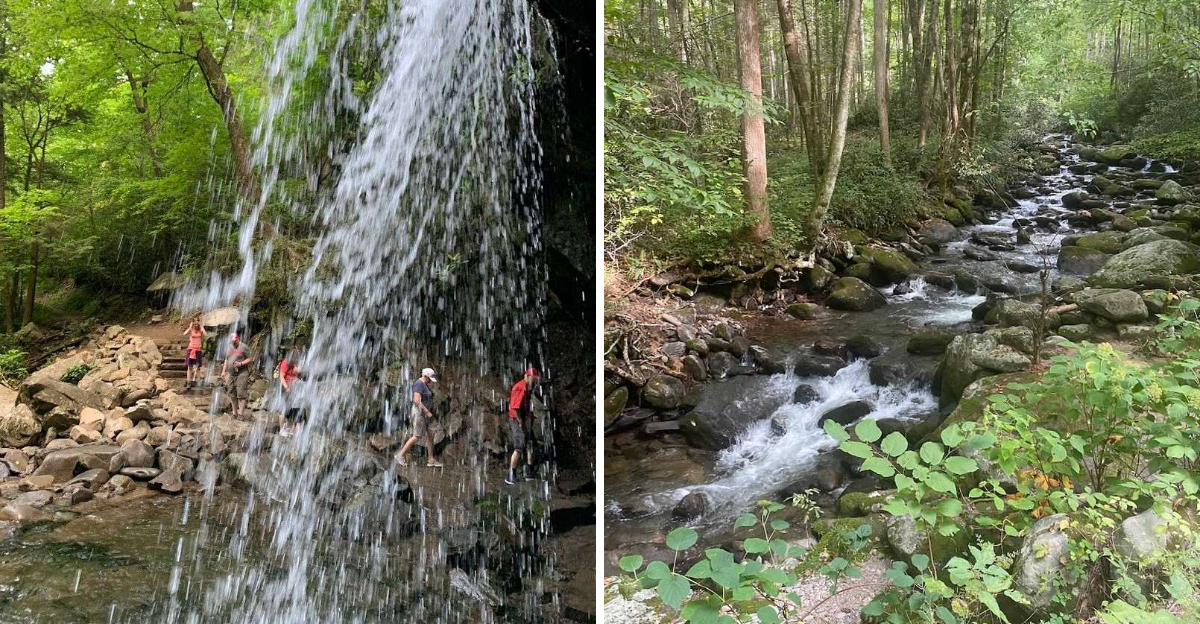
Some waterfalls are pretty. Others make you stop mid-trail and wonder how the view is even real.
Tennessee has one of those rare places where the path leads you right behind a curtain of falling water, with cool mist in the air and forest all around. It feels cinematic without needing any special effects.
The walk there is part of the magic too, with a leafy mountain trail that builds the excitement one step at a time. For anyone craving a nature outing that feels bigger than a simple hike, this waterfall delivers a scene you’ll remember.
The Only Waterfall In The Smokies You Can Walk Behind
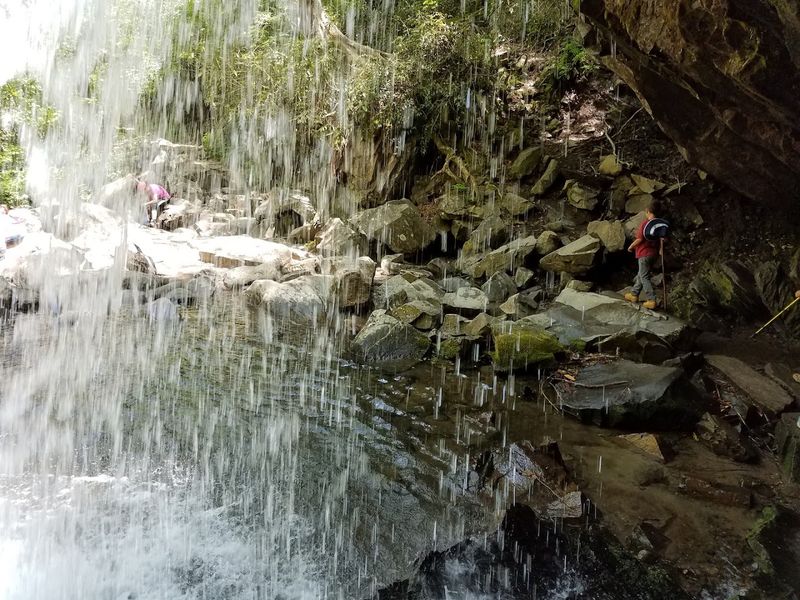
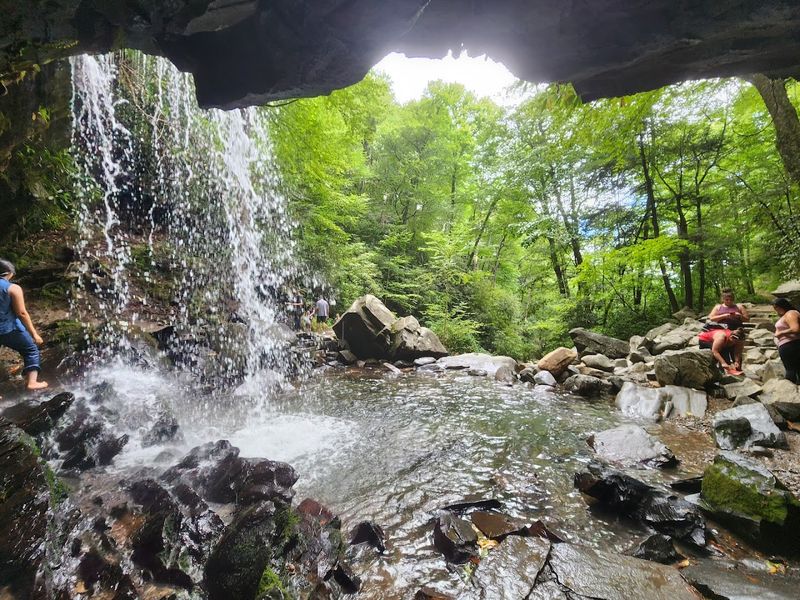
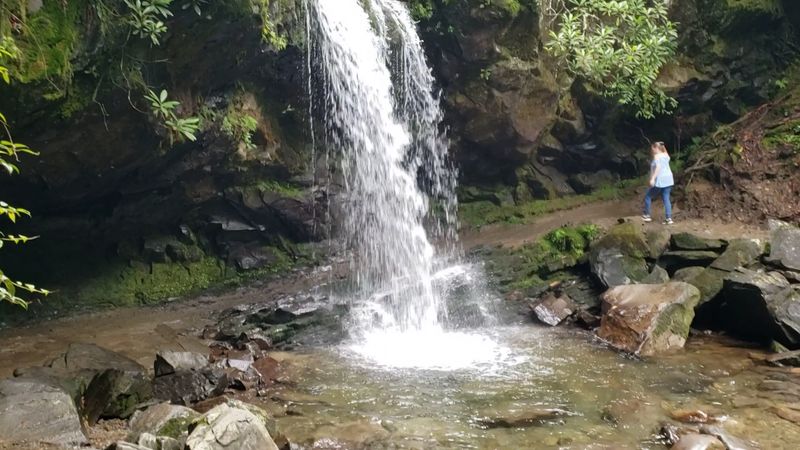
Standing behind a waterfall is one of those experiences that sounds almost too cinematic to be real, yet this place delivers exactly that. It holds the rare distinction of being the only waterfall in Great Smoky Mountains National Park where visitors can physically walk behind the cascading water.
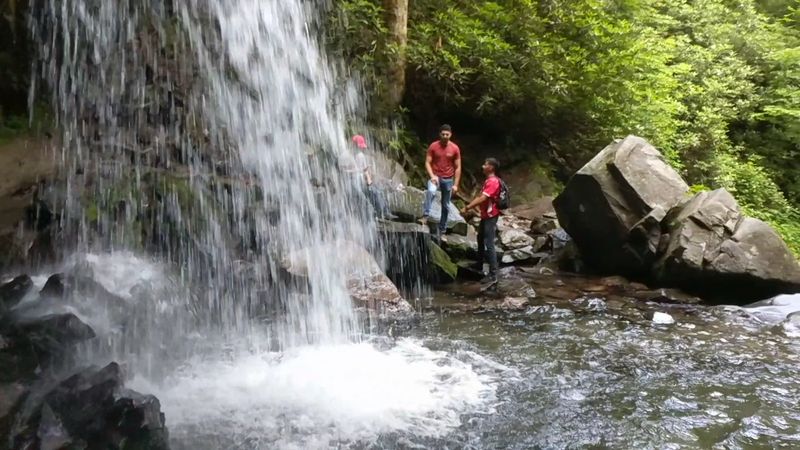
The falls drop 25 feet over a wide ledge of overhanging rock, creating a natural alcove large enough for a group of hikers to stand comfortably inside. The sensation is immediately cooling, with mist filling the air and the sound of rushing water surrounding you on all sides.
It feels less like a hiking destination and more like a scene from an adventure film.
Children and adults alike tend to linger here far longer than planned. The rock shelf behind the falls stays relatively dry in the center, giving you a stable place to stand and observe.
Photographers find the framing irresistible, with the water acting as a translucent curtain in front of the forest beyond. This singular feature is what separates this place from every other waterfall experience in the entire park.
How To Reach The Trailhead Without The Parking Headache
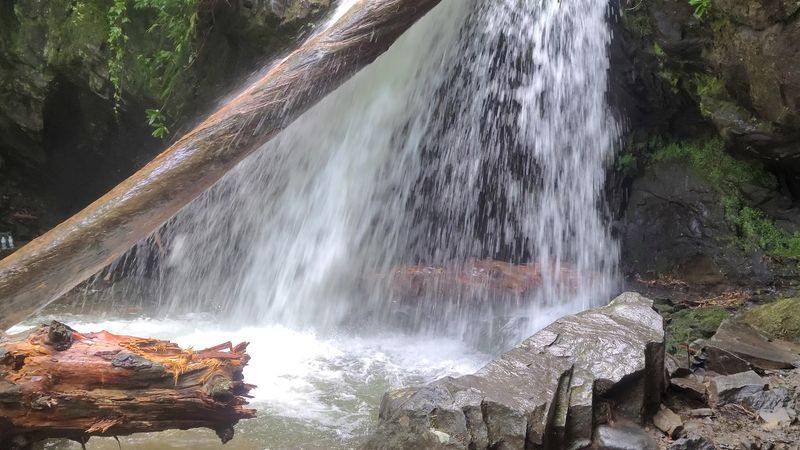
Getting to Grotto Falls requires a bit of planning, and the parking situation is the detail most hikers wish someone had warned them about in advance. The trailhead sits along the Roaring Fork Motor Nature Trail, a one-way scenic road accessed from Traffic Light 8 in downtown Gatlinburg, Tennessee.
Parking spaces at the Grotto Falls lot fill up rapidly, often before 9 AM on weekends and busy seasons. Hikers who arrive at 7 AM report the first lot already half full.
Driving the narrow, winding one-way road twice because you missed your chance is an experience worth avoiding entirely. Arriving before sunrise during peak months is a genuine strategy, not an exaggeration.
A practical alternative is using the shuttle service available in the area, which drops hikers near the trailhead and eliminates the parking scramble altogether. If you do drive, be aware that the Roaring Fork Motor Nature Trail closes from approximately December 1 through March 10 each year, so winter visits require confirming road access in advance.
The address for navigation purposes is Trillium Gap Trail, Gatlinburg, TN 37738. Downloading offline maps before leaving is strongly advised since cell service is nonexistent once you enter the park.
What The Trail Through Old-Growth Hemlock Forest Actually Feels Like
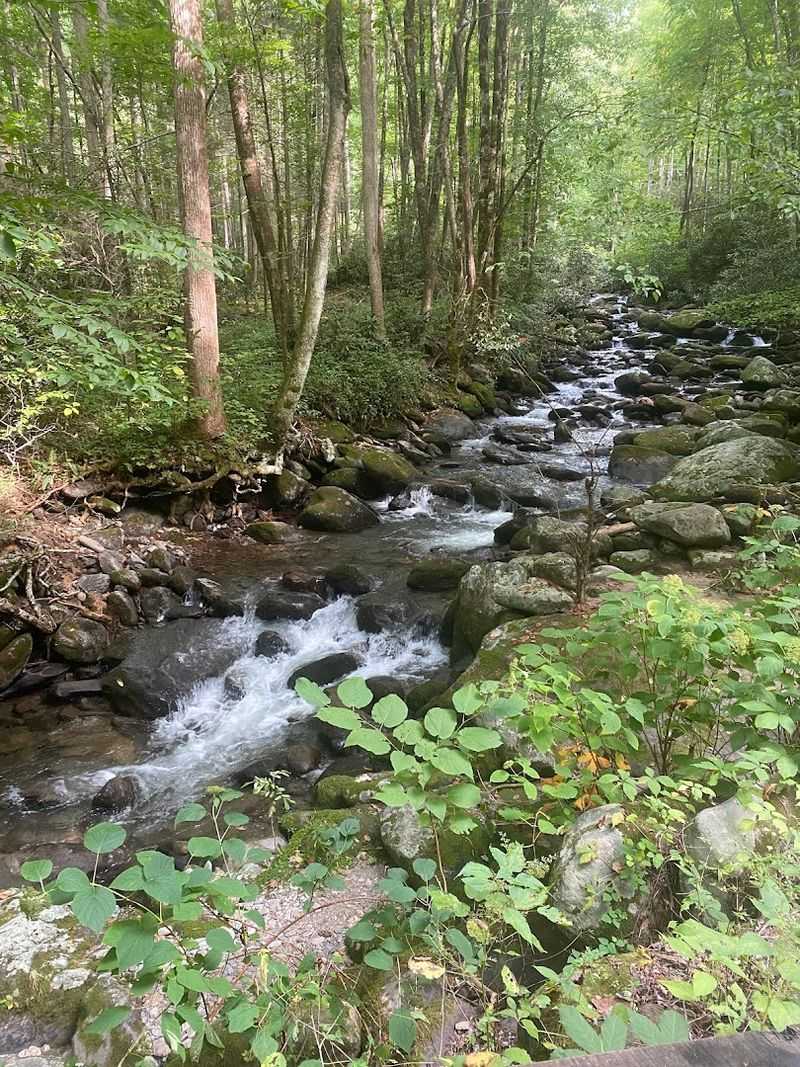
The walk to Grotto Falls is as rewarding as the destination itself, which is not something every hiking trail can honestly claim. The Trillium Gap Trail passes through stands of old-growth hemlock forest that have been growing for centuries, their thick canopies blocking direct sunlight and keeping the air noticeably cooler than the surrounding area even on warm summer days.
The forest floor along this trail carries that particular stillness that only old forests seem to hold. Moss covers the rocks, small streams cross the path at several points, and the sound of water follows you almost from the very beginning of the hike.
The trail is approximately 2.6 to 3 miles roundtrip with an elevation gain of around 585 to 600 feet, which places it comfortably in the moderate category.
Most hikers complete the roundtrip in two to three hours, though those who stop frequently to observe wildlife or photograph the smaller cascades along the way will naturally take longer. The trail surface is a combination of packed earth, exposed roots, and rocks, so footwear with solid grip matters more than many people anticipate.
The forest itself has a quality that makes the effort feel genuinely worthwhile long before you reach the falls.
Spring Wildflowers That Turn The Trail Into A Living Painting
April and May transform the Trillium Gap Trail into something that botanical illustrators would struggle to capture accurately. The trail earns its name honestly, with trillium flowers appearing in generous clusters along the path during peak spring bloom.
White violets and stitchwort add additional layers of color, scattered across the forest floor like a deliberate arrangement.
Spring is widely considered the most visually rewarding season for this hike, and the wildflower display is a significant reason for that reputation. The blooms emerge after the winter road closure lifts, typically around mid-March, and the combination of cool temperatures, frequent rainfall, and filtered forest light creates ideal growing conditions.
Hikers who time their visit for early May often describe the experience as unexpectedly emotional in its beauty.
Beyond the flowers, spring also brings heightened wildlife activity along the trail. Salamanders become more visible near the moist areas close to the falls, and various bird species are actively nesting in the surrounding canopy.
The biodiversity of the Smokies is remarkable in any season, but spring concentrates it in ways that make every section of the trail feel worth pausing over. A slow, observant pace rewards visitors far more than rushing toward the waterfall alone.
The Llama Pack Trains That Share The Trail Three Days A Week
Few things are more unexpectedly delightful on a mountain hike than rounding a bend and coming face to face with a string of llamas. On Mondays, Wednesdays, and Fridays, llama pack trains use the Trillium Gap Trail to carry food and supplies up to Mount LeConte Lodge, one of the only backcountry lodges in the entire national park system.
The llamas move at a steady, unhurried pace and are well accustomed to hikers along the route. Trail etiquette requires stepping to the side and allowing the animals to pass without sudden movements or loud noises.
Most hikers find this encounter genuinely memorable, and children in particular tend to treat it as an unexpected highlight of the entire trip.
The llama supply runs have been operating for decades, representing a practical solution to the challenge of stocking a remote mountain lodge without road access. Each animal can carry a substantial load, and the pack trains typically consist of several llamas moving in a single file line with a handler at the front.
Visiting on one of these three days increases your chances of this encounter considerably. It is the kind of detail that makes Grotto Falls feel like a trail with genuine character rather than just another popular hiking destination.
Wildlife Encounters Along The Route That Keep You Alert
The Trillium Gap Trail sits inside one of the most biodiverse temperate forests on the planet, and the wildlife reflects that fact at every elevation. Bears are occasionally spotted along the trail, and multiple visitor reviews mention sightings, including one bear observed running off the trail and into the valley below.
The standard advice applies firmly here: maintain distance, do not approach, and make noise while hiking to avoid surprising an animal.
Salamanders are arguably the most reliably spotted creatures near Grotto Falls itself. The cool, perpetually moist environment around the waterfall is ideal habitat for several species, and patient observers often find them resting on rocks or moving through shallow water near the base of the falls.
The Great Smoky Mountains hold more species of salamanders than anywhere else in North America.
Insects, birds, and various fungi also appear throughout the hike in remarkable variety. Hikers with a naturalist’s curiosity will find the trail endlessly interesting even on a slow day for larger wildlife.
The mushrooms alone, growing on fallen logs and mossy rocks, represent an astonishing range of forms and colors. Carrying binoculars adds a worthwhile dimension to the experience, particularly during spring and early summer when bird activity peaks along the forest canopy.
Gear And Footwear Choices That Make Or Break The Experience
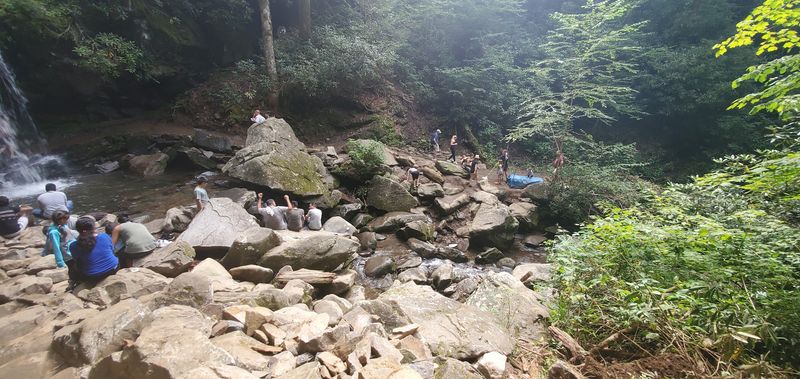
The trail to Grotto Falls is not technically demanding, but the surface conditions demand more respect than casual footwear can provide. The path includes sections of exposed rock, tree roots, and stretches that turn muddy after rain.
The area immediately behind the falls is consistently wet and can be slippery even on dry days, which is where poor footwear choices become immediately apparent.
Sturdy, closed-toe shoes with meaningful tread are the baseline recommendation from experienced hikers and park staff alike. Trail runners work well for most visitors, while proper hiking boots offer additional ankle support on the rockier sections.
Sandals and casual sneakers with flat soles are a reliable source of regret on this particular trail, especially for children who tend to move quickly and unpredictably near the water.
Beyond footwear, a few practical items improve the experience considerably. Bringing water is essential since there are no facilities along the trail itself, though restrooms are available at the trailhead parking area.
Snacks matter more than people expect on a hike that can stretch to three hours with stops. A light rain jacket is worth carrying in any season since mountain weather in the Smokies shifts without much warning.
Trekking poles offer noticeable stability on the descent, particularly on wet or muddy sections.
The Cherokee Heritage Woven Into This Landscape
Long before Grotto Falls became a hiking destination, the land surrounding it held deep significance for the Cherokee people. The Roaring Fork area, where the trail is located, formed part of a vast network of Cherokee paths used for travel, trade, and hunting across the mountain landscape.
The Smokies were not simply a place to pass through but a homeland rich with meaning at every elevation.
Cherokee tradition viewed waterfalls as places of purification and spiritual renewal. The cool, mist-filled environment of a falls like Grotto would have been considered a site for reflection and ceremony, connected to the broader understanding of water as a force of healing and transformation.
This context adds a dimension to the experience that goes beyond the purely recreational.
The Cherokee were forcibly removed from much of this land during the Trail of Tears in the 1830s, yet their cultural legacy remains woven into the fabric of the Smoky Mountains. The Eastern Band of Cherokee Indians continues to maintain a living presence in the region, and their heritage shapes the interpretation of many sites within and around the national park.
Walking these trails with awareness of that history transforms the experience from a pleasant outing into something considerably more layered and meaningful.
Photography Angles That Capture The Falls At Their Most Dramatic
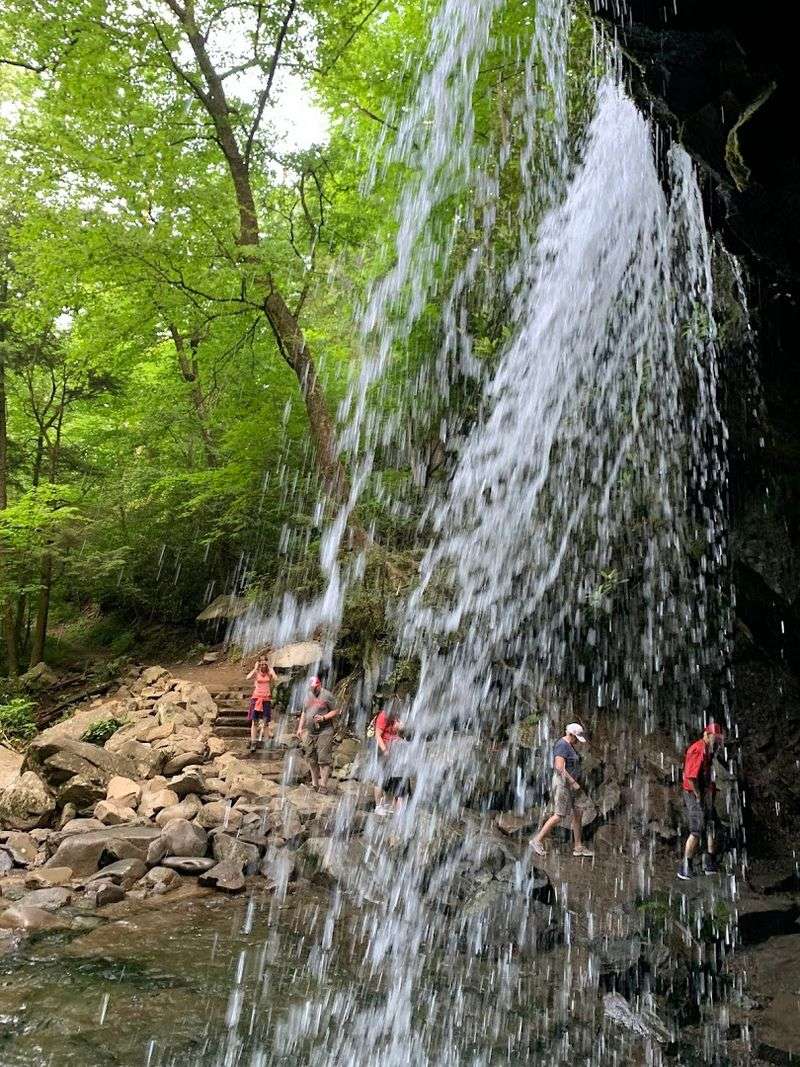
Grotto Falls offers a range of photographic perspectives that few waterfalls can match, primarily because of the unique geometry created by the overhanging rock shelf. Shooting from outside the falls with the water as a foreground element produces images where the forest and rock face are visible through a translucent curtain of moving water.
This framing is difficult to achieve at most waterfalls and practically effortless here.
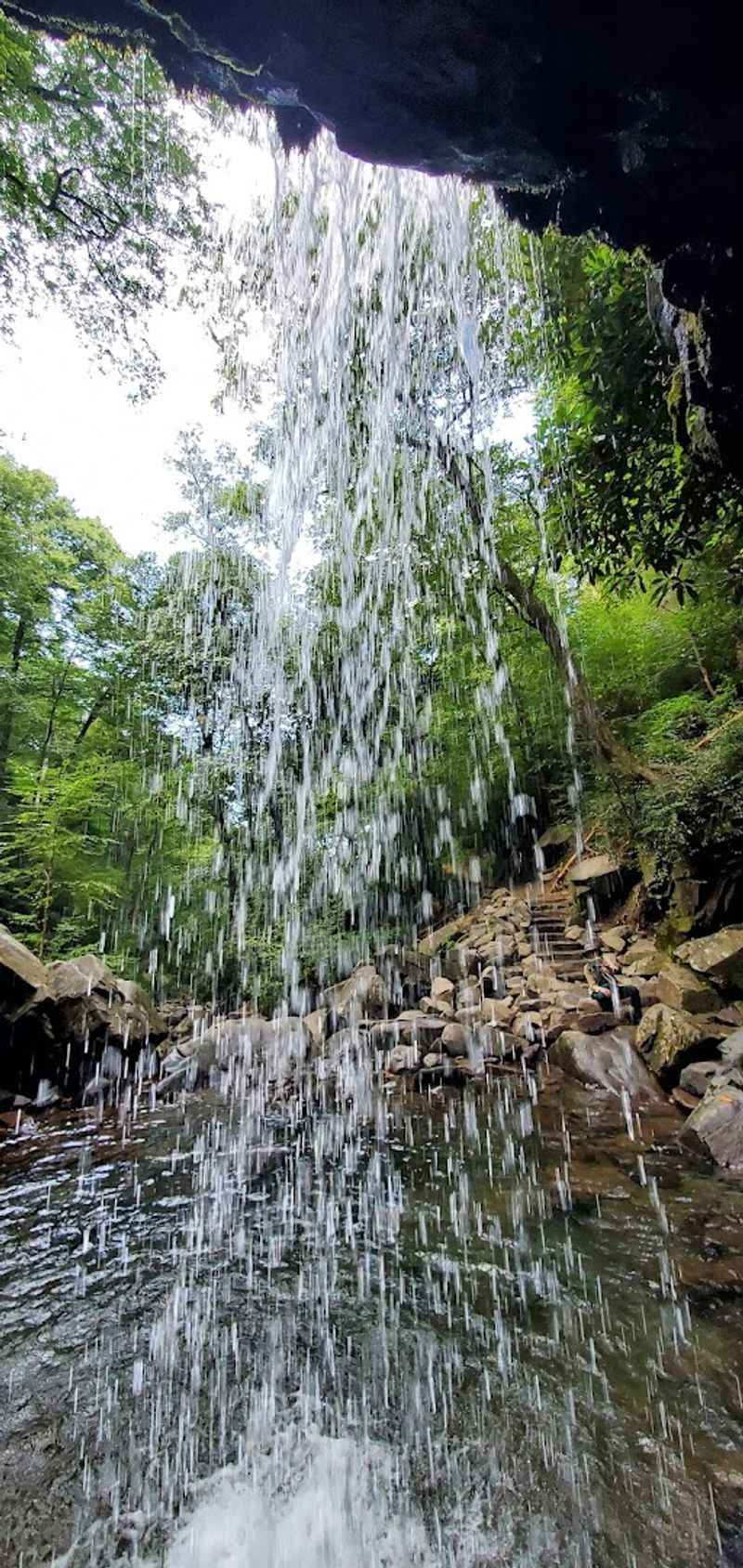
Standing behind the falls and pointing the camera outward gives you the reverse perspective, with the cascading water framing the trail and forest beyond. Early morning light filters into the gorge at a low angle during spring and summer months, which adds warmth and depth that afternoon visits cannot replicate.
Multiple reviewers specifically mention that afternoon visits in autumn and winter produce flatter light due to the orientation of the falls within the gorge.
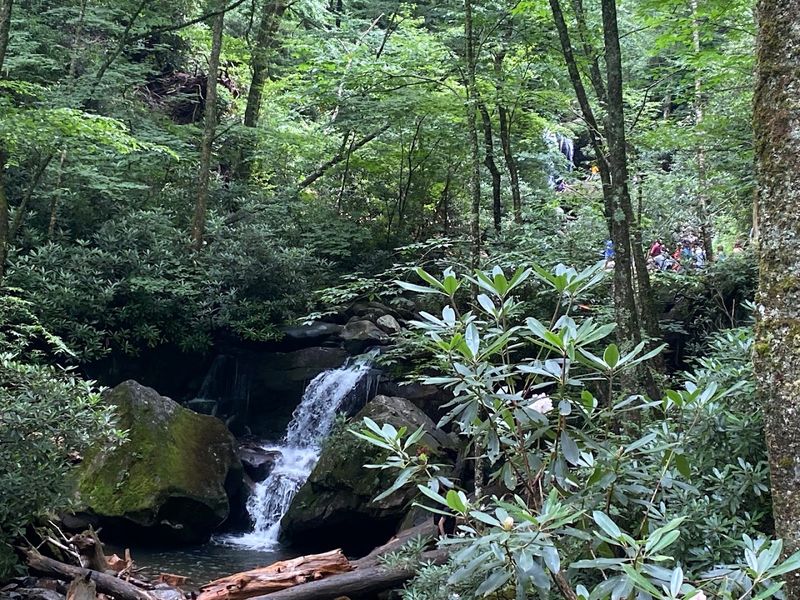
The smaller cascades along the trail leading up to Grotto Falls also deserve attention from photographers. Several tiered drops appear at intervals, each offering its own composition opportunity.
A wide-angle lens handles the scale of the main falls well, while a longer focal length pulls in detail from the rock formations and vegetation. Arriving early keeps the falls relatively clear of other visitors, which matters considerably for clean compositions without strangers in the frame.
Why Visitors Consistently Rate This Among The Best Smoky Mountain Experiences
Grotto Falls carries a 4.8-star rating across more than 1,600 reviews, which reflects something more than ordinary visitor satisfaction. The combination of a manageable trail, a genuinely unique waterfall feature, and the surrounding forest environment creates an experience that works for a wide range of visitors.
Families with young children, solo hikers, couples, and groups all find something that resonates here.
The reviews mention proposals, children’s first bear sightings, winter ice formations, and salamander discoveries with equal enthusiasm. That range of memorable moments speaks to the trail’s capacity to surprise even visitors who arrive with modest expectations.
One family described their son proposing to his girlfriend behind the falls in October, treating the location as a natural stage for a significant life moment.
Accessibility plays a meaningful role in the trail’s broad appeal. The moderate difficulty rating means most reasonably active people can complete the hike without specialized fitness preparation.
The 2.6 to 3 mile roundtrip distance is approachable for older children and adults of varying fitness levels. The payoff at the end, standing behind a 25-foot waterfall in the Great Smoky Mountains, consistently exceeds what visitors imagined before arriving.
That gap between expectation and reality, in the best possible direction, is what drives the trail’s enduring reputation.