
A British Author Founded This Tennessee Village In 1880, And Walking It Still Costs Nothing
Somewhere on the Cumberland Plateau in Tennessee, a wrong turn off a two-lane highway drops you into a cluster of gabled Victorian houses that look like they wandered over from the English countryside. Nobody stops you at a gate, nobody asks for money, and you can walk the whole tree-lined lane for free.
Behind those painted porches sits a genuinely strange story about a famous British writer who tried to build a brand-new society in the Tennessee woods. It is the kind of Saturday detour that costs a tank of gas and sticks with you for years.
Where The English Colony Sits On The Plateau
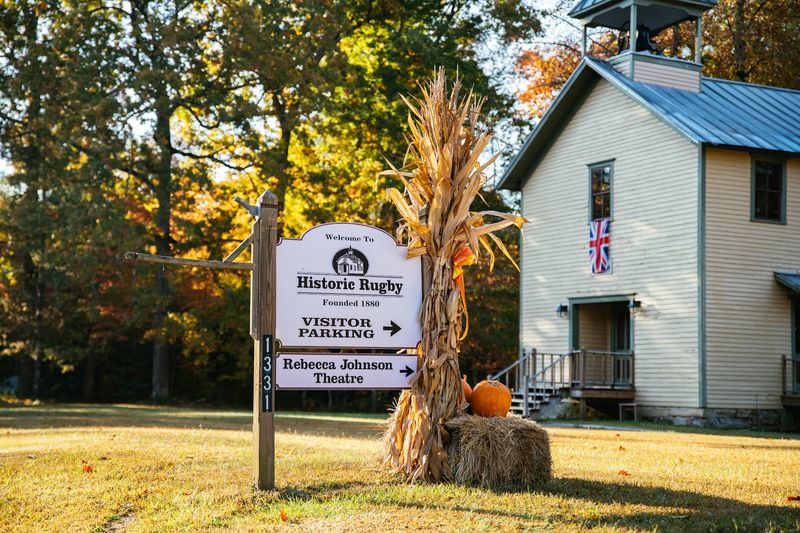
Pull up to 1331 Rugby Parkway in Rugby, Tennessee, and the address alone tells you how small this place is. The village sits on the northern Cumberland Plateau, tucked between the Big South Fork National River and Recreation Area and the Rugby State Natural Area.
Officially it is listed as a museum, though that undersells it. Historic Rugby is an actual community of restored Victorian buildings, gardens, footpaths and gravel lanes where people still live and work.
Drive time is the number most Tennessee families want first. Knoxville sits a little over an hour away, Nashville a bit past two hours, Chattanooga roughly two hours and seventeen minutes, and the Tri-Cities somewhere between two and two and a half hours.
From Memphis it is a longer haul, closer to five and a half hours, so that one works better as a weekend.
Visitors regularly describe finding it by accident and then staying far longer than planned. One common thread in comments is how quiet it feels, with several people calling the whole village peaceful rather than staged or touristy.
Thomas Hughes And The 1880 Experiment
Back in 1880, English author and social reformer Thomas Hughes looked at Victorian England’s rigid class system and decided the answer was a colony in Tennessee. Hughes is best remembered as a writer, but here he was a founder, buying up plateau land and inviting settlers to build something new.
His target audience was unusual: younger sons of the English gentry who, under inheritance customs back home, stood to receive very little. In Rugby they could own land, farm, run shops and build a life measured by work instead of birth order.
The colony never grew into the thriving city Hughes imagined, but the buildings, records and idea outlasted the experiment itself. Around twenty original structures still stand, cared for by a nonprofit that keeps them in use rather than sealed behind glass.
What makes the history land is how plainly it is presented. One visitor summed up the feel by noting it is living history and not a theme park, and that distinction shows up in the worn floorboards, real books and working equipment scattered through the village.
The Free Walk Through Twenty Victorian Buildings
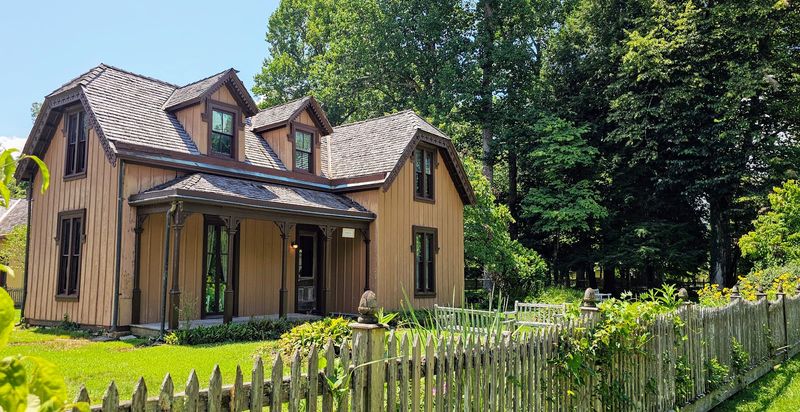
Zero dollars. That is what it costs to park, stretch your legs and stroll the village lanes past the painted porches, picket fences and steep gabled rooflines that gave Rugby its English look.
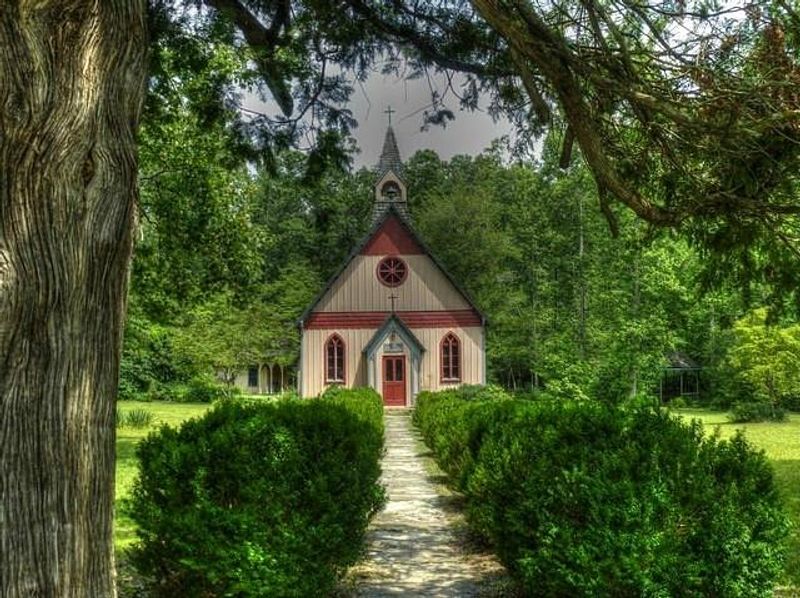
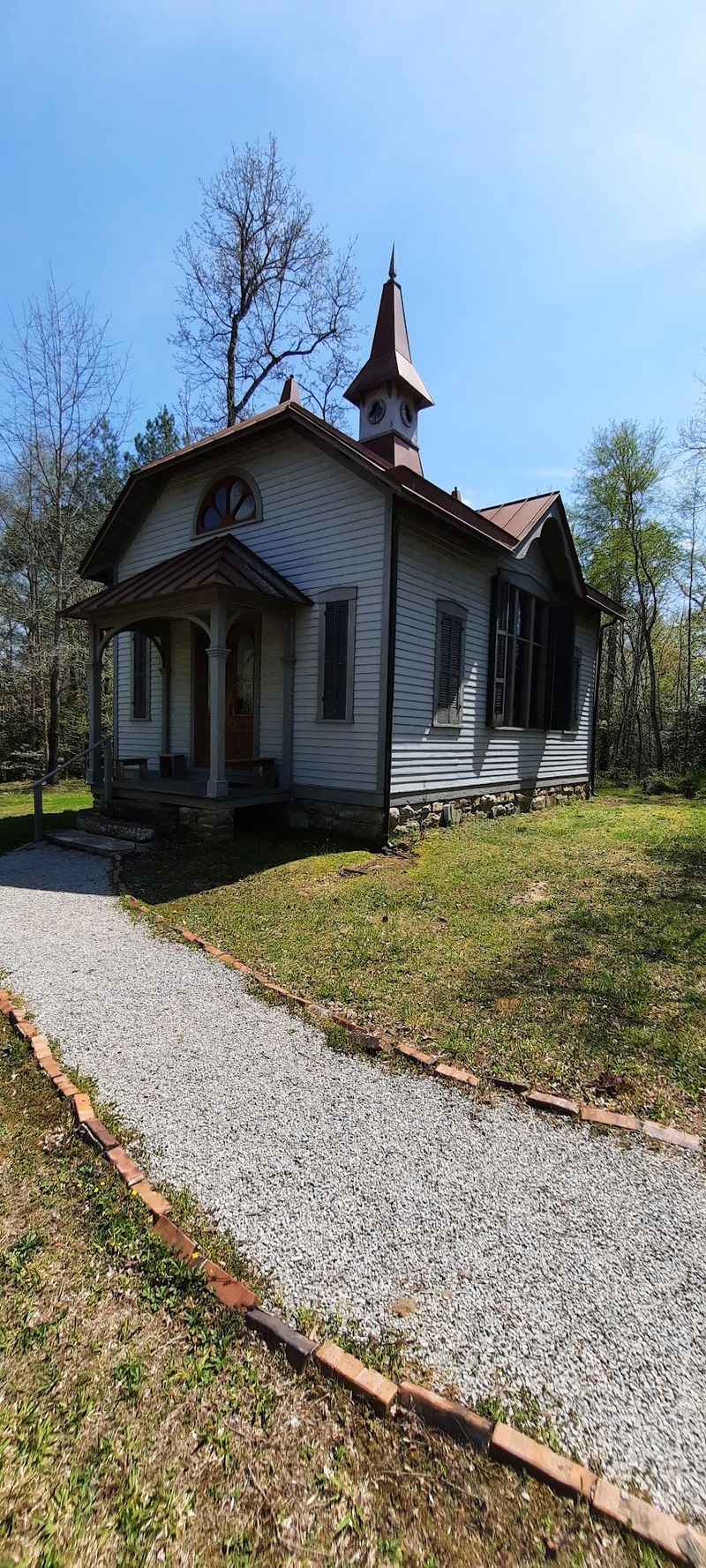
A self-guided wander gets you the exteriors of the 1887 Christ Church Episcopal, the founder’s 1884 home Kingstone Lisle, the 1907 Schoolhouse and a scattering of cottages with names instead of numbers. Historical markers and information boards fill in who lived where and what they were trying to build.
Photographers do well here. Several visitors mention driving slowly through town simply to shoot the restored homes and churches, and one described peeking through windows after the public buildings had closed and still enjoying the evening.
Fair warning from experience shared by others: the self-guided route can get confusing, and a few people reported losing track of which building was which. Grab a map at the Visitor Centre before you set off, and understand that interiors generally require the paid guided tour.
Free admission is the plain fact here, not a promotion, though seasonal schedules do shift.
The South’s First Free Public Library, Still Shelved
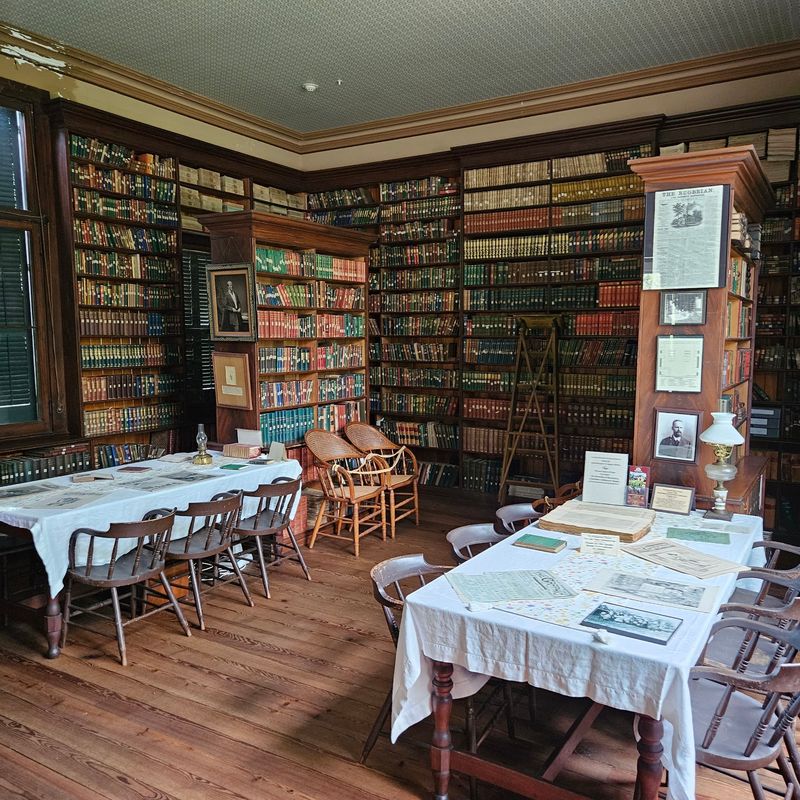
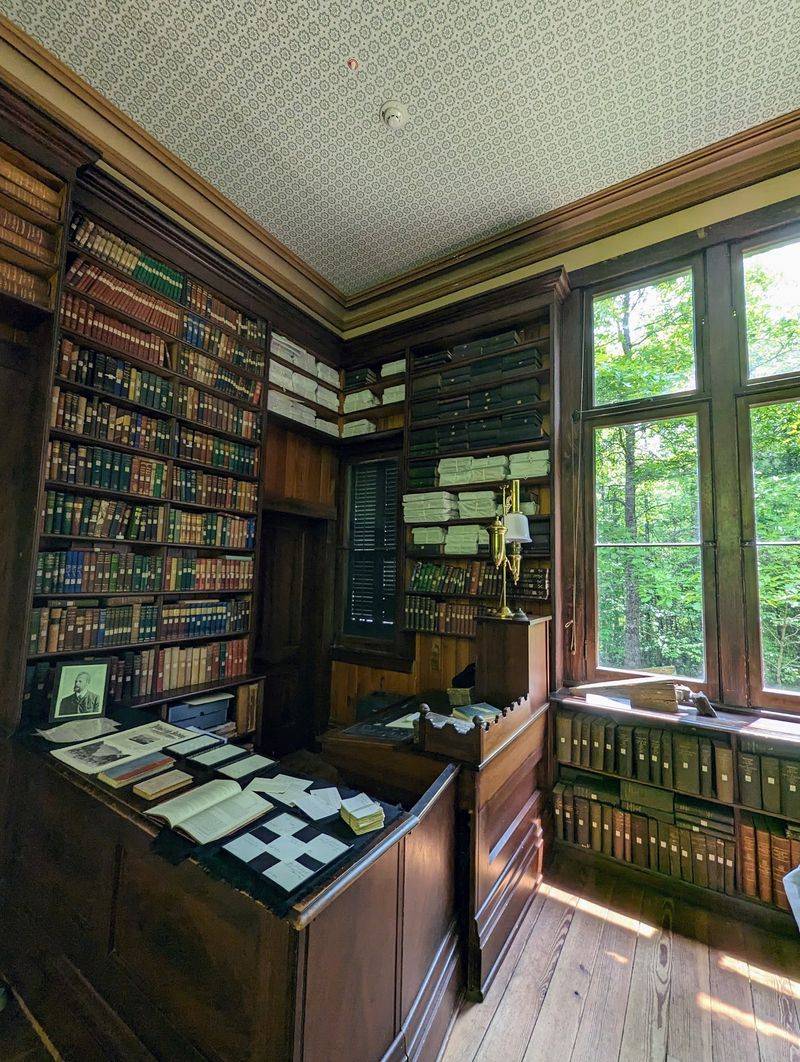
Roughly seven thousand Victorian-era volumes sit on the shelves of the 1882 Thomas Hughes Free Public Library, and the remarkable part is that they are the original collection. Nothing was swapped in later to fill gaps.
It carries the distinction of being the first free public library in the South, which fits neatly with Hughes’s whole idea that learning should not depend on family money. The reading room still has its Victorian furnishings and that particular smell of aged paper that no museum can fake.
Guests can step inside and look around, and it turns up again and again as a favorite stop. Couples touring the village often single out the library and the print shop as the two rooms that made the trip worth the drive.
Light comes through tall windows onto shelves arranged the way librarians arranged them well over a century ago. Give yourself extra minutes here rather than rushing to the next building, because reading a few spine titles does more for the history than any plaque.
Access to the interior typically comes with the guided interpretive tour.
Ink, Type And The Working Printing Works
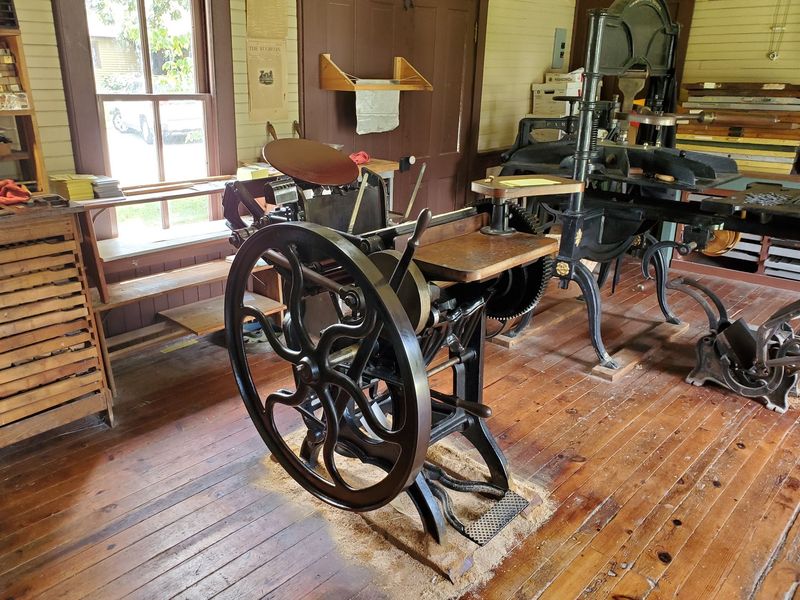
Clack, roll, press. The Rugby Printing Works still runs, and watching metal type get inked and stamped onto paper is the part kids tend to remember long after the architecture blurs together.
Free tours of the print shop are offered Fridays, Saturdays and Sundays during the operating season, which makes it one of the better no-cost stops in the village. Demonstrations show how newspapers were set and printed in the 1800s, letter by letter.
Repeat mentions from visitors point to the press as a highlight, with several saying they caught it in action and left impressed by how hands-on it felt. Even people who found the self-guided route confusing singled out the printing building as the piece that clicked.
There is something satisfying about the noise and the smell of ink in a room where everything is mechanical. No screens, no recorded narration, just gears and paper.
Because the schedule is seasonal and tied to staffing, it makes sense to call ahead at 423-628-2441 if the press demonstration is your main reason for driving out.
Trails, Gorges And Irish Road Bowling
Ten trails fan out from the village, ranging from easy loops to steeper plateau descents, and they are free to hike. The best known drops toward the Gentlemen’s Swimming Hole, with much of the path tracing the river beneath sandstone cliffs and overhangs.
Another route leads to the Meeting of the Waters, where two streams join in a gorge setting. A shorter loop behind the Visitor Centre runs a little over a mile through forest, which suits families who want scenery without a commitment.
Hikers who have done the swimming hole route advise sturdy shoes, a walking stick and tick spray, and one noted a small bridge that sits tilted and slick. Take that seriously with young children along.
Then there is Irish Road Bowling, held regularly on Rugby Parkway and free to join. Rolling a heavy ball down a country road is an odd tradition to find in Tennessee, and it is exactly the sort of thing kids talk about on the ride home.
Autumn brings the plateau’s color, making October a strong window for both trails and photographs.
Bologna Sandwiches At R.M. Brooks General Store
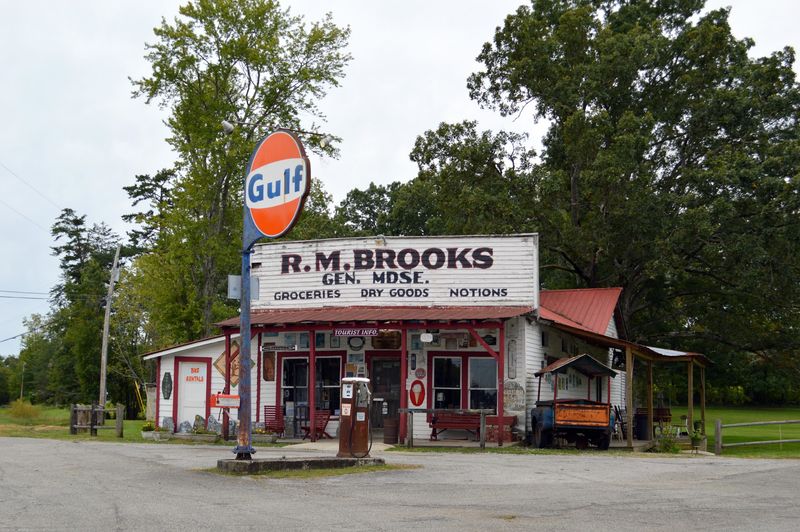
About a mile from the historic center, an old general store keeps the village fed. R.M.
Brooks General Store has built its name on what many call the best bologna sandwich in Tennessee, and the fried version with wheel cheese is the order regulars point newcomers toward.
The menu runs wider than that: cheeseburgers, barbecue, soups, sandwiches and ice cream, served daily until 5 PM except Sundays and Mondays. Saturday mornings add breakfast, which pairs well with an early trail start.
Walking into the store feels like part of the sightseeing. Creaky floors, packed shelves and glass cases make it a stop even if you are not hungry yet.
Dining options in the village are limited right now. The Harrow Road Cafe is closed with plans to reopen as the Harrow Road Public House in 2026, so Brooks is the main choice for a hot lunch.
Packing a cooler is a smart backup, especially on Sundays and Mondays. Picnic tables are available in nearby natural areas such as Frozen Head State Park, and a packed lunch keeps a family day comfortably under thirty dollars.
Hours, Tour Prices And Planning The Drive
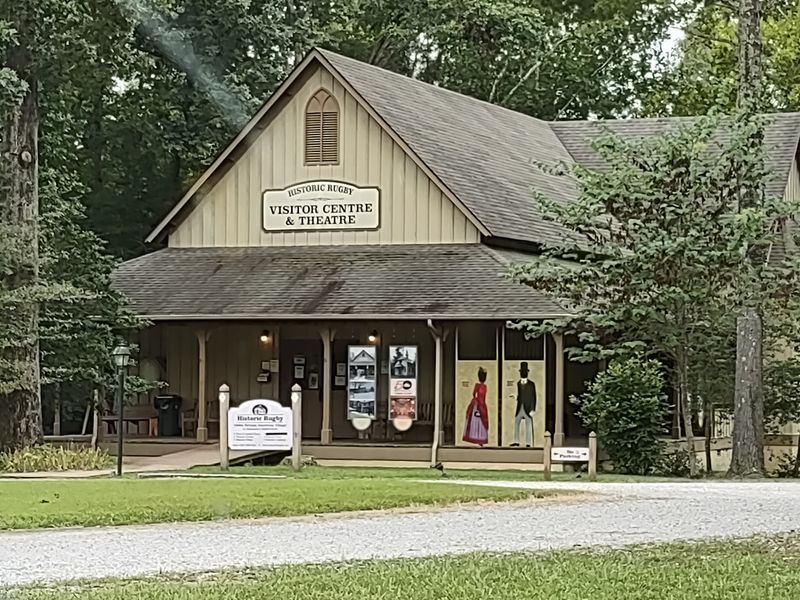
Start at the Rugby Visitor Centre and Theatre, where a complimentary 22-minute award-winning film lays out the colony’s story before you walk anywhere. All times here run on Eastern Time, which trips up Nashville drivers.
The Visitor Centre opens Thursday through Saturday, 9 AM to 5 PM, and Sundays from noon to 5 PM, closed Monday through Wednesday. The Commissary, stocked with artisan goods, runs Thursday through Saturday, 10 AM to 5 PM, and Sunday noon to 4 PM.
Guided interpretive tours operate mid-March through mid-December, Thursday through Sunday, and cost $10 for adults, $8 for seniors 60 and up, and $5 for K-12 students, with preschoolers free. Reservations are recommended.
A family of four with two school-age kids lands around $30 for full interior access.
The Visitor Centre, Theatre and general site are ADA accessible with modern restrooms, though some historic interiors are not.
Seasonal events include the Festival of British and Appalachian Culture in May, the bi-annual Pilgrimage of Rugby Homes, a September Laurel Dale Cemetery lantern tour and Christmas at Historic Rugby. Hours and prices can change seasonally, so call before you drive.