
A Nearly Forgotten Arizona Ghost Town Where The Ruins Are Impossible To Miss From The Highway
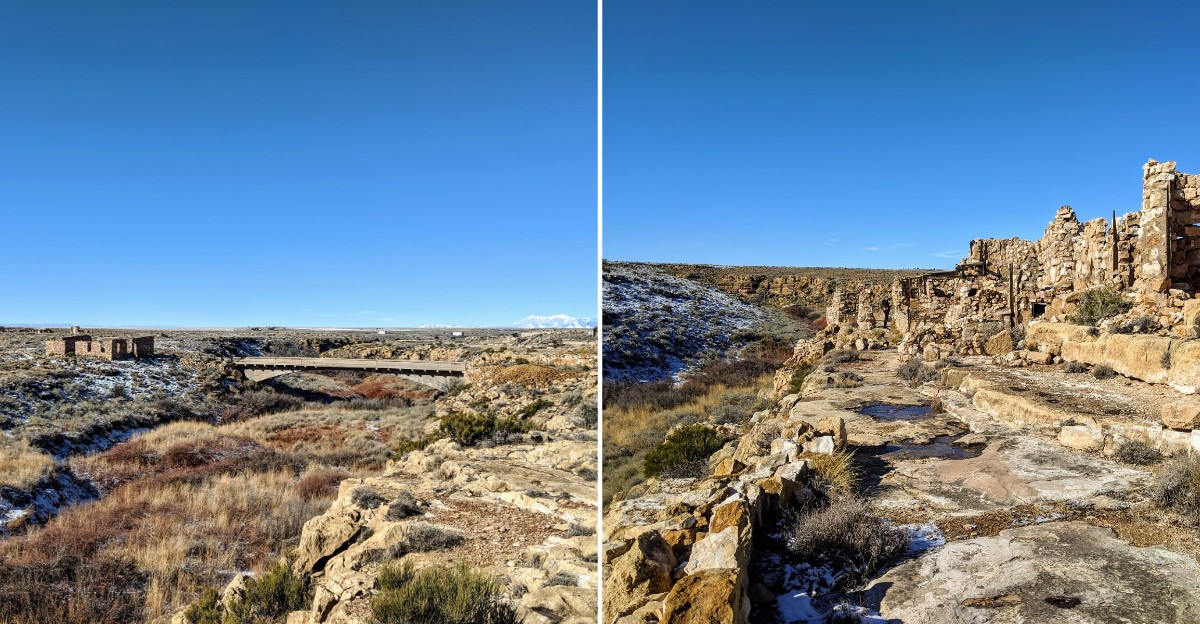
Some towns exist only as a reflection of the past, with no hope of any future ahead, and that past tells a story that commands genuine respect. This nearly forgotten Arizona ghost town holds ruins impossible to miss from the highway.
Buildings here stand quietly, weathered by time but still recognizable despite years of neglect. Nothing about the town feels restored or maintained beyond what nature has already done to it.
Explorers who venture through often describe the silence as the strangest part of the entire experience. Stories about what happened here shift depending on who tells them, though the core details rarely change.
Photography opportunities exist throughout, especially where structures still hold onto their original character. This ghost town proved that sometimes the most striking history stands quietly in plain sight.
A Roadside Relic
Picture cruising east on Interstate 40 with nothing but sagebrush and sky, and then a hollow concrete shell appears off to the side. That is Two Guns, a defunct roadside attraction sitting on the east rim of Canyon Diablo in northern Arizona.
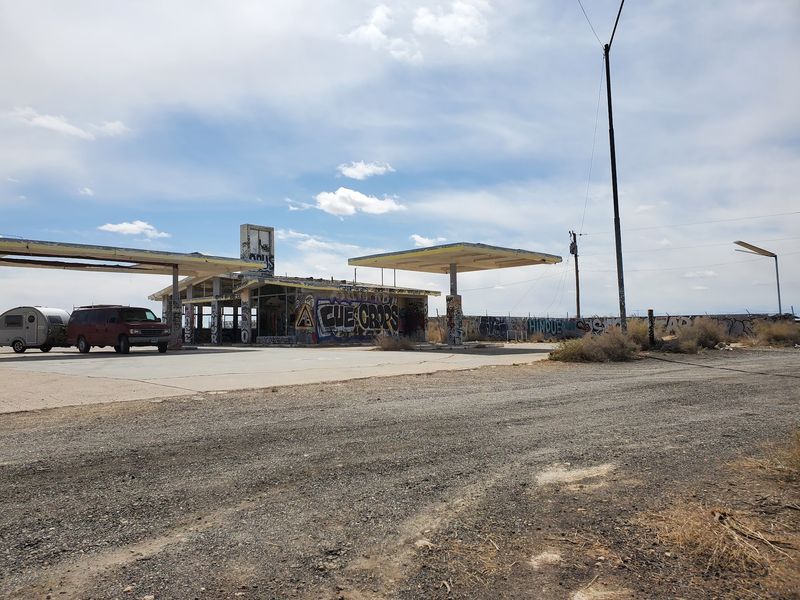
What catches the eye first is usually the skeleton of a Shell gas station built in the mid-1970s. Every inch of it wears layers of spray paint, and the roof canopy still juts out over pumps that vanished decades ago.
Scattered nearby are the leftovers of a KOA campground, a few stone walls, and foundations that only make sense once the history clicks into place. The whole site reads like a scrapbook someone dropped in the dirt.
The location was never random. Travelers had to cross Canyon Diablo somehow, and whoever controlled the crossing controlled the traffic.
Because the ruins sit so close to the freeway, plenty of people spot them at 75 miles per hour and wonder what they missed. The exit exists, and the desert around it is wide open and quiet.
Wear real shoes, bring water, and remember that broken glass and rusted metal are part of the scenery. Shade is basically nonexistent out here.
The Mystery Of Canyon Diablo
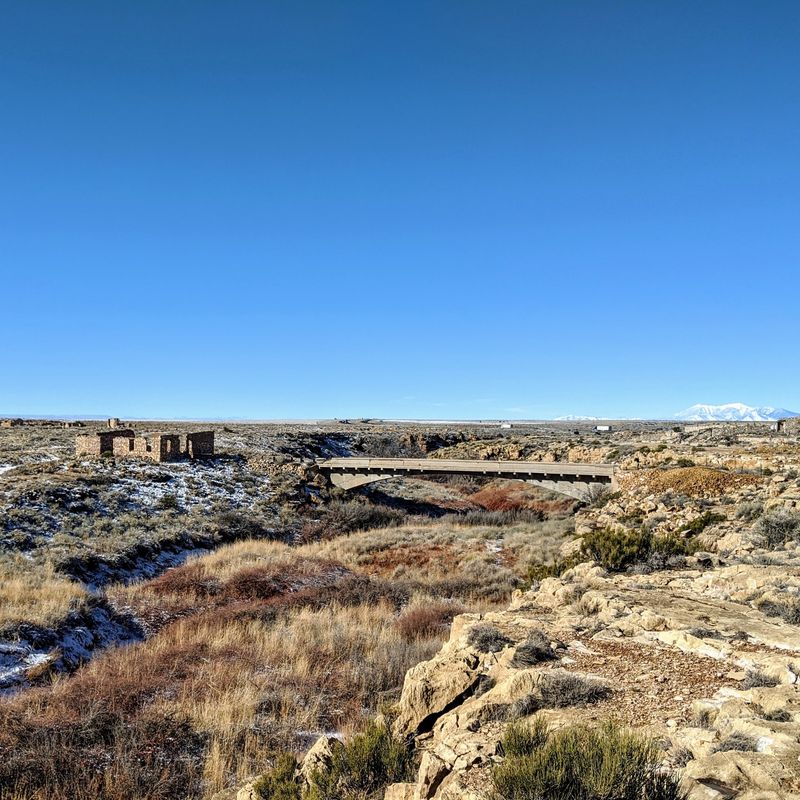
Long before anyone thought about souvenirs or gas pumps, there was the canyon. Canyon Diablo slices through the flat landscape like someone took a knife to it, and for early travelers it was a genuine nightmare.
Surveys for a wagon route through the area go back to the late 1850s, and that work eventually fed into the National Old Trails Road. Getting wagons across a gorge is not a small problem.
In the early 1880s a railroad camp sprang up on the eastern side, sharing the canyon’s name. It earned a reputation as a Hell on Wheels town, packed with rowdy businesses and violence so routine that lawmen there had famously short careers.
That original settlement mostly crumbled away, but a piece of the story still stands. A 1915 bridge spanning Canyon Diablo remains, part of an early alignment of Route 66, and it is listed on the National Register of Historic Places.
The bridge is weathered and closed to traffic, but it is a striking thing to see. Concrete arches, a deep drop, and absolute silence.
Standing near the rim, the scale of the canyon explains everything about why the town existed. People needed a crossing, and businesses followed the crossing.
Stay well back from unstable edges, because the rock here breaks off without warning.
The Mountain Lion And The Apache Death Cave
Now for the part of the story that gives people chills. A man named Harry E.
Miller showed up in 1925 and started calling himself Chief Crazy Thunder, though his actual heritage was disputed.
He leased land, opened attractions, and led paying visitors into a nearby cavern he named the Apache Death Cave. He also sold skeletal remains of Apache people to tourists, which is exactly as grim as it sounds.
The legend attached to the cave says that in 1878, Navajo warriors trapped roughly 42 Apache men inside and lit fires at the entrance. It was described as retaliation for an earlier raid, and the story has followed the site ever since.
Miller’s own luck was spectacularly bad. He was reportedly mauled by two of the mountain lions he kept, and later bitten by a Gila monster, which is a very specific kind of misfortune.
Another tale floats around the area too. Some accounts claim Billy the Kid and his gang holed up in ruins near Canyon Diablo during the winter of 1879 to 1880.
Whether every detail holds up is anyone’s guess, because roadside attractions were built on good storytelling. What is certain is that the cave and its legend shaped how people talk about Two Guns.
Treat the site respectfully, since real history and real tragedy sit underneath the folklore.
Zoo With A View
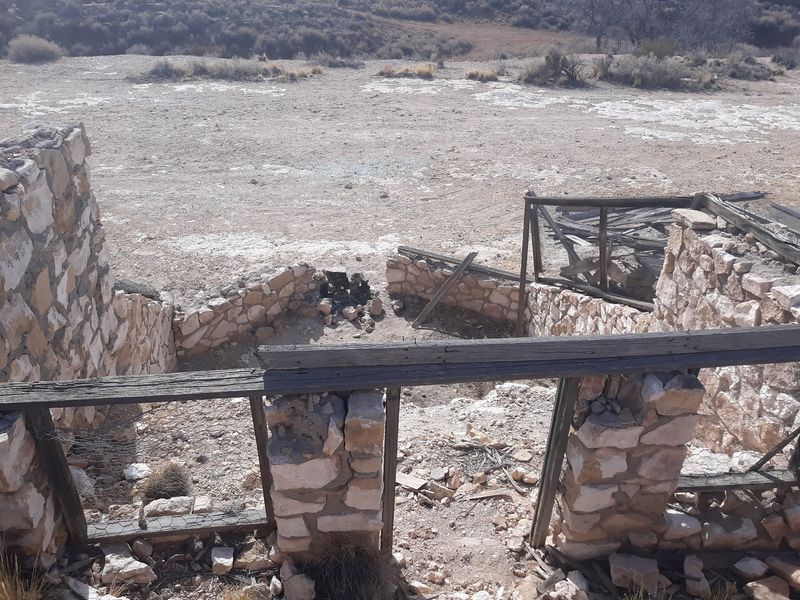
Here is a detail that catches most people off guard. Two Guns once had a zoo, perched right on the rim of a canyon.
Harry E. Miller put it together in 1925 as a way to reel in Route 66 travelers who wanted something more interesting than a sandwich.
His collection included mountain lions, bobcats, bears, and Gila monsters.
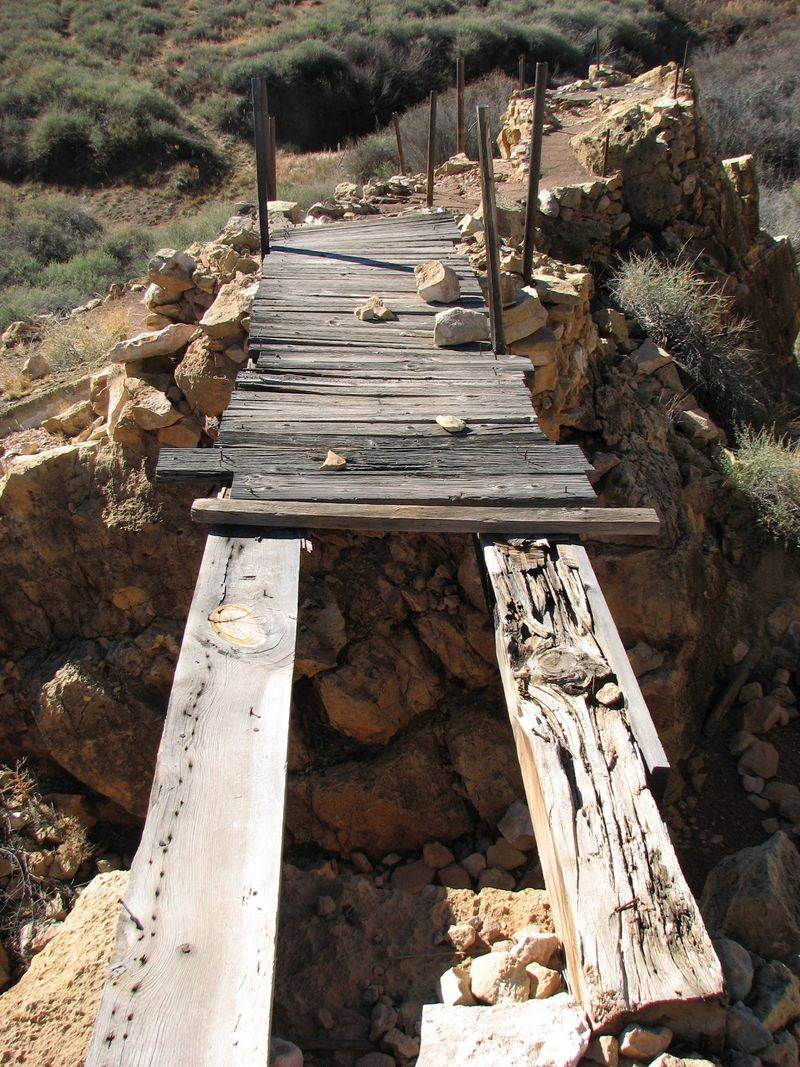
The enclosures were not exactly state of the art. They were crude structures of brick, mortar, and chicken wire, built along the canyon edge so visitors could peer in at the animals.
Those cages have not fully vanished. Their crumbling remains still sit west of where the old campground stood, low walls and empty doorways baking in the sun.
The best part for anyone poking around is the lettering. On some of the walls, the words Mountain Lions are still faintly painted, ghost-pale but readable.
It is a strange thing to find in the middle of nowhere, a hand-painted sign for animals that have been gone for generations. Photographers love the contrast of peeling paint against open desert.
Modern eyes will find the whole setup uncomfortable, and that is fair. Animal care in the 1920s roadside business had almost no rules.
Walk carefully near the cage ruins, because loose stone and hidden drop-offs are common along the rim.
The Painted Desert Connection
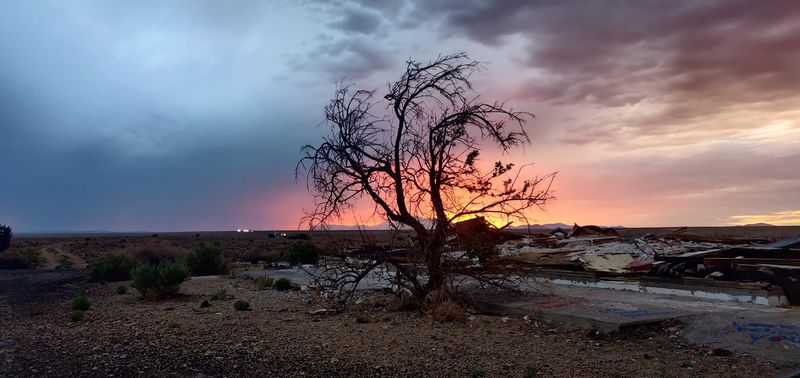
People often lump Two Guns in with the Painted Desert, and the link is more about geography than shared history. The town sits in a stretch of Arizona known for wide views and unusual rock formations.
Drive in any direction from here and the land keeps opening up. Layers of color show in the hills, especially when the light goes low and everything turns orange and violet.
The Little Painted Desert, another nearby stop, gave old Route 66 travelers one more reason to pull over in this region. Sightseeing and souvenir buying tended to go hand in hand.
That dry, sweeping environment does something to the ruins. Without trees or buildings to block the view, the broken walls of Two Guns look even more abandoned than they already are.
Weather here swings hard. Summer afternoons can be brutally hot, winter mornings bring biting wind, and monsoon storms roll in fast during late summer.
Cell service is spotty, so downloading maps ahead of time is smart. So is topping off the tank in Winslow or Flagstaff before heading out.
The isolation is the whole appeal for a lot of visitors. Standing among the ruins with nothing but wind and distant truck noise is a genuinely memorable experience.
Sunrise and sunset deliver the strongest colors by far.
Trading Post Tales
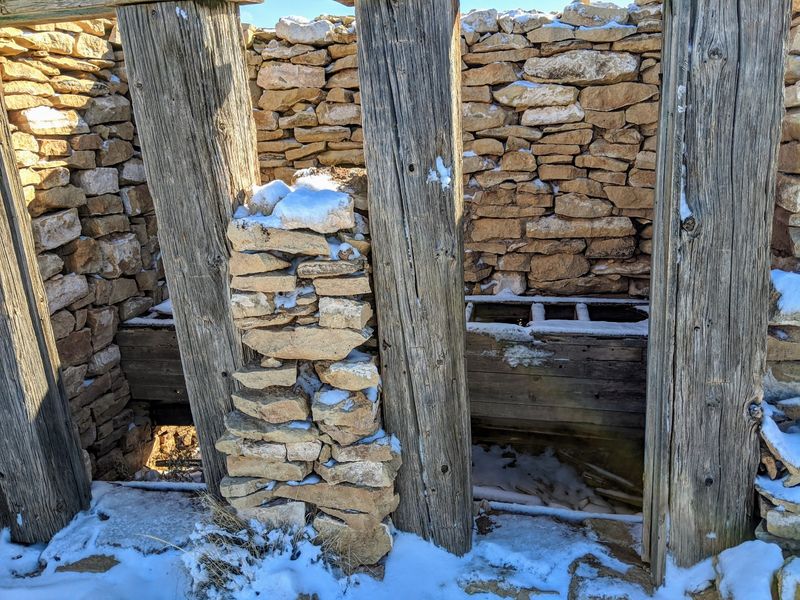
Before neon signs and caged bobcats, this was simply a place to buy supplies. As early as 1914, Daniel B.
Oldfield built a stone house here and ran it as a trading post for anyone crossing the canyon.
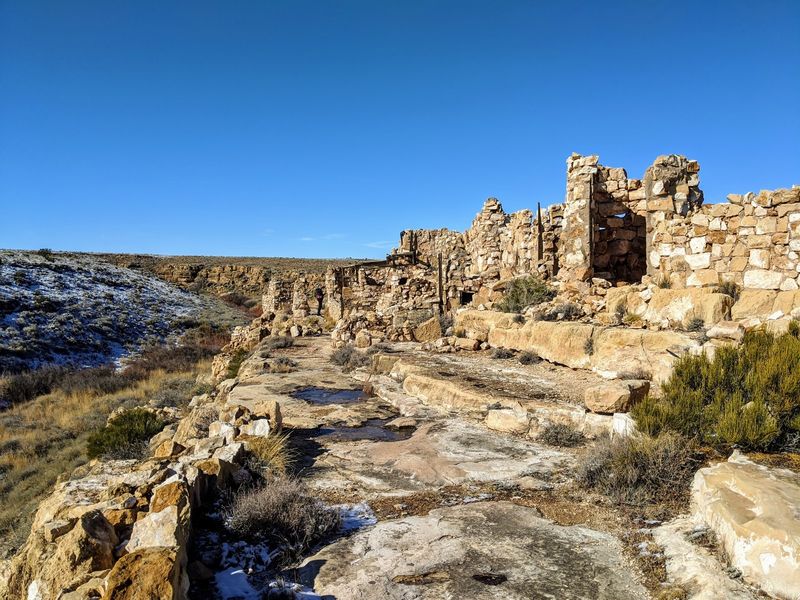
In the 1920s, Earle and Louise Cundiff bought 320 acres and thought bigger. They put up a larger stone building that worked as a trading post, restaurant, and fuel stop all at once.
Harry Miller leased property from the Cundiffs and opened his own trading post and souvenir shop, because competition apparently belonged right next door. That arrangement created plenty of friction.
Fire took Miller’s trading post in 1929, which became a recurring theme at this address. Buildings here had a habit of burning.
Louise Cundiff proved tougher than the circumstances. She kept running a trading post long after Miller left the picture, holding the business together through rough years.
The stone ruins of those various shops still stand in pieces today. Doorways with no doors, window frames with no glass, walls that stop halfway up.
Looking at them, it is easy to imagine dusty travelers hauling in water jugs and walking out with postcards and blankets. Commerce in the middle of nowhere.
Leave artifacts where they sit, since scattered pieces are part of the story others come to see.
Gas Station Ghosts
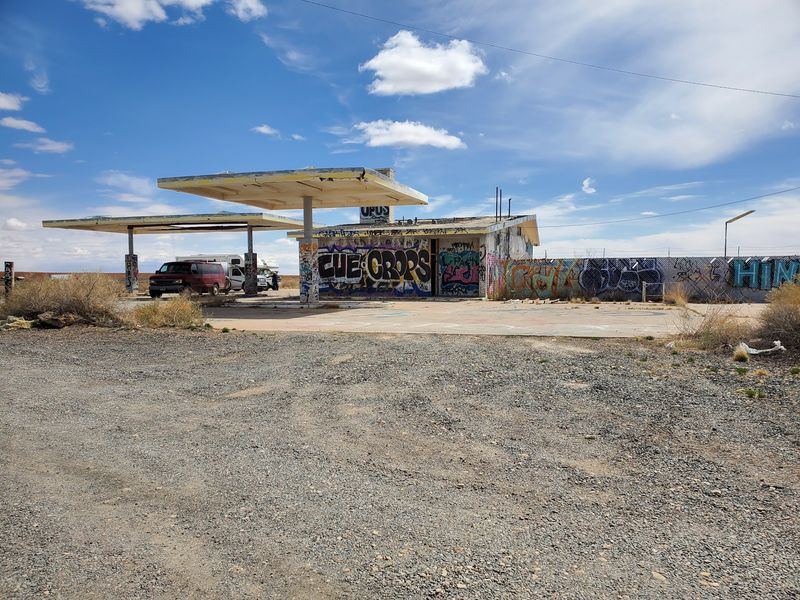
Running low on fuel in this part of Arizona used to be a serious problem, which made Two Guns feel like salvation. The Cundiffs had gasoline pumps working by 1922, catching travelers before the long empty stretch ahead.
Harry Miller added fueling stations of his own, because why let a neighbor keep all the business. Louise Cundiff opened a Texaco service station in 1934.
The station people photograph today came much later. It is the remains of a mid-1970s Shell station, built during an ambitious effort in the 1960s to bring the whole site back to life.
That revival did not last. A major fire in 1971 tore through the property and took out several structures, effectively ending any chance of a comeback.
What survived is a concrete frame covered wall to wall in spray paint. Layers of tags stack on top of each other, changing constantly as new visitors add their own marks.
The canopy still stretches over bare ground where pumps once stood. Sunlight pours through the open roof and throws hard shapes across the floor.
Photographers treat it like an outdoor gallery, and honestly it works. Bright colors against cracked gray concrete is a striking combination.
Watch your footing inside, because rubble and rebar are everywhere.
The Freeway’s Shadow
For decades, this was a working stop, busy with families stretching their legs on Route 66. Kids looked at caged animals, adults bought gas and postcards, and the cash register kept ringing.
Then the interstate arrived. Construction of Interstate 40 in the 1950s rerouted traffic away from the old highway, and drivers suddenly had no reason to slow down.
Two Guns even got its own exit, which sounds like a lifeline but was not enough. Freeway travelers were built for speed, not for wandering into roadside zoos.
Business dried up gradually and then all at once. The 1971 fire finished what the interstate started, and nobody managed to rebuild anything lasting.
Everything left behind has spent half a century in the hands of sun, wind, and occasional flash floods. Concrete cracks, paint fades, and metal rusts into odd shapes.
The result is a ghost town that sits within eyesight of thousands of cars daily. Most people never stop, which somehow makes it more haunting.
Those who do pull off find a place that tells the story of American road travel in one small, scorched lot. Boom, bypass, bust.
Pack out your trash, skip adding graffiti, and let the ruins keep their strange dignity for the next curious driver.