
A Nevada Ghost Town Sits Frozen in Time Since the Gold Rush Went Bust
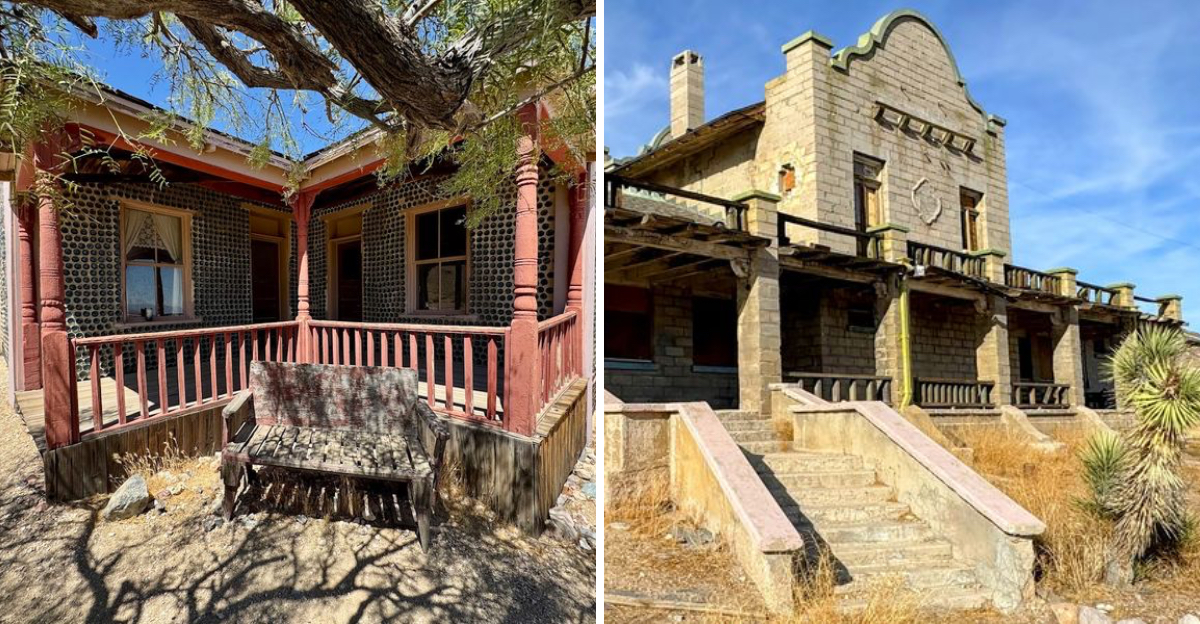
A gold rush once built an entire city in under a year, then wiped it out almost as fast. Nevada has plenty of wild stories, but this one still stops people in their tracks.
Streets once buzzed with miners, bankers, and dreamers chasing fortune under a punishing desert sun. Grand buildings rose from bare sand, complete with electric lights and marble floors, before the money vanished fast.
What is left behind is strange, beautiful, and half swallowed by silence. Roofless walls stand tall against a huge Nevada sky, hinting at a grandeur most visitors never expect.
There is more waiting past the ruins: odd art scattered across open ground, glass walls built from castoffs, and details that rarely reach guidebooks. Give yourself an afternoon and let curiosity do the rest.
When Gold Fever Hit the Bullfrog Hills
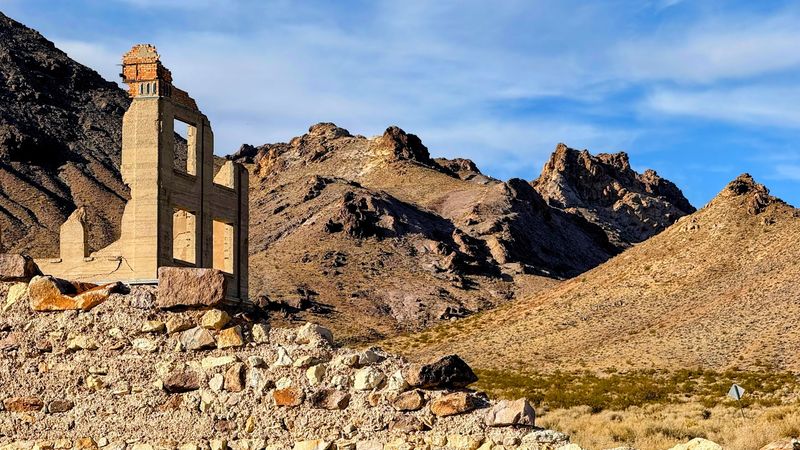
Gold has a way of turning empty land into instant cities. In 1904, prospectors Frank Harris and Ed Cross stumbled onto high-grade gold ore in a remote stretch of what is now Nye County, Nevada.
That single discovery lit a fuse that nobody could stop.
The area became known as the Bullfrog Mining District, named after the green-hued rocks that first caught the prospectors’ attention. Word spread fast, and fortune-seekers poured in from every direction.
Within months, a two-tent camp had grown into something far more serious.
Rhyolite itself was officially platted in 1905, just one year after the initial find. The pace of growth was almost unbelievable.
Thousands of people arrived with tools, ambitions, and big plans. The desert, so indifferent to human dreams, suddenly found itself host to one of the most energetic communities in all of southern Nevada.
The rush was real, the stakes were high, and everyone wanted a piece of it.
A Desert Boomtown That Outgrew Its Own Ambition
Few places in the American West grew as fast or as boldly as Rhyolite did between 1905 and 1907. The town did not just grow; it overachieved.
Concrete sidewalks lined the streets. Electric lamps lit the nights.
Telephone lines connected businesses across town.
At its peak, the community supported three separate railroad lines, three water systems, and a stock exchange. Residents could visit a hospital, attend performances at an opera house, or cool off at a public swimming pool.
Nevada had seen boomtowns before, but this one aimed higher than most.
The population reached somewhere close to 5,000 people within just a couple of years. Fifty establishments served the thirsty and hungry crowds along the main road.
Sixteen restaurants kept workers fed. Nineteen lodging houses gave travelers a place to sleep.
For a brief, dazzling window of time, this remote desert outpost functioned like a fully modern city, complete with all the confidence that gold money could buy.
The Cook Bank Building Still Commands Attention
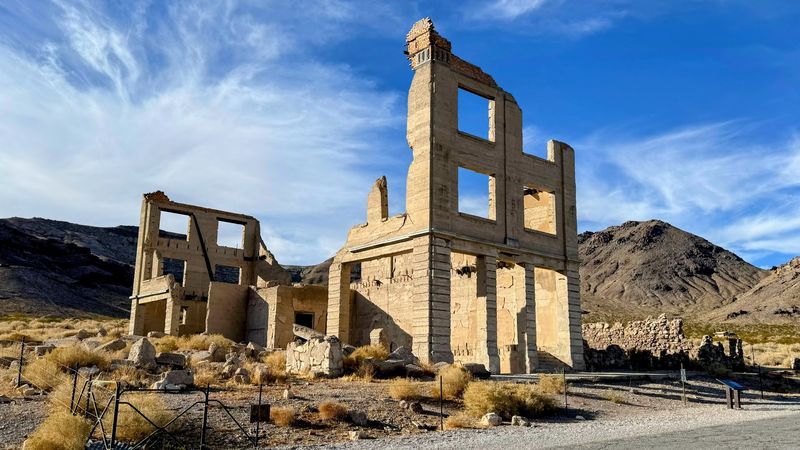
Bold, roofless, and impossible to ignore, the Cook Bank Building is the visual centerpiece of the entire site. This three-story structure once housed a fully operational bank complete with marble staircases and mahogany finishes.
Today, its hollow shell stands as the most photographed ruin in the area.
The walls remain largely intact, which makes the building even more striking against the open Nevada sky. Visitors can walk close to its base and look up through what was once a grand interior.
The scale of it makes the ambition of early Rhyolite feel very real.
Historians and photographers alike treat this structure as a kind of landmark. It appears on countless travel articles and road trip lists focused on the American West.
The building is fenced off for safety, but the views from outside are more than enough to leave a strong impression. Its presence alone justifies the drive out to this corner of the desert.
The Bottle House Is Exactly What It Sounds Like
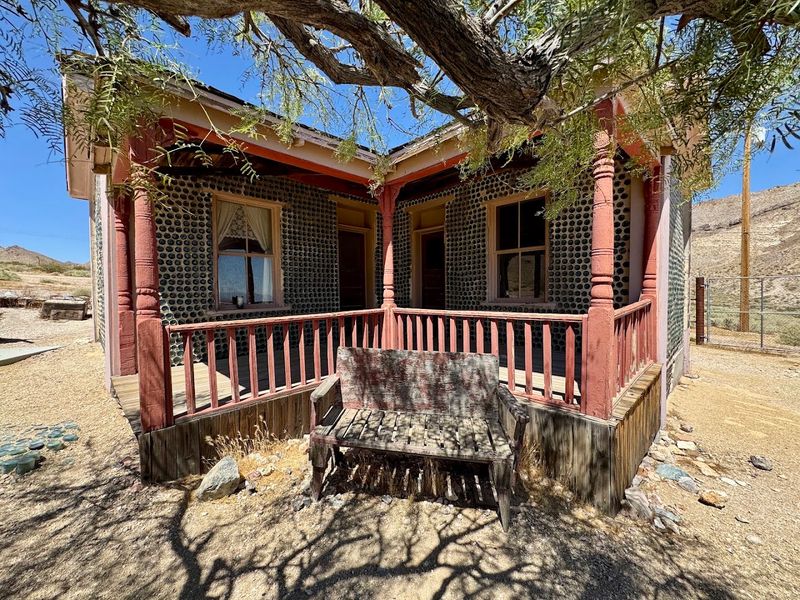
Builder Tom Kelly had a problem: timber was scarce, but empty glass bottles were everywhere. His solution was the kind of practical creativity that the frontier West is famous for.
Between 1905 and 1906, Kelly assembled a full residential structure using somewhere between 30,000 and 50,000 bottles.
Bottles of many shapes and colors, collected from local businesses and residents, were stacked and set into adobe mortar to form thick, insulating walls. The result is a home that looks quirky from a distance and genuinely impressive up close.
Light filters through the glass in unexpected ways depending on the time of day.
The structure is widely considered the oldest and largest known bottle house in the United States. Paramount Pictures restored it in 1925 for use in a film production.
It has held up remarkably well since then. Visitors consistently point to the Bottle House as one of the most memorable stops along the Rhyolite site, and it is easy to understand why once you are standing in front of it.
How Fast the Dream Collapsed
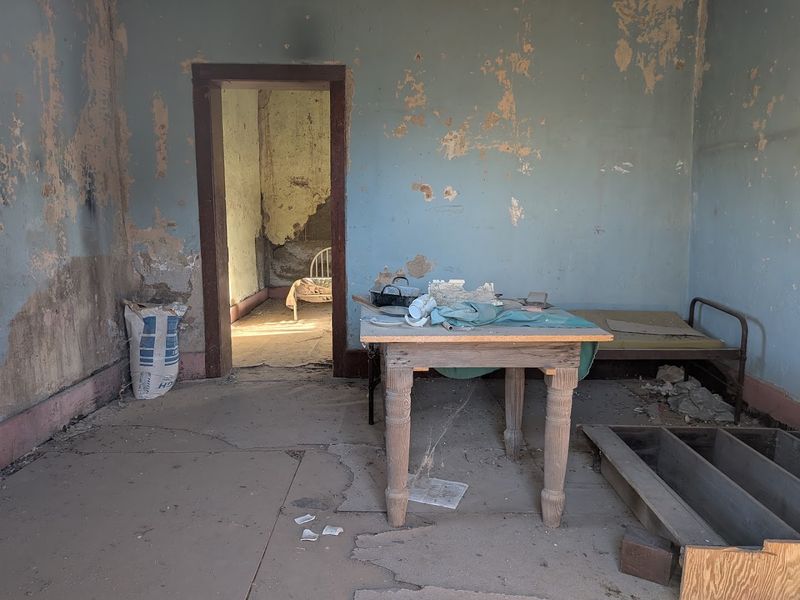
The same speed that built Rhyolite eventually tore it apart. A financial panic in 1907 shook investor confidence across the country.
Mining operations in the Bullfrog Hills felt the impact almost immediately. High-grade ore was already becoming harder to find, and the money to keep digging was drying up.
By 1910, the major mines had closed. Businesses followed one by one.
Electricity to the town was cut off by 1914. The post office, newspapers, banks, and the train depot all shut their doors within a few short years of each other.
The population drop was staggering. A city of thousands shrank to just 14 residents by 1920.
Buildings were stripped for materials and hauled off to nearby Beatty, Nevada, where construction was still happening. What had been a functioning metropolis became a collection of shells and foundations in less than a decade.
The rise and fall of Rhyolite remains one of the most dramatic examples of boom-and-bust history in the entire American West.
The Train Depot That Outlasted Everything
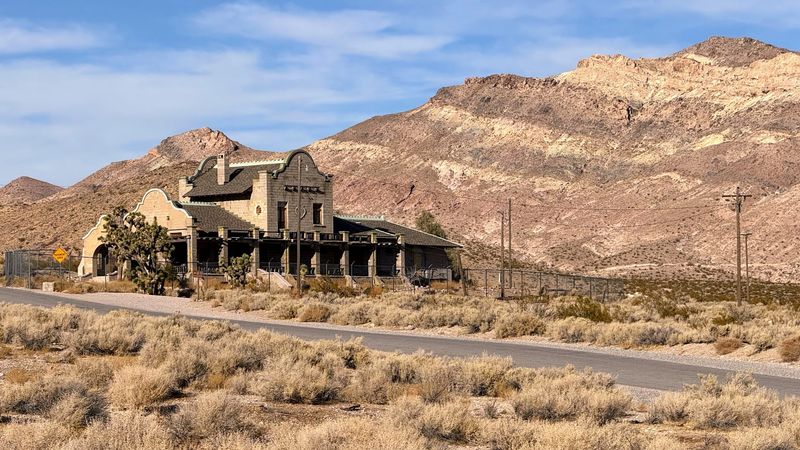
Three railroad lines once served Rhyolite at the height of its prosperity. The Tonopah and Tidewater, the Bullfrog Goldfield, and the Las Vegas and Tonopah railroads all connected this isolated Nevada community to the wider world.
It was a remarkable infrastructure achievement for such a remote location.
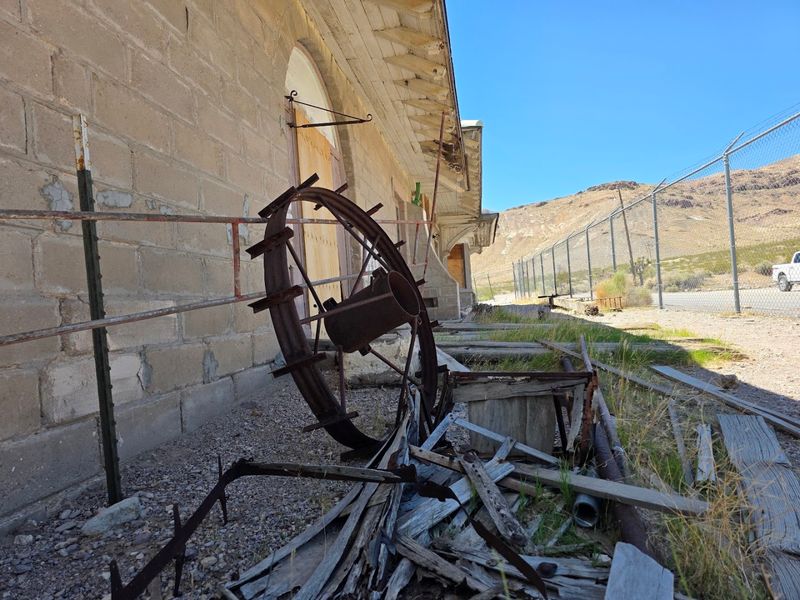
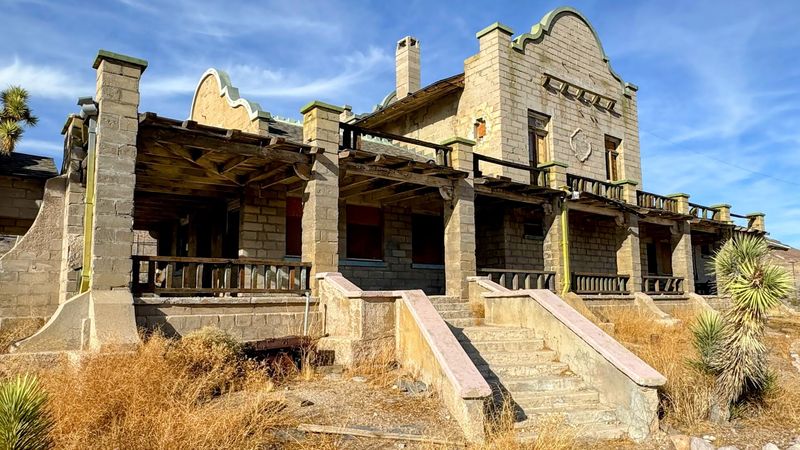
The Las Vegas and Tonopah depot, built in 1908, is one of the few structures in Rhyolite that still stands in relatively complete form. Its stone construction gave it staying power that wooden buildings could never have matched.
The building has passed through different ownership over the decades, including a stretch as a small tourist stop with a gift shop before it was eventually shuttered.
Today the depot is fenced off, and its architectural details are showing serious signs of wear. Visitors can still observe it from outside and read the informational signage nearby.
The building represents a tangible connection to the era when Rhyolite was a genuine regional hub. Its survival, however fragile, gives the site an anchor that pure ruins cannot provide.
The Goldwell Open Air Museum Next Door
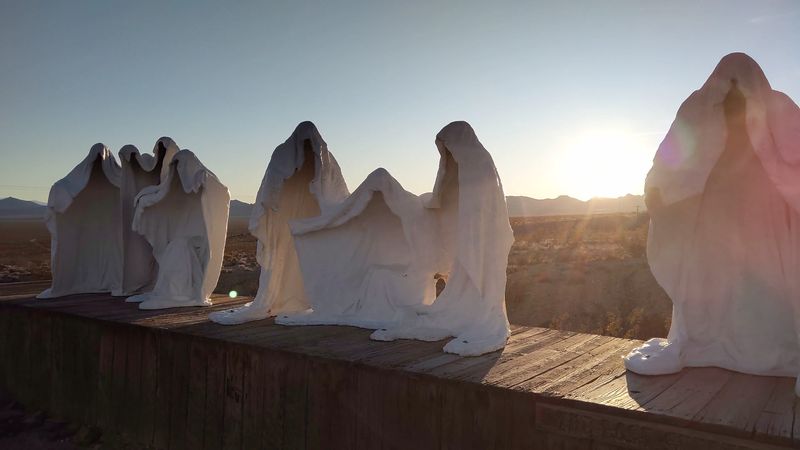
Right at the edge of the ghost town, a collection of large-scale sculptures rises from the desert floor. The Goldwell Open Air Museum began in 1984 when Belgian artist Albert Szukalski created his striking piece called The Last Supper, a set of ghostly white plaster figures arranged in a tableau against the open sky.
Other artists added their own works over the years. Ghost Rider, a shimmering cyclist figure, and Lady Desert: The Venus of Nevada are among the installations that now populate the site.
The contrast between the raw desert setting and the deliberate artistic intent is genuinely thought-provoking.
The museum is free to visit and open around the clock, making it accessible to visitors arriving at any hour. It adds a creative, unexpected dimension to what could otherwise feel like a purely historical stop.
Many visitors find themselves spending as much time at the art installations as they do exploring the ruins. The two experiences complement each other in ways that are hard to predict before you arrive.
The Setting Is Part of the Story
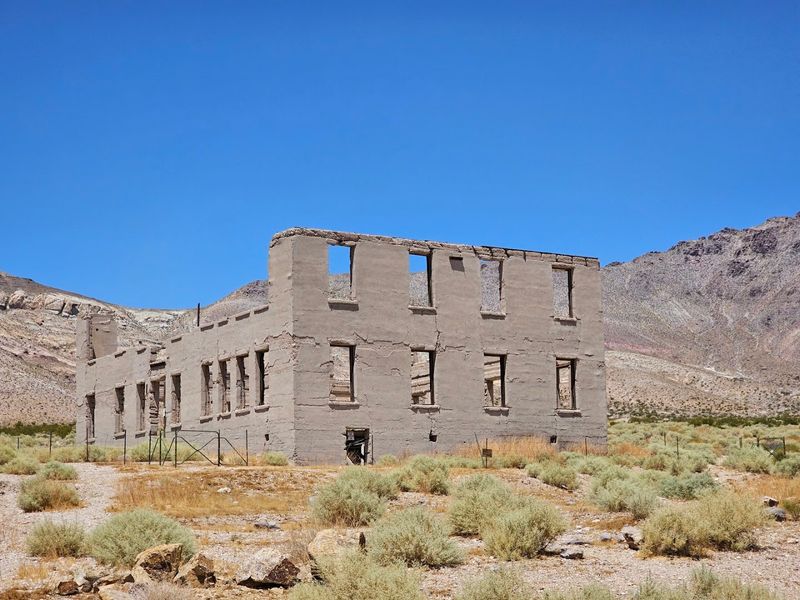
Geography shaped everything about Rhyolite, from its founding to its abandonment. The site sits in the Bullfrog Hills on the eastern edge of Death Valley National Park in Nevada.
The terrain is rugged, dry, and strikingly beautiful in the way that only desert landscapes can be.
The Amargosa Valley stretches out to the south, offering long, unobstructed views that make the isolation feel both vast and oddly peaceful. The surrounding mountains create a natural backdrop that gives every photograph taken here a sense of scale and drama.
That same isolation made life incredibly difficult for the people who lived here over a century ago. Water had to be piped in from miles away.
Timber was nearly impossible to source locally, which is why so many buildings were constructed from concrete, adobe, or recycled materials like glass bottles. The landscape that looks so scenic to modern visitors was a genuine logistical challenge for the thousands who tried to build a permanent city here.
What Visitors Can Expect on the Ground
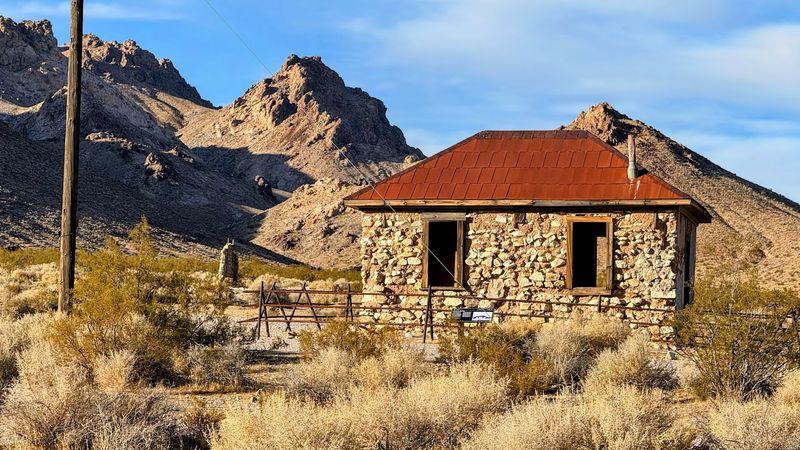
Rhyolite sits about four miles west of Beatty, Nevada, along Highway 374. The site is managed as a historical area and is free to enter.
Vault toilets are available near the main parking area, which is a welcome detail in such a remote location.
Most of the major ruins are fenced off, so close-up interior exploration is limited. However, informational plaques with historic photographs are posted throughout the site, helping visitors understand what each structure once was.
The combination of physical ruins and written context makes the experience more layered than a simple walk through empty shells.
The main road through the site is paved, but dirt tracks branch off into less-visited sections of the former town. Visitors with high-clearance vehicles can explore those outer areas more thoroughly.
Bringing plenty of water is essential, especially during warmer months. Beatty, Nevada, just a few minutes away, offers gas and supplies for those who need to restock before or after the visit.
Dogs are welcome on leash.
Why This Place Still Pulls People In
Quiet places that carry big histories have a pull that is hard to explain until you feel it yourself. Rhyolite Ghost Town delivers that feeling without requiring much effort from the visitor.
The ruins are right there, the sky is enormous, and the silence is the kind that actually makes noise feel out of place.
Historical plaques throughout the site document what each building once was, giving visitors a mental image of the streets when they were full of people and purpose. That contrast between then and now is what makes the experience resonate long after the drive home.
The site also benefits from its proximity to Death Valley National Park, making it a natural add-on for anyone already exploring that region of Nevada. It rewards the curious and the unhurried.
Those willing to wander the dirt roads beyond the main strip consistently report finding more than they expected. Rhyolite does not announce itself loudly, but it leaves a mark on everyone who gives it enough time.