
10 Abandoned New Jersey Spots Locals Speak About In Whispers
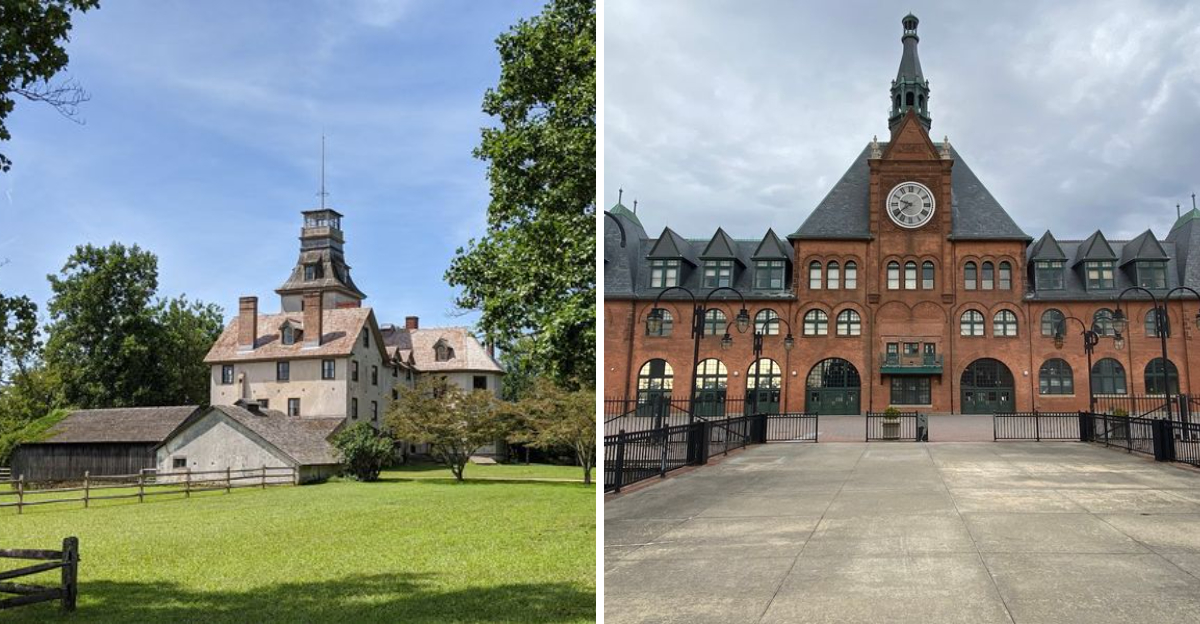
Think New Jersey is all highways and beach boardwalks? Look a little closer and you’ll find ghost towns, crumbling factories, and abandoned villages quietly scattered across the state.
These forgotten places tell stories of booming industries, tight-knit communities, and sudden decline. Over time, nature has crept in, leaving behind eerie reminders of what once was.
It’s no wonder locals still share tales about these spots in hushed tones, keeping the Garden State’s mysterious past alive.
1. Brooksbrae Brick Factory (Manchester Township)
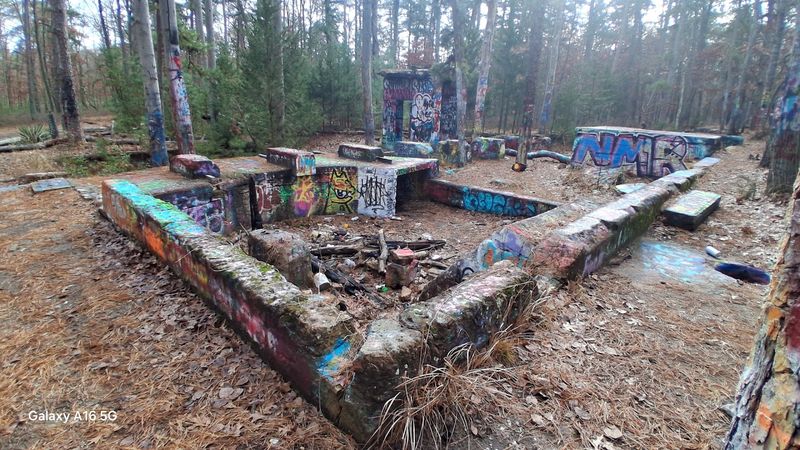
Walking through the Brooksbrae Brick Factory feels like stepping onto a movie set for a post-apocalyptic film. The ruins sprawl across acres of Pine Barrens wilderness, with crumbling brick structures covered in vibrant graffiti that artists have transformed into outdoor galleries.
This factory once produced millions of bricks that built homes and businesses throughout New Jersey during the early 1900s.
The kilns still stand, though nature has reclaimed most of the site with vines and trees pushing through concrete floors. Locals warn about the unstable structures and broken glass scattered everywhere, but that doesn’t stop adventurous photographers from visiting at sunrise when fog rolls through the pines.
The atmosphere shifts dramatically depending on when you visit.
What makes Brooksbrae truly haunting is how quickly industry vanished here. The factory closed in 1939, and within decades, the forest swallowed buildings that once buzzed with hundreds of workers.
People report strange sounds echoing through the ruins at dusk, though it’s probably just wind whistling through broken windows. Still, there’s something unsettling about seeing industrial machinery rusting among wildflowers, a reminder that nothing built by human hands lasts forever in the Pine Barrens.
2. The Deserted Village Of Feltville (Berkeley Heights)
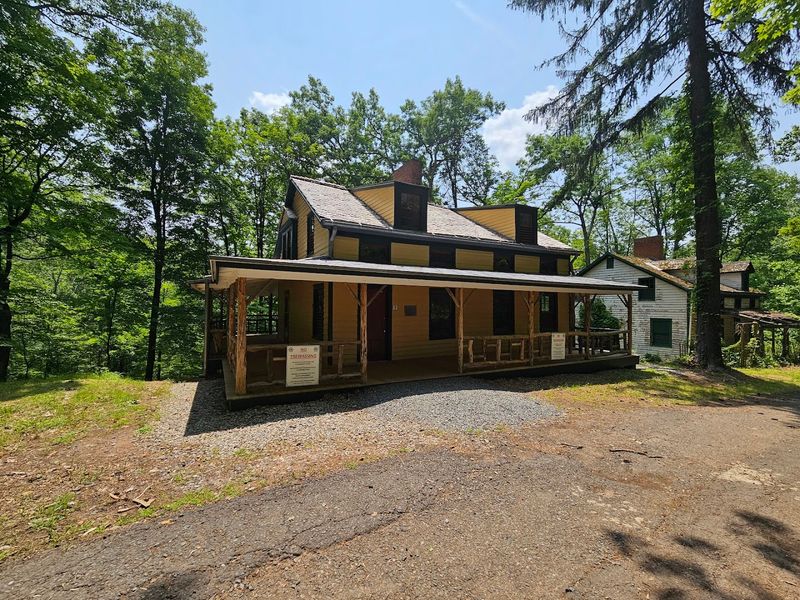
Feltville earned its nickname honestly. This entire village sits frozen in the 1800s, with white clapboard houses lining a dirt road that nobody calls home anymore.
David Felt built this mill town in 1845 to house his paper mill workers, creating a self-contained community deep in the Watchung Reservation. The workers lived, worked, and died here without ever needing to leave.
After the mill failed, the village transformed into a summer resort called Glenside Park, but that venture also collapsed. Now the buildings stand empty, maintained just enough to prevent total collapse but vacant enough to send chills down your spine.
Park rangers sometimes use them for storage, but mostly they just sit there, windows dark and doors locked.
Hikers passing through report an overwhelming feeling of being watched from those empty windows. Some claim to hear children laughing when no kids are around, or smell bread baking from kitchens that haven’t had working ovens in over a century.
The Union County Department of Parks insists there’s nothing supernatural here, just old buildings in need of restoration funding. But spend an hour walking those deserted streets at twilight, and you might change your mind about what’s possible.
3. Van Slyke Castle Ruins (Oakland)
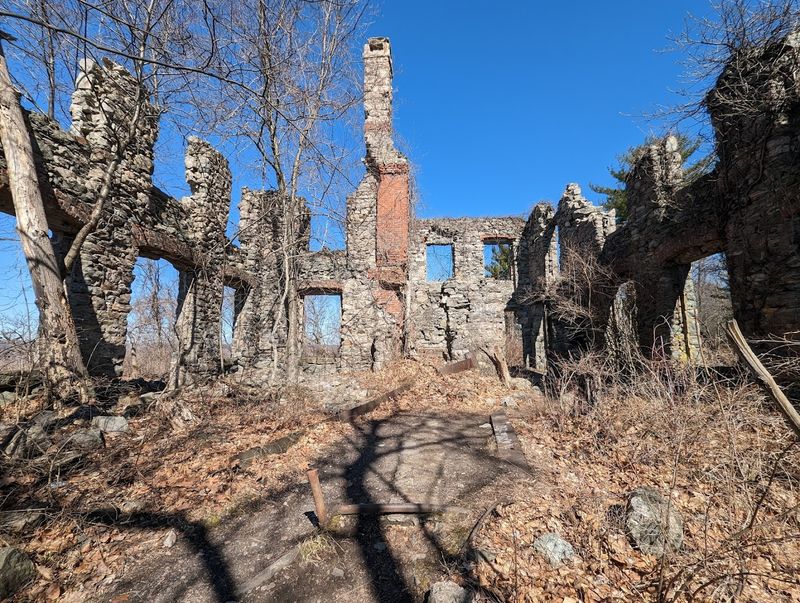
Calling it a castle might be generous, but the Van Slyke ruins definitely have that medieval vibe going on. Perched in the Ramapo Mountains, these stone walls once formed a mansion that Warren Van Slyke built for his wife in the early 1900s.
She never actually lived there, which already tells you this story doesn’t have a happy ending.
The mansion changed hands several times before burning down in 1959 under mysterious circumstances. Now only the stone shell remains, with empty window frames framing views of the forest beyond.
Graffiti covers most surfaces, and beer cans suggest it’s a popular party spot for local teenagers brave enough to hike up after dark.
What’s genuinely creepy is how the ruins seem to shift in the fading light. Shadows move across the stone walls in ways that don’t quite match the trees swaying overhead.
Visitors frequently report camera malfunctions and dead phone batteries, though skeptics point out that the remote location simply has terrible cell reception. The hike up takes about twenty minutes from the Skyline Drive parking area, and the trail gets muddy after rain.
Bring a flashlight if you’re planning a sunset visit, because the forest gets pitch black fast once the sun drops below the ridge.
4. Walpack Center Historic District (Walpack Township)
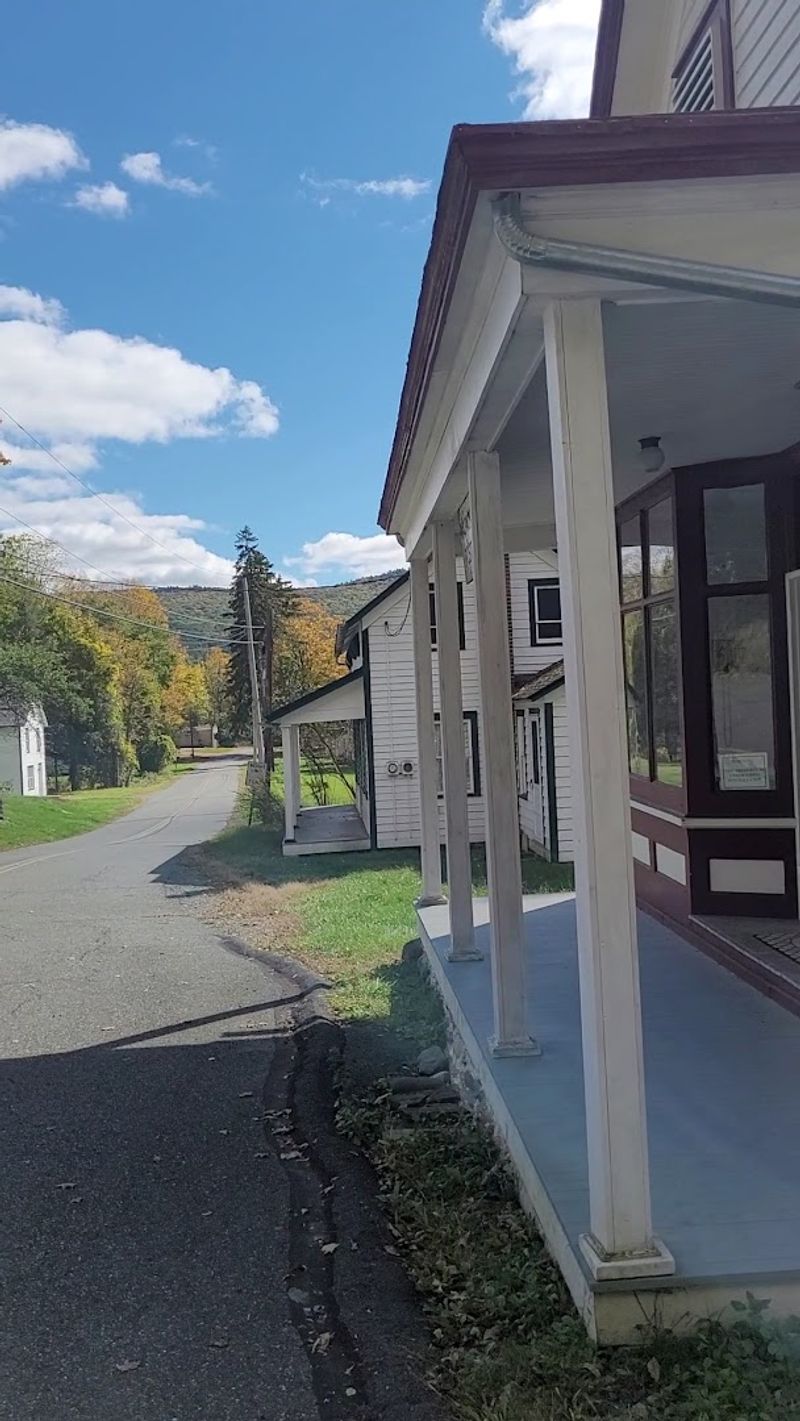
Imagine the government showing up and telling everyone in your town to leave. That’s exactly what happened to Walpack Center in the 1960s when the Army Corps of Engineers planned to flood the valley for a reservoir.
Residents packed up and moved out, expecting their homes to disappear underwater within a few years.
Plot twist: the dam never got built. The reservoir project was abandoned, but by then, everyone had already left.
Now this ghost town sits in the Delaware Water Gap National Recreation Area, perfectly preserved but completely empty. The church still stands with its white steeple pointing skyward, and houses line the main road like nothing ever changed.
You can walk right up to most buildings and peer through windows at rooms frozen in time. Some structures have been stabilized by the National Park Service, while others slowly surrender to gravity and weather.
It’s bizarre seeing a complete village with no people, no cars, no signs of life except for the occasional hiker or history buff exploring the area. On foggy mornings, the whole place looks like a painting from another century.
Locals from nearby towns sometimes drive through just to remember what their communities looked like before development sprawled everywhere.
5. Central Railroad Of New Jersey Terminal (Jersey City)
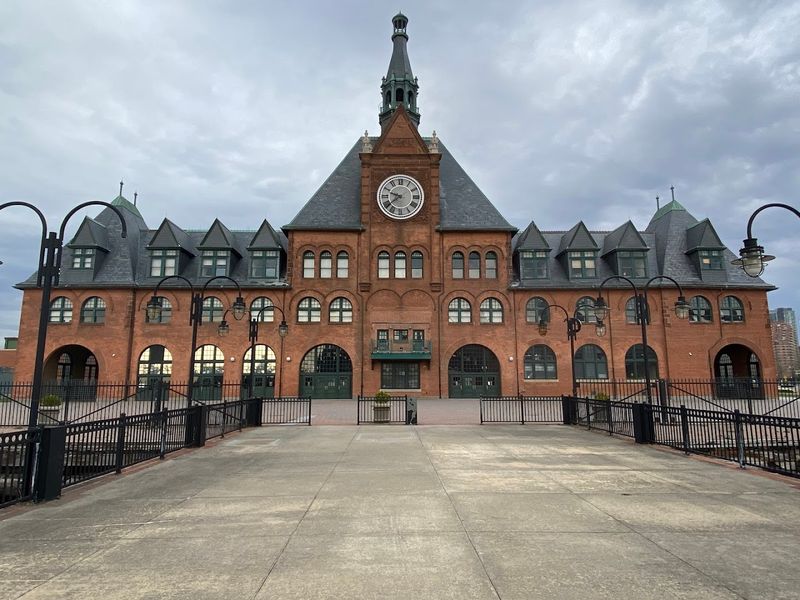
Standing at the Central Railroad terminal, you can almost hear the echoes of millions of immigrants taking their first steps in America. This massive Beaux-Arts building served as the gateway to New York City for people arriving at Ellis Island, who would board trains here to destinations across the country.
Between 1889 and 1954, this terminal buzzed with constant activity, hope, and heartbreak.
The trains stopped running decades ago, but the building remains as a haunting monument to American immigration history. The waiting rooms sit empty now, their high ceilings and ornate details slowly deteriorating despite preservation efforts.
You can still see the ticket windows where nervous travelers once purchased passage to unknown futures.
What hits hardest is standing on the platform at sunset, watching light stream through broken windows while Manhattan’s skyline glitters across the water. The contrast between the abandoned terminal and the thriving city just minutes away feels almost painful.
Tour guides lead groups through during summer months, sharing stories of the building’s glory days. But visit on a quiet winter afternoon when nobody else is around, and you’ll feel the weight of all those goodbye hugs and hopeful departures that happened right where you’re standing.
6. Harrisville Ghost Town (Chatsworth)
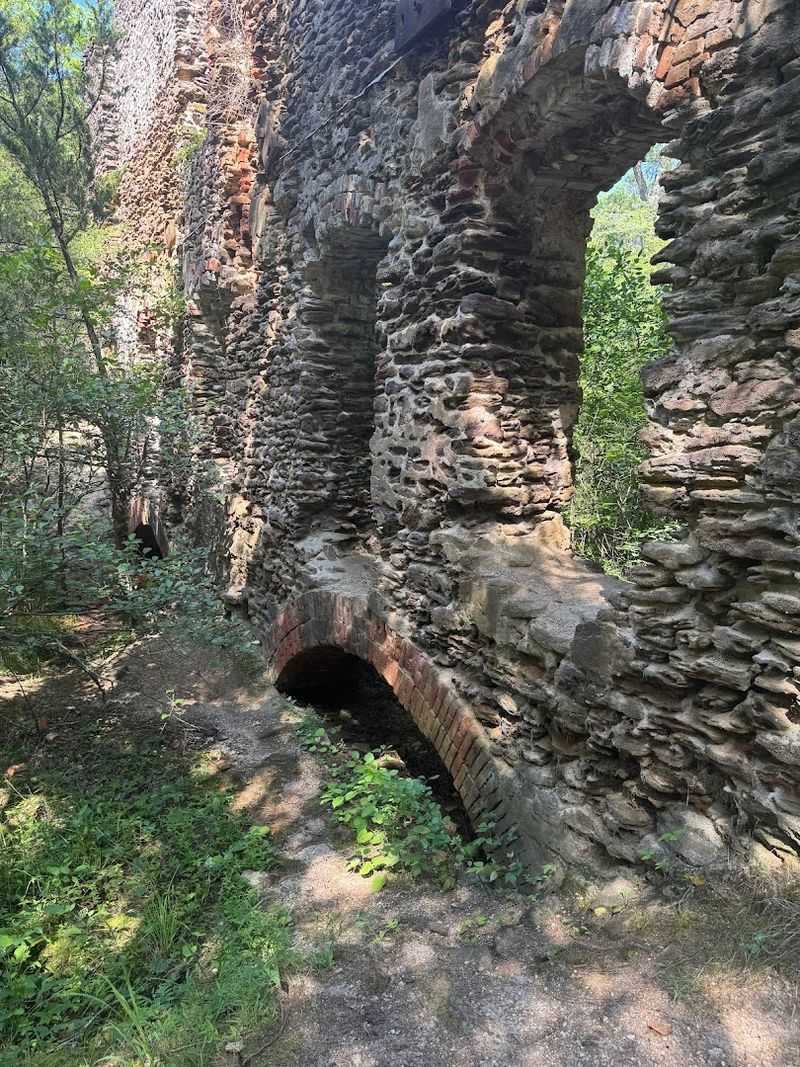
Deep in the Pine Barrens, Harrisville proves that boom towns can go bust faster than you’d think possible. This paper mill village thrived in the mid-1800s with hundreds of workers producing high-quality paper from local bog iron and pine trees.
The company even built its own sawmill, gristmill, and general store to keep workers supplied.
Everything fell apart when the mill burned in 1914. Without the paper industry, there was no reason for anyone to stay in this remote location.
Families packed wagons and left for towns with better prospects, and nature immediately started reclaiming the buildings they abandoned behind.
Today, only foundations and partial walls remain, scattered among the pines like puzzle pieces from a forgotten past. The cemetery still exists, with weathered headstones marking graves of workers and their families who never imagined their thriving town would vanish so completely.
Sandy roads wind through the ruins, popular with off-road vehicle enthusiasts who probably don’t realize they’re driving through someone’s former front yard. Archaeologists occasionally survey the site, finding bottles, tools, and other artifacts that help piece together daily life in this vanished community.
The isolation that once made Harrisville profitable now makes it genuinely eerie after sunset.
7. Friendship Ruins (Tabernacle)
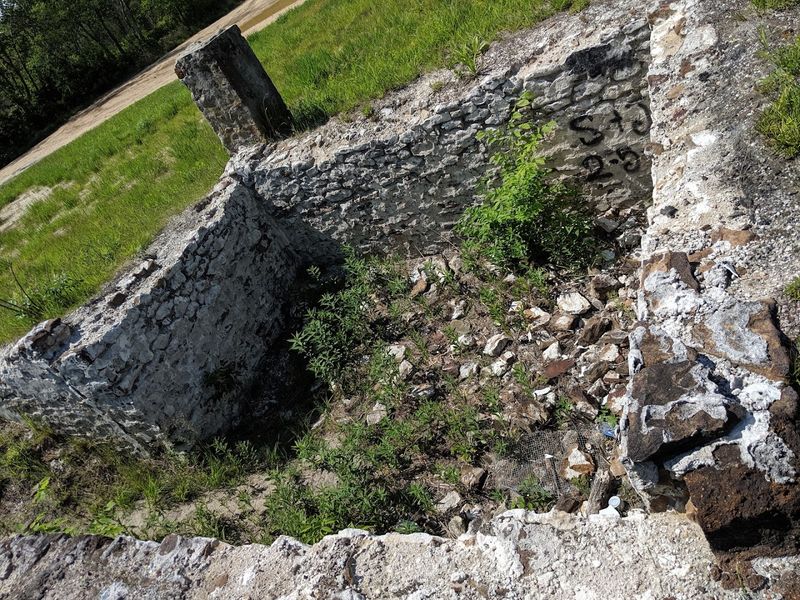
Friendship might have the most ironic name of any ghost town in New Jersey, considering how completely it was abandoned. Founded in the 1860s as a bog iron and lumber community, this village once supported several families who worked the local industries.
They built homes, a school, and everything needed for frontier life in the Pine Barrens.
But bog iron became obsolete, and better lumber could be harvested elsewhere. By the early 1900s, Friendship was finished.
The buildings collapsed or burned, leaving only brick foundations and the occasional chimney poking through the underbrush like tombstones marking where homes once stood.
Finding Friendship requires determination and a good map, because it’s hidden deep on sandy backroads that turn into mud pits after rain. Four-wheel drive is basically mandatory.
Once you locate the ruins, you’ll find scattered foundations among the pines, with very little signage explaining what you’re looking at. Bring bug spray, because the mosquitoes in this area are legendary.
Some foundations still show evidence of cellars where families stored food through harsh winters. It’s sobering to imagine children playing in clearings that are now completely overgrown, or to picture smoke rising from chimneys that now stand alone in the forest, disconnected from any walls or roofs.
8. Martha Furnace Site (Wharton State Forest)
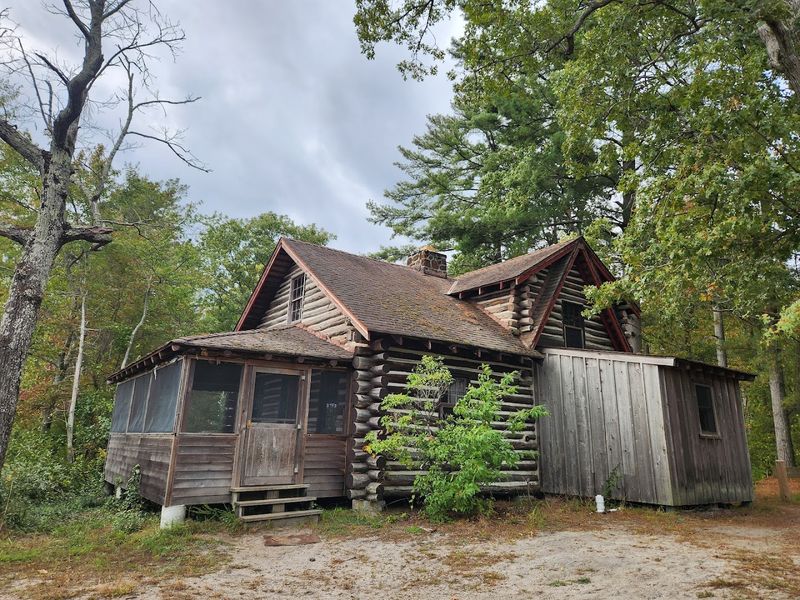
Martha Furnace represents the industrial revolution’s footprint in the Pine Barrens. Built in 1793, this iron furnace produced bog iron products that supplied growing American cities with everything from cookware to cannon balls.
The furnace operated for nearly a century, supporting a community of workers and their families in the wilderness.
Walking the site today, you can still identify the furnace foundation and remnants of the industrial complex that once dominated this riverside location. The Oswego River flows past just as it did when workers used its water to power machinery and cool molten iron.
Interpretive signs explain the iron-making process, but they can’t fully convey the heat, noise, and danger that workers faced daily.
The village that surrounded the furnace has vanished almost completely, with only slight depressions in the ground suggesting where buildings once stood. Canoeists paddling the Oswego River often stop here, combining outdoor recreation with history lessons.
The site feels peaceful now, with birds singing and water flowing gently, but imagine it filled with the roar of furnaces and the clang of hammers shaping hot metal. Archaeologists continue finding artifacts here, from broken tools to household items that paint pictures of frontier industrial life in early America.
9. Atsion Village (Shamong Township)
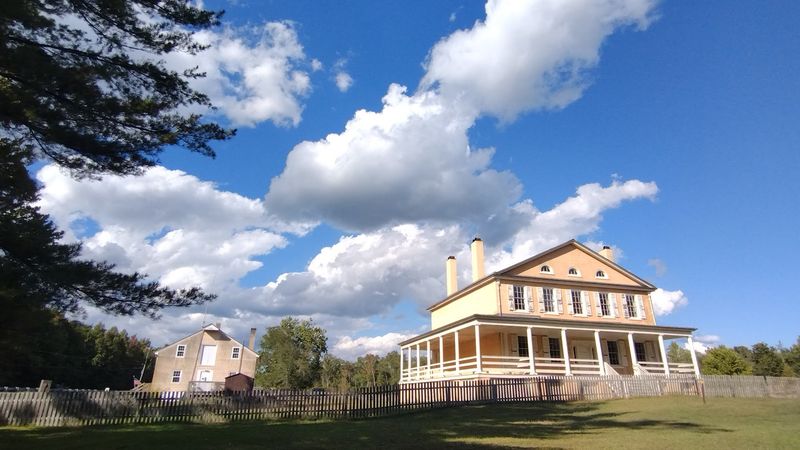
Atsion looks like something from a historical documentary, except nobody lives here anymore. The village started as an iron production center in the 1760s, growing into a proper community with a mansion for the ironmaster, workers’ houses, a general store, and all the infrastructure needed for industrial life in the Pine Barrens.
The mansion still stands, a yellow building that park services occasionally open for tours. But most of the workers’ village sits empty, with buildings maintained just enough to prevent collapse but not enough to feel truly alive.
Walking the grounds feels like being on a movie set between filming days, everything in place but nobody home.
What makes Atsion particularly strange is how it toggles between abandoned and active. The park service uses some buildings for offices and maintenance, so you might see trucks parked near structures that otherwise look frozen in the 1800s.
Atsion Lake attracts swimmers and boaters in summer, who splash and laugh just yards from buildings where iron workers once slept after brutal twelve-hour shifts. The contrast between recreation and ruins creates a weird cognitive dissonance.
Camping is available nearby, and brave souls who spend the night report hearing footsteps on the mansion’s porch when nobody’s there. Rangers insist it’s just old wood settling, but the stories persist anyway.
10. Batsto Village (Wharton State Forest)
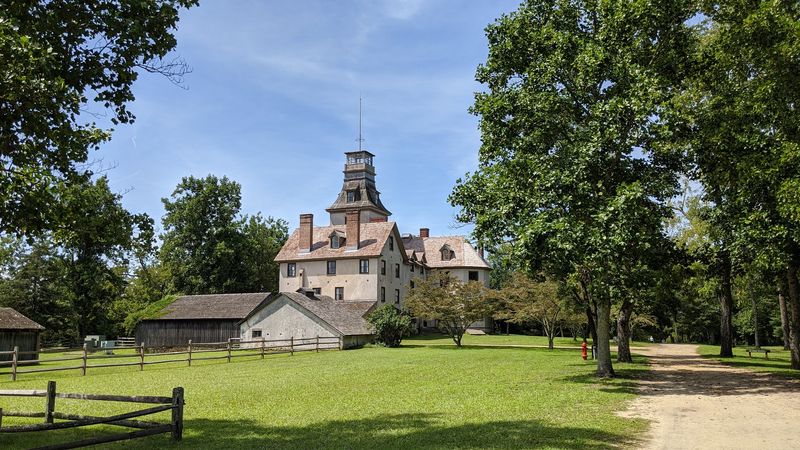
Batsto technically isn’t abandoned, but it’s not exactly alive either. This perfectly preserved iron and glass manufacturing village operates as a living history museum, with buildings restored to their 19th-century appearance and interpreters demonstrating period crafts.
Yet something about walking through Batsto feels deeply unsettling, like the village is holding its breath waiting for residents who will never return.
The ironmaster’s mansion dominates the village center, a grand building that now houses museum exhibits about the region’s industrial past. Workers’ homes line the streets, furnished with period-appropriate items but empty of actual inhabitants.
The gristmill still has its waterwheel, and the general store displays goods that nobody will ever purchase.
Evening visits reveal Batsto’s ghostly side. After the museum closes and day visitors leave, the village falls completely silent except for wind rustling through trees and water flowing past the old mill.
Shadows stretch long across empty streets, and windows reflect dying sunlight from rooms that will never again hear families gathered for dinner. Special events sometimes bring the village to life with reenactors and demonstrations, but these only emphasize how empty it feels the rest of the time.
Batsto survived when other Pine Barrens villages vanished, but preservation transformed it into something caught between past and present, neither fully alive nor completely dead.