
8 Absurdly Specific Massachusetts Museums That Should Not Exist But Do
Every state has odd little museums, but Massachusetts takes the concept somewhere else entirely. Somewhere along the way, people here decided that everyday objects deserved their own exhibit space.
Ordinary items became collections. Small obsessions became entire buildings.
These places exist, they have real visitors, and somehow they keep their doors open year after year. You could spend a weekend driving between them and never once see a dinosaur skeleton or a famous painting.
Instead you would find rooms dedicated to ideas most people would never think twice about. It sounds like a joke until you realize these museums take their strange missions seriously.
Someone somewhere decided a niche hobby or forgotten piece of history deserved a permanent home, and nobody stopped them. Massachusetts clearly loves an inside joke as much as it loves its history.
Once you start exploring these spots, normal museums might start to feel a little boring by comparison.
1. Museum Of Bad Art, Boston
Somewhere in Boston, there is a museum that actively celebrates failure, and it is one of the most joyful places you will ever visit.
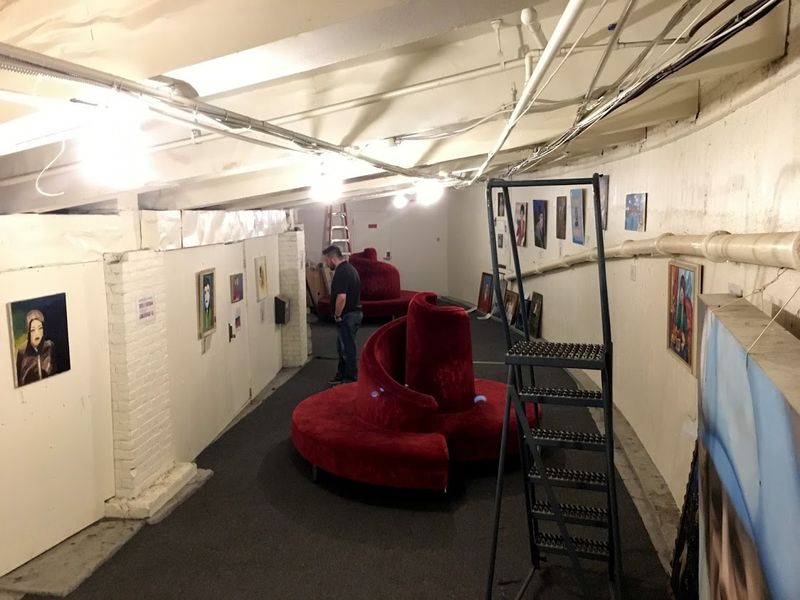
The Museum of Bad Art is located at 1250 Massachusetts Ave Ste 1 and is entirely dedicated to artwork that is, by most traditional standards, spectacularly terrible.
The story begins in 1993, when founder Scott Wilson spotted a discarded painting peeking out of a trash pile on a Boston curb.
That rescued piece, “Lucy in the Field with Flowers,” became the cornerstone of a collection that now exceeds 700 works, though only 25 to 35 are typically on display at any given time.
What makes MOBA so wonderfully strange is its sincerity.
The curators approach each piece with the same seriousness a traditional museum would apply to a Rembrandt, writing thoughtful wall labels that analyze brushwork, emotional intent, and compositional choices, all while keeping a straight face.
Some pieces are donated by the artists themselves, proud of their unconventional creations. Others were rescued from dumpsters or purchased at yard sales for a few cents.
The variety is staggering, from melting portraits to bewildering landscapes where perspective seems entirely optional.
Currently housed within the Dorchester Brewing Company building, the museum draws visitors who leave with a refreshed understanding of creativity.
MOBA proves that the line between brilliance and disaster is thinner than most art critics would ever care to admit.
2. Count Orlok’s Nightmare Gallery Monster Museum, Salem
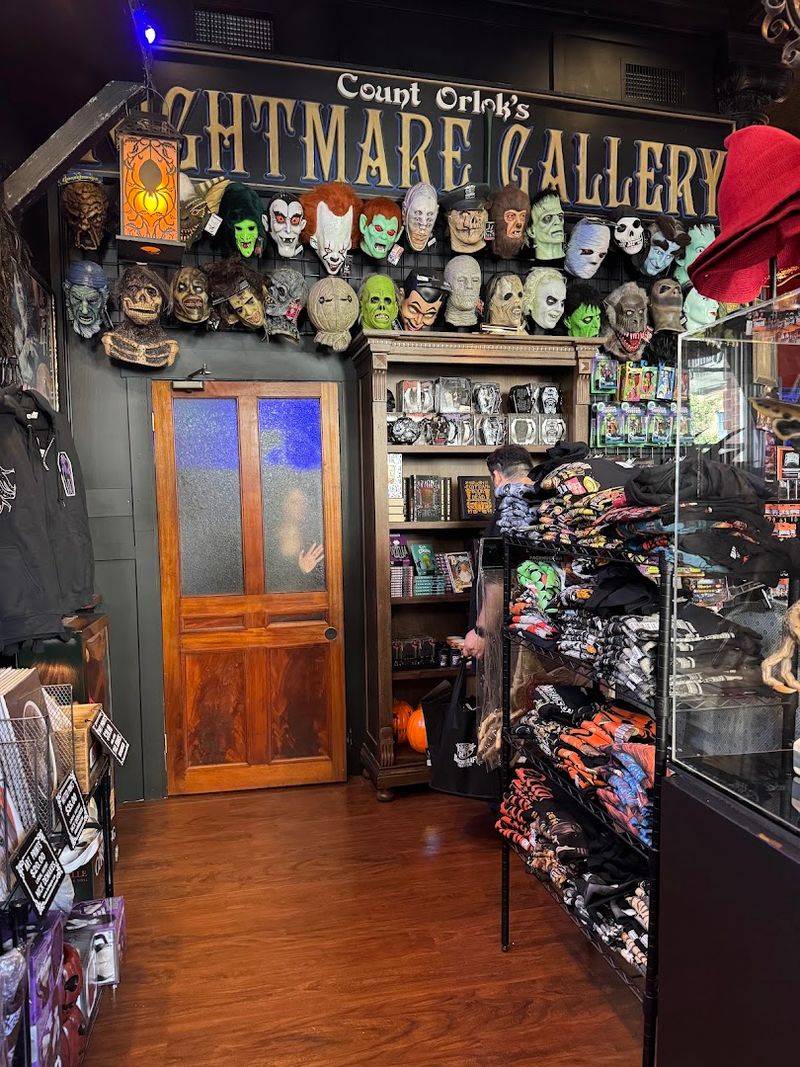
Salem already carries a reputation for the eerie and the unusual, but Count Orlok’s Nightmare Gallery Monster Museum at 217 Essex St takes things to a delightfully cinematic extreme.
Founded in 2007 by lifelong horror devotee James Lurgio, this one-of-a-kind attraction is less a history exhibit and more a love letter to a century of terrifying cinema.
Walking through the gallery feels like stepping directly onto a film set. The lighting is deliberately dim, eerie music drifts through the air, and around every corner stands another life-sized figure crafted from resin, latex, and silicone.
Many of these creations were built by working professionals from the actual movie industry, giving each figure an authenticity that is genuinely impressive.
The collection spans horror history in chronological order, starting with the brooding Universal monsters of the 1930s and moving through slasher icons, creature features, and modern horror legends.
It is essentially a timeline of our collective nightmares, rendered in painstaking three-dimensional detail.
Beyond the figures themselves, the museum displays genuine movie props and life casts of celebrated horror actors and directors, adding a layer of behind-the-scenes fascination for film enthusiasts.
You can stand inches away from a mask or a prop that appeared in a film you grew up watching.
For anyone who has ever loved a good scare, this Salem spot is an unmissable pilgrimage that rewards curiosity with a truly immersive, memorably spine-tingling experience.
3. Edward Gorey House, Yarmouth Port
A quiet lane in Yarmouth Port, Massachusetts, hides one of the most charmingly eccentric literary museums on all of Cape Cod.
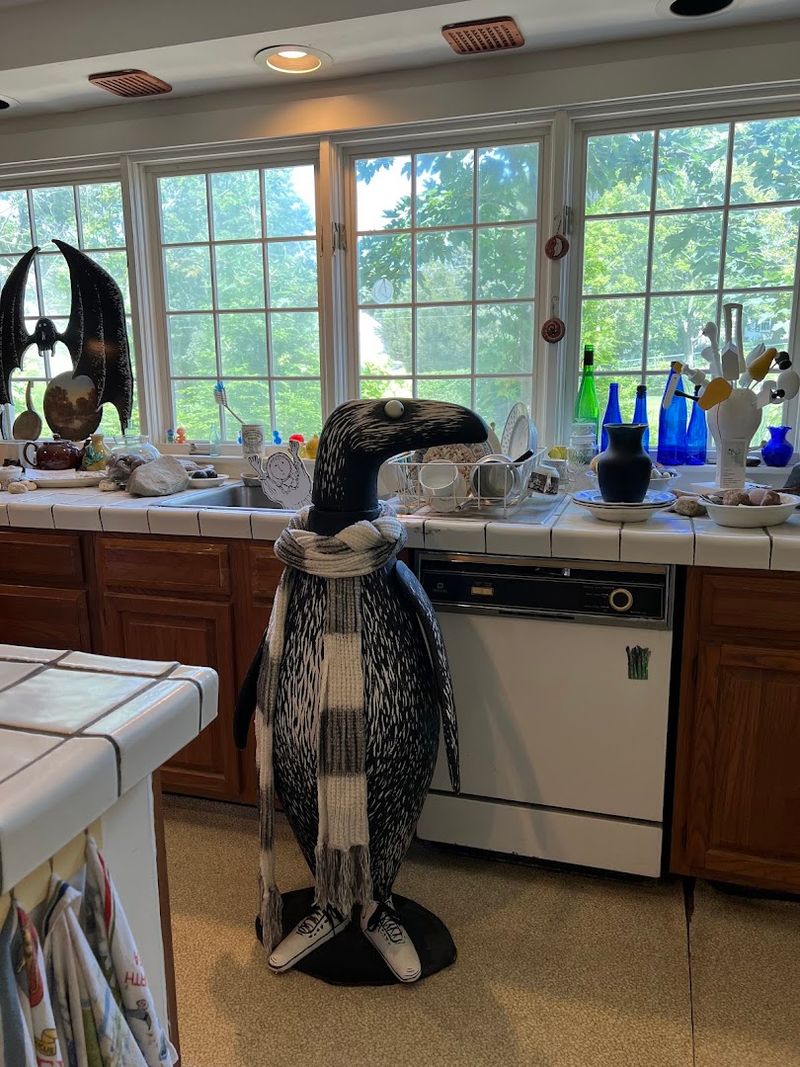
The Edward Gorey House at 8 Strawberry Lane was the personal residence of Edward Gorey, the celebrated illustrator, author, and theatrical designer, from 1986 until his passing in 2000, and it preserves his world with touching specificity.
Gorey was drawn to the property, originally built around 1820 by Captain Edmond Hawes, precisely because of its “unkempt yard and air of genteel decay.”
That phrase alone tells you everything about the man. His aesthetic was deeply rooted in Victorian gloom, gentle absurdity, and a fondness for the unexplained.
Inside, visitors encounter personal belongings, original artworks, and rotating exhibitions that explore different chapters of his career.
His Broadway stage designs for “Dracula” feature prominently, as do his iconic wordless picture books, which manage to feel simultaneously cozy and unsettling in ways that are difficult to describe but impossible to forget.
The house is also affectionately called the “Elephant House,” reflecting Gorey’s lifelong passion for animals, particularly cats.
The museum actively supports local animal welfare causes in his honor, so visiting here carries a genuinely warm charitable dimension alongside the artistic appreciation.
Whether you already know Gorey’s work or are discovering it for the first time on Cape Cod, this small museum on Strawberry Lane will leave you reaching for his books the moment you get home.
4. Mapparium, Boston
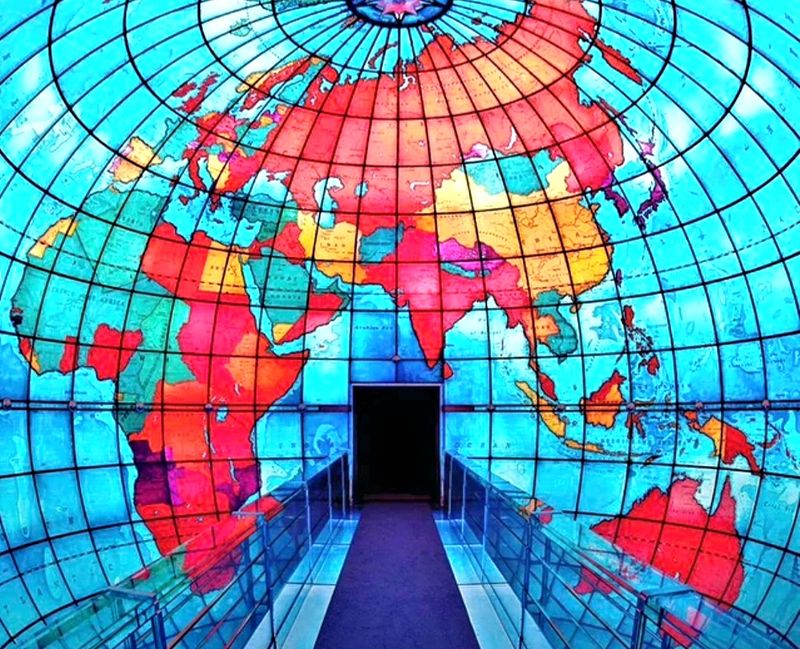
Standing inside a three-story stained-glass globe is not something most people expect to do on a Tuesday afternoon in Boston, yet that is exactly what the Mapparium offers.
Located at 210 Massachusetts Ave within the Christian Science Publishing Society building, this architectural wonder has been stopping visitors in their tracks since it was constructed in 1935.
The concept is beautifully simple and staggeringly effective. You walk across a 30-foot-long glass bridge through the interior of the globe, which means you are viewing the world from the inside out.
Every point on the globe is equidistant from your eye, eliminating the distortion that plagues flat maps and most conventional globes.
The political geography frozen in the glass reflects the world as it existed in the mid-1930s, before World War II reshaped borders and renamed nations.
You will spot labels like “Italian East Africa” and “Siam” that feel like dispatches from an alternate timeline, making the Mapparium as much a history lesson as a visual spectacle.
The acoustics inside are nothing short of extraordinary. The perfectly spherical shape creates a natural whispering gallery, meaning a soft murmur at one end of the bridge travels clearly to the other.
Visitors frequently test this phenomenon and react with genuine delight when it works.
Originally lit by hundreds of incandescent bulbs, the globe now glows via 206 LED fixtures capable of producing 16 million colors, powering a modern light-and-sound show that makes this classic attraction feel remarkably alive.
5. Spellman Museum Of Stamps & Postal History, Weston
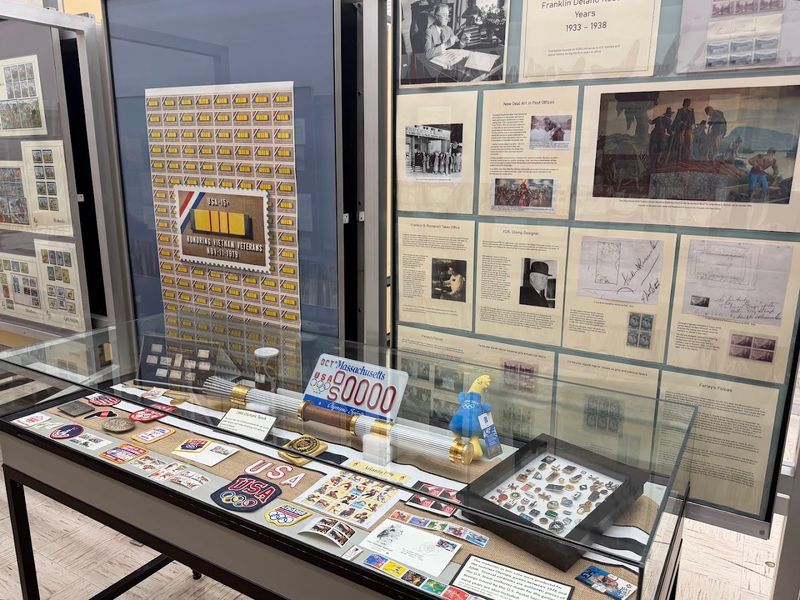
Most people walk past a stamp without giving it a second thought, but the Spellman Museum of Stamps and Postal History in Weston makes a compelling case that these tiny paper rectangles contain entire worlds.
Situated at 241 Wellesley St on the campus of Regis College, this institution stands as one of only two dedicated philatelic museums in the entire United States.
The museum traces its origins to Cardinal Francis Spellman, the former Archbishop of New York and an avid stamp collector whose personal collection formed the foundation when the museum opened in 1961.
That founding collection has since grown into a remarkable archive of over two million items, spanning postage stamps, postal artifacts, and communications history from across the globe.
What surprises most first-time visitors is how skillfully the exhibits use stamps as windows into larger historical narratives.
A single stamp can reveal trade routes, political upheavals, technological milestones, and cultural celebrations, making the museum feel as much like a world history gallery as a collector’s showcase.
The collection includes notable donations from Presidents Franklin D. Roosevelt and Dwight D. Eisenhower, both of whom were passionate philatelists.
That presidential connection lends the collection an unexpected layer of American political history that goes well beyond the postal service.
Children particularly enjoy the hands-on activity of mailing themselves a postcard directly from the museum, a small ritual that connects modern kids to a form of communication that shaped civilizations, one envelope at a time.
6. Paper House, Rockport
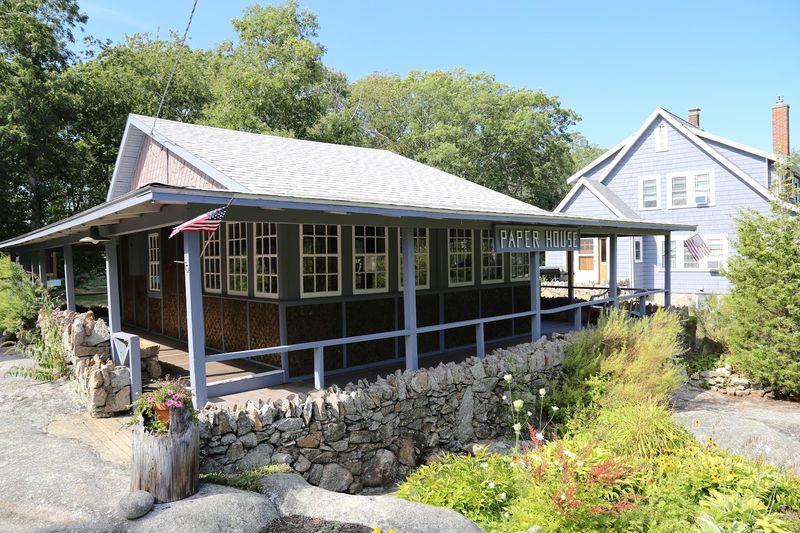
In 1922, a Swedish mechanical engineer named Elis F. Stenman looked at his daily newspaper and decided it was far too useful to simply throw away.
What followed was a two-year construction project that produced the Paper House at 52 Pigeon Hill St in Rockport, one of the most genuinely improbable structures in the entire country.
Stenman built the walls from thousands of newspapers, layering and varnishing them with a homemade paste made from flour, water, and apple peel until the panels reached a sturdy one-inch thickness.
The result is walls that have held firm for over a century, proving that his experiment was far more than a novelty.
The ingenuity does not stop at the walls. Nearly every piece of furniture inside the house is also constructed from tightly rolled, varnished newspapers.
A desk was fashioned from papers covering Charles Lindbergh’s famous transatlantic flight. A grandfather clock was assembled using newspapers sourced from each of the then-48 US states, creating a piece of furniture that doubles as a geography lesson.
The only concessions to conventional building materials are the brick fireplace, included for obvious safety reasons, and the piano, which is simply clad in newspaper rather than built from it. Everything else is paper, through and through.
Since 1930, the Stenman family has maintained the Paper House as a museum, and visiting it feels like stepping into proof that the most extraordinary ideas sometimes start with something as ordinary as yesterday’s news.
7. Museum Of Modern Renaissance, Somerville
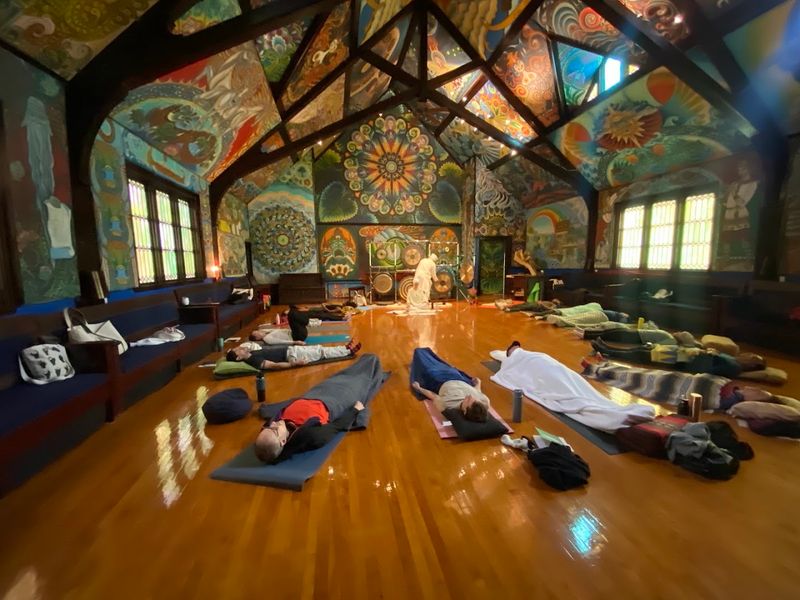
Nothing quite prepares you for your first glimpse of the Museum of Modern Renaissance at 115 College Ave in Somerville, Massachusetts.
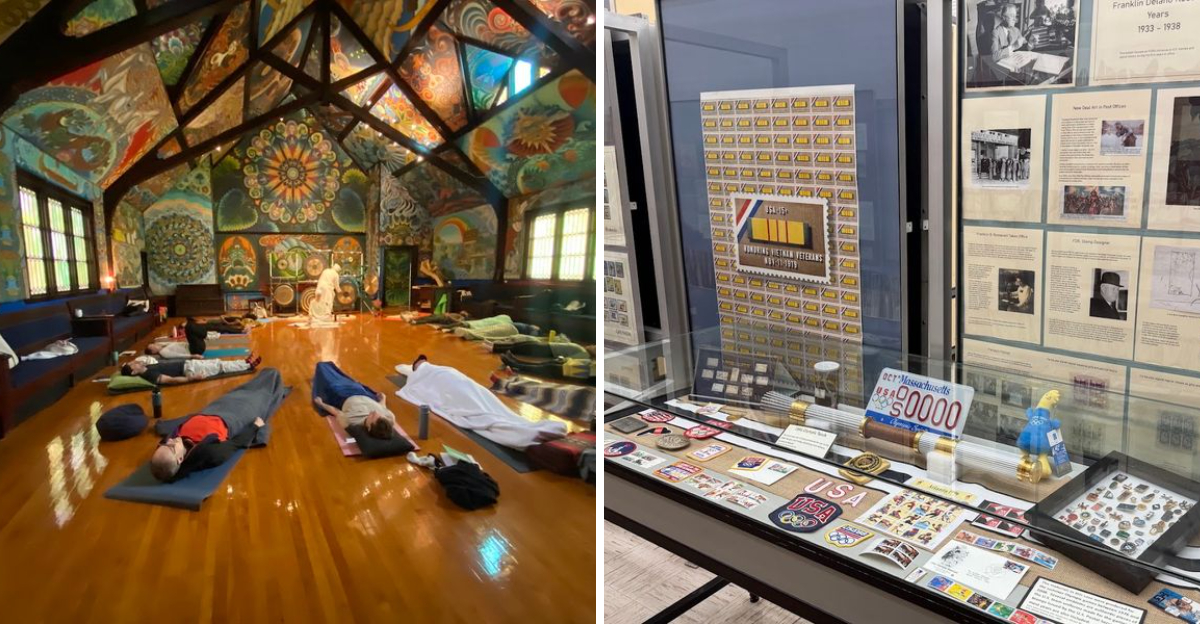
From the outside, it resembles a former church, which it is, but the moment you step through the door, the building transforms into something that feels equal parts cathedral, gallery, and fever dream painted in the most extraordinary colors imaginable.
Russian artists Nicholas Shaplyko and Ekaterina Sorokina discovered the former West Somerville Unitarian Church in 2002 and immediately recognized it as a canvas waiting to be filled.
Over years of dedicated work, they covered virtually every surface, inside and out, with fresco-like murals in a style they call “Mystical Realism.”
Their artwork merges mythological creatures, religious iconography, and intricate geometric patterns into a single, seamless visual experience that changes subtly depending on where you stand and how the light falls.
No two visits feel quite the same, because the murals reward slow, attentive looking in a way that quick glances cannot capture.
The building also carries a remarkable historical footnote: in 1920, Paramahansa Yogananda delivered his very first American speech here, introducing the philosophy of Yoga to the United States for the first time.
Shaplyko and Sorokina feel a deep personal resonance between their artistic practice and that spiritual legacy.
The museum typically opens by appointment and during events like Somerville Open Studios, making each visit feel like a private audience with something genuinely and beautifully singular.
8. The Collection of Historical Scientific Instruments At The Putnam Gallery, Cambridge
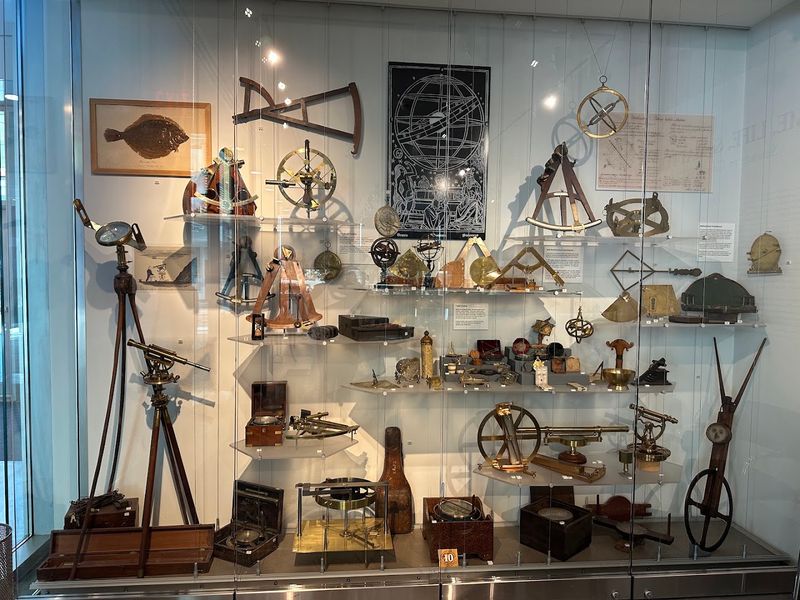
Harvard University’s Science Center at 1 Oxford St in Cambridge holds a collection so rich with history that simply reading the object labels feels like flipping through centuries of human curiosity.
The Collection of Historical Scientific Instruments at the Putnam Gallery was established in 1948 with a straightforward but important mission: save obsolete scientific equipment from being dismantled and lost forever.
That mission has produced one of the three largest university collections of its kind anywhere in the world, now encompassing over 20,000 objects spanning astronomy, navigation, medicine, electricity, and beyond.
The permanent exhibition, titled “Time, Life, and Matter: Science in Cambridge,” showcases the instruments that drove Harvard’s most significant scientific contributions across several centuries.
Among the highlights, visitors can examine a geometric sector attributed to Galileo himself, a connection to the history of science that is almost difficult to process while standing in front of it.
Electrical experimentation apparatus acquired for Harvard by Benjamin Franklin sits nearby, adding a distinctly American founding-era dimension to the collection.
Medical devices partly designed by aviator Charles Lindbergh also appear in the collection, a detail that surprises nearly every visitor who encounters it.
The gallery additionally preserves artifacts from classified research conducted by Harvard scientists during World War II, offering a glimpse into science under extraordinary pressure.
Rotating exhibitions on the second floor ensure that repeat visitors always discover something new, making this Cambridge gallery a destination that rewards curiosity with the kind of tangible, hands-on history that textbooks simply cannot replicate.