
America’s Only Museum Devoted Entirely To Norman Rockwell’s Originals Sits In A Quiet Massachusetts Town
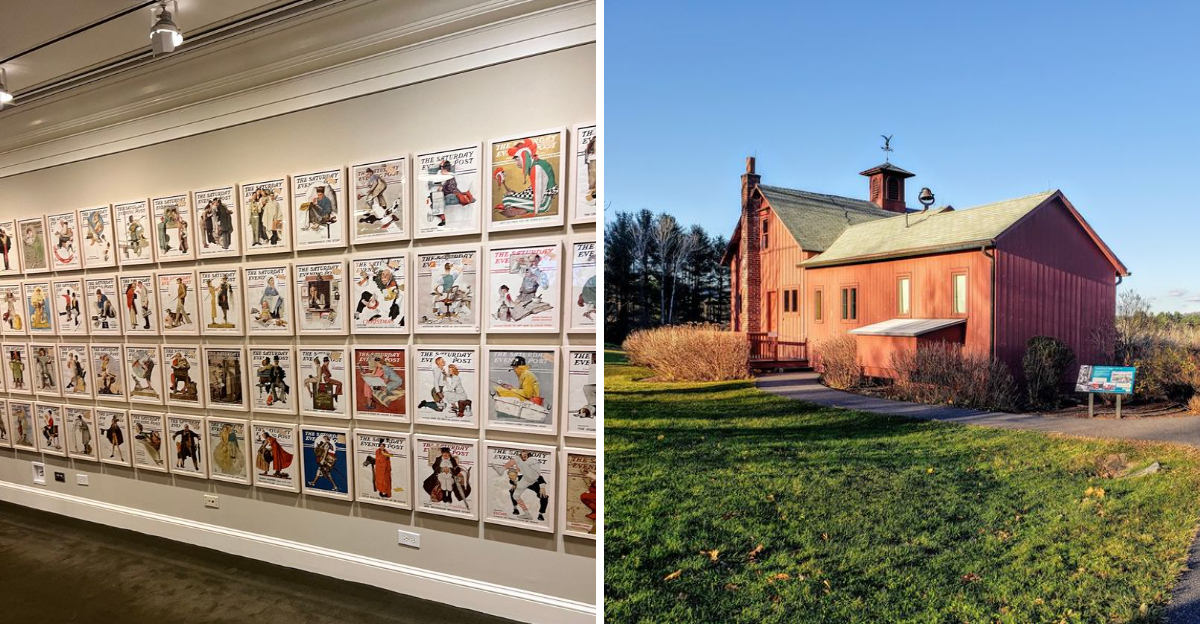
Some museums show you art. This one shows you America, as one artist saw it for over six decades.
Massachusetts holds a museum unlike any other in the country, built entirely around a single storyteller’s original work. Think small town parades. Think doctors examining nervous kids. Think everyday moments that somehow felt bigger once he painted them.
This isn’t a museum with a few pieces borrowed for a special exhibit. Every single original on these walls belongs to one collection, and nowhere else in the country can make that claim.
Norman Rockwell spent decades capturing American life with a level of detail that still stops visitors mid step. Families recognize scenes from their own childhoods.
Art lovers study brushstrokes most people never notice in reproductions.
Are you ready to see the difference between a print and the real thing? This museum proves there’s a massive one, and it’s waiting in Massachusetts for anyone willing to look closely.
The Largest Gathering Of Rockwell Originals On Earth
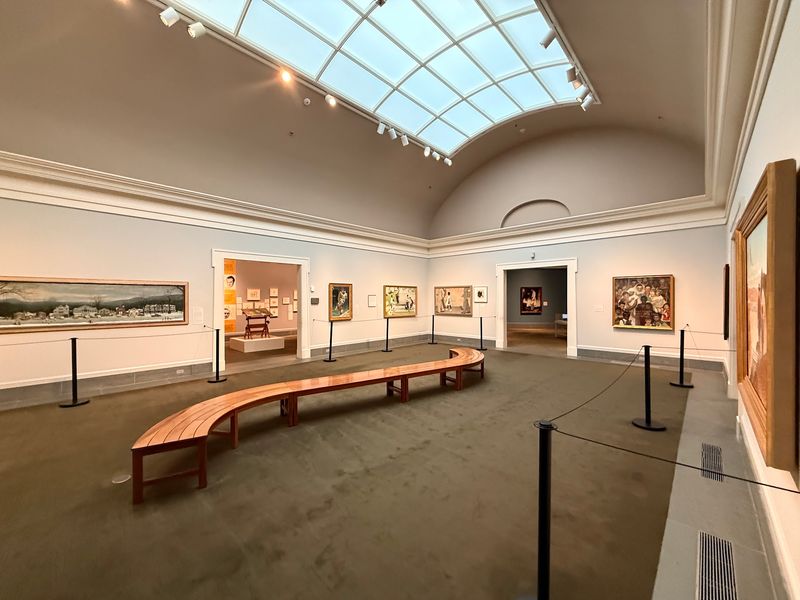
Nearly one thousand original paintings and drawings live under a single roof here, and that number still surprises people. The collection holds 998 original works by Norman Rockwell.
No other museum on the planet comes close. Seeing the originals changes things, because printed reproductions flatten the texture that Rockwell built up layer by layer.
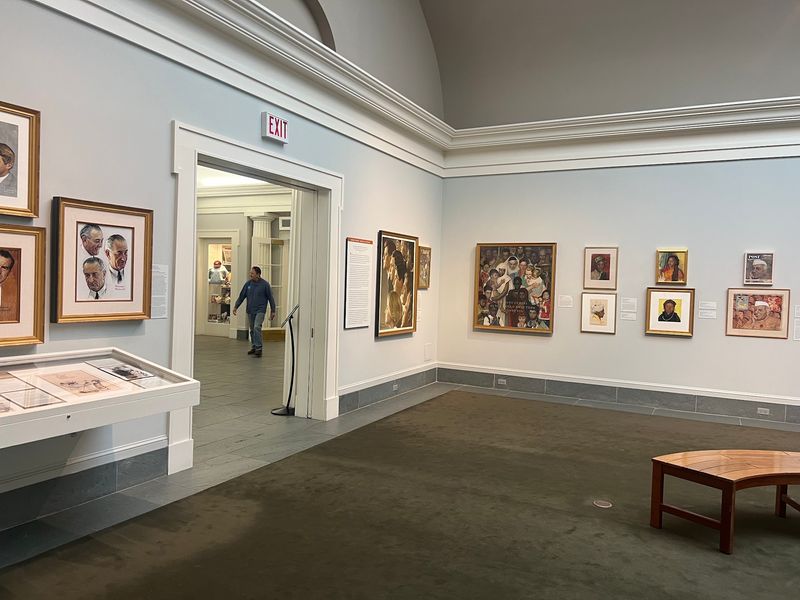
Up close, you notice the thick paint on a wool coat and the tiny highlight in a child’s eye. The Norman Rockwell Museum makes those details easy to study, since the galleries are arranged so you can stand close without feeling rushed.
Famous canvases anchor the experience. The Four Freedoms, Triple Self-Portrait, Girl at Mirror, The Marriage License, and The Problem We All Live With are all part of the holdings.
Each one carries a different mood, from playful to deeply serious. Plan on two hours minimum, though plenty of people stretch that to three.
The wider permanent collection reaches beyond Rockwell too, with more than 25,000 works of original illustration by over 300 artists. That means repeat trips rarely feel repetitive, since rotating displays keep pulling fresh material out of storage.
Every Saturday Evening Post Cover, Lined Up Downstairs
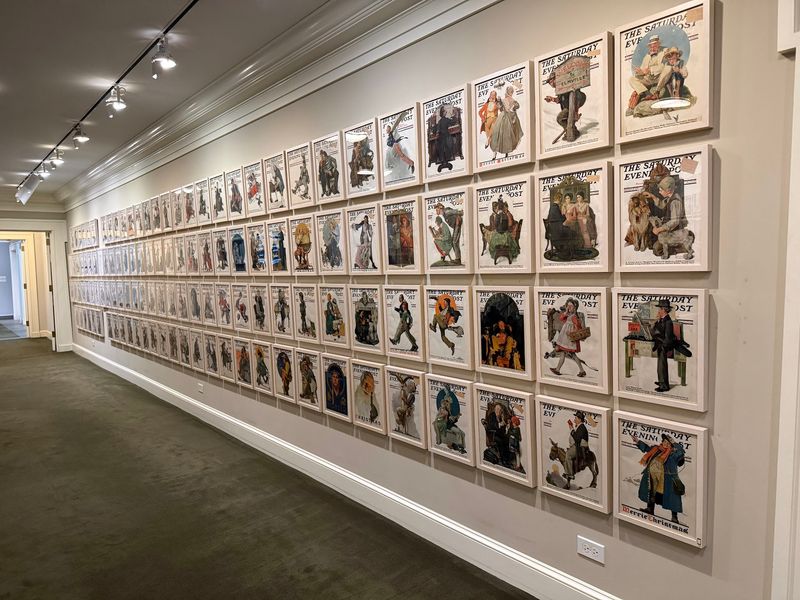
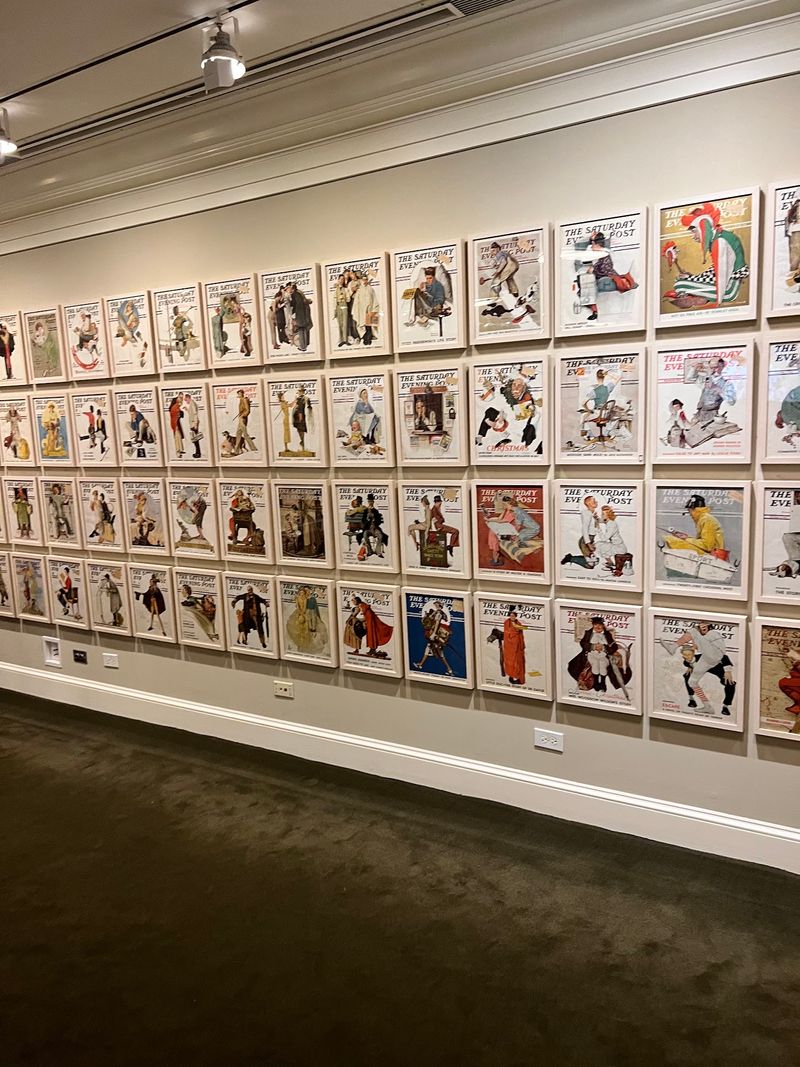
Head downstairs first. That is the advice worth following, because the lower level holds all 323 Saturday Evening Post covers Rockwell created between 1916 and 1963.
They hang in order, which turns the room into a timeline of American life. Start at the beginning and you meet a young illustrator drawing boys with fishing poles and mischievous grins.
Keep walking and the mood shifts. Wartime arrives, then postwar optimism, then the space age, all filtered through Rockwell’s eye for ordinary people.
By the final covers, hairstyles have changed, cars have changed, and so has the country. Few history lessons are this painless.
The chronological setup rewards slow walking. Give yourself permission to linger over the ones that make you laugh, and there will be several.
Rockwell had a gift for the split second right before or right after something happens. A dog mid-leap, a boy caught with a secret, a family squeezed into one car.
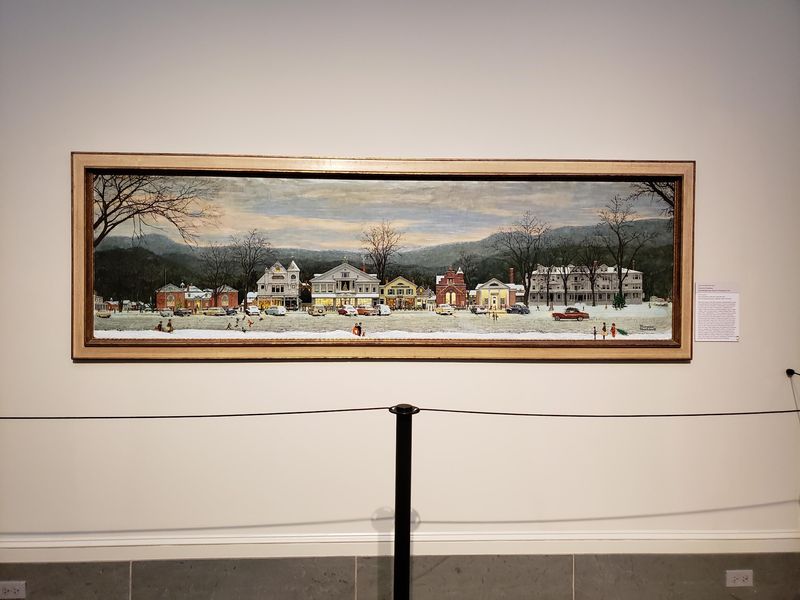
Massachusetts gets its own quiet cameo in the collection through Stockbridge Main Street at Christmas, a long horizontal painting of the very town outside. Recognizing real buildings in a famous artwork is a genuine thrill.
Rockwell’s Actual Studio, Moved Board By Board
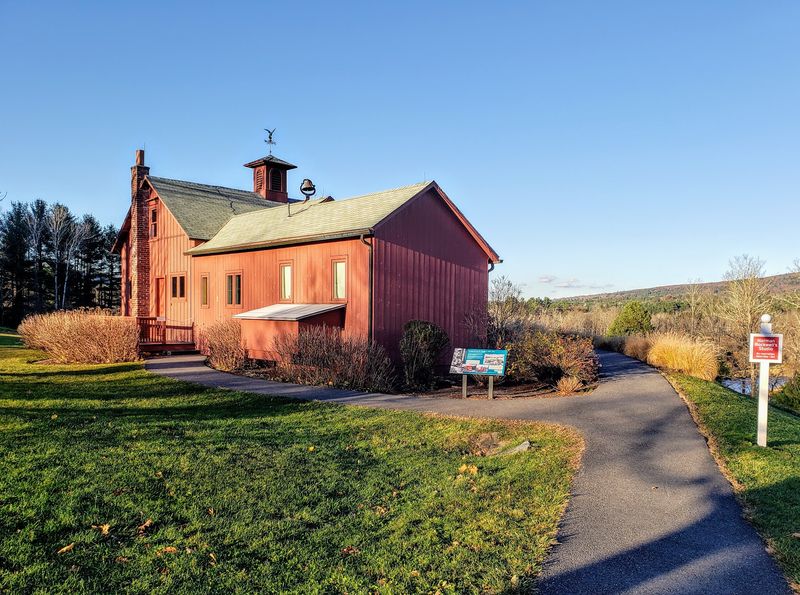
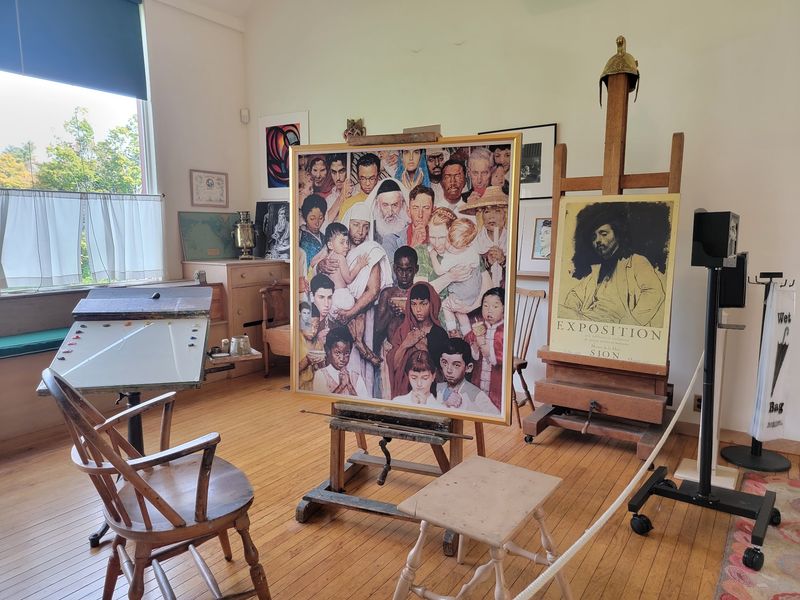
An 1830s carriage barn became the workshop where Rockwell painted his final masterpieces. He converted it himself, and it is the last studio he used and the only one still standing.
In 1986 the whole structure was moved to the museum campus from behind his Stockbridge home. Inside, the space is arranged to look the way it did in late 1960.
Brushes, reference photographs, and the tools of his trade sit where a working artist would keep them. You get a sense of habit and discipline rather than mystery.
Rockwell was famously methodical, staging photographs of neighbors before he ever touched a canvas. Standing in the studio makes that process click.
A practical note matters here. The studio typically opens from May through October, and access is by guided tour with limited group sizes.
Reserving ahead is smart, since the last tour of the day departs well before the galleries close. Arriving late in the afternoon and hoping for a spot is a gamble.
The walk down to the building is short and pretty, past lawn and open views. Even the exterior photographs beautifully.
A Thirty-Six Acre Campus With Housatonic Valley Views
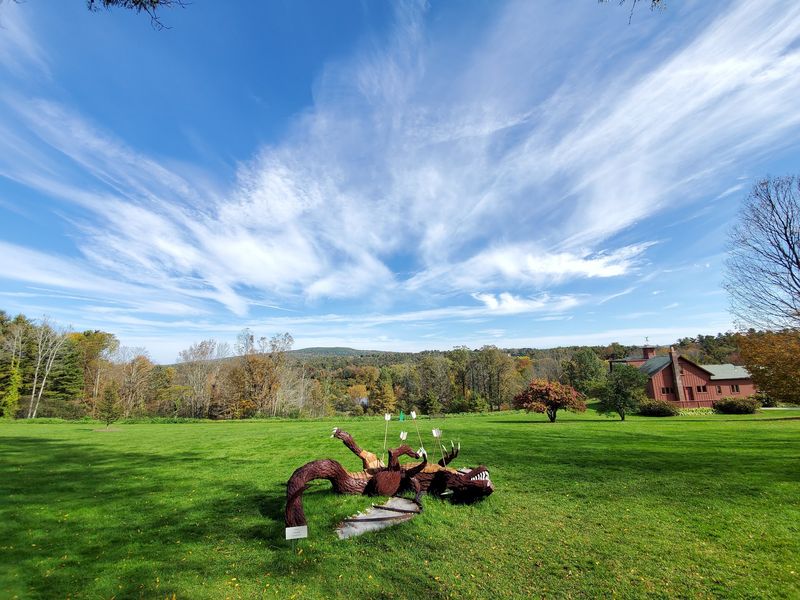
The land alone justifies the drive. The museum sits on a 36-acre campus that looks out over the Housatonic River Valley, and the view opens up the moment you step out of the car.
Rolling lawns, mature trees, and easy walking paths wind across the property. Nothing is steep or strenuous. Outdoor sculpture appears along the way, which gives the stroll a purpose beyond fresh air. Benches invite a pause.
Autumn is spectacular in this corner of Massachusetts, with the surrounding hills turning gold and red. There is even an apple grove on the grounds that draws attention in early fall.
Summer brings deep green and long light, while late spring feels soft and unhurried. Winter has its own quiet appeal, though paths can be snowy.
Budget twenty or thirty extra minutes for the outside portion. Many people treat it as an afterthought and then wish they had allowed more time.
Bring comfortable shoes and a jacket, because the hillside catches a breeze. Photographers will find the valley overlook especially rewarding in late afternoon.
A Barn-Inspired Building Designed By Robert A. M. Stern
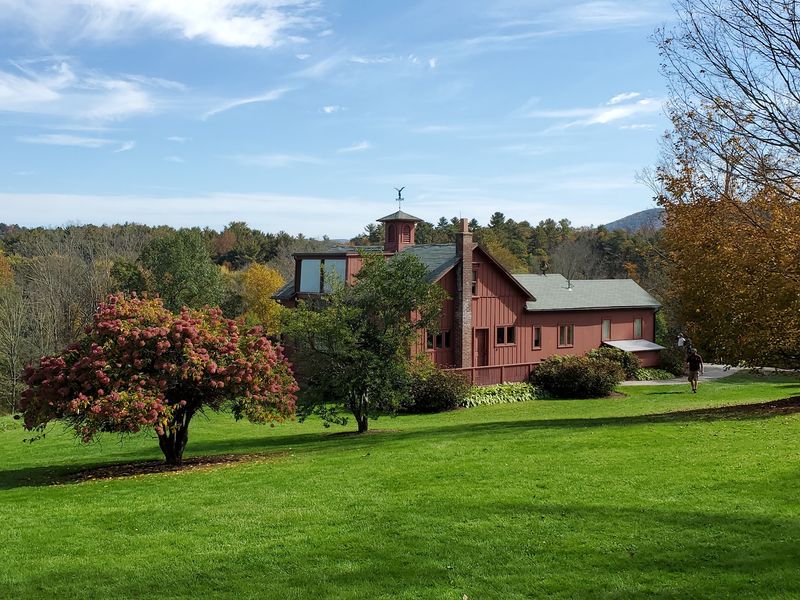
Architecture nerds, rejoice. The gallery building was designed by Robert A. M. Stern, an internationally recognized architect, and it opened when the museum moved to its current site in 1993.
Stern shaped it to evoke a classic New England barn. Clean white lines, simple proportions, and a modest profile keep it from shouting over the landscape.
The choice makes sense. Rockwell painted small-town America, so housing his work in a grand marble palace would have felt off key.
Inside, natural light and calm rooms let the pictures do the talking. Ceilings are generous without feeling cavernous.
The museum did not start here. It was founded in 1969 with help from Norman and Molly Rockwell, and its first home was the Old Corner House on Main Street in Stockbridge.
Growth forced the move, since a historic house could never hold the collection safely. The Glendale Road campus solved that problem.
Take a moment outside before entering. The building reads differently from a distance, where it settles into the hillside like it has always belonged there.
The Town That Rockwell Called His Adopted Hometown
Rockwell spent the last 25 years of his life in this Berkshires town, arriving in 1953 and staying until 1978. He moved so his wife Mary could receive medical treatment nearby.
He grew genuinely fond of the place. He called Stockbridge the best of America, the best of New England, and referred to it as his adopted hometown.
Neighbors became models. Faces you see in the galleries belonged to real people who lived a few streets away.
That connection makes the town worth exploring after the museum. Main Street is short, walkable, and still recognizable from the painting that made it famous.
Every year the community recreates the scene from Stockbridge Main Street at Christmas, complete with period cars parked along the curb. It has become a beloved tradition.
Pairing the museum with a slow loop through town turns a two-hour outing into a full, satisfying day. The contrast is fun, seeing the painted version and then the real one.
Rockwell’s former home stood near the Red Lion Inn, which still anchors the street. Knowing that adds a layer to the walk.
Archives Holding More Than 100,000 Pieces Of Rockwell’s Life
Here is a number that stops people short. The Norman Rockwell Archives contain over 100,000 items connected to the artist’s life and career.
Photographs fill much of it, especially the staged reference shots he used before painting. Fan mail, business papers, personal calendars, and letters round out the rest.
Together the material paints a portrait of a working professional, not just a famous name. Deadlines, corrections, and correspondence were daily reality.
The core of the museum’s holdings traces back to the Norman Rockwell Art Collection Trust, which the artist established in 1973.
He wanted the work kept together and cared for. That decision is the reason the collection never scattered across auction houses. His foresight built what stands today.
Scholarship happens here too. The Rockwell Center for American Visual Studies operates on site as a national research institute focused on American illustration art.
In 2008 the institution received the National Humanities Medal, a serious national honor. Recognition like that confirms the museum is more than a stop for nostalgia.
Some archival material surfaces in exhibitions, so keep an eye out for photographs displayed alongside finished paintings.
Rotating Exhibitions That Go Well Beyond One Artist
Coming back a year later and finding something new is part of the plan. Alongside the permanent Rockwell galleries, the museum hosts traveling exhibitions devoted to American illustration.
Subjects range widely. Fantasy art, jazz age illustration, and contemporary illustrators have all filled the temporary spaces.
The variety works because Rockwell himself was an illustrator, part of a much bigger tradition. Seeing his peers and successors sharpens your appreciation of his skill.
Special programming appears throughout the year as well, including themed tours tied to national anniversaries. Guided talks add context that self-guided wandering can miss.
An introductory film and an audio guide help first-timers get oriented. The film features narration from Rockwell’s son, which lends it warmth.
Checking the current exhibition schedule before you go is a small step with a big payoff. It helps you decide how much time to set aside.
Families do well here because the imagery is instantly readable. Kids who tune out abstract art tend to lean in when a painting tells a clear story. Ask staff about highlights when you arrive.
Planning Your Trip To 9 Glendale Road
Getting the logistics right makes the day smoother. The Norman Rockwell Museum sits at 9 Glendale Road, Stockbridge, MA 01262, along Route 183, a short drive from the center of town.
Galleries run 10 AM to 5 PM most days, with Wednesday closed. Building your schedule around that saves disappointment.
The phone number is 413-298-4100, and the website is nrm.org. Buying tickets online in advance is the easy move, especially in summer and fall.
Studio tours require a separate reservation and carry an additional fee. Book that early if the studio is your main goal, since group sizes stay small.
Arrive by late morning for the fullest experience. Two hours covers the essentials, but three lets you slow down in the Post cover gallery.
A cafe on site handles lunch, and the shop stocks prints, books, and keepsakes worth browsing. Many people finish there rather than starting.
The Berkshires region of Massachusetts offers plenty nearby, so pairing the museum with a drive through the hills makes for a well-rounded day. Fall weekends draw crowds, so earlier is better.