
11 Architectural Wonders In Tennessee Worth Seeing Up Close This Year
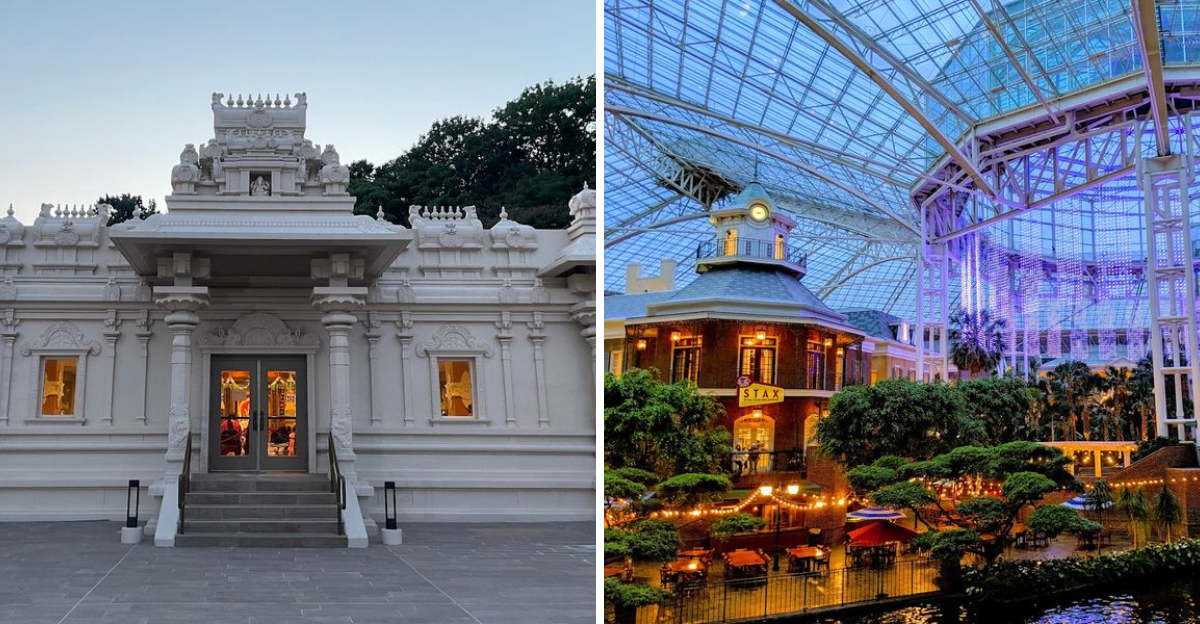
Tennessee is full of buildings that do more than just stand there, they tell stories through design, history, and craftsmanship. Some impress with grand columns and detailed facades, while others stand out for their unique shapes or unexpected features.
Walking up to these places in person feels completely different than seeing photos, with every detail becoming more noticeable the closer you get. It’s a mix of past and present, where historic landmarks sit alongside bold, modern structures.
These architectural wonders show how creative and varied design can be, offering experiences that feel just as interesting outside as they do inside.
1. The Parthenon (Nashville)
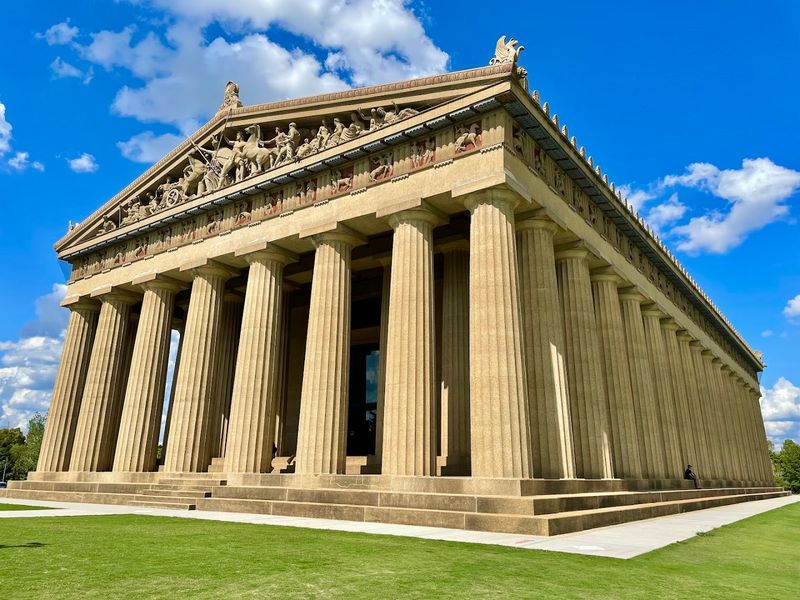
Standing in the middle of Nashville’s Centennial Park is a full-scale replica of one of the most famous buildings in human history. The Parthenon at 2500 West End Ave was originally built in 1897 for Tennessee’s Centennial Exposition and was made permanent in the 1920s.
It is the only full-size reproduction of the original Greek Parthenon anywhere in the world.
Walking up to those massive Doric columns feels genuinely surreal, like you’ve been teleported straight to Athens without the plane ticket. Inside, you’ll find a 42-foot-tall statue of Athena Parthenos, which is the largest indoor sculpture in the Western world.
The details on the exterior friezes and pediment sculptures are breathtaking up close.
The building also functions as an art museum, housing a permanent collection of 19th and 20th century American paintings. Admission is affordable, and the surrounding park makes it a perfect full afternoon outing.
Nashville earned its nickname “Athens of the South” largely because of this extraordinary structure, and seeing it in person makes that title feel completely earned.
2. Ryman Auditorium (Nashville)
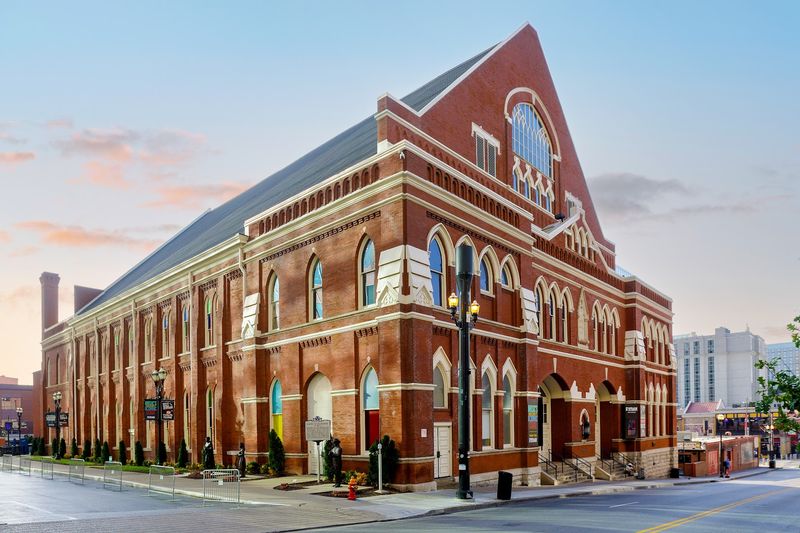
Before it became the legendary home of country music, the Ryman Auditorium at 116 5th Ave N started life as a tabernacle built in 1892 by riverboat captain Thomas Ryman. That origin story alone makes this building fascinating, but the Gothic Revival architecture seals the deal.
The red brick exterior, arched stained glass windows, and church-pew seating inside create an atmosphere unlike any other music venue on earth.
Acoustics inside the Ryman are considered among the best in the world, and architects and musicians alike have marveled at how the original designers achieved that without modern technology. The soaring wooden ceiling and curved balconies contribute to a sound quality that recording engineers still chase today.
Standing on that famous stage, even just for a tour, gives you serious chills.
The building served as the Grand Ole Opry’s home from 1943 to 1974, hosting legends like Hank Williams, Johnny Cash, and Patsy Cline. Guided tours are available year-round and include backstage access.
If you can catch a live show here, do it without hesitation because the combination of historic architecture and live performance creates a truly unforgettable sensory experience.
3. Tennessee State Capitol (Nashville)
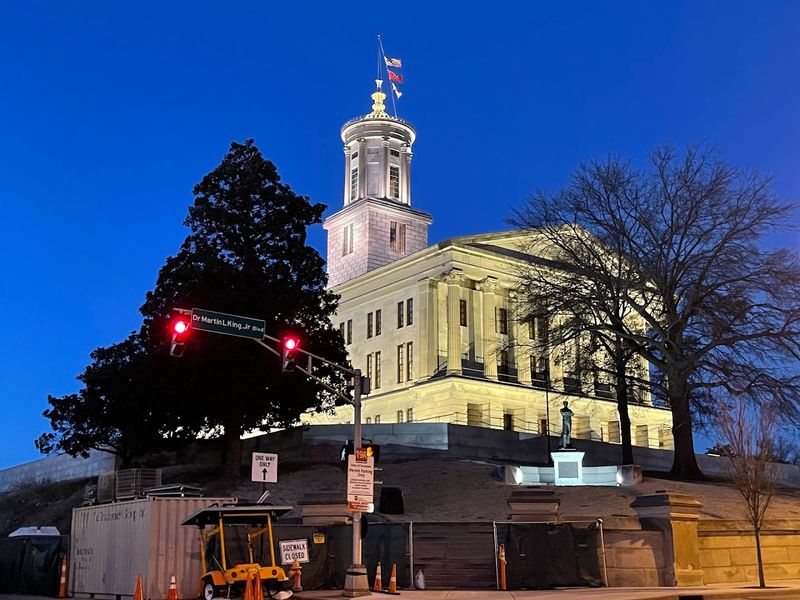
Perched on a hill overlooking downtown Nashville, the Tennessee State Capitol is one of the most elegant government buildings in the entire country. Designed by architect William Strickland and completed in 1859, it stands as a masterpiece of Greek Revival design.
Strickland was so devoted to this project that he actually requested to be entombed within its walls, and his wish was granted.
The building at 600 Dr. M.L.K. Jr Blvd features a stunning central tower modeled after the Lysicrates Monument in Athens, limestone walls quarried from nearby Tennessee hills, and an interior filled with ornate ironwork and grand staircases.
Every detail was carefully planned to project strength, dignity, and democratic ideals. Walking through the halls feels like stepping into a living civics lesson.
Free public tours are offered on weekdays and give visitors access to the historic legislative chambers, the governor’s office area, and the beautifully landscaped grounds. The Capitol is also the burial site of President James K.
Polk and his wife, adding another layer of historical significance. Architects and history enthusiasts consistently rank this building among the finest examples of antebellum civic architecture in the American South.
4. Sun Studio (Memphis)
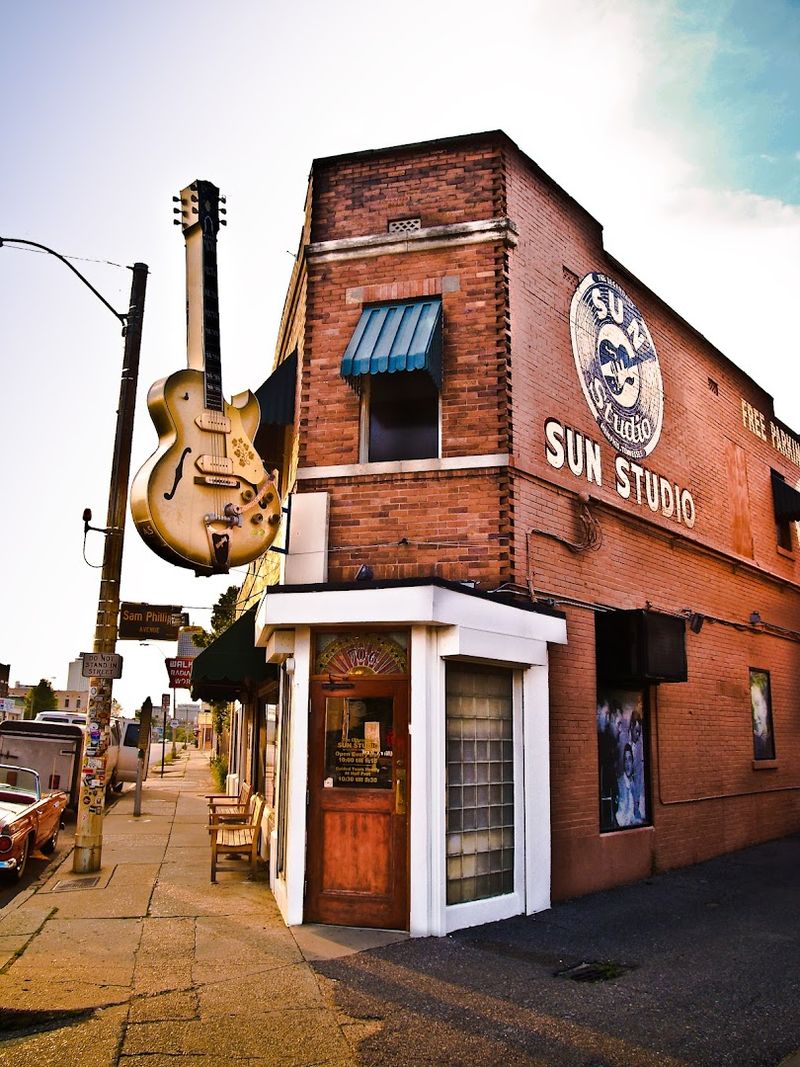
From the outside, Sun Studio at 706 Union Ave in Memphis looks almost disappointingly ordinary. It’s a small, unassuming storefront that you could easily walk past without a second glance.
But the moment you learn what happened inside those walls, the building transforms into something almost sacred in the world of American music and cultural history.
Founded by Sam Phillips in 1950, this tiny studio is where Elvis Presley, Johnny Cash, Jerry Lee Lewis, and B.B. King all recorded some of their most iconic early work.
The mid-century design has been preserved with remarkable care, including the original microphone hanging from the ceiling and the same acoustic tiles on the walls. That microphone is the actual one Elvis sang into, and you can stand right next to it on a tour.
The building earned the nickname “The Birthplace of Rock and Roll,” and the National Historic Landmark designation it received in 2003 confirms just how significant this place really is. Tours run daily and include audio recordings that let you hear sessions recorded in that very room.
Sun Studio also still operates as a working recording studio at night, meaning modern artists continue to make music in this legendary space.
5. Memphis Pyramid (Bass Pro Shops Pyramid)
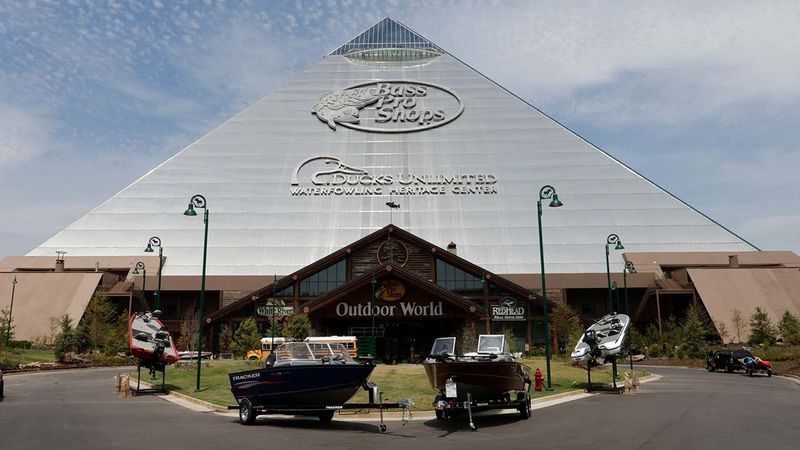
Rising 321 feet above the banks of the Mississippi River, the Memphis Pyramid is one of the most visually dramatic structures in the entire American South. Built in 1991 as a sports and entertainment arena, it sat empty for years before Bass Pro Shops transformed it into something gloriously unexpected.
Today, 1 Bass Pro Dr is home to a sprawling retail and entertainment complex that includes a hotel, bowling alley, restaurants, and even a swamp with live alligators.
The pyramid’s glass-and-steel exterior was inspired by the ancient Egyptian pyramids and pays homage to Memphis’s Egyptian namesake city. At the apex, there’s an observation deck called the Top of the Pyramid that offers sweeping views of the river and the city skyline.
Getting up there via the world’s tallest freestanding elevator is an experience all by itself.
Architecturally, the sheer scale of this structure is jaw-dropping. It covers about 300,000 square feet of interior space and took three years to construct.
Even if you’re not a Bass Pro Shops fan, the building itself justifies the trip. Few places on earth blend ancient architectural symbolism with modern retail innovation quite so boldly, and Memphis pulls it off with genuine swagger.
6. Gaylord Opryland Resort (Nashville)
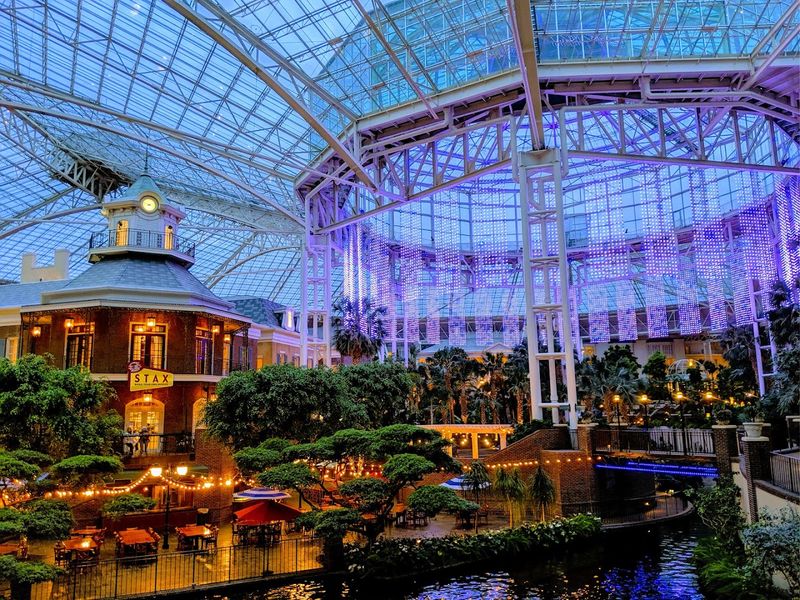
Imagine walking into a hotel and suddenly finding yourself inside what feels like a tropical rainforest, complete with real waterfalls, winding rivers, and thousands of live plants. That’s exactly the experience waiting for you at Gaylord Opryland Resort at 2800 Opryland Dr in Nashville.
The resort covers over 9 acres of indoor garden space spread across multiple climate-controlled glass atriums, making it one of the most architecturally ambitious hotel projects in American history.
The Delta atrium alone features a quarter-mile indoor river where guests can ride flatboats past cascading waterfalls and lush vegetation. The glass roof structures that enclose these spaces are engineering marvels, designed to maintain a comfortable climate year-round regardless of outdoor temperatures.
At night, thousands of lights reflect off the water and glass, creating an almost dreamlike atmosphere.
Beyond the gardens, the resort features over 2,800 rooms, multiple convention spaces, and restaurants designed with architectural flair that matches the overall grandeur. The building’s exterior blends traditional Southern design with massive modern additions that have expanded the property over several decades.
Even if you’re not staying overnight, the resort welcomes visitors to explore the atriums and experience one of Nashville’s most spectacular and genuinely unique architectural achievements.
7. Tennessee Theatre (Knoxville)
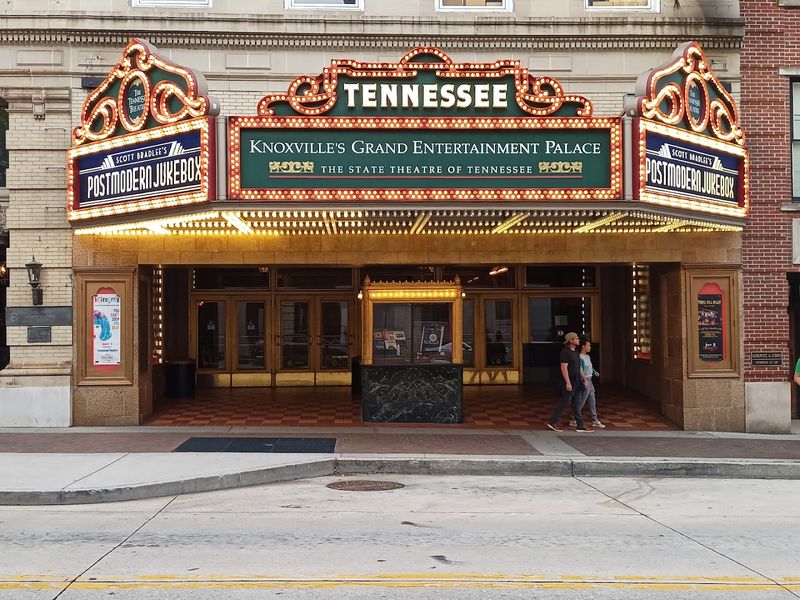
Few buildings in Tennessee carry the kind of old-Hollywood glamour that radiates from every inch of the Tennessee Theatre at 604 S Gay St in Knoxville. Opened in 1928 during the golden age of movie palaces, this stunning venue was designed by architect John Eberson in a lavish Spanish-Moorish style that was meant to transport audiences to another world entirely.
Mission accomplished, because stepping inside still feels like entering a fantasy palace.
The ceiling above the main auditorium is a breathtaking recreation of a Spanish courtyard sky, complete with twinkling stars and drifting cloud effects. Ornate plasterwork, gilded arches, hand-painted murals, and an enormous chandelier combine to create an interior that no modern multiplex could ever dream of matching.
The Mighty Wurlitzer organ, still in working condition, rises dramatically from the orchestra pit during special events.
Knoxville’s community rallied to save and restore this theater in the 1990s when it faced potential demolition, and the result is one of the finest preserved movie palaces in the American Southeast. Today it hosts live performances, film screenings, and community events.
Visiting on a night when the organ plays and the star ceiling glows above you is the kind of experience that stays with you for years.
8. James K. Polk Home & Museum (Columbia)
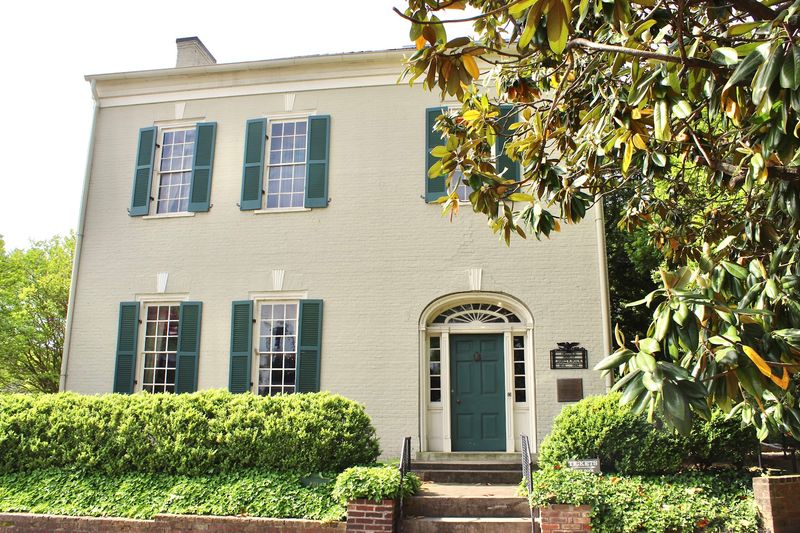
History has a way of feeling distant until you stand in front of a building that actually witnessed it. The James K.
Polk Home at 301 W 7th St in Columbia, Tennessee, is that kind of place. Built in 1816, this modest Federal-style brick house is where the 11th President of the United States spent his formative years, and it remains the only surviving residence of Polk outside of the White House itself.
Federal-style architecture, popular in early 19th-century America, emphasizes symmetry, clean lines, and restrained ornamentation, and this home exemplifies those qualities beautifully. The central entrance with its fanlight window, evenly spaced sash windows, and simple but dignified brick construction reflect the architectural values of a young, confident nation.
Period-appropriate furnishings inside include original items belonging to Polk and his wife Sarah.
The museum portion of the property includes an adjacent sisters’ house, also Federal in style, which provides additional exhibit space exploring Polk’s presidency and the political climate of the 1840s. Guided tours bring the history to life with engaging storytelling and detailed context.
For anyone interested in early American domestic architecture and presidential history, this Columbia gem offers a rare, intimate look at life in 19th-century Tennessee that photographs simply cannot replicate.
9. Sri Ganesha Temple (Nashville)
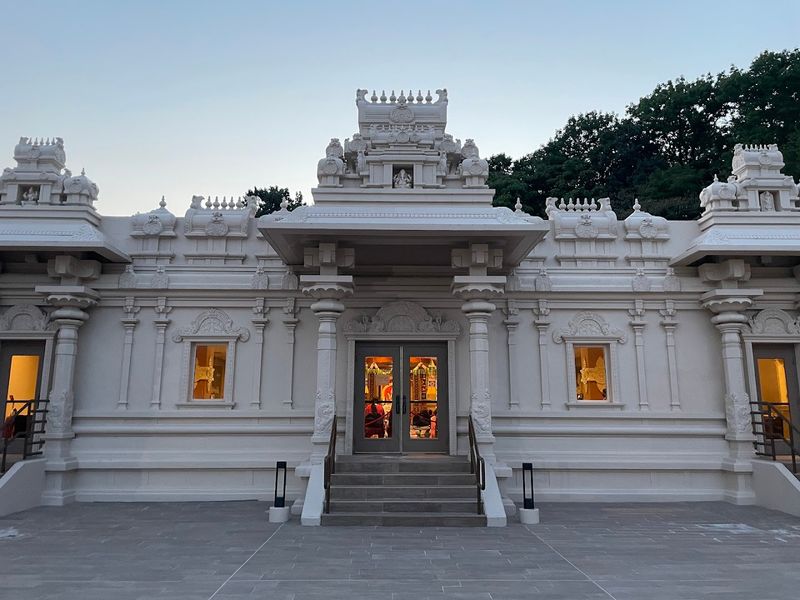
Driving along Temple Road in Nashville’s southwestern suburbs, you’re unlikely to expect what suddenly appears before you. The Sri Ganesha Temple at 7744 Temple Rd is a stunning example of traditional South Indian Dravidian temple architecture, rising from the Tennessee landscape with extraordinary sculptural detail and vibrant color.
It is one of the most architecturally distinctive religious buildings in the entire state.
The temple’s exterior is covered in hundreds of intricately carved stone figures depicting deities, celestial beings, and mythological scenes. Skilled craftsmen from India were brought over specifically to execute the carvings according to ancient Agamic texts, ensuring that every detail meets traditional religious and artistic standards.
The main tower, known as a gopuram, draws the eye immediately with its layered tiers of sculpture that seem to multiply the higher you look.
Inside, the atmosphere shifts to one of profound calm, with the scent of incense and the sound of devotional chanting creating a deeply peaceful experience. The temple welcomes visitors of all backgrounds and offers guided explanations of the artwork and its symbolism.
For architecture lovers, the craftsmanship here is jaw-dropping, representing a living tradition of sacred building that stretches back over a thousand years and continues to thrive beautifully in Nashville.
10. St. Mary’s Catholic Church (Nashville)
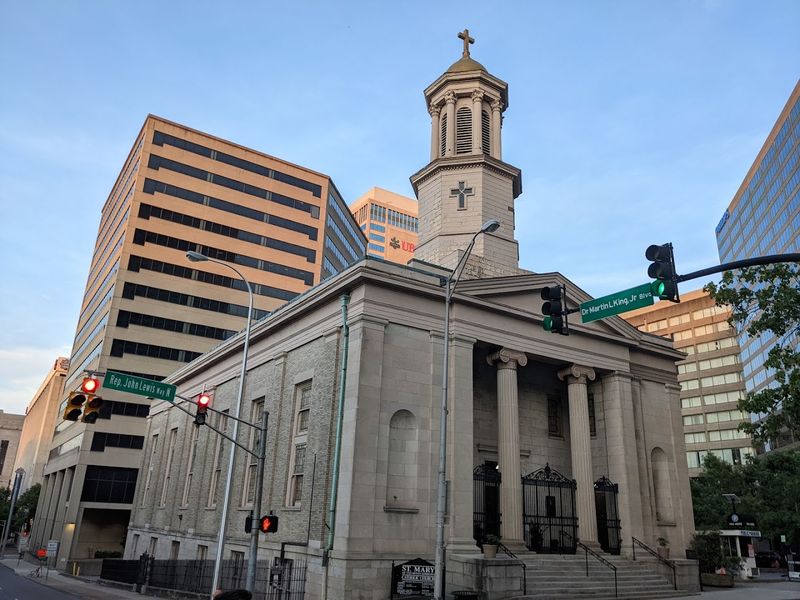
Tucked into the East Nashville neighborhood on Fatherland Street, St. Mary’s Catholic Church is the kind of building that makes you slow your car down just to look. Built in 1847, it is the oldest Catholic church in Nashville and one of the finest examples of Gothic Revival ecclesiastical architecture in the entire state.
The pointed arches, soaring bell tower, and intricate stained glass windows give it a timeless grandeur that feels transported directly from medieval Europe.
The stained glass windows are particularly spectacular, bathing the interior in richly colored light that shifts throughout the day as the sun moves. Each window tells a biblical story through color and imagery, functioning as both devotional art and architectural decoration in the best Gothic tradition.
The craftsmanship in both the woodwork and stonework throughout the interior reflects the serious artistic ambition of its 19th-century builders.
St. Mary’s survived the Civil War, floods, and the dramatic transformation of Nashville’s urban landscape, standing as a resilient anchor in a rapidly changing city. The church remains an active parish, so visitors should be respectful of worship schedules when planning a visit.
The combination of historical depth, architectural beauty, and spiritual atmosphere makes this East Nashville landmark one of the most rewarding stops on any Tennessee architecture tour.
11. Blount Mansion (Knoxville)
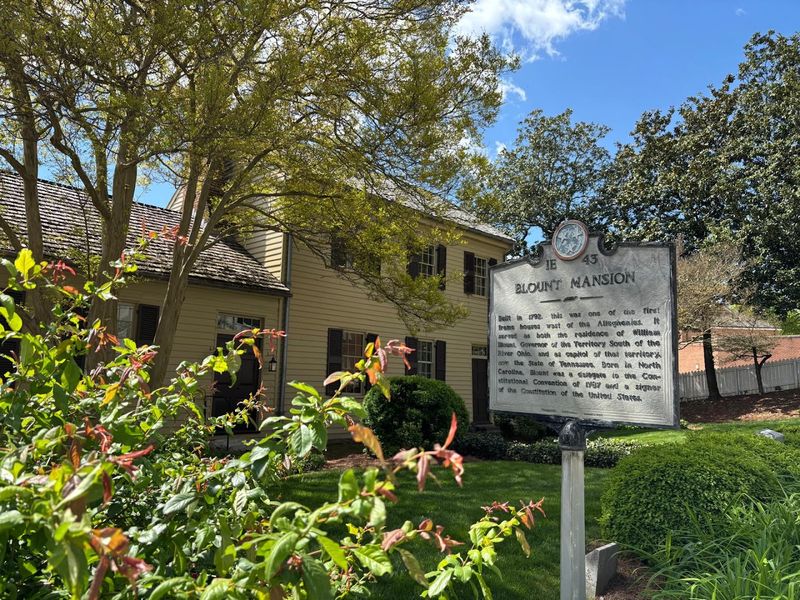
Long before Tennessee was even officially a state, William Blount was building what would become one of the most historically significant homes in the entire region. Blount Mansion at 200 W Hill Ave in Knoxville was constructed in 1792 and served as the territorial capital of the Southwest Territory, making it a genuine birthplace of Tennessee statehood.
The fact that it still stands today, remarkably well-preserved, feels almost miraculous.
The architecture reflects the Federal style popular among wealthy American leaders of the late 18th century, characterized by elegant proportions, symmetrical window placement, and refined interior woodwork. What makes Blount Mansion unusual is that it was one of the first frame houses in the region, a significant departure from the log construction that dominated the frontier landscape at the time.
That choice signaled ambition, sophistication, and a vision of civilized permanence.
The property includes the original mansion, a separate office building where Blount conducted territorial business, and a reconstructed garden that reflects period horticulture practices. Guided tours are led by knowledgeable staff who bring the late 18th-century political drama of territorial governance to vivid life.
History enthusiasts and architecture fans alike will find this Knoxville landmark deeply rewarding, offering a rare direct connection to the very founding of Tennessee as a state.