
7 Areas In New York Where Black Bears Have Been Spotted This Summer
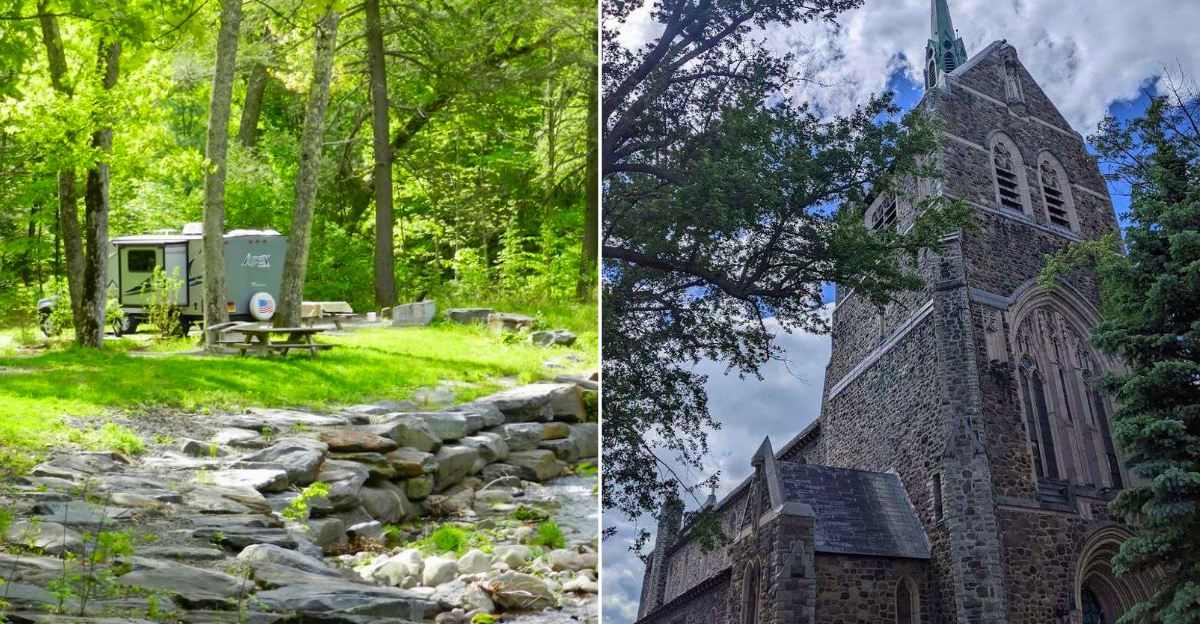
New York is having a wild summer, and that is not a figure of speech. Black bears are showing up in backyards, on hiking trails, and in neighborhoods quiet enough that residents had to look twice before they believed what they were seeing.
Westchester County suburbs. Deep Adirondack wilderness. Spots in between that nobody expected to make this kind of list.
Seven areas across the state have had confirmed sightings, and the bears are not being subtle about it. If you live in or plan to visit any of these areas this summer, the advice is straightforward.
Eyes open. Bird feeders inside. Phone charged. A black bear sighting is genuinely something to tell people about later, and the best version of that story is always the one where everyone walked away fine.
1. Hornell, Steuben County
Ring cameras have caught a lot of wild things over the years, but a bear raiding a backyard in Hornell, Steuben County, at night is definitely up there.
On May 27, 2026, that is exactly what happened, and the footage was sharp enough that The Evening Tribune published it for the whole region to see.
Spoiler alert: the bear was not subtle about it.
Hornell is a small city in the Southern Tier of New York, and while the surrounding area has forested hills, a bear wandering into a residential backyard after dark still turns heads.
Black bears are naturally nocturnal foragers, meaning they are most active in the hours after sunset. A backyard with accessible food, whether it is a garbage can, a grill, or a compost pile, is basically a bear invitation.
The footage showed the bear moving confidently through the yard, clearly comfortable in the darkness. Wildlife officials note that bears caught on camera like this are often young adults exploring new territory for the first time.
They are curious and bold but rarely dangerous when left alone. The key takeaway for Hornell residents is simple: do not make your yard an easy meal.
Store trash in a secure container, clean grills after every use, and bring in any outdoor pet food before nightfall. The bear in the footage moved on without causing property damage, but the visit was a firm reminder that Steuben County wildlife does not keep business hours.
Night owls, meet your new competition. Because bears, as friendly and sweet as they look, are true wanderers.
2. Kaaterskill Falls Trailhead, Haines Falls, Greene County
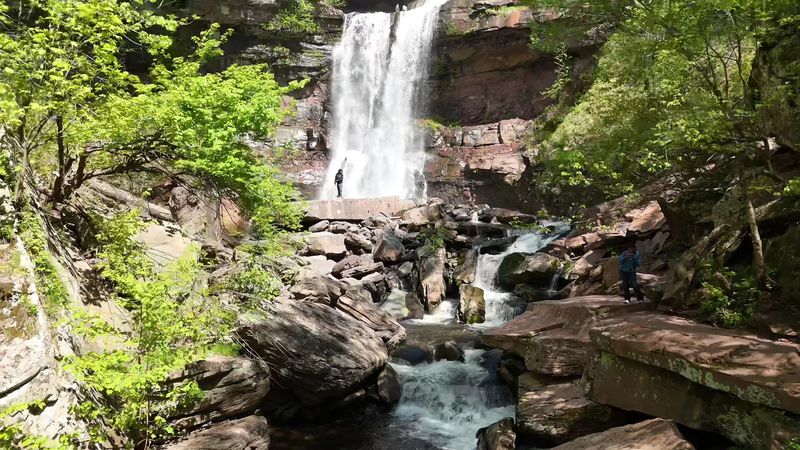
The Catskills have always had a wild side, and Kaaterskill Falls is right at the heart of it.
The trailhead off NY-23A in Haines Falls sits inside confirmed black bear territory, and hikers throughout 2026 have been documenting sightings in the surrounding Catskill woods with regularity.
For experienced hikers, this is exciting news. For first-timers, it is important information. The kind that would keep you safe and prepared for whatever may occur.
The Catskill Mountains are home to an estimated 1,500 to 2,000 black bears, one of the highest densities in New York. That number means encounters on popular trails are genuinely possible, not just theoretical.
Kaaterskill Falls is one of the most visited natural attractions in the region, drawing thousands of hikers each season to see the tallest waterfall in the state.
Greene County offers spectacular scenery, but sharing that scenery with bears requires some preparation. Hikers are strongly encouraged to carry bear spray, make noise on the trail to avoid surprising a bear, and never approach one for a photo, no matter how tempting.
Food should be stored in bear-resistant containers or bags, especially on overnight trips. Bears in the Catskills are generally not aggressive toward people, but a startled bear is an unpredictable one.
The DEC recommends staying calm, backing away slowly, and making yourself appear large if a bear approaches. Kaaterskill Falls is absolutely worth the trip, but go prepared, go informed, and go knowing that the forest belongs to the bears first.
You are just a very enthusiastic visitor.
3. Colgate Avenue And Neighboring Streets, Massena, St. Lawrence County
All of us tend to be skeptical about surveillance cameras, and often for good reason. But it is cases like these which prove that cameras are truly necessary at times.
Surveillance cameras do not lie, and in Massena, they caught something nobody expected. On May 28, 2026, police confirmed a black bear sighting on Colgate Avenue, and that was just the beginning.
Cameras across multiple residential streets, including Maple Street, Hospital Drive, and East Avenue, picked up the bear wandering through backyards and driveways like it owned the place.
Village leaders noted that it had been decades since a bear had been seen in Massena, which sits in St. Lawrence County in far northern New York. That kind of rarity made the footage even more striking.
Bears emerging from hibernation in spring are driven by one thing above all else: food. They are running low on energy and will cover serious ground to find calories.
The Massena Police Department confirmed the sightings and encouraged residents to avoid leaving food sources outside.
The bear appeared to move through the area without any aggressive behavior, which is typical for black bears that have not been conditioned to expect food from people.
Still, a bear wandering near a hospital and through residential driveways is not something anyone takes lightly. St. Lawrence County is more rural than Westchester, but Massena itself is a small city, making this visit genuinely unusual.
Residents were advised to report additional sightings to local police. The bear eventually left the area, but the surveillance footage remains a remarkable reminder of just how far these animals will travel when hunger calls.
4. OK Slip Falls Trail, Hudson Gorge Wilderness Area, Hamilton County
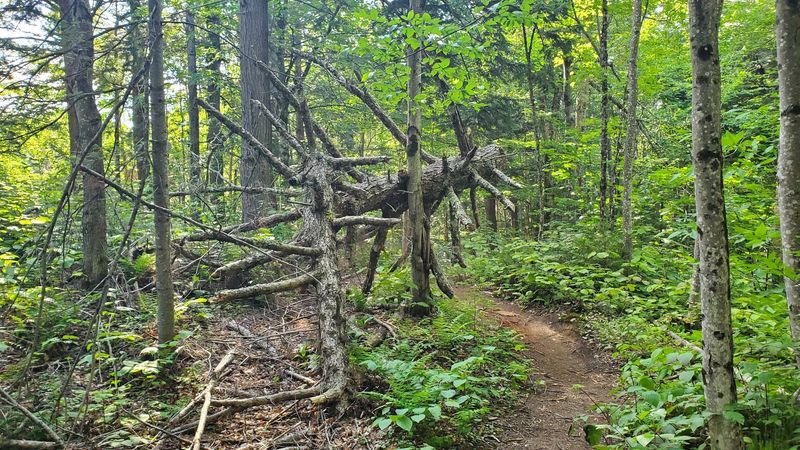
Few places in New York feel as genuinely wild as the Hudson Gorge Wilderness Area, and the OK Slip Falls Trail earns every bit of that reputation.
The New York State DEC has confirmed that black bears are consistently active throughout the gorge corridor in Hamilton County, and standard bear awareness protocols are always in effect for anyone heading into this area.
That is not a warning to scare you off; it is just the honest reality of hiking here.
The Adirondack region holds between 50 and 60 percent of New York’s estimated 6,000 to 8,000 black bears. Hamilton County sits deep inside that range, making OK Slip Falls Trail one of the more reliably active bear corridors in the entire state.
The gorge itself provides perfect bear habitat: dense cover, water access, and abundant natural food sources.
Hikers who make the roughly six-mile round trip to OK Slip Falls are treated to a stunning 100-foot waterfall dropping into the Hudson River gorge below.
The trail is not heavily trafficked compared to Catskill trails, which means encounters feel more intimate and the wilderness feels more real.
Bear canisters are strongly recommended on any overnight trip into the gorge. Day hikers should carry bear spray and keep food sealed in their packs.
The DEC asks that all visitors report sightings using the iMapInvasives or DEC online reporting tools. Out here, you are deep in bear country, and that is honestly part of what makes it so remarkable.
5. Nicks Lake Campground, Old Forge, Herkimer County
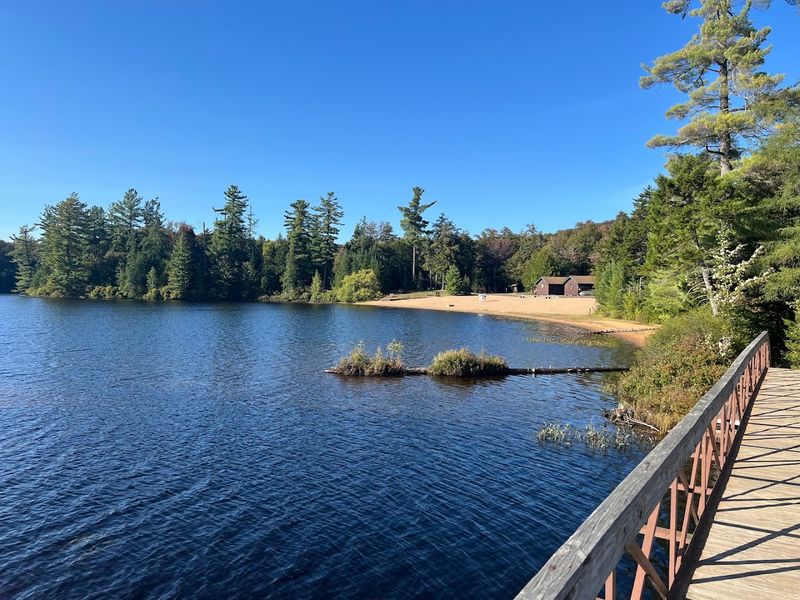
Camping at Nicks Lake Campground in Old Forge means trading city noise for loon calls and pine-scented air. It also means sharing the woods with black bears, which the DEC makes very clear by requiring bear canisters for all food storage.
Active bear presence at the campground has been confirmed by park staff in 2026, so this is not a hypothetical situation.
The campground sits on Moose River Road in Herkimer County and operates from mid-May through mid-October. Previous seasons have seen bears getting into unsecured garbage, sniffing around campsites, and even attempting to access vehicles.
A bear that learns to associate campsites with food is a problem for everyone, including the bear, which is why food storage rules exist and are enforced strictly.
Old Forge is a beloved destination in the Adirondacks, drawing families and outdoor enthusiasts every summer for paddling, hiking, and stargazing. Nicks Lake itself is gorgeous, with calm water perfect for canoes and kayaks.
The campground address is 278 Bisby Road, Old Forge, NY 13420, for anyone planning ahead. Rangers on site can answer questions about current bear activity and best practices.
The golden rule out here is simple: if it smells like food, store it properly. That means no snacks in tents, no scented items left out overnight, and no feeding wildlife under any circumstances.
Bears are smart, persistent, and have a memory that rivals most people when it comes to finding a good meal. Do not be their favorite campsite.
6. Woodland Valley Campground, Phoenicia, Ulster County
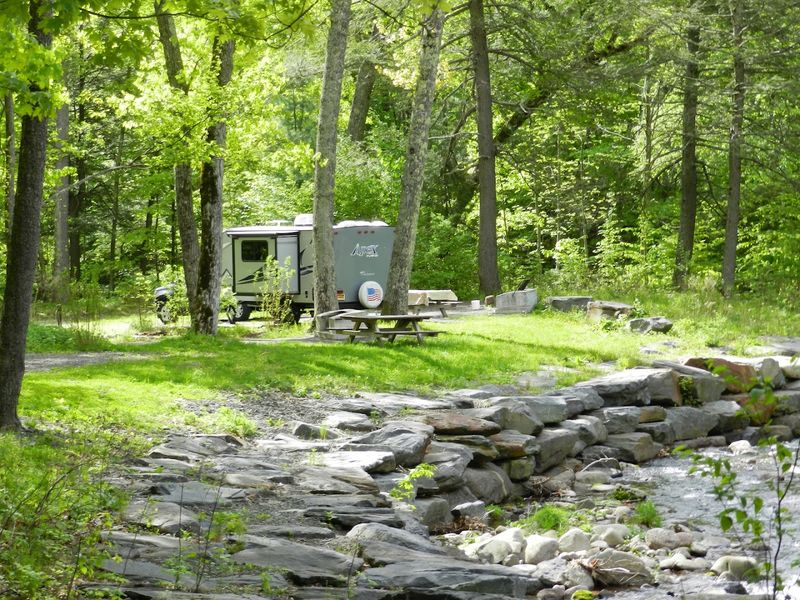
Slide Mountain is the tallest peak in the Catskills, and its base camp, Woodland Valley Campground, is where black bears have firmly claimed their turf. Food storage at this campground is not optional; it is a condition of staying there.
The DEC has designated this as active bear territory, and the bears seem to agree with that assessment based on consistent sightings reported by campers throughout recent seasons.
Woodland Valley Campground sits at 1319 Woodland Valley Road in Phoenicia, Ulster County. The setting is stunning, with the valley carved by Woodland Creek and surrounded by forested ridgelines that connect to some of the best hiking in the Catskills.
Trails leading up Slide Mountain itself pass through dense hardwood forest that is ideal black bear habitat.
Ulster County has seen growing bear activity in recent years as the Catskill population continues to expand. Bears in this area are accustomed to human presence but remain wild animals that deserve space and respect.
Campers are advised to hang food or use bear-resistant canisters, store all scented items including toothpaste and sunscreen away from sleeping areas, and never leave a campfire unattended with food nearby.
Rangers at Woodland Valley are knowledgeable about local bear behavior and can provide current updates on recent activity in the area.
The campground has a primitive, peaceful feel that draws serious hikers and nature lovers. Just know that you are sharing those peaceful woods with some very capable and curious neighbors who have been living here a lot longer than any of us.
7. Sterling Forest State Park, Orange County
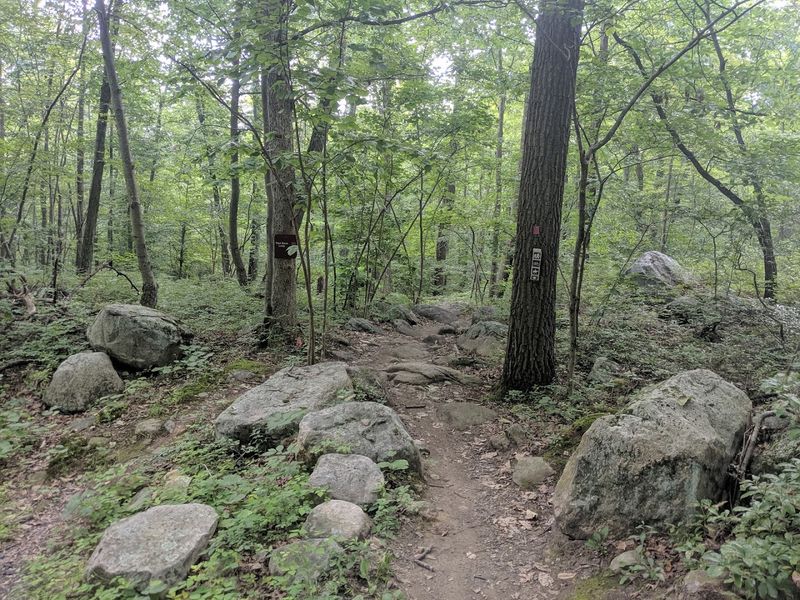
Sterling Forest State Park does not just have occasional bear visitors passing through. The DEC classifies black bears here as permanent residents with established territories, which is a meaningful distinction.
This park is not a place you will often find on articles like these, and the wildlife encounters may be the reason why.
Orange County might be one of the more developed counties in the lower Hudson Valley, but Sterling Forest’s 21,935 acres of preserved deep forest provide exactly the kind of continuous habitat that bears need to thrive year-round.
The park entrance is at 116 Old Forge Road in Tuxedo, NY 10987, and it offers hiking, fishing, and wildlife observation across a genuinely expansive landscape.
Because bears here are territorial residents rather than wandering travelers, sightings tend to follow more predictable seasonal patterns.
Spring and early summer bring increased activity as bears search for food after winter, and fall sees them eating heavily before the cold months return.
Visitors to Sterling Forest should treat every trail as bear country because, frankly, it is. Keep food packed away, do not approach any wildlife, and make reasonable noise while hiking to avoid surprising an animal on the trail.
The park is close enough to New York City that it draws a large number of visitors who may not have experience with bear encounters, making awareness especially important here.
Sterling Forest is a conservation success story, and the bears living within its boundaries are proof that habitat preservation works.
Watching one of these animals move through old-growth trees is the kind of moment that sticks with you. Just make sure you are watching from a safe and respectful distance.