
Arizona’s Old Mining Town That Became A Colorful Bohemian Escape
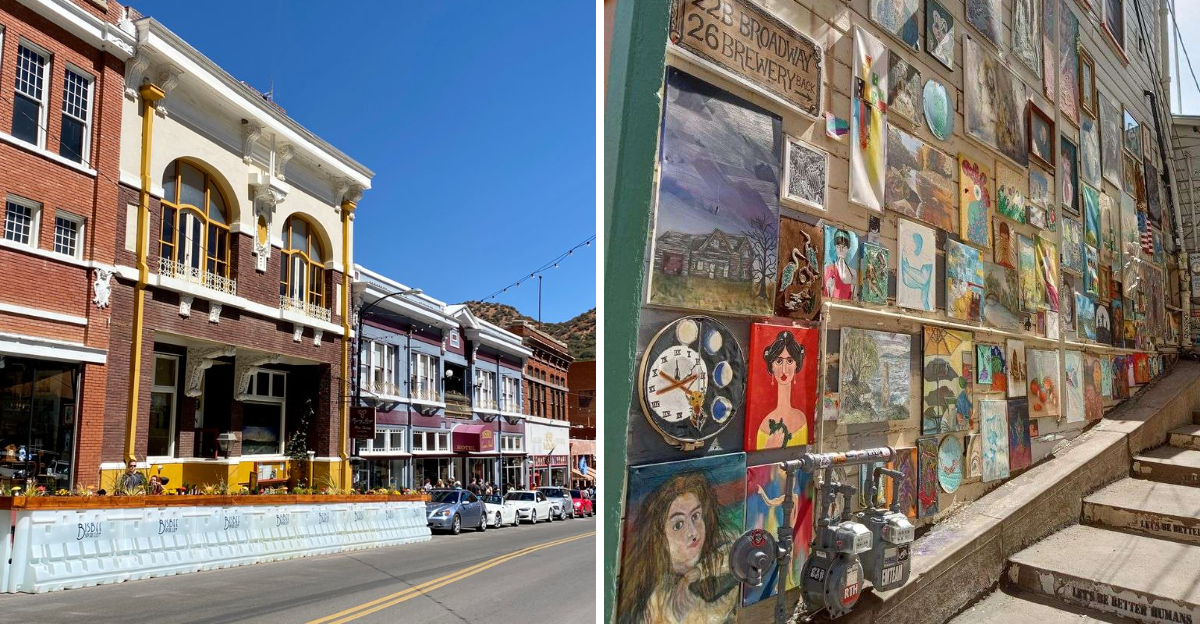
Tucked into the Mule Mountains of southeast Arizona, Bisbee once thrived as a copper mining hub that attracted thousands of workers seeking fortune beneath the desert sun.
When the mines closed and the crowds left, this hillside town could have faded into obscurity like so many other abandoned mining camps across the American West.
Instead, artists, free spirits, and creative wanderers discovered its Victorian architecture, steep streets, and affordable homes, transforming Bisbee into one of the most vibrant bohemian communities in the Southwest.
Today, this former boomtown pulses with galleries, murals, eclectic shops, and a spirit of individuality that draws visitors looking for something authentically different.
From Copper Boomtown To Creative Refuge
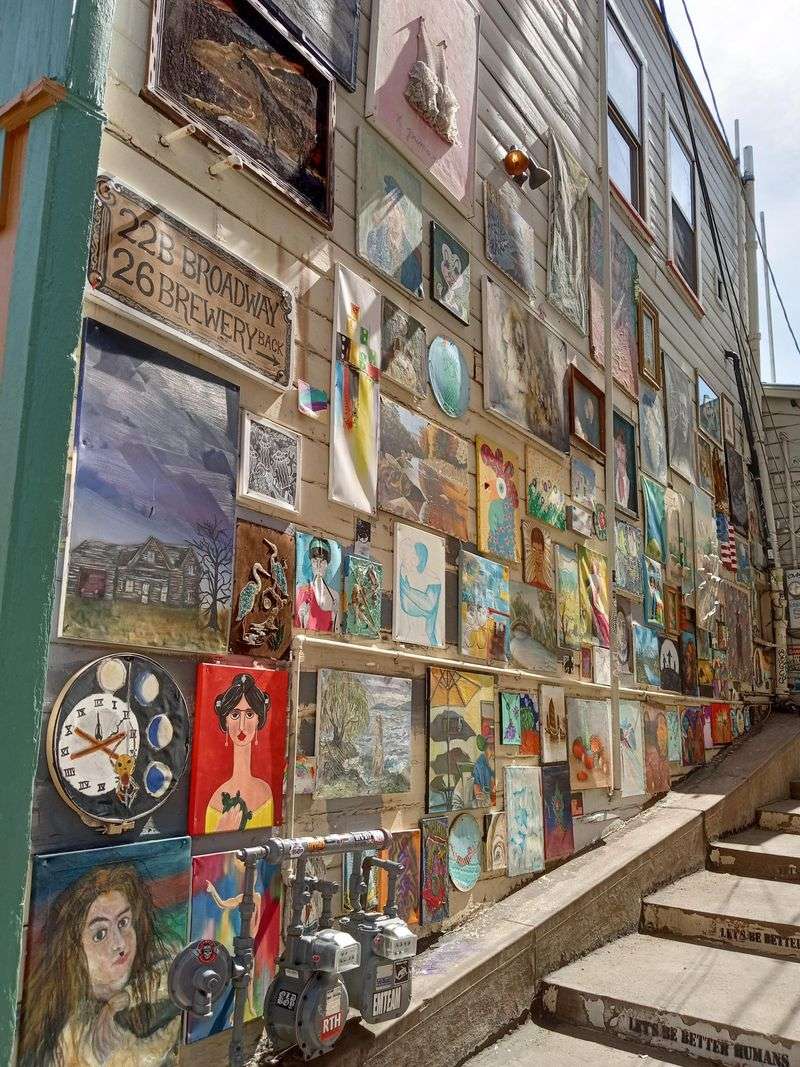
Bisbee’s transformation began in the early twentieth century when copper mining operations brought wealth and workers to this remote corner of Arizona.
At its peak, the town boasted nearly twenty thousand residents who carved homes into hillsides and built grand Victorian structures that still stand today.
When the Phelps Dodge Corporation closed the Copper Queen Mine in the 1970s, the population plummeted and property values collapsed.
Artists and alternative-lifestyle seekers recognized opportunity in the abandoned buildings and cheap rents.
They moved in, opened studios, and began hosting exhibitions that attracted visitors from Tucson and beyond.
What emerged was a community that honored its mining heritage while embracing creativity and unconventional living.
Bisbee’s rebirth as an artistic haven proves that economic decline can sometimes spark cultural renaissance, turning industrial ruins into canvases for imagination and self-expression.
A Hillside Town Shaped By Mining History
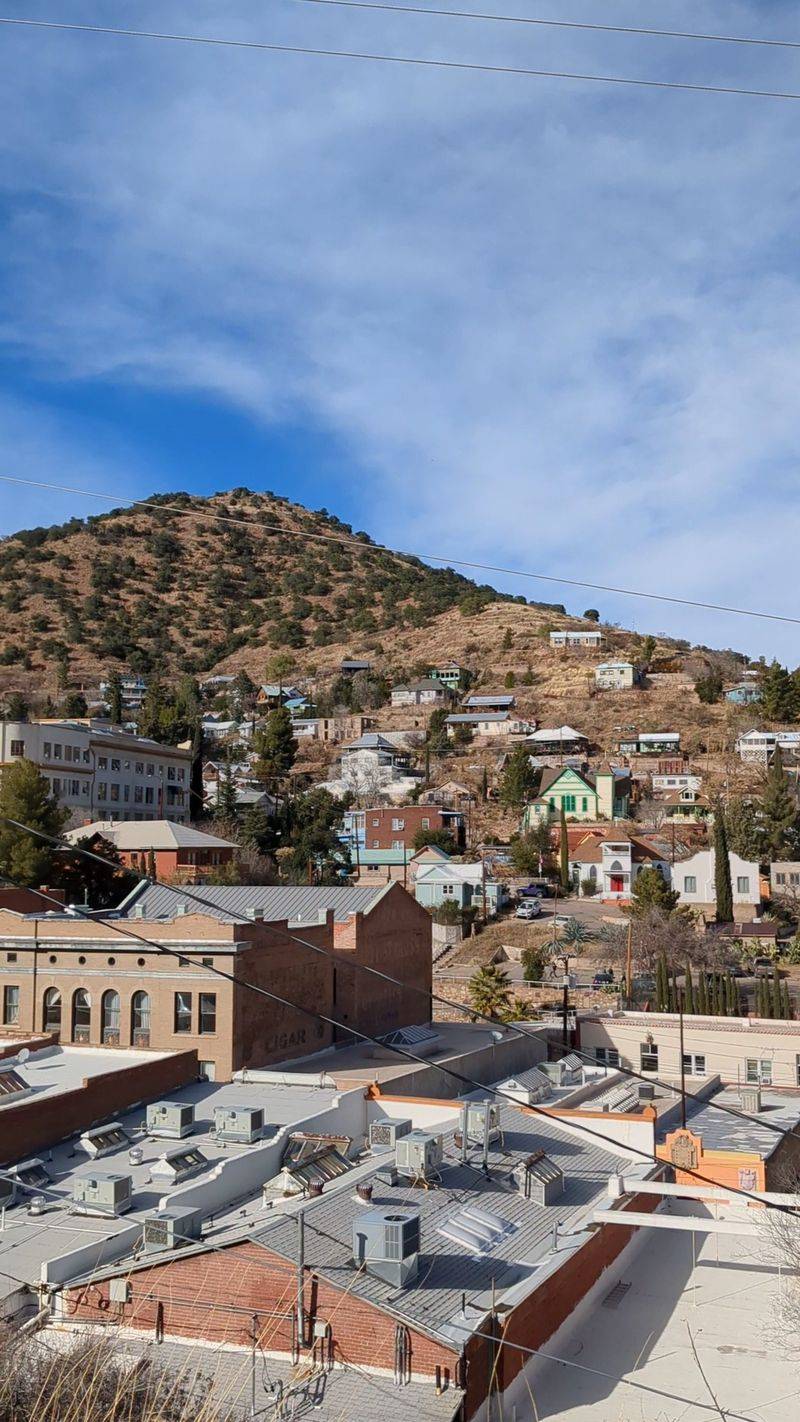
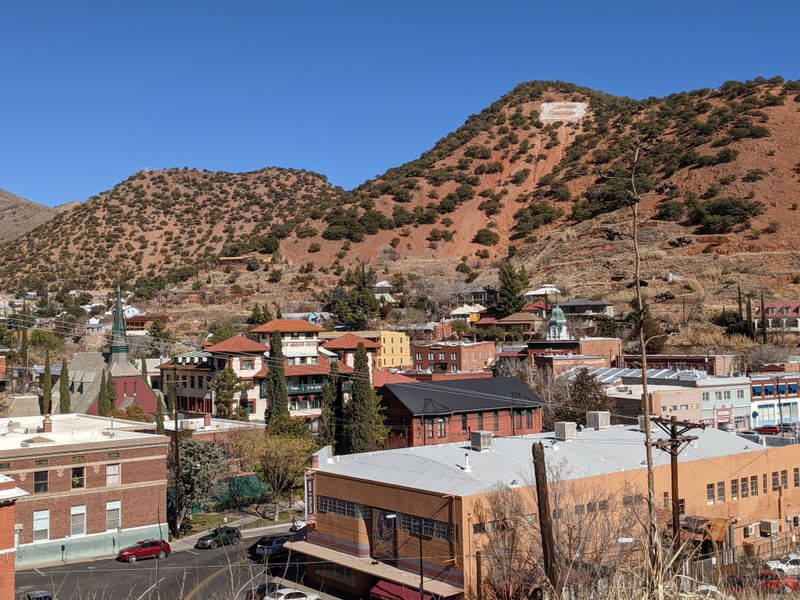
Geography defines every corner of Bisbee, where homes cling to canyon walls and streets twist upward at angles that challenge both drivers and pedestrians.
Mining operations carved terraces into the mountains, creating the unusual topography that gives the town its distinctive character.
Tombstone Canyon runs through Old Bisbee, the historic center where Victorian buildings line narrow streets that feel European in scale and intimacy.
The Lavender Pit, a massive open-pit mine, sits just outside town as a stark reminder of the industrial forces that shaped this landscape.
Underground, the Queen Mine extends for miles, offering tours that take visitors deep into the tunnels where miners once labored in darkness.
This vertical town requires stamina to explore on foot, but the effort rewards visitors with sweeping views across the desert and glimpses into hidden courtyards.
Every elevation change reveals another layer of history and architecture worth discovering.
How Artists Revived A Nearly Abandoned Community
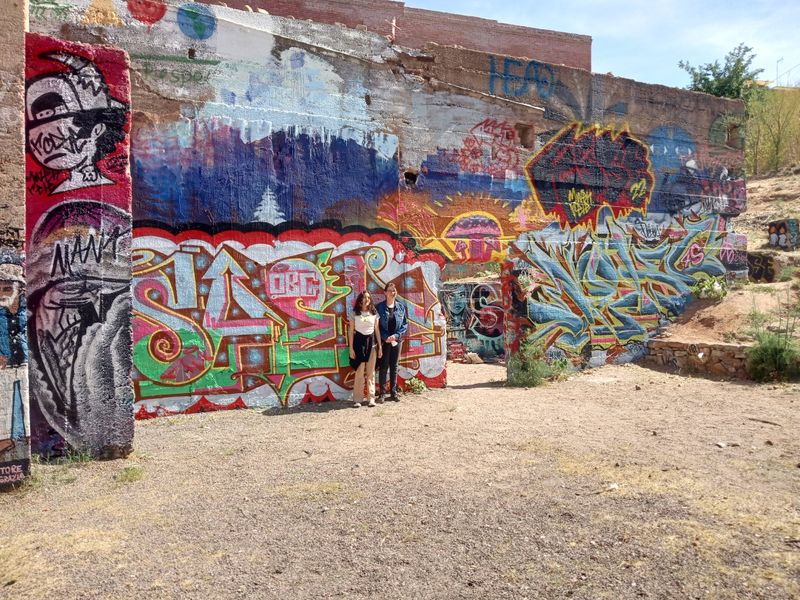
When property prices dropped after the mines closed, artists from California, New Mexico, and other Southwestern states began purchasing homes for a fraction of their original value.
These early arrivals transformed mining-era buildings into studios, galleries, and performance spaces that became gathering points for a growing creative community.
Musicians, painters, sculptors, and writers found inspiration in Bisbee’s isolation and its tolerance for unconventional lifestyles.
The town’s compact downtown made it easy for artists to collaborate, share resources, and organize events that drew attention from regional media.
Word spread through underground networks and alternative publications, attracting more creative migrants seeking refuge from expensive urban markets.
By the 1980s, Bisbee had established itself as a legitimate arts destination with a reputation for supporting experimental work and independent thinking.
This grassroots revival happened without corporate investment or government planning, driven entirely by individuals seeking affordable space and artistic freedom.
Colorful Architecture That Reflects A Free-Spirited Culture
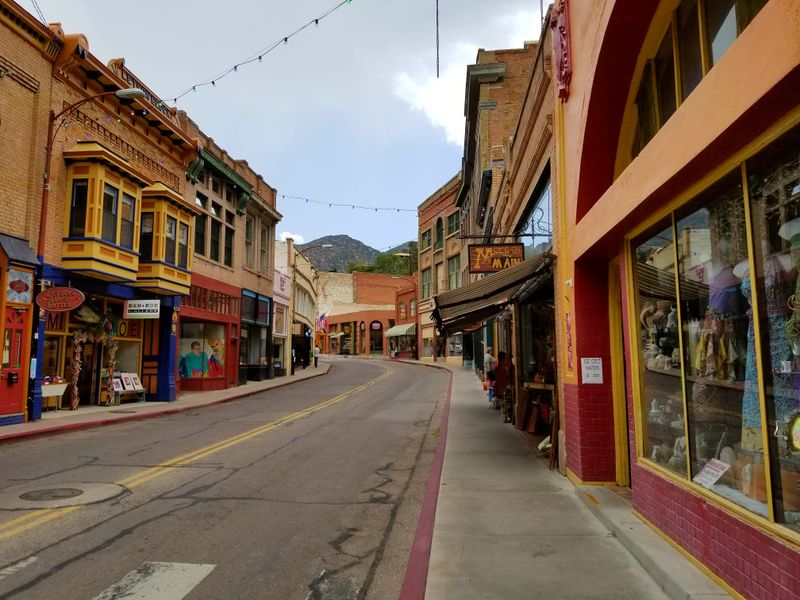
Walking through Bisbee feels like stepping into a living art installation where nearly every building displays some form of creative expression.
Homeowners paint their Victorian cottages in vivid blues, purples, oranges, and greens that would seem out of place in conventional neighborhoods but feel perfectly natural here.
Murals cover exterior walls, depicting everything from desert landscapes to abstract designs that challenge viewers to find meaning in color and form.
Even commercial buildings embrace this aesthetic, with shops and restaurants adorning their facades with hand-painted signs and decorative elements that reflect individual personality rather than corporate branding.
The town’s relaxed attitude toward property aesthetics encourages experimentation and self-expression.
This visual diversity creates an environment where conformity feels more unusual than creativity.
Visitors quickly realize that Bisbee’s appearance reflects its values, celebrating individuality and artistic freedom in ways that most American towns would never permit or understand.
A Downtown Filled With Galleries, Murals, And Independent Shops
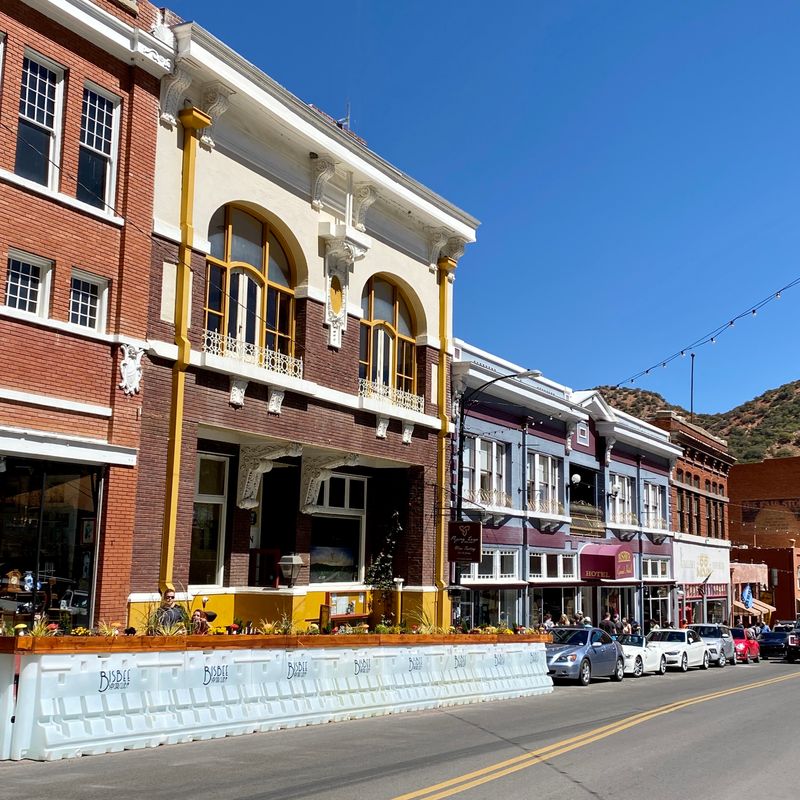
Main Street and Brewery Gulch form the commercial heart of Bisbee, where nearly every storefront houses an independently owned business that reflects the owner’s personal vision.
Art galleries showcase work by local painters, sculptors, and photographers alongside pieces by regional artists drawn to Bisbee’s creative reputation.
Vintage clothing stores, bookshops, and curiosity shops occupy Victorian buildings that once served miners and their families.
Coffee shops and cafes offer gathering spaces where artists, retirees, and visitors share tables and conversation in an atmosphere that feels deliberately unhurried.
Murals appear on walls throughout downtown, some commissioned by building owners and others created spontaneously by artists responding to the urban canvas.
Chain stores remain conspicuously absent, giving downtown an authentic character increasingly rare in American small towns.
Exploring these businesses reveals the diversity of interests and talents that make Bisbee function as both community and creative laboratory.
Victorian-Era Buildings Reimagined For Modern Life
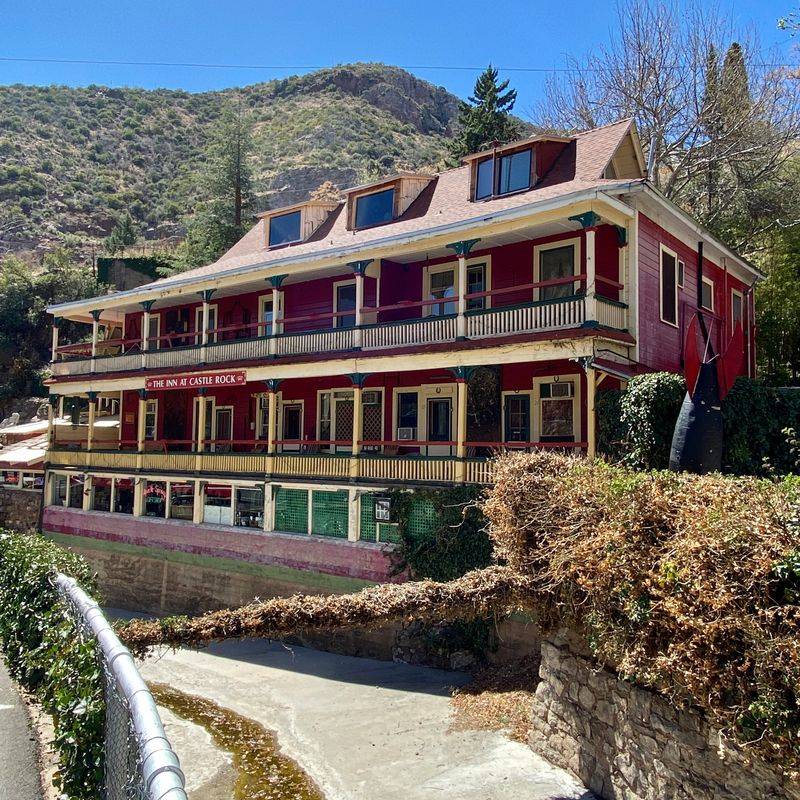
Bisbee’s architectural heritage includes hundreds of structures built during the mining boom, when prosperity allowed for ornate design and quality craftsmanship.
Many of these Victorian buildings feature detailed woodwork, high ceilings, and large windows that new owners have preserved while adapting interiors for contemporary purposes.
Former boarding houses now serve as bed-and-breakfasts, offering visitors rooms with period furniture and mountain views.
The Muheim Heritage House stands as perhaps the finest example of this preservation, showcasing nineteenth-century furnishings in a home that once belonged to a prominent mining family.
Other historic structures house restaurants, theaters, and offices that maintain their original character while meeting modern building codes.
This adaptive reuse demonstrates how historic preservation can occur organically when property values remain affordable and residents value architectural heritage.
Walking these streets offers lessons in how communities can honor the past while creating space for new ideas and contemporary living.
A Walkable Town Where Every Street Feels Unique
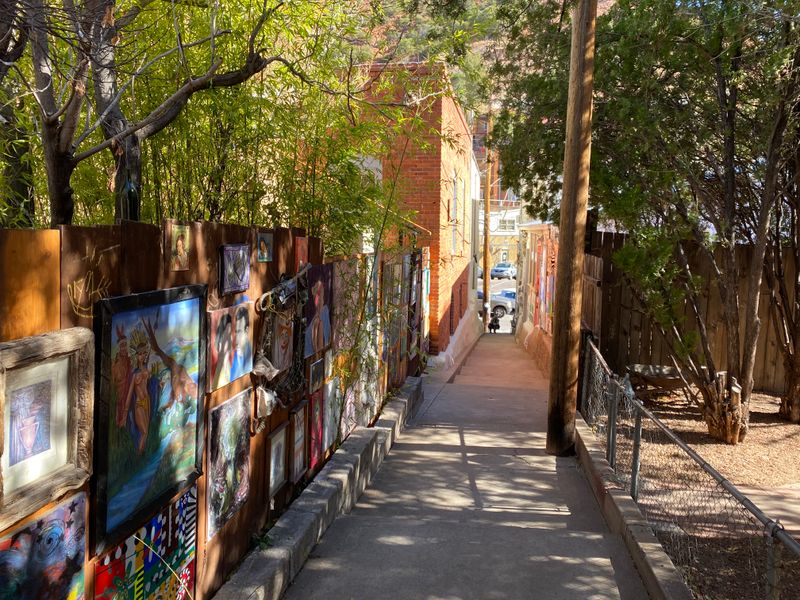
Bisbee’s compact size and pedestrian-friendly layout make it ideal for exploration on foot, though the steep grades require reasonable fitness and comfortable shoes.
Each neighborhood possesses distinct character, from the commercial bustle of downtown to the quiet residential areas where staircases connect different street levels.
Visitors discover hidden gardens, unexpected viewpoints, and architectural details that would go unnoticed from a car window.
The town’s vertical geography creates intimate spaces where neighbors interact naturally and strangers exchange greetings as they navigate shared staircases and narrow passages.
Street names like Brewery Gulch, OK Street, and Tombstone Canyon hint at the town’s colorful past.
Walking allows time to appreciate the layers of history visible in building facades, mining structures, and public art that appear around every corner.
This walkability contributes significantly to Bisbee’s community feeling, encouraging chance encounters and spontaneous conversations that strengthen social bonds among residents and make visitors feel temporarily part of something special.
A Strong Sense Of Community Among Artists And Locals
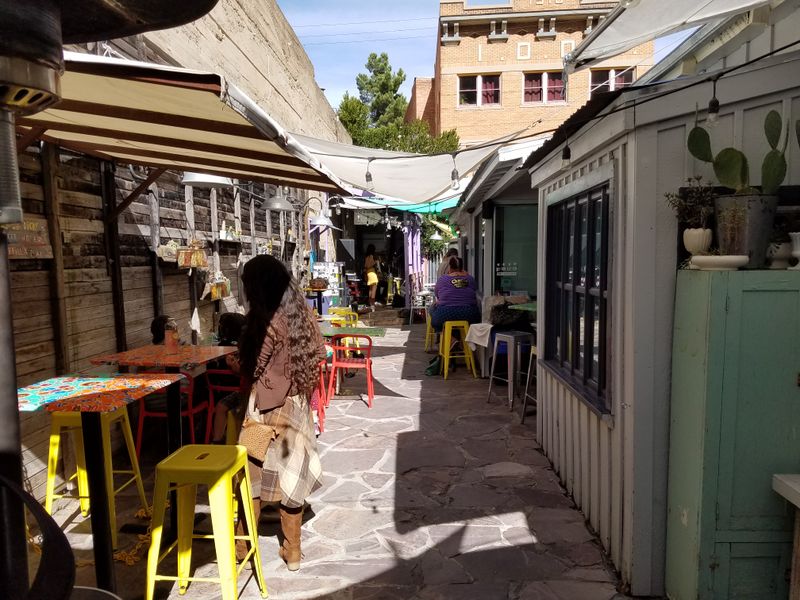
Despite its small population, Bisbee maintains a remarkably active social life built around shared creative interests and mutual support among residents.
Artists collaborate on projects, organize exhibitions, and help newcomers establish themselves in the local creative economy.
Long-time residents who remember the mining era coexist peacefully with newer arrivals, creating an intergenerational community that values both tradition and innovation.
Coffee shops and galleries serve as informal meeting places where residents discuss town politics, upcoming events, and artistic projects in progress.
This social cohesion extends to practical matters, with neighbors helping each other with home repairs, childcare, and other everyday needs.
The town’s isolation in the Mule Mountains strengthens these bonds, making residents more dependent on each other and less connected to regional urban centers.
Visitors often comment on the friendliness and openness they encounter, reflecting a community confident in its identity and genuinely interested in sharing it with others.
A Slower Pace That Appeals To Creatives And Retirees Alike
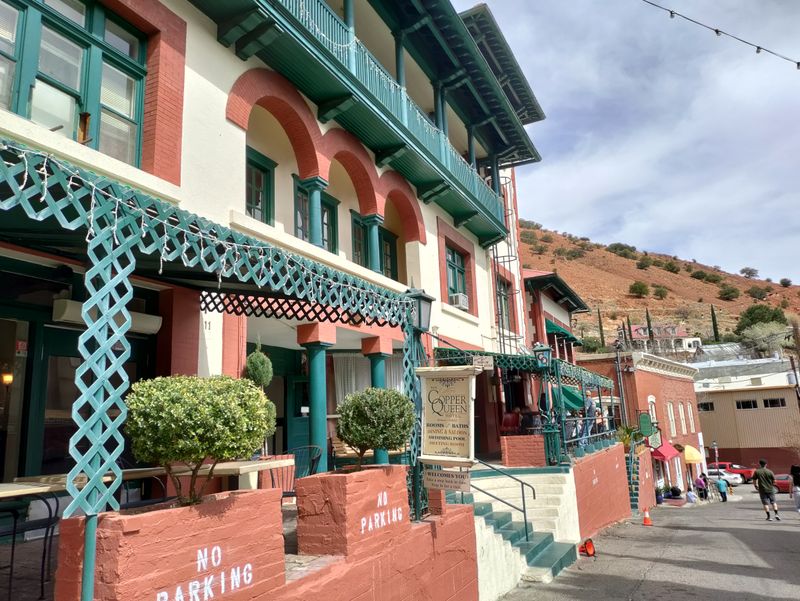
Time moves differently in Bisbee, where the absence of corporate chains and commuter traffic creates an atmosphere conducive to reflection and creative work.
Artists appreciate the lack of distractions and the affordability that allows them to focus on their craft rather than constant income generation.
Retirees find a welcoming community where cultural activities and natural beauty provide fulfillment without the expense of larger Southwestern cities.
Businesses operate on flexible schedules that prioritize quality of life over maximum profit, with some shops closing midweek or opening late to accommodate owner preferences.
This slower rhythm feels countercultural in an age of constant connectivity and economic pressure.
Visitors often extend their stays, discovering that Bisbee rewards those who linger rather than rushing through on tight itineraries.
The town’s pace encourages conversation, observation, and genuine engagement with place and people, offering respite from the accelerated tempo that dominates most American communities today.
Festivals, Art Walks, And Events That Celebrate Individuality
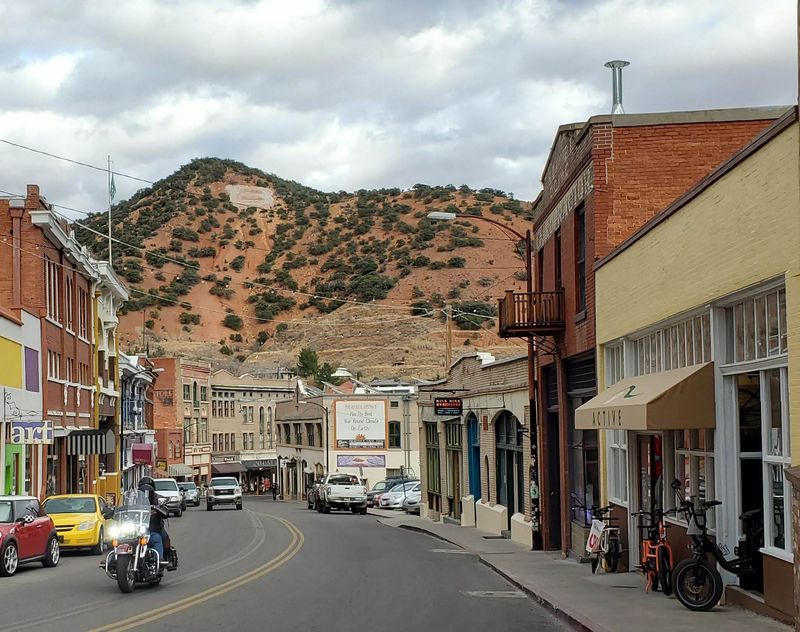
Bisbee’s cultural calendar includes numerous events that showcase local talent and attract visitors from across the Southwest and beyond.
Monthly art walks transform downtown into an evening celebration where galleries stay open late, musicians perform on street corners, and residents mingle with tourists in an atmosphere of shared appreciation for creativity.
The annual Bisbee 1000 Stair Climb challenges participants to ascend the town’s many staircases in a single day.
Other festivals celebrate everything from wine to film to vintage motorcycles, reflecting the diverse interests of residents and the town’s openness to various forms of cultural expression.
These events generate economic activity while reinforcing community identity and providing opportunities for social connection.
Unlike corporate-sponsored festivals in larger cities, Bisbee’s events maintain a grassroots character organized primarily by volunteers who prioritize authentic experience over commercial exploitation.
Attending these gatherings offers insight into what makes Bisbee function as both artistic community and viable small town.
Mining Relics That Coexist With Modern Bohemian Life
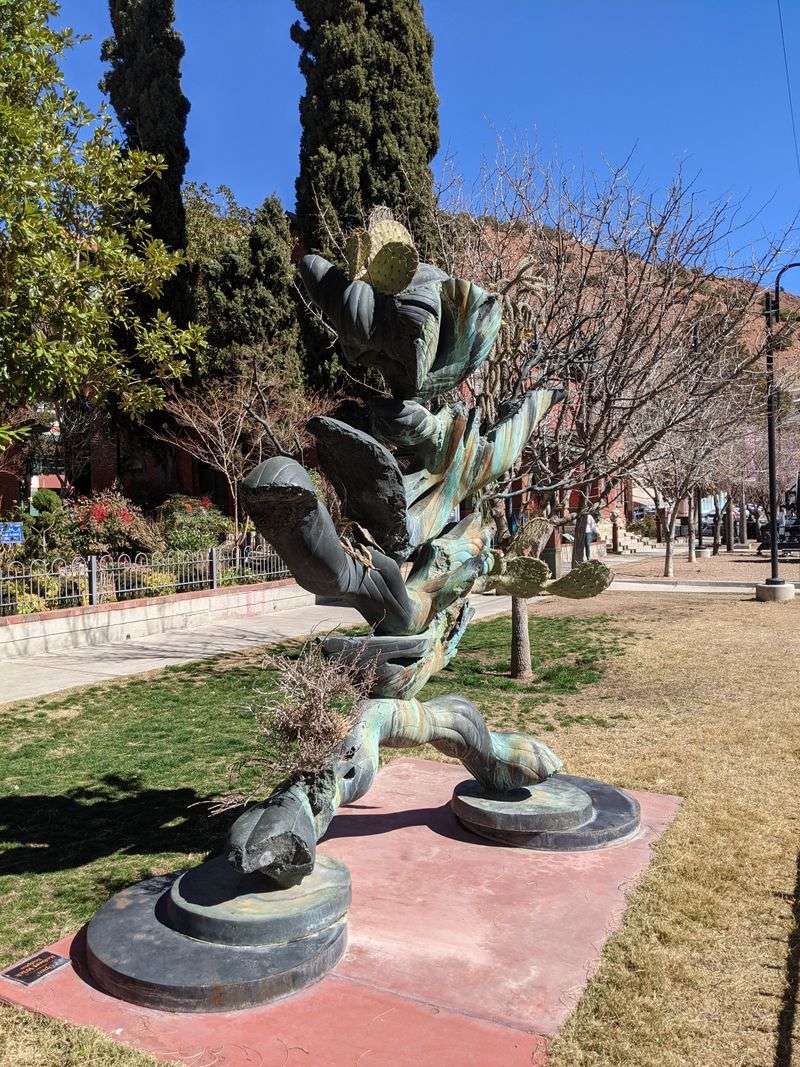
Bisbee never attempts to hide or sanitize its industrial past, instead incorporating mining artifacts into the fabric of contemporary life.
The Queen Mine offers underground tours that take visitors into the same tunnels where miners once extracted copper ore in dangerous conditions.
Above ground, mining equipment sits as public sculpture, rusting gracefully while children climb on it and artists photograph it for inspiration.
The Bisbee Mining & Historical Museum, located in the former Copper Queen Consolidated Mining Company office, documents the industry that created the town through photographs, tools, and personal stories.
Even the Lavender Pit, despite its environmental impact, draws visitors who marvel at the scale of human ambition and industrial capacity.
This coexistence of industrial heritage and bohemian culture creates unique tension and richness, reminding residents and visitors that Bisbee’s artistic present grew directly from its mining past.
The town honors working-class history while embracing creative-class values in ways that feel genuine rather than calculated.
Why Bisbee Feels More Like An Experience Than A Destination
Visiting Bisbee differs fundamentally from typical tourist destinations because the town refuses to package itself for easy consumption or conform to visitor expectations.
There are no luxury resorts, no guided tours that shuttle groups through predetermined itineraries, and no corporate entertainment venues designed to extract maximum revenue.
Instead, visitors must engage with Bisbee on its own terms, wandering streets without clear maps, striking up conversations with strangers, and discovering what appeals through personal exploration.
This lack of tourist infrastructure initially frustrates some visitors but ultimately creates more memorable and authentic experiences.
The town located at Arizona 85603 rewards curiosity and openness while remaining indifferent to those seeking conventional comforts.
Bisbee functions as a living community first and tourist destination second, meaning visitors witness genuine daily life rather than performances staged for their benefit.
This authenticity, increasingly rare in American travel, explains why many visitors return repeatedly or eventually relocate permanently to this bohemian refuge.