
8 Arkansas Churches With Incredible Histories That Continue To Inspire Visitors
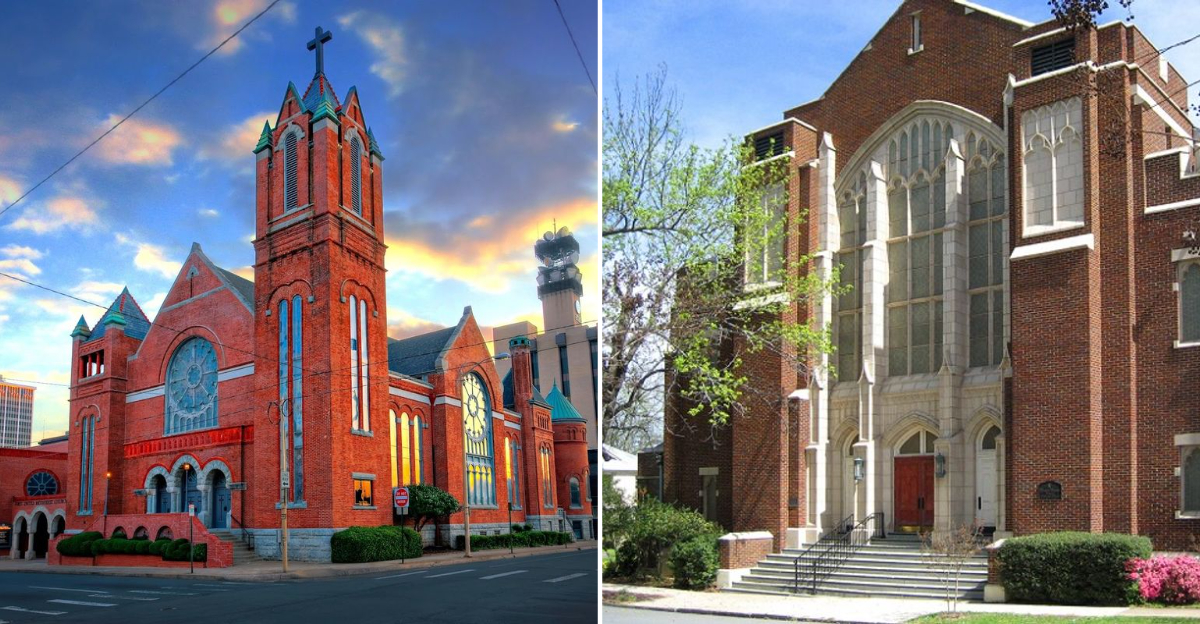
Some buildings accumulate history the way others accumulate dust, quietly and without any intention of stopping. These Arkansas churches have been doing exactly that across generations that span well beyond living memory.
Architecture that survived floods, fires, and the indifference of time stands as evidence of communities that decided certain things were worth preserving. That decision shows in every restored beam and maintained window.
Visitors who arrive expecting a historical site often leave having experienced something considerably more active. These are not museums but living congregations carrying centuries of story into every Sunday service.
Faith and history occupying the same space produce an atmosphere that secular preservation never quite replicates. These churches carry both with equal conviction, and the visitors who walk through their doors rarely leave unchanged.
1. Thorncrown Chapel
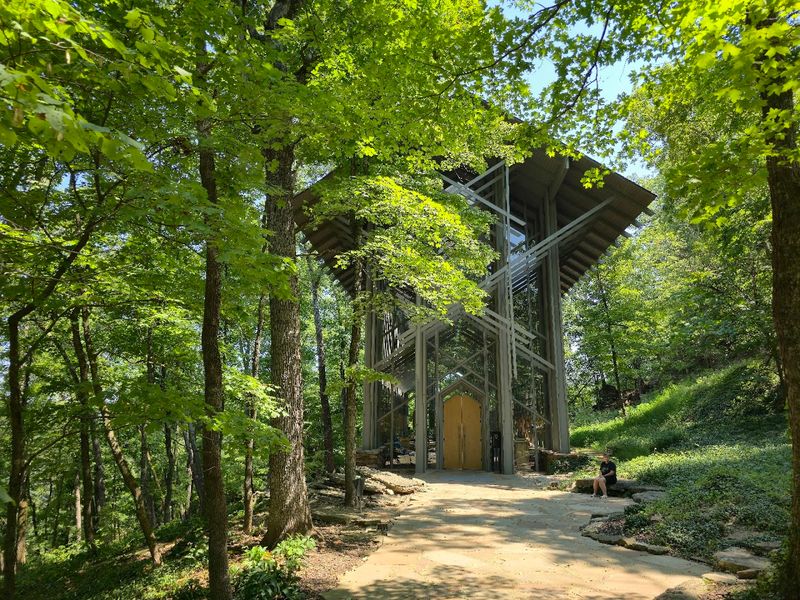
Nobody builds a church like this by accident. Architect E.
Fay Jones designed Thorncrown Chapel as a gift to the Ozark landscape, and the result is genuinely jaw-dropping. The American Institute of Architects named it one of the greatest American buildings of the twentieth century.
The chapel features hundreds of windows that blur the line between inside and outside. You are sitting in a sanctuary, but the forest is basically your wallpaper.
The Ozark trees become part of the worship experience in a way that feels completely intentional.
Jim Reed, a retired schoolteacher, owned this land and wanted hikers to have a peaceful resting place. He commissioned the chapel because he believed beauty itself could be sacred.
That idea clearly worked out.
The architectural style is sometimes called Ozark Gothic, inspired by the famous Sainte-Chapelle in Paris. Think soaring wooden frames and dramatic vertical lines reaching toward the treetops.
It is theatrical and serene at the same time.
Visitors come from all over the world just to sit quietly inside for a few minutes. Weddings happen here regularly, and honestly, the setting does all the heavy lifting.
No decorator could compete with those trees.
The chapel sits along US-62 outside Eureka Springs, which is already one of Arkansas’s most charming towns. Combining the chapel with a stroll through Eureka Springs makes for a genuinely perfect day.
You will probably want to come back before you even leave. The Address 12968 US-62, Eureka Springs, AR 72632.
2. Cathedral Of St. Andrew
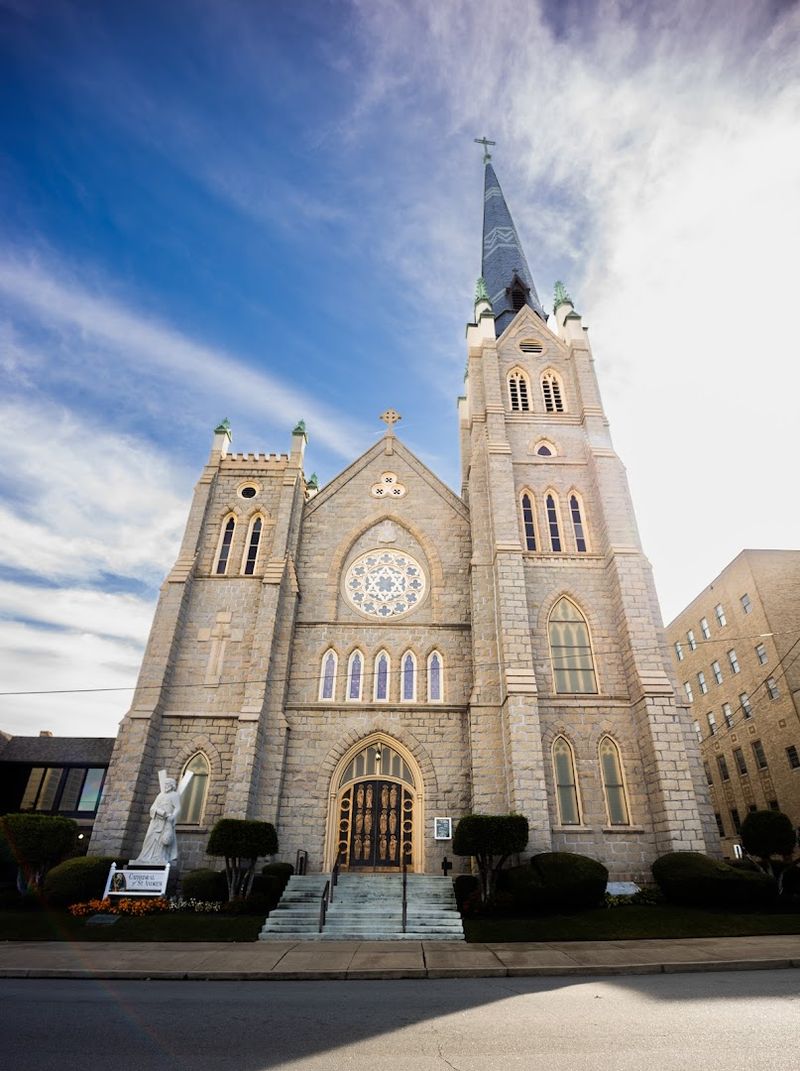
Right in the heart of Little Rock stands a cathedral that has been anchoring the city’s spiritual and architectural identity for well over a century. The Cathedral of St. Andrew is the mother church of the Diocese of Little Rock.
It carries serious historical weight with a serious visual style to match.
The building’s Gothic Revival design draws your eye upward immediately. Stone walls, pointed arches, and rich stained glass windows work together to create an atmosphere that feels both grand and intimate.
It is the kind of place where you automatically lower your voice when you walk in.
Construction on the cathedral began in the late 1800s, and the building has grown and evolved alongside Little Rock itself. Generations of Arkansas Catholics have been baptized, married, and memorialized within these walls.
That layered history gives the space a palpable sense of continuity.
The stained glass windows are worth a long, slow look. Each one tells a story drawn from scripture and Catholic tradition.
Afternoon light coming through those windows turns the interior into something resembling a living painting.
Local historians and architecture enthusiasts regularly include the cathedral on tours of downtown Little Rock. Its placement on South Louisiana Street puts it within walking distance of several other landmark buildings.
The neighborhood itself rewards exploration.
What makes this cathedral particularly compelling is how active it remains today. Regular masses, community events, and educational programs keep the building alive with purpose.
It is not a museum piece. It is a working, breathing institution that happens to look magnificent.
Visit it at 617 S Louisiana St, Little Rock, AR 72201.
3. St. Mary’s Catholic Church
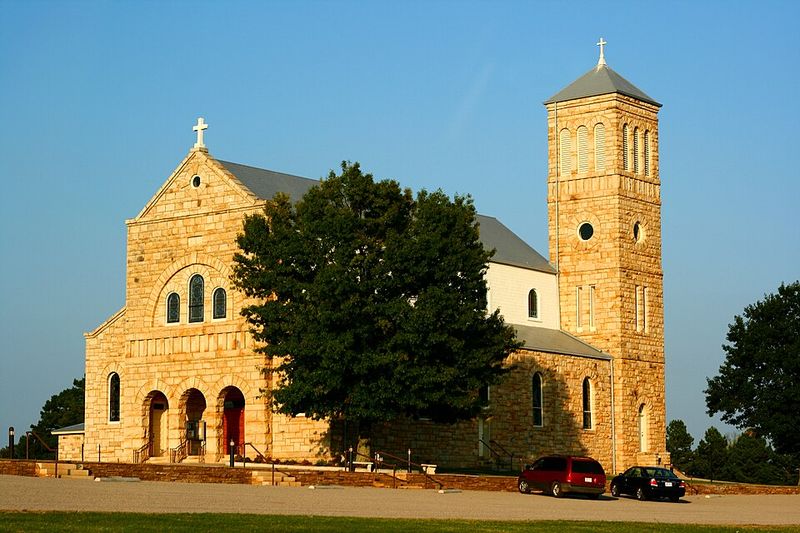
Perched above the Arkansas River Valley vineyards, this church looks like it belongs in rural Germany. The German immigrant settlers who built St. Mary’s in the mid-1800s clearly wanted a piece of home. They absolutely delivered.
The bell tower alone is a landmark. Farmers and travelers have used it as a visual guide across the surrounding countryside for over a century.
On a clear day, you can spot it from a surprising distance, rising above the rolling fields like a quiet sentinel.
Inside, the church preserves its original ornate altars and decorative elements. The craftsmanship on display reflects the deep devotion of its founders.
These were people who worked hard all week and then poured everything they had into building something beautiful for Sunday.
The hillside setting makes this spot genuinely photogenic from every angle. The combination of the historic church, the valley below, and the surrounding vineyards creates a scene that photographers absolutely love.
It is one of those rare places that looks even better in person than in pictures.
St. Mary’s still serves an active congregation today, maintaining its connection to the community that built it. Feast day celebrations here draw visitors from well beyond Altus.
The German heritage of the parish remains a point of pride and a thread of living history.
If you are road-tripping through the Arkansas River Valley wine country, this church is a mandatory stop. Combine it with a visit to the nearby wineries for a day that covers culture, history, and scenery beautifully.
Find it at 5118 St Mary’s Ln, Altus, AR 72821.
4. First United Methodist Church
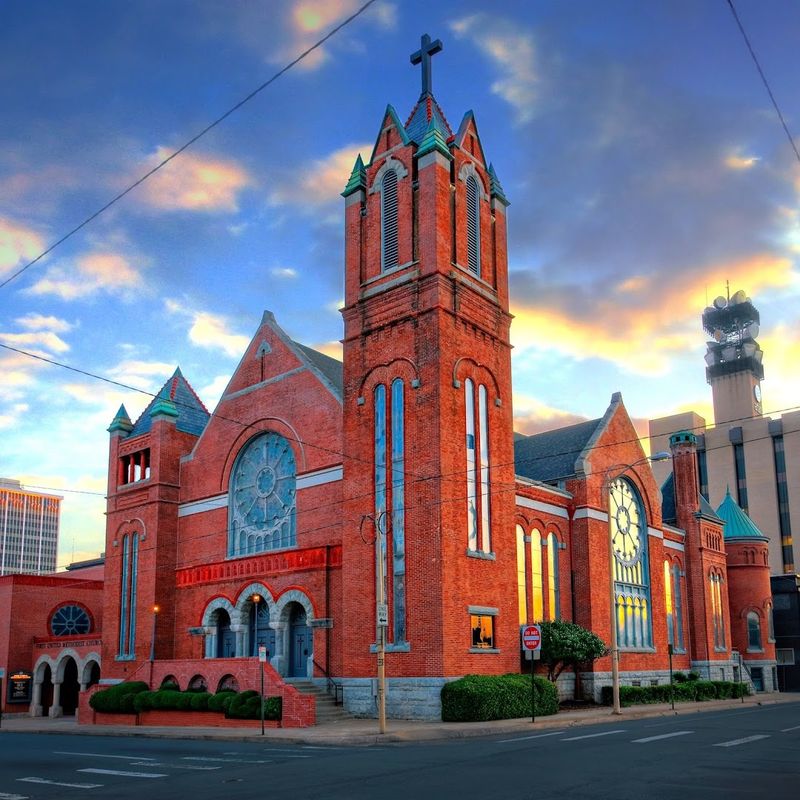
First United Methodist Church in Little Rock has been part of the city’s story since the early days of Arkansas statehood.
It is one of those institutions that has outlasted everything around it, quietly persisting through wars, economic shifts, and decades of urban change. That kind of staying power earns respect.
The church building itself is a striking presence on Center Street. Its architecture reflects the ambition of a congregation that took both faith and civic responsibility seriously.
You get the sense that the people who built this place intended it to last, and they were right.
Over the generations, First United Methodist has hosted some of Little Rock’s most significant community gatherings. The church has been a meeting point for civic leaders, activists, and ordinary families navigating extraordinary times.
Its walls have absorbed a lot of Arkansas history.
The sanctuary interior rewards careful attention. Detailed woodwork, impressive stained glass, and thoughtful proportions create a space that feels designed for reflection.
Even visitors who wander in out of architectural curiosity tend to linger longer than they planned.
The congregation has consistently embraced outreach programs that extend its influence well beyond Sunday mornings.
Food ministries, community education efforts, and social justice initiatives have kept the church engaged with the city around it. It is a place that believes in showing up.
Downtown Little Rock has changed dramatically over the decades, but First United Methodist remains a constant. Walking past its exterior, you get a clear sense of how the city has grown up around this anchor institution.
History and present-day vitality coexist here in an easy, natural way. Visit it at 723 Center St, Little Rock, AR 72201.
5. Christ Episcopal Church
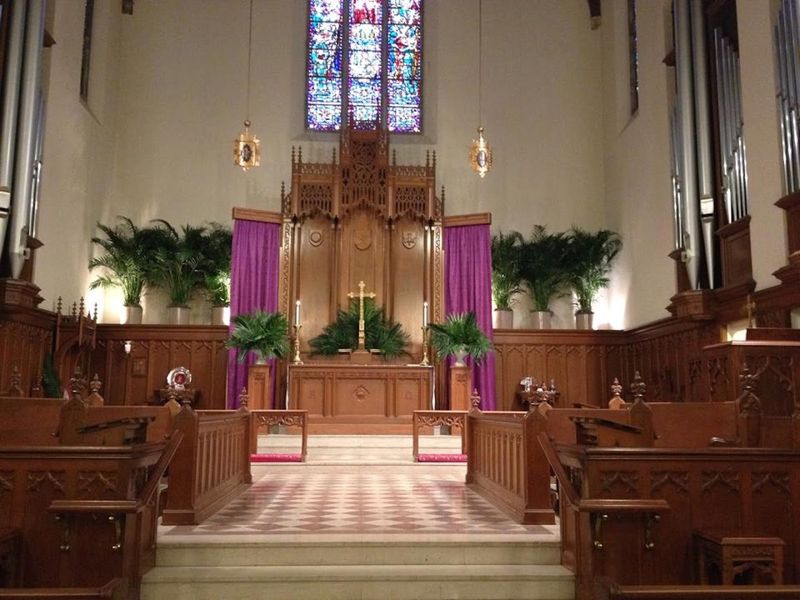
Christ Episcopal Church on Scott Street is one of those buildings that makes you stop walking mid-stride. The historic red brick exterior and Gothic architectural details feel almost European against the backdrop of downtown Little Rock.
It is genuinely striking from the sidewalk.
The congregation dates back to the mid-1800s, making it one of the oldest Episcopal communities in Arkansas. Early members included some of the most prominent figures in Little Rock society.
Their investment in this building reflected both their faith and their ambitions for the young city.
The church has witnessed Arkansas history from a prime vantage point. Scott Street itself is part of the MacArthur Park Historic District, and Christ Episcopal sits comfortably among other significant buildings from the state’s early years.
The whole neighborhood feels like a living timeline.
Inside, the sanctuary features beautiful stained glass windows that have been carefully maintained across generations. The light they cast in the afternoon turns the interior into something genuinely luminous.
Visitors often describe the experience as unexpectedly moving.
The church remains an active and engaged congregation today. It hosts regular services, community events, and arts programming that draw people from across the city.
The building is very much in use, which keeps it feeling alive rather than preserved.
One of the most interesting things about Christ Episcopal is how naturally it balances its historic identity with contemporary relevance. The congregation has adapted over the decades without losing sight of what makes the place special.
That balance is harder to achieve than it looks, and they have managed it beautifully.
Christ Episcopal Church is located at 509 Scott St, Little Rock, AR 72201.
6. First Baptist Church Jonesboro
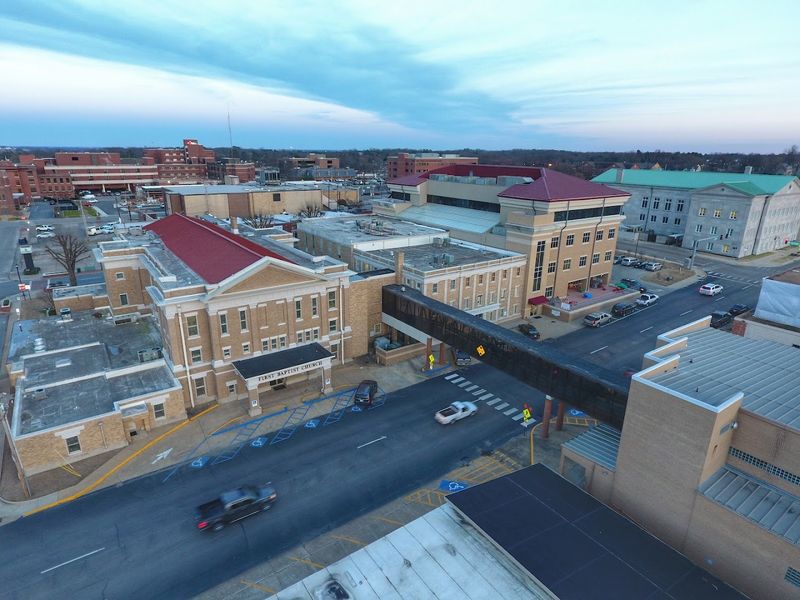
First Baptist Church in Jonesboro has been the spiritual heartbeat of northeast Arkansas for well over a century. The church sits prominently on South Main Street, and its presence there is no accident.
This congregation has always understood that being central to the community means showing up physically as well as spiritually.
The building itself is an impressive structure that has grown alongside the congregation over the decades. Multiple expansions and renovations reflect the church’s consistent growth and its willingness to invest in its future.
The result is a campus that feels both historic and very much alive.
Jonesboro has grown into one of Arkansas’s most dynamic cities, and First Baptist has grown right alongside it. The church has played a role in shaping the city’s civic culture in ways that go well beyond Sunday services.
Community leaders, educators, and public servants have long called this congregation home.
The church’s outreach programs are extensive and genuinely impactful. Mission work, food assistance, youth programming, and community education initiatives extend the congregation’s reach throughout the region.
This is a church that takes its responsibility to the surrounding community very seriously.
The sanctuary’s interior reflects the congregation’s long history through its architectural details and carefully maintained furnishings.
Visiting during a service gives you a sense of a community that knows itself well and takes pride in its traditions. The welcome is warm and immediately apparent.
For anyone exploring northeast Arkansas, First Baptist Jonesboro offers a window into how faith communities shape regional identity over time. The church’s history mirrors the city’s own story of growth and resilience in deeply interesting ways.
Point your navigation to 701 S Main St, Jonesboro, AR 72401.
7. St. Joseph Catholic Church
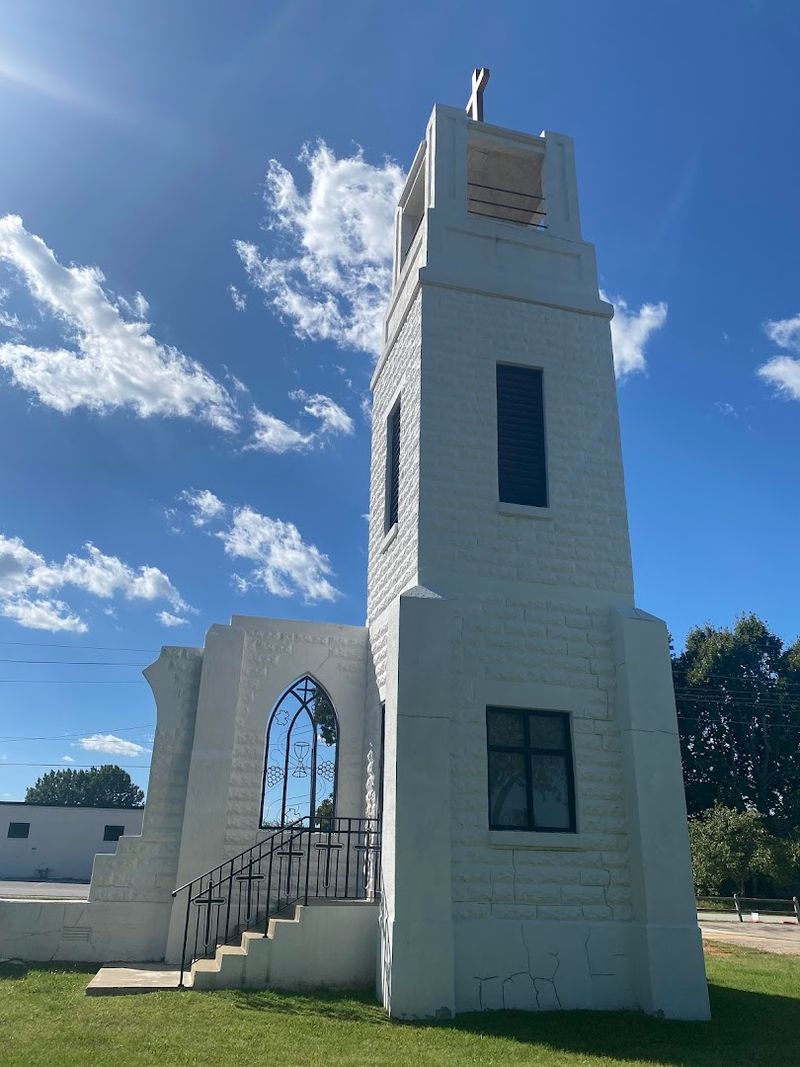
St. Joseph Catholic Church in Springdale carries a history deeply tied to the immigrant communities that shaped northwest Arkansas.
Located on Henri De Tonti Boulevard, this church has served generations of Catholic families as the area grew into a thriving city. That transformation is reflected in the congregation’s own story.
The church was established to serve the spiritual needs of a growing Catholic population in the area. Early parishioners came from diverse backgrounds, united by their faith and their commitment to building something lasting in their new home.
That founding energy still shapes the parish culture today.
The building itself reflects traditional Catholic architecture with a warmth that feels appropriate for a community-centered congregation. The interior features devotional artwork and furnishings that have accumulated meaning over decades of parish life.
Every detail carries the fingerprints of the people who cared for this place.
Springdale today is home to one of the most diverse populations in Arkansas, and St. Joseph’s congregation reflects that richly. Masses are celebrated in multiple languages, honoring the varied cultural backgrounds of current parishioners.
The church has evolved without losing its foundational identity.
The parish’s community outreach programs address real needs in the Springdale area. Food assistance, immigration support services, and educational programs make the church a resource that extends well beyond its membership.
This is a congregation that understands its neighborhood.
Visiting St. Joseph gives you a genuine sense of how a historic faith community can remain relevant across changing demographics and generations. The church’s past and present coexist here in a way that feels honest and genuinely inspiring.
The address 192 E Henri De Tonti Blvd, Springdale, AR 72762.
8. Quapaw Quarter United Methodist
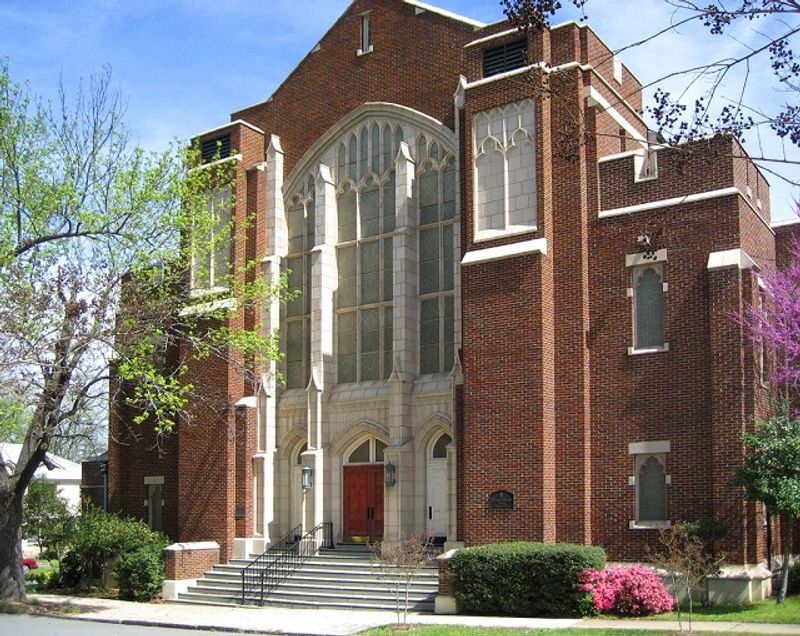
In Little Rock’s historic Quapaw Quarter, this church blends seamlessly with the neighborhood’s remarkable architecture.
The building is a Victorian-era beauty that anchors the southern end of South Louisiana Street with obvious confidence. It is hard to walk past without stopping to look.
The church’s history is bound up with the history of the Quapaw Quarter itself, one of Little Rock’s oldest residential neighborhoods. As the neighborhood has gone through cycles of decline and revival, the church has remained a constant presence.
That kind of institutional loyalty to a place is increasingly rare and worth recognizing.
The congregation has been deeply involved in neighborhood preservation efforts over the decades.
Members have advocated for historic buildings, supported community development initiatives, and worked to maintain the Quapaw Quarter’s distinctive character. The church practices what it preaches about being a good neighbor.
Inside, the sanctuary reflects the congregation’s long relationship with this specific place. Architectural details, memorial windows, and furnishings accumulated over generations create an interior that feels layered with meaning.
Nothing here feels generic or interchangeable with any other church.
The church hosts community events that draw people from across Little Rock, making it a gathering point that extends well beyond its membership.
Arts programming, neighborhood meetings, and outreach activities keep the building active throughout the week. It earns its place in the neighborhood every single day.
For anyone interested in Little Rock’s architectural heritage and community history, this church is an essential stop. The building and its congregation together tell a story about loyalty, place, and what it means to truly belong to a neighborhood.
Visit this place located at 1601 S Louisiana St, Little Rock, AR 72206.