
11 Best Off-The-Beaten-Path Destinations In Florida For A Quiet Getaway

Florida is famous for its crowded theme parks and busy beaches, but there’s a quieter side waiting for you to discover.
Tucked away from the tourist rush are peaceful places where nature takes center stage and crowds disappear.
Whether you crave secluded shores, ancient forests, or wildlife encounters, these hidden gems offer the perfect escape from everyday noise.
Get ready to explore Florida like never before!
1. Cedar Key
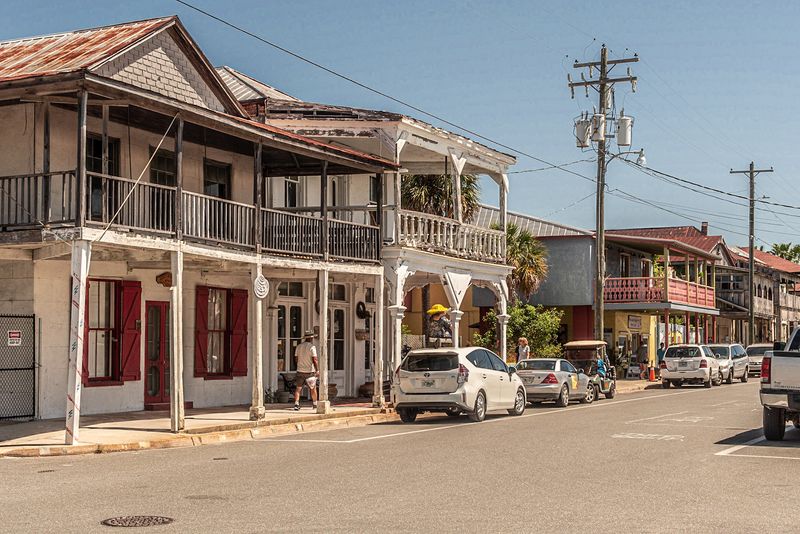
Step into a fishing village that time forgot, where wooden docks creak under your feet and pelicans watch from weathered posts.
Cedar Key sits on a cluster of tiny islands along Florida’s Nature Coast, far from highways and high-rises.
Life moves slowly here, measured by tides and sunsets rather than traffic lights.
Kayaking through the maze of salt marshes reveals herons stalking their breakfast and dolphins surfacing nearby.
The waterways are so calm you can hear fish jumping.
Local seafood shacks serve clam chowder that tastes like the sea itself, fresh and honest.
Art galleries tucked into historic buildings showcase work inspired by endless water views.
Walking the quiet streets feels like discovering a secret Florida kept just for you.
Bring binoculars for birdwatching and leave your hurry behind—Cedar Key rewards those who slow down and breathe deep.
2. Gasparilla Island State Park
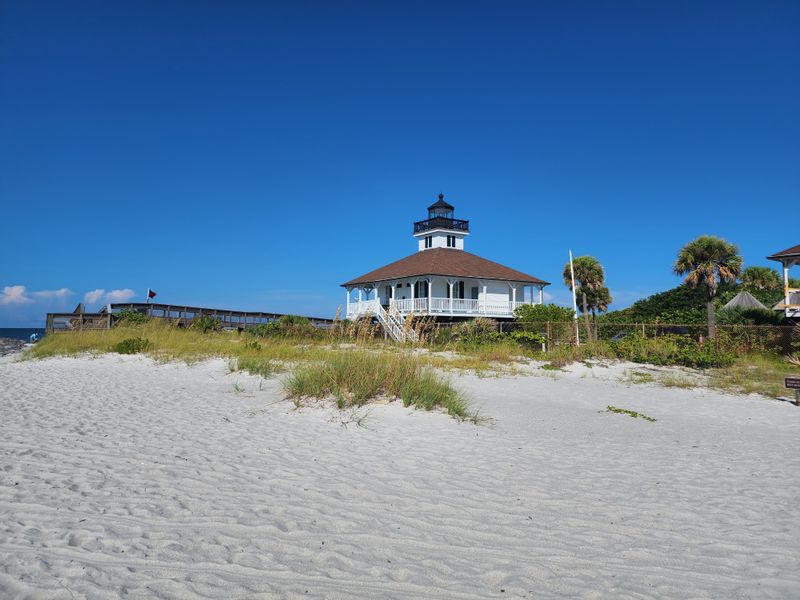
Picture a barrier island where sugar-white sand stretches for miles without a single hotel blocking your view.
Gasparilla Island State Park guards the southern tip of Boca Grande, accessible only by toll bridge or boat.
This keeps the masses away and preserves a rare slice of Old Florida charm.
The historic Port Boca Grande Lighthouse stands sentinel over beaches where sea turtles nest under starlight.
Shelling here feels like treasure hunting because you actually find treasures—lightning whelks, sand dollars, and colorful coquinas.
Warm Gulf waters invite swimming without the shoulder-to-shoulder beach towel situation.
Bike paths wind through coastal scrub where gopher tortoises cross at their own pace.
Fishing from the pier or shoreline connects you to rhythms older than cities.
Sunset paints the sky in colors that cameras never quite capture, reminding you why escaping the beaten path matters so much.
3. Washington Oaks Gardens State Park
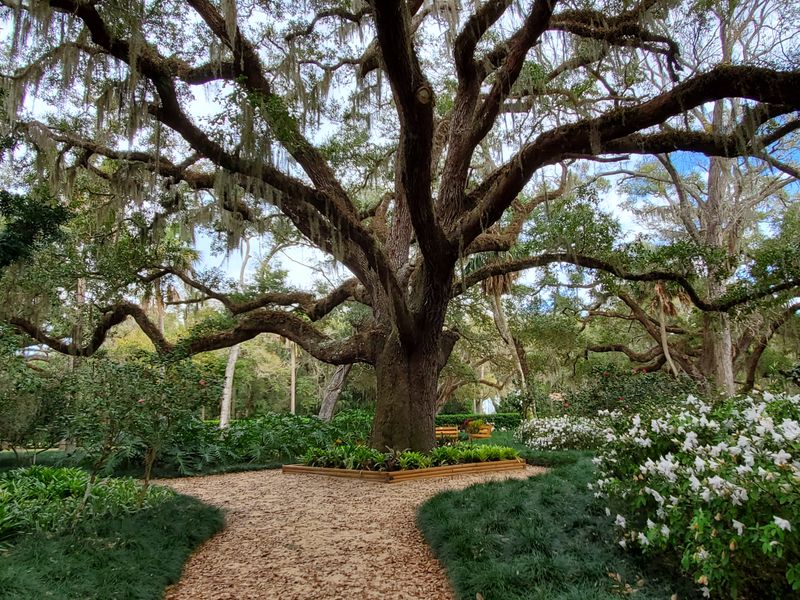
Imagine gardens where formality meets wild coastal beauty, creating something magical between manicured and mysterious.
Washington Oaks Gardens State Park stretches from ornamental gardens to rocky Atlantic shores, offering two completely different worlds in one visit.
Ancient live oaks drape Spanish moss like gray-green curtains over paths that wind through azaleas and camellias.
What makes this place truly unusual are the coquina rock formations along the beach—layers of compressed shells creating tide pools and natural sculptures.
Waves crash against these ancient rocks while you explore miniature ecosystems teeming with crabs and tiny fish.
It’s geology class meets beach day, and way more interesting than either sounds.
Bird songs fill the maritime hammock where butterflies dance between native plants.
Pack a picnic and claim a bench under the oaks where cool shade feels like nature’s air conditioning.
This park whispers rather than shouts, perfect for anyone craving beauty without the theme park chaos.
4. Fakahatchee Strand Preserve State Park
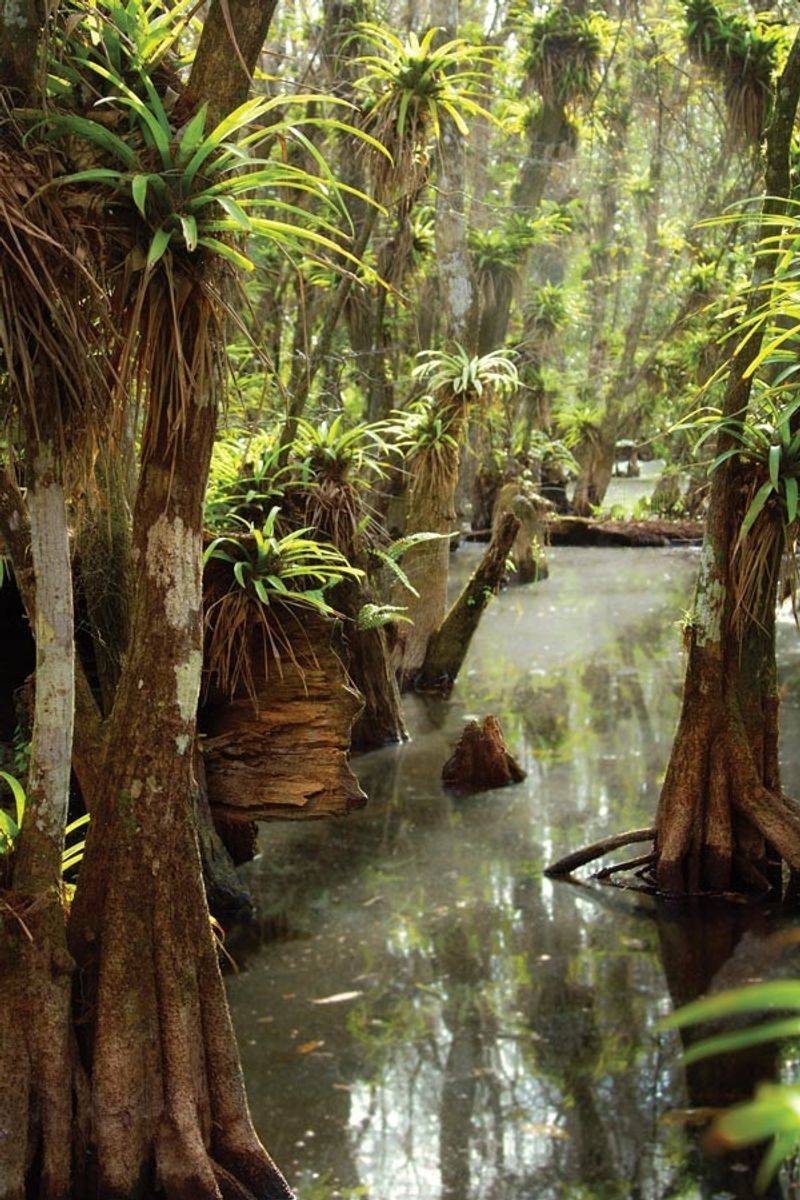
Welcome to Florida’s Amazon, where rare ghost orchids bloom in secret and panthers leave tracks in the mud.
Fakahatchee Strand Preserve State Park protects the largest strand swamp in the world—think of it as a slow-moving river through a cathedral of cypress trees.
This place hums with wild energy that reminds you humans are just visitors here.
Walking the boardwalk feels like entering another dimension where ferns cascade from tree branches and alligators sun themselves below.
The air smells rich and earthy, alive with decomposition and growth happening simultaneously.
Serious plant nerds travel across continents to see the orchids and bromeliads growing naturally in these swamps.
Rangers lead swamp walks where you wade knee-deep through tannic water, getting intimate with an ecosystem most people only see on nature documentaries.
It’s muddy, buggy, and absolutely unforgettable.
Bring your sense of adventure and waterproof camera—Fakahatchee rewards the bold with encounters found nowhere else on Earth.
5. Torreya State Park

Forget everything you think you know about flat Florida—Torreya State Park rises in dramatic bluffs above the Apalachicola River like something borrowed from Appalachia.
Hills here! Actual elevation changes that make your legs work during hikes!
This northern panhandle treasure feels more like Georgia or Tennessee than the Sunshine State.
The park protects one of the rarest trees in North America, the Torreya tree, which grows almost nowhere else on the planet.
Wandering trails through hardwood forests reveals ravines and ridges unusual for this latitude.
The historic Gregory House, a restored plantation home, sits atop the bluffs offering glimpses into 1800s Florida life.
Camping here means falling asleep to owl calls and waking to mist rising from the river below.
Challenging trails reward hikers with views that stretch for miles across forested valleys.
Pack layers because temperatures can surprise you in these highlands, and bring your curiosity for a Florida landscape most tourists never imagine exists.
6. Big Talbot Island State Park
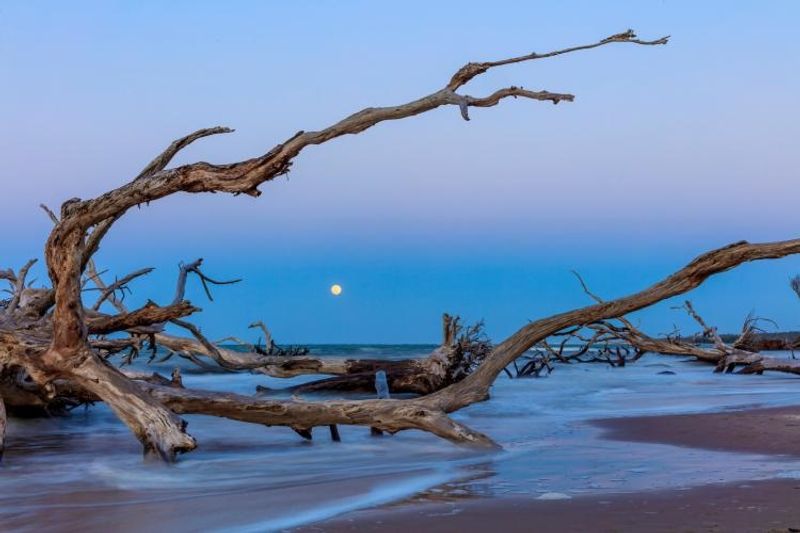
Nature created an outdoor sculpture garden on Big Talbot Island, where skeleton trees lie scattered across black sand beaches like art installations.
Boneyard Beach earned its name from the bleached driftwood—fallen oaks and cedars stripped bare by salt and sun, creating an otherworldly landscape.
Photographers arrive at dawn chasing that perfect shot of twisted wood against sunrise skies.
Erosion constantly reshapes this coastline, meaning each visit reveals new formations and configurations.
The dark sand comes from ancient compressed peat, contrasting dramatically with the pale wood sculptures.
Exploring tide pools reveals crabs, anemones, and small fish trapped temporarily by retreating waters.
Trails wind through maritime forest where you might spot deer, raccoons, or bobcats if you move quietly.
The salt marsh views from overlooks showcase the intricate waterways that feed these barrier islands.
This park feels raw and real, a place where nature’s power and artistry combine in ways that make you stop and stare in wonder.
7. Canaveral National Seashore (Apollo District)

Twenty-four miles of undeveloped Atlantic coastline sounds impossible in modern Florida, but Canaveral National Seashore proves it exists.
The Apollo District offers the most remote beach experience, where footprints in the sand are often yours alone.
No condos, no beach bars, no crowds fighting for parking—just waves, wind, and wilderness.
Sea turtles nest here by the thousands during summer months, returning to the same beaches where they hatched decades ago.
Rangers mark nests with stakes and tape, reminding visitors they’re sharing space with ancient rituals.
Dolphins surf the waves just offshore while pelicans dive-bomb for breakfast in spectacular splashes.
The mosquito-repellent-named Mosquito Lagoon borders the park, offering world-class fishing and kayaking through mangrove tunnels.
Bring everything you need because services are intentionally scarce, preserving the wild character.
Watching rocket launches from this pristine beach creates a surreal contrast—space-age technology framed by timeless nature, uniquely Florida in the best possible way.
8. St. Vincent National Wildlife Refuge

Reaching St. Vincent Island requires a boat ride, which immediately filters out casual tourists seeking convenience over adventure.
This 12,000-acre barrier island remains deliberately undeveloped, managed as a wildlife refuge where animals outnumber humans dramatically.
Red wolves bred here as part of recovery programs, their howls echoing across pine forests at twilight.
Sambar deer, introduced decades ago, roam beaches and forests like something from an Asian nature documentary transplanted to the Gulf Coast.
Fourteen miles of pristine shoreline offer shell collecting, swimming, and solitude in equal measure.
Interior trails wind through pine flatwoods and freshwater lakes where alligators bask and wading birds stalk the shallows.
Primitive camping allows overnight stays for those committed to true escape, though facilities are minimal by design.
Bring water, supplies, and respect for wilderness that operates by its own rules.
The ferry ride back to the mainland always feels too soon, leaving you already planning your return to this forgotten island where wild Florida still reigns supreme.
9. Highlands Hammock State Park

One of Florida’s oldest state parks feels like stepping into a time machine aimed at prehistoric forests.
Highlands Hammock preserves ancient hardwood hammock where some trees have stood for centuries, their massive trunks requiring multiple people to encircle.
Boardwalks wind through cypress swamps where knees rise from dark water like wooden stalagmites.
The park’s age shows in its character—trails designed in the 1930s by Civilian Conservation Corps workers still guide visitors through nine distinct natural communities.
Orange groves planted generations ago now grow semi-wild, their fruit feeding deer and other wildlife.
Ferns carpet the forest floor in shades of green that don’t seem real, thriving in the humid shade beneath the canopy.
Camping here means waking to woodpecker drumming and falling asleep to frog choruses that rival any symphony.
The nature center offers programs that deepen your understanding without lecturing.
This park whispers wisdom earned over decades of preservation, teaching patient visitors that old-growth forests hold magic worth protecting and experiencing firsthand.
10. Florida Caverns State Park
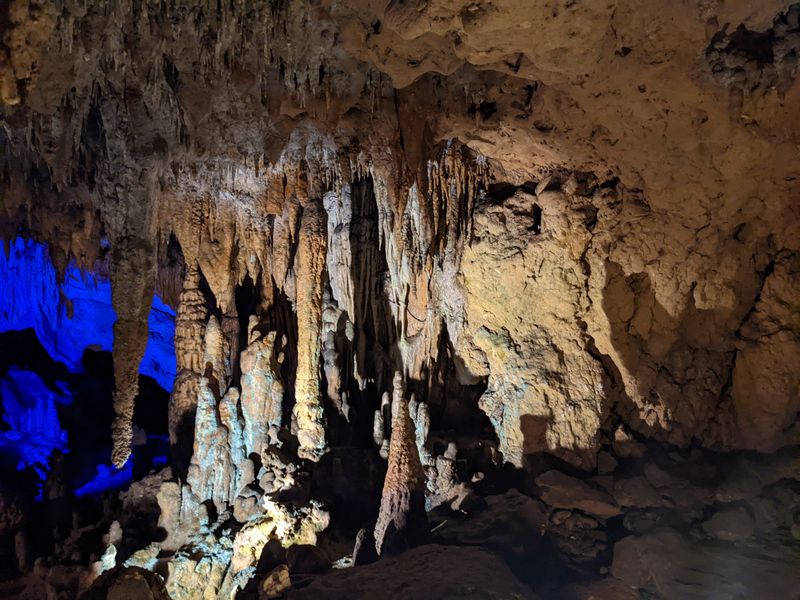
Most people don’t associate Florida with caves, which makes discovering Florida Caverns State Park feel like finding a secret underground palace.
Limestone formations grew for millennia in darkness, creating stalactites, stalagmites, and flowstone draperies that shimmer under guided tour lights.
This panhandle park offers the state’s only air-filled cave system open to public tours.
Temperatures underground stay cool year-round, making summer visits especially refreshing as you descend into another world.
The Chipola River flows through the park above ground, offering canoeing and swimming in spring-fed clarity.
Rangers share geology lessons that actually stick because you’re standing inside the textbook, touching ancient rock formations.
Above ground, hiking trails wind through hardwood forests and along the river where wildlife sightings are common.
Camping facilities provide comfortable base camps for multi-day exploration.
Combining underground wonder with surface beauty creates an experience that surprises everyone who assumes Florida is only beaches and swamps, proving this state’s diversity runs deeper than most imagine—literally.
11. Kissimmee Prairie Preserve State Park
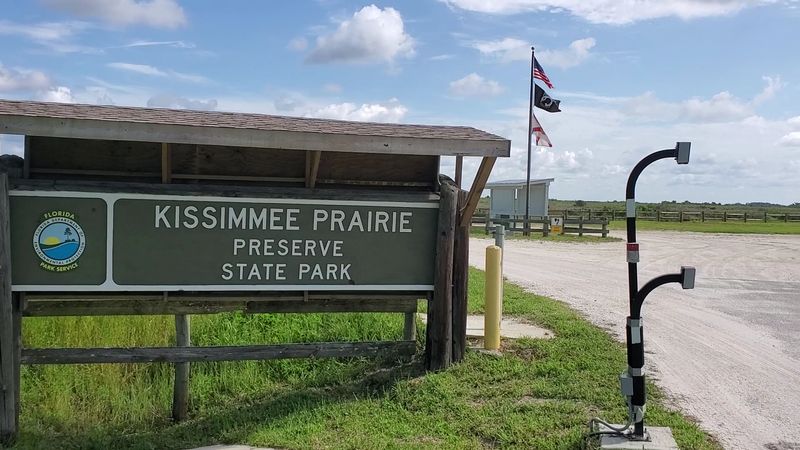
Imagine standing in the middle of 54,000 acres where the horizon stretches unbroken in every direction, grass rippling like ocean waves.
Kissimmee Prairie Preserve protects Florida’s largest remaining dry prairie, an ecosystem rarer than you’d think in this developed state.
Crested caracaras—exotic-looking raptors—hunt across grasslands where bison once roamed centuries ago.
This park earned designation as a Dark Sky Park, meaning light pollution is virtually nonexistent here.
On clear nights, the Milky Way blazes overhead so bright you can read by starlight, constellations sharp enough to touch.
Astronomy enthusiasts travel hundreds of miles for this darkness, a commodity increasingly rare in modern America.
Hiking and biking trails cross the prairie where wildflowers explode in seasonal color and deer bound through tall grasses.
Primitive camping lets you fall asleep under that spectacular sky, coyote songs your lullaby.
This preserve reminds you that Florida contains multitudes beyond beaches, offering Big Sky Country without leaving the peninsula—wide open spaces for wide open thinking.