
Black Bears Have Been Spotted In These 7 New Jersey Areas This Summer
Something furry and unbothered is strolling through backyards this summer, and it is not a stray dog.
New Jersey neighborhoods are seeing black bears wander down quiet streets, climb trees near busy buildings, and even pause outside schools.
Kids are pointing from the windows. Parents are checking group chats.
Police departments keep posting the same warning on repeat: stay calm, stay back, and keep food locked away.
From leafy suburbs to a spot in New Jersey shockingly close to a zoo, these sightings are popping up in places nobody expected.
Seven towns made the list this time, and each one has its own wild story behind it.
Grab a coffee and get comfortable, because bear season just got a lot more interesting.
1. Midland Park, New Jersey

Bear country is closer than most people think. Midland Park, nestled in Bergen County, New Jersey, sits right in the heart of a region where black bear activity has been climbing steadily each summer.
The borough may be small, but its wooded edges and residential greenery make it an appealing corridor for bears on the move.
Black bears roam widely in search of food. They are opportunistic feeders, which means they will investigate anything that smells promising, including trash cans, bird feeders, and outdoor grills.
Residents in Midland Park are urged to remove these attractants before bears make a habit of visiting.
Bergen County wildlife officials confirm that bears travel through multiple municipalities in a single day. Midland Park’s proximity to neighboring towns with confirmed sightings puts it squarely on the radar.
Stay alert when walking dogs or letting kids play outside, especially near wooded areas.
What should you do if you spot one? Stay calm, back away slowly, and never approach the animal.
Make noise to let the bear know you are there. Bears typically avoid confrontation when given the chance to retreat.
Local police and the New Jersey Division of Fish and Wildlife are the right contacts for any sighting. Report encounters promptly so officials can track movement patterns and issue timely alerts to the community.
Sharing information keeps the whole neighborhood safer.
Awareness is your best tool in bear country. Keep your surroundings tidy, talk to your neighbors about prevention, and treat every sighting as a reminder that wildlife and suburban life overlap here in Bergen County more than many expect.
Midland Park, Bergen County, New Jersey, United States.
2. Ridgewood, New Jersey

Did you hear that rustle near the trash cans last night? Ridgewood has been buzzing with black bear activity this summer, and residents along Ridgewood Boulevard North have been keeping their eyes wide open.
Police issued alerts after multiple sightings drew attention to just how comfortable these animals have become in residential settings.
One confirmed sighting placed a bear on Sheridan Avenue and North Monroe Street. That is not a hiking trail.
That is a neighborhood street, which tells you everything about how boldly these animals move through Bergen County communities. Ridgewood police responded quickly and urged residents to take preventive steps immediately.
Securing garbage is the single most effective thing you can do. Bears have an extraordinary sense of smell, reportedly many times stronger than a dog’s.
Once they connect a neighborhood with food, they return. Removing that connection is the key to discouraging repeat visits.
Bird feeders are another overlooked attractant. Sunflower seeds and suet are calorie-rich foods that bears actively seek out during summer months when they are building fat reserves.
Bringing feeders inside overnight, or removing them entirely during peak bear season, makes a real difference.
Ridgewood is a vibrant, walkable community with beautiful tree-lined streets and active outdoor culture. That same greenery that makes it so appealing to residents also provides natural travel corridors for wildlife moving between larger forested areas in the region.
Appreciate the wildness of it, but respect the boundary. Black bears are native to New Jersey and play an important role in the ecosystem.
The goal is coexistence, not conflict, and smart habits from residents make that entirely possible.
Ridgewood, Bergen County, New Jersey, United States.
3. Norwood, New Jersey
Picture this: you lace up your trail shoes, head toward your favorite local path, and spot a mother bear with her cub right at the trailhead. That is exactly what happened near the trail behind Rockleigh Borough Hall, just a stone’s throw from Norwood, in Bergen County, New Jersey.
The sighting stopped hikers in their tracks and sent a clear message about wildlife in the area.
Mother bears with cubs are among the most important encounters to handle carefully. A mama bear’s protective instincts are strong, and she will not hesitate to respond if she feels her cub is threatened.
Giving them space, at least a hundred yards if possible, is the smartest move you can make on any trail.
Norwood sits in a part of Bergen County where suburban development meets the natural landscape in a pretty seamless way. Wooded buffers, stream corridors, and undeveloped parcels create the kind of habitat that supports wildlife movement year-round.
Bears follow these green corridors right into neighborhoods.
Trail users in and around Norwood should consider carrying bear spray and making noise while hiking. Clapping, talking loudly, or using a bear bell helps alert animals to your presence before a surprise encounter can occur.
Most bears want nothing to do with people when they know you are coming.
Local wildlife officials recommend checking community boards and town alerts before heading out on trails during summer months. Bear activity tends to peak in the warmer seasons when food is abundant and cubs are learning to forage alongside their mothers.
Norwood is a tight-knit community, and sharing sighting information among neighbors goes a long way toward keeping everyone bear-aware and prepared.
Norwood, Bergen County, New Jersey, United States.
4. West Orange, New Jersey
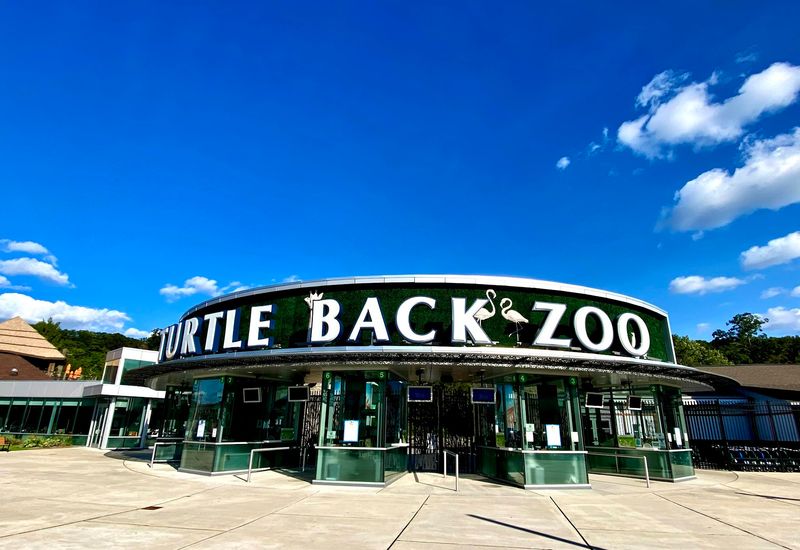
Imagine planning a fun zoo day and finding out the zoo has an unplanned visitor of its own. On June 22, 2026, a black bear caused the temporary closure of Turtle Back Zoo in West Orange, Essex County, New Jersey.
The bear was first spotted in South Mountain Reservation and then made its way onto zoo grounds around midday, turning an ordinary afternoon into a wild one.
Staff reacted swiftly. Visitors were directed to shelter in place while officials worked to monitor and manage the situation safely.
The bear eventually moved on, but the incident sparked a round of community advisories urging West Orange residents to stay alert and secure their properties.
South Mountain Reservation is a massive green space that borders several communities in Essex County. It provides ideal habitat for bears and serves as a natural launching point for animals venturing into nearby neighborhoods.
West Orange residents living close to the reservation boundary are especially encouraged to stay vigilant.
Food security at home matters enormously in areas like this. Trash should be stored in bear-resistant containers or kept in a garage until collection day.
Pet food left outside overnight is a guaranteed invitation for curious wildlife to investigate your yard.
The Turtle Back Zoo incident is a vivid reminder that wildlife does not recognize fences or boundaries the way humans do. Bears follow their instincts, and those instincts lead them wherever food or curiosity takes them, even into a zoo.
West Orange is a dynamic community with rich green spaces and active outdoor life. Respecting the wildlife that shares those spaces makes every outdoor experience safer and more rewarding for everyone involved.
West Orange, Essex County, New Jersey, United States.
5. Westwood, New Jersey
Calm nights do not last long in the Pascack Valley this summer. Recently, Hillsdale police issued an urgent warning for residents to stay indoors after a black bear was spotted near Ann Blanche Smith School.
Hillsdale sits directly next to Westwood in Bergen County, New Jersey, making this sighting highly relevant for the entire surrounding area.
The proximity to a school made this sighting particularly attention-grabbing. Animal Control was notified right away, and officials worked to track the bear’s movements through the neighborhood.
Bears near school zones naturally raise the level of concern, especially when children or pets might be outside.
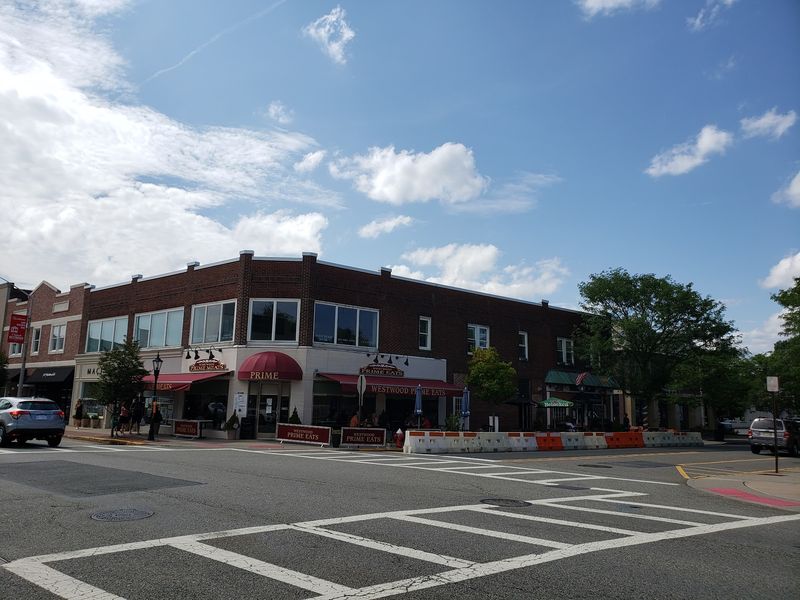
Westwood is a lively suburban hub in Bergen County with busy streets, local shops, and active residential neighborhoods. The borough’s location within the broader Pascack Valley corridor means it shares wildlife pressure with several neighboring towns.
Bears do not stop at borough lines.
Parents and caregivers in the area should talk to kids about what to do if they encounter a bear. The basics are simple: do not run, do not approach, stay calm, and find an adult or go inside immediately.
Teaching children these steps early builds good habits that could matter in a real moment.
Homeowners can help reduce bear visits by eliminating food sources. Compost bins should be covered and secured.
Fruit trees drop a lot of calories that bears find irresistible, so picking up fallen fruit regularly is a practical step worth taking.
Community awareness in towns like Westwood makes a genuine difference. When neighbors share sighting reports and follow prevention tips together, the whole area becomes less attractive to roaming bears.
Westwood, Bergen County, New Jersey, United States.
6. Teaneck, New Jersey

Not every wildlife encounter happens on a hiking trail. In late April 2026, a black bear was spotted resting in a tree near the Teaneck Armory in Teaneck, Bergen County, New Jersey.
Police monitored the animal’s movements carefully, keeping a safe perimeter while residents watched from a cautious distance. It was an unusual scene in a very urban setting.
Teaneck is one of the more densely populated communities in Bergen County. Seeing a bear settle into a tree near a landmark like the Armory highlights just how far these animals are willing to travel through developed areas.
They follow green corridors, stream banks, and tree lines that thread through even busy suburbs.
Bears in trees are not automatically a threat. They often climb to rest or to escape perceived danger.
The best response is to give the animal space and let it come down on its own schedule. Crowds or loud noises can stress the bear and complicate the situation unnecessarily.
Teaneck police handled the situation professionally, keeping the public informed and the area around the bear clear. Coordination between local law enforcement and state wildlife officials is standard practice in New Jersey, where black bears are found in all 21 counties.
Residents throughout Teaneck are encouraged to report any sightings to local police or the New Jersey Division of Fish and Wildlife. Timely reports help officials build a clearer picture of bear movement patterns across the region, which improves response times and community safety overall.
Living alongside wildlife requires patience and preparation. Teaneck’s bear visitor may have been brief, but the reminder it left behind is lasting: Bergen County is bear country, and readiness is everything.
Teaneck, Bergen County, New Jersey, United States.
7. Englewood, New Jersey
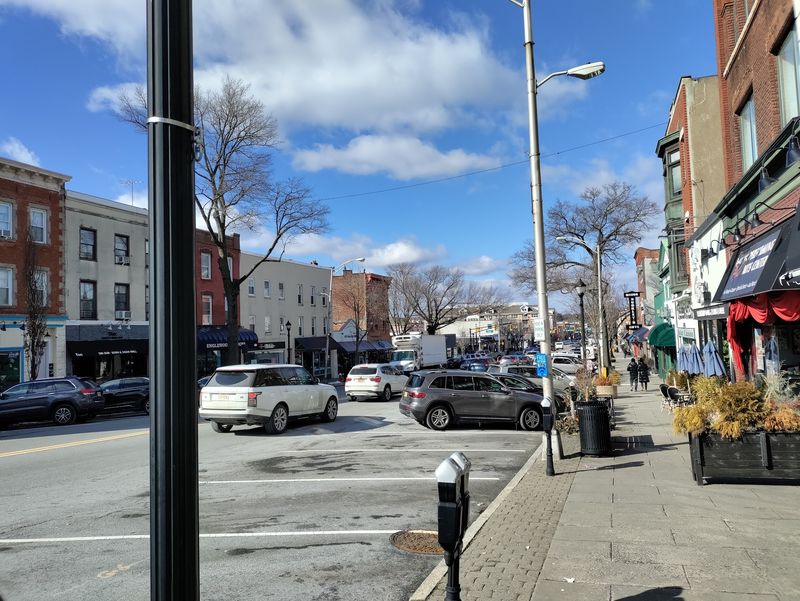
Video footage of a bear strolling down a city street has a way of making people stop scrolling. In late April 2026, Mayor Michael Wildes of Englewood shared exactly that kind of clip, showing a black bear wandering along Pleasant Avenue in Englewood, Bergen County, New Jersey.
The footage spread quickly and put the entire community on high alert.
Englewood police responded by increasing patrols along school routes to ensure student safety during the period of heightened activity. The Englewood Health Department also stepped in, issuing advisories that urged residents to keep food indoors, secure their garbage, and bring pets inside when bears had been reported nearby.
Englewood is a culturally rich and diverse city with a strong community spirit. It sits close to the George Washington Bridge and features a mix of residential streets, parks, and commercial corridors.
That urban energy does not deter bears, which are comfortable moving through populated areas when food sources draw them in.
The Pleasant Avenue sighting is a good example of how quickly bear encounters can pop up in unexpected locations. One moment a street looks completely ordinary, and the next a bear is ambling past parked cars.
Staying aware of local alerts and acting on prevention tips keeps these moments from becoming serious problems.
New Jersey’s black bear population has grown significantly over the decades, and bears are now documented in all 21 counties across the state. Englewood’s sightings are part of a much broader pattern of wildlife adapting to suburban and urban environments throughout the region.
Respect for these animals, combined with consistent prevention habits, is the most reliable path to safe coexistence in a city like Englewood.
Englewood, Bergen County, New Jersey, United States.