
11 Colorado Spring Hikes That Pack Stunning Scenery Into Short Trails
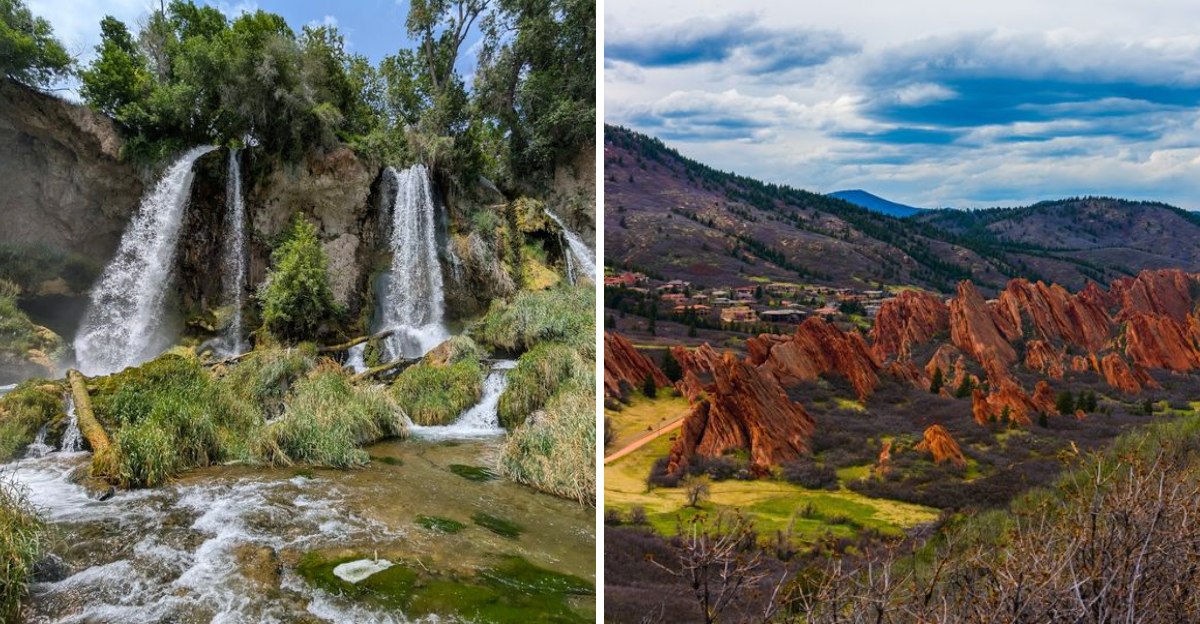
Spring in Colorado hits differently than anywhere else on earth. One moment you are crunching through leftover snow, and the next you are surrounded by wildflowers and warm golden light filtering through canyon walls.
The best part? You do not need to be an ultra-marathoner to experience the jaw-dropping beauty this state offers. These 11 short trails prove that big scenery does not always require big miles.
1. Red Rocks Trading Post Trail (Red Rocks Park, Morrison)
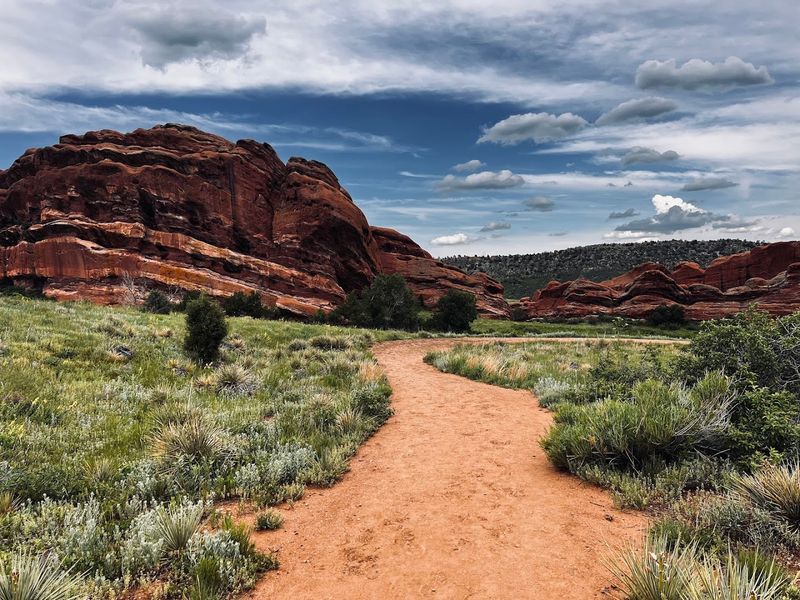
Standing at the base of those towering red sandstone slabs, you get this overwhelming sense that the earth itself decided to show off. The Red Rocks Trading Post Trail wraps around the famous amphitheater area, offering up-close views of the iconic formations that have made this park one of Colorado’s most visited outdoor destinations.
The trail runs roughly 1.4 miles and stays relatively flat, making it accessible to just about anyone lacing up boots for the first time. Spring brings a gorgeous palette of wildflowers popping against the burnt-orange rock, and the morning light turns everything into something straight out of a painting.
You will share the path with joggers and tourists, but the energy feels electric rather than crowded.
Parking fills up fast on weekends, so aim for an early arrival before 8 a.m. The Trading Post building near the trailhead sells snacks and souvenirs if you want a reward after your walk.
Bring a camera because every single angle here produces a frame-worthy shot that will absolutely blow up your social media feed.
2. Central Garden Area Trails (Garden Of The Gods, Colorado Springs)
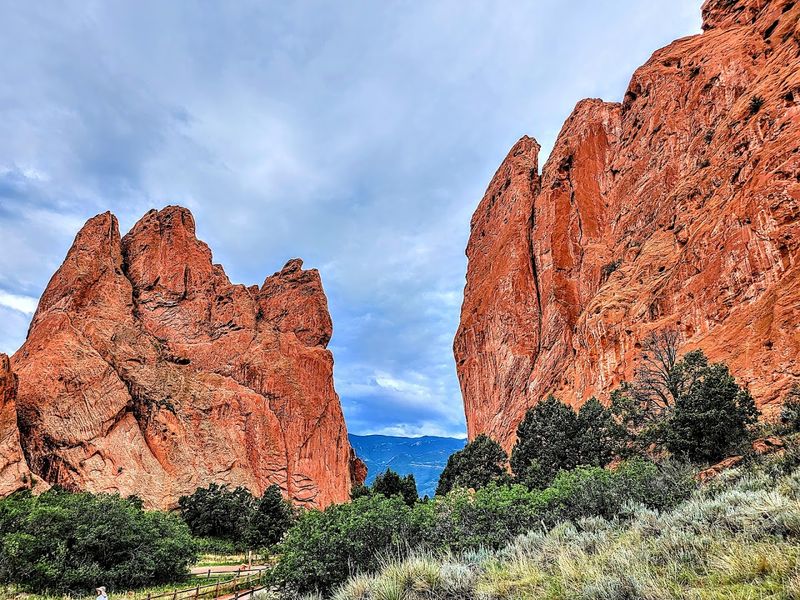
Few places in Colorado deliver a more dramatic first impression than Garden of the Gods. The moment those jagged crimson spires come into view against a crisp blue sky, your jaw genuinely drops.
The Central Garden Area Trails wind through the heart of the park, putting you right among the towering formations rather than just viewing them from a distance.
The loop through this section covers about 1.5 miles total, with options to branch onto additional paths if your legs are feeling ambitious. Spring is arguably the best season to visit because the surrounding grasslands turn vivid green, creating a stunning contrast with the red and white rock formations above.
Interpretive signs along the route explain the fascinating geological history of these formations, some of which are estimated to be over 300 million years old.
Admission to Garden of the Gods is completely free, which makes this one of the best no-cost adventures in the entire state. Dogs are welcome on leash, and the wide, well-maintained paths work well for strollers too.
Sunrise visits reward early risers with softer light and noticeably thinner crowds throughout the trail system.
3. Paint Mines Interpretive Trail (Paint Mines Interpretive Park, Calhan)
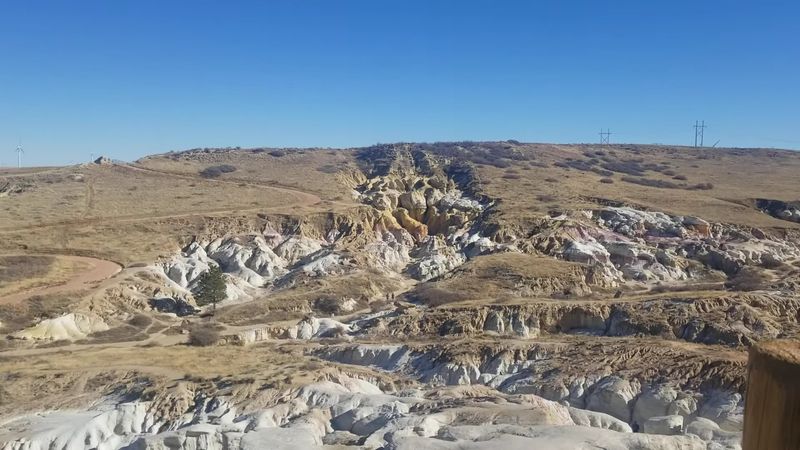
Honestly, nothing prepares you for the Paint Mines. You drive through flat eastern Colorado plains, wondering if you made a wrong turn, and then suddenly the ground opens up into this surreal valley of colorful clay spires and sculpted hoodoos that look borrowed from a science fiction film set.
The Paint Mines Interpretive Trail covers about 4 miles of easy terrain through Calhan’s most otherworldly landscape.
The vibrant colors, ranging from chalky white to deep rust orange and lavender purple, come from ancient iron-rich clay deposits shaped by thousands of years of wind and water erosion. Spring is ideal for visiting because temperatures stay cool, wildflowers dot the surrounding grasslands, and the colors of the formations appear especially vivid after winter moisture.
Archaeological evidence suggests Native American tribes visited this area for thousands of years to gather the pigmented clay.
This trail stays largely under the radar compared to Colorado’s flashier destinations, which means you can often have the entire otherworldly landscape nearly to yourself on a weekday morning. Wear sturdy shoes since the clay paths can get slippery after rain.
Pets must remain on leash throughout the park to protect the fragile formations and surrounding wildlife habitat.
4. Horsetooth Rock Trail (Horsetooth Mountain Open Space, Fort Collins)
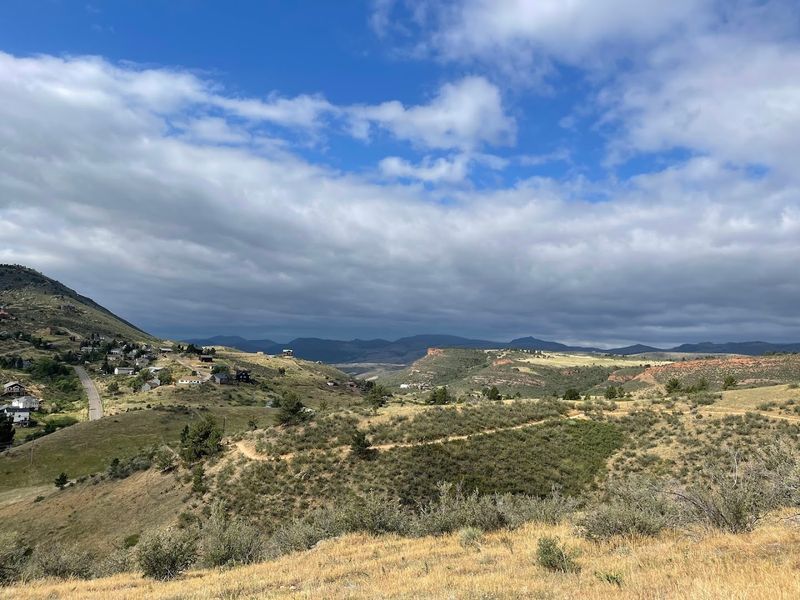
Fort Collins locals will tell you that Horsetooth Rock is basically the city’s unofficial mascot, visible from town and beckoning hikers from miles away. The trail to the summit covers roughly 5.4 miles round trip and climbs about 1,600 feet, which earns it a moderate rating but rewards every step with increasingly spectacular views over Horsetooth Reservoir and the surrounding foothills.
Spring transforms this trail in the best way possible. Ponderosa pines release their sweet vanilla-like scent in the warming air, wildflowers carpet the meadow sections, and the reservoir below shimmers in shades of deep blue.
The distinctive tooth-shaped granite formation at the summit gives the trail its name and provides a satisfying landmark to aim for throughout the climb.
According to Arapaho legend, the rock formation represents the heart of a great beast, which adds a layer of cultural richness to an already memorable hike. Parking requires a small fee or a Colorado state parks pass.
Start early in spring since afternoon thunderstorms can roll in quickly over the foothills, and exposed sections near the summit offer little shelter when lightning is a concern.
5. Fountain Valley Loop (Roxborough State Park, Littleton)
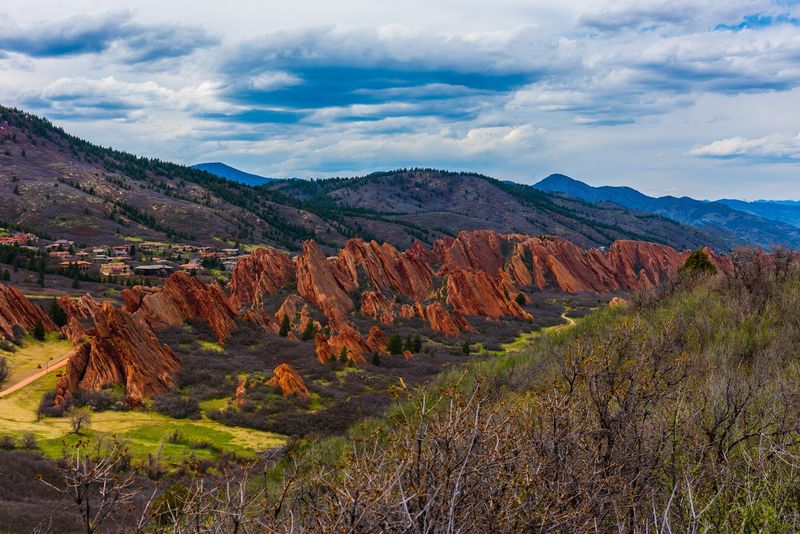
Roxborough State Park holds a quiet kind of magic that feels almost unfair to keep secret. The Fountain Valley Loop, stretching a manageable 2.3 miles, takes you directly through a corridor of massive red sandstone fins that jut dramatically from the valley floor like the spine of some ancient buried creature.
Spring mornings here are genuinely breathtaking in a way that stops you mid-stride.
The trail is rated easy and stays relatively level throughout, making it a fantastic option for families, casual hikers, and anyone still shaking off winter rust. Wildflowers bloom enthusiastically along the path in April and May, and mule deer frequently graze in the meadows without much concern for passing hikers.
Roxborough sits at a geographic crossroads where the mountains meet the plains, creating a unique ecosystem that supports an impressive variety of plant and animal life.
Unlike many popular Colorado parks, Roxborough does not allow dogs or bicycles, which keeps the atmosphere calm and wildlife-friendly. Entry requires a Colorado state parks pass or a small day-use fee.
The park also prohibits rock climbing on the formations, preserving both the geology and the peaceful, undisturbed mood that makes this loop so memorable and refreshing to walk.
6. Canyon View Nature Trail (Castlewood Canyon State Park, Franktown)
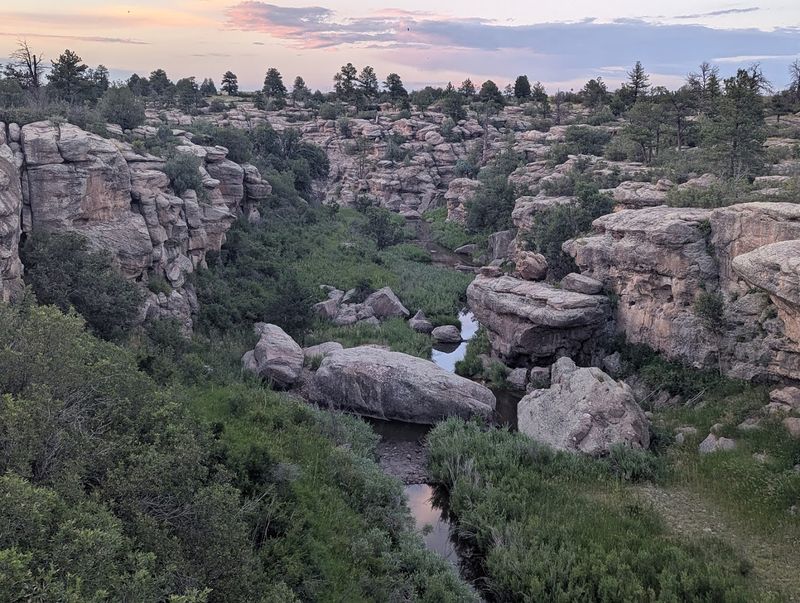
History and geology collide in spectacular fashion at Castlewood Canyon State Park. The Canyon View Nature Trail runs about 1 mile along the canyon rim, serving up dizzying views of the 100-foot-deep canyon below while also revealing the haunting ruins of the old Castlewood Dam, which catastrophically failed in 1933 and sent a wall of water crashing toward Denver.
That backstory alone makes every step feel loaded with drama.
Spring is genuinely the sweet spot for this trail. Cherry Creek rushes through the canyon bottom with snowmelt energy, wildflowers bloom across the rim, and the cottonwood trees in the canyon begin leafing out in that impossibly fresh shade of green that only lasts a few weeks each year.
Interpretive signs throughout the route explain both the geological formation of the canyon and the history of the dam that once held it back.
The park sits about 35 miles southeast of Denver, making it an easy and underrated day trip from the city. Multiple trail connections allow you to extend your hike down into the canyon if you want more mileage.
Parking fills up on warm spring weekends, so a mid-week visit guarantees a more peaceful, crowd-free experience along the rim.
7. Rifle Falls Trails (Rifle Falls State Park, Rifle)
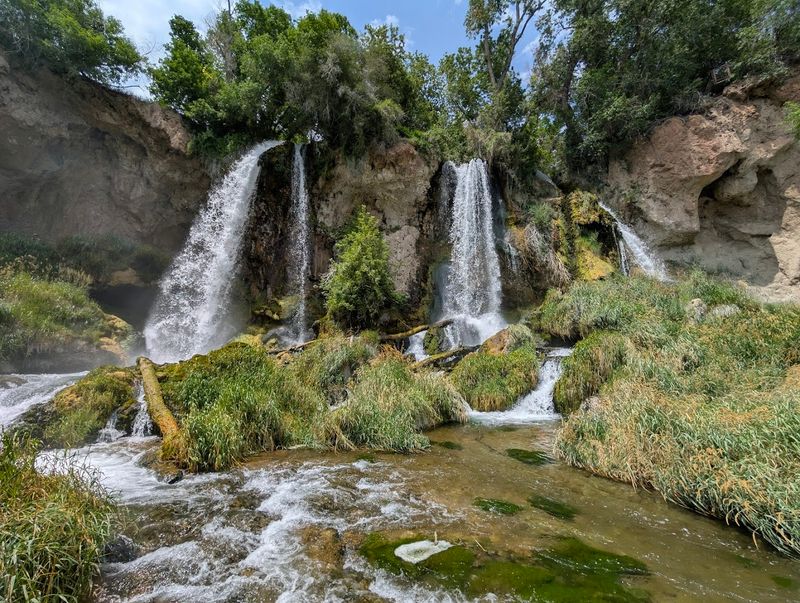
Three waterfalls. One compact trail.
Zero disappointment. Rifle Falls State Park delivers one of Colorado’s most photogenic scenes in under a mile of walking, which means even the most reluctant hikers in your group have zero excuses to sit this one out.
The falls drop about 70 feet over a limestone cliff draped in vivid green moss, and the surrounding canyon feels almost tropical compared to the dry scrubland just outside the park entrance.
Spring runoff cranks the falls to their most powerful and visually dramatic state, sending mist drifting across the trail and creating tiny rainbows in the afternoon light. Short side paths lead to caves carved into the limestone walls, adding an exploratory element that kids absolutely love.
The whole trail system covers about 1.5 miles of easy terrain, so you can comfortably loop through every viewpoint without feeling rushed or tired.
Rifle Falls sits in western Colorado near the town of Rifle, roughly two hours from Denver, making it a worthy destination on a longer road trip through the Western Slope. Camping is available within the park if you want to wake up to the sound of the falls.
Arrive early on weekends since the small parking area fills surprisingly quickly during peak spring months.
8. Hanging Lake Trail (Glenwood Canyon, Glenwood Springs)
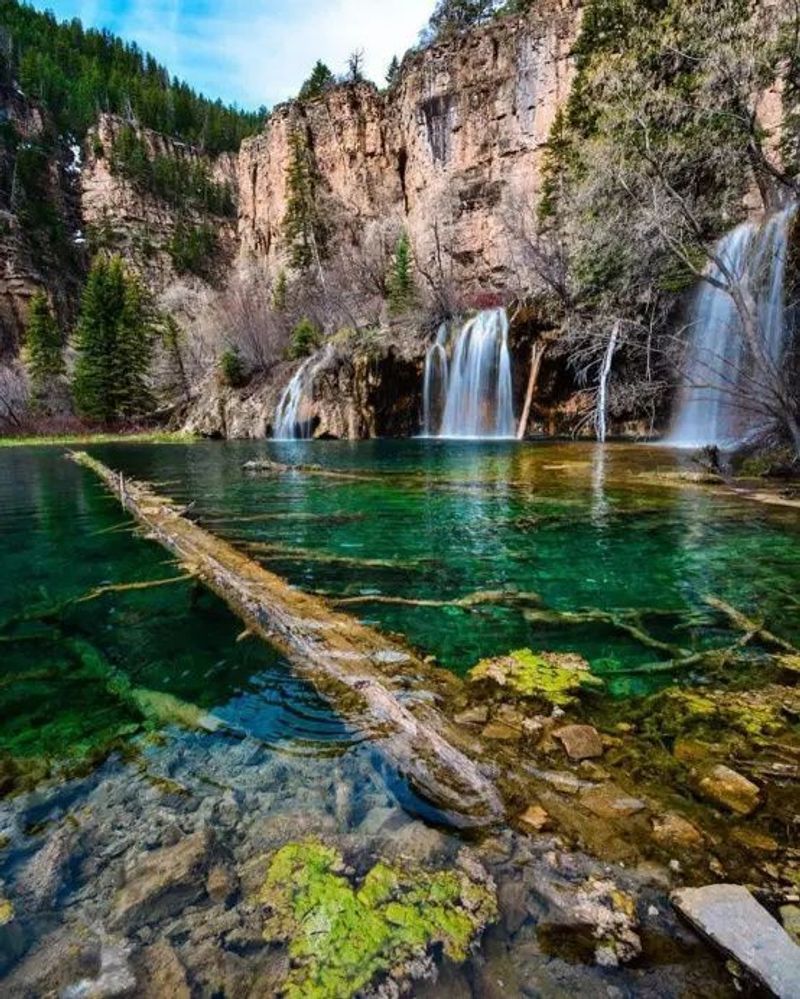
There is a moment on the Hanging Lake Trail when you crest a rocky ledge, catch your breath after the steep climb, and suddenly a turquoise lake appears suspended on a canyon shelf like something from a fantasy novel. That moment never gets old, no matter how many times Colorado locals make the trip.
The lake’s extraordinary color comes from mineral deposits on the lake bed that reflect light in an almost unreal way.
The trail covers 2.4 miles round trip but climbs roughly 1,000 feet in a short distance, so pack your determination alongside your water bottle. Spring visits offer the bonus of Bridal Veil Falls and Spouting Rock running at full force, sending ribbons of water directly into the lake from the canyon walls above.
A wooden boardwalk circles the lake and protects the fragile ecosystem from foot traffic.
Access requires a permit through Recreation.gov, which must be reserved in advance, especially for spring weekends when demand is extremely high. The permit system was introduced to protect the lake’s delicate environment from overuse.
Dogs and swimming are not permitted at the lake itself. Despite the planning required, Hanging Lake consistently ranks among the most stunning short hikes in the entire American West.
9. Mount Sanitas Trail (Boulder)
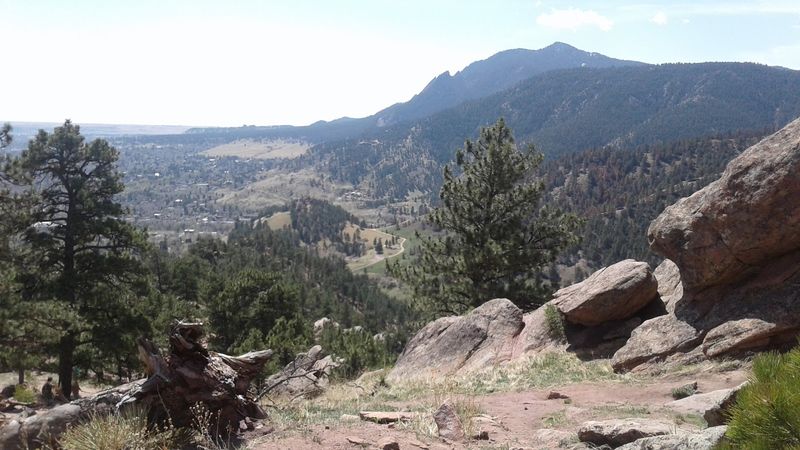
Boulder residents treat Mount Sanitas like a daily ritual, and once you tackle this trail yourself, you will completely understand why. The 3.1-mile loop punches well above its weight class in terms of both difficulty and reward.
The ascent is genuinely steep and rocky in sections, gaining about 1,343 feet of elevation, which means your legs will definitely remember this one the next morning.
Spring mornings on this trail feel electric. The air carries that clean, post-rain freshness, meadowlarks sing from the scrubby hillsides, and sweeping views over Boulder and the iconic Flatirons begin revealing themselves about halfway up.
The trail passes through a variety of terrain including open grasslands, dense shrubby hillsides, and rocky ridgelines, keeping the visual experience constantly changing and engaging throughout the loop.
Named after the historic Boulder-Colorado Sanitarium that once operated at the base of the mountain in the late 1800s, this trail carries a quiet historical significance alongside its physical challenge. No parking fees apply at the main trailhead on Mapleton Avenue.
Dogs are welcome on leash. Arrive before 7 a.m. on weekends to snag a parking spot, since Boulder’s outdoor culture means this trail stays consistently popular year-round with locals and visitors alike.
10. Chief Mountain Trail (Near Idaho Springs)
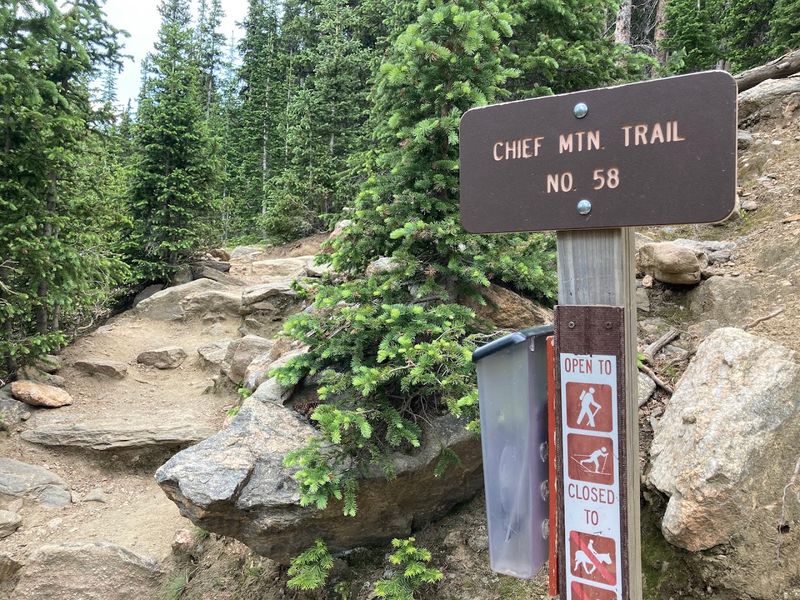
Driving up Mount Evans Road in spring already feels like cheating because the scenery comes to you before you even park. Chief Mountain Trail, located just off that iconic highway near Idaho Springs, offers a relatively short 2.5-mile round trip hike with a summit elevation of 11,709 feet, making it one of the more accessible high-alpine experiences in Colorado without requiring a full mountaineering commitment.
The trail climbs through subalpine forest before breaking above treeline and delivering sweeping 360-degree views of the Front Range, including Mount Evans and Bierstadt looming dramatically to the west. Spring snow often lingers on the upper sections of the trail into May, so microspikes can be genuinely useful depending on conditions.
That mix of muddy lower trail and snowy upper trail is part of the seasonal charm rather than a dealbreaker.
Wildlife sightings are common here, with mountain goats occasionally spotted near the upper rocky sections and Clark’s nutcrackers calling from the pines below. The trailhead parking area is small, so weekday visits are strongly recommended.
Bring extra layers because summit temperatures can be significantly colder than conditions down in Idaho Springs, even on a sunny and seemingly warm spring afternoon.
11. Emerald Lake Trail (Rocky Mountain National Park, Estes Park)
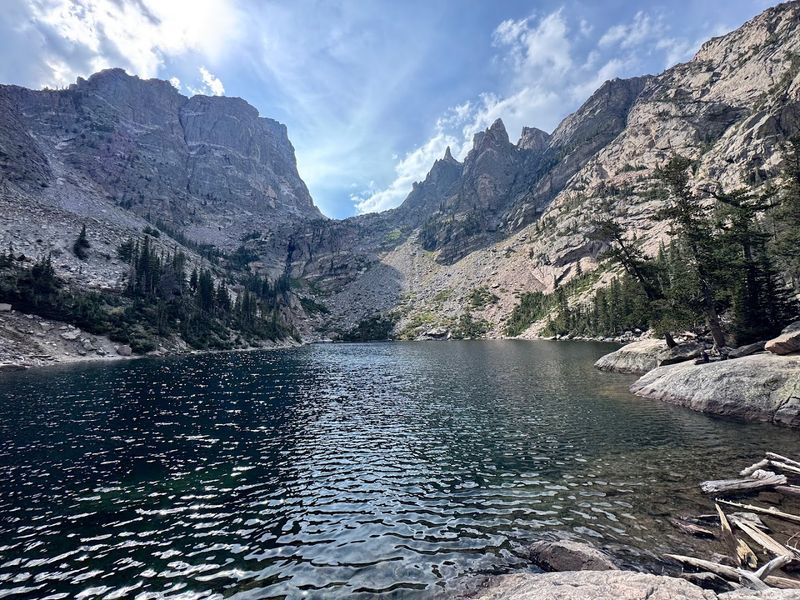
Rocky Mountain National Park holds countless trails worth celebrating, but the Emerald Lake Trail earns its legendary status with pure, undeniable visual payoff at every single step. The trail covers 3.6 miles round trip and passes three stunning alpine lakes, Nymph, Dream, and Emerald, each one more spectacular than the last as you gain elevation through pine forest and open rocky terrain.
Spring visits come with a unique trade-off that most hikers happily accept. Snow often still caps the surrounding peaks and clings to the north-facing cliffs above Emerald Lake, creating a dramatic contrast with the deep green water below.
Wildflowers begin emerging along the lower sections of the trail in May, and the park’s famous wildlife, elk, moose, and marmots, becomes increasingly active as temperatures warm. Traction devices are often necessary for the icy upper sections through early spring.
Timed entry permits are required for Rocky Mountain National Park during peak season, so check the Recreation.gov website well in advance before planning your trip. The trailhead at Bear Lake is one of the most popular in the park, meaning early arrival is genuinely critical for parking.
Elevation at the trailhead starts around 9,475 feet, so pace yourself and drink plenty of water to manage altitude adjustment comfortably.