
Descend Into A Hidden 120-Foot-Deep Mini Rainforest At This Florida Park
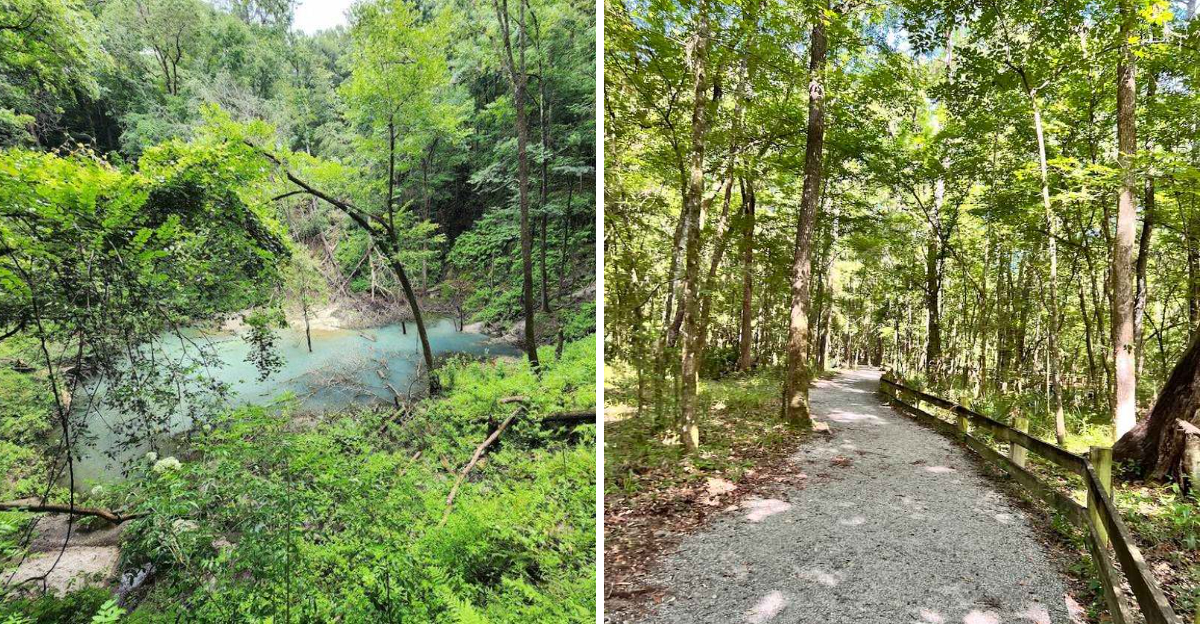
Blink and you might miss it, but one of Florida’s most surprising landscapes drops straight down into the earth. Beyond the beaches and palm-lined highways lies a dramatic natural wonder that defies the state’s flat reputation.
A steep wooden staircase leads into a massive, bowl-shaped sinkhole where a cool, shaded ecosystem flourishes far below the forest floor. With every step downward, the air grows fresher and the greenery denser, as if you’ve crossed state lines without ever leaving Florida.
At the bottom, a lush, almost Appalachian-style setting quietly thrives, hidden in plain sight.
A 120-Foot-Deep Sinkhole Hiding In Plain Sight

Located at 4732 Millhopper Rd in Gainesville, this geological formation appears suddenly in the North Florida landscape like a secret kept by the earth itself. The sinkhole measures an impressive 120 feet from rim to bottom, creating a natural bowl that has captured the imagination of visitors for generations.
From ground level, you might walk right past without realizing the dramatic cavity that exists just beyond the tree line.
The scale becomes apparent only when you approach the viewing platforms and peer over the edge. What you see defies the typical Florida scenery of flatlands and swamps.
Instead, steep walls drop away into shadow, revealing layers of rock and vegetation that tell a story millions of years in the making.
Park rangers often mention that first-time visitors express genuine surprise at finding such dramatic topography in a state known for its lack of elevation changes.
132 Steps Down Into Another World
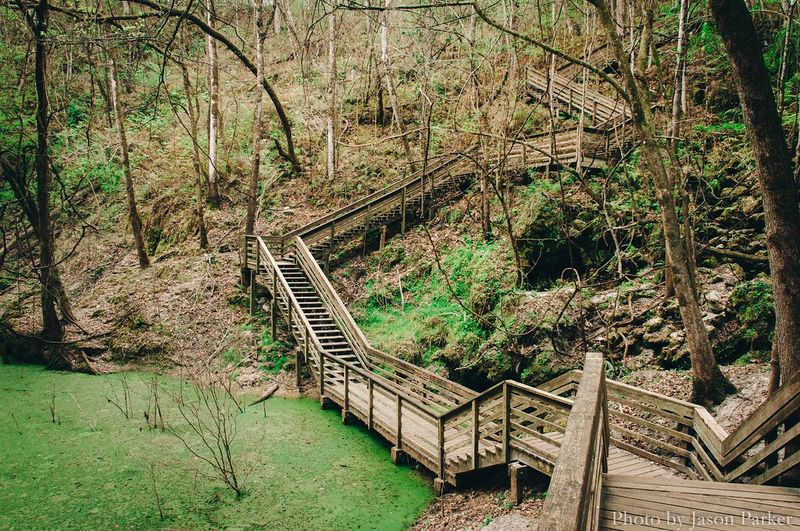
The journey to the bottom requires navigating 132 steps that wind down the sinkhole’s interior wall. Engineers designed the staircase with multiple landing platforms where you can pause to catch your breath and absorb the changing environment.
Each landing offers a different perspective on the limestone walls and the vegetation clinging to impossible angles.
Visitors in reasonable physical condition complete the descent without much difficulty, though the return climb provides a genuine cardiovascular workout. The stairs themselves represent a significant improvement over earlier access methods, with sturdy railings and non-slip surfaces that remain safe even after rain.
Families with children navigate the route successfully, though parents should keep younger ones close on the descent.
The round trip of 264 steps typically takes about 20 minutes, though many people spend considerably longer exploring each level and reading the educational signage.
A Rare Mini Rainforest In North Florida
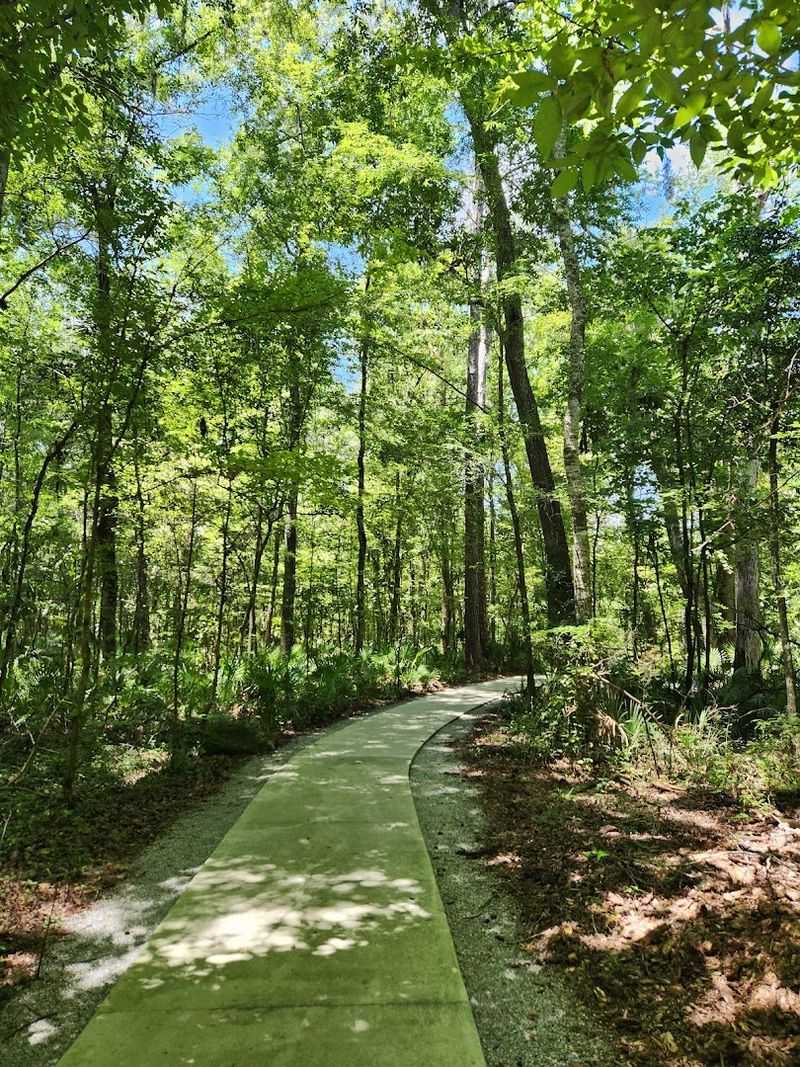
The microclimate inside the sinkhole supports plant species that have no business growing in North Florida. Botanists have documented vegetation more commonly found hundreds of miles north in the Appalachian Mountains or in tropical environments.
The constant shade and moisture create conditions that allow these plants to thrive despite the surrounding climate.
Ferns carpet the lower levels in thick green masses, while mosses coat every available rock surface. The air itself feels different down here, heavy with humidity and the earthy smell of decomposing leaves.
Visitors from other states often remark that the environment reminds them of mountain hollows in Tennessee or North Carolina rather than anything typically Floridian.
This biological anomaly exists because the sinkhole acts as a natural refrigerator, trapping cool air and maintaining consistent moisture levels throughout the year regardless of conditions at ground level.
Why The Temperature Drops As You Descend
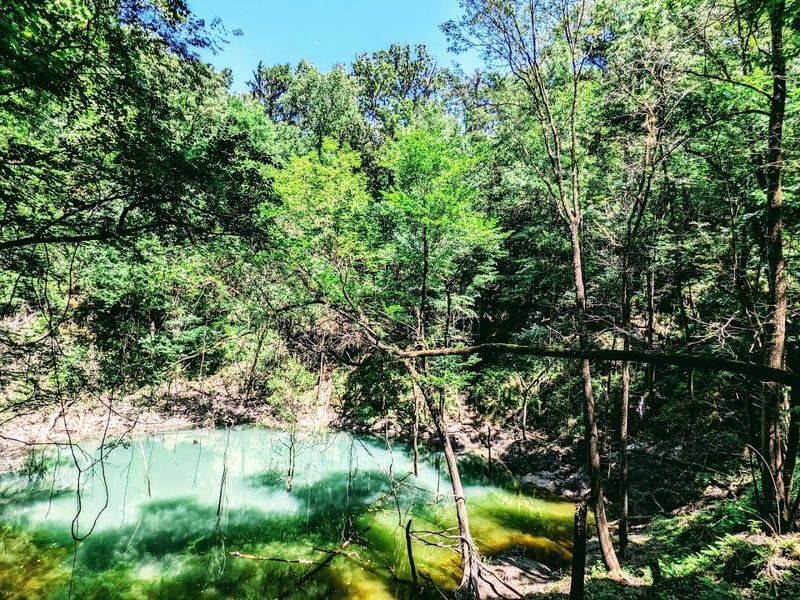
Physics explains the pleasant surprise that greets visitors on hot Florida days. Cool air naturally sinks and becomes trapped in the bowl-shaped depression, creating a natural air conditioning system that can lower temperatures by 10 to 15 degrees compared to the surface.
The effect becomes noticeable about halfway down the staircase.
By the time you reach the observation deck at the bottom, the temperature difference feels substantial enough that some visitors wish they had brought a light jacket. The limestone walls also contribute to the cooling effect, as they remain relatively cool year-round and radiate that coolness into the surrounding air.
Water seeping through the rock evaporates slowly, adding to the refrigeration process through evaporative cooling.
During summer months when surface temperatures exceed 90 degrees, the bottom of the sinkhole might register a comfortable 75 degrees, making it a popular escape for locals seeking relief.
Small Waterfalls That Appear After Heavy Rain
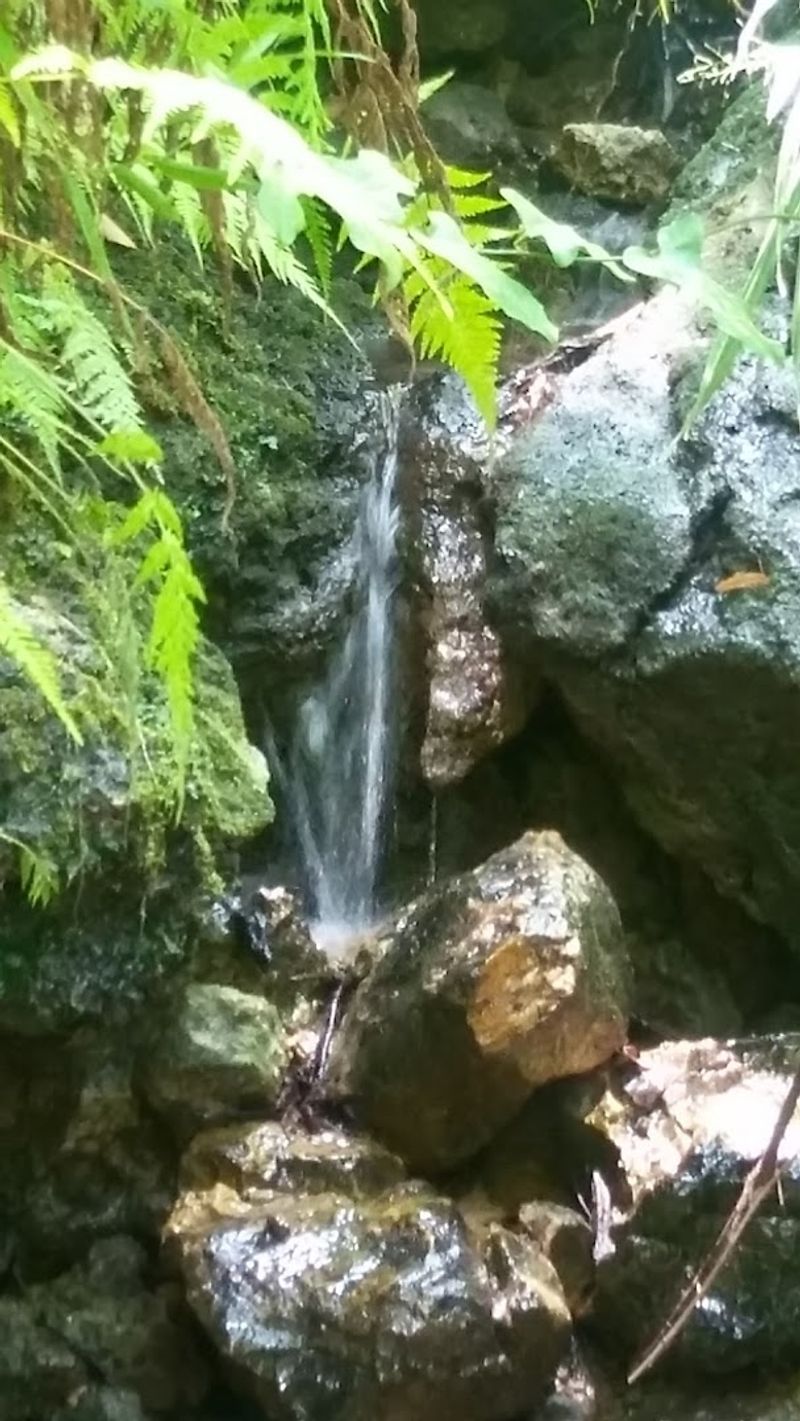
The sinkhole truly comes alive after significant rainfall when multiple small streams activate along the walls. These ephemeral waterfalls emerge from various points in the limestone, trickling and splashing their way down to the pool at the bottom.
The sound of falling water fills the entire space, adding an auditory dimension that visitors during dry periods miss entirely.
Timing your visit after a good rain increases the spectacle considerably, though even during drought conditions some seepage usually occurs. The water originates from the surrounding aquifer, filtering through porous limestone before emerging at weak points in the rock face.
Each stream carries dissolved minerals that have built up deposits over thousands of years, creating subtle variations in the rock coloration.
Photography enthusiasts prefer visiting after storms when the waterfalls provide dynamic subjects and the vegetation appears especially vibrant and saturated with moisture.
Rock Walls That Reveal Florida’s Ancient Past
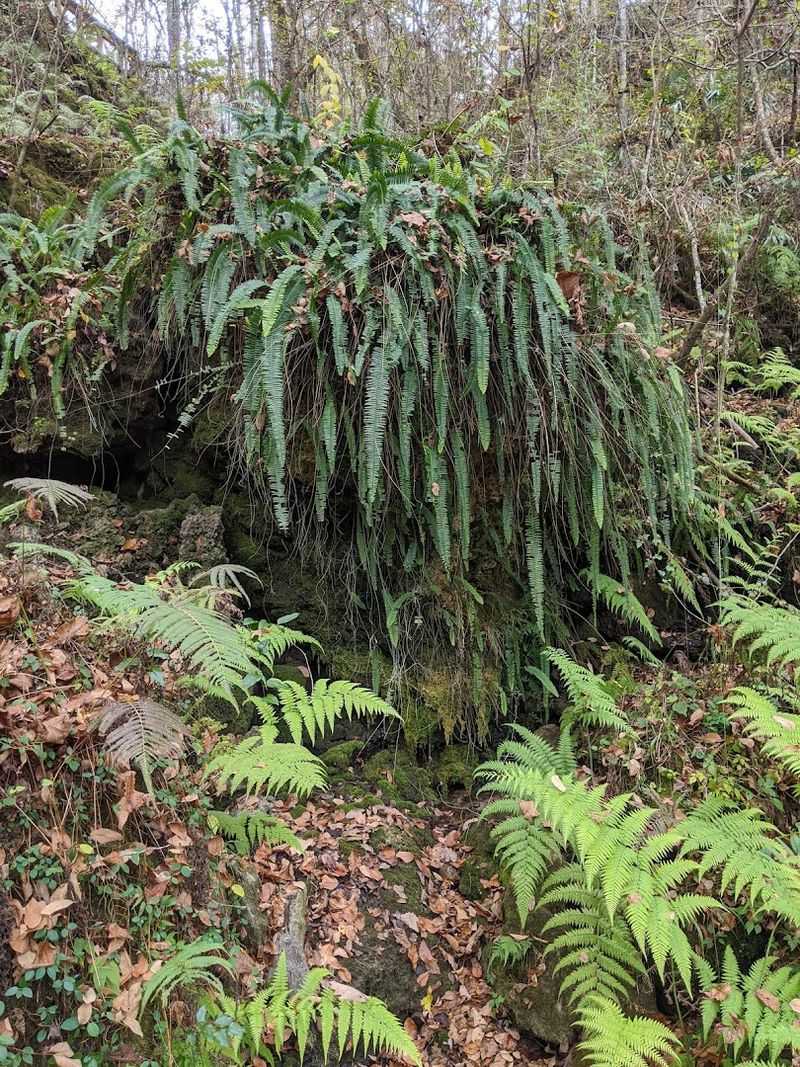
Geologists consider the exposed rock faces a textbook example of Florida’s sedimentary history. The limestone walls display distinct layers that formed over millions of years when this entire region lay beneath a shallow sea.
Sharp eyes can spot fossilized shells and marine organisms embedded in the rock, evidence of the ancient ocean that once covered the peninsula.
Educational signs along the staircase point out significant geological features and explain how each layer represents a different period in Earth’s history. The rock itself consists primarily of calcium carbonate, the compressed remains of countless sea creatures whose shells accumulated on the ocean floor.
This composition makes the limestone particularly vulnerable to dissolution by slightly acidic groundwater, which explains how the sinkhole formed.
Students and amateur geologists find the site valuable for understanding karst topography and the processes that shape Florida’s unusual underground landscape of caves and sinkholes.
Ferns, Vines, And Lush Greenery You Don’t Expect In Florida
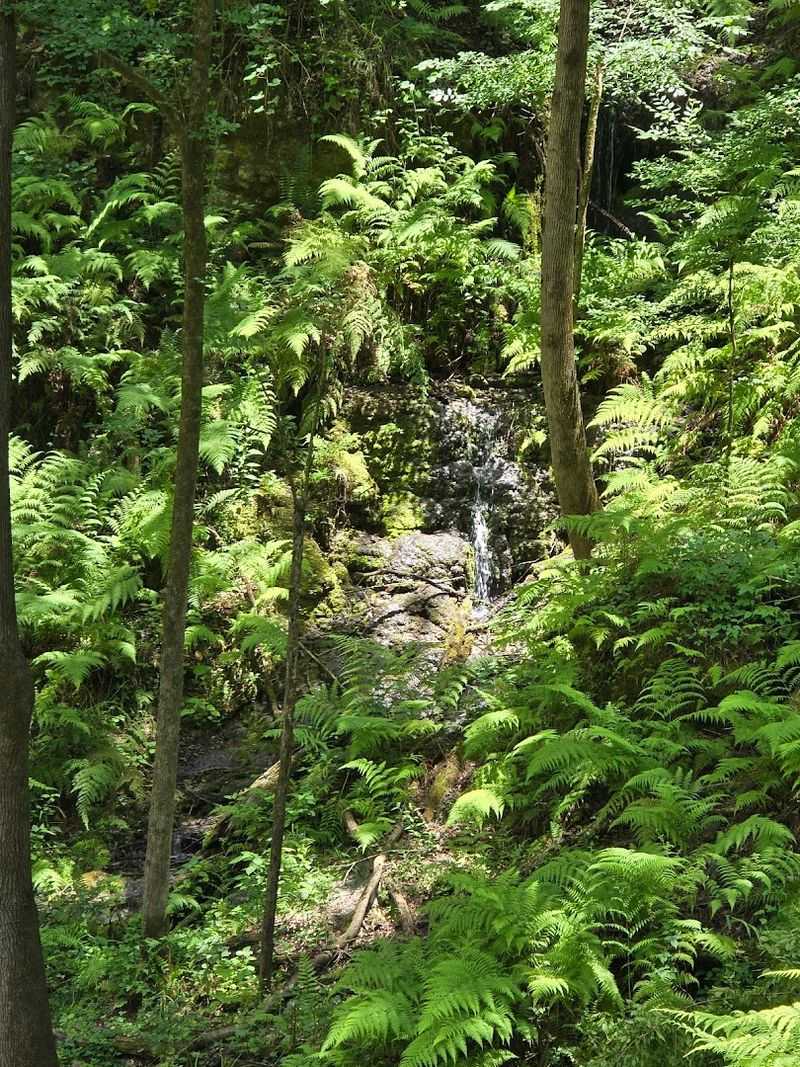
Botanical surveys have identified plant species in the sinkhole that grow nowhere else in the immediate region. Royal ferns spread their fronds across the lower levels, while resurrection ferns cling to every horizontal surface on the walls.
Vines drape from overhanging ledges, creating natural curtains of green that sway in the gentle air currents rising from below.
The vegetation density increases dramatically as you descend, with the bottom levels supporting the thickest growth. Many plants here represent relict populations, survivors from a time when Florida’s climate was cooler and wetter.
The sinkhole’s unique conditions allow these species to persist in isolation, protected from the hotter, drier environment that dominates the surrounding landscape.
Botanists occasionally visit to study these plant communities and understand how they maintain themselves in such a restricted habitat. The greenery provides habitat for various small animals and insects that also benefit from the cooler, moister conditions.
How The Sinkhole Formed Over Thousands Of Years

The formation process began long before humans arrived in Florida. Slightly acidic rainwater percolated through the soil and into the porous limestone bedrock, slowly dissolving the rock and creating underground voids.
Over thousands of years, these cavities grew larger as more water flowed through the system, carrying away dissolved limestone in solution.
Eventually, the roof of one particularly large underground chamber became too thin to support its own weight. The collapse happened suddenly, probably during a period of heavy rain that saturated the soil and added extra weight to the weakened limestone.
The result was the bowl-shaped depression we see today, with steep walls and a relatively flat bottom where sediment has accumulated.
Similar sinkholes exist throughout Florida and other regions with limestone geology, but few are as well-preserved or accessible as Devil’s Millhopper. The formation process continues today, though at an imperceptible rate.
A Boardwalk That Takes You Safely To The Bottom
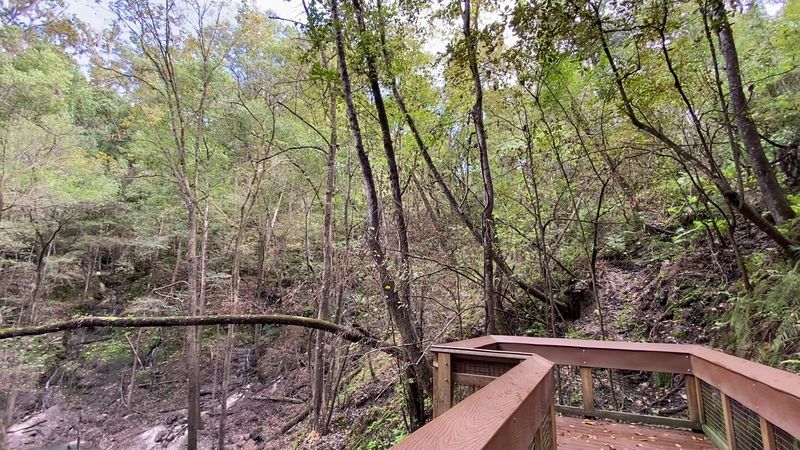
Park officials invested considerable resources in creating safe access to the sinkhole’s interior. The current boardwalk and staircase system replaced earlier, less sophisticated structures that required more caution to navigate.
Modern construction techniques ensure that the pathway remains stable and secure even during wet conditions when wood surfaces might become slippery.
Railings line both sides of the stairs, providing handholds for visitors who need extra support during the descent or climb. The landing platforms serve dual purposes as rest stops and observation points where interpretive signs explain the geology and ecology.
Engineers designed the structure to minimize environmental impact while maximizing visitor safety and experience.
Regular maintenance keeps the boardwalk in excellent condition, with park staff inspecting and repairing any issues promptly. The investment in infrastructure has made this geological wonder accessible to a much broader range of visitors than would otherwise be possible.
The Half-Mile Rim Trail With Sweeping Views
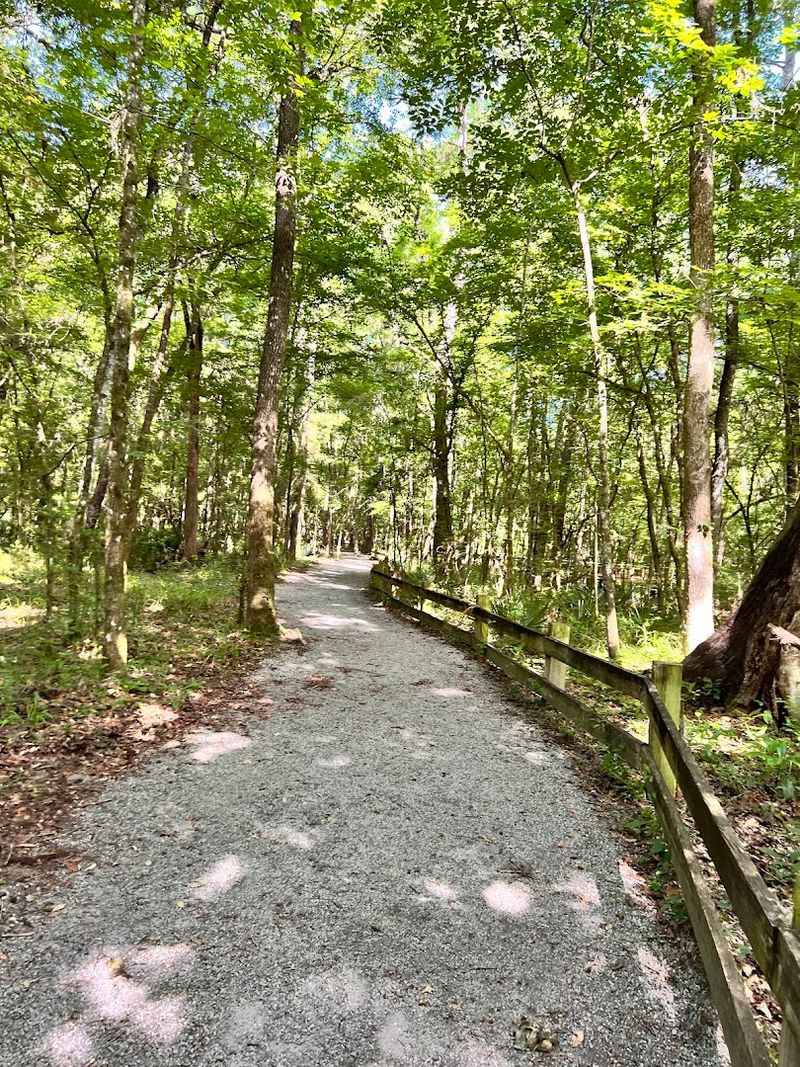
Visitors who prefer to avoid the staircase can still experience the park by walking the half-mile trail that circles the sinkhole’s rim. This relatively easy path winds through typical North Florida forest, offering occasional glimpses down into the depression through breaks in the vegetation.
Benches positioned at strategic intervals provide places to rest and contemplate the geological forces that created this landscape.
The trail crosses small bridges over streams that eventually flow into the sinkhole, demonstrating the watershed that feeds the system. Tree roots create natural obstacles in places, requiring walkers to watch their footing despite the trail’s generally level nature.
The path takes about 20 minutes to complete at a leisurely pace, though many people spend longer stopping at the various viewpoints.
Combining the rim trail with the descent into the sinkhole provides a comprehensive experience that takes roughly 45 minutes to an hour, not counting time spent at the visitor center.
Why It Feels Completely Different From The Forest Above
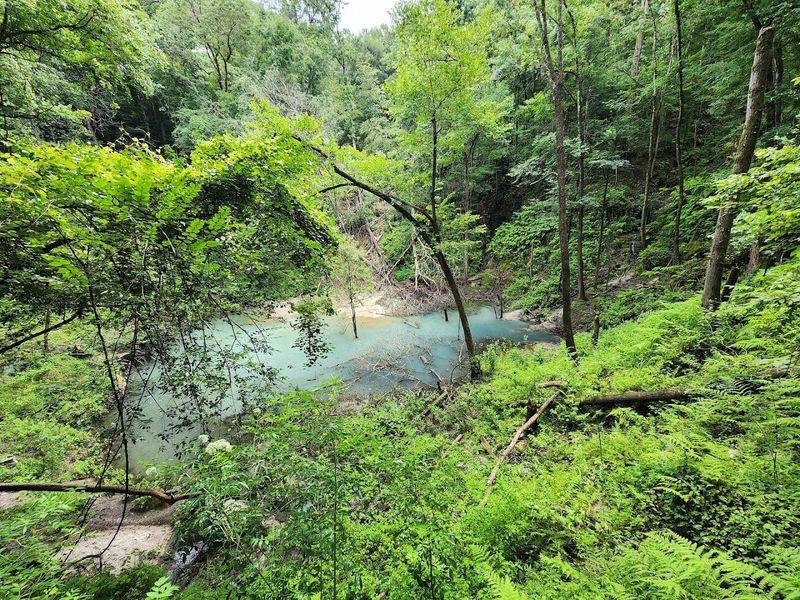
The contrast between the surface environment and the sinkhole interior creates a genuinely disorienting experience. Above ground, you walk through typical longleaf pine and oak forest with sandy soil and scattered undergrowth.
The moment you begin descending the stairs, that familiar landscape disappears and something completely unexpected takes its place.
Light levels drop as the walls rise around you, creating perpetual shade that supports the unusual vegetation. The air quality changes, becoming noticeably more humid and carrying different scents from the forest floor.
Even sounds behave differently in the enclosed space, with bird calls and rustling leaves taking on altered acoustic properties. Several visitors have mentioned feeling transported to a different state or even a different country entirely.
This dramatic transition happens within a matter of minutes and a few dozen vertical feet, making the experience feel almost magical despite having perfectly rational scientific explanations.