
Dig Through Ancient Desert Seafloor Sediment And Keep The Trilobite Fossils You Find At This Nevada Site
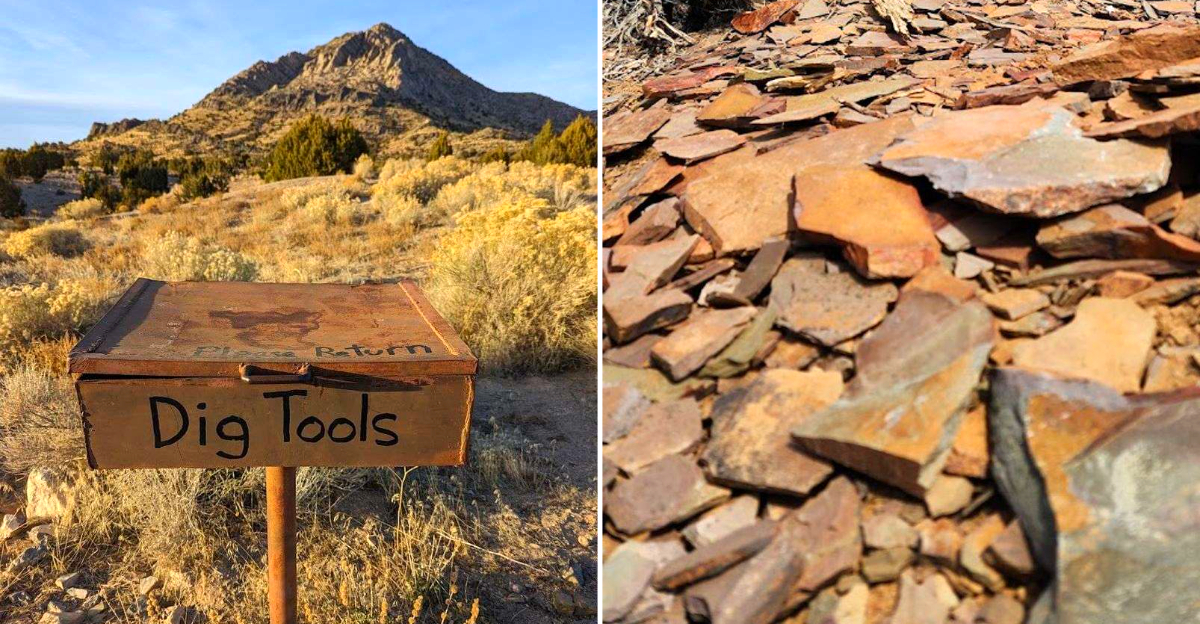
A rock can look completely ordinary until it cracks open and reveals something incredible. Hidden inside may be a fossil from a creature that lived more than five hundred million years ago.
The desert suddenly becomes a giant outdoor treasure hunt, and every swing of the hammer brings another chance to uncover the past.
Nevada turns fossil hunting into a hands-on adventure instead of a museum display. Dig through ancient ocean sediment. Search each layer carefully. Then keep the trilobites you uncover as proof of the day.
Some finds appear quickly, while others take patience and a sharp eye. That only makes the discovery more exciting. Dusty clothes and tired arms feel like a fair trade when a clear fossil finally appears in the stone.
This is not a quick photo stop. It is an adventure that puts history directly in your hands and gives the road trip a story worth repeating.
What Trilobites Are And Why Finding One Feels Incredible
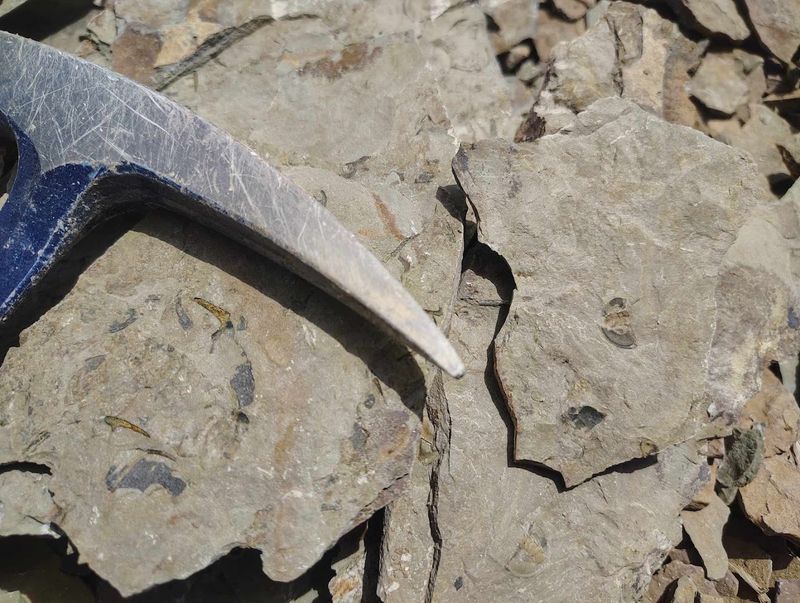
Long before dinosaurs roamed the earth, trilobites ruled the ancient seas. These hard-shelled marine arthropods lived for nearly 300 million years before going extinct, and their fossils are some of the most recognizable in the entire fossil record.
Finding one feels like holding a direct line to prehistoric life.
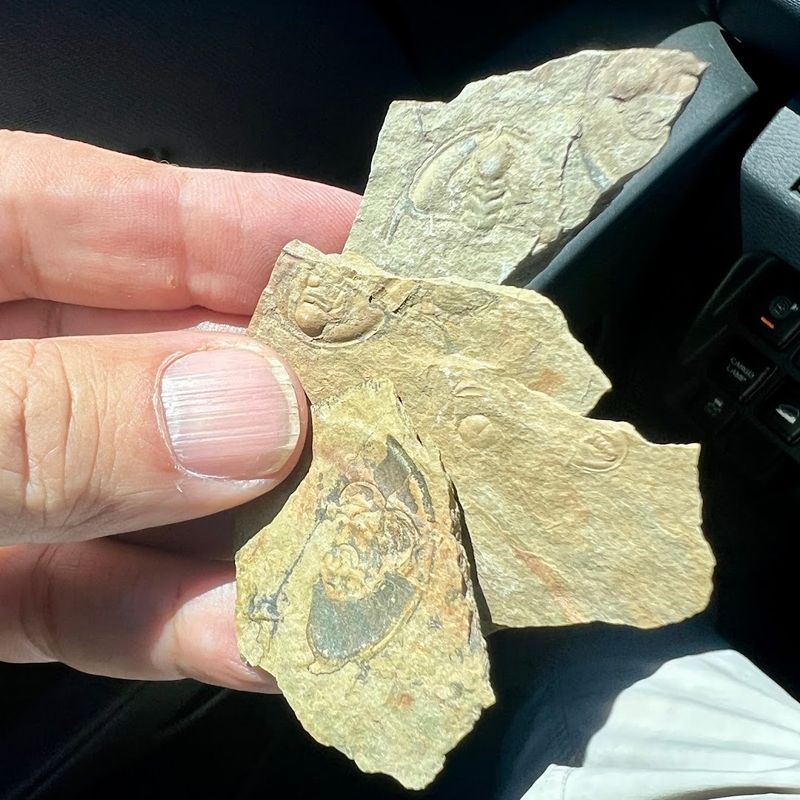
Trilobites had segmented bodies, a distinct head called a cephalon, and compound eyes that were surprisingly advanced for their time. Most fossils you find at Oak Springs Trilobite Area are fragments, often just the head shield, but even a partial piece is genuinely exciting.
You are holding something that formed on the bottom of a shallow sea hundreds of millions of years ago.
The site is in Lincoln County, Nevada, where ancient seafloor sediment was slowly lifted and exposed by geological forces over millions of years. That shale you are breaking open was once soft mud on an ocean floor.
The thrill of discovery is real here, and it does not matter if you are a first-time fossil hunter or someone who has done this before. Every crack of a rock brings a fresh shot of anticipation. That feeling is honestly hard to beat.
Finding The Site And Getting Started
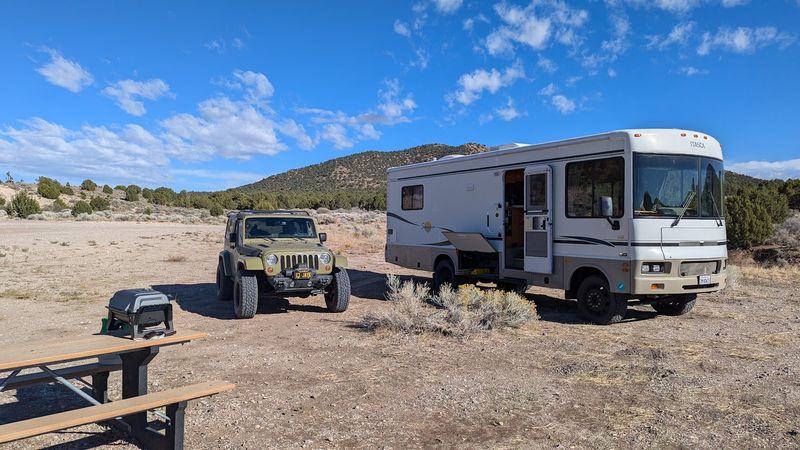
The drive out to this site is part of the experience. Oak Springs Trilobite Area is located at 93 U.S., Caliente, NV 89008.
Follow the highway east of Caliente through Lincoln County’s high desert terrain. The road coming in from the east is packed dirt and gravel, making for a smooth and easy approach.
When you pull into the parking area, you will find it spacious and well-maintained. Clean restrooms are available right at the lot, which is a genuine convenience when you are out in a remote area. There are also a few picnic tables where you can eat lunch before or after your dig.
A helpful information board stands at the trailhead, giving you background on the geology of the area and showing pictures of the types of fossils you might find. You can compare your finds to those images to identify what species of trilobite you uncovered.
The trail leading to the shale fields is short and clearly marked, so you will not have trouble finding your way. The whole setup feels thoughtful and visitor-friendly, which makes the experience comfortable even if you have never been fossil hunting before.
Plan to spend at least a couple of hours to really give yourself a fair shot at finding something good.
The Digging Tools Provided On-Site Make Everything Easier
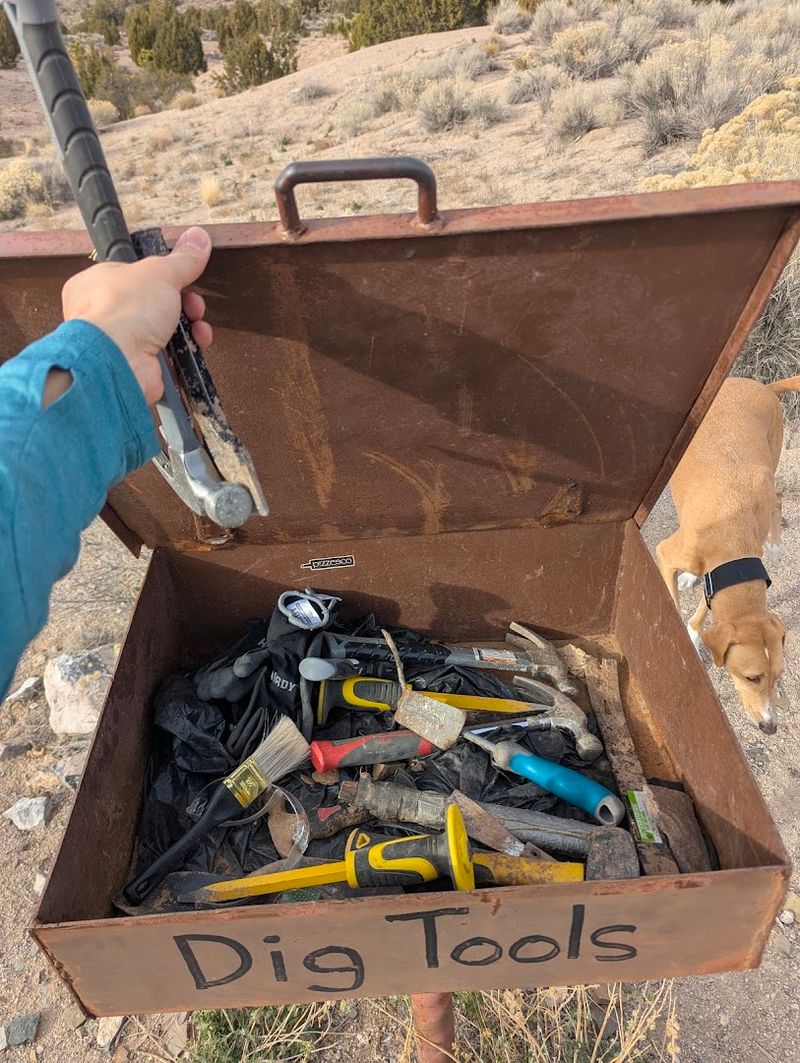
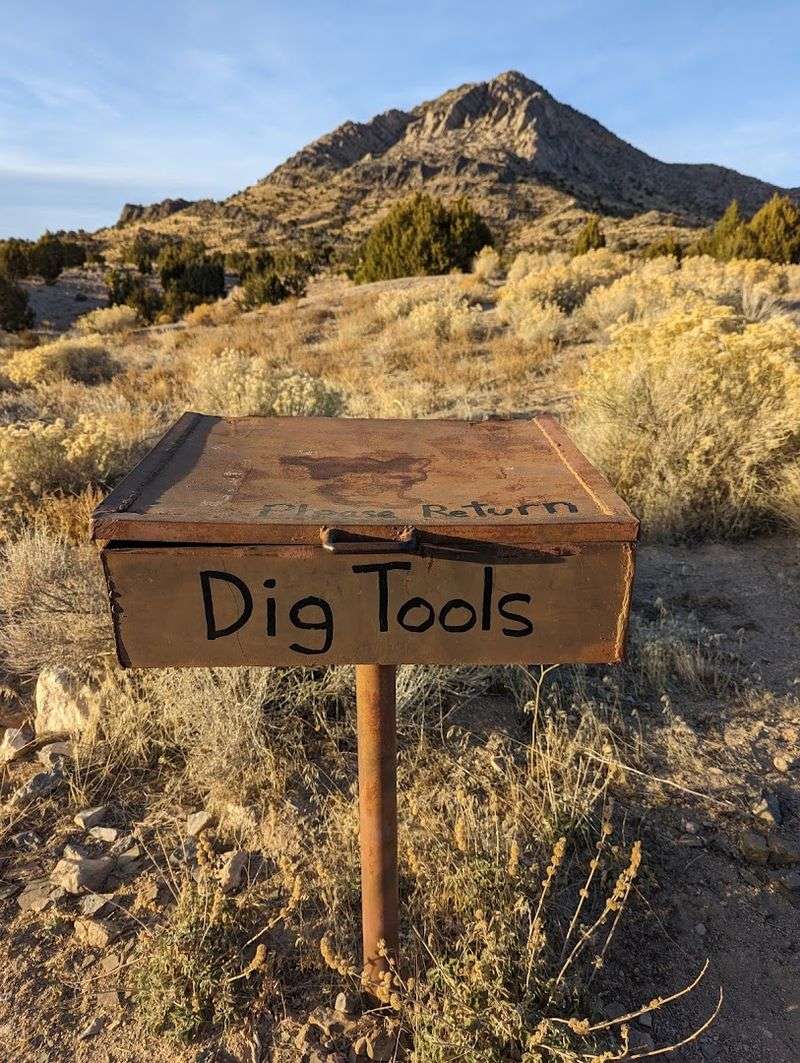
One of the most practical and pleasant surprises at Oak Springs Trilobite Area is the small metal box sitting right at the trailhead. Inside, you will find rock hammers and basic tools that visitors are welcome to borrow during their visit.
Just remember to return them when you are done so the next person has the same advantage.
These tools make a real difference when you are working through shale. Shale splits along natural layers, and a good hammer helps you crack pieces apart cleanly to expose whatever might be hiding inside.
Without a tool, you are mostly limited to sorting through loose surface pieces, which can still produce results but limits your options significantly.
If you have your own rock hammer or chisel, bring it along. Experienced fossil hunters often recommend coming prepared with your own gear, especially a small brush to sweep away dust and debris after splitting a rock. Gloves are also worth packing since shale edges can be sharp.
Nevada summers get hot, so a hat and plenty of water are non-negotiable. The Bureau of Land Management manages the site and provides basic tools to help visitors enjoy a rewarding experience.
You will appreciate the small effort they have made to set you up for success right from the start.
How To Search The Shale Fields Like A Pro
Seeing the shale fields for the first time can feel a little overwhelming. There are piles of broken rock in every direction, and it is not immediately obvious where to start.
The best approach is to slow down, pick up individual pieces of shale, and look closely at both flat surfaces after splitting them apart.
Your eyes need time to adjust to what you are looking for. Trilobite fossils often appear as slightly raised or impressed shapes on the rock surface, sometimes with a faint sheen that stands out against the surrounding stone.
Fern and leaf fossils are more common and easier to spot, so finding those first helps calibrate your eye for what fossil material looks like in this specific shale. Work through the existing piles before digging into fresh material.
Other hunters have already done some of the splitting work, and a good fossil can easily be hiding in a discard pile. Mark your trail back to the path before you wander too far into the field, since the landscape can look surprisingly uniform once you are deep in the digging area.
Patience genuinely pays off here.
Some visitors find pieces within minutes, while others spend a full hour before spotting their first fragment. Either way, the process itself is engaging and surprisingly meditative once you get into a rhythm. Keep going and trust the shale.
You Get To Keep Every Fossil You Find Here
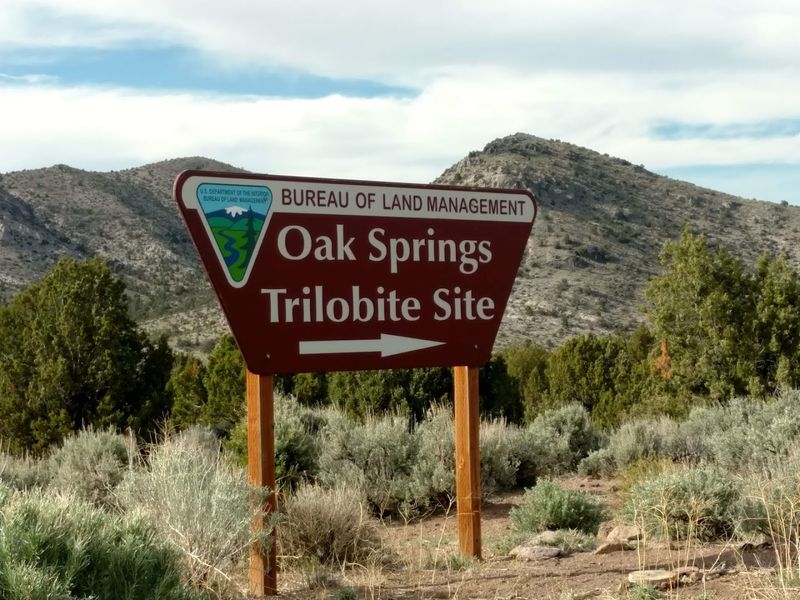
This is the detail that makes Oak Springs Trilobite Area genuinely special compared to many other fossil sites across the country. You are legally allowed to keep the fossils you find here for personal use.
That means the trilobite you crack out of a rock goes home with you as a real, tangible piece of prehistoric history.
The Bureau of Land Management permits casual collection of reasonable amounts of common invertebrate fossils for personal, noncommercial use. That is a meaningful distinction.
You are not just looking at fossils behind glass or watching someone else dig. You are the one doing the work, and you get the reward.
Visitors who have found even small fragments describe the feeling as genuinely unforgettable. Holding something that formed over 500 million years ago, something you personally dug out of the Nevada earth, carries a weight that photographs simply cannot capture.
The site asks that you take only what you will personally use and appreciate, leaving enough behind so future visitors have the same opportunity. That is a reasonable and respectful ask.
A partial trilobite head on your desk becomes a daily reminder of uncovering ancient ocean life in the Nevada desert. That is a pretty remarkable souvenir.
Camping Right At The Site For A Full Fossil Hunting Experience
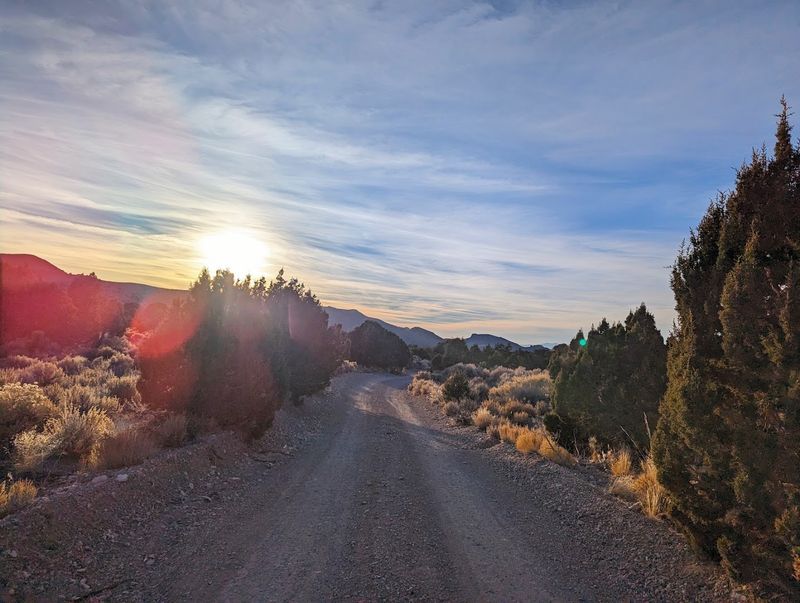
A quick day trip is great, but spending the night at Oak Springs Trilobite Area opens up a completely different kind of experience. The site is on BLM land, which means free dispersed camping is allowed in the area.
You can set up camp, fall asleep under an open Nevada sky, and wake up ready to dig again first thing in the morning.
The terrain around the main parking area is largely open desert with juniper forest nearby. Most of the surrounding boondock sites are better suited for solar setups and open views compared to the more heavily forested spots in the region.
If you are traveling with an RV or a tent, the flat ground near the site works well for an overnight stay.
There are no hookups or developed campground facilities, so you need to be self-sufficient. Bring enough water for cooking, drinking, and washing up. A good cooler, extra food, and basic first aid supplies are smart additions to your packing list.
The restrooms at the parking area are clean and functional, which is more than you get at most free camping spots. Spending an evening here while the sun sets over the desert hills gives the whole trip a slower, more immersive quality.
You are not just passing through. You are actually living in the landscape for a little while, and that changes how you see the place entirely.
The Geology Behind The Ancient Seafloor You Are Standing On
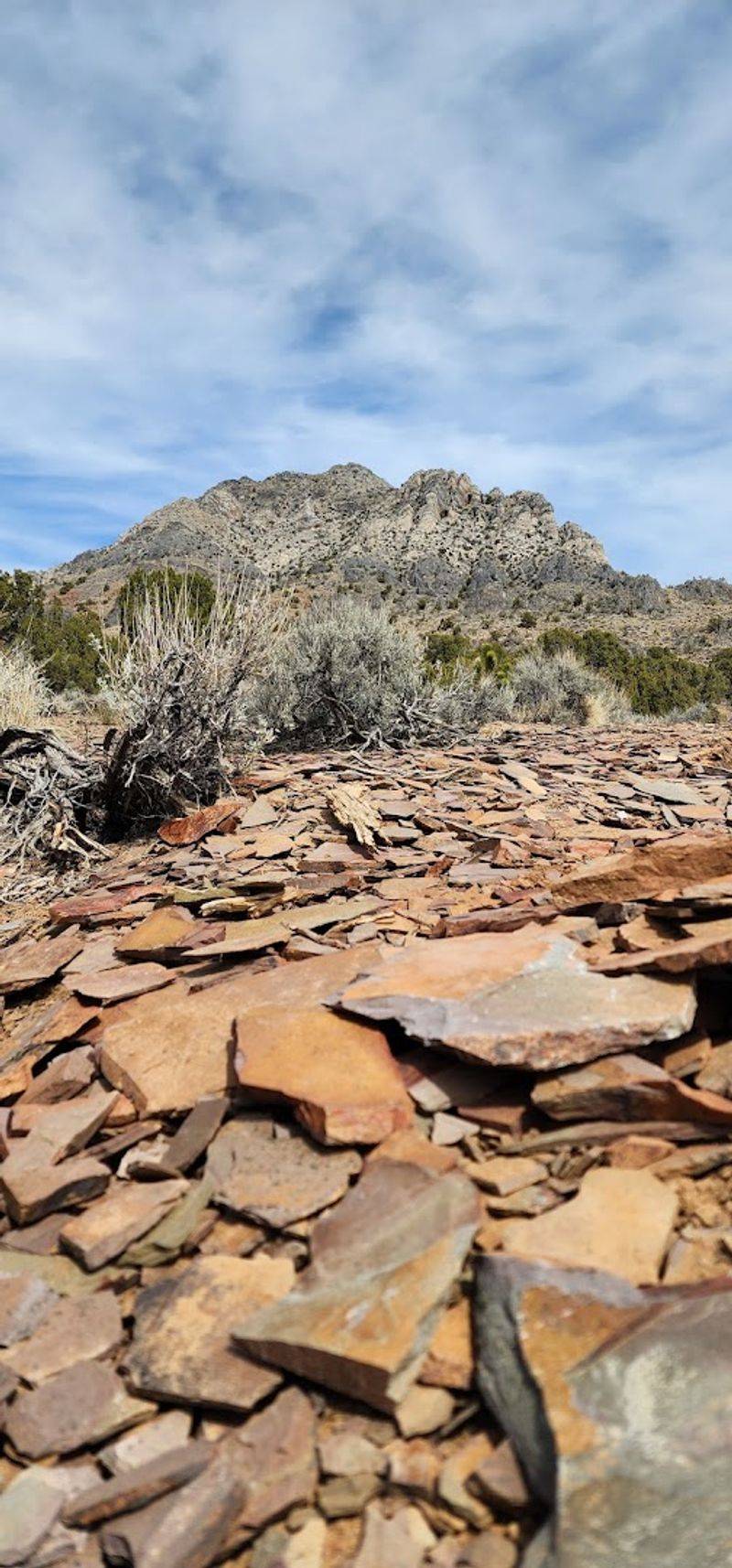
Standing in the middle of the Nevada desert, it is genuinely hard to picture the area as a shallow tropical sea. About 500 to 540 million years ago, during the Cambrian period, much of the western United States lay beneath a warm, shallow ocean.
Trilobites thrived there, eventually sinking into seafloor mud that hardened into the shale you crack open today.
Over hundreds of millions of years, tectonic activity slowly pushed those ancient seafloor sediments upward. Erosion then stripped away the overlying material, exposing the fossil-rich shale layers at the surface.
The result is a place where Cambrian-era marine life sits just inches below the desert floor, waiting to be found by anyone willing to look carefully.
The information board at the trailhead does a solid job of explaining this geological history in plain language. Reading it before you start digging gives you a much richer sense of what you are actually doing out there.
You are not just breaking rocks for fun. You are peeling back layers of time and reading a story written in stone over half a billion years ago. Nevada has many remarkable geological sites, but few combine easy access, educational value, and hands-on discovery so naturally.
The Fascinating Fossil Stop Your Road Trip Needs
Not every stop on a road trip needs to be a national park or a famous landmark to be worth your time. Oak Springs Trilobite Area earns a place on your itinerary with easy access, real discoveries, and a hands-on experience few attractions can match.
You do not need special knowledge or expensive equipment to have a great time here.
The site is free to visit, the trail is short and well-marked, the restrooms are clean, and the fossils are real. You can call ahead at or check the BLM website for updated information before your visit.
Located near Caliente in Lincoln County, Nevada, the site is a manageable detour from the main highway and pairs well with other stops across the region.
Families, solo travelers, and curious adults who have never hunted fossils before all tend to leave with a smile. The hunt is exciting, the scenery is beautiful, and taking home ancient ocean life makes the stop memorable long after you leave.
Oak Springs Trilobite Area proves extraordinary discoveries can be found right off the road. You only need to stop, look closely, and take time to uncover them.