
Dirt-Cheap Day Trips In Massachusetts That Are Worth Every Penny This Spring
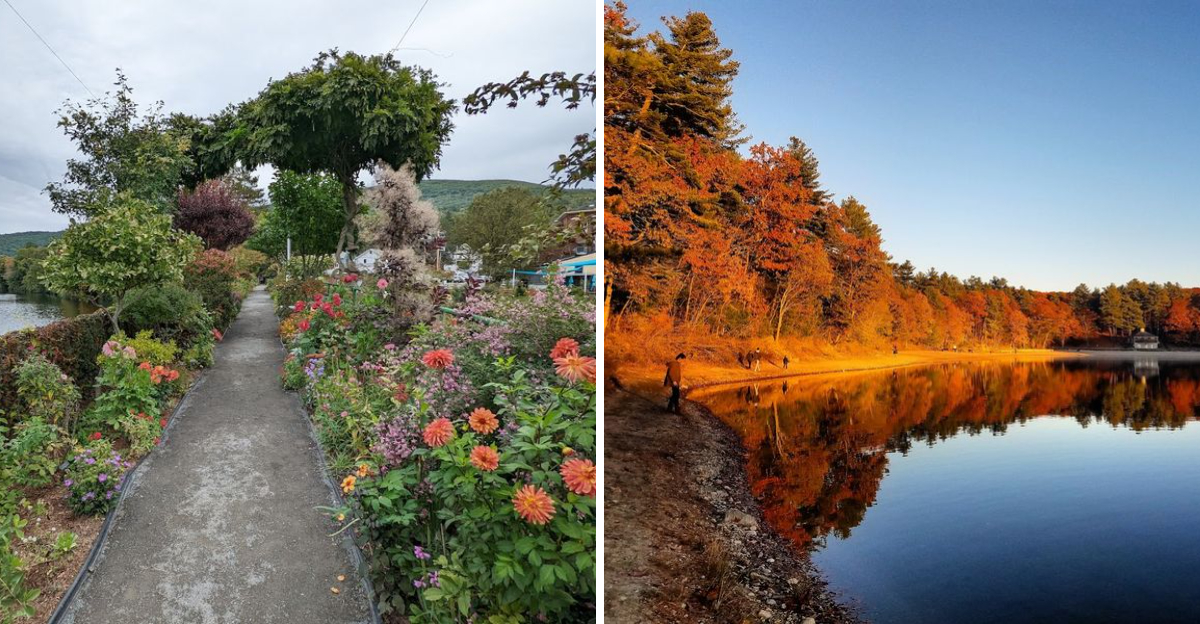
Spring in Massachusetts is free. Well, almost.
The waterfalls are running. The wildflowers are out.
The trails are dry enough to actually enjoy and the whole state looks like it was professionally lit for a photo shoot. The best part?
You do not need to spend much to experience any of it. Massachusetts is absolutely packed with day trips that cost next to nothing and deliver memories that last considerably longer than the gas money it took to get there.
Pack a snack, grab your jacket, and get ready to fall completely in love with this state all over again for basically nothing.
1. Doane’s Falls, Royalston
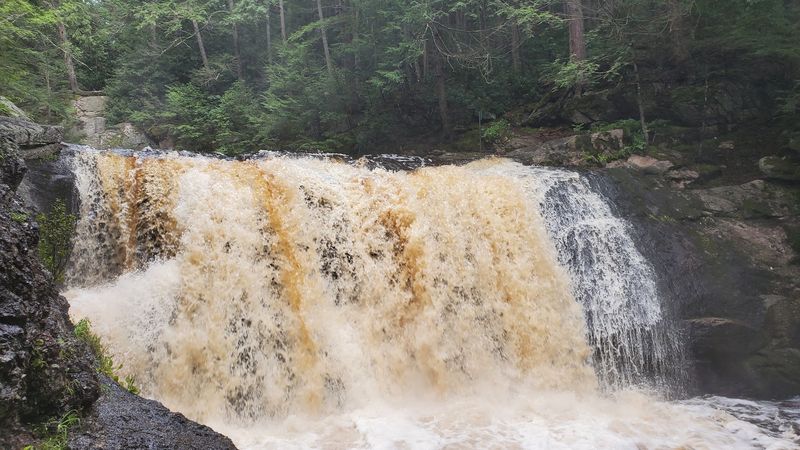
Few places in Massachusetts reward you so generously for so little effort as Doane’s Falls in Royalston in the remote forests of North Central Massachusetts.
The trail is only about half a mile long, completely free to walk, and it connects three separate waterfalls that each have their own distinct personality.
The first drop is dramatic and wide, the kind of sight that makes you stop mid-step and just stare for a moment. The second is quieter and wrapped in ferns, and by the time you reach the third, you will genuinely wonder why this place does not have a long line out front.
Spring is the best season to visit because snowmelt from the surrounding hills sends extra water rushing through Lawrence Brook, turning every cascade into something close to spectacular.
Crowds are almost nonexistent here even on warm weekends, which makes the whole experience feel like a private discovery. Wear waterproof shoes since the trail can be muddy and bring a camera because no phone screen will do this place justice.
Royalston sits near the New Hampshire border, so pair the visit with a scenic drive through the backroads for a full day of free beauty.
2. Walden Pond, Concord
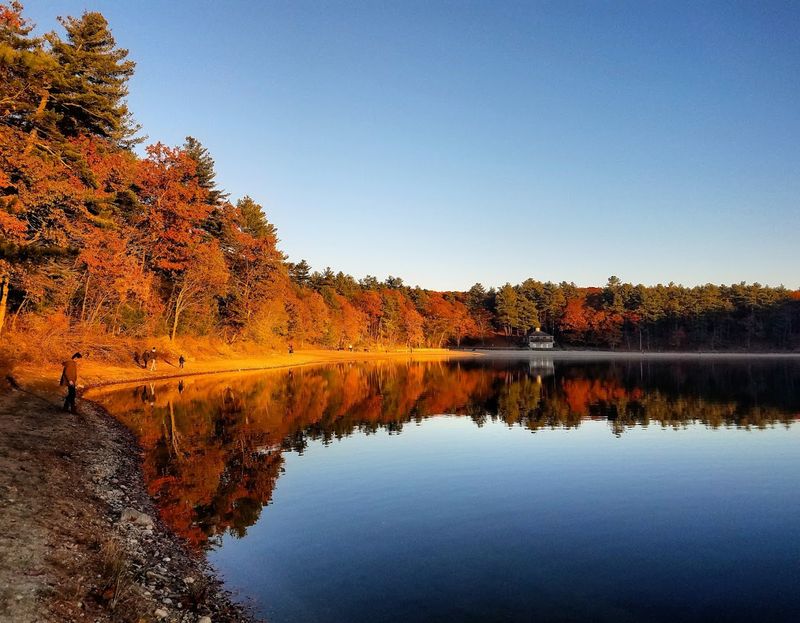
Henry David Thoreau spent two years here writing one of the most influential books in American history, and Walden Pond in Concord, Massachusetts has lost none of the quiet magic that drew him to it in the first place.
The walking trail around the entire pond is free, well-maintained, and just over a mile and a half long, making it an easy and deeply satisfying loop for all fitness levels.
Spring is a particularly moving time to visit because the trees are just leafing out, the water takes on a striking blue-green color, and the whole place feels like it is waking up slowly and intentionally.
There is a small parking fee, typically a few dollars per vehicle, but the experience itself costs nothing beyond that. A replica of Thoreau’s original cabin stands near the parking area and is free to visit.
Swimmers are welcome once the weather warms up, but even in early spring the pond is worth visiting just for the atmosphere and the birdsong. The Concord area is also loaded with historic sites, so you can easily build a full day around this one stop without spending much at all.
3. Bridge Of Flowers, Shelburne Falls
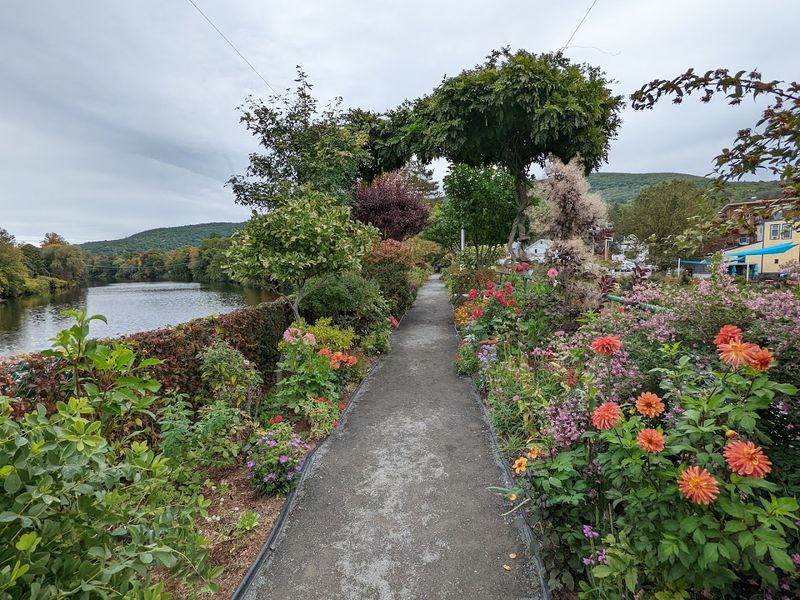
Imagine walking across a bridge where every railing, every ledge, and every inch of surface is covered in living, blooming flowers, and you start to get a sense of what the Bridge of Flowers in Shelburne Falls, Massachusetts actually feels like in person.
This former trolley bridge was converted into a public garden in 1929 by the local women’s club, and it has been maintained by volunteers ever since. Crossing it is completely free, open to anyone, and available from April 1st through the frost of late fall.
Spring is when the bridge truly earns its name, as tulips, daffodils, pansies, and early perennials burst into color all at once. The Deerfield River flows below, adding a soundtrack of moving water to the visual spectacle.
Shelburne Falls itself is a charming small town in the Pioneer Valley region of Western Massachusetts with independent shops, a glacially carved pothole park nearby called the Glacial Potholes, and a relaxed pace that feels like a genuine step back in time.
Plan to spend at least two hours here to soak in the town, cross the bridge a few times, and grab a coffee at one of the local cafes before heading home with a memory that costs almost nothing to make.
4. Parker River National Wildlife Refuge, Newburyport
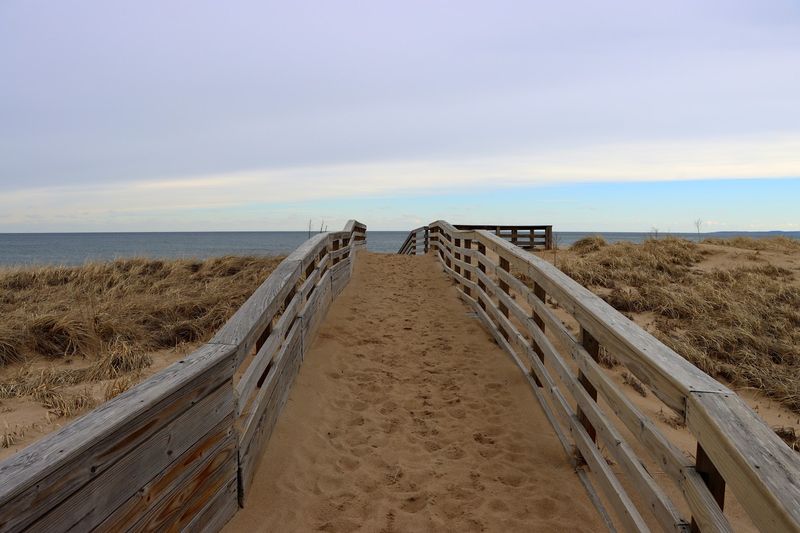
Plum Island sits just off the coast near Newburyport in northeastern Massachusetts, and in spring it transforms into one of the most alive natural places in all of New England.
Parker River National Wildlife Refuge covers most of the island and protects miles of barrier beach, freshwater ponds, and salt marsh that serve as critical stopover habitat for hundreds of species of migratory birds moving north each spring.
Birders come from across the region for a chance to spot shorebirds, waterfowl, raptors, and songbirds all in a single morning walk. Even if you have never picked up a pair of binoculars in your life, the sheer volume and variety of wildlife here is genuinely thrilling.
Entry requires a small vehicle fee, typically around five dollars, which is an outstanding value for what you get. The refuge has multiple walking trails, observation platforms, and interpretive signs that make the experience accessible and educational for all ages.
Spring visits are particularly special because the beach crowds have not yet arrived, meaning you can walk long stretches of pristine Atlantic shoreline in near total solitude. Bring a snack, pack layers since coastal weather can be unpredictable, and give yourself at least half a day to truly appreciate everything the refuge has to offer.
5. Bartholomew’s Cobble, Ashley Falls
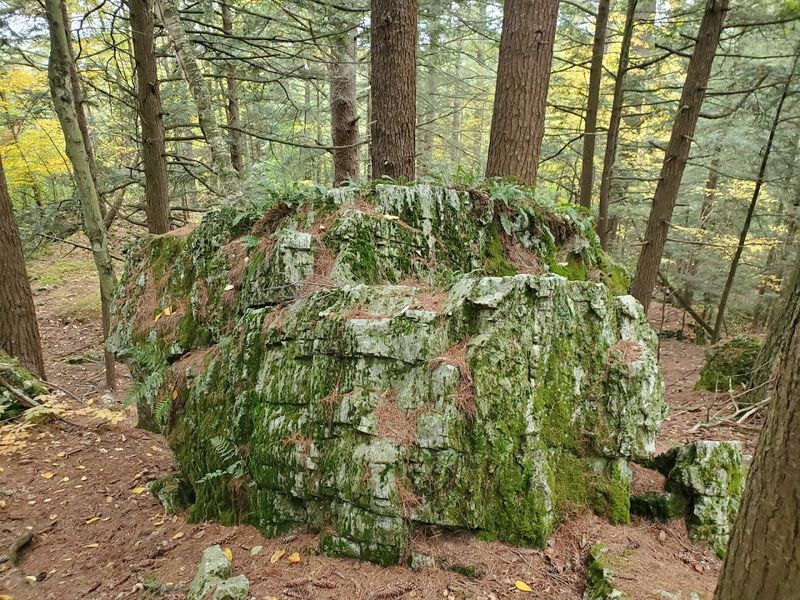
Way out in the far southwestern corner of Massachusetts, where the state quietly brushes up against Connecticut, sits one of the most botanically remarkable places in the entire country.
Bartholomew’s Cobble in Ashley Falls is a National Natural Landmark famous for its ancient limestone and marble rock outcroppings, its wildflower-covered meadows, and its extraordinary collection of native ferns, the most diverse in North America.
Spring is the ideal time to visit because the wildflowers carpet the meadows in waves of color, the Housatonic River runs full and fast below the trails, and the whole landscape feels impossibly lush after a long Massachusetts winter.
There is a small admission fee, usually around five dollars for adults, which funds the conservation work that keeps this place in such remarkable condition. The trail network is well-marked and manageable for most visitors, with options ranging from easy riverside walks to slightly more challenging upland loops.
The Cobble sits within the Berkshires region, so pairing this visit with a drive through the surrounding countryside adds even more value to the trip. Pack a picnic because the meadow views along the Housatonic make for one of the most scenic lunch spots in all of Massachusetts, bar none.
6. Minute Man National Historical Park, Concord And Lexington
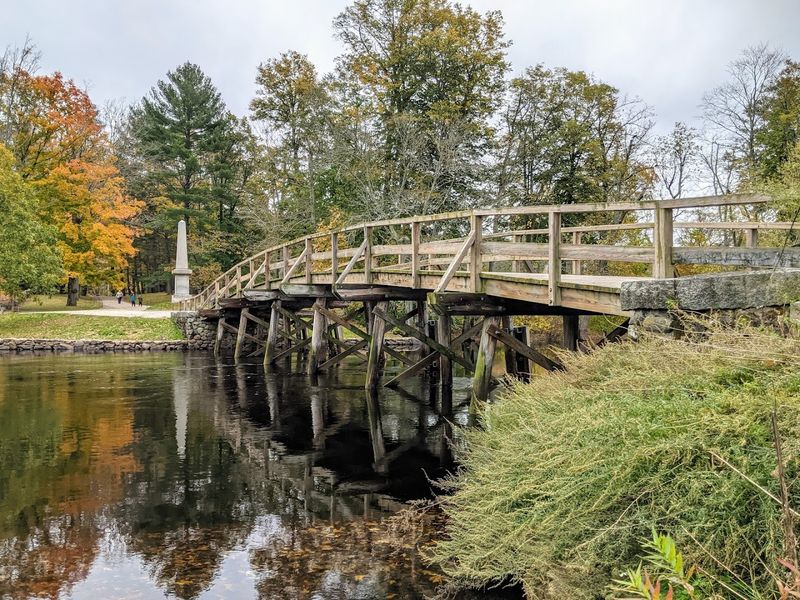
On April 19, 1775, farmers and tradesmen with muskets faced the most powerful military force in the world on a narrow road between Concord and Lexington, Massachusetts, and the world changed forever.
Minute Man National Historical Park preserves that road, those fields, and those moments in a way that feels genuinely moving rather than simply educational. Entry to the park is completely free, which makes it one of the best deals in the entire American national park system.
Spring is the most atmospheric time to visit, particularly around Patriots Day on the third Monday of April, when the park hosts costumed rangers, tactical demonstrations, and commemorative events that bring the history to life in a vivid and memorable way.
The Battle Road Trail stretches about five miles between the two towns and passes through forests, meadows, and past several original 18th-century structures that have stood here for nearly 250 years. Walking it in spring, with apple trees blooming and birds singing, creates a layered experience that is both peaceful and profound.
The visitor center at the Concord end of the park offers free exhibits, a short film, and helpful rangers who can point you toward the most significant spots along the trail. Bring good walking shoes and a sense of history, and plan to spend at least three hours doing the experience justice.
7. Peaked Mountain, Monson
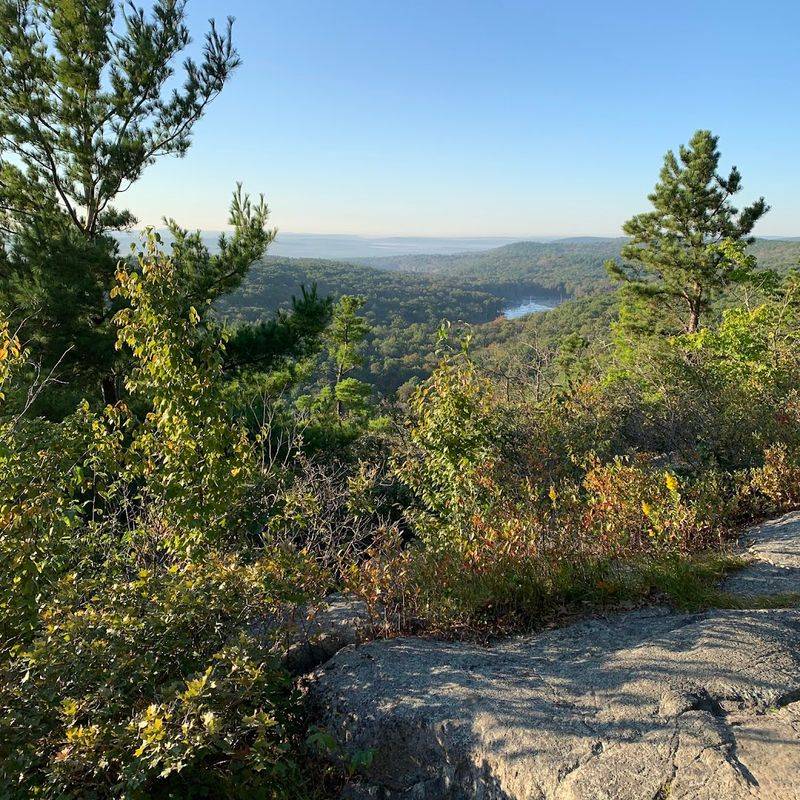
Central Massachusetts does not always get the attention it deserves from outdoor enthusiasts, but Peaked Mountain in Monson makes a compelling case for looking beyond the Berkshires and the coast.
The hike to the summit is short, free, and accessible to most fitness levels, covering roughly two miles round trip through a peaceful hardwood forest that is particularly beautiful in early spring when the understory is still open and the light filters all the way to the ground.
At the top, the reward is a bare granite summit with genuinely impressive 360-degree views over the rolling hills of Central Massachusetts. On a clear spring day you can see for miles in every direction, and the feeling of standing up there with almost no one else around is quietly spectacular.
There is no admission fee, no parking charge, and no crowds to navigate. The trailhead is easy to find off Peaked Mountain Road in Monson, a small town in Hampden County about 20 miles east of Springfield.
Spring wildflowers appear along the lower sections of the trail in May, adding color and interest to the forested approach. Pack water, wear layers since summit winds can surprise you, and plan the visit for a clear day to get the full impact of those views that almost nobody outside the immediate area seems to know about yet.
8. Crane Beach, Ipswich
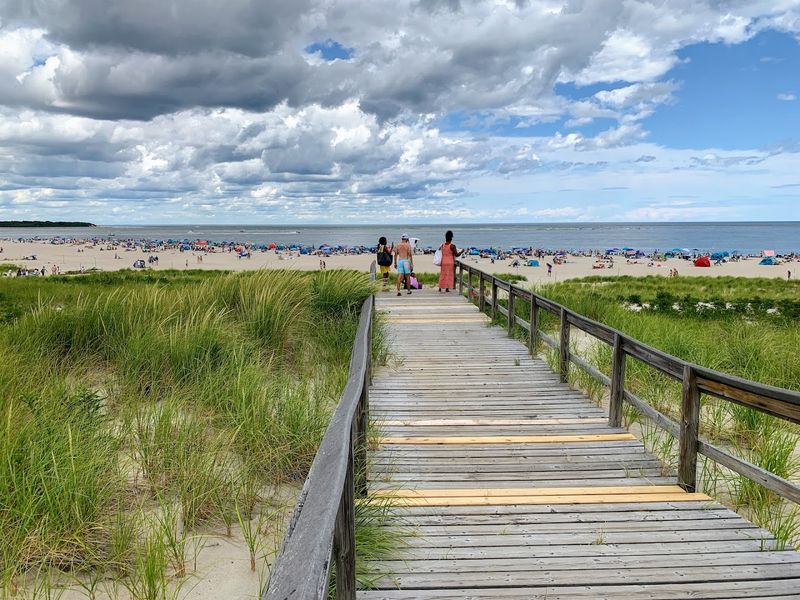
Crane Beach in Ipswich, Massachusetts is the kind of place that makes people question why they ever bother going anywhere else for a beach day on the North Shore.
The beach stretches for nearly five miles along the Atlantic coast, backed by rolling dunes that reach heights of over 30 feet in some places, making it one of the most visually dramatic shorelines in New England. It is managed as part of the Crane Wildlife Refuge, which means the surrounding landscape is protected and wild in a way that most public beaches simply are not.
Spring is arguably the best time to visit because parking fees drop significantly compared to the summer peak, the beach is nearly empty on weekdays, and the light has that particular golden quality that photographers chase all season long.
The nature preserve behind the dunes has additional walking trails through pine forest and meadow habitats that are worth exploring after a walk along the shore. Wildlife is abundant in spring, with shorebirds and raptors moving through regularly.
Ipswich itself is a beautiful historic town with a downtown full of colonial-era architecture, so combining the beach visit with a stroll through town makes for a full and satisfying day that costs very little from start to finish. Arrive early on weekends to secure a good spot before the crowds build.
9. Arnold Arboretum, Boston
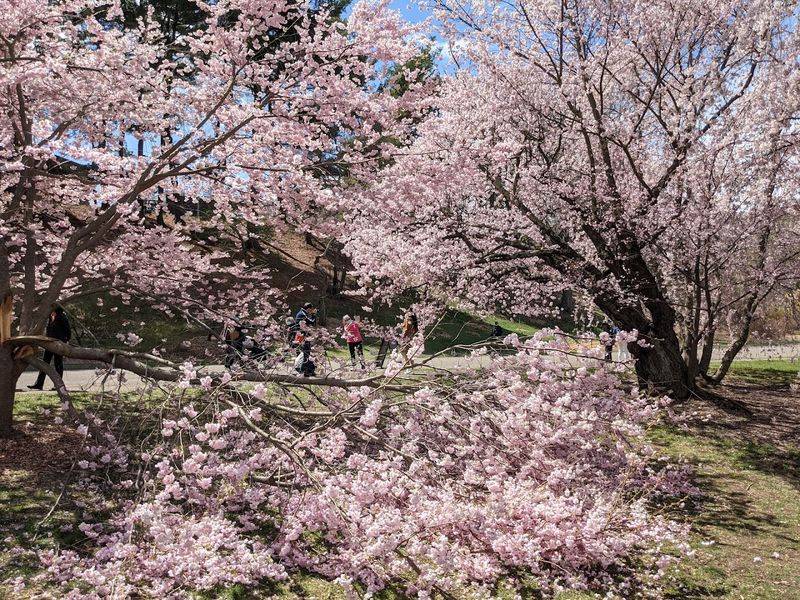
Right on the edge of Boston, there is a 281-acre living museum of trees and plants that most people who do not live nearby have never heard of, and that is a genuine shame because it is one of the most spectacular free experiences in the entire state.
Arnold Arboretum at 125 Arborway in the Jamaica Plain neighborhood is operated by Harvard University and has been open to the public at no charge since 1872. Spring is when the whole place reaches peak glory, with magnolias, flowering cherries, and hundreds of lilac varieties all blooming in overlapping waves from April through May.
Lilac Sunday, held each year on the second Sunday in May, draws thousands of visitors who come specifically to walk among the arboretum’s famous lilac collection while it is at full bloom. The event is completely free and has been a Boston spring tradition for well over a century.
The arboretum’s rolling hills and winding paths make it feel far larger and wilder than its urban location would suggest. Bring a picnic blanket and find a spot on the grass under a blooming cherry tree for a spring afternoon that costs absolutely nothing.
Parking is available on nearby streets, and the arboretum is also accessible via the MBTA Orange Line at Forest Hills station, making it easy to reach without a car.
10. Quabbin Reservoir, Belchertown
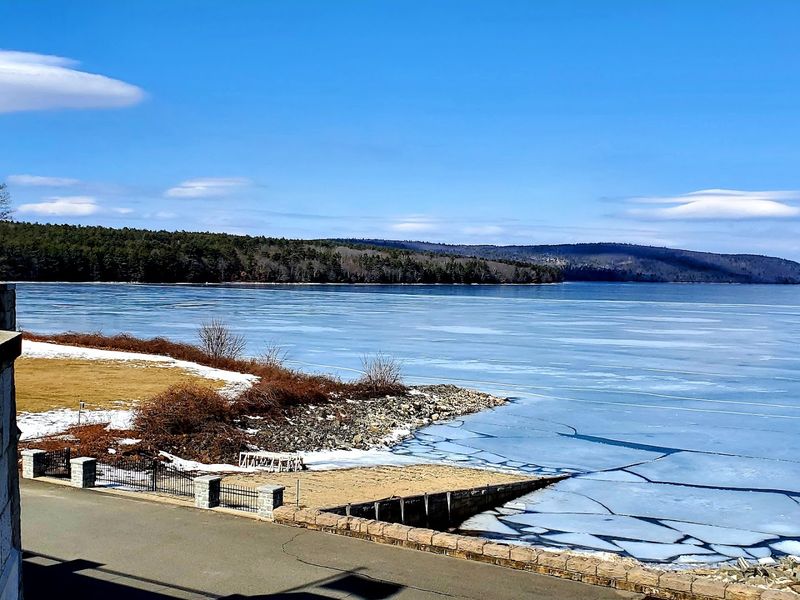
There is a quiet strangeness to the Quabbin Reservoir that makes it unlike any other place in Massachusetts, and once you know its history, every visit takes on an extra layer of meaning.
The reservoir was created in the 1930s by flooding four towns, including Dana, Enfield, Greenwich, and Prescott, to supply drinking water to the Boston metropolitan area. Today, old stone walls and cellar holes from those vanished communities still run through the surrounding forest, turning a simple nature walk into something that feels closer to an archaeological expedition.
Entry to the Quabbin Park area near Belchertown in Central Massachusetts is completely free, and the views of the reservoir from the observation tower and the various shoreline access points are breathtaking in spring when the water is high and the forest is just beginning to turn green.
Bald eagles nest here in significant numbers, making it one of the best and most accessible places in New England to see these birds up close. Spring mornings are the best time to spot them soaring over the open water or perched in tall trees along the undeveloped shoreline.
The visitor center near the Winsor Dam entrance offers free exhibits about the reservoir’s history and ecology, and the staff are genuinely enthusiastic about helping visitors get the most out of their time here. Bring binoculars and comfortable shoes, and plan to stay longer than you think you will need.