
Discover Incredible Giant Sculptures Inside This Florida Park
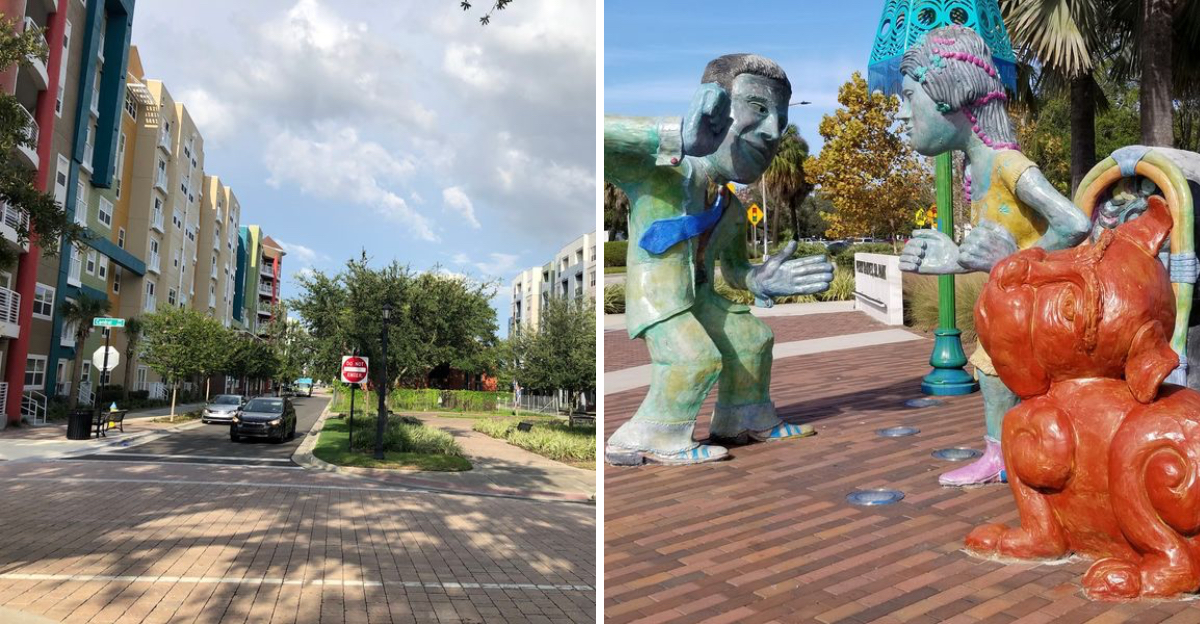
Giant musicians frozen mid-song greet you before the real attractions begin inside this Florida park. Concrete figures rise nine feet tall, caught mid-twist like the party never stopped.
Murals along a walkway shift and blink as you pass, faces from a century-old block waking up in front of you.
Florida keeps history written into the ground here, spelled across ribbons of colorful pavement. Skateboarders carve through a bowl older than most of their parents.
A fountain lights up after dark and dances to music from an era that once ruled these streets, kids racing into the spray.
This quieter corner sits nearby, built from bronze and aluminum, honoring names most visitors never learn.
Start mapping a visit, because the real story clicks once you’re standing in the middle of it.
The Gateway Sculptures That Stop You In Your Tracks
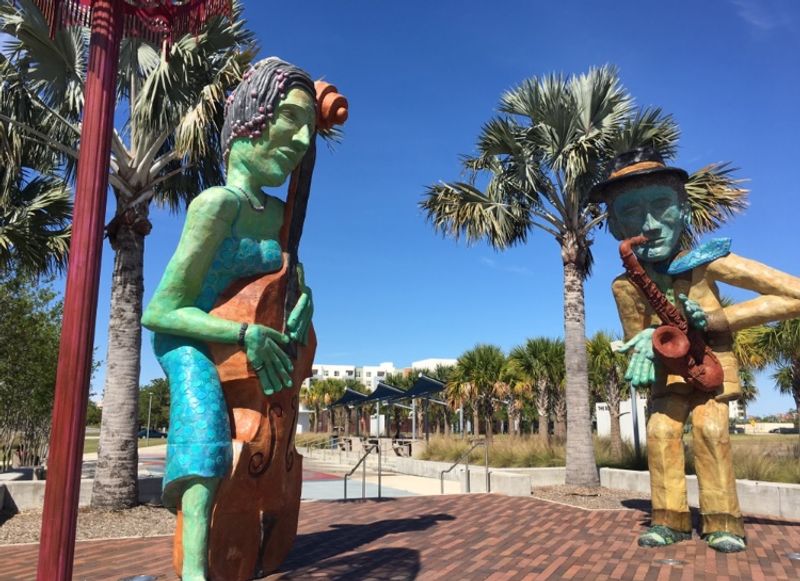
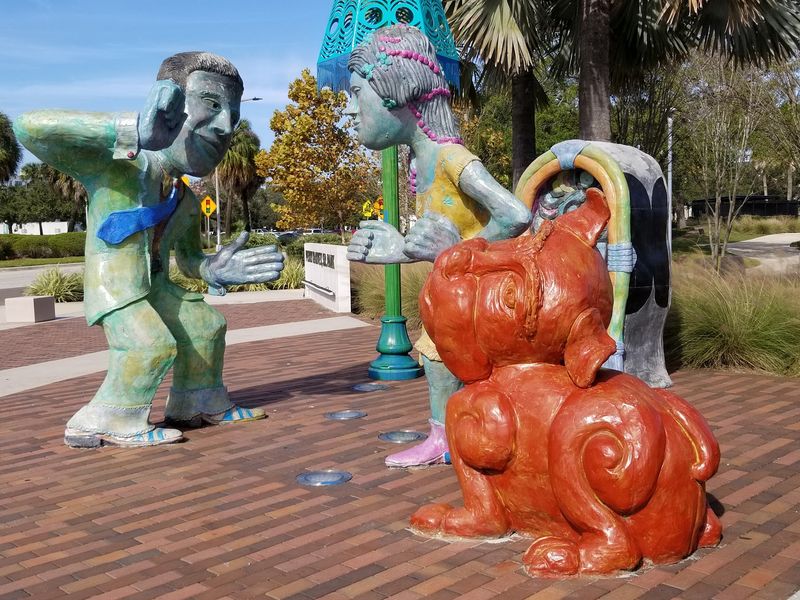
Giant concrete figures greet every visitor before they even step fully inside the park. Artist James Simon created these commanding Gateway Sculptures, and they are impossible to miss.
A 16-foot female bass player anchors the group with quiet authority.
Flanking her are 9-foot dancers caught mid-twist, their forms frozen in joyful motion. A classic jukebox stands nearby, nodding to the rhythm-soaked history of the area.
These pieces celebrate Central Avenue, the legendary Florida street that once hosted musical icons and drew crowds from across the region.
Simon designed each figure to feel alive, not just decorative. The textures, the poses, and the sheer scale demand attention.
Visitors often stop mid-stride to look up, tilt their heads, and simply take in the craftsmanship. These sculptures set the tone for everything that follows inside Perry Harvey Sr. Park, signaling that this is a place where art and memory are taken seriously, and celebrated loudly.
Central Avenue’s Musical Soul Frozen In Bronze And Concrete
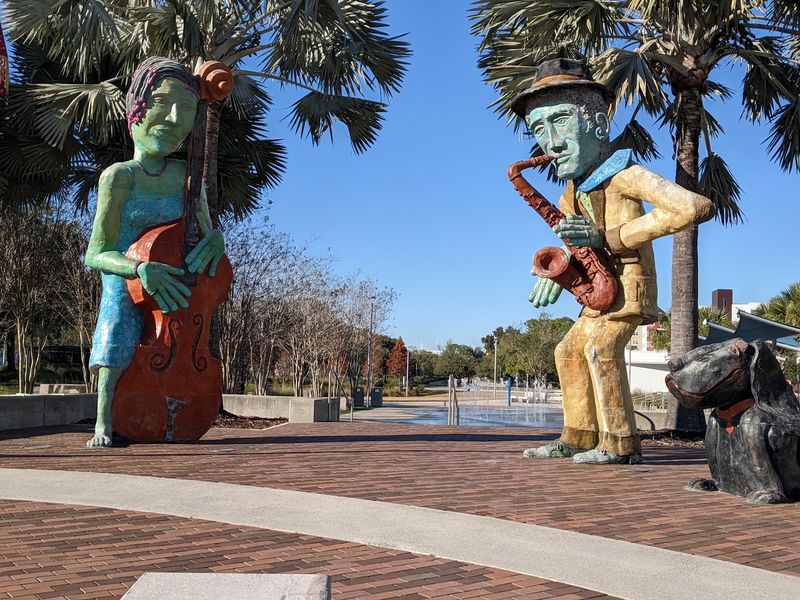
Central Avenue was once the beating heart of Tampa’s Black entertainment district. On any given night, the street hummed with live music, packed clubs, and legendary performers.
The Gateway Sculptures capture that electric era in permanent form.
Artists like Ella Fitzgerald, Ray Charles, Cab Calloway, and James Brown all performed along this corridor. The sculptures do not name them directly, but the spirit of those performances radiates from every carved detail.
The jukebox sculpture alone feels like it could start playing at any moment.
Florida has no shortage of beautiful parks, but few manage to fuse musical heritage with public art this effectively. The figures are not background decoration.
They are the main event. Visitors linger, photograph, and sometimes reach out to touch the textured surfaces, connecting physically with a cultural legacy that might otherwise exist only in history books.
This is storytelling at its most bold and public.
The History Walk LIFETILES That Actually Move
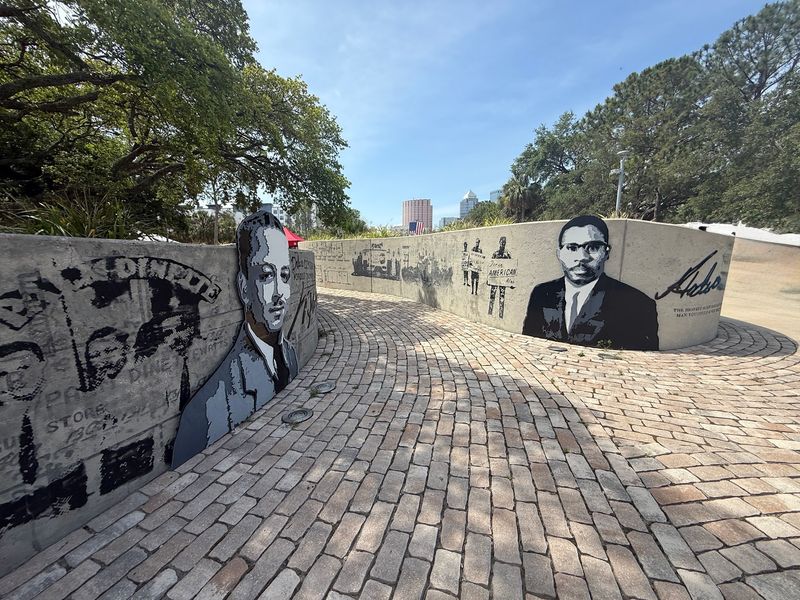
Eight large murals line the park’s History Walk, and these are not ordinary painted panels. Artist Rufus Butler Seder created the LIFETILES using hand-cast optical tiles built from historic photographs.
As visitors walk past, the images subtly shift and appear to move.
The effect is quietly astonishing. Faces from the past seem to turn, figures appear to breathe, and frozen moments feel briefly alive again.
Each mural covers a different theme, including The Early Years, Central Avenue Business Leaders, Social and Religious Life, and Civil Rights.
This technology transforms a walk through the park into something closer to a living documentary. The chronological arrangement guides visitors naturally from one era to the next.
Families with children often stop at each panel, watching the images animate with each step forward or backward. It is one of the most creative uses of public art in all of Florida, and it earns every second of the attention it receives.
The Scrub Neighborhood And Its Remarkable Rise
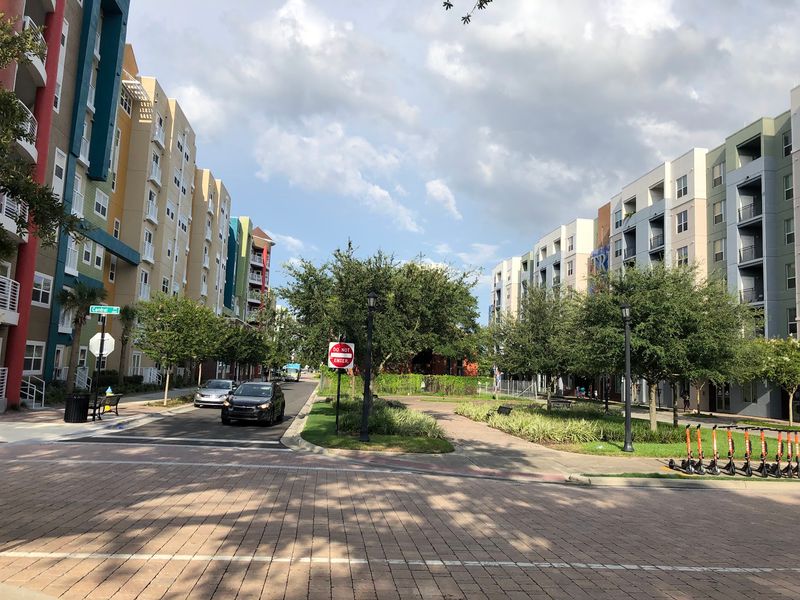
Long before the park existed, this land was part of a neighborhood called The Scrub. After the Civil War, freed slaves settled here and built something extraordinary from very little.
The area grew into a thriving African American residential and commercial district.
Businesses, churches, schools, and social clubs lined the streets. Central Avenue became the cultural spine of the community, drawing residents and visitors alike.
The Scrub was not just a place to live. It was a place to belong, to build, and to lead.
Urban renewal programs and the upheaval of the 1960s eventually reshaped the neighborhood beyond recognition. Much of what stood was lost.
Perry Harvey Sr. Park now occupies this ground with purpose, ensuring that what happened here is never quietly forgotten. The park’s design treats the land itself as a document, one that any visitor can read by simply walking through it on a clear Florida morning.
Timeline Pavers That Tell A Story Underfoot
History is literally written into the ground at this park. Fourteen large Timeline Pavers are set into a ribbon of colorful concrete that winds through the entire space.
Each paver marks a different era in the story of The Scrub and Central Avenue.
The sequence begins with palmetto fields and early settlement, then moves through the growth of a booming business district, the Civil Rights movement, and into the present day. Visitors follow the path almost instinctively, drawn forward by curiosity about what comes next.
The design is clever without being heavy-handed.
Children find the pavers especially engaging, reading aloud and asking questions as they walk. Adults often slow down, crouch for a closer look, or pull out their phones to capture a particular detail.
This is public history done right, accessible to everyone, free of charge, and embedded into the everyday experience of moving through Tampa, Florida. Every step is a page turn.
Leaders Row And The Faces Of A Community
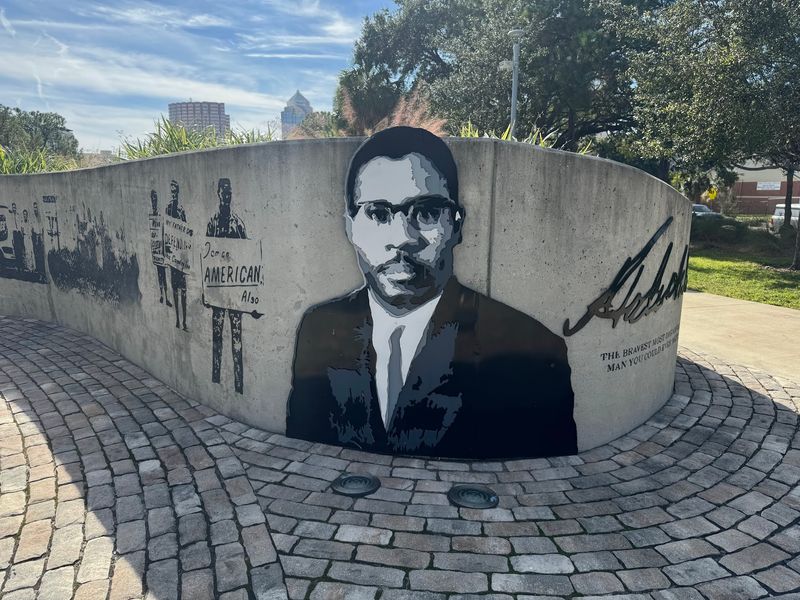
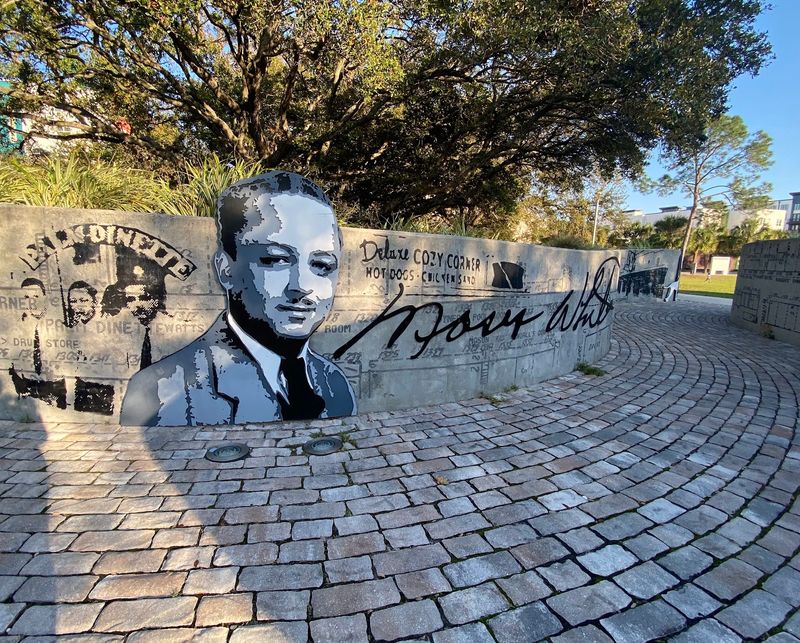
Michael Parker’s “Leaders’ Row” installation pays tribute to the people who shaped the Central Avenue community during its most formative years. These were educators, organizers, and advocates who worked tirelessly under the restrictions of segregation.
Their influence stretched across generations.
Figures like Lee Davis, Robert Saunders, Christina Meacham, and Moses White are honored here. Each name represents a life spent pushing against barriers and building opportunities for others.
This section of the park feels quieter than the rest, more contemplative, and that quality suits its subject perfectly.
Standing among these tributes, visitors get a vivid sense of just how much leadership it took to sustain a community under such pressure. Florida has memorialized many figures from its past, but this installation focuses on local heroes whose stories often go untold outside their own neighborhoods.
Leaders’ Row corrects that gap with dignity, specificity, and a respect for detail that makes the experience genuinely moving.
The Bronze Statue That Anchors The Entire Park
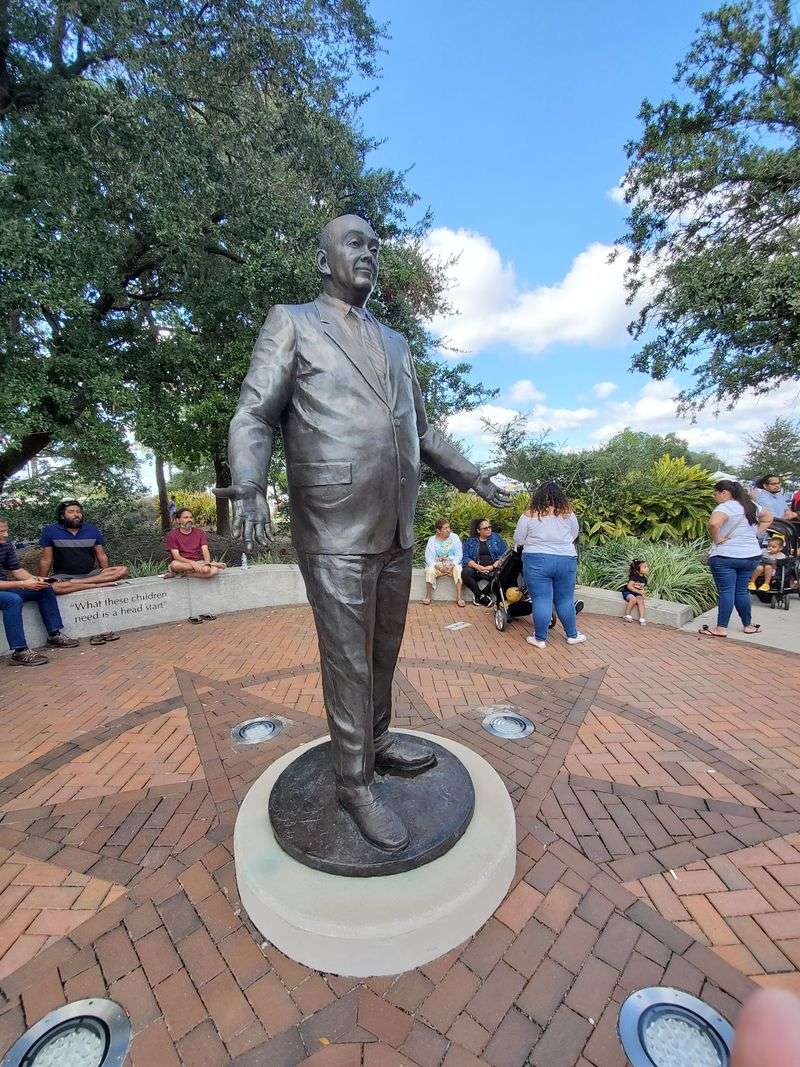
At the highest point of the park stands a larger-than-life bronze sculpture of the man the park honors. Joel Randell crafted this striking figure, and its presence is commanding from every angle.
With arms stretched wide, the statue extends a permanent welcome to all who enter.
The orientation of the statue is deliberate. It faces the ENCORE! development, marking the historic location of The Scrub neighborhood.
This is not a generic monument placed for aesthetic balance. It is a precisely positioned statement about place, memory, and belonging.
Perry Harvey Sr. himself was a civil rights leader and longtime president of the International Longshoremen’s Association Local 1402. He fought for fair wages and better conditions for Tampa’s Black dock workers, and his efforts helped build the city’s first Black-owned apartment building and plaza.
The statue serves as the spiritual anchor of the entire park, reminding visitors why this ground was chosen, why it matters, and why Florida continues to honor his legacy.
Bro Bowl 2.0 And The Legacy Of Tampa’s Skateboarding Culture
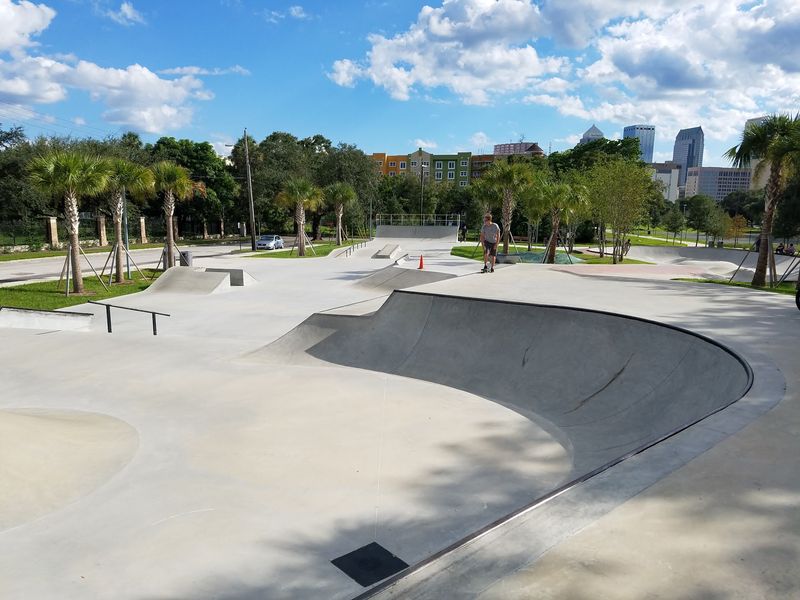
Skateboarders have claimed their own corner of this park, and they have done it in style. Bro Bowl 2.0 is a state-of-the-art skate facility that pays direct homage to the original Bro Bowl, first built in 1978 and beloved by generations of Tampa riders.
The modern version features ramps, stairs, ledges, and transitions suitable for skaters at every level. A section of the original graffiti-covered bowl has been preserved within the new design, giving the space an authentic character that purpose-built skate parks often lack.
History and recreation coexist here with surprising ease.
The skate park draws a steady crowd on weekends, with riders of all ages testing their skills under the open Florida sky. It adds an energetic counterpoint to the park’s more reflective historical installations.
Watching someone land a clean trick in front of preserved concrete that dates back decades creates a strange and satisfying collision of eras. Bro Bowl 2.0 proves that a park can honor the past and still keep things moving forward.
The Interactive Fountain That Lights Up The Evening
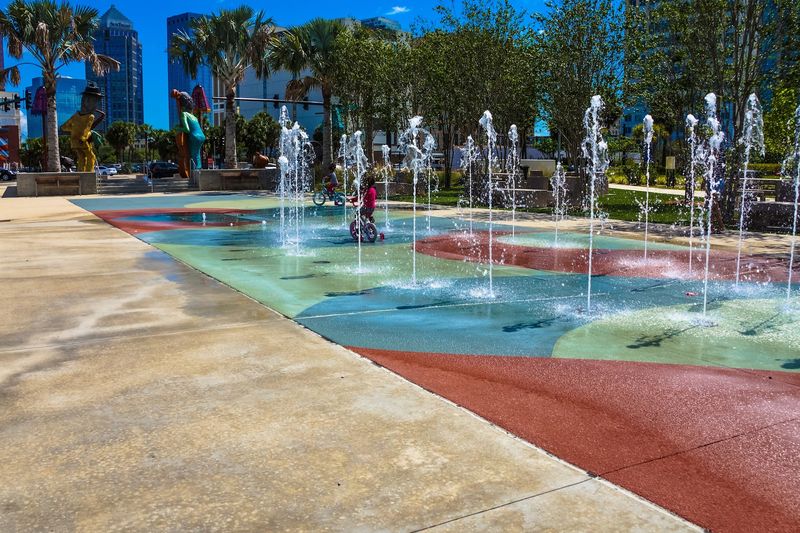
On a warm Florida afternoon, the interactive fountain becomes the most popular spot in the park. Water jets shoot upward in synchronized patterns, and the whole feature is enhanced by colorful lights that make it especially dazzling after dark.
Kids sprint through the streams without hesitation.
In the evenings, the fountain shifts into a more theatrical mode. Waters dance to music from the Central Avenue era, connecting the playful present to the park’s deeper cultural roots.
The combination of light, water, and sound creates an atmosphere that feels festive without being overdone.
Families with young children tend to gravitate here first, especially during the hotter months when Tampa’s heat makes any water feature irresistible. Adults linger nearby on shaded benches, watching the show while the kids burn energy.
The fountain is more than a cooling station. It is a gathering point, a place where strangers smile at each other and the park’s community spirit becomes most visible and most real.
Basketball Courts, Picnic Spots, And Open Green Space
Not every visit to this park needs to be a history lesson. Three full-sized basketball courts offer a straightforward invitation to play, compete, and move.
Games run throughout the day, and the energy around the courts adds a lively layer to the park’s atmosphere.
Shaded benches and picnic tables are scattered throughout the space, giving families a comfortable base for a relaxed afternoon. The large festival lawn opens up the park’s midsection, creating a versatile canvas for outdoor events, concerts, and art shows.
The NEOS 360 Play System keeps younger visitors active with interactive games that blend technology and physical movement.
This mix of recreational options ensures that Perry Harvey Sr. Park functions as a genuine community hub, not just a tourist destination. Locals show up on weekdays for a quick game or a quiet lunch.
On weekends, the space transforms for festivals like Veg Fest and the Empanada Festival, drawing crowds from across Tampa, Florida, and proving that this park is very much alive and in active use.
Downtown Tampa Skyline Views From Inside The Park
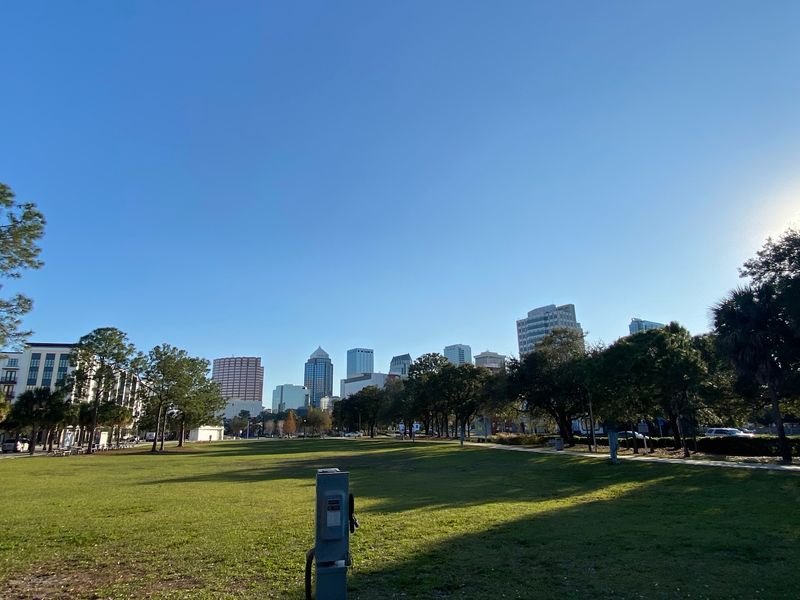
Few city parks offer this kind of visual contrast. The historic sculptures and tile murals of Perry Harvey Sr. Park sit against a backdrop of gleaming downtown Tampa towers, and the juxtaposition is genuinely striking.
The old and the new share the same horizon line.
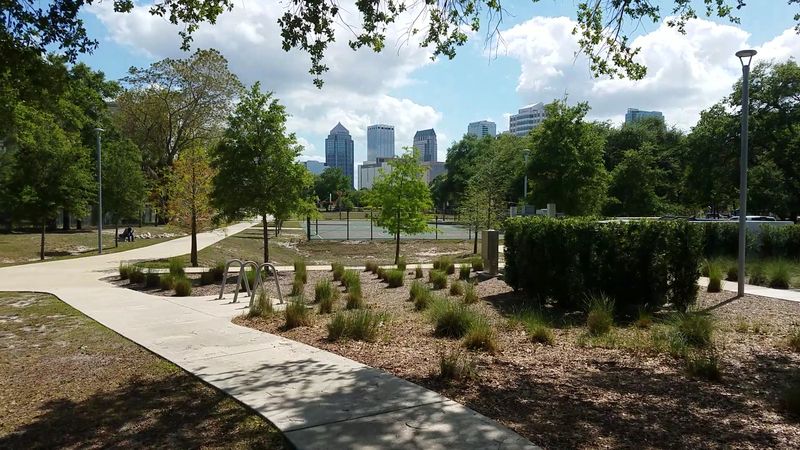
Carefully planned walkways and thoughtful lighting throughout the park frame these skyline views without forcing them. Visitors rounding a bend or pausing at a sculpture often find themselves looking up at a skyline that reminds them exactly where they are in Florida.
The park feels simultaneously removed from the city and deeply embedded in it.
Photographers find this combination especially rewarding. The park’s art installations make compelling foregrounds for skyline shots, particularly in the golden light of early morning or late afternoon.
The setting rewards those who slow down and look around rather than rushing from one landmark to the next. This visual harmony between history and modernity is one of the park’s quieter pleasures, and one of its most memorable qualities.
Future Plans And The Cultural Center Coming Soon
The park’s story is still being written. Phase II of development includes plans for a Cultural Center and a Bandshell that will significantly expand what the site can offer.
The Cultural Center is designed at approximately 16,400 square feet, built to connect indoor and outdoor environments without a hard boundary between them.
Programming will include exhibitions, educational initiatives, performances, and community events. The Bandshell will add a dedicated outdoor performance venue, building directly on the musical heritage that the Gateway Sculptures already celebrate.
These additions are designed to make the park a year-round destination rather than a warm-weather attraction.
For a park already doing so much with art, history, and recreation, these future elements feel like a natural evolution. Florida has many parks that host events, but few are being designed with this level of cultural intention.
When Phase II is complete, Perry Harvey Sr. Park will offer an even richer experience, one rooted in the past, fully functional in the present, and built with genuine ambition for the future.