
Discover The Perfect North Dakota Road Trip Through Stunning Badlands And Endless Sunflower Fields
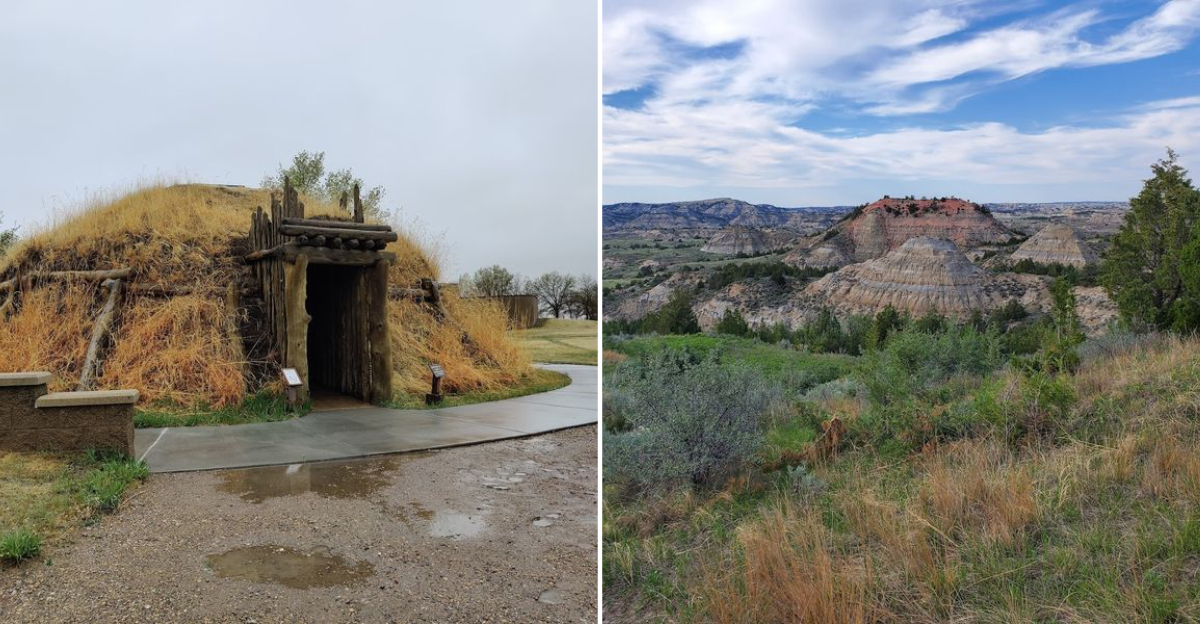
Badlands and sunflower fields sharing the same road trip sounds like a geographic contradiction. North Dakota resolves it effortlessly across a drive that never runs out of reasons to pull over.
Red and gold competing for attention across an open landscape produces a visual no single photograph ever fully captures. The scale here requires movement to understand.
Terrain shaped by erosion gives way without warning to fields that stretch past where the eye can follow. That transition happens repeatedly along this route and never loses its ability to surprise.
A road trip this visually varied, surviving outside mainstream travel conversations, belongs to a state comfortable keeping its landscapes quietly to itself.
North Dakota laid everything out and simply waited for the travelers curious enough to finally show up.
Theodore Roosevelt National Park, South Unit.
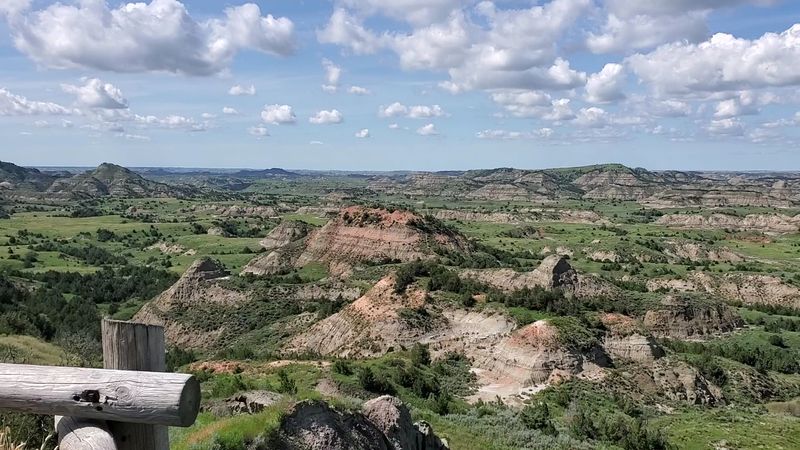
Bison traffic jams are a real thing here, and honestly, nobody is complaining. The South Unit of Theodore Roosevelt National Park is where the badlands get dramatic fast.
Rust-colored buttes rise out of nowhere, and the whole place feels like a movie set that nature built herself.
The 36-mile Scenic Loop Drive is your best friend on this stop. Pull over at every overlook because each one offers something completely different.
Prairie dog towns pop up along the road, and those little guys are absolute chaos in the best way.
The Painted Canyon Visitor Center overlook is genuinely one of the most stunning views in the Midwest. Standing at the edge feels unreal.
The canyon stretches wide and deep, painted in shades of red, tan, and brown that shift with the light.
Wild horses actually roam this park too. Spotting them near the ridgelines is a full adrenaline moment.
The Maltese Cross Ranch Cabin inside the park tells the story of a young Theodore Roosevelt who came here grieving and left transformed.
Hiking trails here range from easy to genuinely challenging. The Coal Vein Trail loops through an area where underground coal once burned for decades.
The Petrified Forest Trail is longer but rewards you with ancient wood turned to stone, scattered across the landscape like forgotten relics.
Medora, the gateway town just outside the park, is a fun little stop. It has great food, a lively atmosphere, and a famous outdoor musical in summer.
Start your road trip here, and you will already feel like you hit the jackpot. Find it at 201 E River Rd, Medora, ND 58645.
North Unit Visitor Center

The North Unit is quieter than its southern sibling, and that is exactly what makes it special. Fewer crowds mean more wildlife encounters and longer moments of pure silence.
Out here, silence sounds like something worth traveling for.
The 14-mile North Unit Scenic Byway is a slow, gorgeous drive through some of the most dramatic terrain in the state. Every curve reveals a new angle of the Little Missouri River valley below.
Cannonball concretions and round boulder formations appear along the roadside like something from another planet.
Oxbow Overlook is the crown jewel of this unit. At sunrise, the river curves in a wide U-shape far below, glowing gold and copper.
It is the kind of view that makes you stand there quietly for a long time.
River Bend Overlook at sunset is equally stunning. The light softens and turns everything amber.
Bison sometimes appear on the ridges just as the sun dips below the horizon, which feels almost cinematic.
The Buckhorn Trail offers a longer hike through varied badlands terrain. It passes through open prairie, coulees, and wooded river bottoms.
Wildlife sightings along this trail are common, including elk, wild horses, and plenty of bird species.
The North Unit also connects to the Maah Daah Hey Trail, a legendary 144-mile non-motorized route through the badlands. Even hiking just a short section gives you a taste of its raw beauty.
This unit rewards patience and early rising, both of which are absolutely worth it. Visit it at 208 Scenic Dr, Watford City, ND 58854.
Painted Canyon Nature Trail
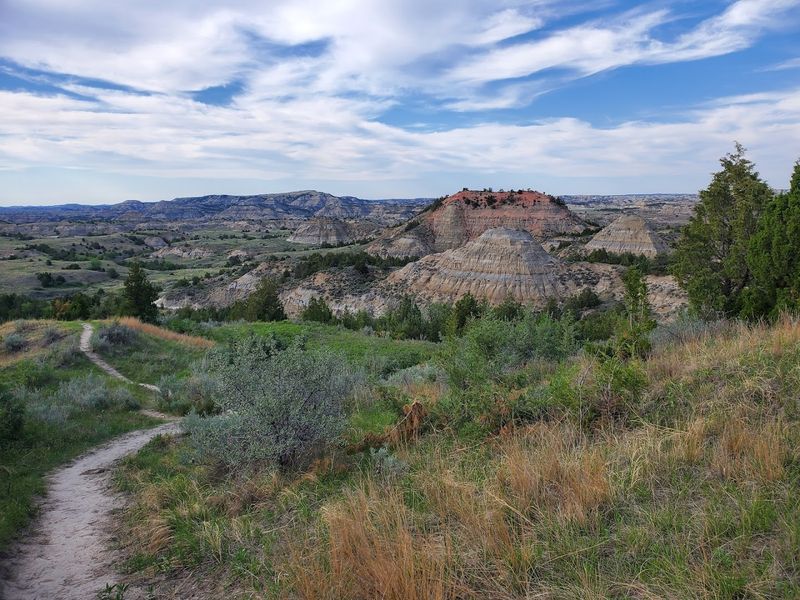
Right off Interstate 94, the Painted Canyon pulls you in before you even plan to stop. The overlook appears suddenly, and your jaw drops just as fast.
This is one of those views that makes you question why you have not visited North Dakota sooner.
The nature trail here is short but absolutely worth lacing up for. It winds along the canyon rim and dips into the badlands terrain below.
You get up close with the layered geology that took millions of years to form.
The colors here are genuinely wild. Shades of red, pink, tan, and charcoal stack up in horizontal bands along the canyon walls.
Early morning light turns the whole scene into something that looks almost too beautiful to be real.
This trail is accessible for most fitness levels, which makes it a great stop for everyone in the car. Kids love exploring the uneven terrain.
Adults tend to stop every few feet to take photos they will probably never stop showing people.
The visitor center at the trailhead has exhibits explaining the geology and history of the badlands. Rangers are friendly and genuinely excited to talk about the landscape.
Stopping in is always a good idea, especially if you want trail maps or wildlife tips.
Sunflower fields sometimes bloom in the rolling hills nearby in late July and early August. The contrast of golden yellow against the rugged badlands backdrop is stunning.
If your timing is right, this area offers one of the most unique visual combinations anywhere on the route.
Fort Abraham Lincoln State Park
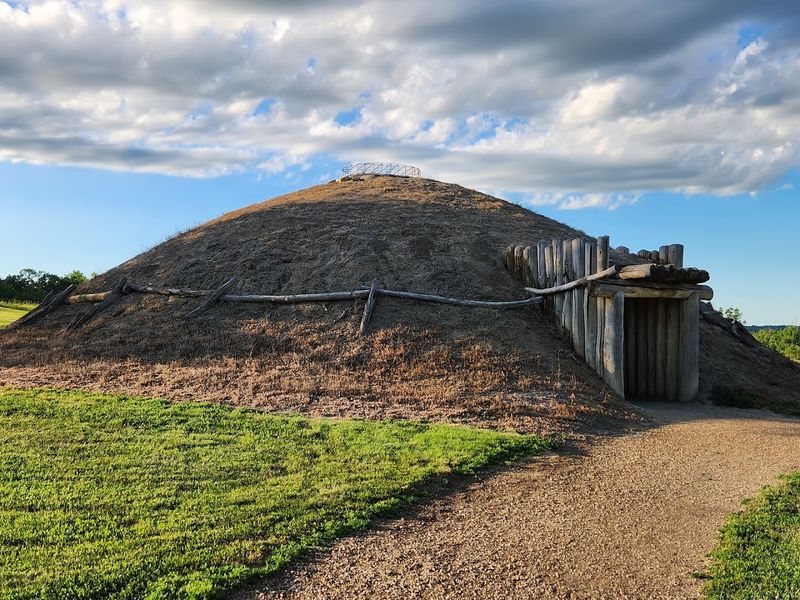
History hits differently when you can walk through it. Fort Abraham Lincoln State Park sits on a bluff above the Missouri River and carries centuries of layered stories.
This place was home to the Mandan people long before it became a U.S. Army post.
The reconstructed Mandan earth lodges are absolutely fascinating. These large, dome-shaped structures were engineering marvels built centuries ago.
Walking inside, one gives you a real sense of how communities lived, gathered, and survived in this landscape.
The fort itself is where General George Custer was stationed before his infamous last campaign. You can tour the reconstructed Custer House and several other buildings from the military era.
It is a sobering and genuinely interesting piece of American history.
Rangers lead tours that connect both the Indigenous and military histories of the site. They do not shy away from the complicated parts, which makes the experience feel honest and respectful.
That kind of storytelling is rare and refreshing.
The park also has great hiking trails along the river bluffs. Views of the Missouri River from the top are wide and windy and completely worth the climb.
Sunsets from this vantage point are slow, golden, and absolutely worth staying for.
Picnic areas and a campground make this a great overnight stop on the road trip. The park is family-friendly and well-maintained.
Whether you are into history, hiking, or just need a break from the car, Fort Abraham Lincoln delivers on every level. The address is 4480 Fort Lincoln Rd, Mandan, ND 58554.
Knife River Indian Villages National Historic Site
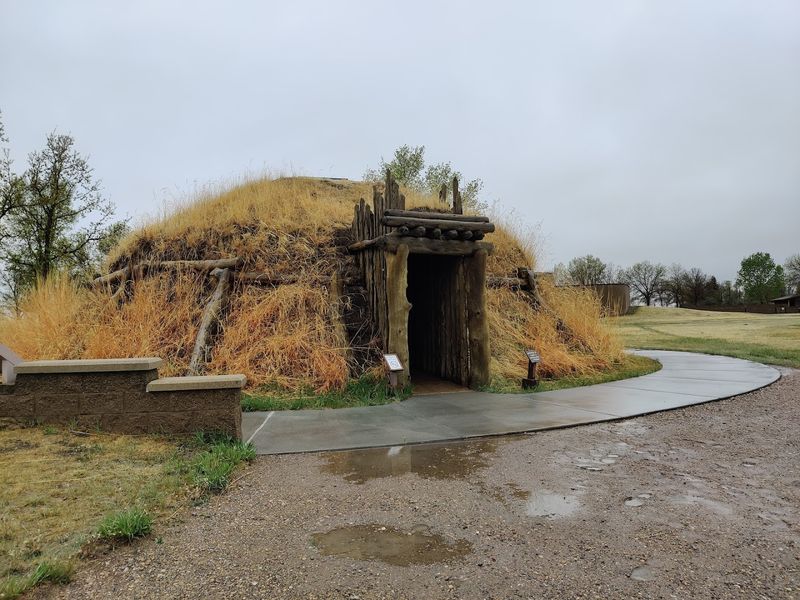
Some places carry a quiet power that you feel before you even read a single sign. Knife River Indian Villages is one of those places.
The site preserves the remains of three Hidatsa villages that were once thriving centers of trade, culture, and community.
The circular depressions in the earth are all that remain of the earth lodges that once stood here. Walking among them is a surprisingly moving experience.
You start to imagine the noise, the fires, the conversations that happened on this exact ground centuries ago.
The visitor center museum is excellent and genuinely engaging. It houses thousands of artifacts recovered from the site, including tools, pottery, and ceremonial objects.
The exhibits explain Hidatsa and Mandan culture with real depth and care.
Sacagawea, the Shoshone woman who guided the Lewis and Clark Expedition, spent time in this area before that historic journey. A statue honoring her stands near the visitor center.
Her story is told here with context and respect that feels long overdue.
A short trail loops through the village site and down to the Knife River. The river is calm and pretty, lined with cottonwood trees that rustle in the prairie wind.
It is a peaceful walk that connects you to the landscape in a meaningful way.
Rangers here are passionate and knowledgeable about the site’s significance. Guided tours add a lot of depth to the visit.
If you only stop at one historical site on this road trip, make it this one; the stories here are extraordinary. Point your navigation to 564 County Rd 37, Stanton, ND 58571.
Enchanted Highway — Tin Family Sculpture
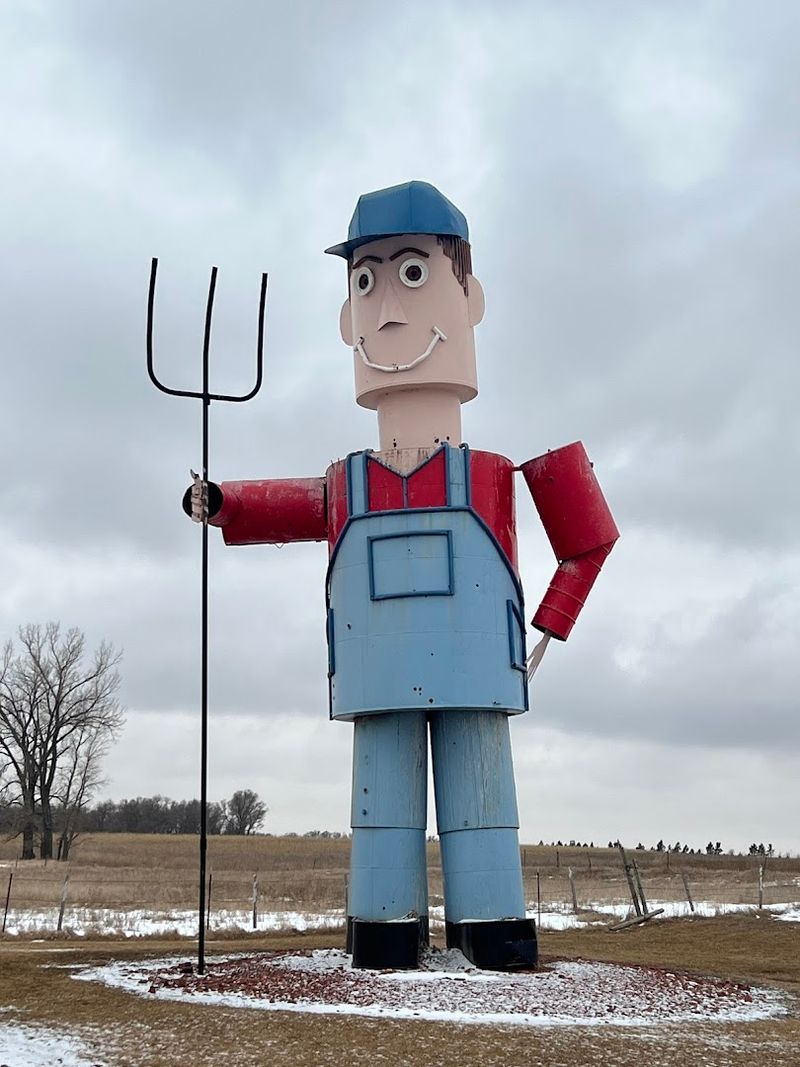
Driving through flat prairie suddenly becomes an adventure when giant metal sculptures appear on the horizon.
The Enchanted Highway is a 32-mile stretch of road in southwestern North Dakota lined with some of the world’s largest scrap metal sculptures. Nobody is prepared for how cool this actually is.
The Tin Family is one of the most beloved stops along the route. A massive father, mother, and children crafted entirely from salvaged metal stand tall against the open sky.
Up close, the detail and scale are genuinely impressive.
Local artist Gary Greff created all the sculptures on this highway starting in the 1990s. He built them to bring visitors to the small town of Regent and keep it alive.
That story alone makes the art feel even more meaningful.
Each sculpture along the highway has its own personality and visual impact. Geese in Flight is another massive piece that stretches across a ridge nearby.
Seeing them all in one drive feels like a treasure hunt through the prairie.
Stopping at each sculpture gives you a chance to stretch your legs and take some genuinely unique photos. The flat landscape makes the sculptures look even more surreal and dramatic.
Your road trip Instagram game will never be the same.
Regent itself is a tiny town with a lot of heart. The sculptures have brought real attention to this part of North Dakota that might otherwise go unnoticed.
Pull off the main road, look up, and let the Tin Family completely catch you off guard. Find it at 102 Ave SW, Regent, ND 58650.
Sheyenne National Grassland
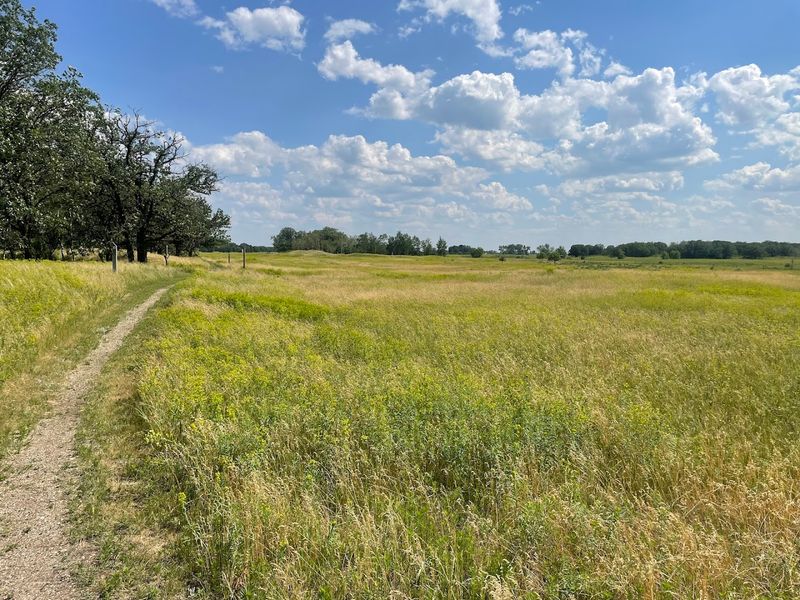
Not every great stop on a road trip needs to be dramatic. Sometimes the most memorable places are the ones that feel wide open and unhurried.
Sheyenne National Grassland is exactly that kind of place, and it sneaks up on you in the best way.
This is the only national grassland in North Dakota and one of the few remaining tallgrass prairie ecosystems in the entire country. The grasses grow tall and move like water in the wind.
It is peaceful in a way that is hard to describe but easy to feel.
Wildflowers bloom throughout summer in patches of purple, yellow, and white. Butterflies and native bees work the flowers constantly.
The whole scene looks like something from a nature documentary, except you are standing right in the middle of it.
Birdwatching here is outstanding. The grassland hosts rare species, including the Baird’s Sparrow and the Sprague’s Pipit.
Birders from across the country make special trips just for these species, which tells you everything about how special this habitat is.
Hiking and horseback riding trails wind through the grassland. The terrain is gentle and approachable for all skill levels.
Even a short walk into the prairie leaves you feeling genuinely refreshed in a way that no coffee stop can replicate.
Sunflower fields sometimes appear on the edges of the grassland region in late summer. The contrast between the golden sunflowers and the waving green grasses is absolutely gorgeous.
This stop is calm, beautiful, and surprisingly unforgettable. Visit it at Main Street, McLeod, ND 58057.
Little Missouri State Park
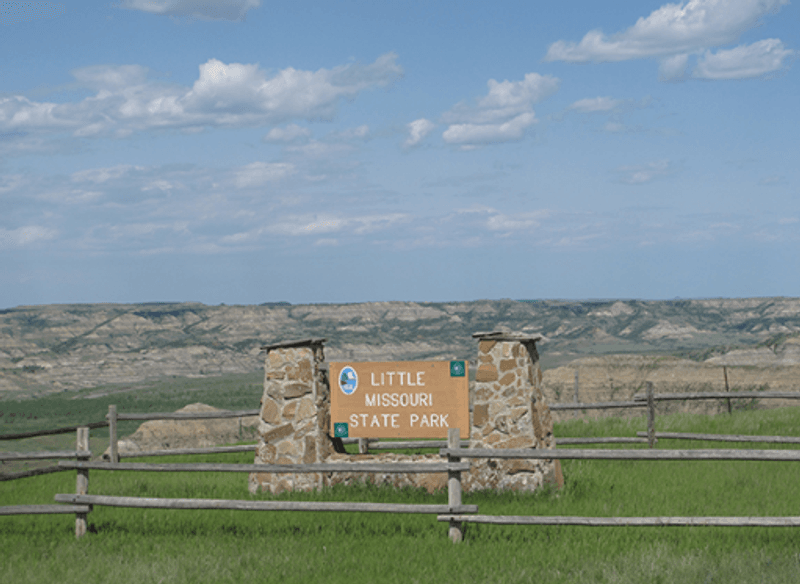
Little Missouri State Park is the kind of place that makes you feel like you have discovered something not many people know about.
It sits in the rugged badlands of western North Dakota and offers some of the most dramatic scenery on the entire route. Best of all, it is rarely crowded.
The park sits within the Killdeer Mountain Four Bears Scenic Byway corridor. The drive approaching the park is already stunning before you even arrive.
Rolling badlands, wide river breaks, and big sky views make every mile feel intentional.
Hiking trails here are raw and adventurous. There are no manicured paths or guardrails just honest badlands terrain that rewards effort.
The views from the higher ridges stretch across miles of untouched landscape.
Horseback riding is a popular activity in the park, and the terrain is perfect for it. Several trails are designated for equestrian use and wind through the most scenic parts of the park.
Watching someone ride through this landscape on horseback looks like a painting.
Wildlife sightings are common and exciting here. White-tailed deer, wild turkeys, and various raptors are frequent visitors.
The park sits along the Little Missouri River, which adds a riparian habitat that draws even more species to the area.
Camping here is a real highlight of the road trip. Falling asleep under a sky full of stars with nothing but badlands silence around you is hard to beat.
If the road trip has one perfect ending spot, Little Missouri State Park is a very strong contender. Head to 910 103rd Ave NW, Killdeer, ND 58640.