
Discover The Tiny Delaware Town Where An 18th Century Grist Mill Still Grinds Flour Every Saturday
A grist mill that outlasted every industrial shortcut and every reason to stop running deserves more than a historical marker. Every Saturday, this tiny town proves exactly why keeping it operational was worth the effort.
Stone grinding flour at the pace it was always meant to move produces a result that modern milling never quite replicates. The difference shows up in the bread made from it before any explanation is necessary.
Visitors who arrive on the right morning watch a process that most of the world decided was no longer worth the effort. Standing beside machinery this old and this functional produces a quiet that museums full of static exhibits never manage.
Delaware has a talent for preserving things worth preserving, and this grist mill sits among the most compelling examples. The town keeps its Saturday schedule without fanfare, and the flour it produces keeps making the case entirely on its own.
History Of Flour Milling Techniques
Flour milling has a longer American story than most people realize. The Old Wye Mill in Delaware traces its roots back to 1682.
That makes it older than the United States itself.
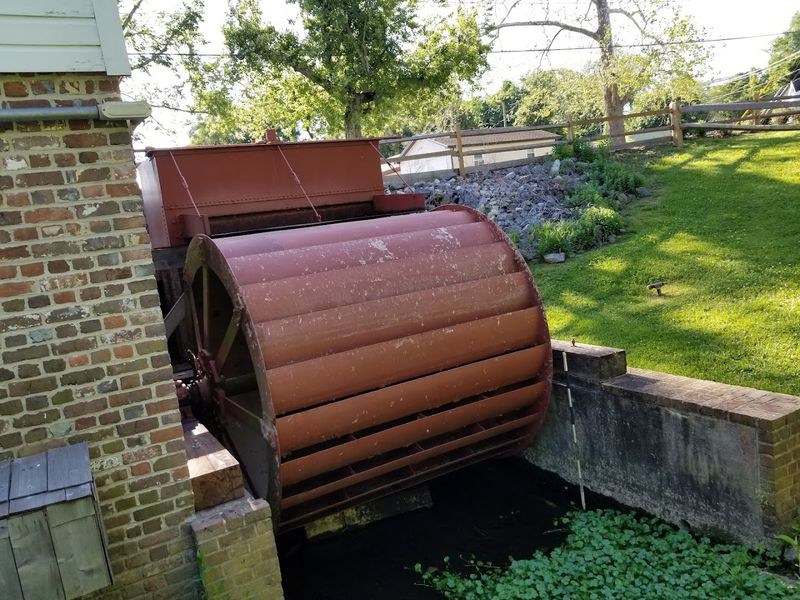
Early milling relied entirely on water power. A millstream pushed a large wooden wheel.
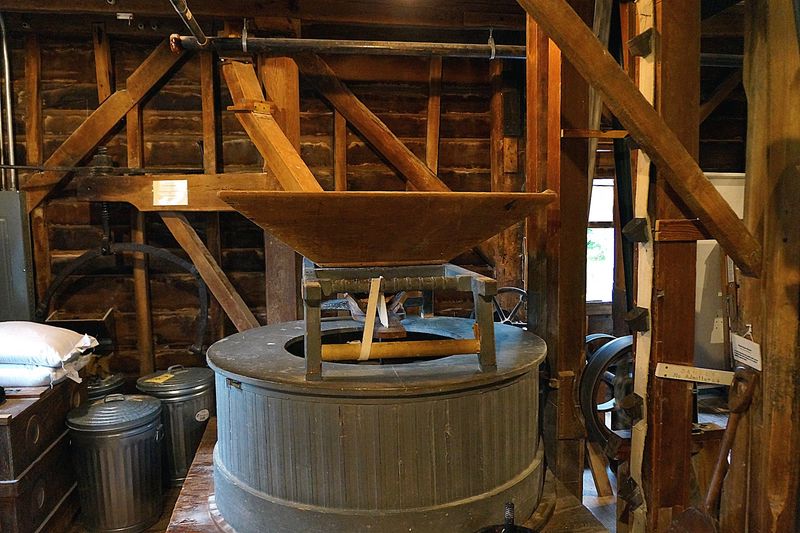
That wheel turned a series of wooden gears connected to heavy millstones.
The milestones did the real work. Grain poured between them and got crushed into flour.
The miller adjusted the gap between the stones to control the texture.
At Wye Mill, those same basic principles still apply today. Water still drives the process.
The stones still turn. Nothing about the core method has changed in three centuries.
The current building at Wye Mills likely dates to around 1753. It replaced the original 1682 structure.
But the milling tradition never stopped, even during that transition.
You can visit the mill at 900 Wye Mills Rd, Wye Mills, MD 21679. It is open Wednesday through Saturday from 10 AM to 3 PM.
Sundays run from 1 PM to 3 PM, May through October.
Significance Of Grist Mills In Maryland
Maryland earned a serious nickname during the Revolutionary War. People called the Eastern Shore the Breadbasket of the Revolution.
That title was not handed out lightly.
Grist mills like the Old Wye Mill made that nickname possible. They converted raw grain into usable flour fast enough to feed an army.
General George Washington’s Continental Army depended on that supply chain.
Wye Mill specifically ground flour that went directly to Washington’s troops. That is not a legend.
It is a documented historical fact that connects this small building to the founding of the country.
Maryland had dozens of grist mills operating during the colonial period. They were the food infrastructure of their time.
Without them, communities could not eat through the winter.
Most of those mills are gone now. They fell apart, burned down, or got demolished.
The Old Wye Mill is a rare survivor that kept operating rather than becoming a ruin.
That continuity matters. A mill that still grinds grain is different from a mill that just sits behind a rope.
Wye Mill belongs to the first category, and that is exactly what makes it worth the drive.
Traditional Grain Varieties Used For Milling
Not all flour is the same, and the Old Wye Mill makes that point clearly. The grains ground here go well beyond basic white flour.
The variety on offer is genuinely impressive for a mill this size.
Whole wheat is the most familiar option. But the mill also grinds buckwheat, rye, einkorn, spelt, and Emmer.
Cornmeal and corn grits round out the lineup.
Einkorn is one of the oldest cultivated grains on earth. Emmer is another ancient variety that most modern grocery stores have never heard of.
Spelt has been around for thousands of years and has a slightly nutty flavor.
Most of the grain milled here is locally grown. That means the connection between the farm and the flour is short and traceable.
You know where your food came from.
Stone-ground flour keeps more of the grain’s natural nutrients intact. Industrial roller milling strips a lot of that out.
The difference shows up in flavor and texture.
Buckwheat pancakes made with flour from this mill are a genuinely different experience. The flour smells fresh and earthy in a way that bagged grocery store flour simply does not.
It is worth picking up a bag before you leave.
Mechanical Processes In The Eighteenth Century
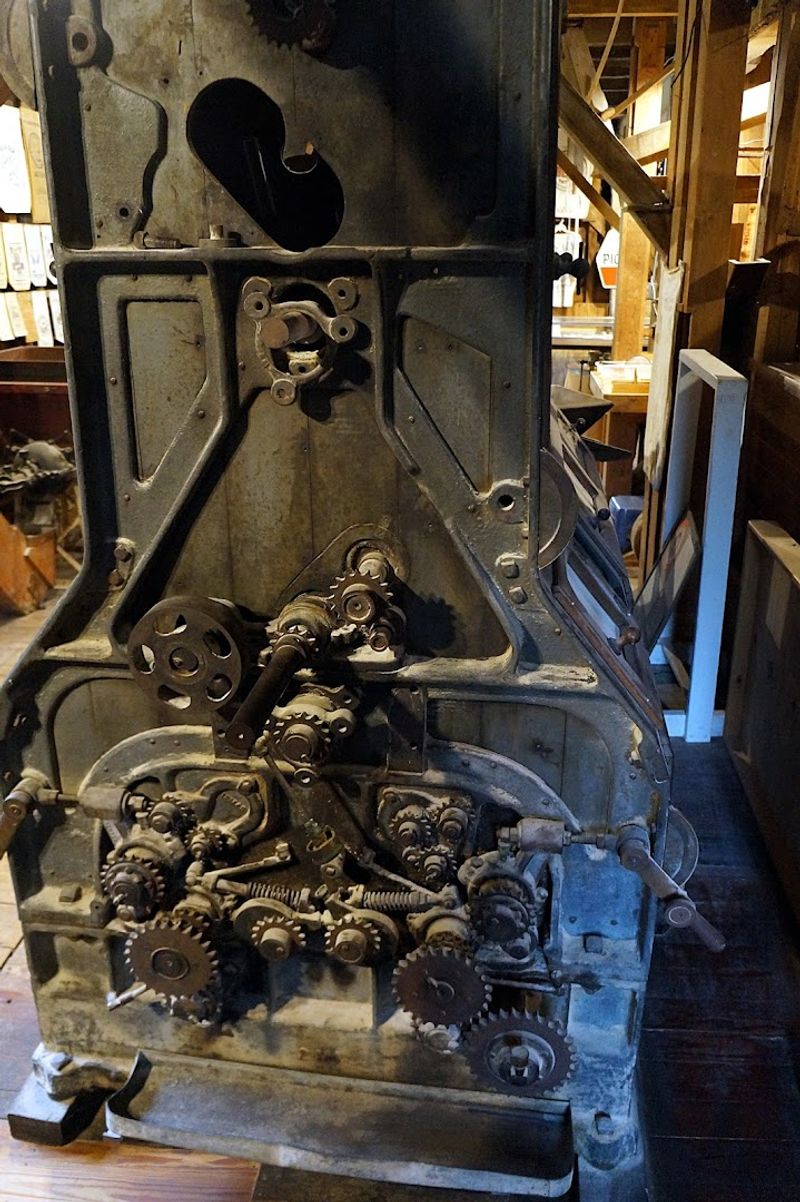
The machinery inside the Old Wye Mill looks almost impossibly simple for what it accomplishes. A wooden water wheel sits outside the building.
Water hits the paddles, and the whole thing starts turning.
That rotation travels through a horizontal shaft into the mill. Inside, wooden gears convert the motion and send it upward to the millstones.
The whole system runs without electricity or fuel.
The millstones themselves are massive. Each one weighs hundreds of pounds.
The bottom stone stays fixed while the top stone spins above it.
Grain drops through a hole in the center of the top stone. It works its way outward as it gets ground.
By the time it reaches the edge, it has become flour.
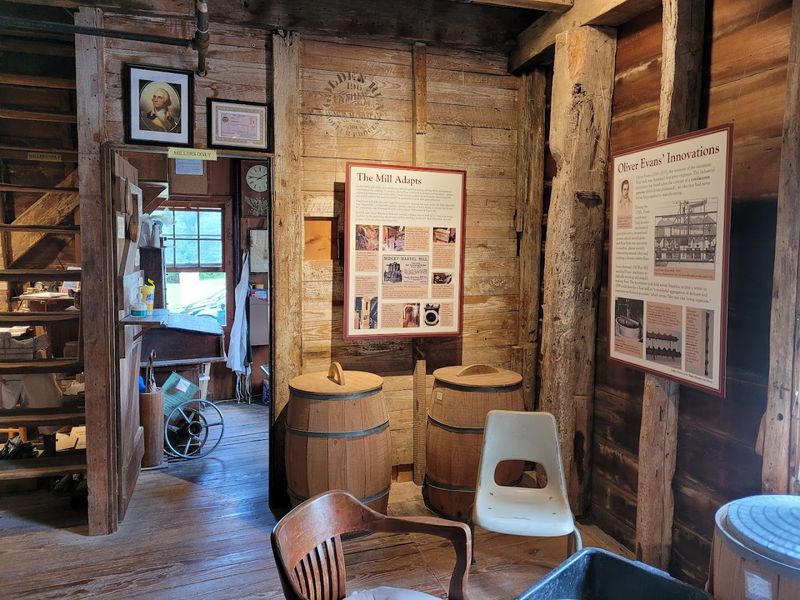
Oliver Evans visited Wye Mill in the 1790s. He was an inventor and engineer who used what he observed here to develop early factory automation concepts.
That is a remarkable footnote for a building this small.
Evans went on to transform American manufacturing. The ideas he developed after studying mills like this one helped shape the Industrial Revolution in the United States.
Not bad for a little wooden building in rural Maryland.
Preservation Efforts For Historic Milling Equipment
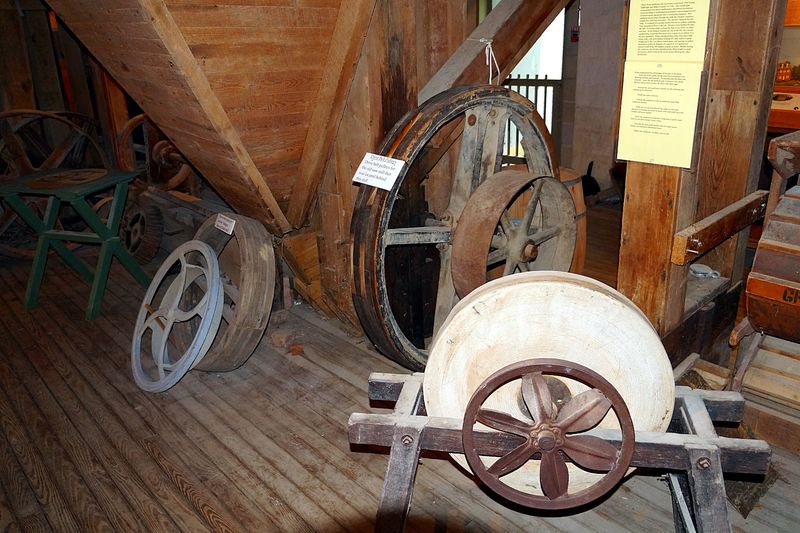
Keeping a 300-year-old mill running is not a passive activity. It requires constant attention, skilled volunteers, and a real commitment to doing things the right way.
The Old Wye Mill has all three.
The Friends of Wye Mill is the volunteer-run non-profit that keeps the place going. They handle everything from guided tours to equipment maintenance.
Without them, the mill would not be operational.
Historic milling equipment is not something you can order replacement parts for online. When something breaks or wears out, the solution often involves hand-crafting a replacement using period-appropriate techniques.
That takes real skill.
The mill was listed on the National Register of Historic Places in 1985. That designation helps protect the structure and supports preservation funding.
It also signals that the site has national significance.
Maintaining a working mill is different from preserving a static museum exhibit. The equipment has to actually function under load.
That means regular inspection, lubrication, and occasional rebuilding of wooden components.
Visitors can see the results of that work every time the mill runs a grinding demonstration. The machinery moves smoothly, the stones turn, and the flour comes out.
That outcome does not happen by accident.
Educational Programs About Flour Production
The Old Wye Mill is one of those rare places where learning feels completely natural. You are not reading a plaque about something that used to happen.
You are watching it happen right now.
The mill offers interactive activities specifically designed for younger visitors through sixth grade. These are hands-on explorations, not just passive observation.
Kids actually engage with the material.
Homeschool families have discovered this place in a big way. It covers American history, early engineering, agriculture, and food production all in one visit.
That kind of cross-subject learning is hard to find.
School groups can arrange tours through the mill. The volunteer guides are knowledgeable and patient.
They answer questions thoroughly without making anyone feel rushed.
Adults learn just as much as the kids do. The history of how grain becomes flour is not something most people think about.
Watching the process unfold makes it click in a way that reading about it never quite does.
Admission is free, though a two-dollar donation per adult is suggested. For the depth of experience you get, that is an extraordinary value.
Bring the family, bring questions, and plan for at least an hour.
Cultural Impact Of Local Milling Traditions
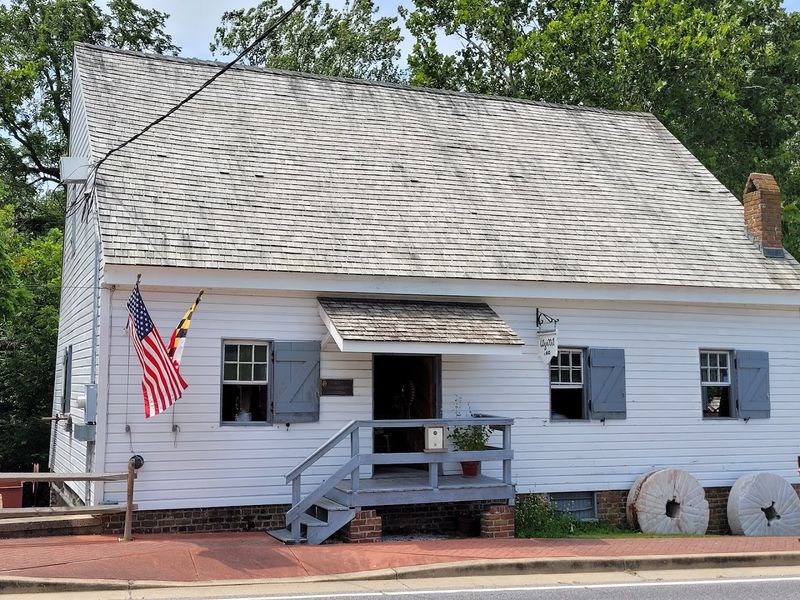
Milling shaped community life in early America more than most people appreciate. A grist mill was not just a place to process grain.
It was a gathering point, a local economy, and a social institution.
Farmers brought their grain to the miller and waited while it was ground. That waiting time created conversation, trade, and community bonds.
The mill was where news traveled.
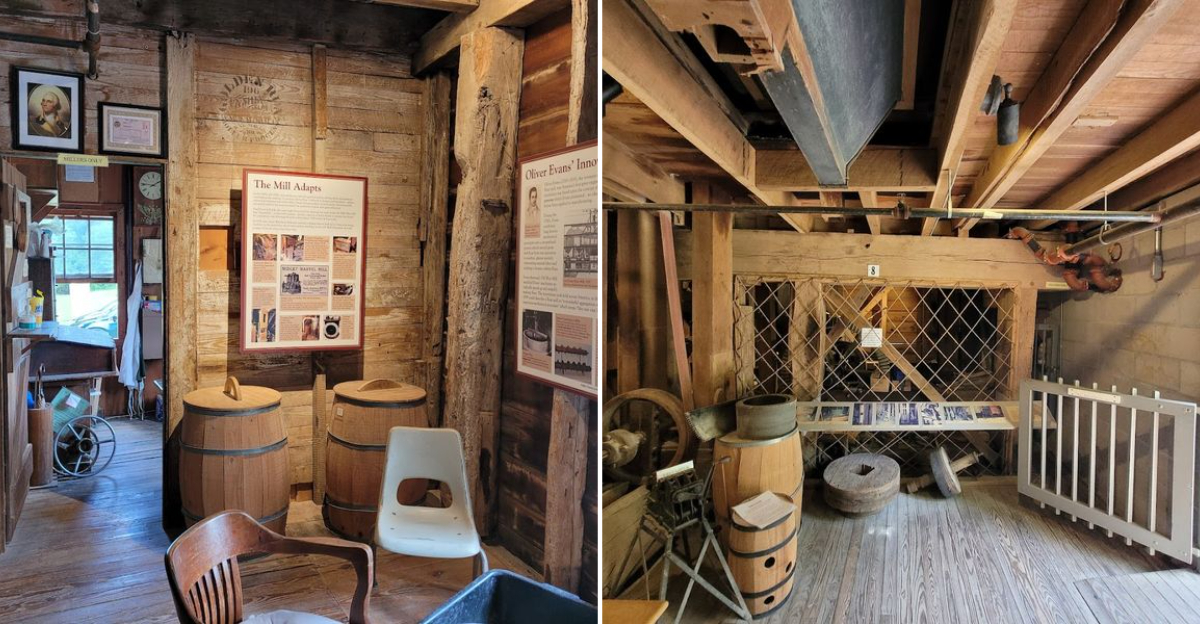
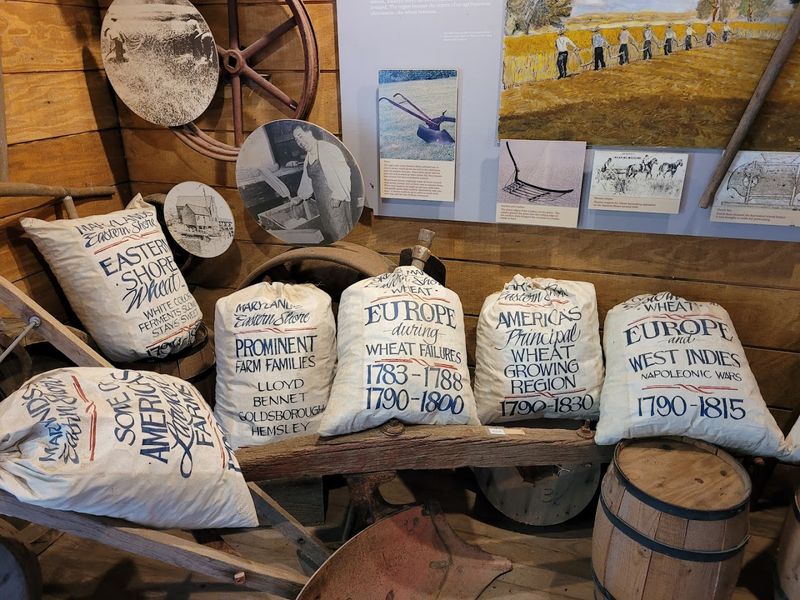
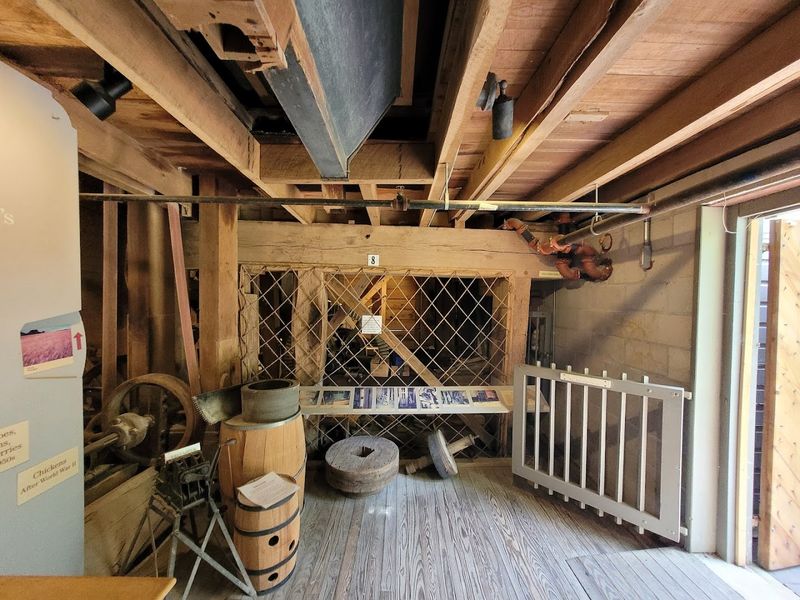
The Old Wye Mill reflects that tradition in its exhibits. Framed original flour sacks hang on the walls.
Historical photographs and models of the town show what this area looked like centuries ago.
Wye Mills itself has a layered cultural history. The Wye Oak, Maryland’s honorary state tree, stood here until a thunderstorm brought it down in 2002.
The Old Wye Church nearby dates back to 1712.
The Wye River Accords were also signed near here in 1998. President Bill Clinton hosted those peace talks involving Jordan and the Palestinian leadership.
Small communities can carry long histories.
The mill connects all of that local identity to something tangible. Stone-ground flour from locally grown grain is not just a product.
It is a direct link to the agricultural culture that defined this region for centuries.
Seasonal Milling Schedule And Visitor Information
The Old Wye Mill runs on a seasonal schedule that is worth planning around. It is open from May 1st through October 31st each year.
Outside those months, the mill is closed to the public.
During the season, the mill is open Wednesday through Saturday from 10 AM to 3 PM. Sundays have shorter hours, running from 1 PM to 3 PM.
Mondays and Tuesdays are closed.
Grinding demonstrations happen on the first and third Saturdays of each month. If you want to watch the stones actually turn and see flour come out, plan your visit around those dates. It is worth it.
There are no bathrooms on site, so plan accordingly before you arrive. The visit typically runs between 30 minutes and an hour and a half, depending on how deeply you explore.
Bring water if it is a warm day.
The mill has a small gift shop that sells freshly ground flour, cornmeal, and grits. Picking up a bag of stone-ground buckwheat or whole wheat is a genuinely good souvenir.
You can actually use it.
You can reach the mill by phone at 410-827-3850 or visit oldwyemill.org for current event listings. The location sits conveniently along Maryland’s Chesapeake Country Scenic Byway, making it a natural stop on any Eastern Shore road trip.